What Should I Not Miss In Naples?
The essential Naples stops and the Pompeii, Herculaneum and Vesuvius day trips worth building your Campania trip around, with ticket, train and timing facts from the official operators.
Naples is the loudest, hungriest, most layered city in southern Italy, and it sits about 24 km by road from the ancient Roman city of Pompeii, the archaeological park buried by Mount Vesuvius in AD 79. That geography is the whole point of the place: a morning in the ruins, an afternoon on a pizza, and a ferry or a cliff road waiting the day after. This page answers the question in practical order, first the city itself, then the park and volcano day trips that no Campania itinerary should skip, using ticket, train and visitor figures read from the official operators' pages.

What Should I Not Miss In Naples?
The honest shortlist is the historic centre on foot, a sit-down pizza in the city that invented it, the seafront from Castel dell'Ovo towards Posillipo, and at least one full day out at the buried Roman cities. Naples is about 24 km from Pompeii, reachable in 29 to 35 minutes on the Circumvesuviana from Napoli Garibaldi to Pompei Scavi-Villa dei Misteri, so the unmissable list genuinely spans two worlds, the living Baroque city and the dead Roman one beside it.
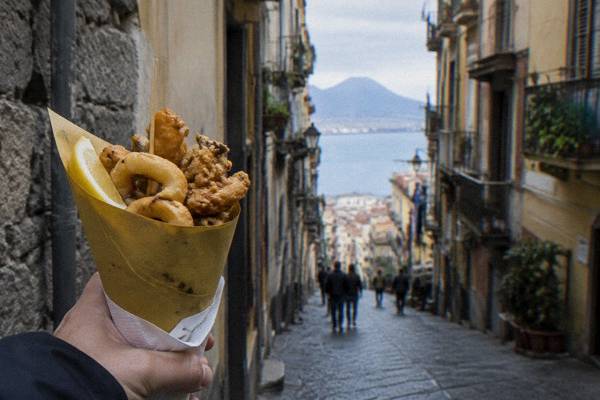
Begin with the streets, not a checklist. The historic centre, a UNESCO-listed fabric of narrow lanes around Spaccanapoli, works as one long walk: churches stacked on top of Roman foundations, workshops, food stalls, laundry overhead. Do not race it. The centre is compact enough that a slow half day covers the spine of it, and the street food tradition is part of the sight, not a break from it. For the corners other pages skip, the hidden corners of Naples page on this site lists quieter finds, and the question of which neighbourhood to sleep in matters more here than in flatter cities, because Naples climbs a hill the moment you leave the seafront.
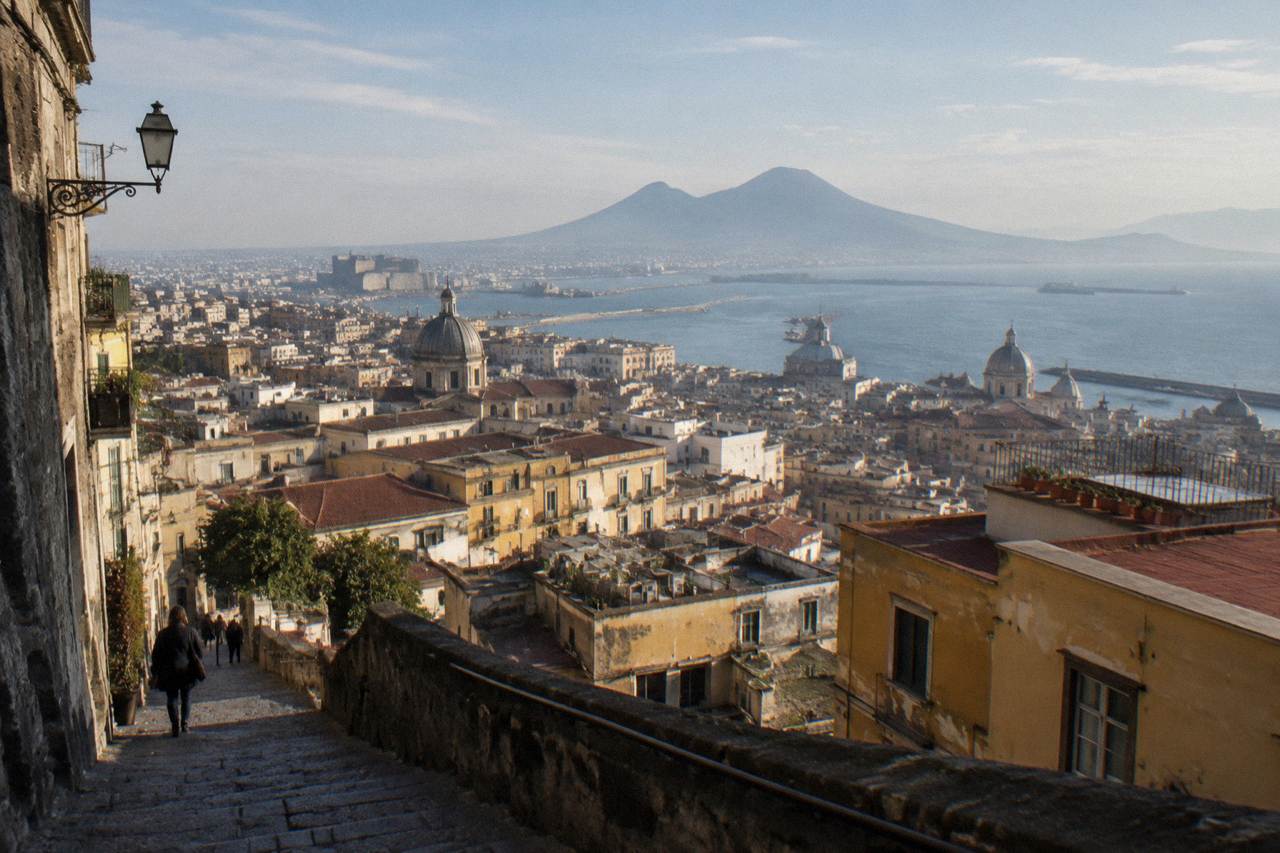
The second unmissable is the sea itself. The Bay of Naples, with Vesuvius sitting across the water, is the view the city is arranged around, and the lungomare gives it to you for nothing. The third is food. Pizza was born here, and the city's pizzerias run from famous queues to neighbourhood counters. This site's Naples day trips guide covers the wider area, and if you are weighing Naples against Sorrento as a base, the Naples or Sorrento comparison settles the trade-offs: Naples wins on archaeology access and price, Sorrento on ease and views.
Which Naples Experiences Can You Book Before You Leave?
The three worth booking from home are a guided Pompeii walk with an archaeologist, a combined Pompeii and Vesuvius day tour from Naples, and the free tip-based old town walk of Naples itself. Everything else in the city, the museums, the churches, the pizzerias, works fine on the day. Booking matters only where a guide or a transport seat is involved, because those are the things that sell out and the things that change how much you understand.
Pompeii rewards expertise more than any other site in Italy. The park is vast, the signage is thin, and a guide who can read a wall turns rubble into a city. The strongest format is a small group led by an archaeologist; the tour below is the site's deepest guided option, a walk that reaches the Villa of the Mysteries, the painted villa at the western edge of the excavations that independent visitors frequently run out of time for. It has its own page on this site at the Villa of the Mysteries archaeologist tour, with Check availability showing the live dates.
The combination tour is the efficient second booking: Pompeii and Vesuvius in one day from Naples, transport handled, so you are not negotiating two ticketing systems and a mountain road in the same afternoon. The free walk is the third, and the odd one out: it costs nothing up front and runs on tips, run through GuruWalk with a local guide who covers the old town. It is in the city, not the ruins, and no free English-language walk of Pompeii itself exists, so treat it purely as a Naples introduction.
Booking questions narrow to timing. The park caps entries at 20,000 visitors a day, a limit in force since 15 November 2024, and time slots split at 13:00: from 9:00 to 13:00 the cap is 15,000, from 13:00 to 17:30 it is 5,000. That is why the question of buying Pompeii tickets in advance has a firm answer for peak months, and why a guided tour with entry included removes the problem entirely. On the first Sunday of each month entry is free for everyone, and on one such Sunday the park recorded more than 36,000 visitors, a number worth remembering before you pick a free day in summer.
Is Naples The Best Base For Seeing Pompeii And Vesuvius?
Yes, for the buried cities Naples is the best base in Campania: the Circumvesuviana line from Napoli Garibaldi reaches Pompei Scavi-Villa dei Misteri in 29 to 35 minutes, and the same line serves Ercolano for Herculaneum and Sorrento at the far end. No other base puts you on a single local train that stops at Pompeii, Herculaneum and Sorrento, which is why day trips from Naples dominate this coastline.
The train is unglamorous and it works. Scheduled times from EAV's own timetable data give Napoli Garibaldi to Pompei Scavi-Villa dei Misteri at 29 to 35 minutes, with a median of 29; continue to Sorrento and the whole run is 64 to 75 minutes. The station for the excavations is Pompei Scavi-Villa dei Misteri, a short walk from the Porta Marina entrance. The practical detail of buying Circumvesuviana tickets is covered separately on this site.
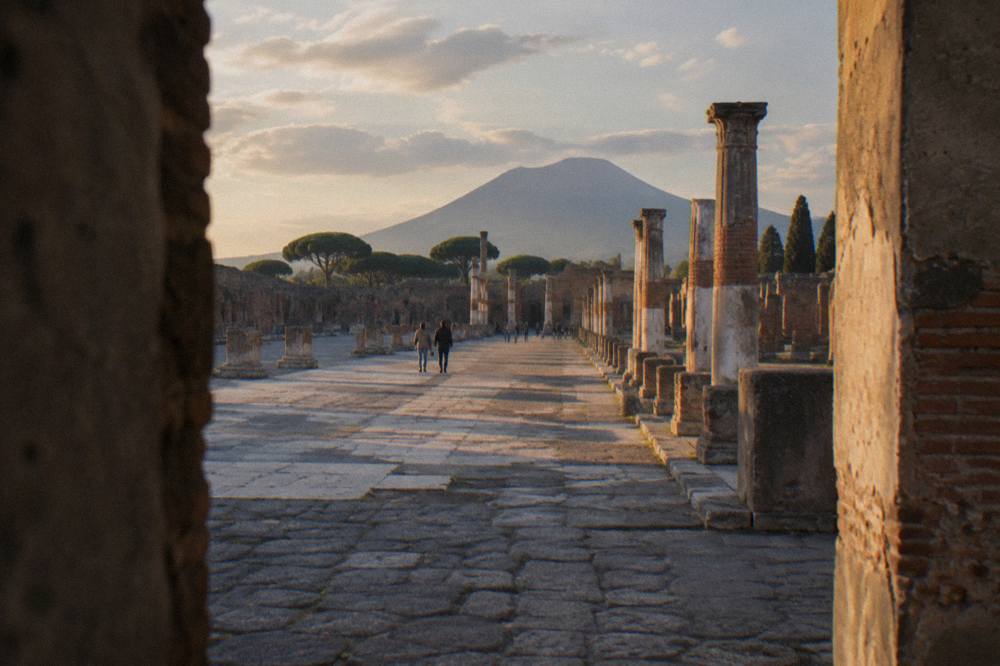
Vesuvius is the second half of the day-trip pair, and its ticketing is its own system. The Gran Cono crater trail sells timed tickets online only, at EUR 11.68 full and EUR 9.55 reduced as sold, released 30 days ahead in batches of 50 tickets every 10 minutes, with 10 nominative last-minute tickets per slot from 30 minutes before. The path and ticket office close automatically on an orange weather alert or above, with automatic refunds when weather shuts the trail. Access hours shift by month:
| Months | Gran Cono Access Hours | Daily Caps |
|---|---|---|
| January, February, November, December | 9:00 to 15:00 | 2,160 |
| March and October | 9:00 to 16:00 | 2,160 to 3,240 |
| April, May, June, September | 9:00 to 17:00 | 2,160 to 3,240 |
| July and August | 9:00 to 18:00 | 2,160 to 3,240 |
If the mountain and the ruins in one day sound like a lot, that is exactly what a combined tour is for, and the question of doing Pompeii as a day trip from Naples or pairing Pompeii with Herculaneum is worth settling before you book anything. The answer depends on stamina more than logistics, because the logistics are genuinely easy.
How Do You Fit Herculaneum Into A Naples Trip?
Herculaneum is the smaller, better-preserved sister site of Pompeii at Ercolano, reached on the same Circumvesuviana line, and it deserves two to three hours of any Naples-based itinerary. Entry is EUR 16 full and EUR 2 reduced for EU citizens aged 18 to under 25, free for under-18s and on the first Sunday of the month, with the ticket collected on the day. Two of its landmarks, the Villa dei Papiri and the Ancient Theatre, are closed for works, so plan around the houses and boat sheds.
Where Pompeii overwhelms, Herculaneum concentrates. The town was buried deeper by the eruption, traditionally dated to 24 August AD 79, and the carbonised wood and intact upper floors it preserved give a different, more domestic picture of Roman life. Its opening hours mirror the coast's rhythm: from 16 March to 14 October it runs 8:30 to 19:30 with last entry at 18:00, and from 15 October to 15 March 8:30 to 17:00 with last entry at 15:30. It closes only on 1 January and 25 December, and free days add 25 April, 2 June and 4 November to the first Sundays.
Back inside Pompeii itself, the 2026 ticket structure still rewards a little planning, and it changes at the end of the year. From 1 January 2027 a single EUR 25 ticket covers all park sites, valid 30 days with one entry per site, while the three outlying sites stay EUR 8 each and the MyPompeii Card stays EUR 45:
| Ticket (2026 prices, until 31 December 2026) | Price | Covers |
|---|---|---|
| Pompeii Express | EUR 20 | The ancient city only |
| Pompeii Plus | EUR 25 | City, suburban villas, Boscoreale villa and Antiquarium, shuttle |
| 3-day ticket | EUR 30 | Pompeii Plus plus Oplontis, Stabiae villas and museum, Boscoreale |
| Oplontis, Stabiae museum, Boscoreale | EUR 8 each | Each outlying site individually |
| MyPompeii Card (annual) | EUR 45 | All park sites for a year, EUR 10 reduced |
When Is The Best Time To Do All This?
The shoulder months are the sweet spot, and the park's own visitor data shows it: May 2024 brought 516,923 visitors to Pompeii and October 481,255, while January drew 112,121 and November 189,866. Winter hours cut the day short, with last entry at 15:30 and closure at 17:00 from 15 October to 15 March, so a summer-length itinerary simply does not fit the colder half of the year.
The numbers point one way. Crowds peak from April through October, and the park's time-slot caps, 15,000 morning entries against 5,000 afternoon, mean an afternoon arrival in high season is both quieter and tighter. Temperature matters too: at the Pompei grid point the 1991-2020 normals show a mean daily maximum of about 29.4 C in August against about 12.2 C in January, and November is the wettest month at about 180 mm of rain against about 16 mm in July. There is almost no shade inside the excavations, so the heat advice in the Naples month-by-month primer applies doubly to the ruins.
| Month (2024, Pompeii visitors) | Visitors | Month (2024, Pompeii visitors) | Visitors |
|---|---|---|---|
| January | 112,121 | July | 449,162 |
| February | 142,648 | August | 421,255 |
| March | 272,723 | September | 468,340 |
| April | 466,344 | October | 481,255 |
| May | 516,923 | November | 189,866 |
| June | 410,712 | December | 138,028 |
Free first Sundays fall every month, year-round, and they are the busiest days the park sees. If a free day is your plan, arrive for the 9:00 opening, expect the crowd the 36,000-plus record implies, and remember the smaller outlying sites, Oplontis and the Stabiae villas and museum, close on Tuesdays even when Pompeii does not.
What Should I Not Miss Beyond Naples Itself?
The unmissable ring around Naples is Pompeii, Herculaneum and the Vesuvius crater trail, all on one rail line, with the Amalfi Coast and Capri as the sea-facing second act. Capri is a ferry day from the port, the Amalfi Coast a driving day on a road no train serves, and both combine awkwardly with archaeology, so give them their own days rather than stacking them behind ruins.
The pairing trap is real: cramming ruins and coastline into one day shortchanges both, and the question can you cover Pompeii and the Amalfi Coast in one day has an honest answer on this site. A booked combined tour is the only version that works. For the coast itself, the Amalfi Coast day trip guide and the Capri day trip guide lay out the options, and for the drive up the volcano, driving up Vesuvius is possible part of the way, though the crater trail itself is walked.
One geological footnote belongs on every Naples list. The city survived the eruption that buried its neighbours, and the reasons why are their own small story, told on why Naples was not destroyed by Vesuvius. Standing on the seafront looking at that mountain, it is a question worth carrying with you.
Common Questions About Naples
Can you do Vesuvius and Pompeii in one day from Naples?
Yes, and a booked combined tour handles it best, since Vesuvius crater tickets are online-only with timed entry while Pompeii runs its own capped time-slot system.
Naples rewards the traveller who treats it as a base camp rather than a dash-through. Walk the centre, eat properly, ride the little train out to the dead cities, and climb part of the volcano that made them. The rest of the questions, tickets, trains and timing, are answered page by page across this Pompeii Travel Guide, starting with the Naples to Pompeii transport guide when you are ready to plan the first day out.