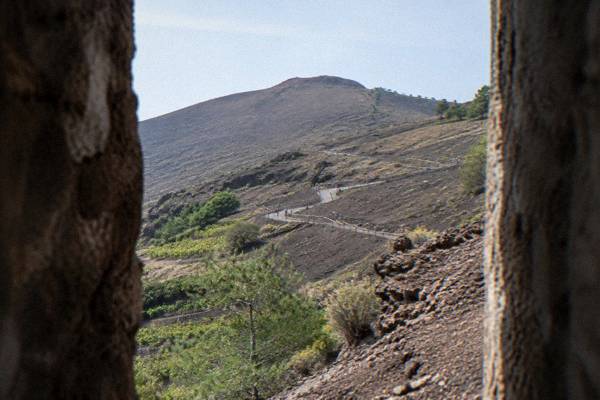
Mount Vesuvius
Mount Vesuvius is the volcano that buried Pompeii in AD 79, and its Gran Cono crater trail is one of the few active volcanoes you can walk to the top of in Europe. Here is how the ticketing, timing and trails work.
Short answer
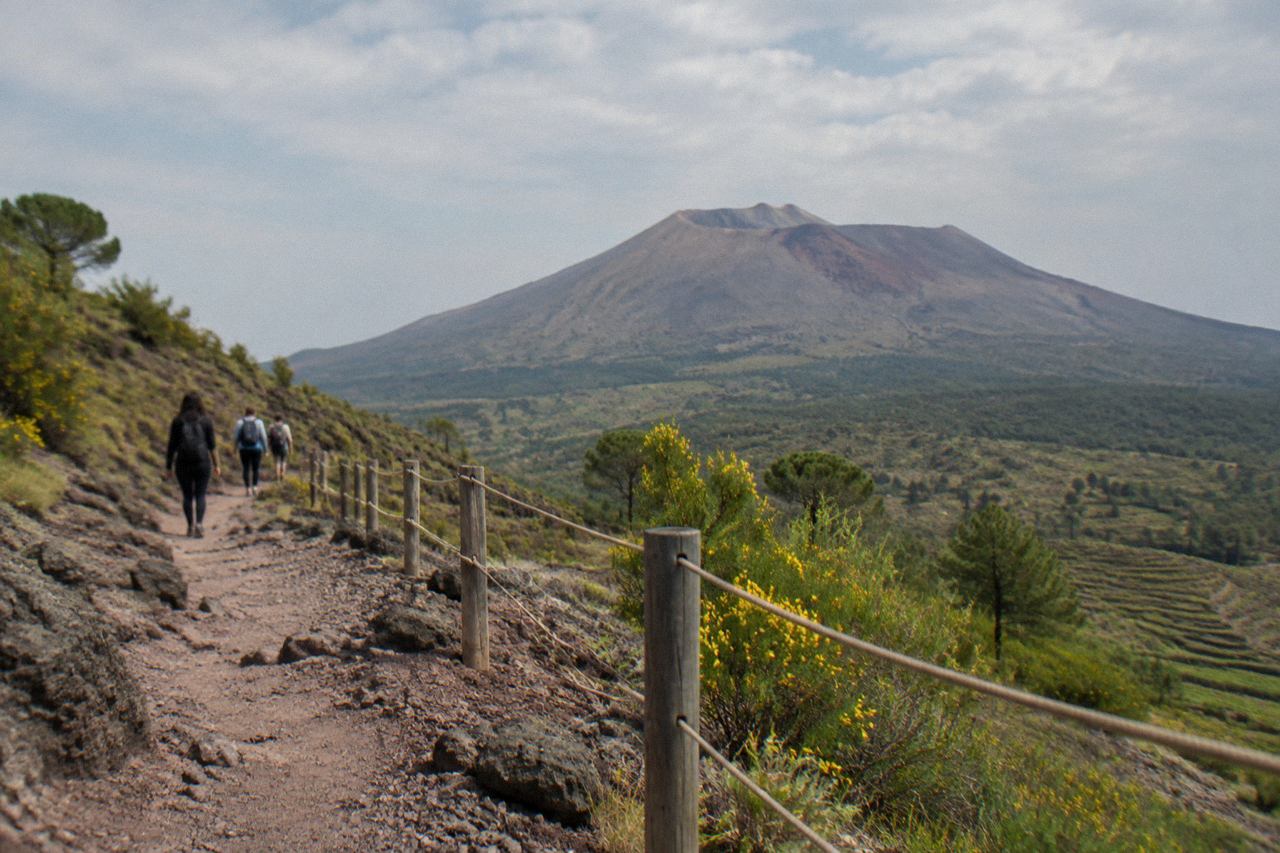
The Gran Cono crater trail costs EUR 11.68 full fare and EUR 9.55 reduced, sold online only in timed slots of 50 tickets every 10 minutes, bookable up to 30 days ahead. Access hours run from 09:00-15:00 in winter to 09:00-18:00 in July and August, and the round trip takes about 2 hours on the shortest route.
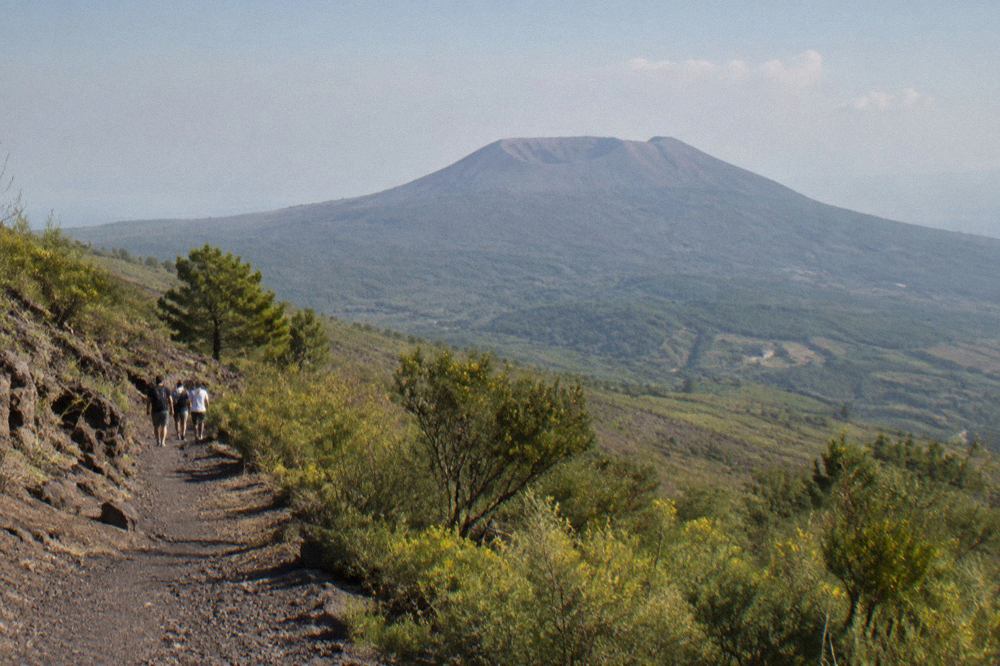
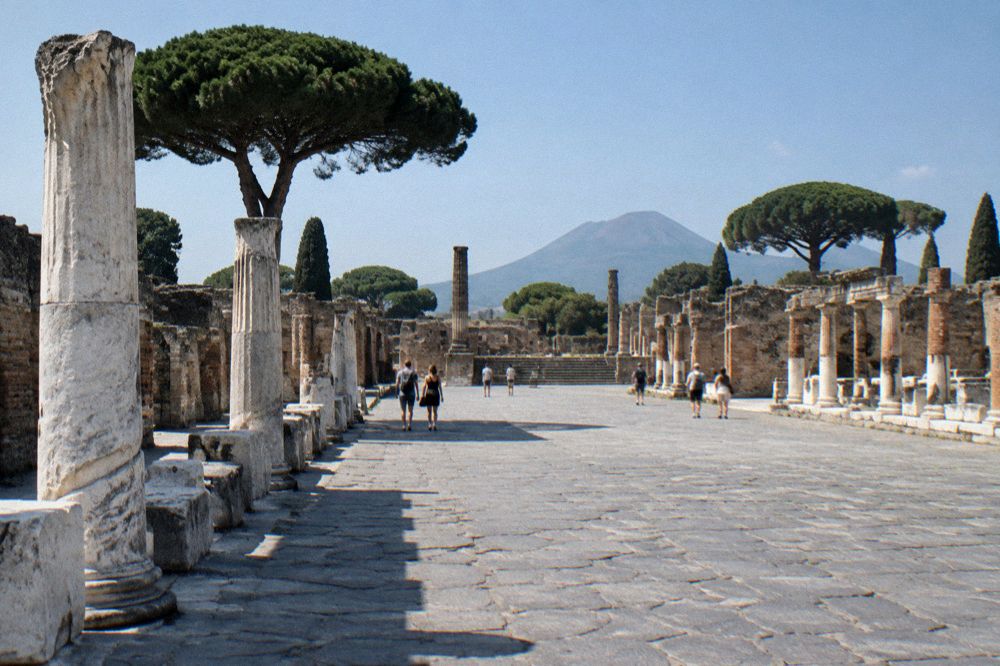
Mount Vesuvius rises behind the archaeological park of Pompeii in Campania, southern Italy. It is the volcano whose eruption in AD 79, traditionally dated to 24 August, buried the Roman city and its neighbours under ash and pumice, and its summit crater is now reachable on foot inside a national park. The park, Parco Nazionale del Vesuvio, sells timed entry to the Gran Cono trail, the path that runs around the rim of the crater itself. This page covers the practical side: tickets, hours, the walk, what you see from the top, and how to pair the volcano with a day at Pompeii.
For everything on getting into the buried city itself, start with the Pompeii tickets and prices guide, and for the wider region the Pompeii Travel Guide homepage lays out the base towns and day trips.
Where Is Mount Vesuvius And How Do You Get There?
The Circumvesuviana railway stops at Pompei Scavi-Villa dei Misteri, the station for the Pompeii excavations, and bus services climb from there toward the crater parking areas. There is no rail station on the mountain itself.**
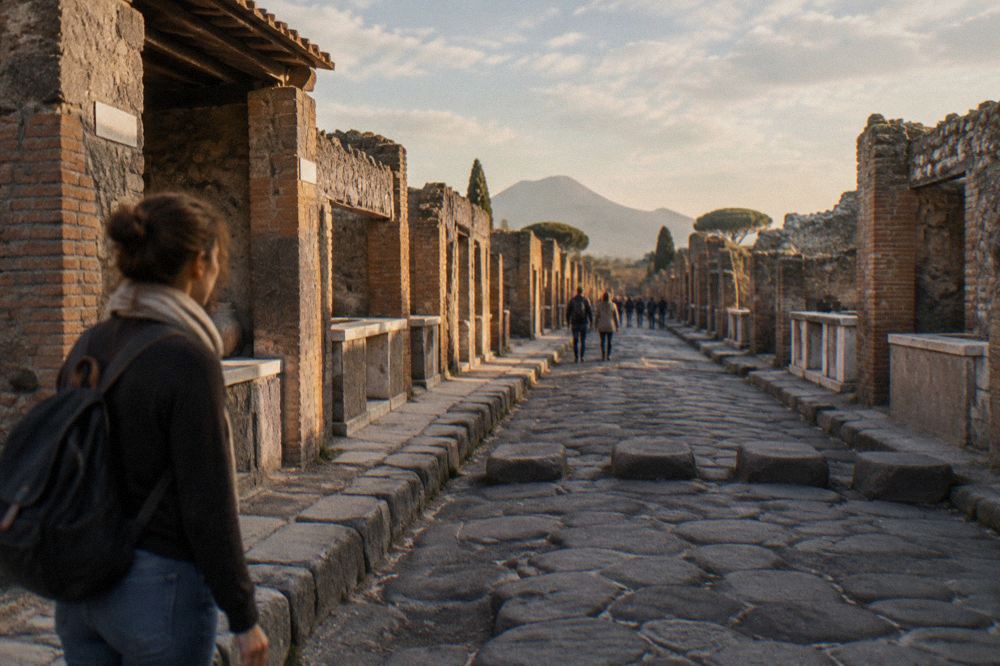
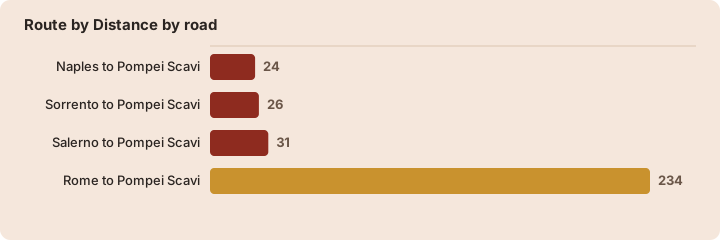
The volcano is the natural backdrop to the whole Pompeii visit. From the Porta Marina entrance of the excavations the cone is visible to the north, and the modern town of Pompei sits at its foot. Road distances, computed on OpenStreetMap routing data, put Naples 24 km and about 22 minutes away by car, Sorrento 26 km and about 37 minutes, and Salerno 31 km and about 30 minutes. Rome is 234 km and about 159 minutes of driving, which is why a guided day tour is the usual way to pair the capital with the crater.
The Circumvesuviana line from Naples to Sorrento calls at Pompei Scavi-Villa dei Misteri, the station beside the excavations. EAV's own timetable data, from the operator's public transit feed, gives scheduled run times of 29 to 35 minutes from Napoli Garibaldi to Pompei Scavi and 64 to 75 minutes through to Sorrento. One thing to know before planning a rail-and-bus day: the Campania Express premium train service has been suspended since 1 October 2026 until further notice, so the regular Circumvesuviana trains are the rail option. The operator's own timetable page carries the current times.
For the road access question in detail, including where vehicles can and cannot go, see can you drive up Mount Vesuvius. If you are weighing which to see first on a combined day, Pompeii or Vesuvius first settles the sequencing question.
| Route | Distance by road | Approximate driving time |
|---|---|---|
| Naples to Pompei Scavi | 24 km | about 22 min |
| Sorrento to Pompei Scavi | 26 km | about 37 min |
| Salerno to Pompei Scavi | 31 km | about 30 min |
| Rome to Pompei Scavi | 234 km | about 159 min |
How Much Does It Cost To Go Up Mount Vesuvius?
Entry to the Gran Cono crater trail costs EUR 11.68 for a full ticket and EUR 9.55 reduced as sold online, against a base fare of EUR 10 and EUR 8 in the park's regulation text. Tickets are online only, issued in timed slots of 50 people every 10 minutes, bookable up to 30 days ahead. Children under 6 go free, and reduced fares apply to visitors under 25 and residents of the 13 park municipalities.
The pricing structure comes straight from the national park's official Gran Cono page. The gap between the regulation base fare and the sold price reflects booking fees on the official ticketing channel. Beyond the standard slots, the park releases 10 last-minute tickets per slot from 30 minutes before each departure time, and since 11 April 2026 those tickets are nominative, tied to the named visitor like every other ticket.
If you are weighing the volcano against the buried city in the same budget, the Pompeii side has its own ladder of fares in 2026: EUR 20 for the Express ticket covering the ancient city, EUR 25 for Pompeii+ with the suburban villas, EUR 30 for the three-day ticket, and EUR 8 each for the smaller sites at Oplontis, Boscoreale and the Stabiae museum. From 1 January 2027 that structure is replaced by a single EUR 25 ticket valid 30 days across all park sites, with one entry per site, while the three smaller sites stay at EUR 8 individually and the MyPompeii Card stays at EUR 45. The full breakdown is in the Pompeii tickets guide, and for a shorter answer on the volcano alone see how much does it cost to go up Mount Vesuvius.
| Gran Cono ticket type | Price | Notes |
|---|---|---|
| Full fare | EUR 11.68 as sold | regulation base EUR 10 |
| Reduced | EUR 9.55 as sold | regulation base EUR 8, under 25 and park residents |
| Children under 6 | free | stated on the park page |
| Last-minute ticket | same fares | 10 per slot, from 30 min before, nominative since 11 April 2026 |
Daily visitor caps on the crater run from 2,160 to 3,240 depending on the season, which is why a same-day ticket is a gamble in peak months. The dedicated answer on buying Vesuvius tickets on the day covers the realistic options.
What Are The Opening Hours And Ticket Rules For The Gran Cono?
Access hours shift by month: 09:00-15:00 in January, February, November and December, 09:00-16:00 in March and October, 09:00-17:00 in April, May, June and September, and 09:00-18:00 in July and August. Slots admit groups of up to 60 people per 10 minutes, in three subgroups of 20. The ticket office and the trail close automatically when an orange weather alert or higher is issued, with an automatic refund.
Those hours come from the national park's Gran Cono page and they matter more than they might seem. The last entry time governs your day, not the closing time, and the trail itself needs two to three hours round trip. A winter visit means being off the mountain by mid-afternoon, which pairs naturally with a morning at Pompeii. A July or August visit buys you evening light over the bay.
The weather rule is the one that catches people out. Closure on an orange alert is automatic and it triggers an automatic refund, so a storm day costs you the view but not the money. Planning around it is a matter of booking a slot early in your stay rather than on your last day, so a washout can be retried.
| Months | Access hours | Notes |
|---|---|---|
| January, February, November, December | 09:00-15:00 | shortest window |
| March, October | 09:00-16:00 | spring and autumn shoulder |
| April, May, June, September | 09:00-17:00 | standard season |
| July, August | 09:00-18:00 | longest window, hottest climb |
If booking timed slots and reading weather alerts sounds like the part of the trip you would rather hand off, a combined tour does exactly that. The two-site day tour from Naples, which pairs the excavations with the crater and is covered in the Pompeii and Vesuvius in one day itinerary, is the option this site features: Check availability.
How Long Is The Walk Up Vesuvius And How Hard Is It?
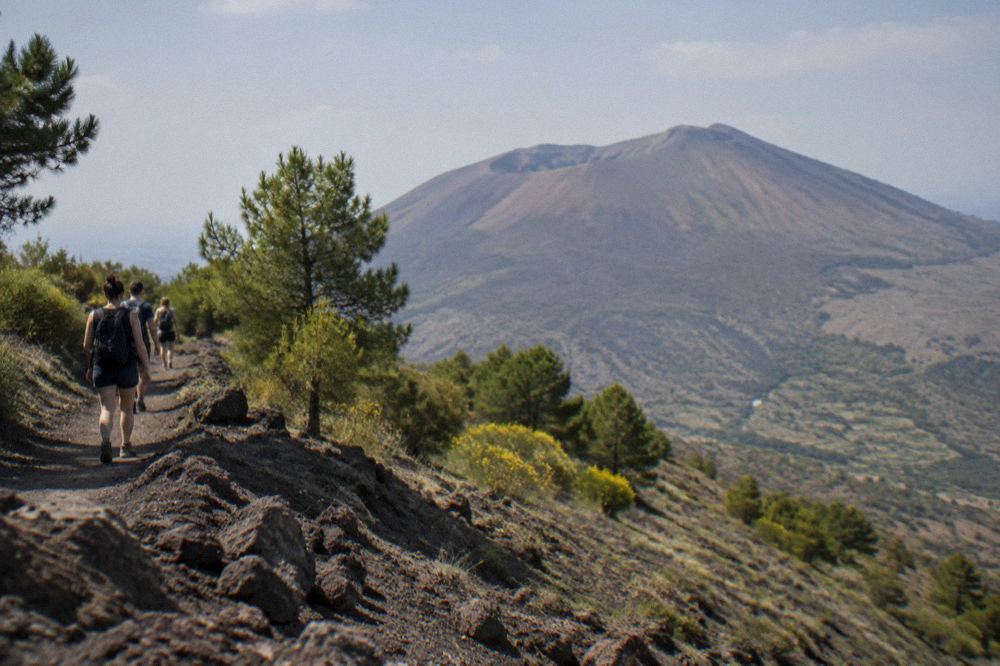
The Gran Cono excursion takes about 2 hours for the round trip on the shortest route and up to 3 hours on the longest, according to the national park's own trail page. The path climbs ash and volcanic rubble to the crater rim, where a circuit runs around the edge of the basin. There is no cable car and no road to the top for visitors: the final stretch is on foot for everyone.
The walk is not technical, but the surface is loose in places and the gradient is steady rather than gentle. The full answer on how long the walk up Vesuvius takes covers timing, and the trail itself is described in the site's Vesuvius crater trail page. Sturdy shoes matter more than fitness, though summer heat adds its own load, and the question is it cold at the top of Vesuvius is worth reading before you pack, because the rim is windy even when the parking area is warm.
For visitors who want the crater without organising the logistics, a skip-the-line ticket product bundles entry with a digital guide, and it suits independent travellers who only need the access handled:
The trail page also states the seasonal caps again: 2,160 to 3,240 people per day, which keeps the rim from feeling like a stadium even in August.
When Did Vesuvius Erupt And Is It Still Active?
Vesuvius erupted in AD 79, a date traditionally fixed to 24 August from Pliny the Younger's oldest manuscripts, though the park's own e-journal states that a 24 October date has no evidentiary basis and that 24 August is not necessarily correct either. The volcano is still considered active and closely monitored, and it last erupted in 1944.
The eruption destroyed Pompeii, Herculaneum and the villas at Oplontis and Stabiae, and the buried sites are now a UNESCO World Heritage property with an excavated area at Pompeii of 44 ha inside a 98 ha inscribed area. The dating debate is genuinely open: a charcoal inscription found in 2018, which many scholars read as mid-October, reopened the question, but the park's position on that find is not settled. The site's when did Vesuvius erupt guide carries the full discussion.
Two related questions are answered in depth elsewhere: is Vesuvius ever going to erupt again and why was Naples not destroyed by Vesuvius. For the 1944 event, see how many people died when Vesuvius erupted in 1944.
What Can You See From The Crater?
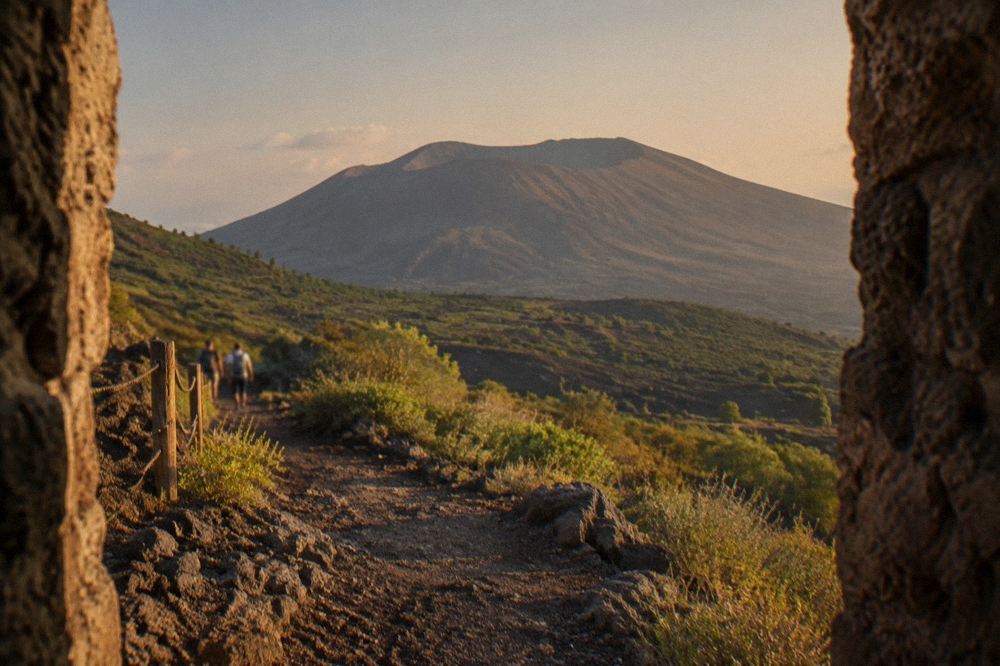
From the Gran Cono rim the view spans the whole Bay of Naples on clear days: the city of Naples to the north-west, the islands of the bay, the Sorrento peninsula, and the excavations of Pompeii laid out on the plain below. Looking inward, the trail circles the crater basin itself, a grey, fumarolic bowl rather than a lava lake, with the 1944 eruption's scar visible in the rock.
The interior of the crater is the surprise for many visitors. It is not the smoking cone of popular imagination but a wide depression of ash and rubble with minor fumarolic activity, and the rim circuit lets you read the volcano's layered history in the exposed walls. The external view is best in the clearer months; haze over the bay is common in high summer, and the Pompeii weather and best time to visit guide carries the climate picture for the whole area.
The wine country on the lower slopes is part of the same landscape, and many visitors combine the crater with a tasting on the way down. The Vesuvius wine tasting guide covers the vineyards inside the national park. For a broader two-site or three-site plan, the two days Pompeii Herculaneum Vesuvius itinerary sequences all three.
| View from the rim | Direction | What you are looking at |
|---|---|---|
| Naples | north-west | the city at the head of the bay |
| Pompeii excavations | south | the ancient city on the coastal plain |
| Sorrento peninsula | south-west | the ridge dividing the bay from the Amalfi side |
| Crater basin | inward | ash slopes and the 1944 eruption scar |
Which Tours Combine Vesuvius With Pompeii?
The strongest combinations are tour products that bundle transport, a guided walk at Pompeii and a timed crater ascent: an elite full-day tour from Naples with lunch, a priority-access full-day tour from Sorrento, and a budget day trip from Naples with pizza lunch. All three handle the slot timing that independent visitors must manage themselves, and each is bookable through the operator's live listing.
Tour choice mostly comes down to your base. From Naples, the elite option pairs both sites with a lunch stop and has the schedule built around the crater's slot system:
From Sorrento, the priority-access product does the same pairing from the other side of the peninsula:
The budget end from Naples adds a pizza lunch to the two-site day:
| Combination style | Starting point | Best for |
|---|---|---|
| Two-site day tour, no meal | Naples | the leanest pairing |
| Elite tour with lunch or wine | Naples | a fuller day on the mountain |
| Priority-access full day | Sorrento | travellers based on the peninsula |
| Independent rail plus online crater ticket | Pompei Scavi | flexible, self-guided days |
Cruisers have their own timing constraints, covered in the Pompeii shore excursions guide, and anyone weighing the capital connection should read the Rome to Pompeii day trip guide.
What Should You Wear And Bring For The Vesuvius Hike?
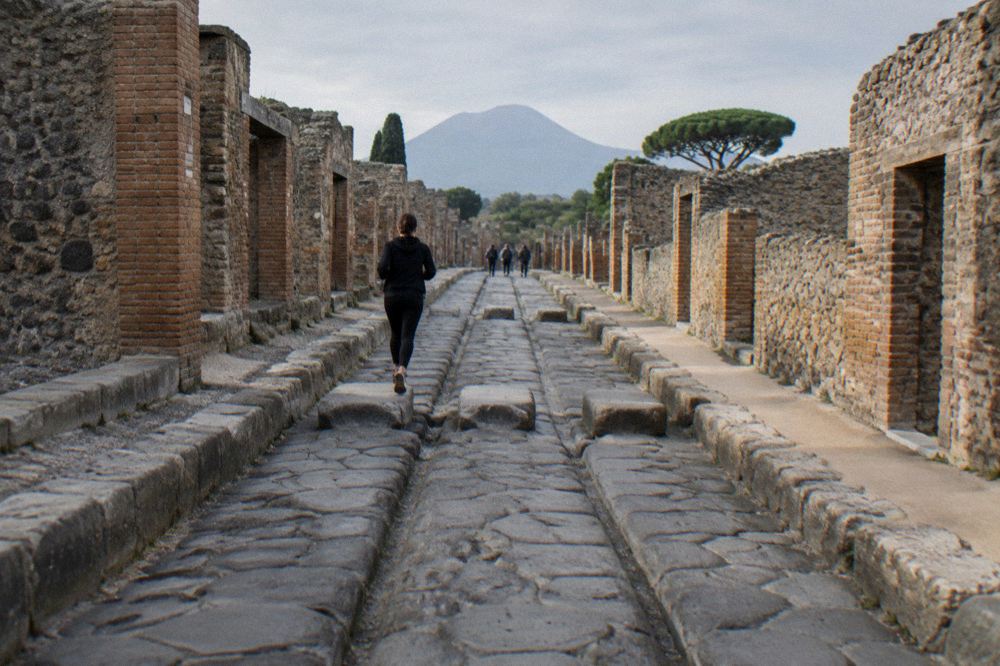
Wear closed walking shoes with grip, because the trail surface is loose volcanic ash and rubble, and bring more water than feels reasonable in summer, since the climb is exposed to sun for most of its length. A windproof layer is advisable for the rim even in warm months, and the same rules as Pompeii apply to bags: pack light, and check the weather alert before you set out because the trail closes automatically on an orange warning.
Footwear is the single most common regret on this trail. Trainers are workable in dry conditions, sandals are not, and anything with a smooth sole struggles on the descent. The question of temperature at the top has its own answer page, and the honest summary is that the rim is several degrees cooler than the parking area and almost always windy.
Two small rules from the park are worth repeating here: do not take rocks or volcanic material off the mountain, a point expanded in can you take a rock from Mount Vesuvius, and keep to the marked trail, because the crater rim is an active monitoring zone. For the full how-to, including arrival logistics, see how to visit Mount Vesuvius and the Mount Vesuvius tickets guide.
| Item | Why it matters | Season |
|---|---|---|
| Closed shoes with grip | loose ash and rubble on the trail | all year |
| Water | exposed climb, no supply on the trail | April to September especially |
| Windproof layer | rim is windy and cooler than the base | all year |
| Sun protection | little shade on the slope | April to September |
For comparison shoppers, the neighbouring volcano question is answered in which is bigger, Vesuvius or Etna, and the wider regional picture is on the site's map page.
Common Questions About Mount Vesuvius
How much does it cost to go up Mount Vesuvius?
The Gran Cono trail costs EUR 11.68 for a full ticket and EUR 9.55 reduced as sold online, against a regulation base of EUR 10 and EUR 8. Children under 6 enter free, and reduced fares apply to visitors under 25 and residents of the 13 park municipalities.
Can you buy Vesuvius tickets on the day?
Tickets are sold online only, but the park releases 10 last-minute nominative tickets per slot from 30 minutes before each departure time. In peak season the standard slots sell out, so booking ahead is the safer plan.
How long is the walk up Vesuvius?
About 2 hours for the round trip on the shortest route and up to 3 hours on the longest, per the national park's trail page. The trail is on foot only, with no cable car or visitor road to the summit.
Is Vesuvius still an active volcano?
Yes. Vesuvius is considered active and is closely monitored, and its most recent eruption was in 1944. The AD 79 eruption that buried Pompeii is traditionally dated to 24 August, though the park's own journal says the 24 October alternative has no evidentiary basis and the debate remains open.
What happens if the weather is bad?
The ticket office and trail close automatically when an orange weather alert or higher is issued, and the refund is automatic. Booking a slot early in your stay leaves room to retry on a clearer day.
Can I drive up Mount Vesuvius?
Vehicles reach the parking areas partway up the mountain, but the final stretch to the crater rim is on foot for everyone. The full answer is on the site's driving page for Vesuvius.
Whether you climb it after a morning among the ruins or make the crater the whole day's purpose, Vesuvius rewards a booked slot, sturdy shoes and an early start, and on a clear evening the view from the rim is the single best perspective on the bay that the eruption of AD 79 reshaped.