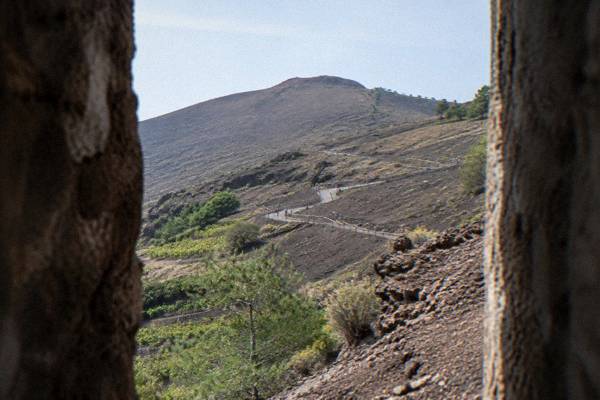
How Long Is The Walk Up Vesuvius?
The walk up Mount Vesuvius takes about two hours return by the shortest route and up to three by the longest, on a well-made crater path above Pompeii and the Bay of Naples.
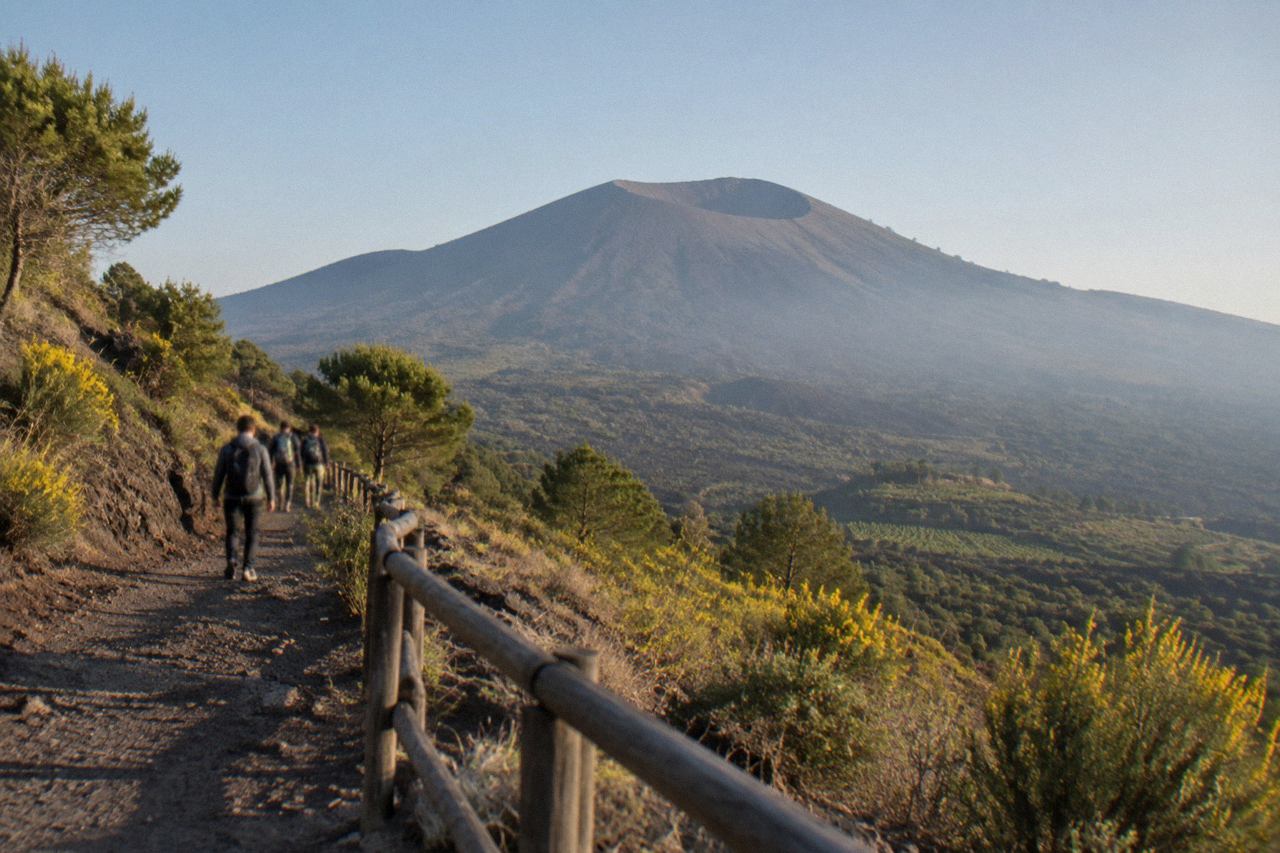
Mount Vesuvius, the volcano that destroyed Pompeii in AD 79 and looms over the Bay of Naples in Campania, southern Italy, is walked on a single managed trail to the crater rim known as the Gran Cono. The national park that runs it gives a simple, official figure: the excursion takes about 2 hours return by the shortest route, and up to 3 hours by the longest. Everything else, the gradient, the surface, the timed slots, the weather rules and the time of year, decides where between those two numbers your own walk lands. This page sets out the full picture for anyone planning the climb as part of a Pompeii trip.
How Long Is The Walk Up Vesuvius?
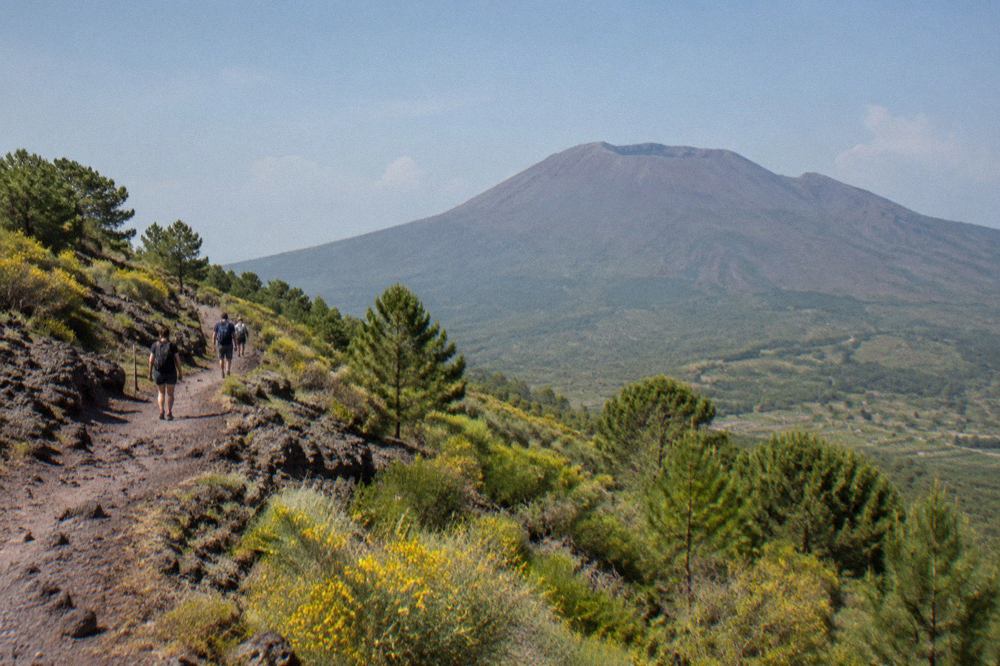
The walk up Vesuvius takes about 2 hours return on the shortest route and up to 3 hours on the longest, according to the national park's own Gran Cono page. The climb is steady rather than technical, on a built path to the crater rim, and the pace is set less by distance than by how long you linger at the top looking into the crater and out over Pompeii, Herculaneum and the Bay of Naples below.
Those two figures, 2 and 3 hours, are the park's published range for the full excursion, out and back. The walk itself is only half the planning; the slot system is the other half.
It helps to picture the shape of the outing. You arrive at the upper parking area by bus, tour vehicle or car, show a nominative online ticket, and join the path. Groups go up in batches of 60 per 10-minute slot, which keeps the trail flowing rather than congested. At the rim you walk a stretch of the crater edge, then descend the same way. Nobody scrambles, nobody ropes up, and nobody needs hiking experience; ordinary shoes and water cover it. What slows people down is the view, and the volcanic ground underfoot, loose in patches, which rewards a measured pace on the way down.
What Sets Your Time: Route, Season And Fitness
Three things move your walk between the 2-hour and 3-hour marks: which route variant the park has open on the day, the month you visit, and how hot it is. Summer access runs to 18:00, winter to 15:00, and July and August highs on the Bay of Naples coast average about 29.4 C, so the same path walked at noon in August is a different outing from the same path at 09:00 in April. Fitness matters less than heat management and shoe choice.
The seasonal window is fixed by the park and worth checking against your travel dates. Access hours are:
| Months | Access hours |
|---|---|
| January, February, November, December | 09:00-15:00 |
| March and October | 09:00-16:00 |
| April, May, June, September | 09:00-17:00 |
| July and August | 09:00-18:00 |
Weather can end the day entirely. The ticket office and the path close automatically whenever an orange weather alert or higher is in force for the area, and the park issues an automatic refund when that happens. There is no arguing with that rule and no workaround; the crater rim is exposed, and the park treats it accordingly. Check the official alert status the evening before and the morning of your walk, and have a fallback, the excavations of Pompeii itself are 24 km by road from Naples and make the obvious rainy-day swap.
Your own party composition counts too. Walkers who pair the crater with the ancient city in a single day, a very common plan, should budget realistically: the Pompeii side alone justifies several hours on the flat, and the Pompeii and Vesuvius in one day itinerary exists precisely because the sequencing question, which site first, catches people out. The general guidance in is it better to do Pompeii or Vesuvius first is to climb when the air is cooler and walk the ruins after, but tour schedules and slot availability often decide for you.
For the logistics of combining the two without a car, a structured day tour is the low-friction option, and the question can Pompeii be a day trip from Naples covers the wider picture. The featured option on this page is the Pompeii Ruins & Mount Vesuvius day tour from Naples, which covers both sites with transport between them handled. It suits travellers who want the crater walk and the excavations in one door-to-door day.
How The Timed-Entry System Shapes Your Walking Day
Vesuvius Gran Cono tickets are sold online only, as timed slots: 50 tickets per 10-minute slot, bookable up to 30 days ahead, plus 10 last-minute tickets per slot released 30 minutes before each departure, issued in the visitor's name since 11 April 2026. A full-price ticket costs EUR 11.68 as sold, EUR 9.55 reduced, with the underlying regulation showing EUR 10 and EUR 8. Children under 6 go free, and under-25s and residents of the 13 park municipalities pay reduced.
Because entry is nominative, bring the ID you booked with; the park checks names, and tickets bought for one person cannot be handed to another. The 30-day booking window means that in the busy months, when daily caps sit at the top of the 2,160 to 3,240 range, the choice slots in the middle of the day go first. Anyone hoping to walk in the cooler morning window should book as soon as their travel dates firm up, and anyone deciding late should read the practical detail in can you buy Mount Vesuvius tickets on the day, which explains exactly how the last-minute pool works.
The slot system also answers a question people often ask the wrong way round. The walk has a fixed duration range, but your slot fixes when it starts, and the access hours fix the last possible start. Arriving late for a slot is the one mistake the system does not absorb gracefully. Build in margin for the drive or bus ride up from the coast; road routing puts Naples 24 km from the Pompei Scavi station area, but the crater parking is a further climb above that, on switchback roads that slow coaches and cars alike.
Can You Combine The Vesuvius Walk With Pompeii In One Day?
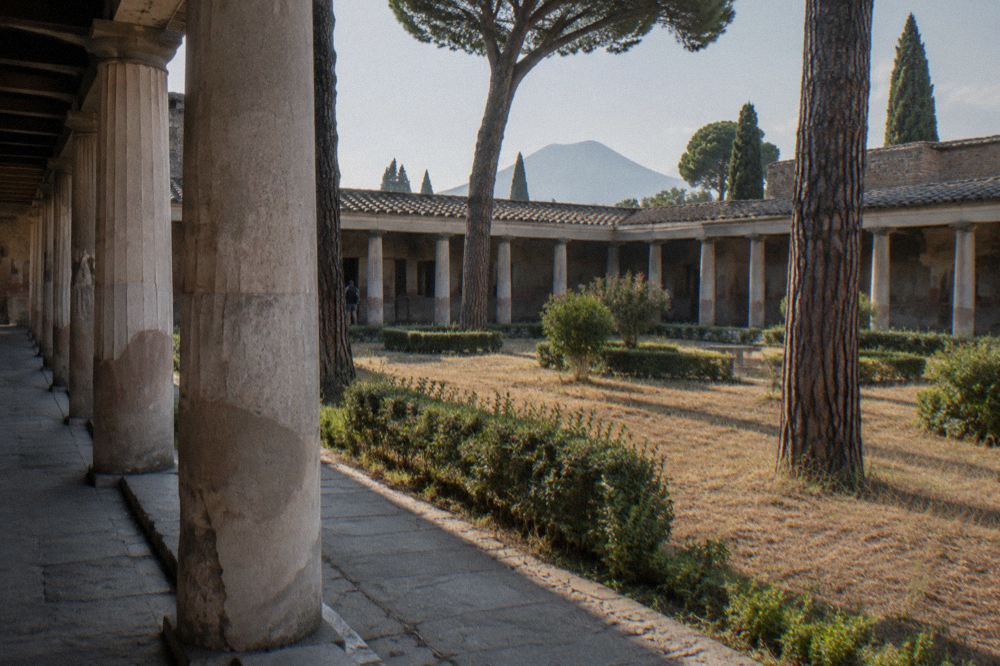
Yes, and it is the standard pairing. The crater excursion needs 2 to 3 hours on the path, Pompeii needs a half day at minimum for its highlights, and the two sites sit close enough that a combined day works from Naples, Sorrento or the coast. The binding constraint is not stamina but scheduling: your Vesuvius slot time, the Pompeii park's own entry windows, and the return leg of your transport.
Pompeii's hours run from 9:00 with last entrance at 17:30 and closing at 19:00 in the 16 March to 14 October season, and from 9:00 with last entrance at 15:30 and closing at 17:00 across the winter. Its ticket offices are at Porta Marina, Piazza Esedra and Piazza Anfiteatro, and the park caps entries at 20,000 a day in time bands, 9:00 to 13:00 carrying up to 15,000 and 13:00 to 17:30 up to 5,000 in the current season structure. That afternoon band is the natural landing zone for a morning crater walk, and it is also the quieter band inside the ruins. The full ticketing picture, including the move to a single EUR 25 all-sites ticket from 1 January 2027 that replaces the 2026 Express EUR 20, Pompeii+ EUR 25 and 3-day EUR 30 structure, is laid out in Pompeii tickets.
If you are assembling the day yourself rather than on a tour, two more pages do the heavy lifting. The costs of the crater side, ticket by ticket, are broken out in how much does it cost to go up Mount Vesuvius, and the driving question, including what the roads up are actually like, is answered in can I drive up Mount Vesuvius. For the walk inside the excavations themselves, a different animal entirely, how difficult is it to walk in Pompeii covers the ancient paving, the shade and the distances.
What The Climb Itself Is Like, Minute By Minute
The Gran Cono path is a wide, built track of compacted volcanic gravel and stone steps, steady uphill all the way out and steady downhill all the way back, with the crater fumaroles and the whole Bay of Naples as the payoff at the rim. There is no scrambling, no exposure and no equipment requirement. Many of the walking time is spent in sight of the parking area on the way up, and in sight of Capri, Sorrento and Naples on the way along the rim.
The surface deserves the one warning it gets: volcanic gravel shifts underfoot on the descent, and worn-smooth shoes make it worse. Trainers with grip are fine; sandals are not. There is little shade anywhere on the trail, so in the April-to-September access window, when the park keeps the path open to 17:00 or 18:00, water and a hat are not optional extras. Temperatures at the rim run cooler than the coast, a point quantified in is it cold at the top of Vesuvius, but the sun is the same sun.
Visitors with the crater walk behind them usually describe the same arc: the first twenty minutes feel like a slog, the middle section trades gradient for rhythm, and the rim arrives sooner than expected. Photography stops add time, and there are many of them; the crater's interior, with its fumaroles, and the panorama from Naples to the Sorrento peninsula are the two frames everyone wants. Budget the full 3 hours if you plan to walk the longer rim variant and take those stops properly. What you should not do is plan a tight onward connection off the back of the 2-hour figure; the slot queue, the rim walk and the descent back to the parking area all eat margin.
One small legal note that rangers do enforce: taking volcanic rock from the path is prohibited, a point spelled out in can I take a rock from Mount Vesuvius. The crater is a protected national park, not a souvenir quarry. The wider story of the volcano, including whether it could erupt again, is covered at is Vesuvius ever going to erupt again; the walking page only needs the practical rule.
For travellers who want the crater, the ruins and lunch without self-managing three timetables, a fuller guided option is the Vesuvius and Pompeii signature tour with wine and lunch from Naples, which adds a light lunch and Vesuvius-area wine to the two-site day, or the classic Pompeii ruins and Vesuvius day tour from Naples, the featured pairing on this page. Both are bookable with free cancellation in the usual way, and the live listing carries every price, rating and duration detail.
Practical Planning Summary
Plan on 2 to 3 hours for the crater excursion, a morning slot in the warm months, an online nominative ticket booked up to 30 days ahead, and grip-soled shoes for the gravel on the descent. Pair it with Pompeii's afternoon entry band if you are doing both sites in a day, and check the weather alert the night before, because an orange alert closes the path automatically with an automatic refund.
Common Questions About The Vesuvius Walk
How long is the walk up Vesuvius?
About 2 hours return on the shortest route, and up to 3 hours on the longest, per the national park's official Gran Cono page. The range covers route variants and time spent at the rim, not different levels of difficulty; the path itself is the same steady built track for everyone.
How difficult is the walk up Vesuvius?
It is a steady uphill walk on a built path of volcanic gravel and stone, not a hike requiring experience or equipment. The descent is where care is needed, because loose gravel shifts underfoot. Ordinary trainers with grip, water and a hat are the whole kit list.
Can you buy Vesuvius tickets on the day?
Only through the last-minute pool: 10 nominative tickets per 10-minute slot, released from 30 minutes before each departure, online only, since 11 April 2026. Standard tickets are timed slots sold online up to 30 days ahead. There is no walk-up ticket office sale in the ordinary sense.
Does Vesuvius close in bad weather?
Yes, automatically. The ticket office and the path close whenever an orange weather alert or higher is in force, and the park issues an automatic refund when that happens. Check the alert status before setting out, especially from November to February when access already ends at 15:00.
Is the Vesuvius walk suitable for children?
The park's pricing structure points the way: children under 6 enter free, and under-25s pay the reduced rate, so families are expected on the path. The walk is non-technical, but it is a continuous slope with no shade, so it suits children used to a couple of hours of walking, best in a morning slot outside the July-August heat.
Everything around those two numbers, the timed slots, the monthly hours, the weather rules and the pairing with Pompeii below, is where a good day on the volcano is actually won, and the pages linked above carry each of those pieces in full.