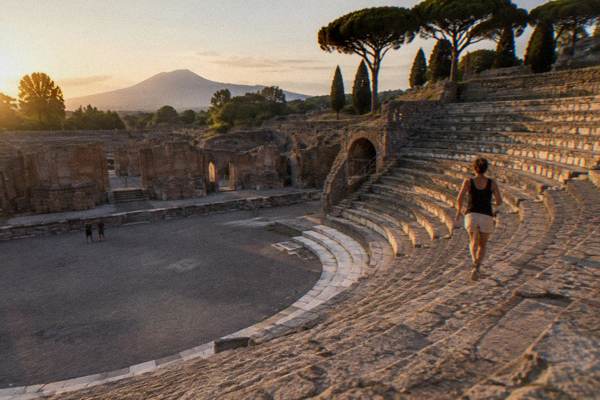
Is It Better To Do Pompeii Or Vesuvius First?
The honest order for pairing Pompeii and Mount Vesuvius in Campania, Italy: when the ruins should come first, when the crater should, and what closing times do to the plan.
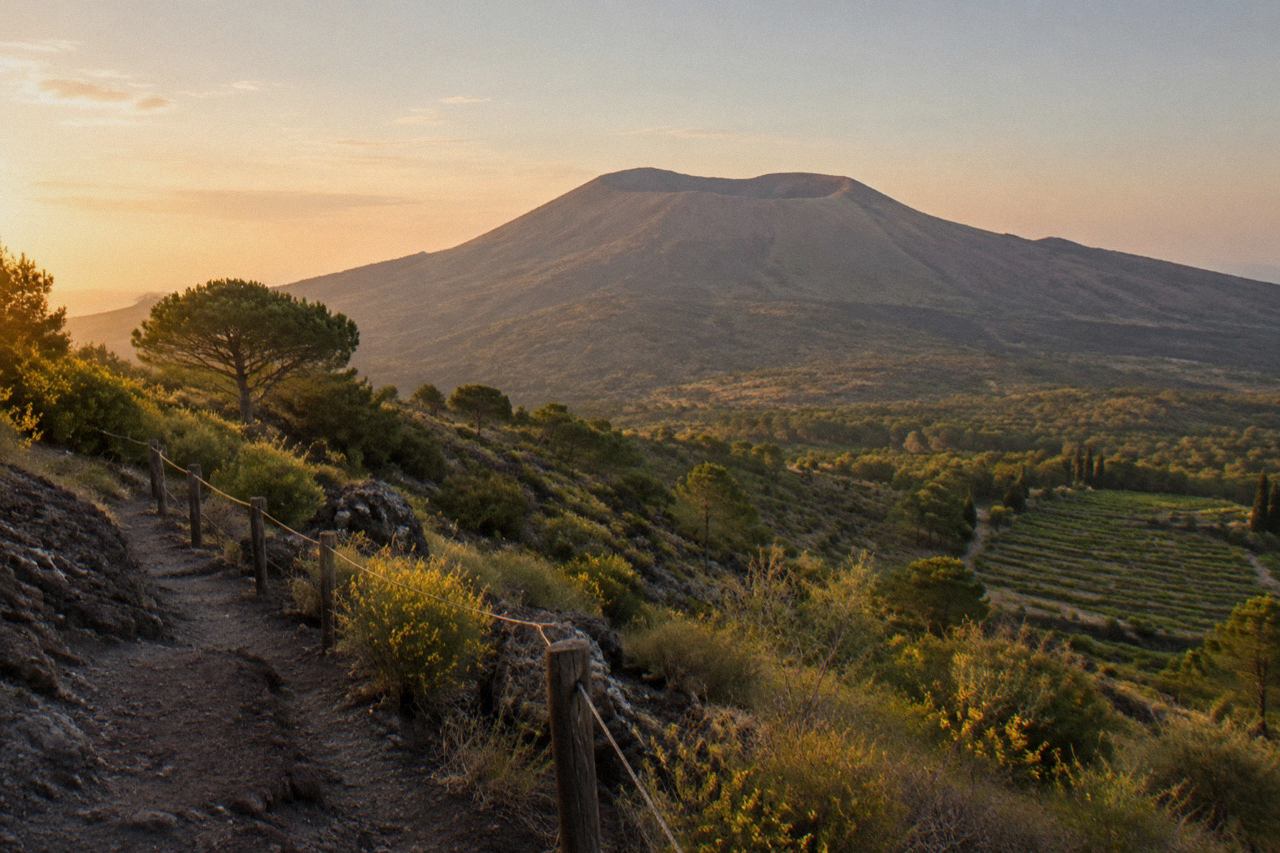
Pompeii is the ancient Roman city buried by the eruption of Mount Vesuvius, traditionally dated to 24 August AD 79, and today it is an archaeological park in Campania, southern Italy, beside the modern town of Pompei and about 24 km by road from Naples. Travellers pairing it with the crater of the volcano that destroyed it face one small planning question that shapes the whole day: which one comes first. The short answer is that Pompeii first is the safer default, because the ruins take longer, the heat bites harder, and the Vesuvius path closes earlier and automatically when the weather turns. But there are real cases for flipping the order, and this page sets out both.
Is It Better To Do Pompeii Or Vesuvius First?
Pompeii first is the better default for a combined day. The ancient city needs two to four hours on foot with almost no shade, so it is best done in the cooler morning, and its ticket windows at Porta Marina, Piazza Esedra and Piazza Anfiteatro open at 9:00. Vesuvius, by contrast, is a timed online-only slot with afternoon availability and a path that takes about two hours return, so it slots naturally into the afternoon that the ruins left behind.
The logic is practical rather than philosophical. Pompeii's summer schedule runs from 16 March to 14 October with last entrance at 17:30 and closing at 19:00, while the Vesuvius Gran Cono path in July and August only admits visitors until 18:00, and earlier in every other month. A morning in the ruins and an early-afternoon ascent leaves slack on both sides: if the crater closes on a weather alert, you have still seen the city, and the automatic refund covers the crater ticket.
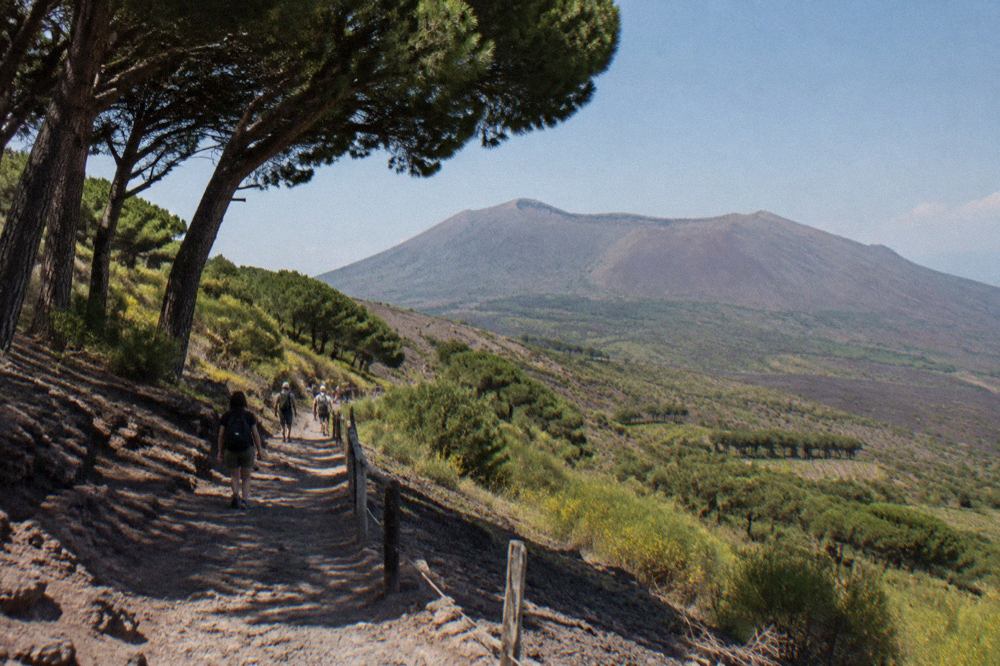
There is also the matter of what your legs can take. The excavated city covers 44 hectares of uneven Roman paving, and the crater trail is a steady uphill walk on volcanic gravel. Doing the harder, hotter walk second, after lunch and a sit-down on the shuttle or bus up the slope, is simply kinder to the average traveller's knees than the reverse.
Full ticket detail for the park side, including the 2026 prices and the single-ticket change coming on 1 January 2027, lives on the Pompeii tickets page, and the pairing question is covered in depth by the Pompeii And Vesuvius In One Day itinerary, which works the two sites into a single workable timetable.
Why Pompeii First Works For The Morning
The ruins reward the first hours after the 9:00 opening. The site runs a 20,000-visitors-per-day cap, and its time-slot system splits entry into 9:00-13:00, with up to 15,000 admissions, and 13:00-17:30, with up to 5,000. Morning slots therefore run fuller, but the city is large enough, 44 hectares excavated, that density thins out fast once you move beyond the Forum and the Street of Abundance.
Pompeii's official figures show how sharply the day builds: in May 2024 the park recorded 516,923 visitors against 466,344 in April, and October that year logged 481,255 against November's 189,866. The shoulder months are enormous by any museum standard, and the free first Sunday of every month pushes single days past 36,000 visitors, the record the park itself has published. Arriving early on an ordinary paid day is the single easiest way to see the famous houses, such as the House of the Faun and the Villa of the Mysteries, before the crowds thicken.
Heat is the second reason. Pompei's climate normals for 1991-2020 show August with a mean daily maximum of about 29.4 C and July about 28.7 C, against February's mean minimum of about 6.5 C. The ancient streets hold that heat, and shade inside the ruins is scarce. A 9:00 start gives you the city at its coolest and leaves the crater, which sits higher and catches the sea breeze, for the warmest part of the day.
If you would rather not manage the pair yourself, the featured full-day option from Sorrento handles the sequencing, transport and priority access in one booking: Check availability. There is more on this site about Pompeii Travel Guide and its coverage of both sites, including the guided versus self-guided question covered elsewhere on the homepage's tour hub.
For visitors who prefer independent travel with a guide only inside the walls, an archaeologist-led small-group walk with the entry ticket included is the natural first half of a Pompeii-first day, and the Naples To Pompeii transport guide explains how the Circumvesuviana line serves the Pompei Scavi-Villa dei Misteri station beside the Porta Marina entrance.
When Vesuvius First Makes More Sense
Flip the order in three situations. First, when your crater slot is a morning one, since timed entry cannot be moved casually. Second, in the depths of winter, when the Gran Cono path closes at 15:00 from January, February, November and December, and Pompeii's own last entrance moves to 15:30 with a 17:00 close. Third, when you are staying overnight in the area and want the crater view in morning light across the bay.
The Vesuvius side runs on a different rhythm from the park. Tickets are online only, issued as timed slots of 50 people every ten minutes, bookable up to 30 days ahead, with ten last-minute nominative tickets per slot released from 30 minutes before each departure, a rule in force since 11 April 2026. Daily caps run from 2,160 to 3,240 visitors depending on the month. There is no walk-up ticket office in the ordinary sense, so a morning slot is a commitment, and honouring it beats a theoretical ideal order.
Weather can also invert the plan. The path and ticket point close automatically on an orange weather alert or higher, with an automatic refund, so on an unstable forecast it is worth taking the earliest crater slot available and leaving Pompeii, which stays open in almost any conditions short of an extraordinary closure, for the afternoon.
| Month Group | Gran Cono Access Hours | Pompeii Last Entry | Pompeii Closes |
|---|---|---|---|
| Jan, Feb, Nov, Dec | 09:00-15:00 | 15:30 | 17:00 |
| Apr, May, Jun, Sep | 09:00-17:00 | 17:30 | 19:00 |
| Jul, Aug | 09:00-18:00 | 17:30 | 19:00 |
Winter is the season that genuinely rewards Vesuvius first. With the crater's access window ending at 15:00 and Pompeii's last entry at 15:30, the pair barely fit into one short day at all, and the order that protects both is the volcano in the morning and a focused two hours in the ruins after lunch. The Is It Cold At The Top Of Vesuvius question matters more than you think here, because the summit runs several degrees below the streets below it.
What The Weather Does To Your Order
The crater closes automatically on an orange weather alert or above, with an automatic refund, while Pompeii closes only on extraordinary closure, so rain and wind argue for booking the crater early in your stay and keeping the ruins as the flexible fallback. Pompei's wettest month is November, with about 180 mm of rain on the 1991-2020 normals, and July the driest at about 16 mm, which makes the autumn and winter half of the year the season when the order question is most live.
Rain does not close Pompeii. Wet basalt and Roman paving are slippery, and the What To Wear To Pompeii guide covers the footwear side of that, but the site keeps its hours.
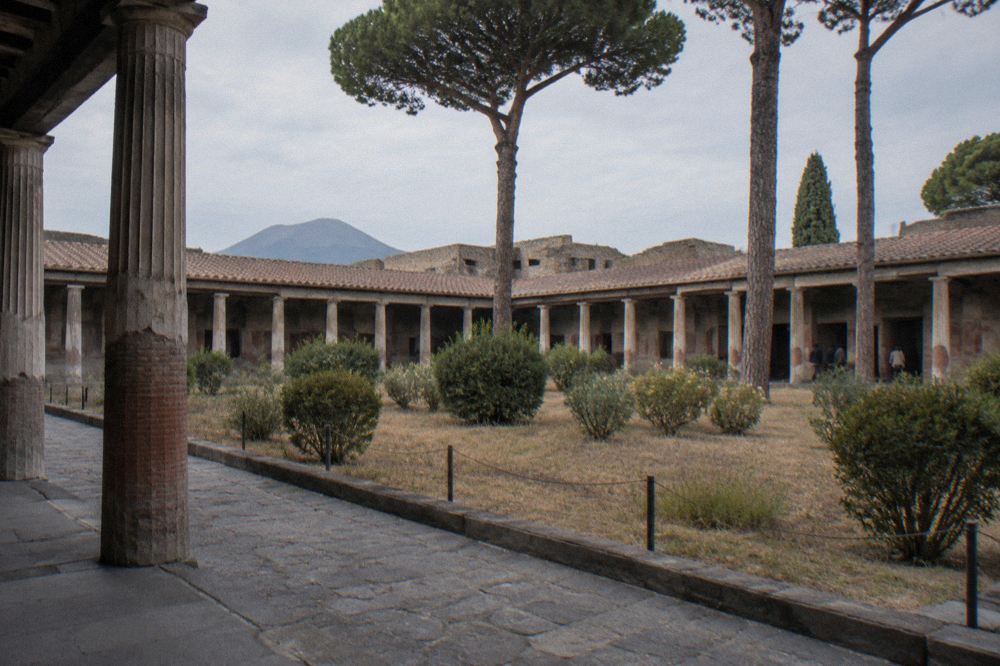
The eruption history is a quiet part of the appeal, and the date itself is genuinely contested. The park's own e-journal states that the 24 October date has no evidentiary basis and traces it to a 1929 misreading, while also noting that the traditional manuscript date of 24 August is not necessarily correct either. The When Did Vesuvius Erupt guide carries the full debate, and the modern side of the story, including the 1944 eruption, is on the how many people died in the 1944 eruption page.
Practical pairing table:
| Question | Pompeii | Vesuvius Gran Cono |
|---|---|---|
| 2026 entry cost | Express EUR 20, Pompeii+ EUR 25, 3-day EUR 30 | EUR 11.68 full, EUR 9.55 reduced as sold |
| Booking | vivaticket, linked from the park page | Online only, timed slots, 30 days ahead |
| Typical time needed | 2-4 hours on site | About 2 hours return, up to 3 by the longest route |
| Best light | Early morning, thinning after noon | Afternoon, with the bay below |
| Weather rule | Ordinary hours in rain | Closes on orange alert, automatic refund |
| Free entry | First Sunday of the month, under 18 | Children under 6 |
Can You Do Both In One Day?
Yes, comfortably, if Pompeii comes first and the crater slot is late afternoon, and tightly, if it does not. The pairing that works is a 9:00 to 12:30 stretch in the ruins, lunch, then a timed ascent in the 14:00 to 16:00 window, which fits inside every month's access hours except the four winter months, when the 15:00 crater close forces either a shorter ruins visit or splitting the pair across two days.
The one-day version is common enough that it has its own shape. From Naples, the Circumvesuviana from Napoli Garibaldi to Pompei Scavi-Villa dei Misteri takes 29 to 35 minutes on scheduled times computed from the operator's own timetable data, and the station sits beside the Porta Marina entrance, so the transit between the two halves of the day is short. The Campania Express service has been suspended since 1 October 2026, so the ordinary Circumvesuviana line is the rail option.
For a day that adds wine to the volcano, a guided pairing with lunch and a Vesuvius-side tasting is the relaxed version of the one-day plan: Check availability. The vineyards on the volcano's slopes sit on the same road network as the crater trailhead, so the geography works in your favour.
If the answer to the one-day question is no, and two days are available, the order matters far less. Spend the first afternoon at whichever site your booking forces, sleep in Pompei or Naples, and give the other site a full morning. The Is It Worth Staying Overnight In Pompei question covers the base decision, and the cost side of the volcano alone is on the how much it costs to go up Mount Vesuvius page.
Common Questions About Ordering Pompeii And Vesuvius
Is it better to do Pompeii or Vesuvius first?
Pompeii first, in almost every case. The ruins need the cooler hours and tolerate crowds, while the crater runs on timed online slots and closes automatically in bad weather, so it fits the afternoon better and refunds itself if the sky turns.
How long should I allow for each site?
Pompeii needs two to four hours depending on how much of the 44 excavated hectares you cover. The Vesuvius Gran Cono excursion takes about two hours return by the shortest route and up to three hours by the longest.
Can I buy Vesuvius tickets on the day?
Only online, and only if slots remain. The park sells 50 timed tickets per ten-minute slot up to 30 days ahead, plus ten last-minute nominative tickets per slot released from 30 minutes before, a rule in force since 11 April 2026. The full detail is on the can you buy Vesuvius tickets on the day page.
Does Pompeii or Vesuvius close first?
Vesuvius. Its access hours end between 15:00 and 18:00 depending on the month, and the path shuts automatically on an orange weather alert. Pompeii's last entry runs to 17:30 from 16 March to 14 October and 15:30 in winter, closing at 19:00 and 17:00 respectively.
Is Pompeii free on any day?
Yes, entry is free for everyone on the first Sunday of every month, and for under 18s year-round. EU citizens aged 18 to under 25 pay a reduced EUR 2. The record for a free first Sunday is more than 36,000 visitors in one day.
Plan the timed slot first, since it is the only part of the day that cannot be improvised, and the ancient city will still be there, as it has been for nearly two millennia, when you come back down the mountain.