How Much Does It Cost To Go Up Mount Vesuvius?
The full cost of going up Mount Vesuvius from Naples or Pompeii: crater ticket prices, reductions, transport options and combined day trips, with figures from the national park's official pages.
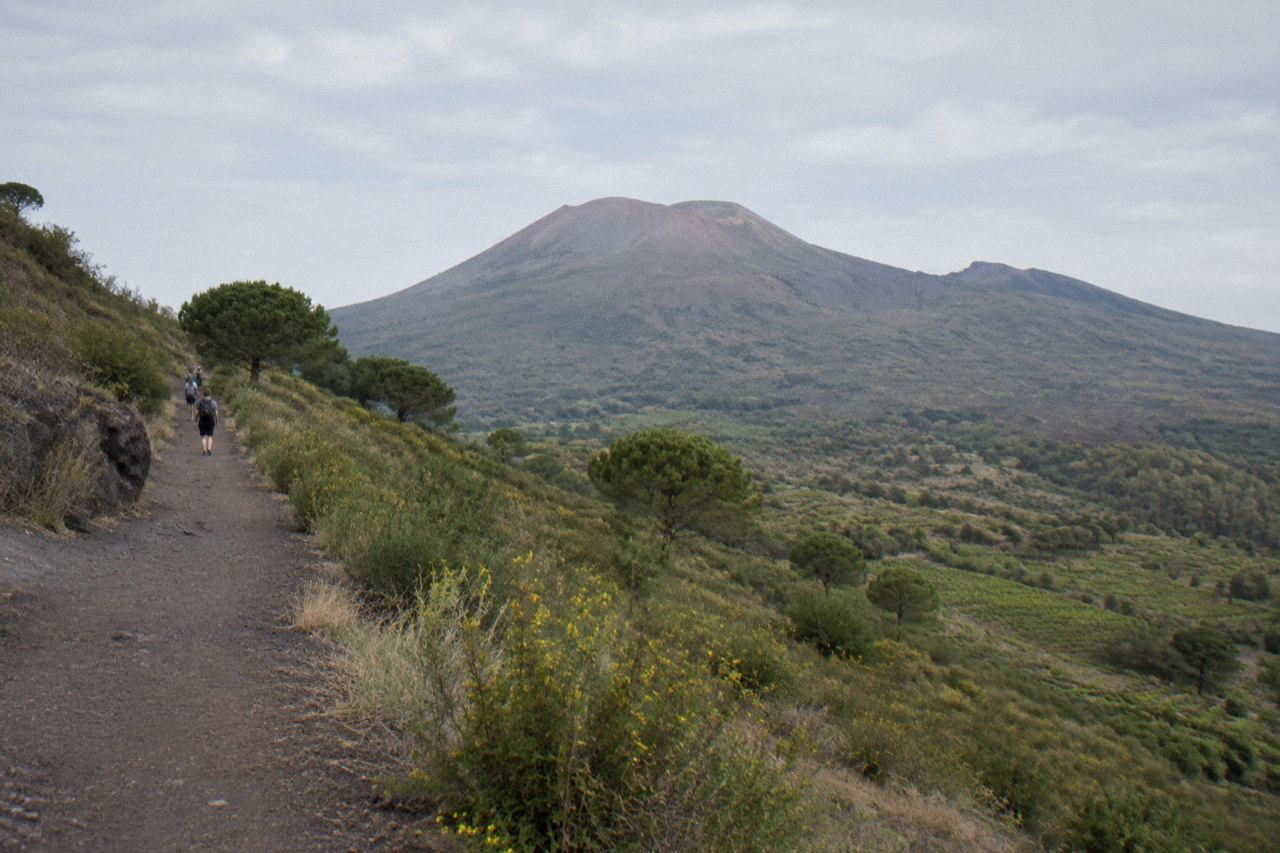
The crater of Mount Vesuvius, the volcano that buried Pompeii in AD 79, sits inside a national park in Campania, southern Italy, and going up it costs far less than a day at the theme parks people compare it to. The national park sells access to the Gran Cono trail online only, as timed slots: EUR 11.68 for a full ticket and EUR 9.55 for a reduced ticket as sold, figures the park's own trail page publishes alongside the regulation base prices of EUR 10 and EUR 8. Children under 6 go free, and reductions apply to visitors under 25 and to residents of the 13 park municipalities. That is the entry cost, but not the whole cost of the day, because the trailhead is not reachable on foot from anywhere a traveller normally starts, so transport, or a tour that bundles it, forms the second half of the bill.

How Much Does It Cost To Go Up Mount Vesuvius?
Going up Mount Vesuvius costs EUR 11.68 for a full Gran Cono ticket and EUR 9.55 reduced, sold only online through the national park's official ticketing page as timed 10-minute slots bookable up to 30 days ahead. Children under 6 enter free. Reduced tickets serve visitors under 25 and residents of the 13 park municipalities. There is no walk-up ticket office purchase, and the path closes automatically whenever an orange weather alert or higher is issued, with an automatic refund.
The pricing is unusual among Italian attractions because the regulation text and the amount actually charged differ. The park's regulation lists base prices of EUR 10 full and EUR 8 reduced, while the ticketing system sells at EUR 11.68 and EUR 9.55, the figures a buyer sees at checkout. Quote the sold price when budgeting, and expect the pre-sale fees to be baked into it rather than added at the gate, because there is no gate sale at all.
Booking mechanics matter as much as the figure. Fifty tickets are released per 10-minute slot up to 30 days in advance, plus 10 last-minute tickets per slot released from 30 minutes before each departure, nominative since 11 April 2026, meaning the name on the booking has to match the holder. Groups move up in batches of 60 per slot, organised as three groups of 20. In July and August, when access runs 09:00-18:00 and the daily cap rises to 3,240 visitors, the popular morning slots can go early, so the 30-day booking window is worth using.
| Item | 2026 price | Notes |
|---|---|---|
| Gran Cono full ticket | EUR 11.68 | Online only, timed slot |
| Gran Cono reduced ticket | EUR 9.55 | Under 25, park residents |
| Regulation base prices | EUR 10 / EUR 8 | Stated in the park regulation |
| Children under 6 | Free | Stated on the park page |
| Last-minute tickets | Same prices | 10 per slot, from 30 min before, nominative |
For the wider picture of what each ticket covers and how the slots work hour by hour, the detailed breakdown lives on the Mount Vesuvius ticket guide, and the practical question of buying Vesuvius tickets on the day is covered separately.
What The Gran Cono Ticket Actually Gets You
The EUR 11.68 ticket buys access to the crater rim trail only: a walk of about 2 hours return by the shortest route, up to 3 hours by the longest, inside the national park with views into the crater and across the Bay of Naples. It includes no guide unless you book a tour product separately, no food, no water, and no transport to the trailhead. The path and ticket operation shut automatically on an orange weather alert or above, and the park refunds automatically when weather closes it.
The walk itself is the product. The shortest route to the rim and back takes about two hours; the longest about three. What you stand on at the top is the rim of the only volcano on the European mainland to have erupted within the last century, its last eruption having been in 1944, a story told in detail in how many people died when Mount Vesuvius erupted in 1944. The trail surface is volcanic gravel and rock, so footwear matters, and the temperature at the rim is noticeably lower than at the bottom, a practical point unpacked in is it cold at the top of Vesuvius.
Nothing about the crater visit is guided by default. The national park sells access, and independent visitors walk the trail with a digital or paper map. Travellers who want interpretation, the eruption mechanics, the 1944 lava flows, the geology of the caldera, tend to book a tour product that pairs the crater with an archaeologist-led or guide-led visit to Pompeii, and those products carry their own prices on their live listings.
The three options above frame the real decision. A ticket-only visit is the cheapest route to the rim but leaves transport and timing to the traveller. A combined day tour from Naples adds Pompeii or Herculaneum to the crater in one booked day. A wine-and-lunch version turns the same geography into a slower, food-centred day on the volcano's slopes.
Vesuvius Opening Hours And Daily Caps By Month
Access to the Gran Cono runs 09:00-15:00 in January, February, November and December; 09:00-16:00 in March and October; 09:00-17:00 in April, May, June and September; and 09:00-18:00 in July and August. Daily visitor caps run from 2,160 to 3,240 depending on the month. The longer the access day, the more slots exist, and the higher the cap: summer offers the most tickets and also the strongest demand.
These windows are fixed by month, not by weather, so an October visit ends ticket access at 16:00 regardless of how warm the afternoon is. Plan the arrival time backwards from the last slot. Because the excursion takes two to three hours, a ticket late in the access window means descending as the operation closes, and in the short winter months the whole visit compresses into the middle of the day.
| Months | Access hours | Notes for planners |
|---|---|---|
| January, February, November, December | 09:00-15:00 | Shortest window, lowest caps |
| March and October | 09:00-16:00 | Mid-length day |
| April, May, June, September | 09:00-17:00 | Long spring and autumn access |
| July and August | 09:00-18:00 | Longest day, daily cap up to 3,240 |
Weather can override all of it. The park states that the ticket office and path close automatically when an orange weather alert or higher is issued, and that refunds in those cases are automatic, so a closure does not mean losing the money, only the morning. The volcano's current alert level is a separate, technical matter, and travellers wondering about the mountain's future should read is Vesuvius ever going to erupt again rather than inferring anything from a path closure.
What A Combined Pompeii And Vesuvius Day Costs
A combined day costs EUR 31.68 in entry tickets alone: the Vesuvius crater at EUR 11.68 online plus the 2026 Pompeii Express at EUR 20, with any transport added on top. That Pompeii pricing ends on 31 December 2026, and from 1 January 2027 a single EUR 25 ticket covers every park site, valid 30 days with one entry per site, while booked day tours from Naples bundle entries, transport and a guide into one operator-listed price.
The self-managed version means buying two timed tickets from two official systems and getting between them. Booked tours remove that coordination, which is their real value rather than a discount: a tour that includes the crater ticket has already secured a slot inside the 50-per-10-minutes allocation, and the itinerary is timed backwards from the access hours above.
The featured option on this site is the two-site day tour from Naples, which covers the Pompeii excavations and the Vesuvius crater in one day, Check availability for its live price and dates. The same decision, which site first and how the day sequences, is argued out in is it better to do Pompeii or Vesuvius first, and the full two-day version of the route is laid out in the two days Pompeii Herculaneum Vesuvius itinerary.
| Cost item | 2026 figure | From 1 January 2027 |
|---|---|---|
| Vesuvius Gran Cono full ticket | EUR 11.68 online | Unchanged structure, online only |
| Pompeii Express (ancient city) | EUR 20 | Replaced by single EUR 25 ticket |
Ways To Reduce The Cost Of Going Up
The reductions are structural rather than promotional: EUR 9.55 instead of EUR 11.68 for anyone under 25 or resident in one of the 13 park municipalities, free entry for children under 6, and an automatic refund whenever weather closes the path. Outside those categories there is no discount channel, because the park sells the crater online only at fixed slot prices. Bundled tours are not cheaper per component, but they replace two ticket purchases and a transfer with one booking.
Age is the lever worth checking before anything else. A visitor aged 24 qualifies for the reduced crater ticket on age alone, no residency or student card involved, and the same under-25 bracket earns the EUR 2 reduced Pompeii entry for EU citizens aged 18 to under 25. Families with children under 18 pay nothing for Pompeii entry at any time, not only on free Sundays, and nothing at all for under-6s at the crater.
The free-day rules differ between the two sites, and mixing them up wastes money. Pompeii is free for everyone on the first Sunday of the month, a scheme the park runs year-round, and one such Sunday drew a record of more than 36,000 visitors, a figure worth remembering when imagining a quiet free visit. Vesuvius is not part of that scheme: the crater has no free Sunday, and the last-minute tickets released 30 minutes before each slot are nominative and sold at the same prices.
Timing is the third lever. The winter months carry the lowest daily caps and the shortest access windows, but also the thinnest demand, so slots are easy to secure close to the date. July and August carry the highest caps and the longest days, and the cost of the day rises with everything around the ticket: the heat on an exposed volcanic trail in a month when the mean daily maximum at the Pompei grid point is about 29.4 C is a comfort cost even when the money is identical.
The questions below reuse the exact phrasing travellers search for. The crater ticket is EUR 11.68 full and EUR 9.55 reduced, online only, and every other figure here traces to the national park's official trail page or the archaeological park's ticketing pages.
Common Questions About Vesuvius Costs
How much does it cost to go up Mount Vesuvius?
EUR 11.68 for a full Gran Cono ticket and EUR 9.55 reduced, sold online only through the national park's official ticketing page. Children under 6 go free. The regulation lists base prices of EUR 10 and EUR 8; the sold prices are the higher pair.
Can you buy Vesuvius tickets on the day?
Only as last-minute online tickets: 10 per 10-minute slot, released from 30 minutes before each departure, nominative since 11 April 2026. There is no ticket office sale. The full method is explained in the guide to buying Vesuvius tickets on the day.
How long is the walk up Vesuvius?
About 2 hours return by the shortest route and up to 3 hours by the longest, inside the timed access window for your month. The trail detail is in how long is the walk up Vesuvius.
Is the Vesuvius ticket refundable?
Yes, automatically, when the path closes for an orange weather alert or above. The park states the closure and the refund are both automatic.
Does a Pompeii ticket include Vesuvius?
No. The two are separate systems: Pompeii is the archaeological park, Vesuvius is the national park, each with its own ticketing. Combined day tours from Naples bundle both entries into one booking.
Who gets the reduced Vesuvius ticket?
Visitors under 25 and residents of the 13 municipalities of the Vesuvius national park. No other reduction category is listed on the park's page.
The Honest Total For A Vesuvius Day
An adult visiting the crater independently pays EUR 11.68 for the trail plus transport to the trailhead; pairing Vesuvius with Pompeii in 2026 adds the EUR 20 Pompeii Express entry before transport, and from 1 January 2027 that Pompeii side becomes a single EUR 25 ticket valid 30 days, one entry per site, with crater prices unchanged, while a booked day tour charges one price set on the operator's listing.
The honest summary is that the crater itself is one of the cheaper headline sights in Campania: less than a pizza-and-tiramisu cooking class, less than any boat trip on the bay, and comparable to a cinema ticket in a northern European city. What makes a Vesuvius day feel expensive is the distance between the sites and the absence of a walk-up option, both of which push travellers toward bundled products, and both of which are covered in the practical pages on how to visit Mount Vesuvius and the Mount Vesuvius attraction guide elsewhere on this Pompeii Travel Guide. Book the crater slot early in the 30-day window, check the month's access hours before choosing a date, and treat the weather-refund rule as the safety net it is rather than a reason to skip booking ahead.