Should I Go To The Naples Archeological Museum Before Or After Pompeii?
Deciding whether to visit the Naples Archaeological Museum before or after Pompeii? Here is why the museum is best seen after you have walked the ancient streets, plus exactly how to plan a single-day or two-day itinerary that fits both.

Standing in the ruins of Pompeii, you see the shells of houses, shops and baths, but the most exquisite frescoes, mosaics and statues were removed long ago for safekeeping. Many now fill the halls of the Naples National Archaeological Museum, about 24 km away. So the question is natural: should you visit the museum before or after you walk through the ancient city? The short answer is after, and here is why. For more on planning your visit, see our Pompeii Travel Guide.

Should I Go To The Naples Archeological Museum Before Or After Pompeii?
Yes, you should visit both, and the best order is Pompeii first, then the Naples Archeological Museum. Walking through the ruins themselves gives you a real sense of the scale of the city and what daily life there looked like. Seeing the frescoes, mosaics and everyday objects that were removed from the site and are now displayed in the museum afterwards brings everything together and deepens what you experienced among the ruins.
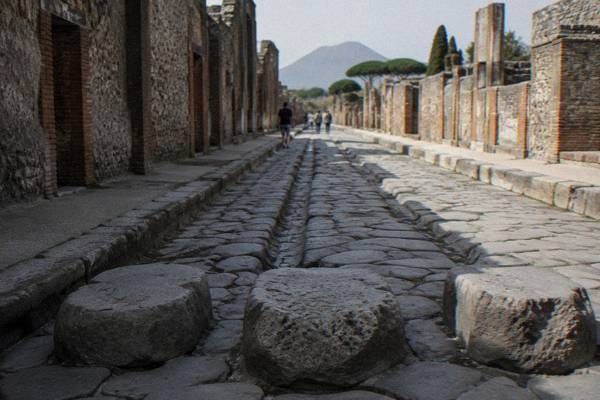
The logic is simple. Pompeii is an enormous open-air site of about 44 excavated hectares. You walk the same stone streets, peer into atriums, stand in the forum and imagine the roar of the amphitheatre. That immersion builds a mental map of a living Roman town. When you later stand in front of the Alexander Mosaic or the delicate frescoes from the Villa of the Mysteries in the museum, you are not just looking at beautiful objects: you are connecting them to the exact houses, baths and temples you walked through hours earlier. The art feels like it belongs to a place you already know.
Visiting the museum first is not a mistake, but it gives you the art without the context of the streets, the light, the scale. You might admire the craftsmanship, yet you will not picture the peristyle garden where that bronze faun once stood or the triclinium whose walls held those painted scenes. A pre-visit works well if you want to study Roman painting and sculpture before you see the architecture that housed them, but the emotional punch of the combined experience is stronger when Pompeii comes first.
| Approach | Pros | Cons |
|---|---|---|
| Museum after Pompeii | Art connects to the exact houses and streets you just saw; the narrative of daily life is complete. | You may be tired after walking the ruins; requires good planning for a single day. |
| Museum before Pompeii | You study the masterpieces while fresh; you recognise motifs when you later see the original walls. | The objects lack spatial context; the scale of Pompeii can feel overwhelming after a long museum visit. |
What Pompeii Treasures Are In The Naples Archaeological Museum?
The museum holds the largest collection of Pompeii artifacts anywhere, including the Alexander Mosaic, the Secret Cabinet's erotic art, the Farnese collection of Roman copies of Greek bronzes, and thousands of everyday items from the buried cities. Seeing them after you have walked the streets of Pompeii makes each object resonate with the life you just imagined.
The Farnese collection alone is worth the trip. The colossal Farnese Bull and the Farnese Hercules are among the most famous ancient sculptures in the world, and they were excavated in Rome, not Pompeii, but the museum houses them alongside the Vesuvian finds. The Pompeii galleries are on the mezzanine and first floor. The Secret Cabinet, a small room of erotic art from Pompeii and Herculaneum, is often the most talked-about stop.
Everyday objects fill case after case: carbonised bread from a bakery, surgical instruments, glassware, jewellery and even a portable sundial shaped like a ham. These items are not behind glass in a sterile white cube; many sit in old wooden vitrines that feel like a cabinet of curiosities, which adds to the sense that you are rummaging through the actual contents of a buried city. For a deeper look at the museum's layout and highlights, see our guide to the Naples National Archaeological Museum.
| Exhibit | Origin | Why It Matters |
|---|---|---|
| Alexander Mosaic | House of the Faun, Pompeii | One of the finest surviving Hellenistic mosaics, depicting Alexander the Great in battle. |
| Farnese Hercules | Baths of Caracalla, Rome | A colossal marble copy of a lost Greek bronze, a symbol of Roman power. |
| Secret Cabinet | Various Pompeii and Herculaneum sites | A collection of erotic frescoes, statues and objects that shocked early excavators. |
| Villa of the Mysteries frescoes | Villa of the Mysteries, Pompeii | The cycle of initiation rites is the most complete Roman wall painting in existence. |
| Carbonised bread and food | Pompeii bakeries and shops | Direct evidence of what Pompeians ate on the day of the eruption. |
How To Visit The Museum After Pompeii: Practical Tips
Take the Circumvesuviana train from Pompei Scavi-Villa dei Misteri to Napoli Garibaldi, a journey of 29 to 35 minutes, then walk or take the metro to the museum. Plan at least two to three hours inside the museum; a combined Pompeii-and-museum day is possible if you start early. The museum's own ticket page lists current opening hours and admission fees.
The train is straightforward. Pompei Scavi-Villa dei Misteri station is a short walk from the Porta Marina entrance of the archaeological park. Trains run frequently on the Circumvesuviana line to Napoli Garibaldi, the city's main station. From there, the museum is about a 20-minute walk through the historic centre, or you can take metro Line 1 to Museo station, which stops directly opposite the museum entrance. If you are coming from Sorrento, the same line runs direct to Pompei Scavi, so you can leave your accommodation in the morning, tour Pompeii, and then continue by train to Naples.
Timing is everything. A thorough visit to Pompeii takes at least two to three hours, and the museum demands a similar block of time. If you enter Pompeii at the 9:00 opening, you can finish by midday, grab a quick lunch near the station, and be inside the museum by 13:30. That gives you a comfortable afternoon before the museum closes. In summer, the museum stays open later, which helps. The museum is closed on Tuesdays, so plan around that day.
| Detail | Information |
|---|---|
| Train from Pompei Scavi to Napoli Garibaldi | Circumvesuviana line, 29 to 35 minutes, frequent service |
| Museum location | Piazza Museo 19, Naples; metro Line 1 to Museo station |
| Recommended museum time | 2 to 3 hours minimum |
| Combined day feasibility | Start Pompeii at 9:00, finish by 12:00, museum from 13:30 |
| Museum closed day | Tuesday (check the official site for holiday exceptions) |
A guided tour that includes transport can streamline the morning. For example, the express train tour from Sorrento bundles skip-the-line entry, a two-hour guided walk and the train ticket, so you do not need to navigate the Circumvesuviana on your own. After the tour, you are already at the station and can continue to Naples in the early afternoon. The operator's live listing shows current availability and departure times.
Can You Do The Museum And Pompeii In One Day?
Yes, if you start early and use a guided tour that includes transport, you can see Pompeii in the morning and the museum in the afternoon. The express train tour from Sorrento gets you to the ruins efficiently, leaving you enough time to reach Naples by mid-afternoon. Without a tour, a self-guided morning at Pompeii followed by a train to Naples and a museum visit is tight but feasible for a full day.
A one-day combination works best if you are based in Sorrento or Naples. From Sorrento, the early train reaches Pompei Scavi in about 35 minutes. A two-hour guided tour of the highlights, such as the forum, the baths, the House of the Vettii and the brothel, covers the essentials without exhausting you. You can then take the train to Naples, have lunch, and enter the museum by early afternoon. From Naples, the train to Pompeii is even shorter, so you can reverse the order if you prefer to see the museum first, but the post-Pompeii logic still holds. For more on day-trip logistics, read can Pompeii be a day trip from Naples.
For a self-guided day, you need to be disciplined. Buy your Pompeii ticket online in advance to avoid queues, and map out a route that hits the key sights in under three hours. The audio guide or a good guidebook helps. Then walk to the station and catch the next available train. The museum ticket can be bought on arrival; lines are usually short. This plan leaves little room for lingering, but it is entirely doable if you are fit and start at 9:00.
If you prefer a more relaxed pace, split the two across two days. Spend a full morning at Pompeii, perhaps with a longer tour like the horse-riding experience on Vesuvius that includes lunch, and dedicate the following day to the museum and Naples itself. The express train tour from Sorrento is a particularly good fit for a one-day plan because it handles the logistics and frees your afternoon.
What Else Should You See In Naples After The Museum?
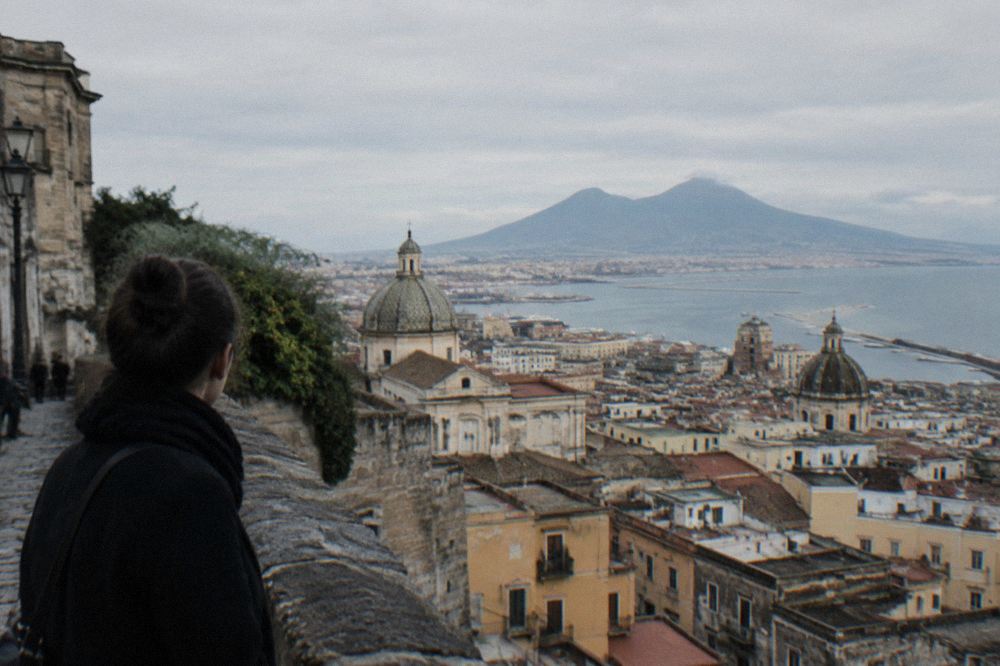
Naples is a city of layers, from the underground catacombs to the street food of Spaccanapoli. After the museum, walk through the historic centre, try a pizza fritta, and consider a free walking tour to get oriented. The city's energy is a sharp contrast to the stillness of Pompeii, and the two together make a complete Campanian day.
The museum sits at the top of Via Toledo, one of Naples' main shopping streets. From there, you can wander downhill into the Quartieri Spagnoli, a grid of narrow lanes where laundry hangs overhead and the smell of fresh sfogliatella fills the air. A few blocks east is Spaccanapoli, the straight street that cuts through the ancient Greek centre of Neapolis. Here you will find the cathedral, the Sansevero Chapel with its veiled Christ, and countless pizzerias.
If you have the energy, a free walking tour is an excellent way to understand Naples' chaotic charm. It is tip-based, so you pay what you feel the tour was worth. Another option, the Free Essential Tour from Piazza Municipio with guide Alessia, focuses on the monumental centre and the waterfront. Both are in English and run daily. These walks do not cover Pompeii itself, but they are a perfect complement to a museum afternoon, giving you the living city that grew up beside the buried one.
Common Questions About The Naples Archaeological Museum And Pompeii
Should I Go To The Naples Archeological Museum Before Or After Pompeii?
After Pompeii is the better order for most people. Walking the ruins first builds a mental picture of the ancient town, so when you later see the removed frescoes, mosaics and everyday objects in the museum, they carry far more meaning. A pre-visit works if you want to study the art in advance, but the emotional connection is stronger when Pompeii comes first.
How long does it take to visit the Naples Archaeological Museum?
Plan at least two to three hours. The Farnese collection, the Pompeii galleries and the Secret Cabinet each deserve unhurried time. Art lovers can easily spend half a day.
Can I do Pompeii and the museum in one day?
Yes, if you start at the 9:00 opening at Pompeii, finish by midday, and take the Circumvesuviana train (29 to 35 minutes) to Naples for an afternoon museum visit. A guided tour that includes transport, like the express train tour from Sorrento, makes the day smoother.
What is the best way to get from Pompeii to the museum?
The Circumvesuviana train from Pompei Scavi-Villa dei Misteri to Napoli Garibaldi takes 29 to 35 minutes. From there, walk about 20 minutes or take metro Line 1 to Museo station, directly opposite the museum.
Is the museum open on Mondays?
The museum is closed on Tuesdays and open on Mondays, but always check the official website for holiday changes before you go.
Do I need a separate ticket for the museum?
Yes, the Naples Archaeological Museum requires its own admission ticket, which is not included in any Pompeii ticket. Current prices and hours are on the museum's official site.
For more ideas, read our guide on what you should not miss in Naples.