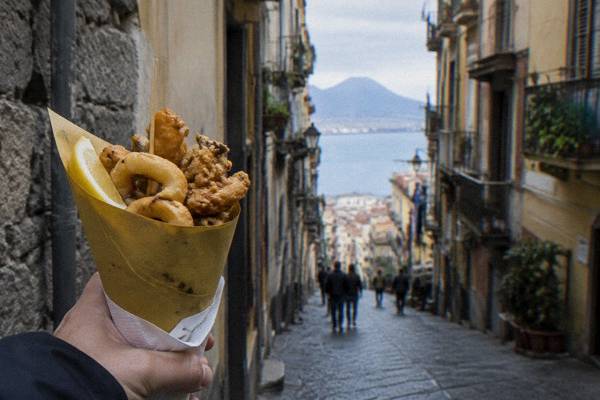
Naples National Archaeological Museum
The Naples National Archaeological Museum in Naples, Italy, holds the finest movable art excavated at Pompeii and Herculaneum, and pairing it with a day at the ruins is the standard way to see both halves of the story.
Short answer
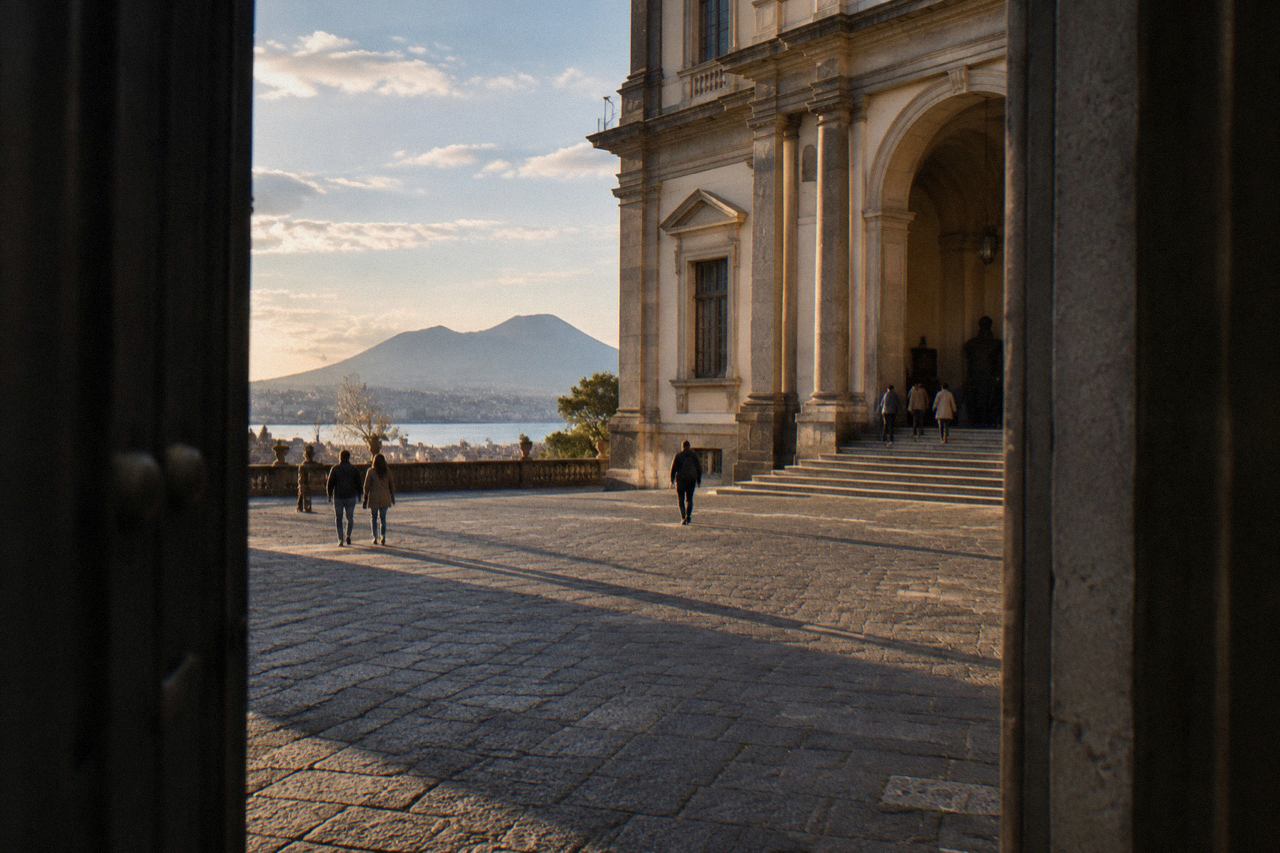
The Naples National Archaeological Museum stands in central Naples, Italy, about 24 km by road from Pompeii, reachable by the Circumvesuviana train from Napoli Garibaldi to Pompei Scavi-Villa dei Misteri in about 29 to 35 minutes. Its Pompeian and Herculaneum galleries hold mosaics and frescoes removed from the sites, so it is the natural second half of any Pompeii trip.
The Naples National Archaeological Museum sits in central Naples, Italy, roughly 24 km by road from the ancient city of Pompeii, and it completes a story the excavations themselves can no longer tell. When excavators uncovered Pompeii and Herculaneum, buried by the eruption of Mount Vesuvius in AD 79, the finest paintings, mosaics and small treasures they lifted from the ground were carried to the capital of the old kingdom and placed in this building. Walk the streets of Pompeii in the morning and you see the houses; walk these galleries in the afternoon and you see what hung on their walls.
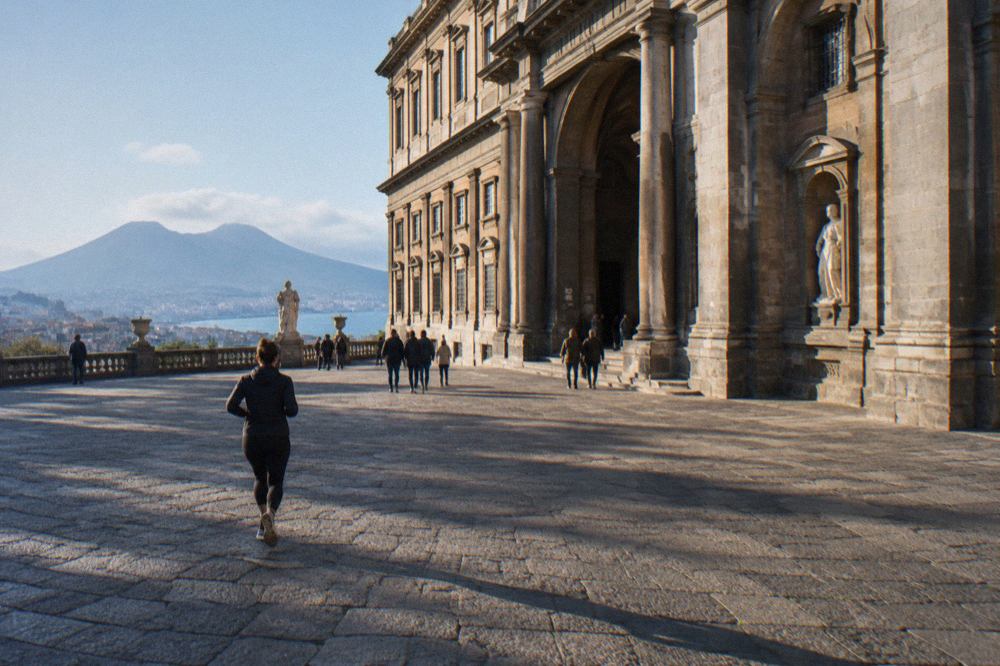
That division of labour, ruins in one place and treasures in another, is the single fact that most shapes a Pompeii trip. This page from Pompeii Travel Guide covers what the museum holds, how it connects to the archaeological park, how to travel between the two, and how to fit both into one realistic day.
What Is The Naples National Archaeological Museum?
The Naples National Archaeological Museum is Italy's great museum of Greco-Roman antiquity, housed in a historic palace in central Naples, and its core collections come from excavations at Pompeii, Herculaneum and the other Vesuvian sites buried in AD 79. It holds the mosaics, frescoes, sculpture and everyday objects removed from those sites over the long history of digging. For a Pompeii visitor it is not a rival attraction but the museum half of the same visit.
The museum's strength is precisely its origin. Excavation at Pompeii produced two kinds of material: the architecture and wall surfaces that stayed where they were found, and the movable art that was stripped out and taken to Naples. The famous Alexander Mosaic, lifted from the House of the Faun at Pompeii, is the textbook example. The floor of the real house still lies in the excavated city, while the mosaic itself, millions of tiny tesserae depicting Alexander the Great in battle, hangs in this museum.
Visitors who skip Naples and see only the excavations often leave without realising what they have missed. Many of the finest painted rooms from Pompeii and Herculaneum were detached from their walls in earlier eras of archaeology, when preservation in place was not always possible or not always attempted. The museum's Pompeian and Herculaneum galleries reconstruct and display those paintings at eye level, in controlled light, minutes from a coffee bar rather than under the Campanian sun.
The building itself has a layered history: a palace, then a university, then a museum, and its galleries today divide broadly into the Farnese collection of classical sculpture, the Vesuvian collections from Pompeii and Herculaneum, the Egyptian collection, and the epigraphic and numismatic rooms. A visit is a half-day undertaking, not a quick stop, and it rewards the same preparation as the ruins do.
Why Pair The Museum With A Day At Pompeii?
The Circumvesuviana line connects them in about 29 to 35 minutes scheduled running time from Napoli Garibaldi to Pompei Scavi-Villa dei Misteri. Seeing one without the other leaves the story incomplete.**
The practical case is simple. A morning at the excavations answers the question of how people lived: streets, shops, baths, arenas, the physical fabric of a Roman town frozen on the day of the eruption. The museum answers the question of what they owned and looked at: mythological frescoes, portrait sculpture, silverware, glass, the mosaics that paved the dining rooms of the wealthy. Guides at the site constantly point across the bay and say the original is in Naples.
Timing favours the pairing. Pompeii opens at 9:00, and in the summer season the last entrance is 17:30 with closing at 19:00, while the winter season from 15 October pulls the last entrance back to 15:30 and closing to 17:00. A disciplined morning in the ruins, roughly four hours for the highlights, leaves the afternoon free for the train back to Naples and the museum galleries, or the museum can be saved for a separate, unhurried day.
There is a planning subtlety worth knowing before you build the day. The park's ticket structure is changing: through 2026 the Pompeii Express ticket for the ancient city alone is EUR 20, Pompeii+ is EUR 25, and the 3-day ticket covering Oplontis, the Stabiae villas and Boscoreale is EUR 30, but from 1 January 2027 a single EUR 25 ticket covers all the park sites, valid 30 days with one entry per site. If your trip straddles that change, the Pompeii tickets explained guide carries the full detail, and the free-cancellation tours below remove the risk of booking before your dates are fixed.
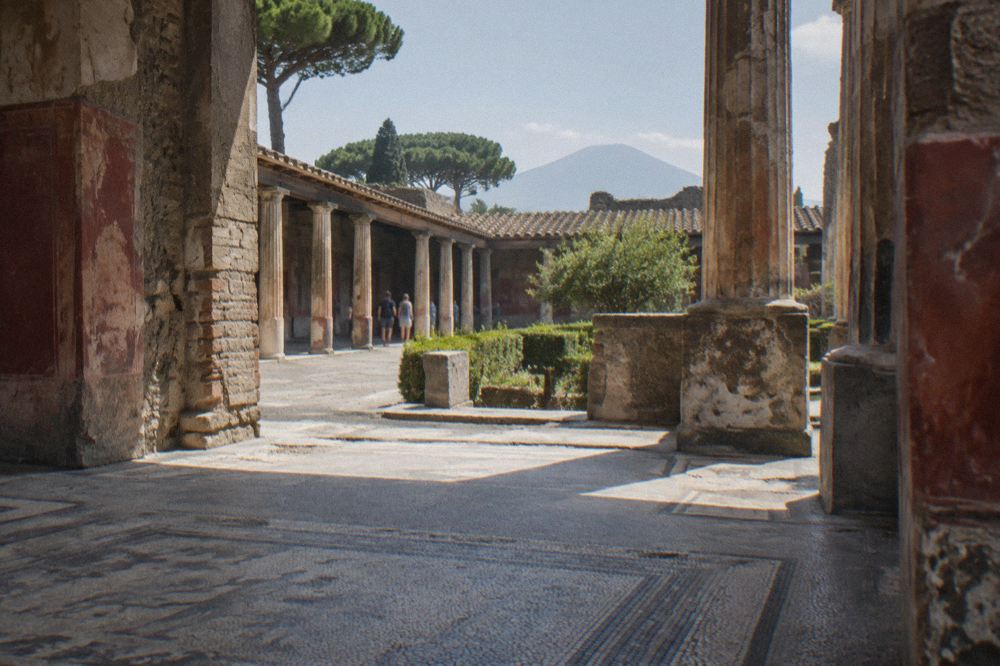
For travellers who want the ruins explained rather than merely walked, a private guide changes the character of the morning entirely. The Pompeii 2H Private Tour with an Archeologist Guide is led by a trained archaeologist and booked per group rather than per person; Check availability to see live dates and the operator's terms. An archaeologist's commentary at the site, followed by the museum's galleries in the afternoon, is the deepest version of this pairing.
What Are The Highlights Inside The Museum?
The headline pieces are the Alexander Mosaic from the House of the Faun at Pompeii, the Farnese Bull and the rest of the monumental Farnese sculpture collection, the Secret Cabinet of ancient erotic material from Pompeii, and the wall after wall of detached frescoes from Pompeii and Herculaneum. Together they form the largest body of Roman painting and mosaic anywhere, and no other museum can offer it.
The mosaic galleries are the emotional centre for Pompeii visitors. The House of the Faun, a vast residence in Pompeii, was paved with the Alexander Mosaic, and the museum displays it with a reconstruction of how the floor appeared to guests entering the house. Around it sit smaller panels, dogs, fish, masks and street scenes, that show the range of Roman mosaic craft recovered from the buried cities.
The fresco galleries carry paintings lifted from houses whose walls at the site are now faded or exposed. Mythological panels, garden scenes, theatrical masks and portraits hang in sequences that let a visitor trace styles across the decades before AD 79. For anyone who has just stood in a roofless Pompeian dining room, seeing the intact painted decoration of similar rooms is the moment the ancient interiors snap back into colour.
The Farnese collection predates the excavations: it is classical sculpture assembled by the Farnese family and inherited by the museum, and its centrepiece, the massive Farnese Bull group, is one of the largest single marble sculptures to survive from antiquity. The Egyptian collection and the epigraphic rooms round out a building that deserves more than the two hours a rushed day-tripper gives it.
A rough allocation of a visit, based on how the collections are laid out:
| Gallery or collection | What it holds | Why a Pompeii visitor cares |
|---|---|---|
| Alexander Mosaic and mosaic galleries | Mosaics lifted from Pompeii houses, including the House of the Faun floor | The originals of pavements you may have just walked over in replica at the site |
| Pompeian fresco galleries | Detached wall paintings from Pompeii houses and villas | Reconstructs the interiors the exposed ruins have lost |
| Herculaneum material | Paintings and objects from Herculaneum, whose Villa dei Papiri and Ancient Theatre are currently closed for works | Partly substitutes for closed areas at the site itself |
| Farnese sculpture | Monumental classical sculpture assembled by the Farnese family | The largest marble group surviving from antiquity |
| Secret Cabinet | Ancient erotic art and objects from Pompeii | The famous locked room of the museum, now open to all visitors |
| Egyptian and epigraphic rooms | Egyptian antiquities and inscriptions | Context for Naples as a Greek-founded, Roman-refashioned city |
The order you take them in matters less than committing to enough time. Visitors rushing from a morning at the ruins should head straight for the mosaic and fresco galleries while their memory of the houses is fresh, and leave the Farnese and Egyptian rooms for whatever energy remains.
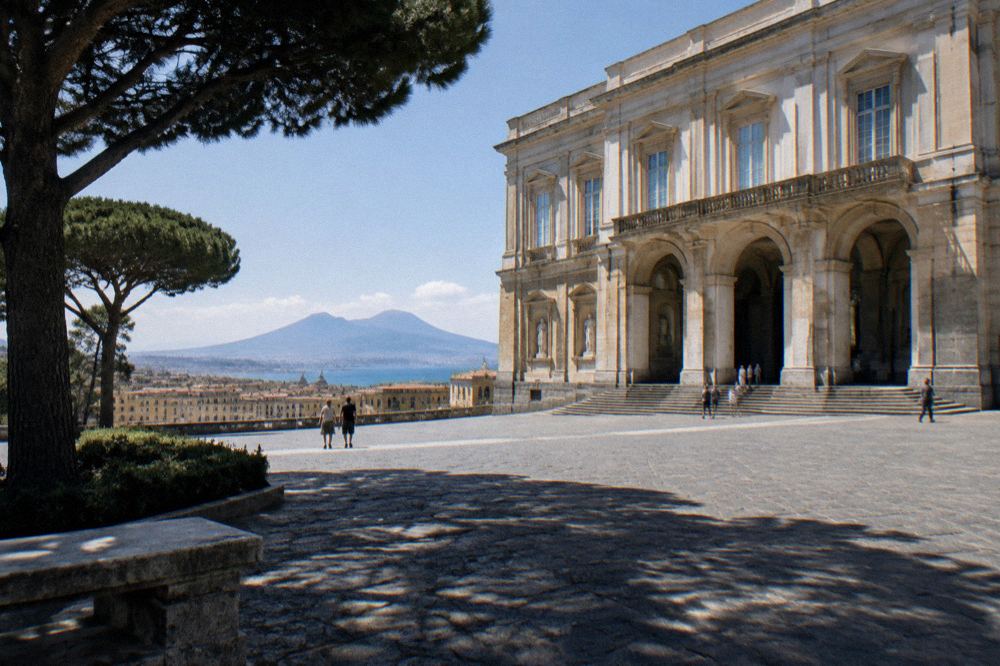
One honest warning about expectations: the museum, like the park, has rooms that close for works. Herculaneum's own Villa dei Papiri and Ancient Theatre at the site are closed for works, which pushes even more weight onto the Naples galleries as the place to see Herculaneum's portable art. Check the museum's own pages for current room closures before you promise yourself a specific fresco.
How Do You Travel Between Pompeii And The Museum?
The standard link is the Circumvesuviana railway from Napoli Garibaldi, connected to Naples Centrale, to Pompei Scavi-Villa dei Misteri station, with a scheduled running time of 29 to 35 minutes and a median of 29. The Campania Express service is suspended since 1 October 2026 until further notice, so this local line and road transport are the realistic options.
The station named Pompei Scavi-Villa dei Misteri serves the excavations and sits beside the Porta Marina entrance area; the museum, by contrast, is a short walk or metro hop from Napoli Centrale and Garibaldi. The journey is therefore a single line with no changes: board at Garibaldi, alight at Scavi, reverse the trip for the museum. EAV, the operator, announced new trains and a new Vesuvian-lines timetable on 16 September 2026, so timetables deserve a check on the operator's own site before you fix a tight connection.
Scheduled times computed from EAV's own timetable data, feed dated 30 September 2026:
| Journey | Scheduled time |
|---|---|
| Napoli Garibaldi to Pompei Scavi-Villa dei Misteri | 29 to 35 minutes |
| Napoli Garibaldi to Sorrento | 64 to 75 minutes |
| Pompei Scavi-Villa dei Misteri to Sorrento | 34 to 40 minutes |
Road distances, from OpenStreetMap routing and not an official source, for anyone considering a driver or hire car: Naples to Pompei Scavi is 24 km, about 22 minutes; Sorrento to Pompei Scavi is 26 km, about 37 minutes; Salerno to Pompei Scavi is 31 km, about 30 minutes; Rome to Pompei Scavi is 234 km, about 2 hours 40 minutes.
| Route by road | Distance | Approximate driving time |
|---|---|---|
| Naples to Pompei Scavi | 24 km | about 22 minutes |
| Sorrento to Pompei Scavi | 26 km | about 37 minutes |
| Salerno to Pompei Scavi | 31 km | about 30 minutes |
| Rome to Pompei Scavi | 234 km | about 2 hours 40 minutes |
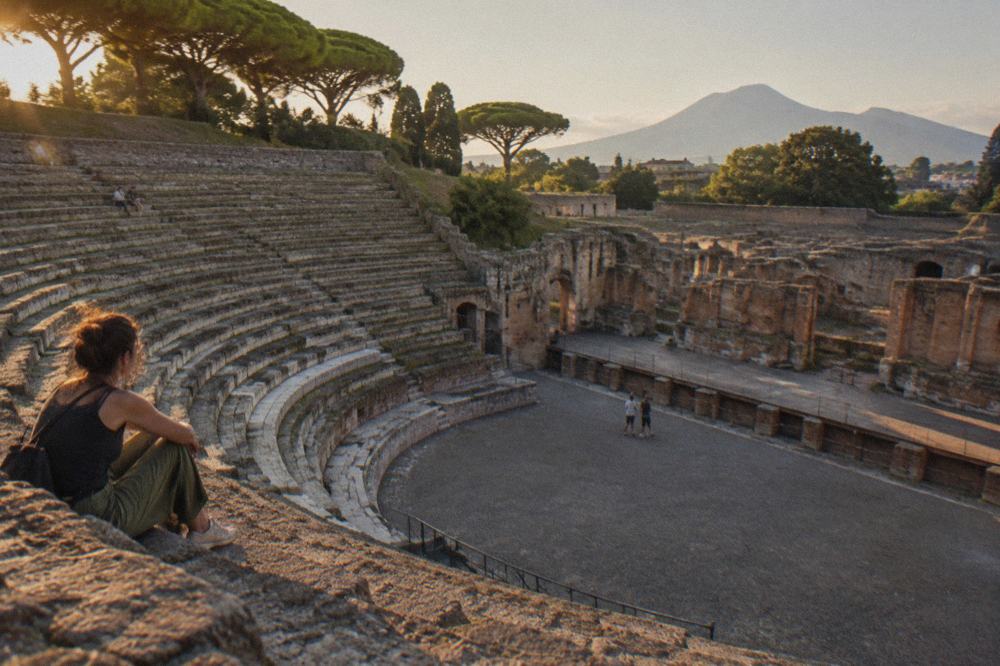
The practical rhythm for a combined day: an early start on the Circumvesuviana, the ruins in the cooler morning hours, a late lunch, then the return train and the museum's ground-floor galleries before closing. Travellers starting from Sorrento should read the dedicated Naples to Pompeii transport guide for the same line from the other end, and anyone weighing a city base against a coastal one can compare options in Naples or Pompeii as a base.
Should You Visit The Museum Before Or After Pompeii?
There is no single right order, but the practical answer is ruins first, museum second: Pompeii's scale and heat are best met in the morning, and the museum then reassembles what the sun-baked walk has only hinted at. The reverse order, museum first, suits travellers who want names and styles in their head before they meet the houses those things came from.
The case for ruins first is physical. Summer mean daily maxima at Pompei run about 28.7 C in July and about 29.4 C in August, on 1991-2020 normals, and the excavated city offers little shade. The museum is climate-controlled, indoor and forgiving of tired legs, which makes it the natural afternoon. The case for museum first is interpretive: a traveller who has spent an hour with the Alexander Mosaic and the fresco cycles walks into the House of the Faun already knowing what its floor looked like. The dedicated page on the museum before or after Pompeii works the sequencing question in full.
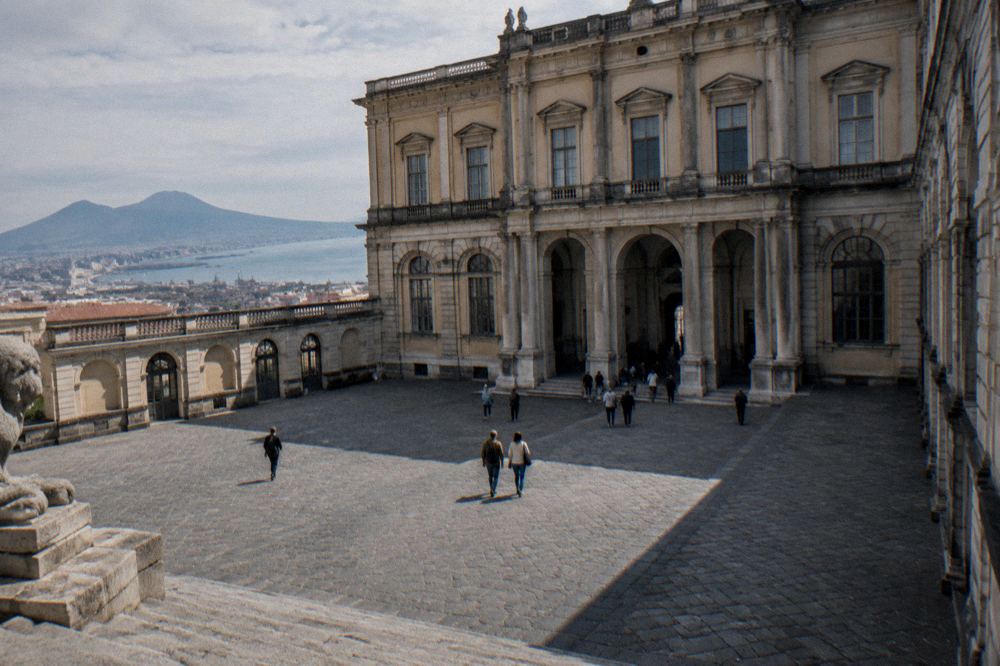
Whatever the order, do not attempt both on a cruise-arrival day without checking timings first; the port-to-Pompeii leg and the Pompeii-to-museum leg compound quickly, and the Pompeii cruise ship day itinerary exists precisely because that margin is tight. For shore visitors with limited hours, the choice is usually ruins plus a quick museum sprint, or ruins alone with the museum saved for a future port call.
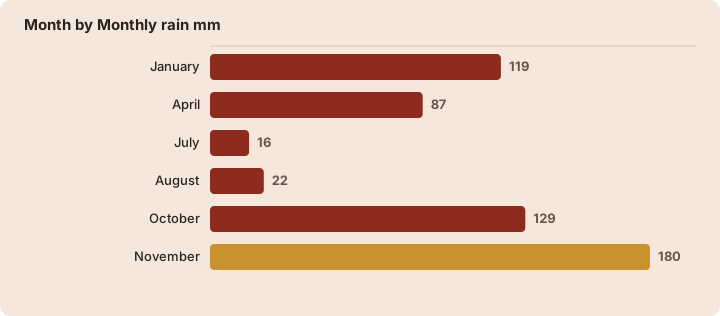
Season shapes the decision too. Monthly climate normals for Pompei, computed from the Open-Meteo historical archive as reanalysis grid values rather than station readings, so treat them as approximate:
| Month | Mean daily max C | Mean daily min C | Monthly rain mm |
|---|---|---|---|
| January | about 12.2 | about 6.6 | 119 |
| April | about 17.7 | about 10.4 | 87 |
| July | about 28.7 | about 21.1 | 16 |
| August | about 29.4 | about 21.8 | 22 |
| October | about 21.3 | about 15.1 | 129 |
| November | about 16.9 | about 11.5 | 180 |
November is the wettest month at 180 mm and July the driest at 16 mm on these normals, which argues for longer museum time in the wet months and an early ruins start in summer, when the last Pompeii entrance is 17:30 in the summer season but the sensible walking hours end well before that.
How Does The Museum Compare With Herculaneum's Own Site?
Herculaneum is the smaller, better-preserved sister site at Ercolano, and its museum story runs through Naples too: the site's Villa dei Papiri and Ancient Theatre are closed for works, so the Naples museum currently carries a larger share of Herculaneum's visible heritage than usual. A Herculaneum entry ticket with optional audio guide is the lightest way to add the site to a museum trip.
Where Pompeii shows an entire city, streets and all, Herculaneum shows a residential town buried deeper, with wooden structures and upper floors preserved. The two sites answer different questions, and the museum's Herculaneum material, sculpture and painting lifted from the town and from the Villa dei Papiri, sits on top of both. With the villa and theatre closed at the site, a visitor whose heart was set on those names should redirect that hour to the Naples galleries rather than expect a reopening notice.
The pairing question, Pompeii or Herculaneum or both, also depends on how much ruin-walking a trip can absorb. The full ticket landscape through 2026, before the 2027 consolidation, looks like this, and every figure below ends on 31 December 2026:
| 2026 ticket | Price | Covers |
|---|---|---|
| Pompeii Express | EUR 20 | The ancient city of Pompeii only |
| Pompeii+ | EUR 25 | The city plus suburban villas, Boscoreale and shuttle |
| 3-day ticket | EUR 30 | Pompeii+ plus Oplontis, Stabiae villas and museum, Boscoreale |
| Other sites individually (Boscoreale, Oplontis, Stabiae museum) | EUR 8 each | The single named site |
| MyPompeii Card (annual) | EUR 45 | Annual pass, EUR 10 reduced |
From 1 January 2027 the structure simplifies: one EUR 25 ticket for all park sites, valid 30 days, one entry per site, with the three smaller sites still EUR 8 individually and the MyPompeii Card at EUR 45. Entry to Pompeii is free for under-18s and for everyone on the first Sunday of the month, and reduced EUR 2 admission applies to EU citizens aged 18 to under 25. None of that covers the Naples museum, which is a separate institution with its own ticketing.
What Else Can You Combine With A Museum Day In Naples?
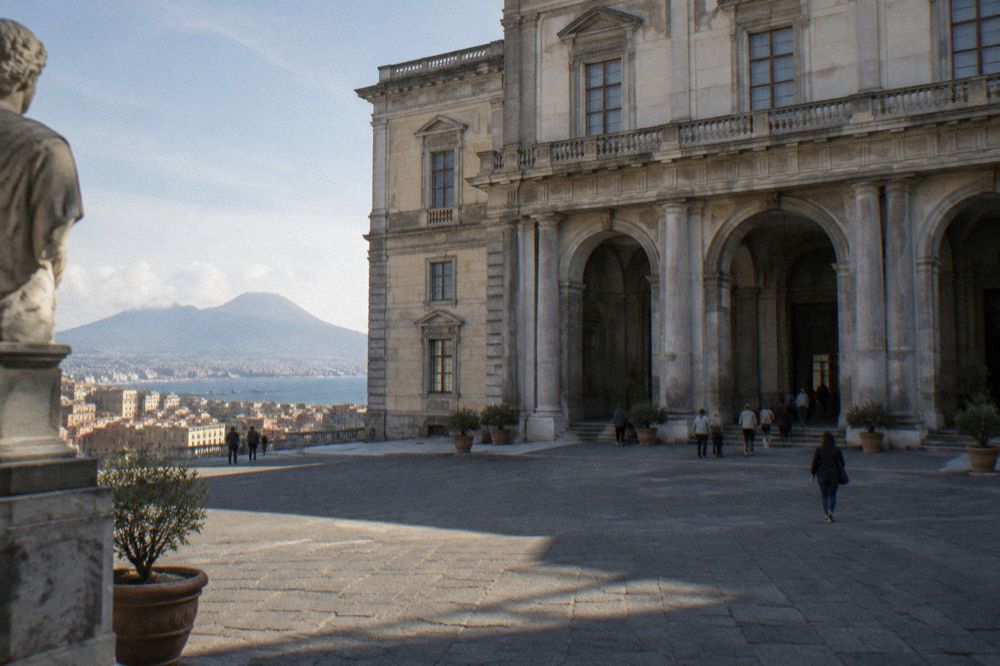
A museum day slots easily into a wider Naples itinerary: the historic centre, the street food of the old town and Naples Underground all sit within reach of the museum, and a free tip-based walking tour of the old town is the lowest-commitment way to orient yourself. Travellers on a longer trip can add the Amalfi Coast, Capri or Vesuvius on separate days, each reachable from the same rail corridor.
The free option deserves a plain statement: there is no English-language free walk of the Pompeii excavations themselves. What does exist is The Original Free Tour of Naples, a free, tip-based walk of Naples' old town run through GuruWalk, which pairs naturally with a museum day because both are in central Naples. It is led by a local guide under the GuruWalk model, you tip what you choose, and it covers the historic centre street by street rather than any ancient site.
Beyond the walk, the neighbourhood around the museum rewards an unhurried afternoon. For planning that part of the day, the round-ups of what not to miss in Naples and hidden gems in Naples cover the lanes and viewpoints within walking distance, while Naples Underground makes a contrasting subterranean half-day. Travellers pairing the city with coast time can move on to the Amalfi Coast or Capri, and the wider Naples day trips page collects the options.
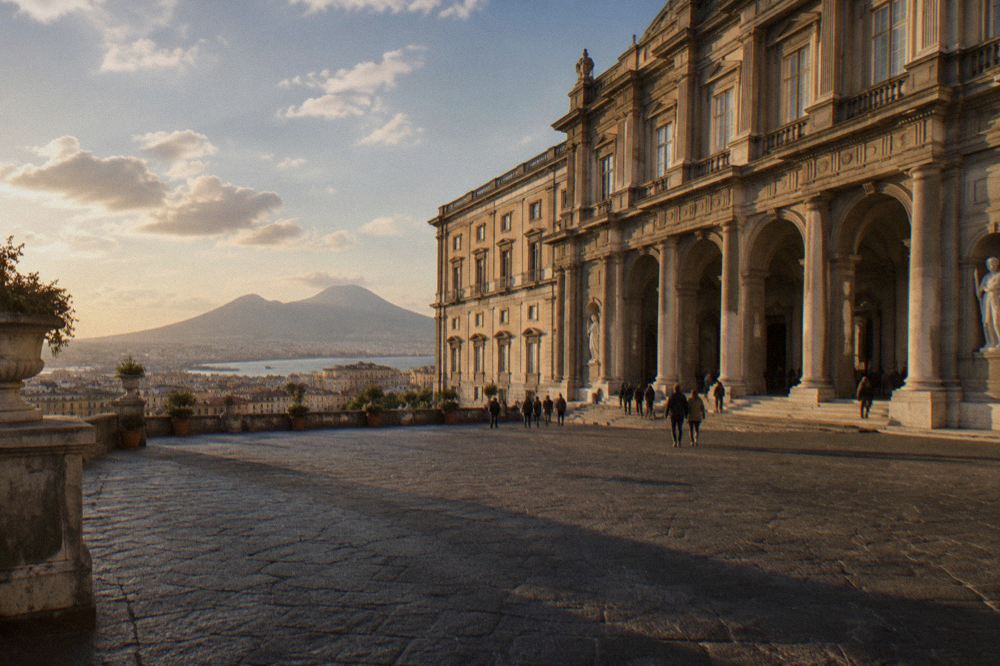
For context on why so much treasure sits in Naples rather than at the sites, it helps to know the scale of the excavation story. Official visitor counts for the Pompeii site alone, from the park's own published data:
| Year | Visitors to the Pompeii site |
|---|---|
| 2022 | 2,972,159 |
| 2023 | 3,985,424 |
| 2024 | 4,069,377 |
| 2025 | 4,000,090 |
Those are site visits, not museum visits, but they show the flow the museum feeds on: four million people a year walk the streets whose decoration hangs in Naples. The excavated area of Pompeii is 44 ha within a 98 ha inscribed property, shared with Herculaneum and Torre Annunziata on the UNESCO list, and lifting fragile art out of that exposure was standard practice for the early excavators who filled these galleries.
What Should You Know Before Booking A Guided Pompeii Morning?
Book a guide for the ruins half if you want interpretation, and book independently if you only want access: entry tickets alone admit you to the park, while guided products add an archaeologist or official guide, and the best format depends on group size and budget. Private options are priced per group, small-group tours per person, and every figure renders on the operator's live listing rather than in this prose.
The private route suits families and small parties who want to set the pace and ask questions. The Pompeii 2H Private Tour with an Archeologist Guide is a private walk with a trained archaeologist, priced per group, and the archaeologist-led private tour page on this site describes it in full; Check availability for live dates and cancellation terms before you lock the museum afternoon around it.
The small-group route trades intimacy for a lower per-person cost and fixed departures, which matters when the afternoon museum plan leaves no slack in the morning. Whichever format you choose, note the park's own constraints: nominative tickets with a 20,000-visitors-per-day cap have applied since 15 November 2024, bags are limited to 30x30x15 cm with larger items to left luggage, and identification may be checked at entry. Guides who include the entry ticket remove one queue; guides who do not leave you buying it yourself at Porta Marina, Piazza Esedra or Piazza Anfiteatro.
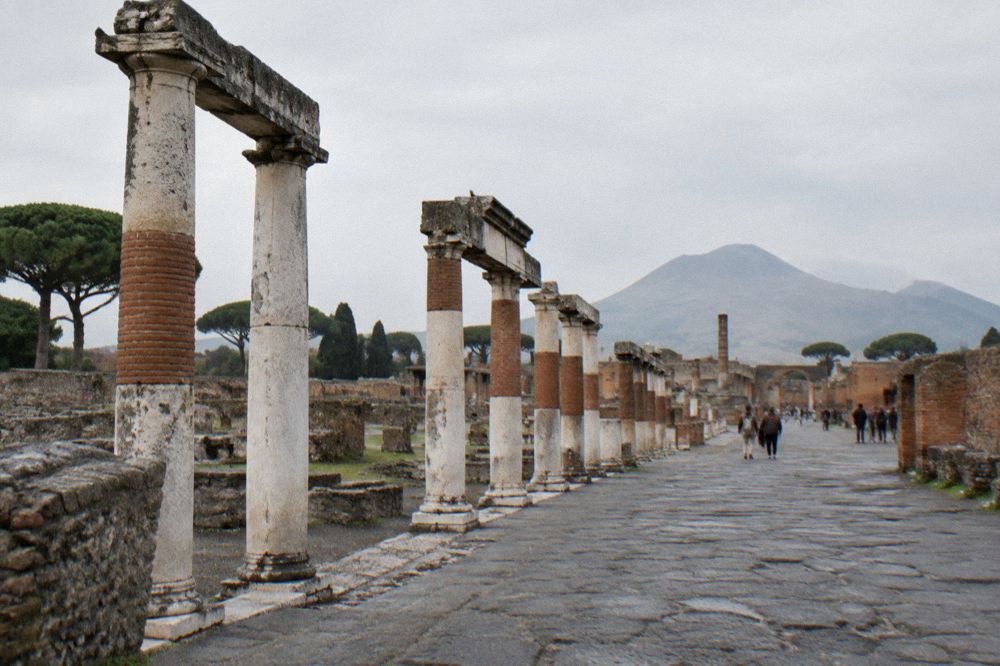
A closing thought on the eruption date, because the museum's labels and the site's panels both touch it: the destruction of Pompeii is traditionally dated to 24 August AD 79 from the oldest manuscripts of Pliny the Younger, while the park's own e-journal states that the alternative 24 October date has no evidentiary basis. Treat any confident third date on a t-shirt or a tour blurb with scepticism; the museum itself is the quietest and best place to meet the world that date, whichever it was, destroyed.
Common Questions About The Naples National Archaeological Museum
Should I go to the Naples Archaeological Museum before or after Pompeii?
Ruins first is the practical default: Pompeii is best walked in the cooler morning and the museum is indoor and forgiving in the afternoon. Museum first suits travellers who want the mosaics and frescoes in mind before meeting the houses they came from. The full sequencing discussion is on this page.
How do I get from Pompeii to the Naples National Archaeological Museum?
Take the Circumvesuviana from Pompei Scavi-Villa dei Misteri to Napoli Garibaldi, a scheduled 29 to 35 minutes, then continue a short distance to the museum in central Naples. The Campania Express has been suspended since 1 October 2026, so this local line is the rail link.
Can I do Pompeii and the museum in one day?
Yes, as a disciplined pairing: Pompeii opens at 9:00, roughly four hours covers the highlights, and the return train leaves the afternoon for the museum's mosaic and fresco galleries. Allow less depth at both than you would on separate days.
What is the most famous exhibit in the museum?
The Alexander Mosaic, lifted from the House of the Faun at Pompeii, is the single most famous piece, displayed alongside the Farnese Bull sculpture group and the vast Pompeian fresco galleries.
Does the Pompeii ticket include the Naples museum?
No. The park tickets, EUR 20 Express, EUR 25 Pompeii+ and EUR 30 three-day through 2026, then a single EUR 25 ticket from 1 January 2027, cover the archaeological park sites only. The museum is a separate institution with its own admission.
Is the museum worth it if I am short on time?
If you can only add one indoor hour to a Pompeii trip, the mosaic and fresco galleries repay it more than any other museum hour in Campania, because they hold the originals of what you have just seen reproduced or lost at the site.
The Naples National Archaeological Museum is the quiet other half of every Pompeii journey, the room where the paintings went when the walls came down. Plan the ruins morning, ride the Circumvesuviana back, and give the galleries the afternoon they deserve.