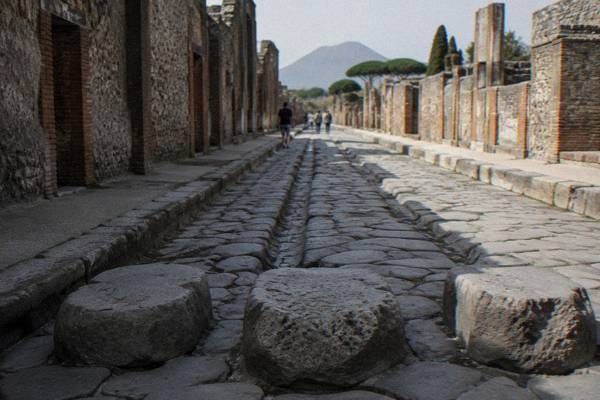
What Can You Buy In Pompeii?
What you can actually buy at Pompeii: park tickets, guidebooks, authorised reproductions, wine from Vesuvius slopes, and what the rules forbid you to take home.
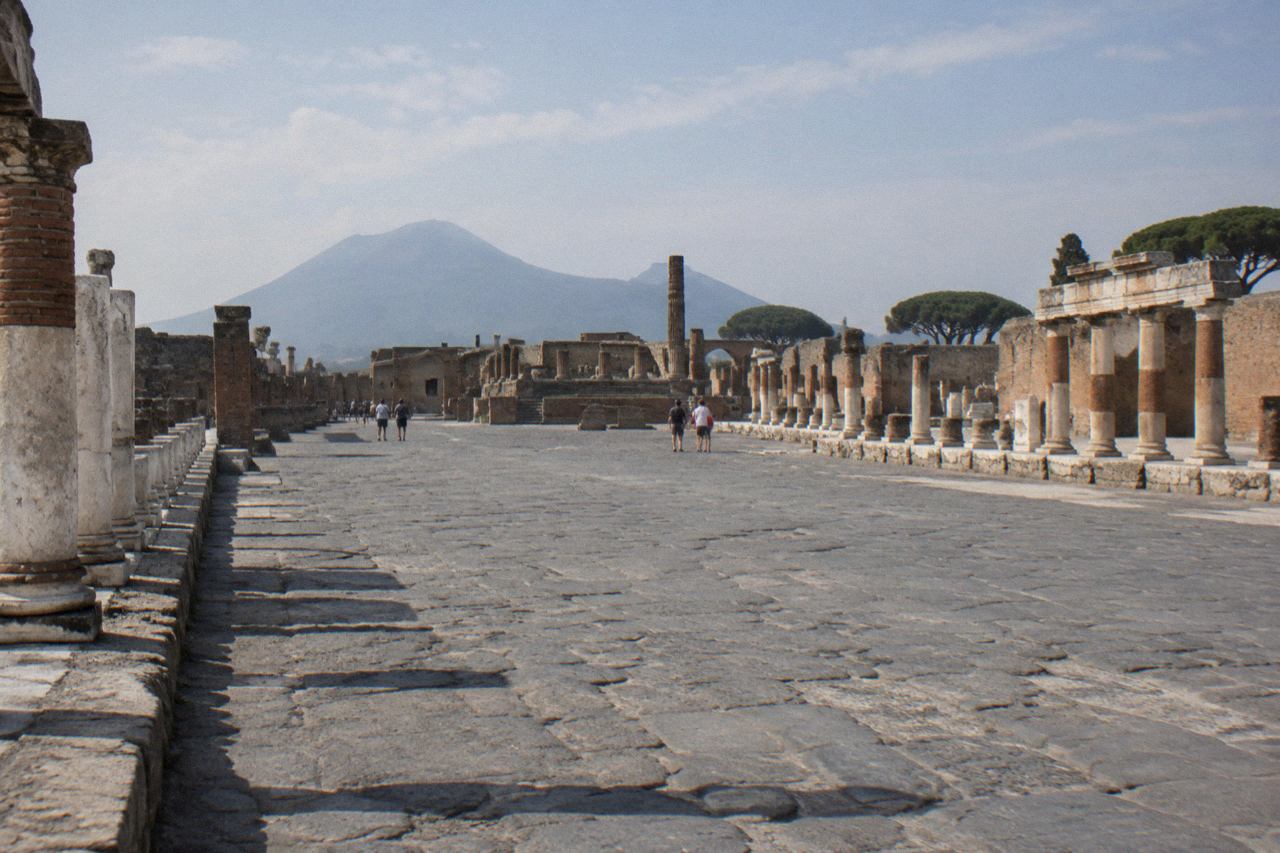
Pompeii, the ancient Roman city buried by the eruption of Mount Vesuvius in AD 79, now an archaeological park in Campania, southern Italy, sits beside the modern town of Pompei about 24 km by road from Naples. Visitors often arrive expecting a gift shop and little else. In practice the buying landscape splits into four layers: the park's own tickets and bookshops, the licensed stalls and workshops around the entrances, the shops of the modern town a short walk from the Circumvesuviana station, and the wine estates on the lower slopes of Vesuvius. There is also a short list of things you cannot buy at all, and one thing you must never take.
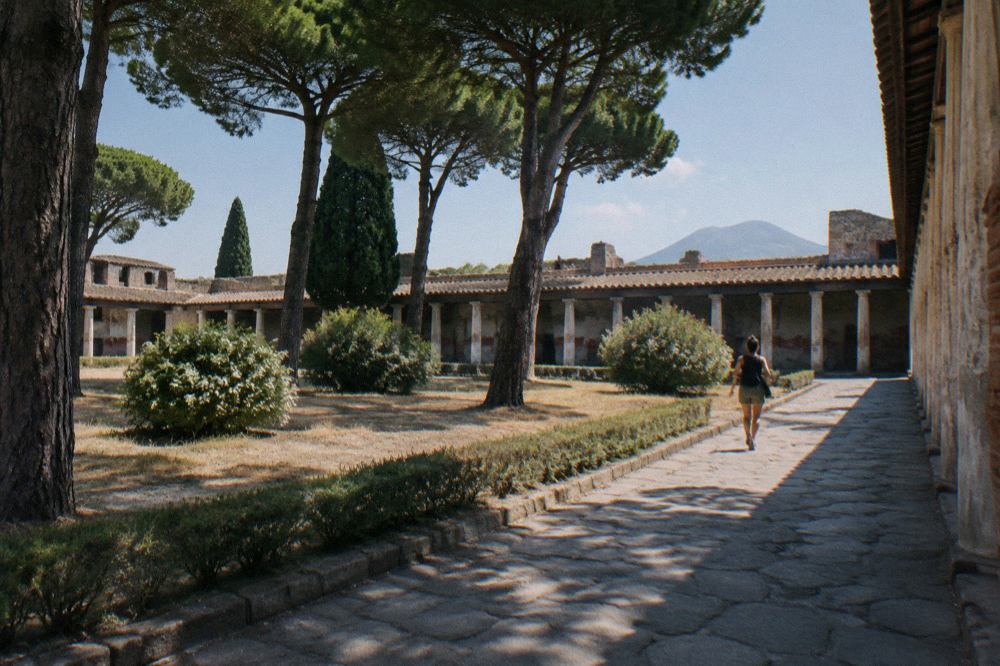
What Can You Buy In Pompeii?
Inside and around the archaeological park of Pompeii in Italy you can buy admission tickets and annual cards, official guidebooks and archaeological publications from the park's own bookshops, authorised reproductions of frescoes and artefacts, plaster souvenirs including the famous body-cast replicas, postcards and prints, snacks and water at the site's refreshment points, and, in the modern town of Pompei and on Vesuvius's slopes, local wine, cameos, coral jewellery and food specialities. What you cannot buy is any genuine artefact, and taking stones or fragments from the site is forbidden.
The question sounds simple and the answer is layered, because "Pompeii" covers two places at once. The archaeological park is the ancient city, and everything sold inside its walls is controlled by the park authority: books, catalogues, authorised reproductions and refreshments, sold at bookshops and kiosks near the entrances and main buildings. The modern town of Pompei, spelled with one "i", begins outside the gates and around the Circumvesuviana railway station called Pompei Scavi-Villa dei Misteri, and it is there that the commercial street life lives: souvenir shops, leather goods, limoncello, religious souvenirs tied to the town's Sanctuary, and ordinary Italian pharmacies and supermarkets.
A third layer, easily missed, is the wine. The vineyards on Vesuvius's lower slopes grow in soil the volcano itself created, and several estates near the park sell bottles and run tastings with lunch. Readers planning the practical side of entry can pair this page with the ticketing detail on advance tickets for Pompeii and with the broader question of touring Pompeii independently, which shapes how much you end up buying on the day.
Tickets, Passes And Add-Ons You Can Buy At Pompeii
The buyable park products in 2026 are the Pompeii Express ticket at EUR 20 for the ancient city only, the Pompeii+ ticket at EUR 25 adding the suburban villas and Boscoreale, the 3-day ticket at EUR 30, the individual EUR 8 tickets for Oplontis, the Stabiae museum and Boscoreale, and the annual My Pompeii Card at EUR 45 or EUR 10 reduced. From 1 January 2027 this structure is replaced by a single EUR 25 ticket covering all park sites, valid 30 days.
Those figures come from the park's official timetable and ticketing pages, and every one of them expires at the end of 2026, so treat them as this year's prices rather than a permanent fact. The single-ticket reform, announced by the park on 14 September 2026, keeps the nominative ticket rule and the 20,000-visitors-per-day cap introduced on 15 November 2024, so named tickets and a daily ceiling are now part of the furniture either way. Reduced entry at EUR 2 applies to EU citizens aged 18 to under 25, entry is free for under-18s, and everyone enters free on the first Sunday of the month, a scheme that produced a record of more than 36,000 visitors in a single free Sunday according to the park's November 2024 release.
One smaller purchase deserves a line of its own: if you hold an Express ticket and later decide you want the suburban villas route, the Villa of the Mysteries and Villa of Diomedes, you can add it for EUR 8, card payment only, at the Porta Ercolano / Street of the Tombs entrance. That entrance is the fourth named access point alongside the three ticket offices at Porta Marina, Piazza Esedra and Piazza Anfiteatro, and it is the one that matters for the villas.
| Park product (2026 prices) | Price | What it covers |
|---|---|---|
| Pompeii Express | EUR 20 | The ancient city only |
| Pompeii+ | EUR 25 | The city, suburban villas, Villa Regina, Antiquarium at Boscoreale, shuttle |
| 3-day ticket | EUR 30 | Pompeii+ plus Oplontis, the Stabiae villas and museum, Boscoreale |
| Oplontis / Stabiae museum / Boscoreale | EUR 8 each | Single smaller site |
| My Pompeii Card (annual) | EUR 45, EUR 10 reduced | Annual park access |
| Suburban villas add-on for Express holders | EUR 8 | Card only, at Porta Ercolano / Street of the Tombs |
From 1 January 2027 the middle three rows collapse into one EUR 25 ticket valid 30 days with one entry per site, while Oplontis, Stabiae and Boscoreale stay at EUR 8 individually and the card stays at EUR 45. Booking a guided product rather than a bare ticket is covered in detail on choosing the best tour for Pompeii; one strong option for families and small groups is the Check availability link beside the park's official private-guide product, which prices per group of up to fourteen rather than per person.
Books, Guides And Official Park Merchandise
Inside the park the buyable goods are the park authority's own: guidebooks in several languages, exhibition catalogues, academic publications from the e-journal of the excavations, postcards and prints of frescoes and mosaics, and authorised reproductions of objects from the collection. Prices are set by the park's bookshops at the entrances and main buildings, and the stock is the only merchandise legally sold within the walls.
The bookshops are the quiet highlight for anyone with an interest in the archaeology itself. Alongside the standard visitor guide, they carry the scholarly output the park produces, including the e-journal that published the open debate on the eruption date, in which the park's own authors state that the traditional 24 August AD 79 rests on the oldest manuscripts of Pliny the Younger while the rival 24 October date has no evidentiary basis, arising from a 1929 misreading. Reproduction casts and prints make honest souvenirs precisely because the originals stay in the collection.
A word on guidance as a purchase: an official guide's time is itself one of the things you can buy at Pompeii, and it is the item that changes the visit. The private tour with an official guide is the park-authority-badged version, priced per group rather than per person.
Reproductions, Cameos And Craft Shopping Around The Gates
Outside the three ticket-office entrances, Porta Marina, Piazza Esedra and Piazza Anfiteatro, licensed stalls and nearby shops sell plaster reproductions of the famous body casts, resin and ceramic replicas of amphorae and lamps, coral and cameo jewellery, a Campanian speciality worked in Torre del Greco, leather bags, magnets, prints and limoncello. Quality runs from genuine hand-worked cameos to mass-produced trinkets, so the purchase worth researching is the jewellery.
The body casts deserve a note of respect. The plaster forms sold as souvenirs are replicas of the voids left in the hardened ash by people who died in the eruption of AD 79, and the park's own collection, including the Garden of the Fugitives casts, is the subject of a dedicated page on this site. Buyers who want the story behind what they are taking home can read about where the bodies from Pompeii are now before choosing a replica.
Cameo and coral work is the one craft with a real regional pedigree: the coral workshops of Torre del Greco, on the same Bay of Naples coast, have supplied jewellers for well over a century, and a hand-carved shell cameo is a purchase that holds its value in a way a fridge magnet does not. Stalls near the gates carry both, alongside the lava-stone pendants marketed as Vesuvius rock, which is decorative rather than provenanced. The rest of the planning pages sit on Pompeii Travel Guide.
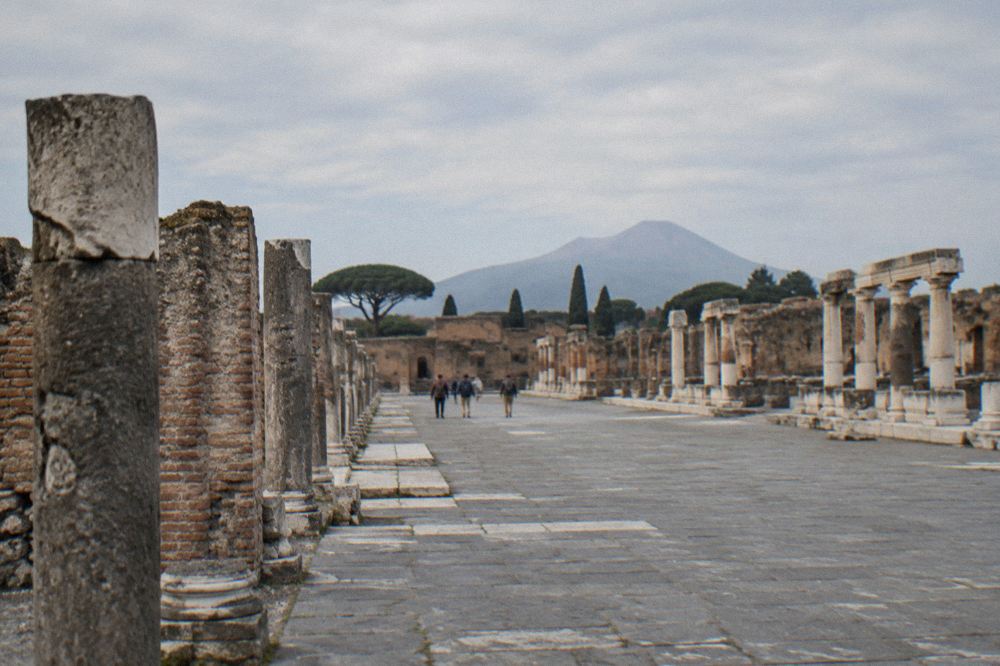
Food, Wine And Shopping In Modern Pompei
In the modern town of Pompei, a short walk from the Pompei Scavi-Villa dei Misteri station, you can buy local food and drink: wine from the Vesuvius slopes including the lacryma christi style, limoncello and citrus products, olive oil, pasta, mozzarella and pastries, plus everyday shopping, pharmacies and religious souvenirs tied to the town's Sanctuary. Several wine estates around the volcano also sell bottles and run tastings with lunch.
The wine is the serious purchase. Vineyards on Vesuvius's lower slopes grow in volcanic soil, and the estates around the national park sell direct, which is why combining the ruins with a vineyard lunch has become a popular structure for a day. This site's own roster includes a tour that pairs the city with an organic lunch and wine tasting on the mountain, and the numbers on that product, its price, rating and review count, render from the live listing rather than being typed here:
For travellers structuring a bigger day, the pairing of shopping and sightseeing also works in the other direction, combining the site with the coast, and the question of covering Pompeii and the Amalfi Coast in one day sets out what is realistic. In the town itself, the shopping streets around the Sanctuary sell religious medals and rosaries alongside the food shops, a reminder that modern Pompei is a working pilgrimage town, not only a service centre for the ruins.
What You Cannot Buy At Pompeii
You cannot buy any genuine artefact from Pompeii: fragments, fresco pieces, mosaic tesserae, bones and amphora sherds are protected, and removing stones or any material from the excavated area is an offence. Outside the fences you cannot buy an English-language free walking tour of the site, because no such product exists, and inside the walls you cannot buy anything not authorised by the park, including from unlicensed hawkers.
The rules on taking material are not etiquette, they are law, and the park's visitor regulations, which also set the 30x30x15 cm bag limit and require nominative tickets with possible identity checks at entry, are published on the park's own regulations page. The same caution applies to souvenirs claimed as "ancient": anything genuinely Roman is either in the collection or illegally removed, and a stall item marketed as authentic is neither. The related question of taking stones from Vesuvius covers the same principle on the mountain, where the national park also prohibits collecting rock.
One transport caveat belongs here because shoppers plan around it: the Campania Express train service has been suspended since 1 October 2026, so anyone building a buying day around Naples or Sorrento connections should check the Circumvesuviana operator's own timetable pages rather than any older guide that still lists the Express.
Common Questions About Buying In Pompeii
What can you buy in Pompeii?
You can buy park tickets and the annual My Pompeii Card, guidebooks and catalogues and authorised reproductions in the park's own bookshops, body-cast replicas, cameos and coral jewellery, leather goods, postcards and limoncello at the licensed stalls by the entrances, and wine, oil and food specialities in the modern town of Pompei and at Vesuvius-slope wine estates.
Can you buy tickets at Pompeii on the day?
Yes, at the three ticket offices, Porta Marina, Piazza Esedra and Piazza Anfiteatro, or online through the park's official ticketing page, but the 20,000-visitors-per-day cap and nominative tickets, in force since 15 November 2024, mean high-season days can sell out, so advance booking is the safer route.
Are there shops inside the Pompeii archaeological park?
Only the park authority's own bookshops and refreshment points, selling books, catalogues, authorised reproductions, postcards and food and drink. Commercial souvenir stalls sit outside the entrances, not within the excavated city.
Is it illegal to take stones from Pompeii?
Yes. The site is protected and removing stones, fragments, mosaic pieces or any other material from the excavated area is prohibited under the park's visitor regulations and Italian heritage law, so every genuine fragment you see must stay where the park keeps it.
Can you buy wine near Pompeii?
Yes. Estates on the lower slopes of Vesuvius, within the national park area, sell bottles direct and several offer tastings with lunch, and shops in the modern town of Pompei stock the same volcanic-soil wines alongside limoncello, olive oil and pasta.
The honest summary is that Pompeii rewards buyers who know which of the four layers they are standing in: the park's books and reproductions inside the walls, the craft stalls at the gates, the food and wine of the modern town, and the vineyards on the volcano itself, with nothing ancient for sale anywhere at any price.