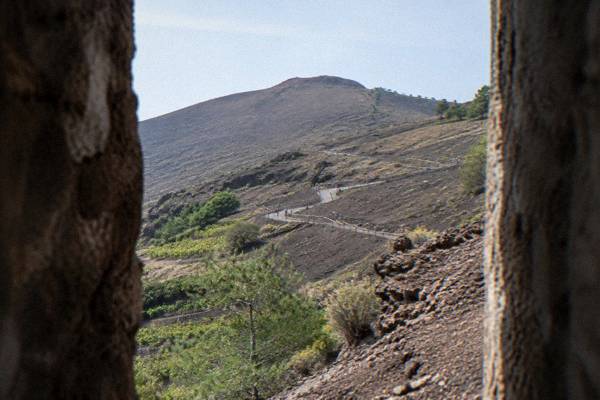
Is It Cold At The Top Of Vesuvius?
How cold the Vesuvius summit really feels compared with Pompeii, what to wear on the crater trail, and when the path closes for weather, with climate data for the Bay of Naples.
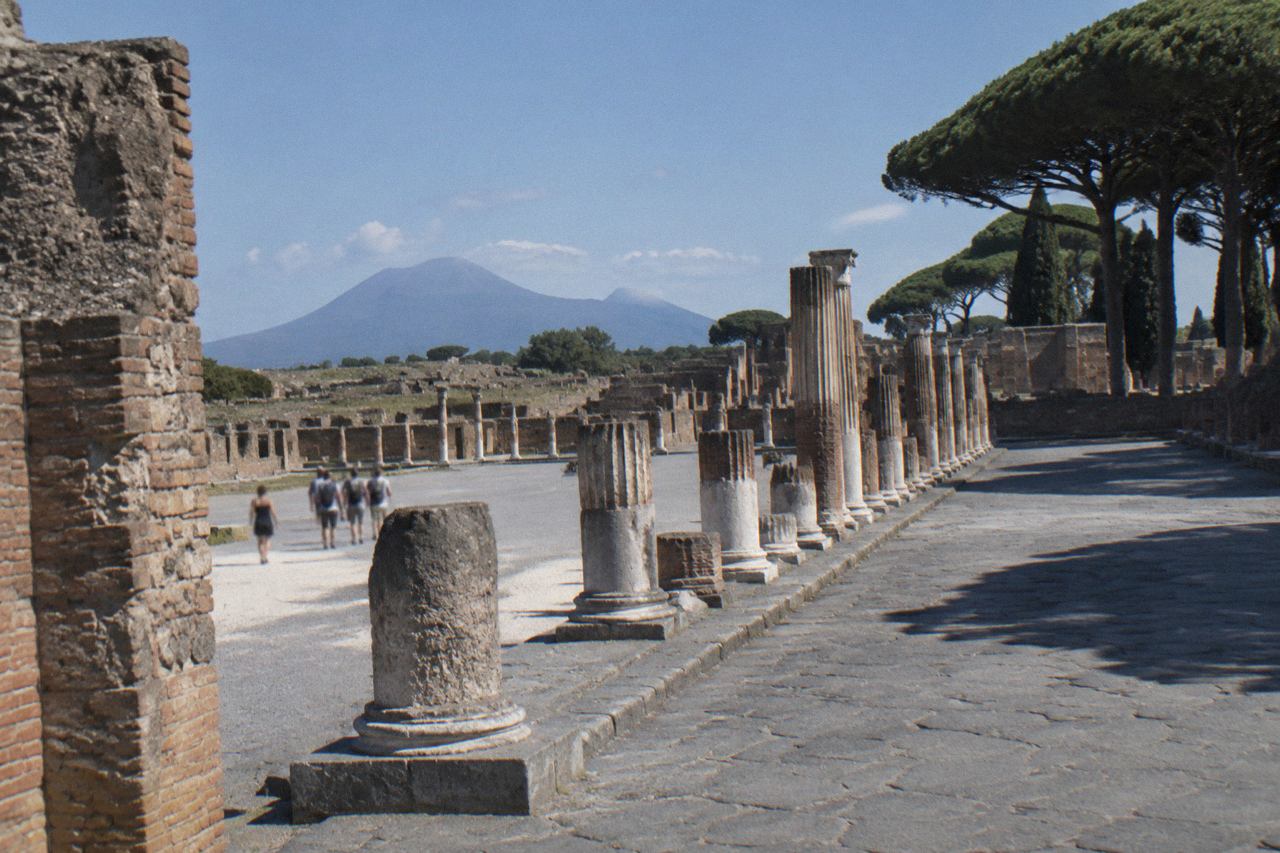
Mount Vesuvius looms over the ancient city of Pompeii in Campania, southern Italy, and almost every visitor who pairs the two notices the same thing: the crater rim feels like a different season from the ruins below. This page, from the Pompeii Travel Guide editorial desk, answers the question with the region's own climate record rather than guesswork, then covers clothing, timing and the weather rules that can shut the trail entirely.
Is It Cold At The Top Of Vesuvius?
Yes, it is noticeably colder at the top of Vesuvius than in Pompeii or Naples, in every season. The crater rim sits well above the coastal plain, temperatures fall as you climb, and the exposed summit amplifies the difference with wind chill and the absence of any shade or shelter. On a mild Bay of Naples afternoon the summit can feel wintry; on a genuinely cold January morning, when the coast averages about 12 degrees, the top can sit near or below freezing with a cutting wind on top.
The scale of the gap is easiest to state honestly for the coast, where hard numbers exist. Climate normals for the Pompei grid point, computed from the Open-Meteo historical archive for 1991-2020, put the mean daily maximum at about 12.2°C in January and about 29.4°C in August, with mean daily minima of about 6.6°C and 21.8°C respectively. Those are sea-level figures for the town beside the park. The summit is more than a kilometre above them, and the standard physical effect, roughly one degree of cooling per hundred metres of ascent in still air, means the crater rim is plausibly several degrees cooler before wind is even considered.
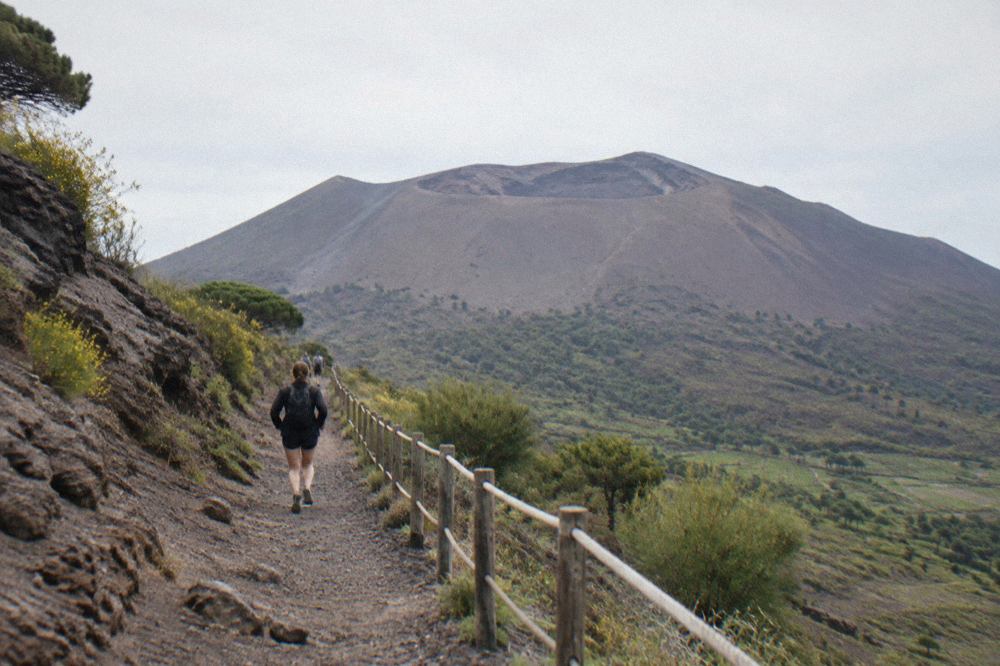
Wind is the part that surprises people. The Gran Cono trail is a bare cinder path on an open cone: there is no tree cover, no wall and no kiosk at the top. The national park's own trail page notes that the ticket office and path close automatically when an orange weather alert or higher is issued for the area, which tells you the park treats summit weather as a live operational risk, not a footnote. On any day with a breeze at sea level, expect a sustained wind at the rim, and expect it to strip heat from you far faster than the air temperature alone suggests.
Shorts in the ruins at midday can be the right call in June; the same shorts at the crater an hour or two later can be genuinely unpleasant. If you are debating the order of the two sites, the Pompeii or Vesuvius first question has its own page, and the answer interacts with the cold: afternoon cloud often builds on the cone, so earlier is frequently clearer as well as milder.
How Much Colder Is The Summit Than The Coast?
The coast around Pompei is a warm baseline: mean daily maxima run from about 12.2°C in January to about 29.4°C in August, from the 1991-2020 Open-Meteo normals for the Pompei grid point. The summit is cooler than those figures by an amount driven by altitude and wind, and no verified summit station series exists to quote an exact gap, so treat the difference as reliably several degrees.
The coastal record is worth reading in full because it corrects two common assumptions. First, the Bay of Naples winter is not tropical: November is the wettest month of the year at the Pompei grid point with about 180 mm of rain, and January nights average about 6.6°C. A visitor climbing Vesuvius in a linen shirt in April has misread the climate. Second, the summer is hot enough that the summit can feel pleasant in July and August while the ruins below are punishing, which is why some travellers deliberately put the crater inside the cooler half of a summer day.
| Month | Mean Daily Max (°C) | Mean Daily Min (°C) | Rain (mm) |
|---|---|---|---|
| Jan | about 12.2 | about 6.6 | 119 |
| Feb | about 12.6 | about 6.5 | 103 |
| Mar | about 14.9 | about 8.1 | 104 |
| Apr | about 17.7 | about 10.4 | 87 |
| May | about 21.6 | about 14.1 | 59 |
| Jun | about 25.8 | about 18.2 | 30 |
| Jul | about 28.7 | about 21.1 | 16 |
| Aug | about 29.4 | about 21.8 | 22 |
| Sep | about 25.3 | about 18.6 | 90 |
| Oct | about 21.3 | about 15.1 | 129 |
| Nov | about 16.9 | about 11.5 | 180 |
| Dec | about 13.2 | about 8.0 | 147 |
These are 1991-2020 averages from a reanalysis grid rather than a weather station, which is why every figure is stated with "about". What they establish is the shape of the year: a genuinely cool, wet half from October to March, and a hot, dry half from June to August in which July is the driest month at about 16 mm. The summit experience rides on top of that baseline. Rain that falls as a shower in Pompei can fall as stinging drizzle at the rim in winter, and the cinder path holds surface cold long after sunrise.
Because the two-site day is the standard format here, the choice of how you structure it matters. A combined day trip from Naples handles the logistics, the timed Vesuvius entry and lunch in one booking; Check availability on the operator's live listing for current dates and pickup points. If you would rather climb from Sorrento, the Sorrento to Pompeii planning guide covers the coastal side of the same decision.
What Should You Wear For The Vesuvius Summit?
Dress in layers you can add and remove, with a windproof outer layer as the non-negotiable item, because the crater rim is an exposed cinder slope with no shelter of any kind. Sturdy closed shoes matter almost as much as the jacket: the path is loose volcanic gravel in both directions. In winter add a warm hat and gloves, and in summer take a layer anyway, since a summit wind at the end of a hot coast day still feels cold on sweaty clothing.
The trail itself is not technical, but it is a real mountain walk: the national park describes the Gran Cono excursion as about two hours return by the shortest route and up to three hours by the longest, on a path that climbs the cone's flank to the rim and back. Loose rock underfoot plus wind at the top is the standard combination, and trainers with worn soles are the usual cause of the slow, careful descents you see in front of you. The Vesuvius crater trail guide covers the route in detail.
A useful packing frame, season by season, using the coastal normals as the planning baseline:
| Season | Coast Baseline (Mean Max/Min, °C) | What The Summit Adds | Packing Focus |
|---|---|---|---|
| Dec-Feb | about 12.2-13.2 / about 6.5-8.0 | Near-freezing possible at the rim, frequent wind | Warm hat, gloves, insulated jacket, windproof shell |
| Mar-Apr | about 14.9-17.7 / about 8.1-10.4 | Several degrees cooler, changeable showers possible | Fleece mid-layer, rain shell, long trousers |
| May-Jun | about 21.6-25.8 / about 14.1-18.2 | Pleasant to cool at the top, wind likely | Light layers, one warm layer, windbreaker |
| Jul-Aug | about 28.7-29.4 / about 21.1-21.8 | Warm but windy; sun exposure intense | Sun hat, sunscreen, light windbreaker, water |
| Sep-Oct | about 21.3-25.3 / about 15.1-18.6 | Cooling fast, first autumn showers | Layers, rain shell, closed shoes |
The sun is the other element people underestimate. There is no shade anywhere on the cone, and in the dry half of the year, when July delivers about 16 mm of rain for the whole month, the sun reflects off pale volcanic gravel. Sunburn and wind-chapped lips on the same walk are a normal outcome. Water carried from the bottom is the standard advice, and in summer more of it than seems reasonable.
When Is The Coldest Time To Visit The Summit?
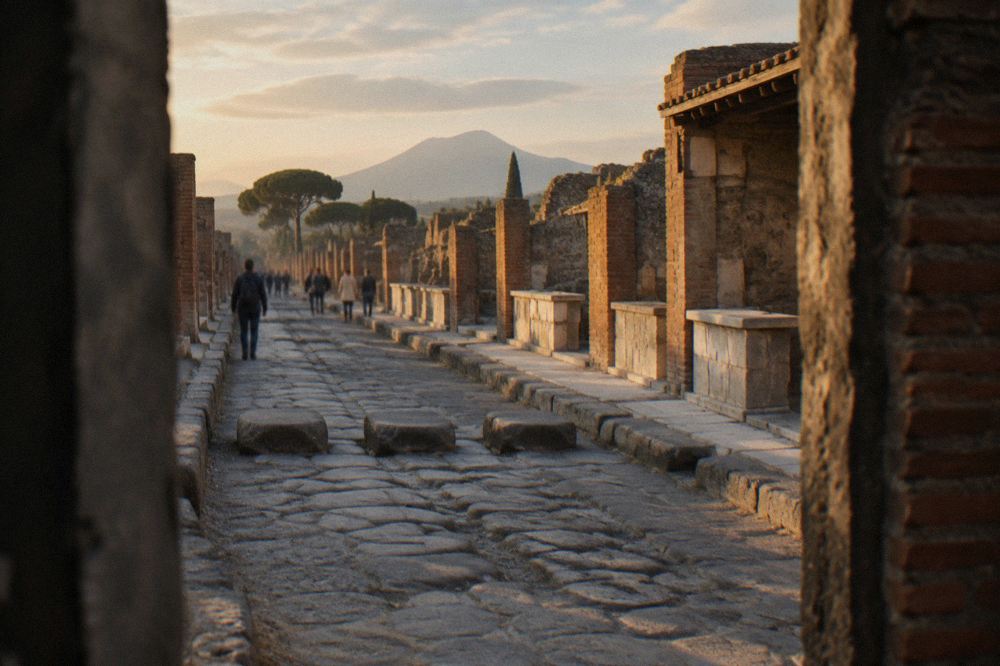
Winter mornings are the coldest slot on the mountain: the coast averages about 6.6°C overnight in January and February, the summit sits several degrees below that, and the first access window of the day begins at 09:00 in the November-to-February months, which means early visitors climb on ground that has been cooling all night. The flip side is that winter mornings are also the clearest, so the cold and the best views arrive together.
The park's access hours shift by month, and they are worth knowing because they define how early you can be up there at all. In January, February, November and December the cone is open 09:00-15:00; in March and October 09:00-16:00; in April, May, June and September 09:00-17:00; and in July and August 09:00-18:00. Timed entry is sold online only, in 10-minute slots, with 50 tickets per slot bookable up to 30 days ahead. The practical reading for temperature: in summer, a late-afternoon slot trades some heat for a cooling summit as the sun drops, while in winter the midday slots are the warmest on offer.
One thing worth knowing before you build a day around the climb is that Vesuvius weather closes the mountain entirely at times, and it does so by rule rather than by judgement. The automatic orange-alert closure means a forecast check the evening before is part of the plan, not an optional extra. For the money side of the visit, the Vesuvius ticket cost question is answered separately, and the full Vesuvius tickets guide covers booking mechanics, including whether you can buy on the day.
If a crater walk in the cold is not your idea of a holiday, the national park around the volcano offers a warmer proposition: lunch and wine tasting on the Vesuvius slopes, where the cold that stings you at the rim is precisely what the local vineyards credit for their wine's acidity. Check availability if that trade appeals.
Does Weather Ever Close The Vesuvius Trail Completely?
Yes, and by automatic rule rather than a same-day judgement call: the national park's trail page states that the ticket office and the path close automatically whenever an orange weather alert or higher is issued for the area, and a weather-driven closure triggers an automatic refund. Winter visitors in particular should check the regional alert the evening before, because November through January delivers about 103 to 180 mm of rain per month at the coast, and more unsettled air at elevation.
What the record does establish is the mechanism: alert level, automatic closure, automatic refund. That is a visitor-friendly system, and it removes the ambiguity that plagues many mountain sites, where you only learn at the gate that the day is lost. It also means there is no value in arguing at the ticket office; the decision has already been made by the alert system.
The wider planning context for a two-day visit that includes the volcano, with a buffer day in case the mountain closes, is laid out in the two days, three sites itinerary. If your interest in the summit is less about the walk and more about the volcano itself, the story of why Naples was spared in 1944 and the classic Pompeii first or Vesuvius first debate are both covered on their own pages.
Common Questions About The Cold On Vesuvius
Is it cold at the top of Vesuvius?
Yes, reliably colder than Pompeii or the coast below, in every month of the year. The crater rim sits well above the coastal plain, the air cools with altitude, and the exposed summit adds wind on top. On winter mornings the rim can sit near freezing while Pompei's mean daily maximum is about 12.2°C; even in August, with a coast mean maximum of about 29.4°C, a windy summit can feel cool in a sweat-soaked shirt.
How cold is Vesuvius in winter?
The coast averages mean daily minima of about 6.5°C in February and about 6.6°C in January, and the summit runs several degrees below the coast, with wind making it feel colder still. No verified summit station series exists, so plan for near-freezing conditions and wind chill rather than trusting a single number.
Do I need a jacket for Vesuvius in summer?
Take one. There is no shade or shelter anywhere on the cone, the trail takes about two to three hours return, and the summit wind on a hot day can still strip heat from you quickly once you stop walking. A light windbreaker that packs into a bag is the standard recommendation.
What shoes are best for the Vesuvius crater trail?
Closed, sturdy shoes with grip. The path is loose volcanic gravel uphill and down, which is why worn trainers are the common cause of slow, cautious descents. The shortest return route is about two hours; the longest about three.
Can bad weather close the Vesuvius path?
Yes. The ticket office and path close automatically whenever an orange weather alert or higher is issued for the area, and the park issues an automatic refund when the closure is weather-driven. Check the regional alert the evening before your climb.
When is the warmest time of day at the summit?
Midday and early afternoon. Access hours run 09:00-15:00 in the November-to-February months and extend to 09:00-18:00 in July and August, so in winter the midday slots are the warmest available, while in summer a late slot trades heat for a cooling summit.
The short version stands: pack for a coast day and a mountain top in the same bag, and let the windproof layer be the one item you never leave in the hotel.