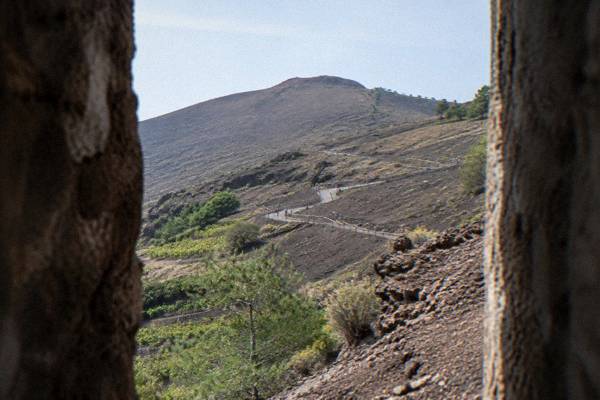
When Did Vesuvius Erupt
Vesuvius buried the Roman city of Pompeii in Campania, southern Italy, in AD 79, and the exact day of the eruption is still an open scholarly question. Here is what the evidence says, what the eruption did, and how to stand on the crater yourself.

Short answer
Vesuvius erupted in AD 79, traditionally dated to 24 August. The oldest manuscripts of Pliny the Younger give that date, while the park's own e-journal says the rival 24 October reading has zero evidentiary basis. The volcano last erupted in 1944 and can be visited today.
The eruption that destroyed Pompeii, the ancient Roman city in Campania, southern Italy, about 24 km by road from Naples, is traditionally dated to 24 August AD 79, a date scholars still debate. Mount Vesuvius, the volcano that rises directly above the buried city and the modern town of Pompei, unleashed the destruction in two forms: a shower of pumice and a succession of pyroclastic surges. The event froze a living Roman city, and the question of exactly which day it happened has turned into one of archaeology's longest-running arguments.
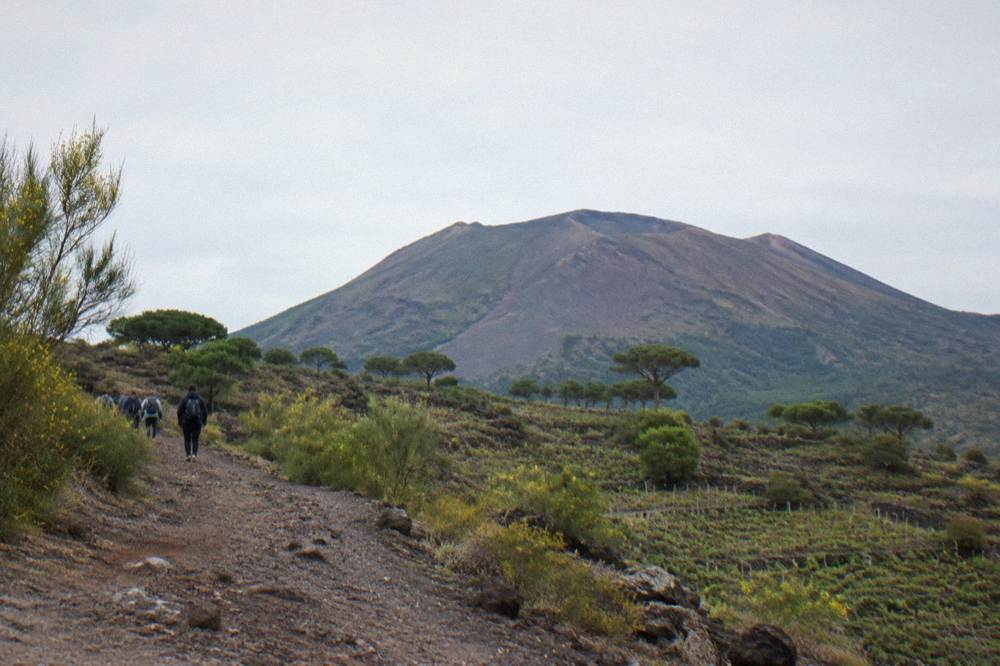
This guide lays out what the sources actually say, what happened during the eruption, and how the story connects to the volcano you can climb today.
When Did Vesuvius Erupt And Why Is The Date Debated?
Vesuvius erupted in AD 79, traditionally dated to 24 August. The date comes from the oldest surviving manuscripts of Pliny the Younger, whose letters describe the eruption nonum kal. Septembres, the ninth day before the Kalends of September, which works out to 24 August. The park's own e-journal states that the rival 24 October reading has zero evidentiary basis and results from a 1929 misreading, while adding that 24 August is not necessarily correct either.
The debate has real substance. Pliny wrote his two famous letters to the historian Tacitus roughly a quarter century after the event, and the manuscripts that carry them were copied and recopied across centuries. Copying introduces errors. The August reading rests on the manuscript tradition; the October reading, which circulates widely in popular coverage, traces back to a modern editorial slip rather than to any ancient source, according to the park's journal article on the destruction date of Pompeii.
One find reopened the question in recent years. In 2018 excavators uncovered a charcoal graffito that many scholars read as dated to mid-October, weeks after the traditional August date. That would be hard to explain if the city had already been buried. The honest summary stands: the eruption happened in AD 79, the traditional date is 24 August, and scholars have not settled it.
| Question about the date | What the evidence says | Status |
|---|---|---|
| Which year did Vesuvius erupt? | AD 79, undisputed across all sources | Settled |
| Which day do the oldest manuscripts give? | 24 August, from Pliny's nonum kal. Septembres | Traditional date |
| Where does 24 October come from? | A 1929 misreading, per the park's e-journal | No evidentiary basis |
| What reopened the debate? | A 2018 charcoal graffito many scholars date to mid-October | Open scholarly question |
If the broader story of the eruption and the city it buried is new to you, the Pompeii Travel Guide homepage gathers the practical pages in one place, including ticket rules and routes.
What Happened During The Eruption Of AD 79?
Vesuvius produced a sustained plinian eruption: a column of pumice and gas that collapsed repeatedly into pyroclastic surges, burying Pompeii, Herculaneum and the villas around the Bay of Naples. Pliny the Younger, watching from Misenum across the bay, described the cloud as like an umbrella pine, and his uncle Pliny the Elder sailed toward the disaster and died there. The sequence, a pumice fall followed by surges, explains why Pompeii was buried gradually while Herculaneum was struck fast.
The name of the eruption type comes from that account. Geologists still call a tall, sustained explosive column a plinian eruption in honour of the man who described it, and his nephew's letters remain the founding document of volcanology. For readers who want the survival side of the story in detail, the guide to who escaped the destruction of Pompeii covers the evidence house by house.
The different burial conditions left the two famous sites looking unlike each other. At Pompeii the pumice fall settled deep over hours, and the surges that followed sealed the deposit. Note that Herculaneum's Villa dei Papiri and Ancient Theatre are closed for works, and the remarkable story of the carbonised scrolls from that villa is told in the Herculaneum scrolls guide.
Visiting both places in a single day is a realistic plan, and the one-day Pompeii and Herculaneum itinerary works through the timing. If you would rather have a driver, a guide and the logistics handled, these three options cover the main ways to see the volcano and the city together.
The scale of the buried city is easy to underestimate. The excavated area covers 44 ha within an inscribed UNESCO property of 98 ha, with a buffer zone of 1,788.79 ha, and the whole ancient city has not been dug out.

How Did The Eruption Destroy Pompeii And Herculaneum Differently?
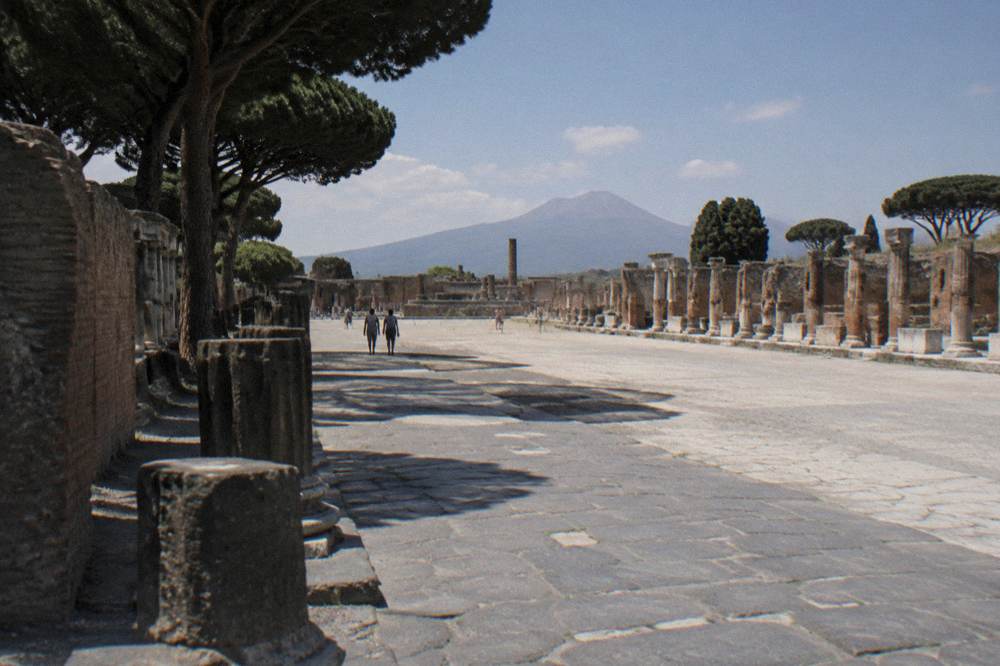
Pompeii, south-east of the volcano, was buried first under a deep fall of pumice and then by successive pyroclastic surges, while Herculaneum, directly west on the coast, was overwhelmed by the surges themselves. The contrast in distance and direction produced two different kinds of site: a city sealed gradually under metres of deposit, and a shoreline town struck almost instantly. Both were lost at the same time, in the same eruption, in AD 79.
The surges are the reason the sites look and feel different when you walk them. Pompeii's streets and walls stand open to the sky because the deposit was excavated away; Herculaneum's remains sit in a deep void below the modern town of Ercolano, preserved to a height that survives nowhere else. The boatheds along Herculaneum's former shoreline, where skeletons were found sheltering, are among the most affecting stops in the whole Vesuvian area.
| Site in the AD 79 eruption | Position relative to Vesuvius | How the burial happened | Character today |
|---|---|---|---|
| Pompeii | South-east of the volcano | Pumice fall, then pyroclastic surges | Full city streets, walls and frescoes |
| Herculaneum | West, on the former coast | Struck directly by surges | Deeply preserved houses, carbonised wood |
| Oplontis (Torre Annunziata) | West of Pompeii | Buried by the same eruption | Luxury villa with preserved decoration |
| Stabiae (Castellammare di Stabiae) | South across the plain | Ash fall and surges at greater distance | Villas and a museum, quieter site |
Whether the volcano gave any warning at all is its own question, and the answer belongs to the question of whether Pompeii knew Vesuvius would erupt. Roman writers recorded tremors in the days before, but nobody in AD 79 connected them to a volcano.
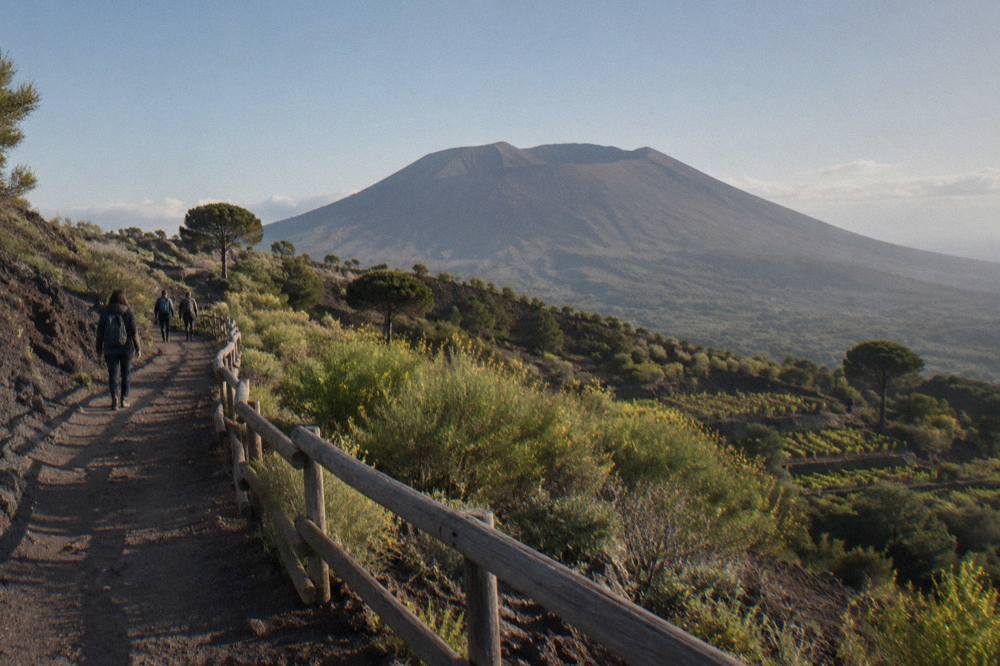
After a morning in the ruins, standing on the crater rim gives the eruption a physical scale no photograph manages, and the crater trail guide covers what the climb itself is like.
What Has Vesuvius Done Since AD 79?
**Vesuvius has erupted repeatedly since AD 79 and last erupted in 1944. The volcano is dormant, not extinct: it remains one of the most closely monitored volcanoes in Europe, and the national park that now covers its slopes exists because the mountain is an active geological system.
The 1944 eruption is within living memory and reshaped the mountain's profile; the question of how many people died in the 1944 eruption is answered on its own page. What matters for a visitor is the geography that history created: a national park ringing the summit, a crater you can walk to the edge of, and vineyards on the lower slopes that grow in soil the volcano made. The wines of the Vesuvius slopes carry the eruption's legacy in the glass.

The volcano's future is a genuine research question rather than a suspense story, and the park service and observatories watch it continuously. The question of whether Vesuvius will erupt again covers what monitoring involves and what the planning around Naples assumes.
How Many People Visit Vesuvius And Pompeii Today?
The archaeological park of Pompeii recorded 4,000,090 visitors in 2025, after 4,069,377 in 2024 and 3,985,424 in 2023, and all the park's sites together drew 4,118,926 people in 2025. Vesuvius itself, run by the national park rather than the archaeological park, caps access at between 2,160 and 3,240 climbers per day depending on the season. The eruption's aftermath is, two millennia on, one of the visited places in Italy.
Those Pompeii figures come from the park's own published visitor data, and they explain the practical pressures: the 20,000 visitors-per-day cap, in force since 15 November 2024, and nominative tickets tied to your name. Inside the day, the park splits entry into time bands, with a maximum of 15,000 in the 9:00-13:00 window and 5,000 from 13:00 to close of entry at 17:30 in the summer season.
| Year | Pompeii site visitors | All park sites together |
|---|---|---|
| 2022 | 2,972,159 | n/a |
| 2023 | 3,985,424 | 4,079,235 |
| 2024 | 4,069,377 | 4,177,753 |
| 2025 | 4,000,090 | 4,118,926 |
Monthly patterns matter more than the annual totals when you are picking a date. The park's 2024 month-by-month figures show the shoulder months carrying heavy numbers: May 2024 saw 516,923 visitors and September 468,340, while November fell to 189,866. October, at 481,255, is effectively a high-season month now. Choose your day accordingly, and book early.
| 2024 month | Pompeii visitors | 2024 month | Pompeii visitors |
|---|---|---|---|
| January | 112,121 | July | 449,162 |
| February | 142,648 | August | 421,255 |
| March | 272,723 | September | 468,340 |
| April | 466,344 | October | 481,255 |
| May | 516,923 | November | 189,866 |
| June | 410,712 | December | 138,028 |
Entry to Pompeii itself is free for under-18s and for everyone on the first Sunday of the month, and reduced EUR 2 tickets go to EU citizens aged 18 to under 25. The full ticket structure, including the changes arriving on 1 January 2027, is covered in the Pompeii ticket guide.
Can You Visit The Vesuvius Crater Today?
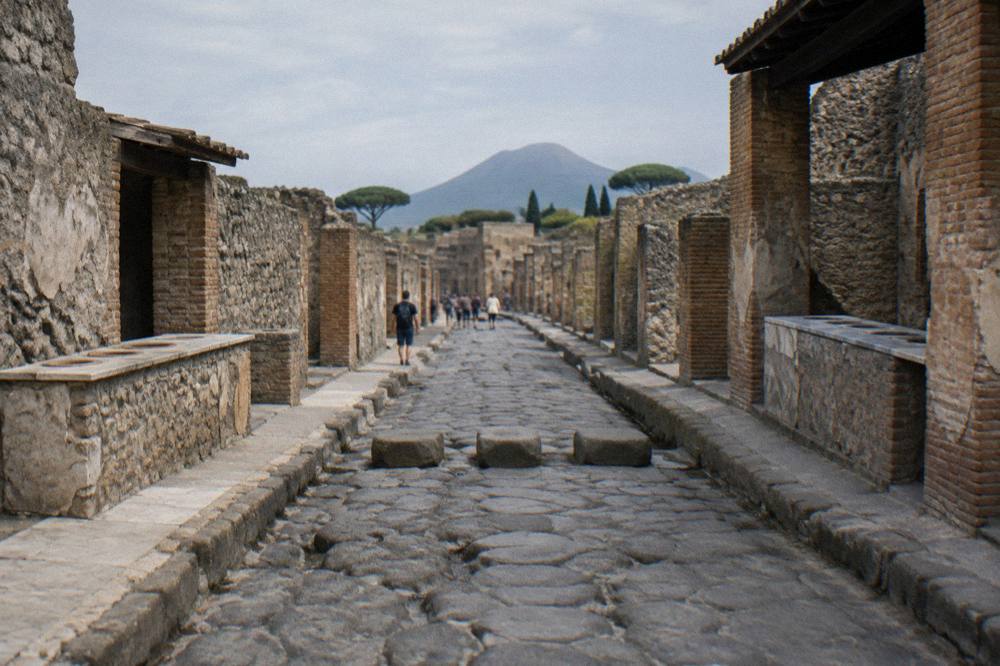
Yes. The Gran Cono trail to the crater rim is open to walkers with an online timed ticket, EUR 11.68 full and EUR 9.55 reduced as sold, released up to 30 days ahead in 10-minute slots. The walk takes about 2 hours return by the shortest route and up to 3 hours by the longest, and the path closes automatically when an orange weather alert is issued, with an automatic refund.
The ticketing is strictly online through the national park's official ticketing page; there is no walk-up sales point. Each slot admits groups of 60, moving as three groups of 20, and daily caps run from 2,160 to 3,240 visitors depending on the month. Since 11 April 2026 the 10 last-minute tickets released per slot from 30 minutes before departure are nominative too. Whether same-day purchase is realistic is answered in the question of buying Vesuvius tickets on the day, and the full price detail sits in the Vesuvius tickets guide.
| Months | Gran Cono access hours |
|---|---|
| January, February, November, December | 09:00-15:00 |
| March, October | 09:00-16:00 |
| April, May, June, September | 09:00-17:00 |
| July, August | 09:00-18:00 |
The climb itself is shorter than its reputation, and the conditions at the top surprise people in both directions; how long the Vesuvius walk is and whether it is cold at the summit are each answered separately. If you would rather not deal with the timed-slot system yourself, the Vesuvius skip-the-line ticket with digital guide is the straightforward option: Check availability.
For everything from driving up to what the trail surface is like, the full guide to visiting Vesuvius is the practical companion to this one.
How Do You Combine Pompeii And Vesuvius In One Day?
Pair the two by giving Pompeii the morning and Vesuvius the afternoon: the ruins open at 9:00 and the crater's access hours stretch to 15:00 or later year-round, so a two-hour walking tour of the city followed by an afternoon ascent fits comfortably. The sequence question, ruins first or volcano first, has a real answer with reasons behind it, and the one-day plan already exists on this site.
The order matters for reasons of light and fatigue. Pompeii's stone streets are exposed and hot by midday, while the crater path is more exposed still, so front-loading the city and climbing Vesuvius in the cooler afternoon hours is the standard advice. The question of doing Pompeii or Vesuvius first argues it out in detail, and the two-day Pompeii, Herculaneum and Vesuvius itinerary is the slower alternative that adds Herculaneum properly.
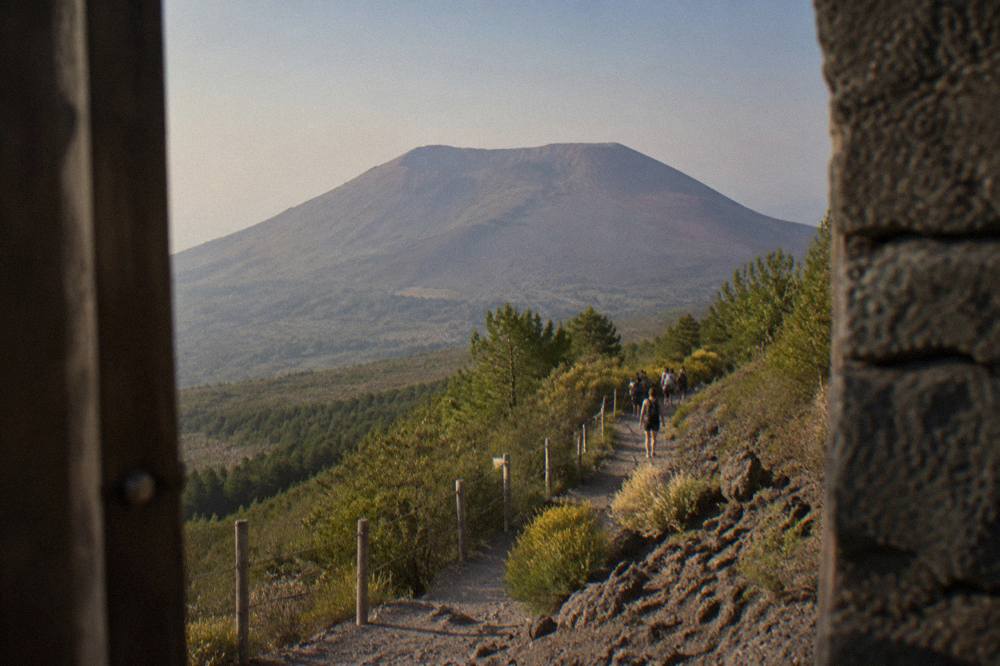
Getting between the two is the one logistics headache. Driving distances to the Pompei Scavi station area are about 24 km from Naples, 26 km from Sorrento and 31 km from Salerno, and the question of driving up Vesuvius has its own answer. A guided day that handles the transfers removes the headache entirely.
What Does The Eruption Look Like When You Stand In It?
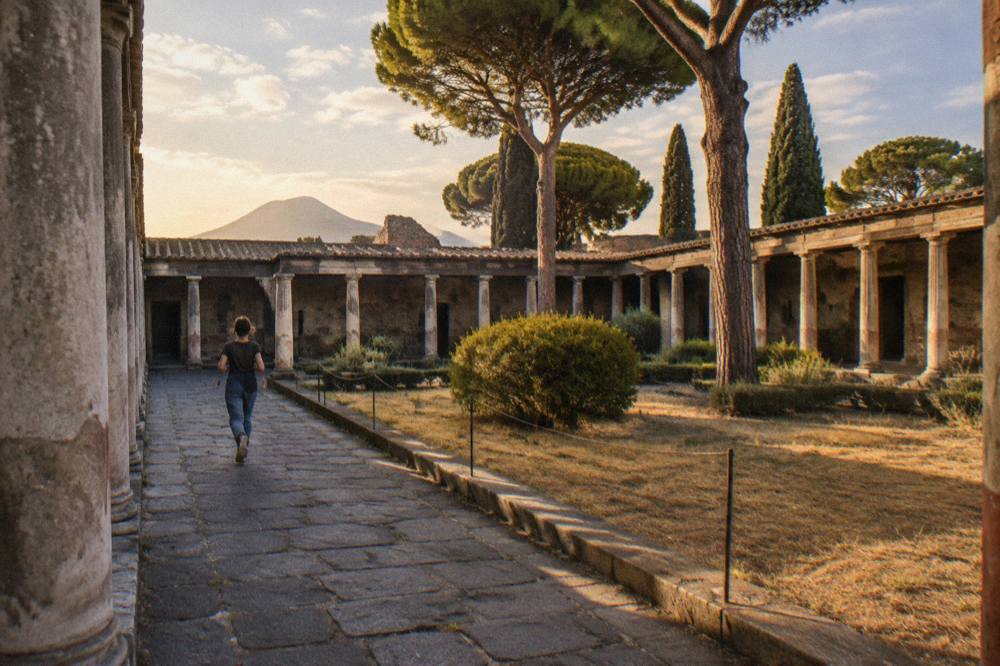
Standing in Pompeii with Vesuvius on the horizon makes the eruption legible in a way no account manages: the volcano is close enough that you can see the mountain that did this from the streets it destroyed. The Forum, the baths, the bakeries and the vineyards are all within sight of the summit, and the visitor numbers above, four million a year, are a measure of how powerfully that single juxtaposition lands.
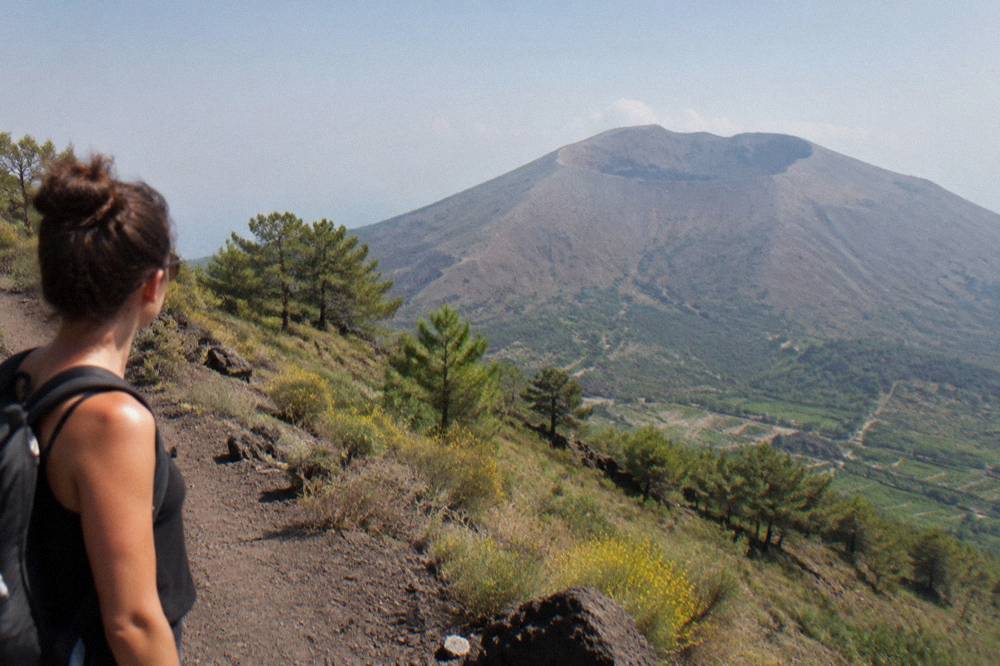
The view works in both directions. From the crater rim, the whole buried landscape spreads below: the line of the excavations, the modern towns pressed against them, the Bay of Naples beyond. It is the clearest way to understand why the eruption's story and the modern region's story are the same story, and why the hike to the Vesuvius crater is the natural closing act of a Pompeii trip.
For travellers weighting the cost of the volcano against the cost of the city, what it costs to go up Vesuvius runs the arithmetic, and whether the summit is worth the climb makes the case both ways. One small rule worth knowing before you go: taking a rock from Vesuvius is not permitted, so leave the volcano where it stands.
What The Eruption Left Behind, And What It Still Holds
The AD 79 eruption left a 44 ha excavated city inside a 98 ha protected property, with more of ancient Pompeii still buried beneath the modern landscape than has ever been dug. The eruption that destroyed the city also preserved it, which is the paradox every visitor walks through, and the reason the site supports the visitor volumes recorded above without feeling like a theme park.
Every period of excavation has changed what the eruption's date question can even mean. The 2018 graffito that reignited the August-versus-October argument came from a routine dig, and future excavation could shift the balance again. That is the honest state of the evidence, and the archaeological park's own journal says as much: 24 October has no basis in the sources, and 24 August, the traditional date, may not be the final word either. The eruption happened in AD 79; the day remains open.
Practically, the site rewards preparation. Ticket offices sit at Porta Marina, Piazza Esedra and Piazza Anfiteatro, bags are limited to 30x30x15 cm, and the daily cap of 20,000 visitors makes advance booking the safe play. Whether an organised tour beats independent visiting is a fair question with an honest answer on the question of whether a guided tour is worth it.
Common Questions About The Vesuvius Eruption
When did Vesuvius erupt?
Vesuvius erupted in AD 79, traditionally dated to 24 August. The date comes from the oldest manuscripts of Pliny the Younger's letters, and the archaeological park's own e-journal notes that the rival 24 October reading has zero evidentiary basis, while 24 August itself is not beyond question either.
Is the eruption date of Vesuvius definitely 24 August AD 79?
No date is settled. The traditional date is 24 August AD 79 from the manuscript tradition; 24 October comes from a 1929 misreading; and a 2018 charcoal graffito that many scholars date to mid-October has kept the argument alive. Scholars still debate it.
When did Vesuvius last erupt?
Vesuvius last erupted in 1944. The volcano is dormant rather than extinct and is continuously monitored.
Did everyone in Pompeii die in the eruption?
No. Evidence from the site and from Pliny's letters shows that many people fled before or during the eruption. The question of who survived, and how we know, is covered in the site's dedicated survival guide.
Can you visit the crater of Vesuvius today?
Yes, with an online timed ticket for the Gran Cono trail, EUR 11.68 full and EUR 9.55 reduced as sold. The walk takes about 2 hours return by the shortest route, and the path closes automatically on an orange weather alert, with an automatic refund.
The eruption of AD 79 was a single afternoon in geological time that shaped two thousand years of history, four million annual visits and an open scholarly argument about one calendar day. Walk Pompeii's streets, look up at the mountain, and the debate stops being academic: it becomes the reason anything around you survives at all.