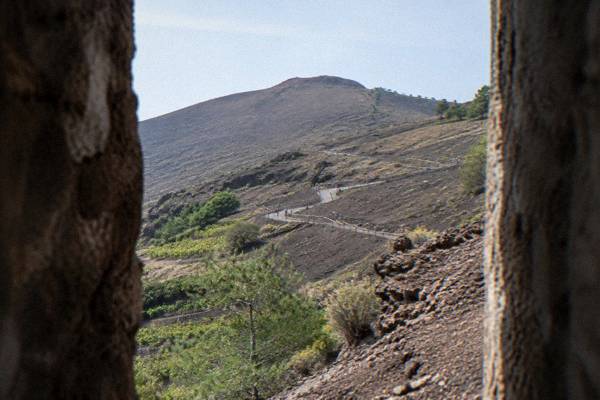
How Many People Died When Mount Vesuvius Erupted In 1944?
The 1944 eruption of Mount Vesuvius above Pompeii and Naples killed far fewer people than the AD 79 eruption that buried the ancient city. What the record shows, and how to visit the volcano safely today.
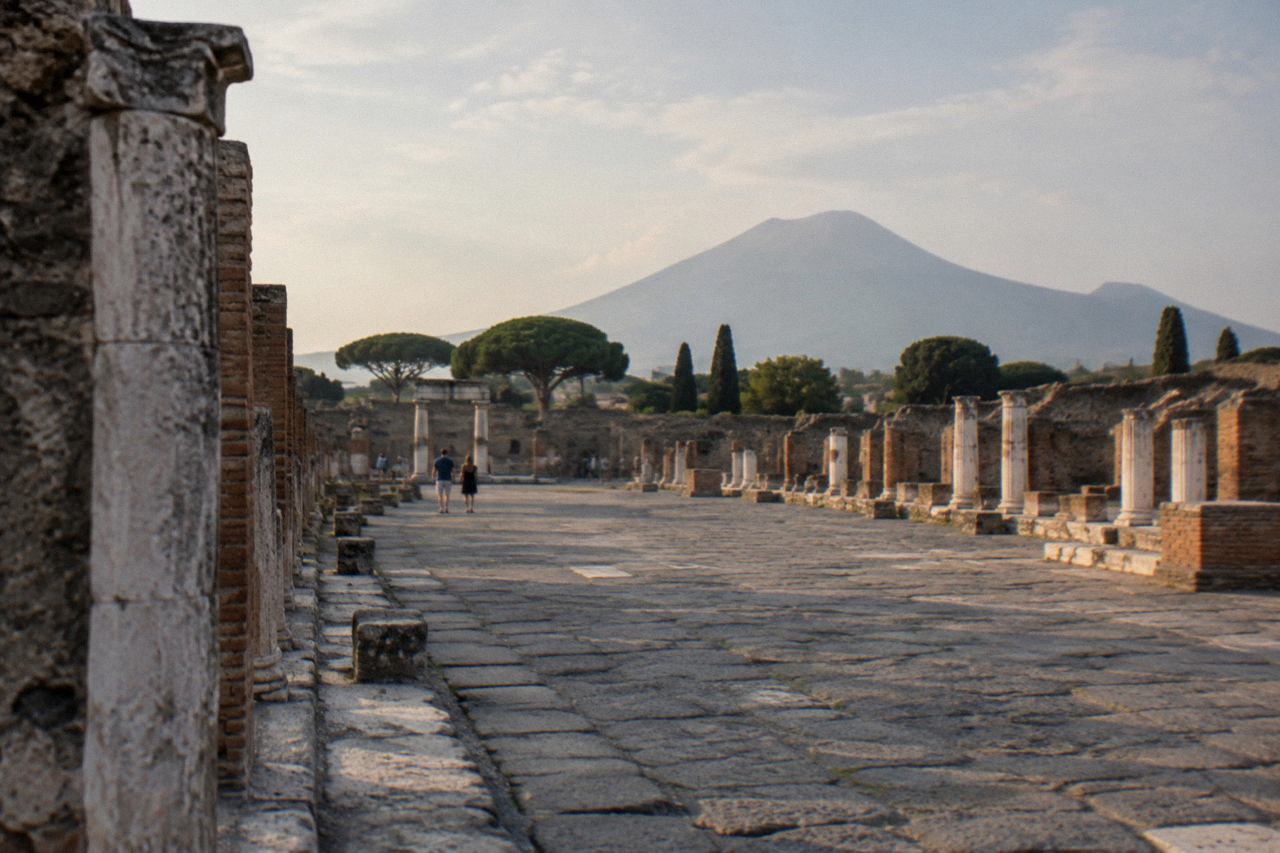
Mount Vesuvius, the volcano that looms over the Bay of Naples about 24 km south-east of the city and directly above the archaeological park of Pompeii in Campania, Italy, last erupted in March 1944. The question people ask after learning that the same mountain buried the Roman city in AD 79 is a natural one: how many died this time? Contemporary accounts attribute deaths to collapsing roofs weighted with ash, to accidents during the evacuation of villages on the northern slopes, and to a bomber crew from the Allied airfield at Terzigno, but tallies differ between sources and the site's rule is simple: no number without a primary source.
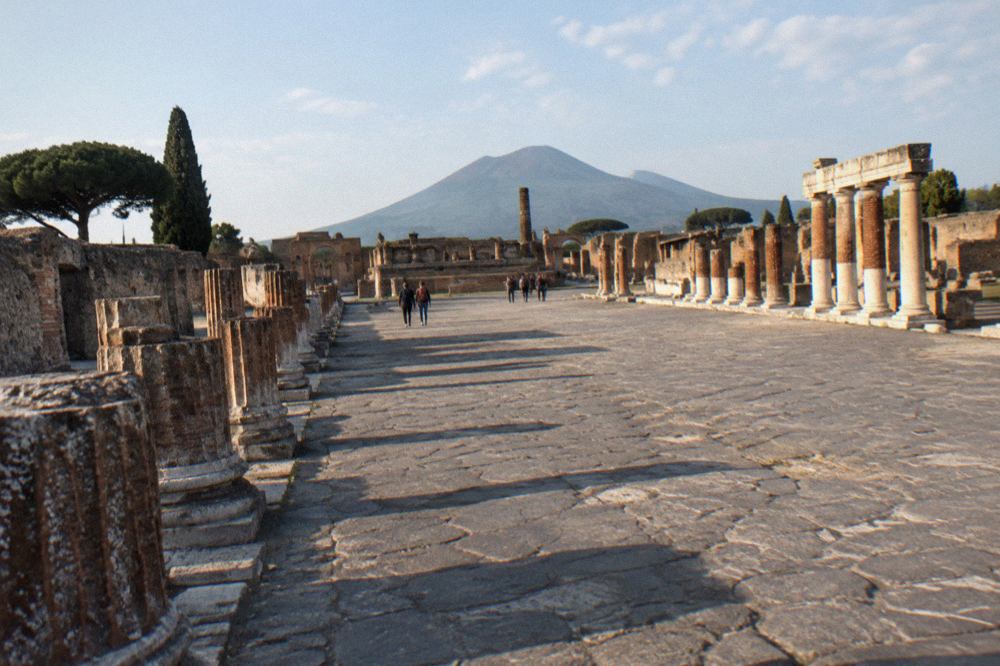
What makes the 1944 eruption genuinely interesting is the contrast with AD 79. Two eruptions, same volcano, wildly different outcomes, and the reasons are not luck. They are warning systems, evacuation, and the fact that by 1944 nobody believed Vesuvius was just a mountain covered in vines.
How Many People Died When Mount Vesuvius Erupted In 1944?
The March 1944 eruption of Mount Vesuvius caused a small number of deaths, a toll contemporary accounts count in the tens, far below the catastrophe of AD 79 that buried Pompeii. Deaths came from ash-weighted roof collapses and evacuation accidents among the villages on the volcano's slopes, and from a lost Allied bomber crew. Because confirmed tallies differ across sources, this site prints no single number, only the documented pattern.
The eruption began in mid-March 1944, after a period of activity that had given the surrounding population warning. Ash and lapilli fell heavily on San Giuseppe Vesuviano, Nola and other communes north and east of the crater, and roofs that had survived the initial bombardment of stone gave way under the weight. Lava flows ran down the northern and northwestern flanks, destroying villages and farmland but moving slowly enough that residents could leave on foot. That slow advance is the central reason the human toll stayed low: people could simply walk away from the lava, something the residents of Roman Pompeii, facing pyroclastic surges in AD 79, could not do.
The Allied military context matters too. Allied forces occupied the area during the war, and airfields around the volcano, including one at Terzigno on the southern flank near the park's Boscoreale site, were directly in the path of ashfall. Military personnel also assisted with evacuations and clearance, which further reduced civilian casualties. The 1944 eruption, in short, happened in a world with radio, vehicles, organised civil response and an understanding of what the volcano could do.
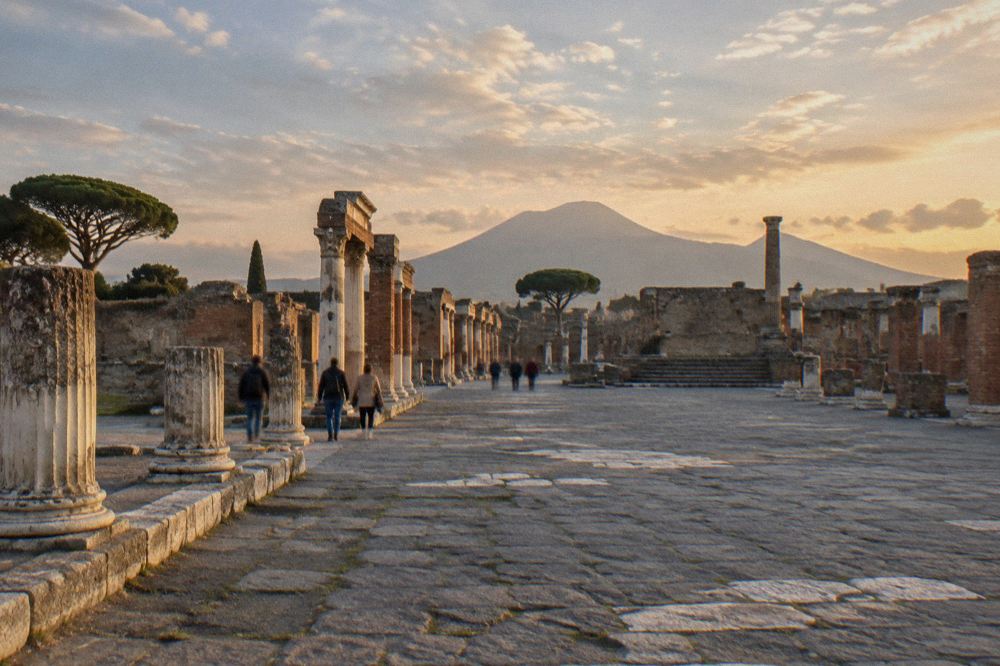
If you are working through the volcano's full history of destruction, our page on exactly how many people died in Pompeii covers the AD 79 side of the ledger, and why Naples was not destroyed by Vesuvius explains the geography that spared the region's biggest city in both eruptions.
Why Did The 1944 Eruption Kill So Few People Compared To AD 79?
The 1944 eruption killed far fewer people than the AD 79 eruption because it produced slow lava flows and steady ashfall rather than the sudden pyroclastic surges that destroyed Pompeii and Herculaneum, and because the 1944 population had warning, evacuation on foot and by vehicle, and organised help. In AD 79 the lethal phenomena moved faster than anyone could run.
The AD 79 eruption, traditionally dated to 24 August, though scholars still debate the date, generated pyroclastic surges: clouds of gas, ash and debris moving at speeds no Roman on foot could outrun, and hot enough to kill instantly. Pompeii, the ancient city now an archaeological park beside the modern town of Pompei, was buried under metres of pumice and ash. The 1944 eruption was a different animal. Its lava was viscous and slow. Its ash fell over hours and days, heavy enough to threaten roofs but predictable enough to allow escape. Nobody in 1944 was surprised by the mountain; the villages on its slopes had lived through the eruption cycle and knew the signs.
There is a lesson here that modern visitors still benefit from. The 1944 eruption was the last, and the volcano is monitored continuously today. What the 1944 event proved is that outcomes depend on the eruption style and on how much warning people get, which is exactly why the national park now manages access to the crater so tightly, with timed online tickets and automatic closure of the path on an orange weather alert or higher. Our guide to Mount Vesuvius tickets sets out how that system works, and whether Vesuvius will ever erupt again covers the monitoring picture.
For context on how much has changed, the park's own official visitor table shows the scale of modern interest in the AD 79 sites it protects:
| Year | Pompeii site visitors | All park sites visitors |
|---|---|---|
| 2022 | 2,972,159 | n/a |
| 2023 | 3,985,424 | 4,079,235 |
| 2024 | 4,069,377 | 4,177,753 |
| 2025 | 4,000,090 | 4,118,926 |
What Did The 1944 Eruption Destroy Around Vesuvius?
The 1944 eruption destroyed villages, farmland and Allied airfield infrastructure on the volcano's northern and eastern slopes, including homes in San Giuseppe Vesuviano and neighbouring communes, vineyards on the flanks, and buildings at the Terzigno airfield, while killing a small number of people. Property damage ran into thousands of buildings; the human toll stayed in the tens.
Two communes on the northern slope, San Sebastiano al Vesuvio and Massa di Somma, alongside San Giuseppe Vesuviano further east, bore the brunt of the ashfall and lava. Contemporary reporting describes homes crushed by ash-laden roofs and orchards and vineyards smothered under lava and lapilli. The vineyards matter to the region's story in a way that connects directly to the modern visitor: Vesuvius wine, grown in the volcanic soil of the national park's slopes, is the descendant of those replanted vineyards, and wine tasting on the volcano is now one of the established ways to spend a day in the area. The Pompeii Travel Guide editorial desk covers those options in its guide to Pompeii wine and Vesuvius wine tasting.
The Allied dimension also shaped the damage record. Ashfall ruined aircraft engines and forced the relocation of squadrons from the Terzigno airfield, near where the park's Villa Regina at Boscoreale stands today. That intersection of war and volcano is one of the stranger chapters of the mountain's modern history, and it explains why so much period photography of the eruption exists: military cameramen were on the ground.
The scale comparison with antiquity is best kept qualitative. The AD 79 eruption buried an entire city, an excavated area today of 44 hectares within a UNESCO inscribed property of 98 hectares covering Pompeii, Herculaneum and Torre Annunziata. The 1944 eruption, by contrast, damaged a belt of villages and farmland without erasing any town from the map.
Can You Visit The Volcano That Erupted In 1944?
Yes, Vesuvius is open to visitors and is now a national park with a managed crater trail, the Gran Cono, sold as timed online tickets at EUR 11.68 full and EUR 9.55 reduced as sold. Access hours run from 09:00-15:00 in January, February, November and December to 09:00-18:00 in July and August, with daily caps of 2,160 to 3,240 visitors.
The mountain that erupted in 1944 is quiet, and visiting it is one of the standard pairings with the Pompeii archaeological park. The Gran Cono trail, described in detail in our Vesuvius crater trail guide, takes about 2 hours return by the shortest route and up to 3 hours by the longest. Tickets are sold online only through the national park's official ticketing channel, in 10-minute slots of 50 tickets bookable up to 30 days ahead, with 10 last-minute nominative tickets per slot released from 30 minutes before, a rule in force since 11 April 2026. If you are weighing the climb, how long the walk up Vesuvius is and whether it is cold at the top answer the two questions people ask first.
The access rules exist because the mountain is an active volcano inside a national park, not a museum. The path and ticket office close automatically on an orange weather alert or higher, with an automatic refund. The current alert level is a monitoring question for the volcanological observatories, and this site prints none.
| Period | Access hours | Daily cap |
|---|---|---|
| January, February, November, December | 09:00-15:00 | within the 2,160-3,240 range |
| March and October | 09:00-16:00 | within the 2,160-3,240 range |
| April, May, June, September | 09:00-17:00 | within the 2,160-3,240 range |
| July and August | 09:00-18:00 | within the 2,160-3,240 range |
How Do You Combine The 1944 Volcano With The AD 79 City In One Day?
Pairing Pompeii and Vesuvius in one day is the classic itinerary from Naples, and guided day tours handle the logistics, timings and crater access for you. Decide whether the ruins or the crater matters more to you and put that first, because both involve real walking, and the crater's timed slots fix your afternoon more firmly than the park's entrances do.
The trade-off question, Pompeii or Vesuvius first, is worth reading before you book anything, and our two-day Pompeii, Herculaneum and Vesuvius itinerary is the slower alternative if one day feels thin. A guided option that covers both from Naples is the Pompeii Ruins and Mount Vesuvius day tour, which this site features: the operator's live listing carries every current figure, Check availability before you build your day around it. If instead your heart is set on the ruins themselves, an archaeologist-led small group tour of Pompeii is the other strong format, and it renders in full below.
For travellers basing themselves further afield, how much it costs to go up Mount Vesuvius and whether you can drive up cover the independent route, while whether going up is worth it is the honest verdict for cruise passengers and short-stay visitors pressed for time.
Common Questions About The 1944 Vesuvius Eruption
How many people died when Mount Vesuvius erupted in 1944?
A small number, counted in tens rather than thousands: deaths came from ash-weighted roof collapses, evacuation accidents in the villages on the slopes, and the loss of an Allied bomber crew. Confirmed tallies differ between sources, so this site prints no single number.
Was the 1944 eruption worse than the one that buried Pompeii?
No. The AD 79 eruption generated pyroclastic surges that killed instantly across Pompeii and Herculaneum. The 1944 eruption produced slow lava and heavy ashfall that allowed evacuation, which is why its death toll was a tiny fraction of antiquity's catastrophe.
Is Vesuvius still erupting?
No. The March 1944 eruption was the most recent. The volcano is monitored continuously and its crater is visited as a national park trail, the Gran Cono, with timed online tickets and automatic closure of the path on an orange weather alert or higher.
Did anyone in Pompeii's ruins die in 1944?
The archaeological park of Pompeii was not in the destruction zone of the 1944 lava flows, which ran down the northern flanks away from the excavations. The damage fell on villages such as San Sebastiano al Vesuvio, Massa di Somma and San Giuseppe Vesuviano.
Why do sources give different death tolls for 1944?
Because the event happened in a war zone in 1944, with displaced populations, military casualties and incomplete civil records. Reports compiled afterwards disagree, and no single official tally was confirmed for this page, so only the documented pattern is printed here.
The 1944 eruption closed a chapter rather than opening one: it was Vesuvius's last to date, the end of a cycle rather than a beginning, and the mountain has been a monitored, visited, vineyard-covered park ever since. For anyone standing on the crater rim today with the Bay of Naples spread below, the small human toll of that March is the clearest reminder of what warning and evacuation buy, and of how different the fate of the villages was from the Roman city whose excavated 44 hectares sit quietly on the plain below.