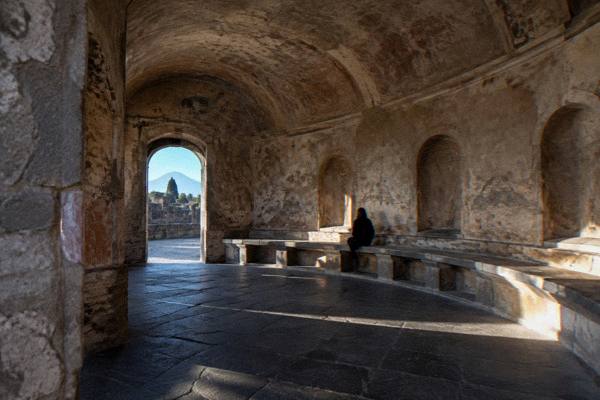
What Is Unique About The Villa Of The Mysteries In Pompeii?
The Villa of the Mysteries outside Pompeii's walls holds the finest surviving Roman fresco cycle, the Dionysiac paintings. Here is what makes it unique and how to visit.
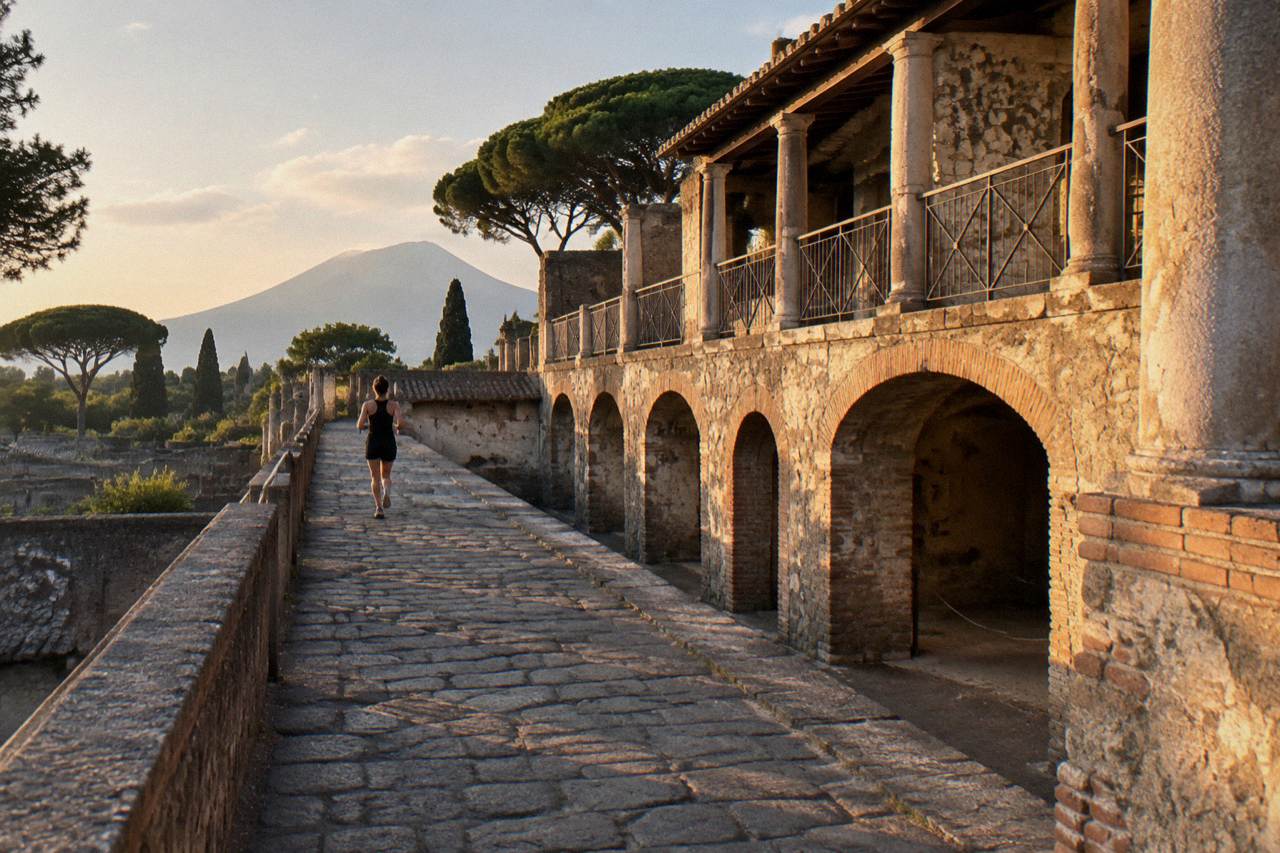
The Villa of the Mysteries stands just outside the ancient walls of Pompeii, the Roman city buried by the eruption of Mount Vesuvius in AD 79, in Campania, southern Italy, beside the modern town of Pompei about 24 km by road from Naples. What makes it unique among all the buildings of Pompeii is a single, astonishing survival: the great Dionysiac fresco cycle that still wraps the walls of its largest reception room, painted for the room it occupies and never removed, never rebuilt, never copied from a museum reconstruction. Almost every famous Roman painting a visitor sees elsewhere is a detached fragment or a later copy. Here the whole room survives, figures and panels and architecture together, exactly where the painters left it when the eruption, traditionally dated to 24 August, buried the villa along with the city. This page explains what the frescoes show, where the villa sits, and how to reach it under the ticket rules in force for 2026.
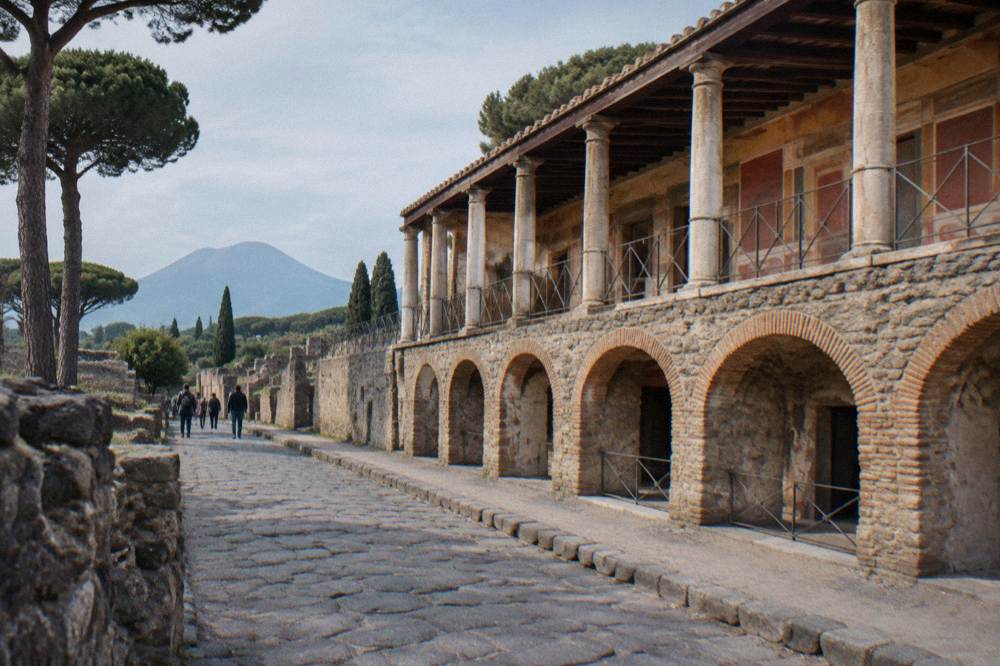
What Is Unique About The Villa Of The Mysteries In Pompeii?
The Villa of the Mysteries is unique because it preserves the most complete Roman fresco cycle surviving from antiquity, the Dionysiac frieze, still in place in the villa's great hall. It is also unique in setting: a grand suburban villa outside Pompeii's walls, reached by its own route rather than through the city streets. Together, the completeness of the paintings, the survival of the room they were designed for, and the villa's position outside the walls make it unlike anything else in the park.
That first point deserves its full weight. Painting on plaster is fragile. Fires, rebuildings, collectors and damp destroy it, and what usually survives of Roman painting is a wall here, a fragment there. The Villa of the Mysteries instead keeps a continuous painted programme running around all four walls of one large room: a procession of life-size figures, seated and standing, some near-life-size divinity, some mortal participant, unfolding across a deep red ground that is the colour people now call Pompeian red. Nothing equivalent survives anywhere in the Roman world in this state of completeness.
The second point is positional. Pompeii's houses crowd together inside the walls; this villa stood apart, a country residence outside the city gate, with vineyards on the lower slopes of Vesuvius. That separation mattered in antiquity and it matters now, because the villa sits on the suburban villas route, reached through the Porta Ercolano / Street of the Tombs entrance, not through the three main city ticket offices at Porta Marina, Piazza Esedra and Piazza Anfiteatro. Readers planning the whole site should start with the site's own attraction guide to the Villa of the Mysteries for the building itself, then come back here for the frescoes and the practicalities.
There is also a quieter uniqueness. Because the villa was sealed rather than burned like Herculaneum, and because the paintings were protected by the eruption debris rather than exposed to weather, the frieze reads as a single composed work. A visitor standing in the room sees what a Roman guest saw, which is something no other building in Pompeii can offer to the same degree.
Why The Dionysiac Fresco Cycle Cannot Be Seen Anywhere Else
The Dionysiac cycle cannot be seen anywhere else because it was never moved, never repainted over and never replicated: it is a one-off decorative programme tied to one room in one villa. Other Roman sites hold fragments, copies or detached panels, while Pompeii's villa keeps the full sequence of figures in sequence around the walls it was designed for. Its survival is an accident of the AD 79 burial, which sealed the room intact.
The subject is a mystery in the scholarly sense, meaning a rite. The frieze shows figures engaged in preparation for initiation into the cult of Dionysus, the god the Romans called Bacchus: a seated matron, a winged figure, dancers, a nude youth reading, a silenus playing a lyre, a child, and a kneeling figure undergoing something hidden from the viewer. The paintings deliberately withhold the rite's climax. Scholars still argue over the precise meaning, whether it depicts a real initiation ceremony, a marriage rite reworked in Dionysiac terms, or a painted statement about the household's religious life. Nobody has settled it, and the debate is part of the room's pull.
What is not in debate is the quality. The figures are modelled with a confidence that ancient painting is rarely allowed to show, since so little ancient painting survives to compare. The painter, whoever they were, worked with the architecture: the low podium around the room's base, the painted architecture above, and the illusion that the figures stand on that podium inside the room with you. When you stand there, the painted figures are effectively at eye level across the room, which is exactly the effect intended.
A specialist guided visit changes what the room gives you, because an archaeologist can walk the walls figure by figure instead of leaving you to guess which painted moment answers to which. For readers weighing guided options generally, the companion answer on choosing the best tour for Pompeii sets out the trade-offs, and the villa-specialist option is linked below.
The site's dedicated villa tour is listed here: Check availability
Where The Villa Sits And Why Its Position Shapes The Visit
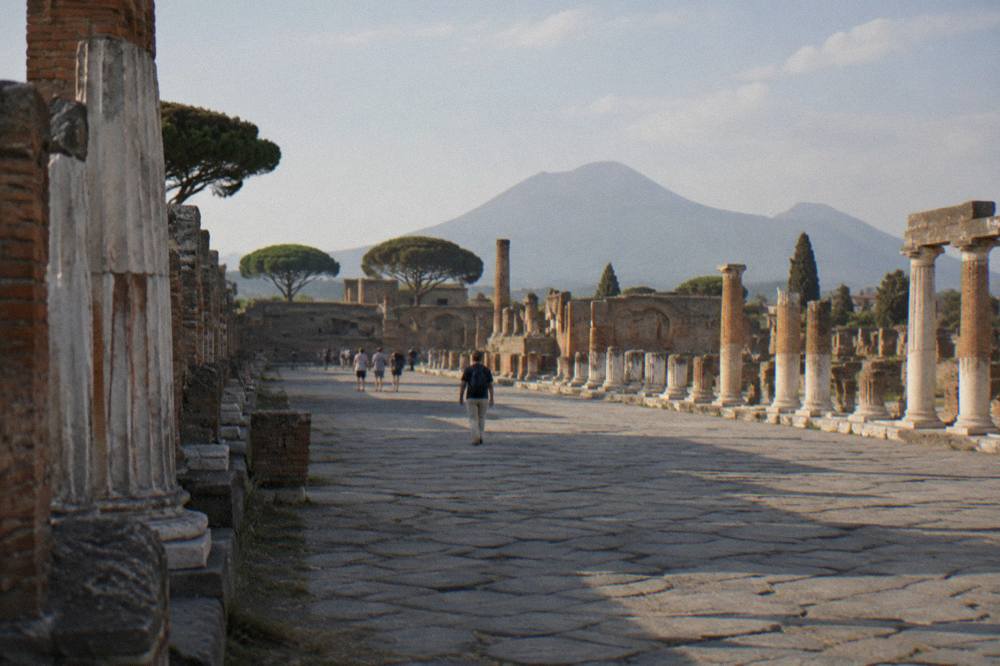
The Villa of the Mysteries lies outside Pompeii's north-west city wall, beyond the Porta Ercolano gate along the Street of the Tombs, the road lined with Roman tombs that led away from the city. Because it sits on the suburban villas route, visitors reach it through the Porta Ercolano / Street of the Tombs entrance, and ticket rules for that route differ from the standard city ticket in 2026. Its position, a working villa on Vesuvius's slopes, is also why it was built grand and buried deep.
The Street of the Tombs is one of the most atmospheric approaches in the whole park: Roman funerary monuments on both sides, the villas of the wealthy standing among them, and the modern railway station named for the villa itself, Pompei Scavi-Villa dei Misteri, a short walk away. This is the answer to a practical question many readers arrive with, namely whether the ruins are walkable from the station; the site's answer on walking from the station to the ruins covers that route in detail, and the villa side of the site is the side the station serves.
Two neighbouring suburban houses, the Villa of Diomedes and the House of the Cryptoporticus, stand on the same route, and the wider string of Roman villas around the Bay of Naples has its own itinerary, the villas of Vesuvius route. The Villa of the Mysteries is the grandest of them and the only one carrying a fresco cycle of this rank, which is why the question of which villa is best preserved has a short answer covered separately.
Do note that on the other side of the bay, Herculaneum's Villa dei Papiri is closed for works, along with Herculaneum's Ancient Theatre, so the Mysteries villa currently stands effectively unchallenged as the villa to see in the Vesuvian area.
Which Ticket Covers The Villa Of The Mysteries In 2026?
In 2026 the standard Pompeii Express ticket at EUR 20 does not include the suburban villas route; the villas are covered by the Pompeii+ ticket at EUR 25, or by adding the villas route to an Express ticket for EUR 8, payable by card only at the Porta Ercolano / Street of the Tombs entrance. Children under 18 enter free, EU citizens aged 18 to under 25 pay a EUR 2 reduction, and everyone enters free on the first Sunday of the month.
That is the whole ticket picture for this villa under the 2026 tariff, in force since 12 January 2026. The table below puts the options side by side as the park's ticketing page lists them. Free first-Sunday entry applies year-round under the Domenica al Museo scheme, though it is worth remembering the park caps daily entry at 20,000 visitors, a limit in force since 15 November 2024, and one free first Sunday has drawn more than 36,000 people, so crowds on those days are real.
| 2026 ticket | Price | Covers the Villa of the Mysteries? | Notes |
|---|---|---|---|
| Pompeii Express | EUR 20 | No | Ancient city only |
| Pompeii+ | EUR 25 | Yes | City, suburban villas route, Villa Regina and Antiquarium at Boscoreale, shuttle |
| Express + villas add-on | EUR 8 on top of EUR 20 | Yes | Card only, bought at the Porta Ercolano / Street of the Tombs entrance |
| 3-day ticket | EUR 30 | Yes | Pompeii+ plus Oplontis, Stabiae villas and museum, Boscoreale |
| Reduced (EU 18 to under 25) | EUR 2 | Applies to any ticket | ID checks at entry |
| Under 18 or first Sunday | Free | Yes | Nominative ticket rules still apply |
One further rule from the park's visitor regulations matters here: bags larger than 30x30x15 cm must go to left luggage, and tickets are nominative, non-transferable and non-refundable except for extraordinary closure. If buying in advance is part of your planning, the site's answer on whether to buy Pompeii tickets in advance is the right companion read, and the general ticket page at Pompeii ticket options explained covers the full tariff.
How The Ticket Rules Change From 1 January 2027
From 1 January 2027 the Express, Pompeii+ and 3-day structure ends and a single EUR 25 ticket covers all park sites, valid 30 days with one entry per site, which simplifies villa access: no more EUR 8 add-on at the gate. The smaller outlying sites, Oplontis, the Stabiae museum and Boscoreale, stay EUR 8 each, and the MyPompeii Card stays EUR 45. Nominative tickets and the 20,000 daily cap are retained.
For this villa specifically the change is good news. The add-on purchase at Porta Ercolano, card only, is the one small friction in the current system for Express holders, and it disappears. A reader visiting in 2027 buys one ticket and the suburban villas route is simply part of it.
| What | Until 31 December 2026 | From 1 January 2027 |
|---|---|---|
| City only | Express EUR 20 | Single ticket EUR 25, all park sites |
| City plus villas | Pompeii+ EUR 25, or Express plus EUR 8 add-on | Included in the EUR 25 ticket |
| Multi-site pass | 3-day ticket EUR 30 | Not needed; EUR 25 ticket valid 30 days, one entry per site |
| Oplontis, Stabiae museum, Boscoreale | EUR 8 each | EUR 8 each, unchanged |
| MyPompeii Card | EUR 45 (EUR 10 reduced) | EUR 45, unchanged |
Seeing The Villa With A Guide Or On Your Own
The villa can be seen independently with a Pompeii+ ticket or the villas add-on, and the frescoes reward a slow, self-paced look. But because the frieze's meaning is genuinely contested and unlabelled, a guided visit adds more here than at almost any other building in Pompeii. Self-guiding suits confident readers on a budget or a tight schedule; a guide suits anyone who wants the figures explained rather than merely admired.
If you go alone, plan the direction: the villa is at the far end of the suburban route from the city, so coming from the Pompei Scavi-Villa dei Misteri station side puts it first, which is ideal in the heat of the day. The site's coverage of touring Pompeii on your own walks through the whole self-guided case, and how difficult it is to walk in Pompeii sets out what the surfaces and distances actually involve.
If you prefer a guide, the general-entry option below pairs an entry ticket with an archaeologist-led small-group walk of the city itself, a different product from the villa-specialist tour, and useful when the villa is one stop within a wider visit.
Whichever way you go, allow unhurried time in the great hall itself. The room is the point. Everything else in the villa, the restored winery areas, the terrace outlooks toward Vesuvius, supports the moment when the red walls resolve into figures, and that moment is why the question this page answers has the answer it does.
Common Questions About The Villa Of The Mysteries
What is unique about the Villa of the Mysteries in Pompeii?
It holds the most complete Roman fresco cycle to survive anywhere, the Dionysiac frieze, still in the room it was painted for, in a grand villa standing outside the city walls on the Street of the Tombs. No other building in the park, or in the Roman world, offers a painted programme of this completeness in place.
Do I need a special ticket for the Villa of the Mysteries in 2026?
Yes, in effect: the EUR 20 Pompeii Express covers the ancient city only. The villa is on the suburban villas route, covered by the EUR 25 Pompeii+ ticket, or by adding the route to an Express ticket for EUR 8, card only, at the Porta Ercolano / Street of the Tombs entrance. From 1 January 2027 a single EUR 25 ticket covers all park sites.
What do the frescoes in the Villa of the Mysteries show?
They show figures preparing for initiation into the rites of Dionysus: a seated matron, dancers, a winged figure, a silenus with a lyre, a child, and a kneeling initiate. The precise meaning is still debated by scholars, which is part of why the room fascinates.
Is the Villa of the Mysteries inside the main Pompeii site?
It sits just outside the ancient city wall, beyond the Porta Ercolano gate along the Street of the Tombs. Visitors reach it through the Porta Ercolano / Street of the Tombs entrance, and the modern railway stop Pompei Scavi-Villa dei Misteri is on that side of the site.
How long should I spend at the Villa of the Mysteries?
The villa itself rewards at least half an hour in the painted hall and a walk through the terrace areas, longer with a guide who explains the frieze figure by figure. Allow more for the whole suburban route, including the Villa of Diomedes, if your ticket covers it.
Can children visit the Villa of the Mysteries?
Yes, and under 18s enter the park free. Some painted figures relate to Dionysiac rites and fertility, which parents of younger children sometimes want to know in advance, but nothing is restricted and the villa is a normal stop on family visits.
Readers comparing the villa against the city's other grand houses can settle the ranking question in the site's answer on the best-preserved villa in Pompeii, while Pompeii Travel Guide remains the hub for planning the whole visit, from tickets to the train.