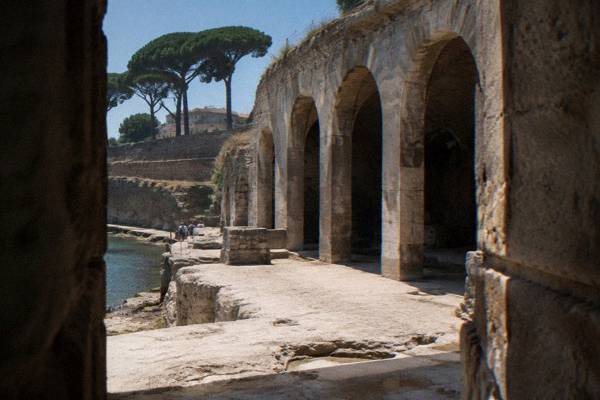
Herculaneum
Herculaneum is the smaller, better-preserved sister city of Pompeii, buried by the same eruption of Mount Vesuvius in AD 79 and now an archaeological site in the modern town of Ercolano, Campania, southern Italy.
Short answer
Herculaneum is an ancient Roman city buried by Vesuvius in AD 79, excavated within the modern town of Ercolano, about 12 km west of Pompeii on the Bay of Naples. Entry in 2026 is EUR 16 full, EUR 2 for ages 18 to 25, free on the first Sunday of each month. The Villa dei Papiri and the Ancient Theatre are closed until further notice.
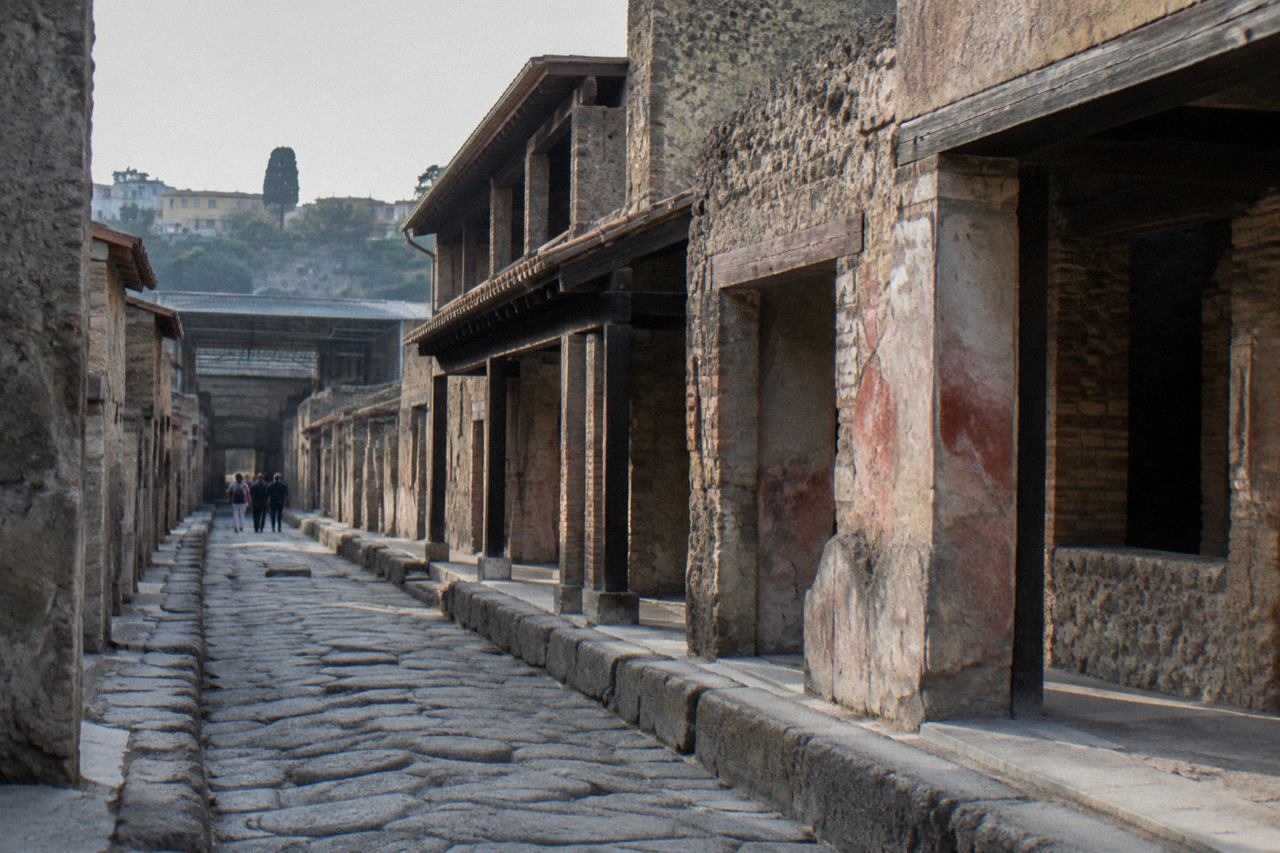
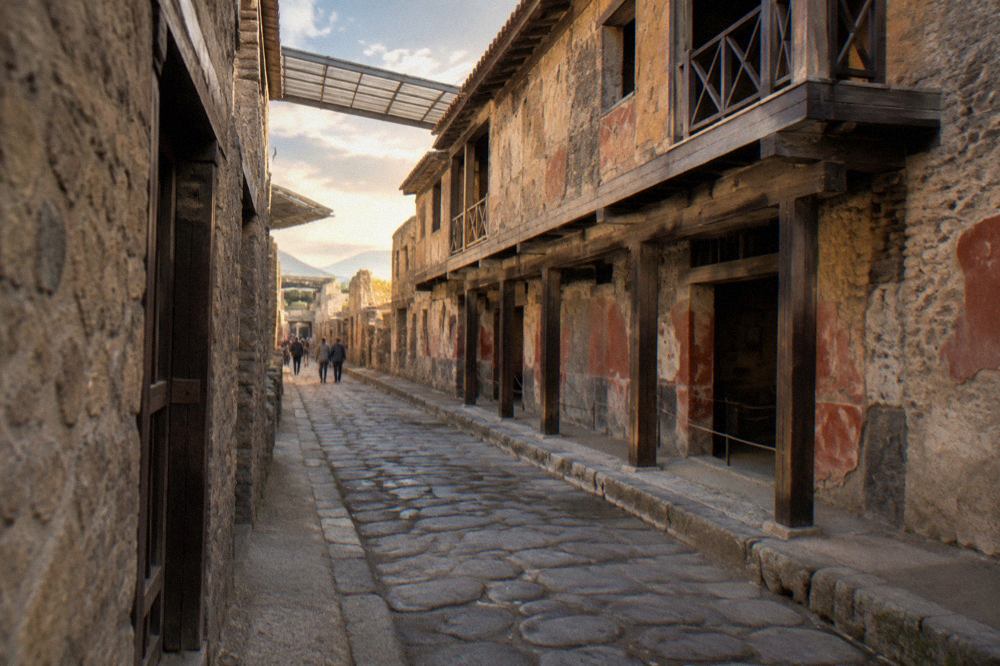
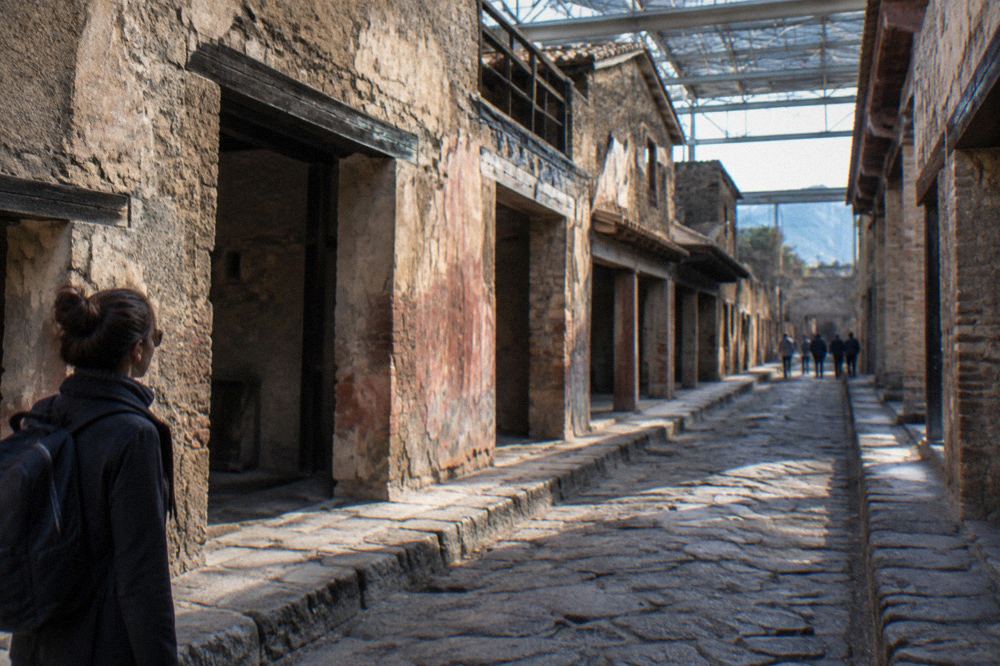
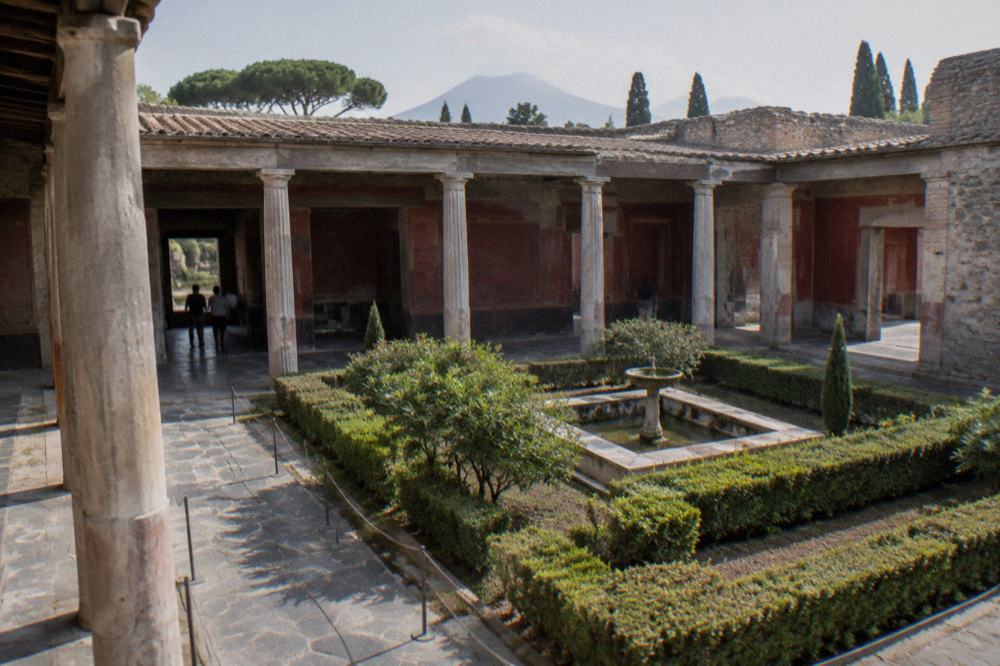
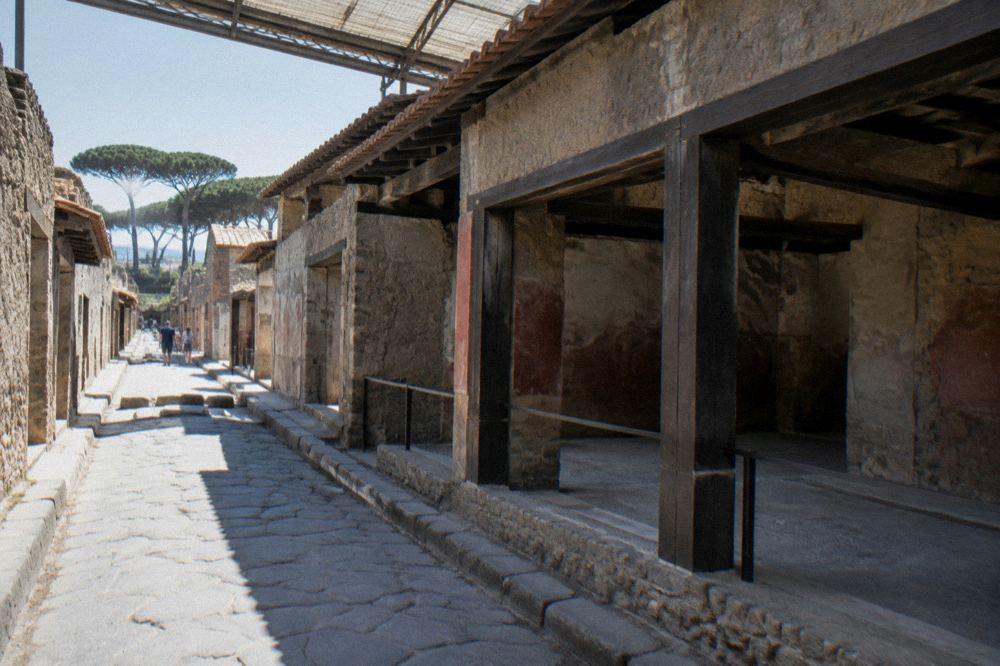
Herculaneum is an ancient Roman city buried by the eruption of Mount Vesuvius in AD 79, the same eruption that destroyed Pompeii, and today it is an open-air archaeological site inside the modern town of Ercolano in Campania, southern Italy, on the Bay of Naples west of Pompeii. Where Pompeii was a busy commercial city stopped mid-motion, Herculaneum was a smaller seaside town of villas and workshops, and the way it was buried, by volcanic material that carbonised rather than incinerated, left wooden doors, screens, beds and even food survives in place. The site is compact, walkable in two to three hours, and it answers a question Pompeii cannot: what did Roman interiors actually look like, timber and all.
This page from Pompeii Travel Guide covers the practical side of a Herculaneum visit: what a ticket costs in 2026, when the site opens, which famous parts are currently closed, how the town compares with Pompeii for a day trip, and which guided options exist. Herculaneum sits inside the same UNESCO World Heritage property as Pompeii and Torre Annunziata (site 829, inscribed under criteria (iii), (iv) and (v)), so it usually appears on itineraries built around the bigger park, and the comparison is worth doing honestly rather than treating the two as interchangeable.
What Is Herculaneum And Why Was It Preserved So Well?
Herculaneum was a coastal Roman town of a few thousand residents, buried in AD 79 by the same eruption of Vesuvius that destroyed Pompeii, and its organic material survived because hot volcanic material carbonised wood rather than burning it away. The traditional date of the eruption, from the oldest Pliny manuscripts, is 24 August, though the park's own journal notes the debate remains open. Smaller and deeper-buried than Pompeii, it yields complete interiors rather than empty stone shells.
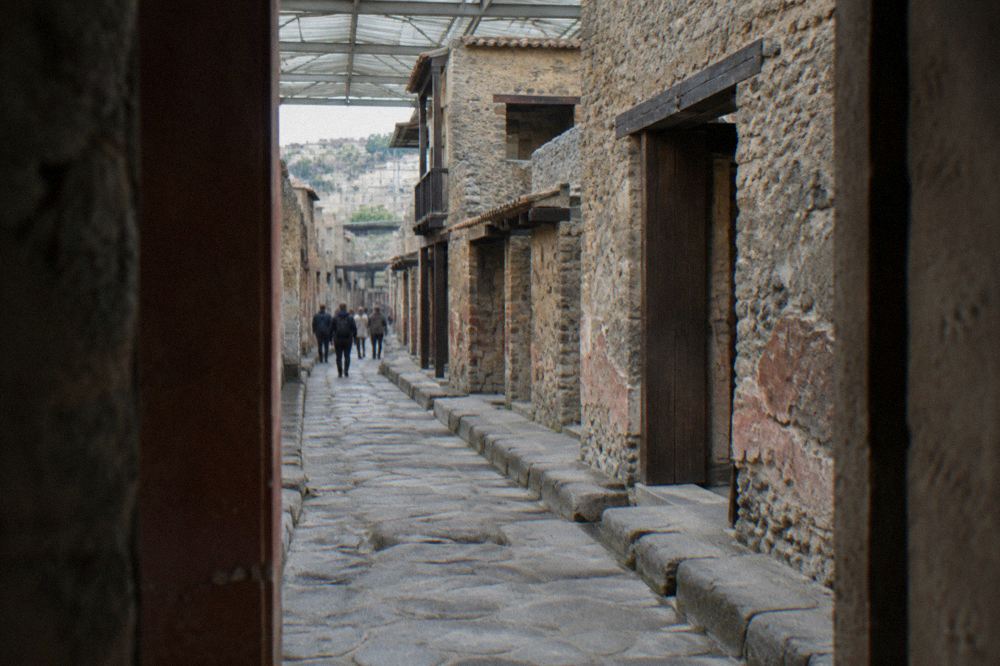
The town lies at the western foot of Vesuvius, and the eruption's pyroclastic surges that reached it were hot enough and slow-arriving enough to carbonise timber, papyrus and food while encasing whole buildings. Excavation, which began decades before systematic work at Pompeii, exposed multi-storey houses still standing to their upper floors, with window frames, staircases and partition screens in place. That is the site's singular draw: not scale, but completeness.
The price of that completeness is confinement. Herculaneum sits in a deep excavation pit surrounded on all sides by the modern town of Ercolano, whose buildings press against the rim, and roughly two-thirds of the ancient town still lies beneath them, which is one reason excavation continues only slowly. The part you can walk is a dense rectangle of streets, houses, baths and boat sheds, and it rewards slow looking far more than route-marching.
What Do Herculaneum Tickets Cost In 2026?
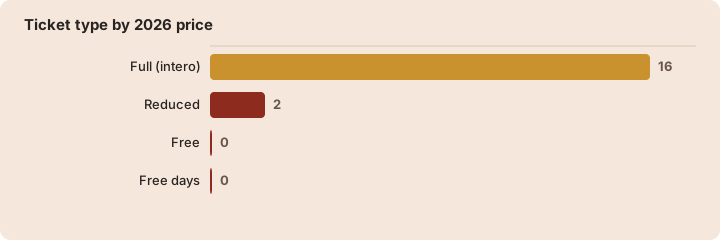
A full Herculaneum ticket costs EUR 16 in 2026, with a EUR 2 reduced rate for visitors aged 18 to 25, free entry for under-18s, and free entry for everyone on the first Sunday of each month plus 25 April, 2 June and 4 November. Free-day tickets are collected at the ticket office on the day, with no reservation. Hours and prices are those published on the official site.
The reduced EUR 2 rate applies to ages 18 to 25, mirroring the EU-wide young-adult discount used across Italian state museums. Note that Herculaneum is a separate park from Pompeii with a separate ticket: a Pompeii Express or Pompeii+ ticket does not admit you here, and the two sites are managed and priced independently. If you are planning both, the combined-visit question is covered in detail further down this page.
| Ticket type | 2026 price | Who it applies to |
|---|---|---|
| Full (intero) | EUR 16 | Adults |
| Reduced | EUR 2 | Ages 18 to 25 |
| Free | EUR 0 | Under 18 |
| Free days | EUR 0 | First Sunday monthly, 25 Apr, 2 Jun, 4 Nov |
For the Pompeii side of a two-site trip, ticket structures are different and time-bound, and they are covered in full on the Pompeii tickets and prices guide, including the change coming from 1 January 2027. Bookable products that bundle Herculaneum with a guide, with Pompeii, or with Vesuvius render their own live prices from their listings, so the figures below come from those operators rather than being typed here.
When Is Herculaneum Open, And When Should You Go?
Herculaneum is open daily, 8:30 to 19:30 from 16 March to 14 October (last entry 18:00) and 8:30 to 17:00 from 15 October to 15 March (last entry 15:30), closing only on 1 January and 25 December. Morning entry, soon after opening, is the calmest window, and the site's small size means late entry still allows a full circuit.
The site is a sunken pit with limited shade, so summer afternoons are hot work, and the Pompeii summer heat plan logic applies equally here, even though Herculaneum's circuit is far shorter.
| Period | Opening | Last entry | Closing | Closed days |
|---|---|---|---|---|
| 16 Mar to 14 Oct | 8:30 | 18:00 | 19:30 | 1 Jan, 25 Dec |
| 15 Oct to 15 Mar | 8:30 | 15:30 | 17:00 | 1 Jan, 25 Dec |
Free first Sundays deserve a caution. If your dates are flexible, a paid weekday morning is the comfortable choice.
What Can You Actually See, And What Is Closed Right Now?
The Villa dei Papiri is closed for works and the Ancient Theatre is closed until further notice, both confirmed on the official ticketing page, so two of the site's headline names are off the itinerary. Everything else is viewable: the boat sheds with their skeletons, the Suburban Baths, the House of the Deer, the SAMNITE House and the carbonised shops and houses along the decumanus.
The closures matter because both names carry fame. The Villa dei Papiri, the grand seafront villa whose buried library of carbonised scrolls has fired imaginations for centuries, is not currently walkable, and the Ancient Theatre is likewise shut. Plan around them rather than arriving expecting either. The full closure picture, with dates, is in the table below.
| Feature | Status | Notes |
|---|---|---|
| Villa dei Papiri | Closed for works | Confirmed on the official ticketing page |
| Ancient Theatre | Closed until further notice | No reopening date published |
| Boat sheds and skeletons | Open | Skeletons visible under the vaults |
| Suburban Baths, House of the Deer, SAMNITE House | Open | Carbonised wood and frescoes in place |
What remains is still the best-preserved Roman domestic architecture anywhere. The Herculaneum boat sheds hold the skeletons of residents who sheltered from the eruption, one of archaeology's most sombre sights, and the question of why Herculaneum holds skeletons where Pompeii holds plaster casts is answered on why no bodies were found in Herculaneum.
A guided small-group visit with an archaeologist is one way to make the closures irrelevant: the guide's narrative fills the gaps the barriers create. The two-site version of that tour is the one this site features, and it is described in the section on combining the cities below.
Herculaneum Or Pompeii: Which Should You Visit?
Choose Herculaneum for preserved interiors, carbonised wood, quiet streets and a short two-to-three-hour visit; choose Pompeii for scale, famous landmarks like the amphitheatre and the Forum, and a full-day experience. They are different products: Herculaneum is intimate and complete, Pompeii is vast and varied. The honest answer for a first trip with a full day available is both, and the two are directly connected by the same rail line.
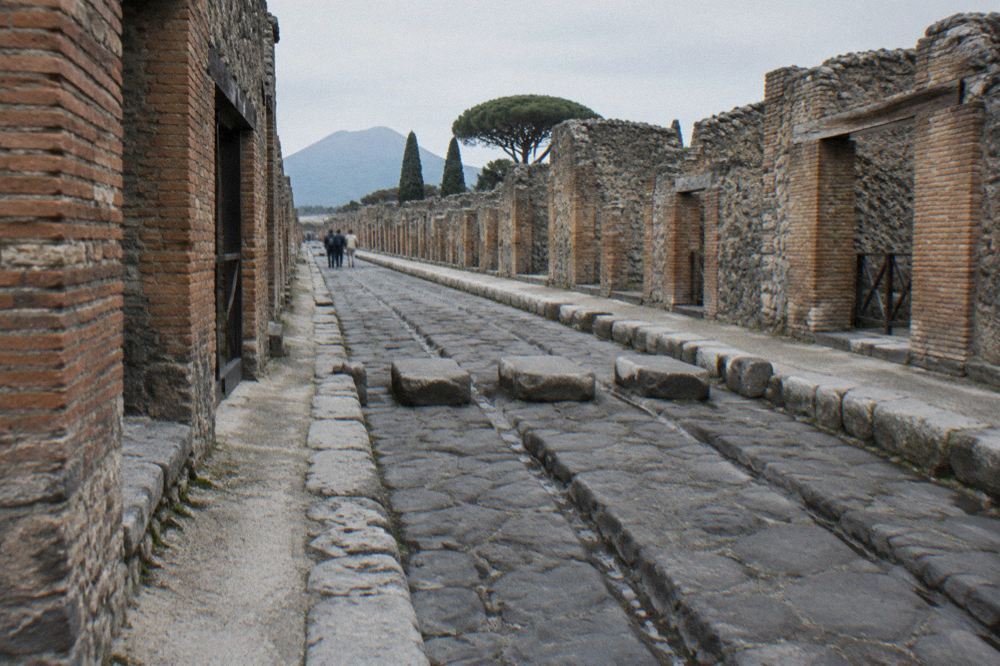
The Pompeii versus Herculaneum comparison covers the decision in depth, but the short version is about what each burial did. Pompeii was buried in lighter pumice that destroyed organic material but left walls standing over a huge area, roughly 44 hectares excavated within a 98-hectare inscribed property shared with Herculaneum and Torre Annunziata. Herculaneum was sealed in material that preserved wood, food and fabric in a much smaller footprint.
| Factor | Herculaneum | Pompeii |
|---|---|---|
| 2026 entry price | EUR 16 full, EUR 2 ages 18-25 | EUR 20 Express, EUR 25 Pompeii+ |
| Size of visit | Compact, 2-3 hours | Vast, half to full day |
| Organic survival | Carbonised wood, food, doors | Stone, plaster, mosaics |
| Famous landmarks | Boat sheds, Suburban Baths | Amphitheatre, Forum, Villa of the Mysteries |
| Current closures | Villa dei Papiri, Ancient Theatre | Praedia of Julia Felix since 7 Sep 2026 |
| Crowds | Moderate | Capped at 20,000 per day |
If Pompeii is your pick and Herculaneum a maybe, the headline Pompeii landmarks each have their own pages: the amphitheatre, the Villa of the Mysteries, the House of the Vettii and the Forum. If you have already done Pompeii, Herculaneum is the richer second act, not a rerun.
How Do You Get To Herculaneum?
Herculaneum is reached by the Circumvesuviana railway from Naples or Sorrento to Ercolano Scavi station, a short walk above the site's entrance, or by car to Ercolano on the Bay of Naples, about 12 km west of Pompeii's excavations. The Campania Express, the premium alternative train service, has been suspended since 1 October 2026 until further notice, so plan around the standard line.
EAV, the operator, announced on 16 September 2026 a plan of new trains and a new timetable for the Vesuvian lines, so timetables in late 2026 are in flux; check EAV's own timetable pages before travelling rather than relying on cached apps.
| Route | Status in October 2026 |
|---|---|
| Circumvesuviana Napoli-Sorrento line | Running, serves Ercolano Scavi |
| Campania Express | Suspended since 1 October 2026 |
| Naples to Pompei Scavi (same line) | 29 to 35 minutes scheduled |
| Car, Naples to Pompei Scavi | About 24 km by road |
The modern town itself is worth a paragraph: Ercolano is a working Vesuvian town, and the Ercolano area guide covers getting from the station down to the ticket office, food nearby and how the excavation sits inside the streets. Arrive with comfortable shoes; the descent into the site involves stairs and uneven Roman paving inside.
How Long Do You Need, And Is A Guided Tour Worth It?
Two hours is enough to see Herculaneum's core circuit, and three allows a slower pass with the boat sheds and baths; the site rewards depth over speed because its interest is in small preserved details a casual walk misses. A guided tour is worth it here more than at Pompeii, since carbonised doorframes and carbonised loaves mean little without explanation, and archaeologist-led options start in Ercolano or Naples.
The timing question has its own detailed answer on is 2 hours enough for Herculaneum. The short reasoning: Herculaneum's walkable area is small, but interpretation density is high. A guide who can point out a carbonised wooden screen, explain what the skeletons in the boat sheds tell us, and decode the bathhouse frescoes converts a confusing pit into a story.
Two products fit well. A Herculaneum small-group tour with an archaeologist, ticket included, runs from the site itself:
For travellers starting in Naples who want transport and ticketing handled together, a guided Herculaneum tour with tickets included departs from the city:
Whether guidance is worth it also depends on your appetite for preparation. The Pompeii guided tour versus self-guided guide lays out the same trade-off for the bigger park, and the logic transfers: guides buy context, independence buys flexibility. Herculaneum's small size means a bad guide is a larger share of your visit, so small-group or archaeologist-led formats are the safer bet here.
Can You Combine Herculaneum And Pompeii In One Day?
Yes, and it is a well-trodden plan: the two sites sit on the same Circumvesuviana line about 12 km apart, and a realistic day gives three hours to Pompeii in the morning and two to Herculaneum in the afternoon, or the reverse in cooler months when Herculaneum's later closing time helps. Doing both independently is easy; doing both with a guide is easier still, since the tour handles tickets and transfers.
The full independent itinerary, with timings and entrance choices, is on the Pompeii and Herculaneum in one day route, and the feasibility question is argued on can you do Herculaneum and Pompeii in one day. The one rule that matters: buy timed Pompeii entry in advance during the 16 March to 14 October band, because Pompeii slots are capped and nominative, while Herculaneum entry is simpler.
This is exactly the trip the featured tour on this page is built for: a small-group tour of both cities led by an archaeologist, with the interpretation gap at both sites filled by one guide. The tour and its live pricing are on the operator's live listing, and the site's own page carries the details.
If a single day feels rushed, the two days across Pompeii, Herculaneum and Vesuvius itinerary splits the load, and adding the volcano itself is covered by the Mount Vesuvius guide. The Vesuvius Gran Cono trail requires an online timed ticket bought in advance, which is worth booking the moment your day-trip dates are fixed, since slots sell out in peak season.
What Should You Not Miss Inside The Site?
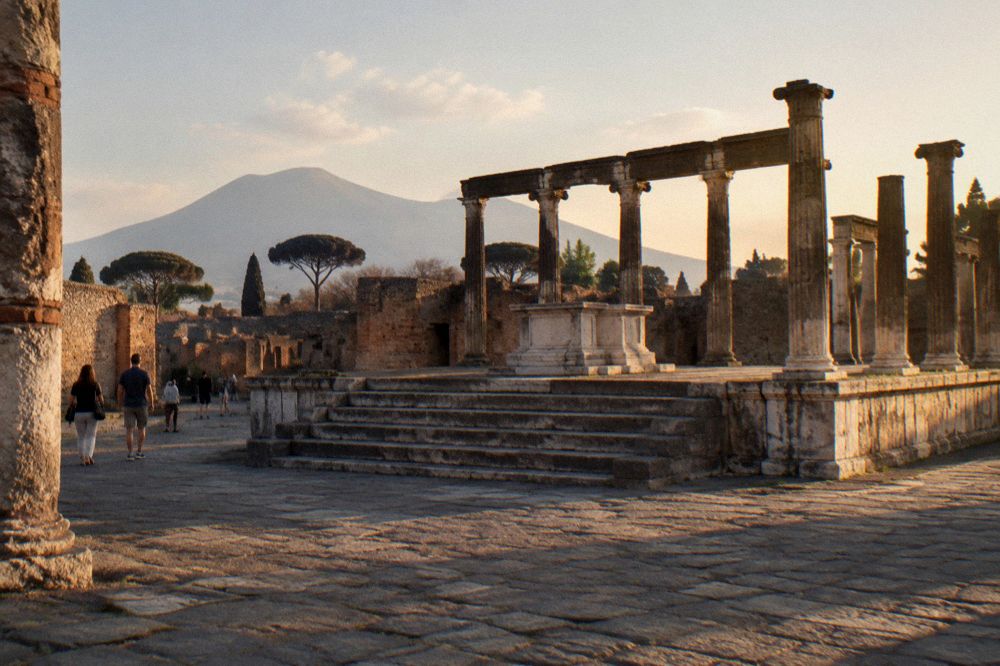
Do not miss the boat sheds with their skeletons, the Suburban Baths with intact stucco, the House of the Deer's seafront views, the SAMNITE House's painted panelling, and any shopfront with carbonised wood still in its frame: those five experiences are what separate Herculaneum from every other Roman site. Fresco lovers should also seek the mosaics and painted rooms that survived with their upper storeys intact.
Work a loop from the entrance down to the ancient shoreline, where the boat sheds sit at the level of the Roman sea, then back up through the decumanus maximus. The shoreline walk delivers the eruption's most direct evidence, and the deeper archaeology behind it, including what the skeletons reveal and the debate over who these people were, is unpacked on are the skeletons in Herculaneum real or fake.
| Sight | What makes it unmissable |
|---|---|
| Boat sheds | Skeletons sheltered from the eruption under the vaults |
| Suburban Baths | Stucco and marble interiors nearly complete |
| House of the Deer | Seafront terrace, garden sculpture |
| SAMNITE House | Painted panelling, early Roman decoration |
| Carbonised shopfronts | Wooden frames, doors and screens in place |
Excavation has never finished here, and what that means for the town under the modern buildings is explained on is Herculaneum still being excavated. The town's ancient name and its afterlife as Ercolano are covered on what is Herculaneum called today, a useful piece of orientation before you arrive, since station signs and bus destinations use the modern name only.
Where Does Herculaneum Fit In A Wider Bay Of Naples Trip?
Herculaneum works as a half-day anchor on any Bay of Naples itinerary: pair it with Pompeii for a one-day double header, with Vesuvius for a volcano-and-city day, or with Oplontis for a villas-focused alternative. Naples is the natural base, Sorrento works for coast-first trips, and the site's short visit length makes it the flexible component that fits around bigger commitments.
The wider frame: the Bay of Naples holds Pompeii, Herculaneum, Vesuvius, Oplontis at Torre Annunziata, the Stabiae villas near Castellammare di Stabiae and Boscoreale, all part of the same Vesuvian story and, from 2027, largely covered by the single EUR 25 park ticket described earlier. The Villa Poppaea at Oplontis is the closest cousin to Herculaneum's interiors, painted on a grander domestic scale, and it is usually quiet.
For orientation across all of it, the interactive site map plots the sites and entrances, and the question of which base suits your trip, Naples or the coast, is argued across the site's area guides. Cruise passengers have the tightest version of the problem, and the Pompeii cruise ship day guide covers the port logistics that a Herculaneum-first plan would share.
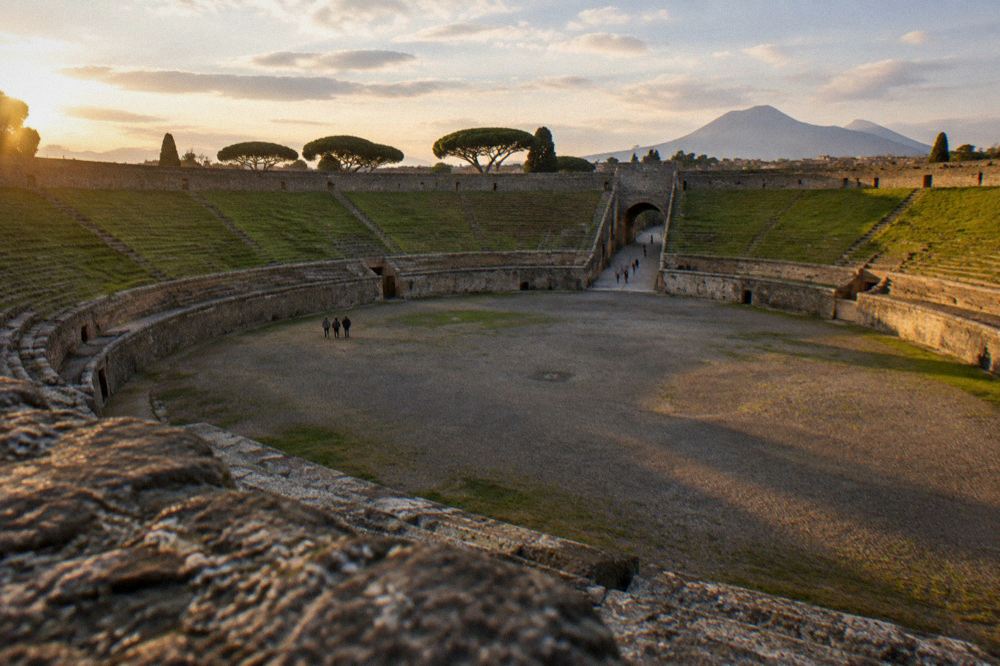
Herculaneum earns its place on a Campania itinerary not as Pompeii's understudy but as the site where Rome feels furnished: doors on hinges, bread on shelves, beds with frames. Buy the EUR 16 ticket, go early, give it two unhurried hours at least, and let the closures steer you toward the parts of the town that need no famous name to stop you in your tracks.
Common Questions About Herculaneum
Is 2 hours enough for Herculaneum?
Two hours covers the core circuit, including the boat sheds, the Suburban Baths and the main street, at a steady pace. Three hours lets you revisit houses and read the detail, and is the better choice if frescoes and carbonised wood are the reason you came.
Can you do Herculaneum and Pompeii in one day?
Yes. The sites are on the same Circumvesuviana line about 12 km apart. A morning at Pompeii and an afternoon at Herculaneum is the standard order, using Herculaneum's later summer closing time of 19:30 to your advantage.
How much are Herculaneum tickets in 2026?
EUR 16 full price, EUR 2 for ages 18 to 25, free for under-18s, and free for everyone on the first Sunday of each month plus 25 April, 2 June and 4 November. Herculaneum is a separate park from Pompeii and its ticket does not cover Pompeii.
Why is Herculaneum not as famous as Pompeii?
Pompeii is vastly larger, was excavated earlier and more spectacularly, and captured the public imagination through its plaster casts and grand public buildings. Herculaneum is smaller and lies under a modern town, which limits both excavation and fame, despite better preservation.
Why were no bodies found in Herculaneum?
Bodies were found, but as skeletons rather than cavities. The volcanic material at Herculaneum preserved bone, so around 300 skeletons remain, notably in the boat sheds, whereas at Pompeii flesh decayed in the pumice and left cavities later filled with plaster.
Herculaneum rewards the traveller who arrives knowing what it is: the smaller city where Rome kept its furniture. Two hours, a EUR 16 ticket and an early start are all the plan you need, and the rest of this site covers every neighbouring site worth chaining onto it.