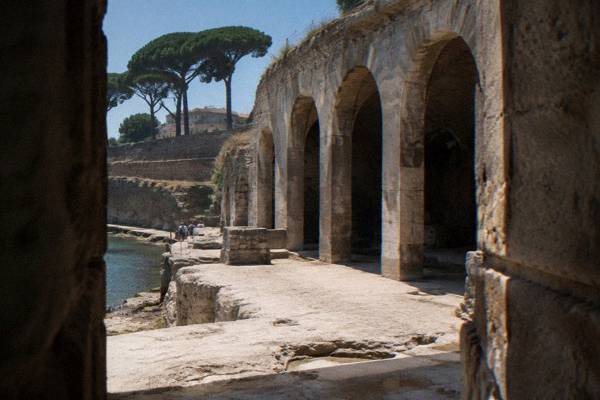
Herculaneum Ercolano
Herculaneum, known as Ercolano in Italian, is the smaller, better-preserved sister city of Pompeii, buried by the same eruption of Mount Vesuvius in AD 79 and now an archaeological site in the modern town of Ercolano on the Bay of Naples.
Short answer
Herculaneum at Ercolano in Campania, Italy, costs EUR 16 full price in 2026, EUR 2 for visitors aged 18 to 25, and is free on the first Sunday of each month plus 25 April, 2 June and 4 November. It opens 8:30 to 19:30 in summer and 8:30 to 17:00 in winter, and is closed 1 January and 25 December.
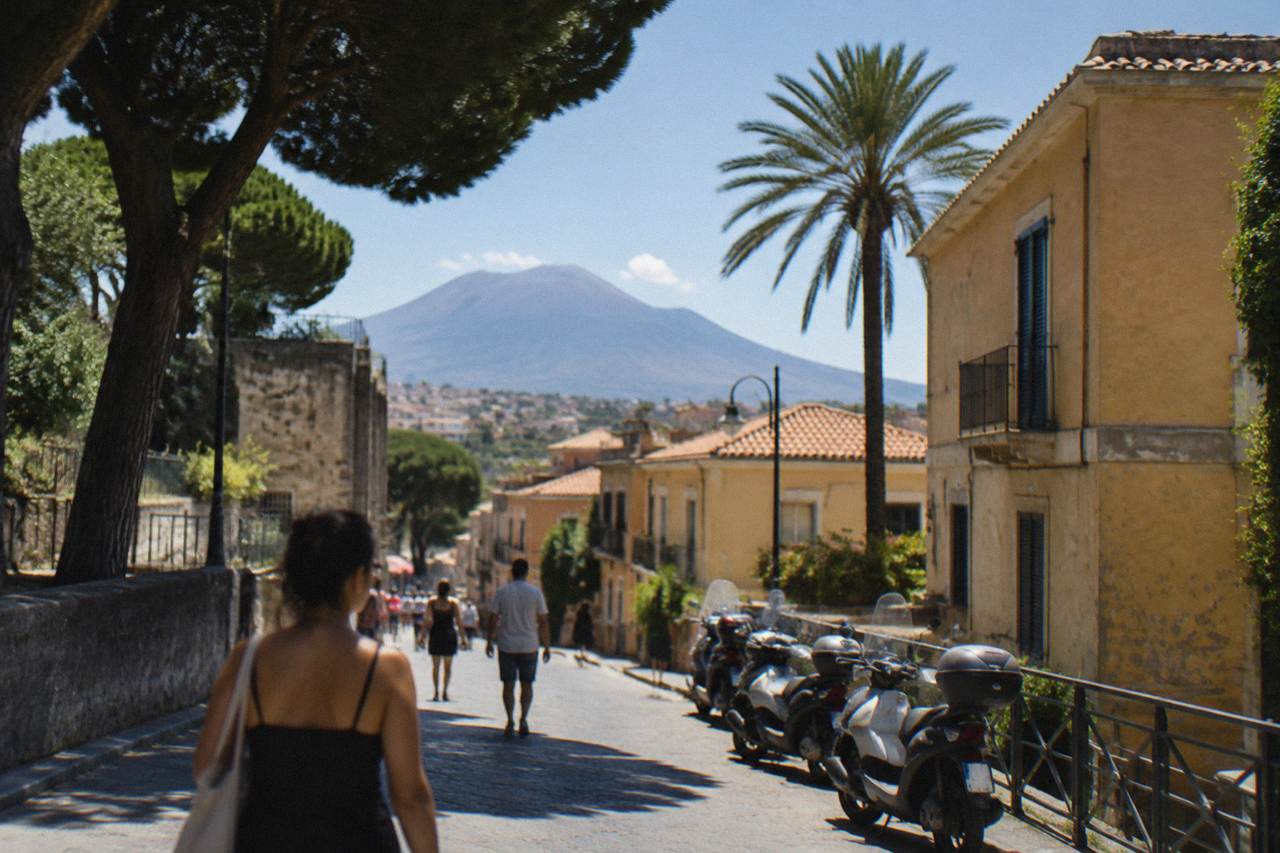
Herculaneum is an ancient Roman city buried by the eruption of Mount Vesuvius in AD 79, and Ercolano is the modern Italian town built around and above it, on the Bay of Naples in Campania, southern Italy. Where Pompeii was a sprawling commercial city, Herculaneum was a smaller coastal town, and that difference shapes everything about a visit: the excavated area is compact, the buildings are better preserved to their upper storeys, and a thorough walk takes hours rather than a full day. This Pompeii Travel Guide page covers the town and the buried city together, because in Ercolano the two are physically inseparable: the modern streets sit on top of the ancient ones, and the excavated wedge drops below the modern town like a quarry.
What Is Herculaneum And Why Is Ercolano Its Name?
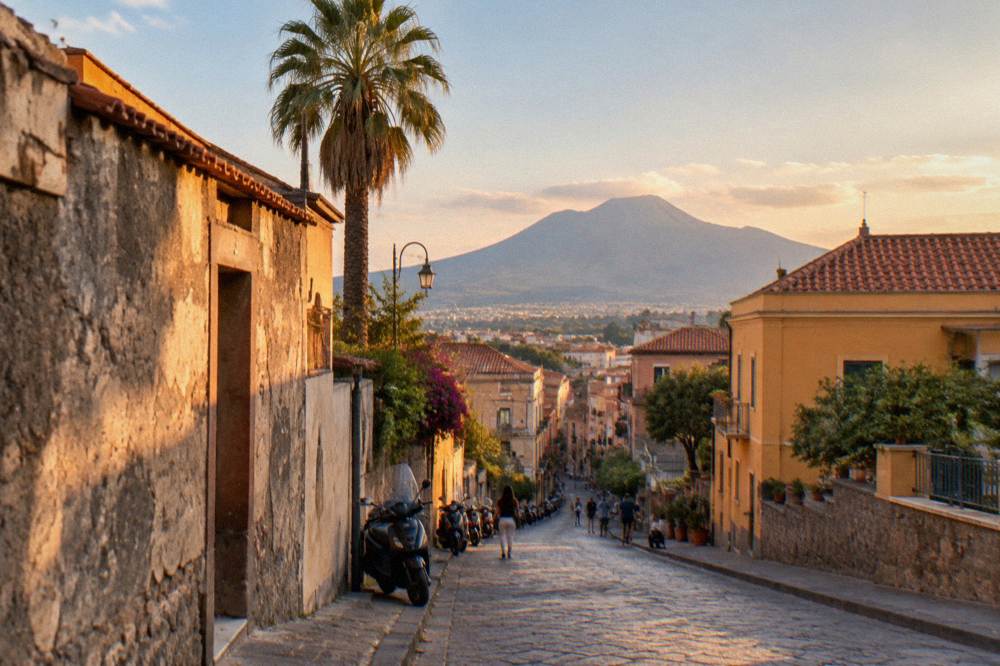
Herculaneum is the English and Latin name of the ancient town, Ercolano is the modern Italian town that grew over it, and the two names refer to the same place: an ancient Roman settlement buried by Vesuvius in AD 79, in the province of Naples, Campania, Italy, now excavated in the middle of a living modern town. The eruption that destroyed it is the same one that buried Pompeii, traditionally dated to 24 August AD 79 from the oldest manuscripts of Pliny the Younger's letters. That date is not settled: the park's own e-journal states that the alternative 24 October date has no evidentiary basis and results from a 1929 misreading, while adding that 24 August is not necessarily correct either, so this site reports the traditional date without settling the debate. The town's name changed over the centuries, and readers curious about that history can read what Herculaneum is called today.
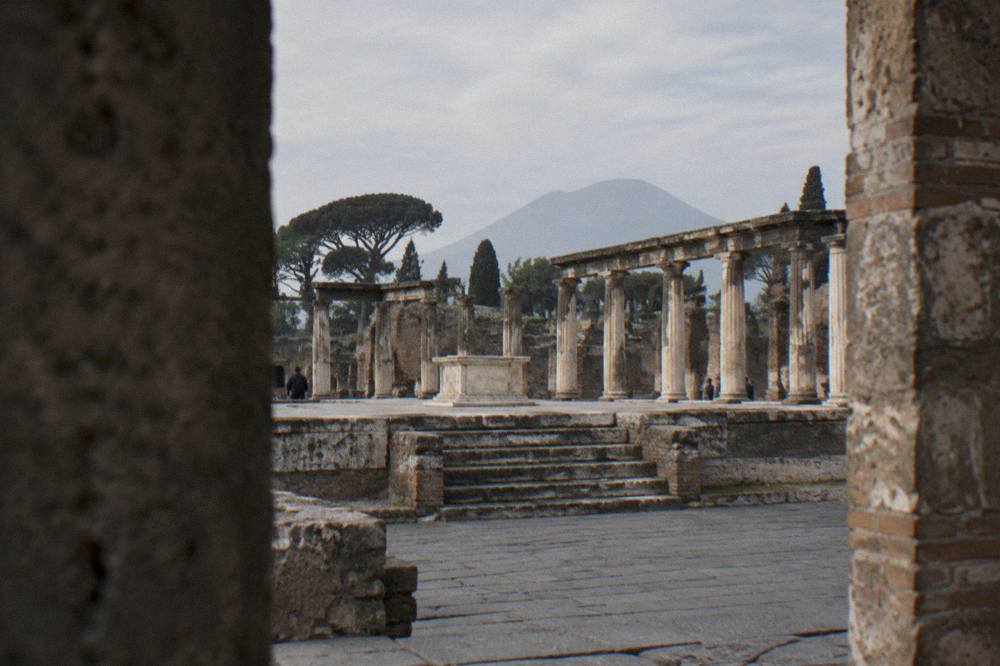
The difference in how the two cities died explains the difference in what survives. Herculaneum lay closer to the volcano, and the material that smothered it sealed buildings so thoroughly that wood, doorframes and staircases survived in places where Pompeii kept only stone and plaster. The site is part of the same UNESCO World Heritage property as Pompeii and Torre Annunziata, listed as property number 829 under criteria iii, iv and v, with an inscribed property area of 98 ha across the three sites and a buffer zone of 1,788.79 ha. The excavated area of Pompeii alone covers 44 ha; Herculaneum's exposed quarter is a fraction of that, and a far larger part of the ancient town still lies beneath the modern streets of Ercolano, which is one reason the site has never matched Pompeii's fame.
Archaeologically the place is still live. Excavation and conservation work continue, and whether Herculaneum is still being excavated has a more interesting answer than a walk suggests. The Villa dei Papiri, the famous seafront villa that yielded the only intact library of scrolls to survive from antiquity, lies outside the visitor circuit, and two of the site's best-known monuments are currently shut, which this page covers in detail below.
How Much Are Herculaneum Tickets And When Is It Open?
A full Herculaneum ticket costs EUR 16 in 2026, reduced to EUR 2 for visitors aged 18 to 25, free for everyone on the first Sunday of each month and on 25 April, 2 June and 4 November, with the site open daily except 1 January and 25 December: 8:30 to 19:30 from 16 March to 14 October, and 8:30 to 17:00 from 15 October to 15 March. Last entry is one and a half hours before closing in each season: 18:00 in summer, 15:30 in winter. The official ticketing page of the Herculaneum park publishes these figures, and free-day tickets for the first-Sunday scheme are collected at the ticket office on the day, with no reservation. Booking an entry ticket with an optional audio guide ahead of time is also possible: Check availability on the operator's live listing if a fixed date matters.
| Ticket type | 2026 price | Who it applies to |
|---|---|---|
| Full | EUR 16 | All adult visitors |
| Reduced | EUR 2 | Visitors aged 18 to 25 |
| Free | EUR 0 | First Sunday of each month, 25 April, 2 June, 4 November |
| Season | Dates | Opening hours | Last entry |
|---|---|---|---|
| Summer | 16 March to 14 October | 8:30-19:30 | 18:00 |
| Winter | 15 October to 15 March | 8:30-17:00 | 15:30 |
Two closures matter for planning and neither is temporary in a good way. The Villa dei Papiri is closed for works, and the Ancient Theatre is closed until further notice, per the park's own tickets page read in October 2026. Neither should appear on a modern itinerary as a place you will walk through. Everything else this page describes is within the open circuit. For the practical comparison, our dedicated Herculaneum tickets guide works through the options in more depth.
What Should You See Inside The Herculaneum Site?
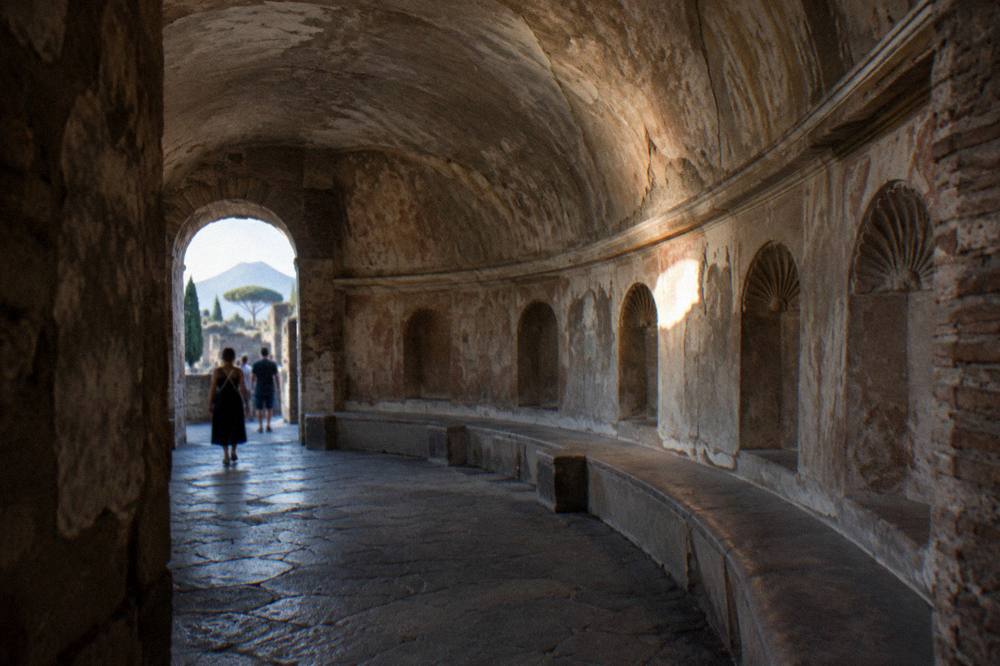
The unmissable sights are the boat sheds holding the skeletons of those who died awaiting rescue by the sea, the House of the Wooden Partition with its carbonised sliding doors, the Samnite House, the House of the Mosaic Atrium and the thermopolium counters, all reachable on a compact circuit that drops below the modern town and needs about two to three hours at a relaxed pace. The boat sheds are the emotional core of a visit: dozens of victims sheltered in the stone vaults at the ancient shoreline, and their remains are still there, visible from the viewing terrace. What that means, and questions like are the skeletons in Herculaneum real or fake, are among the most-searched topics about the site.
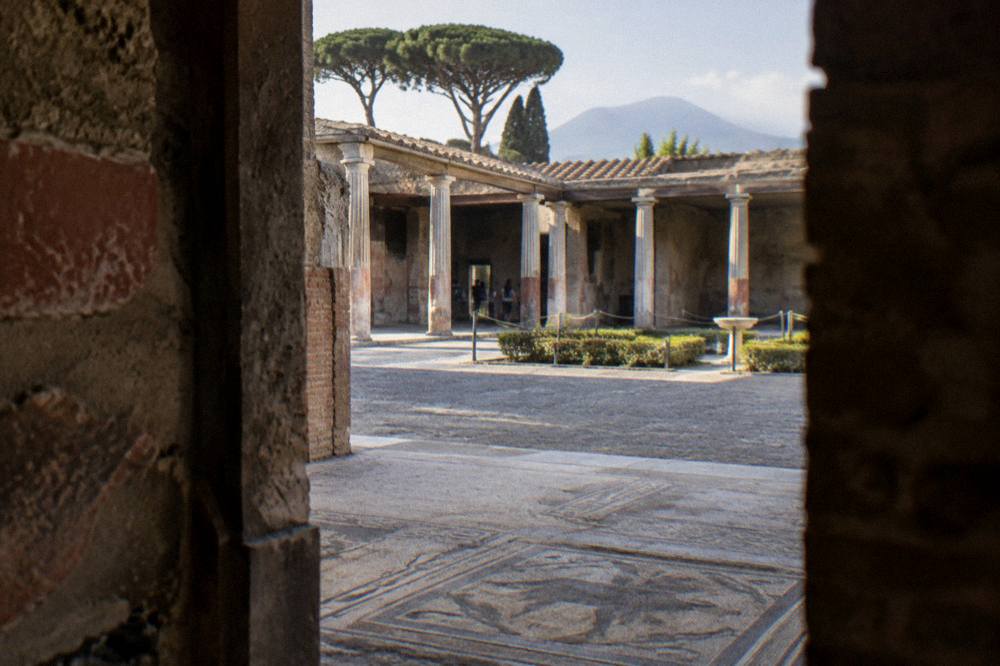
Start from the top terrace and walk down into the ancient street grid. The depth is the first shock: the Roman town sits roughly a storey or more below the modern ground level, ringed by the retaining walls of the early excavations, and modern Ercolano apartment blocks look straight down into it. Inside, the streets are narrow, the houses are dense, and the survival of timber is what distinguishes every stop: window frames, beds, screens and roof beams appear here as blackened carbon, material almost never seen at Pompeii.
The thermopolia, the Roman snack bars with masonry counters sunk with dolia for hot food, survive beautifully here, and the House of the Wooden Partition takes the prize for furniture: its folding wooden screen stands as it stood in AD 79, carbonised but intact. Beyond the houses, the Decumanus Maximus and the Cardo III and IV street axes give the town its shape, and the palaestra and the sacred area near the ancient shoreline close the circuit.
Is Herculaneum Better Than Pompeii?
Yes, for many travelers: Herculaneum is smaller, less crowded, and often better preserved than Pompeii, with vivid details like wooden doors, staircases, and upper floors that Pompeii rarely offers. Pompeii's sheer scale and iconic status still make it unmissable for first-time visitors, but if you want an intimate, atmospheric glimpse of Roman life in a shorter visit, Herculaneum is arguably the better choice.
| Factor | Herculaneum at Ercolano | Pompeii |
|---|---|---|
| Reduced | EUR 2, ages 18 to 25 | EUR 2, EU citizens aged 18 to under 25 |
| Scale | Compact buried town | Excavated area of 44 ha |
| Signature preservation | Carbonised wood, upper storeys | Frescoed houses, grand public buildings |
| Time needed | About 2-3 hours | Half a day to a full day |
Our full head-to-head, Pompeii versus Herculaneum, works through the trade-offs site by site. The honest reporting position is that the two are complements, not rivals: the same eruption made both, and the UNESCO property lists them together with Torre Annunziata precisely for that reason. If the schedule allows only one, Pompeii answers the question "what was a Roman city"; Herculaneum answers "what was a Roman home". Combining both in a single day is feasible and popular, and our Pompeii and Herculaneum in one day itinerary sequences them realistically, with the direct answer to can I do Herculaneum and Pompeii in one day covering the timing in detail.
For travellers who want both sites with a single guide and single booking, a combined small-group option exists that covers the two excavations back to back:
How Do You Get To Ercolano From Naples?
By road, the driving distance from Naples to the Pompei Scavi area is 24 km, with Sorrento 26 km and Salerno 31 km from the same point; those verified distances describe the same coastal corridor Ercolano sits on, and Ercolano lies between Naples and Pompei on it. Parking and arrival logistics at the neighbouring site are covered in our Naples to Pompeii guide, which describes the same corridor, and the rail line itself is explained in detail in how the Circumvesuviana train works. The suspended Campania Express is covered on its own page, the Campania Express guide, including the refund route via EAV's complaints form for anyone holding tickets for the suspended service.
| Transport option | Status in October 2026 | Notes |
|---|---|---|
| Circumvesuviana railway | Running | EAV Vesuvian lines towards Pompei and Sorrento serve Ercolano |
| Campania Express | Suspended since 1 October 2026 | Refunds via the EAV complaints form or original seller |
| Car | Running | Coastal corridor |
| Guided day transport from Naples | Running | Several rostered tours include Herculaneum |
For cruise passengers the calculus is different again, because the port of Naples sits close to the departure points for Vesuvian-line trains and for private transport, and a shore excursion with a guide removes the transfer risk on a tight day. A Herculaneum guided tour from Naples with tickets included is one such option:
What Is There To Do In The Modern Town Of Ercolano?
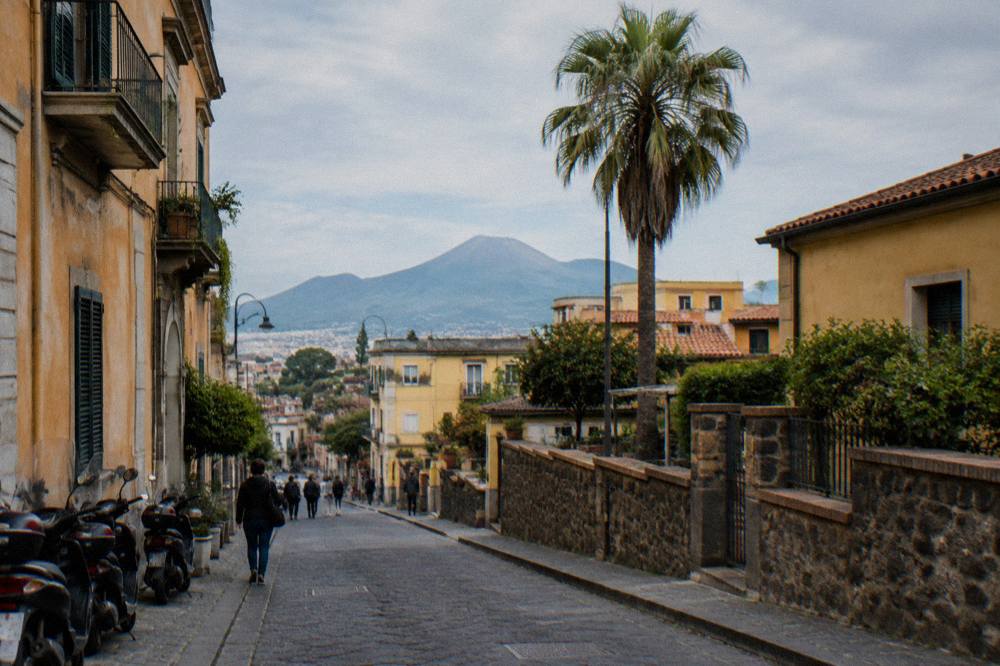
The modern town of Ercolano offers the Villa Campolieto and other Villa Vesuviana residences on the Miglio d'Oro, the golden mile of historic villas along the old royal road, the Herculaneum park's own museum spaces, and the town's role as the natural base for the Vesuvius National Park trailheads above it, all walkable within a compact town centre built along the Corso Resina. The town grew around the excavations rather than before them, and its prosperity as a resort came from the aristocrats who built summer palaces here to be near the newly discovered ruins. Unlike the neighbouring modern town of Pompei, whose identity centres on its Sanctuary and pilgrims, Ercolano's identity is Vesuvian: villas, vineyards and the volcano.
The Miglio d'Oro is the distinctive draw. Villa Campolieto and the neighbouring residences along the SS18 old road form a run of ornate frescoed palaces known as the Ville Vesuviane, and the Villa Signorini and other properties host events and weddings in season. Above the town, the Vesuvius National Park begins at the edge of the built-up area, with trailheads for the Gran Cono crater path; the crater walk, its online-only timed tickets sold at EUR 11.68 full and EUR 9.55 reduced as sold, its 50 tickets per 10 minutes release and its automatic closure on orange weather alerts, is covered in full on our Mount Vesuvius guide and on how to visit Mount Vesuvius.
| Attraction in Ercolano | Type | Current status |
|---|---|---|
| Herculaneum archaeological site | Roman buried city | Open daily except 1 Jan and 25 Dec |
| Villa dei Papiri | Ancient villa, origin of the scrolls | Closed for works |
| Ancient Theatre | Roman theatre, underground | Closed until further notice |
| Villa Campolieto | Historic Villa Vesuviana | Part of the Miglio d'Oro circuit |
| Vesuvius Gran Cono trailhead | Volcano crater path | Online timed tickets only |
The town's food and wine identity belongs to the Vesuvian slopes: the lava-soil vineyards around Ercolano produce the Lacryma Christi wines served at agriturismi on the mountain above, a pairing our Vesuvius wine tasting guide explores. Ercolano also sits inside the same UNESCO property as the Oplontis villas at Torre Annunziata and the Stabiae villas near Castellammare di Stabiae, which makes it a sensible hub for the lesser-visited Vesuvian sites.
When Is The Best Time Of Year To Visit Herculaneum?
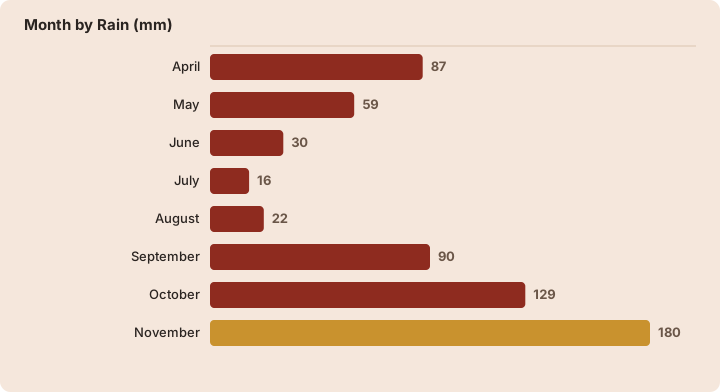
The most comfortable months to visit Herculaneum are late April to early June and late September to October, when daytime temperatures at the nearby Pompei grid point average about 17.7 to 25.3 degrees Celsius at maximum and crowds thin after the summer peak, while July and August are the hottest at about 28.7 and 29.4 degrees Celsius respectively, and November is the wettest month with about 180 mm of rain. These figures come from 1991-2020 climate normals computed from the Open-Meteo historical archive at the Pompei grid point, an ERA5 reanalysis grid rather than a weather station, so they are read as approximate for the whole Vesuvian coast, Ercolano included. Pompeii's own monthly visitor table shows the shape of the crowd: May 2024 drew 516,923 visitors to the larger site, against 189,866 in November and 138,028 in December, and Herculaneum's rhythm follows the same curve at a smaller scale.
| Month | Mean daily max (C) | Mean daily min (C) | Rain (mm) |
|---|---|---|---|
| April | 17.7 | 10.4 | 87 |
| May | 21.6 | 14.1 | 59 |
| June | 25.8 | 18.2 | 30 |
| July | 28.7 | 21.1 | 16 |
| August | 29.4 | 21.8 | 22 |
| September | 25.3 | 18.6 | 90 |
| October | 21.3 | 15.1 | 129 |
| November | 16.9 | 11.5 | 180 |
Two scheduling facts are worth building a day around. The first Sunday of each month is free at Herculaneum, along with 25 April, 2 June and 4 November, and free tickets are collected on the day, which makes those dates both a bargain and the busiest on the calendar. Winter brings shorter hours, last entry 15:30, but the site's compact size means a winter afternoon still works, and the sea-view terraces are at their best in the clear, cold air. Our broader weather and best time to visit guide extends the same analysis across the whole destination.
Which Herculaneum Tour Or Ticket Should You Book?
For independent travellers the entry ticket with optional audio guide is the natural choice, for visitors who want interpretation a small-group tour led by an archaeologist adds depth the signs do not provide, and for anyone travelling from Naples without a car a guided transfer-and-ticket package removes the two things that most often go wrong: the train connection and the ticket queue. What each option costs, its rating and its review pool are printed on the live listings, and this site does not quote product figures in prose; every price shown on this page comes from the operator listings themselves.
A small-group Herculaneum tour with an archaeologist, ticket included, is the strongest interpretation option on the roster: the guides are trained archaeologists, the group size is capped, and the ticket is bundled.
For visitors basing themselves in Naples and wanting Herculaneum inside a bigger Vesuvian day, the pairing options widen. The choice between them is a choice of pace, not of quality.
What Practical Tips Make A Herculaneum Visit Easier?
Arrive at opening or in the late afternoon, allow at least two hours, bring water and sun protection for a summer visit because the excavated wedge offers almost no shade, wear closed shoes with grip for the ancient stone streets, and plan the return leg before the last Circumvesuviana trains, since the site sits below street level and every exit involves stairs. The terrain inside is uneven Roman paving and stepped walkways; anyone with reduced mobility should check the accessibility arrangements with the park before travelling, and the same goes for pushchairs, which are easier to manage here than at Pompeii but still a workout on the ramps.
Timing against the crowds works the same way as everywhere on this coast. Coach groups tend to arrive mid-morning, so the first hour after the 8:30 opening is the quietest and coolest window, and the last two entries of the day, from about 16:00 in summer, see the site thin out again. Free first Sundays are the exception: on those days the early window is the busy one, and the free tickets are handed out at the office on the day, so a queue at opening is normal. Anyone combining the visit with Pompeii should read our Pompeii in 2 hours guide to see what the bigger site's minimum looks like before committing to a same-day double.
A few honest warnings round out the picture. Do not plan around the Villa dei Papiri or the Ancient Theatre: both are closed, and no reopening date is published. Do not rely on the Campania Express for any part of the journey: it has been suspended since 1 October 2026. And do not treat the eruption date as settled trivia for the kids: the traditional date is 24 August AD 79, the alternative October date has no evidentiary basis per the park's own journal, and the honest sentence is that the debate is open.
Common Questions About Herculaneum At Ercolano
How much are Herculaneum tickets?
A full ticket costs EUR 16 in 2026, reduced to EUR 2 for visitors aged 18 to 25. Entry is free for everyone on the first Sunday of each month and on 25 April, 2 June and 4 November, with free tickets collected at the ticket office on the day.
What are Herculaneum's opening hours?
From 16 March to 14 October the site opens 8:30 to 19:30 with last entry at 18:00. From 15 October to 15 March it opens 8:30 to 17:00 with last entry at 15:30. It is closed on 1 January and 25 December.
Is Herculaneum better than Pompeii?
Neither is simply better. Herculaneum is smaller, quieter and preserves carbonised wood and upper storeys that Pompeii does not, while Pompeii covers an excavated area of 44 ha with forums, theatres and amphitheatres on a far larger scale. Many visitors do both.
How long do you need at Herculaneum?
About two hours covers the highlights at a steady pace, and three hours allows the full circuit with the boat sheds, the major houses and the terraces. Two hours is enough for a rushed visit, but not a comfortable one.
Ercolano rewards the traveller who treats it as a town rather than a footnote: a buried city in a hole in the middle of a living one, a golden mile of villas, a volcano overhead and a railway at the door. Choose the quiet months if you can, book what needs booking, and give the smaller city the time its preservation deserves.