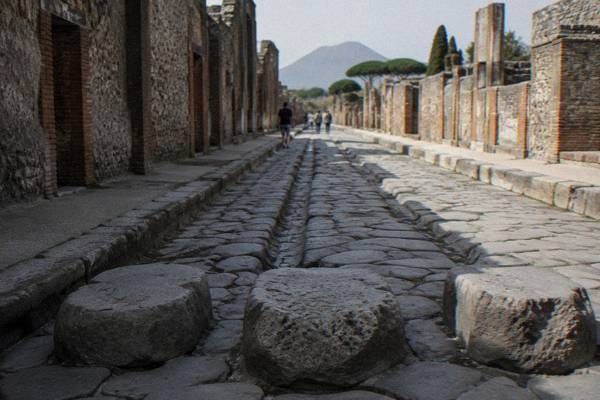
What Was The Purpose Of The Dog In Pompeii?
Why Romans at Pompeii kept dogs, what the guard-dog mosaics meant, and how to see the evidence at the archaeological park in Campania, Italy.
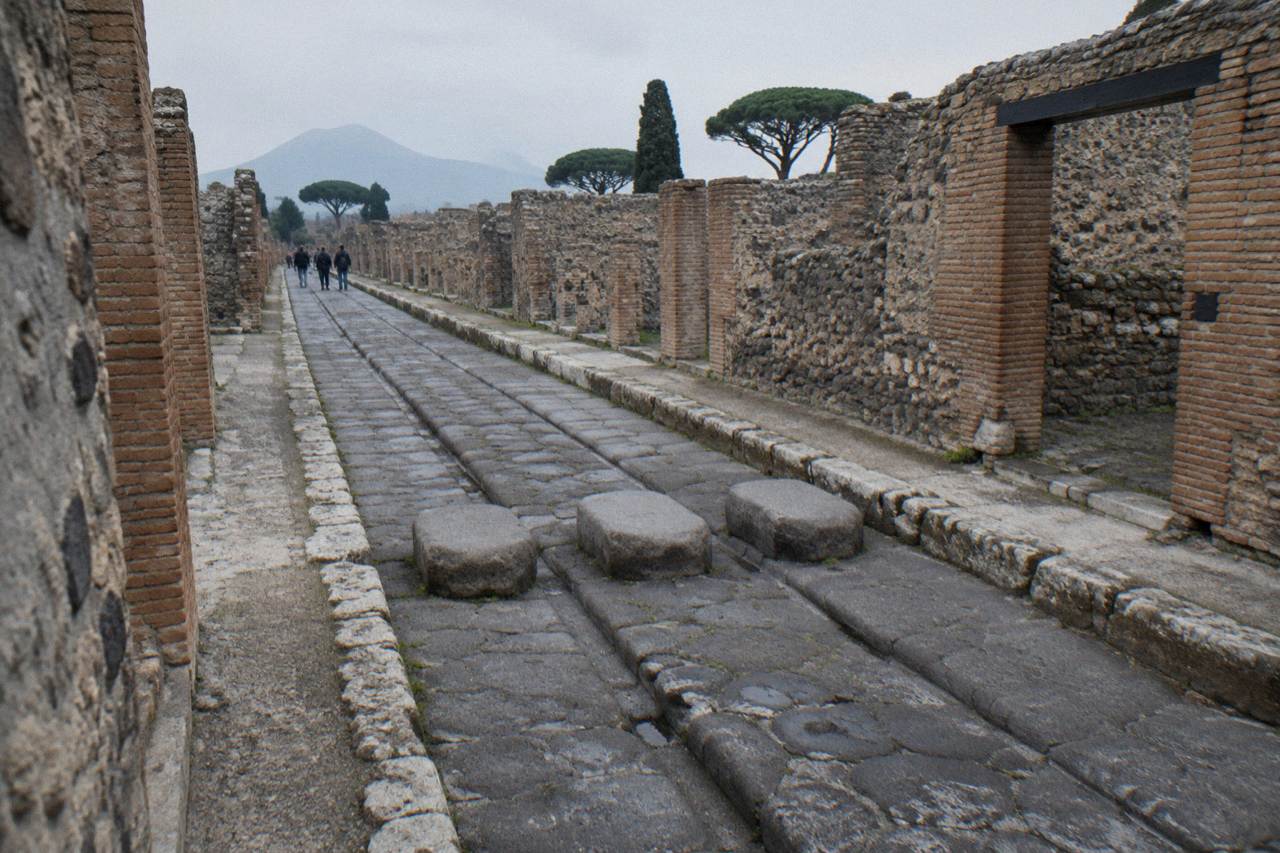
Dogs at Pompeii, the ancient Roman city buried by the eruption of Mount Vesuvius in AD 79 and now the Parco Archeologico di Pompei beside the modern town of Pompei in Campania, southern Italy, were practical animals before they were pets. The archaeological park, about 24 km by road from Naples on the Bay of Naples, preserves their traces in guard-dog mosaics at house thresholds, in the bones excavated from buildings, and in the wider Roman written record of watchdogs, hunting hounds and companions. The question of what these animals were actually for has a clear answer in that evidence: security above all, with hunting and affection close behind.
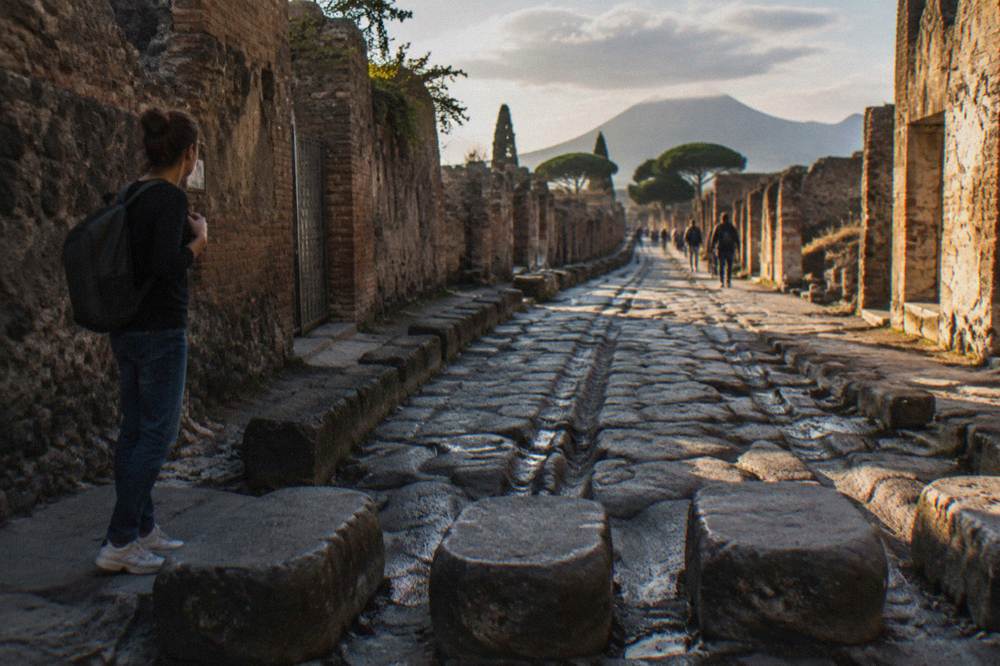
What Was The Purpose Of The Dog In Pompeii?
The purpose of the dog in Pompeii was primarily guarding: Roman households and businesses kept watchdogs to deter intruders, and the celebrated Cave Canem, or Beware of the Dog, floor mosaics at house entrances worked as both a literal warning and a status symbol. Beyond guarding, the evidence from Pompeii and from Roman writers points to dogs kept for hunting, for herding, and as household companions, so the animal filled several roles in daily life rather than one.
The famous image visitors associate with Pompeii is the chained watchdog mosaic, the letters CAVE CANEM spelled out beside a snarling black dog on a white ground. It sat where a caller crossing the threshold could not miss it. That placement is the key to reading it: the mosaic stands at the boundary between street and house, exactly where a real watchdog would have been tethered, and it does the real dog's job in mosaic form.
The message worked on two levels. A visitor saw a warning that an animal might bite, which was a genuine risk in a world without locked front doors in the modern sense. At the same time, a finely made floor mosaic announced that the owner could afford craftsmanship and could afford to keep a dog that ate its share of the household's food. A guard animal fed but producing no goods was itself a display of means.
The purpose, then, was not ornamental. The dog earned its place by watching the house through the night, accompanying the hunt, minding shops and store rooms, and in some homes simply lying by the master. Pompeii's evidence, read together, shows a working relationship between people and dogs that would be recognisable to any modern owner, backed by a warning at the door that has become one of the site's best known images.
Why Roman Households Kept Watchdogs At The Door
Households at Pompeii kept watchdogs because Roman houses opened directly onto the street: the doorway, or ostium, was the single point of entry and the single point of failure, and a dog chained near it was the cheapest alarm available. Shops, bakeries and workshops had the same problem, since goods and cash sat in rooms a passer-by could reach. A barking dog deterred the opportunistic thief long before any watchman could.
Roman towns were dense, lit by lamp at night, and policed lightly by modern standards. The house type excavated at Pompeii, arranged around an atrium reached through a narrow corridor from the street, concentrated everything valuable behind one entrance. A dog at that entrance covered the whole plan. The mosaic warnings and the written references to chained guard dogs both reflect how ordinary this arrangement was across the town and across the Roman world.
The mosaics also tell us something about the dogs themselves. The animal shown in the Cave Canem type is a compact, muscular, short-coated dog with a heavy neck, closer to a modern mastiff-type guard breed than to a slender hunting hound. Roman writers distinguish these two kinds plainly: the heavy guardian kept at the house, and the fast hound kept for the hunt. Different jobs, different dogs.
Visitors planning to walk the site themselves can build a route around the threshold mosaics, and the practical questions of tickets and timing are covered in detail on the page on buying Pompeii tickets in advance. The park's own entry rules also matter here: bags are limited to 30x30x15 cm at the entrances at Porta Marina, Piazza Esedra and Piazza Anfiteatro, so a day pack needs to be small.
| Evidence for dogs at Pompeii | What it is | What it shows about purpose |
|---|---|---|
| Cave Canem threshold mosaic | Floor mosaic of a chained, snarling watchdog at a house entrance | Guarding the doorway; warning visitors; signalling the owner's standing |
| Watchdog imagery in shops and workshops | Similar dog motifs at commercial premises | Protecting stock, cash and equipment |
| Dog bones in excavated buildings | Skeletal remains of dogs inside houses and yards | Real animals kept on the premises, not just imagery |
| Roman literary references to guard dogs | Written advice on keeping chained watchdogs for the house and farm | The practice was normal across Roman society, not local to Pompeii |
What The Cave Canem Mosaic Actually Meant To A Caller
To a caller in AD 79, the Cave Canem mosaic meant exactly what its words say: beware of the dog. It was a serious notice at a serious boundary, the entrance corridor where a real chained animal might be lying just out of sight, and only secondarily a decorative flourish or a joke about the family's fierce pet. The craftsmanship tells the second story, but the lettering tells the first.
The phrase itself is good Latin shorthand, two words doing the work of a sign. Modern visitors read it as charming; a Roman delivery boy read it as a reason to knock loudly and stay back. The tension between those two readings is part of why the image travels so well: it is a functional warning that survives as art, from a city destroyed in the eruption whose date is still debated, traditionally dated to 24 August AD 79. The rest of the planning pages sit on Pompeii Travel Guide.
It is worth being careful with the story around the eruption itself. The park's own e-journal holds that the alternative October date has no evidentiary basis, while the traditional August date comes from the oldest manuscripts of Pliny the Younger's letters. The dog mosaics are far older than that debate and unaffected by it. For the wider destruction narrative, the page on how fast death came at Pompeii covers what the eruption did to the town and its people.
What the record does support is the function of the image at the threshold, which is the question this page answers.
How To See The Dog Evidence At Pompeii Today
To see the dog evidence today, walk the excavated city, which covers 44 hectares, and look at the entrance corridors of the houses: threshold mosaics survive in place or in the site's museum display, and a private or small-group guide will point out examples a casual visitor walks straight past. Tickets are needed for entry, EUR 20 for the Pompeii Express option in 2026, and the site opens at 9:00 year round with seasonal closing times.
The practical frame for any visit is the ticket system, and it changes at the end of 2026, so the table below is worth reading before booking anything. The 2026 structure runs to 31 December 2026; from 1 January 2027 a single EUR 25 ticket covers all the park's sites, valid 30 days with one entry per site, while the smaller sites stay EUR 8 each and the MyPompeii Card stays EUR 45. Full detail is on the site's guide to Pompeii tickets.
| Ticket (2026 prices, ending 31 December 2026) | Price | What it covers |
|---|---|---|
| Pompeii Express | EUR 20 | The ancient city only |
| Pompeii+ | EUR 25 | City plus suburban villas route and shuttle |
| 3-day ticket | EUR 30 | Pompeii+ plus Oplontis, the Stabiae sites and Boscoreale |
| Other sites (Oplontis, Stabiae museum, Boscoreale) | EUR 8 each | Individual smaller sites |
| MyPompeii Card (annual) | EUR 45 | Annual pass |
Entry is free for under-18s and for everyone on the first Sunday of the month, and EU citizens aged 18 to under 25 pay a EUR 2 reduced rate. Hours follow two seasons: from 16 March to 14 October the last entrance is at 17:30 and the site closes at 19:00, while from 15 October to 15 March the last entrance is at 15:30 and closing is at 17:00.
For travellers with more than a few hours, combining the city with the volcano that destroyed it is the natural extension, and the choices involved are compared on the page about the best tour for Pompeii. Whether to go alone or with a guide is its own question, treated on touring Pompeii on your own.
What A Private Guided Tour Adds To The Dog Story
A private guided tour adds context that a floor mosaic cannot supply on its own: an official guide can explain which room type the mosaic belongs to, how the entrance corridor functioned in a Roman house, and where the comparable examples sit in the wider site, all at the pace of the group rather than a fixed schedule. For a question like the purpose of the dog, that layer of explanation is the difference between a photo and an answer.
The featured option on this page is the Pompeii private tour with an official guide, booked per group and led by a guide certified to interpret the site. It suits families and small parties who want to ask questions as they go, and it can be shaped around particular interests, including the houses and mosaics. It can be checked via Check availability on the operator's live listing.
Visitors based in Naples with a full day to spend have a wider set of options that fold Pompeii into a route taking in Herculaneum and Mount Vesuvius in one organised day. That kind of itinerary removes the need to coordinate separate tickets and train times across three sites, which is a genuine load off a one-day plan.
The three-site day trip from Naples is the strongest fit for that job, moving from the excavated city to Herculaneum and up to the volcano with transport handled throughout.
For the Vesuvius leg in particular, the crater trail is ticketed separately through the national park's own online system, with timed entry sold in advance only, and the details are covered on this site's guide to Mount Vesuvius. Weather matters: the path closes automatically on an orange weather alert or above, with automatic refunds when that happens.
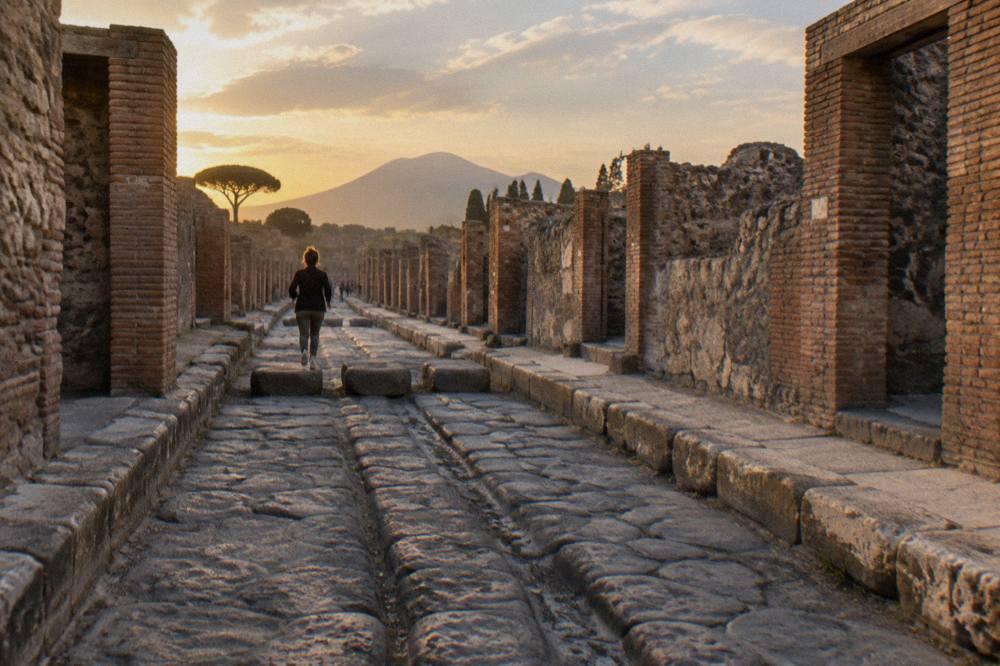
Common Questions About The Dog In Pompeii
What was the purpose of the dog in Pompeii?
Guarding, first and above all. Dogs kept at Pompeii watched house entrances, shops and store rooms, and the Cave Canem mosaics at thresholds both warned callers and advertised the household. Hunting and companionship were secondary purposes attested in the wider Roman record.
What does Cave Canem mean?
It is Latin for Beware of the Dog. The words accompany a mosaic of a chained, snarling watchdog at the entrance of a house, placed where anyone crossing the threshold would see it.
Are there real dog remains at Pompeii?
Yes, dog bones have been recovered from excavated buildings at Pompeii, confirming that real animals were kept on the premises and not merely depicted.
Where can I see the watchdog mosaic at Pompeii?
Watchdog mosaics survive at house thresholds within the excavated city and in the site's display material; the exact houses open on any given day vary, and a guide is the reliable way to find them. The site opens at 9:00, and tickets cost EUR 20 for the Express option in 2026.
Did Romans keep dogs as pets?
Yes, alongside their working roles. Roman written sources describe dogs kept for hunting, for guarding and as household companions, and Pompeii's evidence fits that picture of an animal with several jobs in daily life.
The dog at Pompeii was a worker with a mosaic in its honour: a guardian of doorways whose image has outlasted the house it protected, and whose job description is still legible in two words of Latin on the floor.