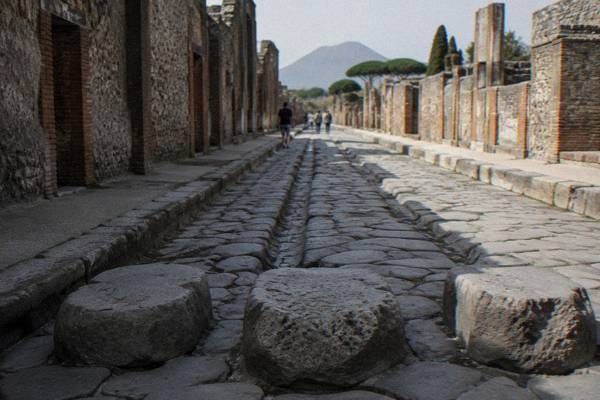
How Fast Was Death At Pompeii?
How fast was death at Pompeii when Vesuvius erupted in AD 79? What Pliny described, how the surges moved, and why the casts tell different stories.
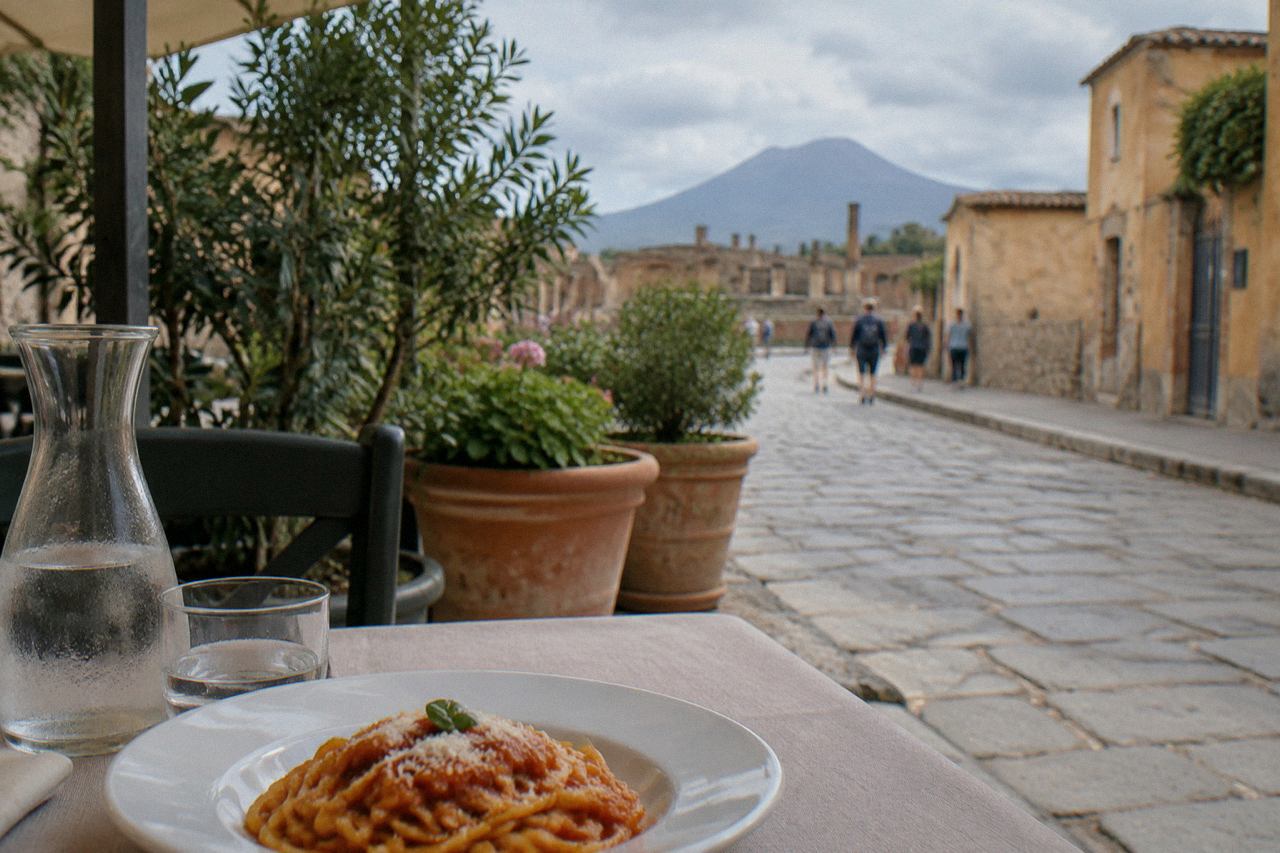
The ancient city of Pompeii, buried by the eruption of Mount Vesuvius in AD 79, lies in Campania, southern Italy, beside the modern town of Pompei and about 24 km by road from Naples. Its excavated streets, preserved under volcanic debris, are the reason anyone can ask a question as stark as how fast death came to the people who stayed. The answer is not a single number. The city died across a span of hours, in distinct waves of destruction, and the archaeological evidence, read carefully, separates those waves one from another.
How Fast Was Death At Pompeii?
Death at Pompeii was not instantaneous for the city as a whole, but it was close to instantaneous for the individuals the surges reached. The lethal phase arrived later, when surges of hot gas and volcanic debris swept down the mountain. When a surge overtook a person, death followed within moments.
That two-part pattern is what the stratigraphy of the site shows, the layered volcanic deposits that archaeologists have mapped street by street. The lower layers are pumice, light and falling from above, which crushed roofs slowly and gave people time to move, to shelter under roofs, to flee, or to die under collapsing structures. Above the pumice lie the surge deposits, darker, denser and laid down in minutes rather than hours.
What can be said with confidence is that the deposits were laid down faster than anyone in the city could outrun them, and that the people found in them died where the surge caught them, in doorways, in gardens, on roads, often in small groups. The famous casts, hollows in the ash later filled with plaster, preserve people who died in that fast final phase, not in the slow morning one. For the deeper background on the destruction and rediscovery, the guide When Was Pompeii Discovered carries the excavation story in full.
What Did Pliny The Younger Actually Describe?
Pliny the Younger, watching from Misenum across the Bay of Naples, described an eruption column shaped like an umbrella pine, a cloud that rose high and then spread, followed by falling debris, darkness and a sequence of earth tremors. His letters never describe conditions inside Pompeii itself. His uncle, Pliny the Elder, sailed toward the eruption and died at Stabiae, on the shore, after landing on a coast already deep in ashfall.
The letters are the only eyewitness account that survives, and they matter for the speed question because they establish the rhythm of the day. Pliny describes a plume visible from a great distance in the early afternoon, ashfall reaching the ships, sea so churned by tremors that the boats could not launch again, and a darkness he compares to a sealed room with no lamps. That description matches the deposit sequence in the city: a long phase of fallout, then rapidly worsening conditions. The letters cannot tell us what any individual in Pompeii experienced in their final moments, but they confirm that the eruption escalated in stages visible from kilometres away.
Pliny also records that many people stayed because they were not alarmed, or because they had nowhere safe to go, and that others fled at the first sign. That divide is visible in the ruins. Some bodies were found with valuables, packed for flight, stopped in the streets. Others were found in cellars and ground-floor rooms, people who waited out the pumice fall and were then caught by the surge phase. If you want the question of warning and expectation, the companion article Did Pompeii Know Vesuvius Was Going To Erupt? takes it up directly.
Where Was Death Faster, Pompeii Or Herculaneum?
At Herculaneum, closer to the volcano and struck by the first and hottest surges, death appears to have come faster and earlier, chiefly to people sheltering in the seafront boat sheds. At Pompeii, further from the vent, the lethal surges arrived later and the dying was spread across a wider area and a longer span. Both cities were ultimately killed by the same sequence, but the timing and the setting differed.
The distinction matters because popular accounts often merge the two sites into one story. Herculaneum's boat sheds, arched chambers opening onto the ancient shoreline, held groups of people who had gathered there waiting for rescue or sheltering from the ashfall. When the surge reached them, they died where they stood or lay, and the preservation of their bones reflects the intense heat of those early surges. Pompeii, by contrast, shows death distributed across a whole urban landscape: in houses, on roads, in the amphitheatre quarter, at the necropolis outside the walls. The difference in setting is why the two sites feel so different to walk today, a contrast the guide Pompeii Vs Herculaneum explores for visitors deciding between them.
| Feature | Pompeii | Herculaneum |
|---|---|---|
| Position relative to Vesuvius | Further from the vent | Closer to the vent |
| First lethal event | Later surges after hours of pumice fall | Early, hotter surges |
| Where remains concentrate | Streets, houses, gardens across the city | Seafront boat sheds |
| Preservation of organic material | Ash casts of voids | Carbonised wood and bone |
| Modern visiting notes | 2026 ticket prices in force until 31 December 2026 | Villa dei Papiri and Ancient Theatre closed for works |
Both sites are part of the same UNESCO-inscribed property, listed with Torre Annunziata under criteria (iii), (iv) and (v), covering an excavated area at Pompeii of 44 ha within a 98 ha inscribed property. Neither site should be read as a single moment of death. Both record a day that unfolded in phases, from morning column to afternoon surge, with people making decisions at every stage, and those decisions determining where the volcanic record would find them.
For travellers planning to see both, the practical question of sequencing and timing is covered in Can I Do Herculaneum And Pompeii In One Day?, which weighs the trade-offs honestly rather than promising the impossible.
How Did The Body Casts At Pompeii Form?
The casts formed because the bodies of surge victims, buried in fine volcanic ash, decayed over the following centuries and left hollow spaces in the hardened deposit. When excavators later poured plaster into those hollows, the plaster reproduced the shape of the person at the moment of death, clothing, posture and expression included. The casts are therefore exact negative records of the final seconds, not the skeletons themselves, which in many cases were removed or remain inside.
That process explains why the casts carry so much emotional force and why they answer the speed question so well. A person frozen mid-gesture, arms raised against the heat, curled on the ground, or lying as if asleep, records a body that stopped moving at once. The slow deaths of the morning phase, crushed under pumice and roof collapse, left bones in rubble. The fast deaths of the surge phase left hollows in fine ash, and the hollows are what the plaster turned into the figures visitors see today. Where those figures and the mortal remains connected to them now sit is covered in Where Are The Bodies From Pompeii Now?.
The casts also show, quietly, that speed was not uniform even within the surge phase. Some figures are prone and apparently at rest, which some researchers read as death arriving before the body could react. Others are contorted, in postures consistent with the intense heat of the surge cloud. What the casts establish without dispute is sequence: pumice first, surges after, and the surges decisive.
Was Death At Pompeii Instantaneous For Everyone?
No. The evidence divides the dead into at least two groups: those killed during the hours of pumice fall, chiefly by collapsing roofs and structures, and those killed by the surges, for whom the end appears to have come within moments. A further group died attempting escape on the road or the shore, caught in the open. The one honest general statement is that the city's destruction was fast overall but not uniform, and individual outcomes varied with shelter, timing and location.
The roof-collapse deaths deserve their own weight in the story. Pompeii's tiled roofs, loaded with pumice stones for hours, failed in places while people were still sheltering beneath them, and excavators found victims beneath fallen masonry in the pumice layers, below any surge deposit. These people died hours before the surges arrived. Others, in the same streets and the same hours, survived the ashfall entirely, only to be caught in the surge phase because they stayed, or because they left shelter too late. The decisions were small ones, an extra hour indoors, a delayed departure, and the volcanic deposit recorded the outcome of each.
The question of survivors sits beside this one. Pompeii was a living city of thousands, and the excavated dead represent only a fraction of the population, so evacuation evidently happened on a large scale during the early hours. The fuller account of who got out, and how, is in Did Anyone Survive Pompeii?, and the more specific question of the death toll, which this page does not guess at, is treated separately in How Many People Died In Pompeii Exactly?.
After hours among the casts and the ash layers, many visitors want the opposite of the ancient world for an afternoon, and Naples, the nearest big city, supplies it. One natural pairing is food: the Neapolitan street kitchen is a living tradition a short train ride from the excavations, and ending the day inside it is a common and sensible plan.
Why Does The Date Of The Eruption Matter To This Story?
The traditional manuscript date, 24 August AD 79, comes from the oldest copies of Pliny the Younger's letters, which give nonum kal. Septembres. The alternative date, 24 October, has, in the words of the park's own e-journal, zero evidentiary basis, tracing to a 1929 misreading. The park's journal adds that 24 August is not necessarily correct either, so the date remains an open scholarly question.
The date matters to the speed question because the season changes the picture of who was in the city and why. An August date implies summer occupancy, travellers, and the full weight of a busy season; an autumn date implies different populations and different behaviour.
What is not in dispute is the physical sequence, which is read from the deposits themselves rather than from the calendar. Column, fallout, surges, in that order, with the human remains distributed accordingly. Readers who want the eruption placed against the city's wider story of loss and rediscovery can follow Why Was Pompeii Lost For So Long?, and for the religious-historical curiosity of the era, Was Jesus Alive When Pompeii Was Destroyed? answers it plainly.
A guided walk with an archaeologist is the format that connects these threads fastest, since the guide can match the deposit layers underfoot to the phases of the day. For visitors weighing that option, the related tour below is one of the established choices on this site's roster.
What Does A Modern Visit To Pompeii Add To The Story?
A modern visit to Pompeii adds physical immediacy to the story: walking the excavated city turns the sequence of events from an abstraction into something you can feel underfoot and see around you. The distances people fled, the doorways they died in, and the depth of ash their city vanished under all become real, tangible details rather than facts on a page.
Standing on the Via dell'Abbondanza or inside the Forum, the geometry of the last day becomes concrete: the mountain visible to the north, the sea to the west, the roads out of the city measurable on foot. Guides who are trained archaeologists can point to the deposit layers in exposed sections and explain which phase killed which victim, which is a different order of understanding from any documentary. Choosing between a guided visit and an independent one is a real decision with real trade-offs, and Can You Tour Pompeii On Your Own? sets them out without pressure either way.
The visitor context also keeps the story honest. Pompeii is not a static memorial; it is a working archaeological park with new finds emerging year by year, some of them reshaping what is known about the final day. The running record of those finds is collected in What Was Recently Found In Pompeii?, which shows how the picture this page describes continues to be corrected in detail even as its outline holds.
A note on planning: many visitors pair the excavations with the food culture of Naples, the nearest great city and the place where much of the modern region's life happens. The Pompeii Travel Guide homepage collects the practical pages, tickets, entrances, train stations and itineraries, in one place, while the Naples Street Food Walking Tour is one way to end an intense day among the ruins with something firmly alive.
Whichever way you choose to see the city, with a guide, alone, or as part of a longer Bay of Naples day, the underlying story this page has traced stays the same and stays legible on the ground.
Common Questions About Death At Pompeii
How fast was death at Pompeii?
For people caught by the pyroclastic surges, death appears to have come within moments, and the plaster casts preserve figures stopped mid-gesture. For people killed earlier, under roofs collapsing under hours of pumice fall, death came more slowly and differently. The city as a whole died across a span of hours, not in one instant, and individual outcomes varied with shelter, timing and location.
Was death at Pompeii painful?
The evidence is mixed and this page avoids overstating it. Surge victims appear to have lost consciousness quickly, while postures in some casts are consistent with intense heat. People who died under collapsing structures during the ashfall faced a different end.
Why did some people in Pompeii not flee?
Pliny the Younger records that many people were not alarmed at first, and the deposits show that some stayed indoors through the pumice fall, sheltering from falling stones. Others were packed to leave but delayed too long. The decision to stay or go, made hour by hour during the ashfall, largely determined who lived and who died.
Were the people of Pompeii killed by lava?
No. Pompeii was not reached by lava flows. The city was struck first by hours of falling pumice and ash from the eruption column, then by surges of hot gas and volcanic debris that raced down the mountain's flanks. Those surge deposits, not lava, are the layers in which the human remains and the famous body casts were found.
Do the plaster casts show how people died?
In many cases, yes, in posture and position. The casts are plaster fills of hollows left in hardened ash by bodies that decayed in place, so they record the position of the person at the moment of death, sometimes including clothing folds and facial detail. They do not, on their own, establish the exact cause or speed of death for each individual.
How does Herculaneum differ from Pompeii in how people died?
Herculaneum, closer to the volcano, was struck by the earlier and hotter surges, and many victims were found grouped in the seafront boat sheds where they had sheltered. Pompeii's dead are distributed across a whole urban landscape, streets, houses and gardens, killed across a longer span by both the ashfall and the later surges.
The speed of death at Pompeii is ultimately a story about stages: a morning column, hours of pumice, and surges that ended everything in moments for those they reached. The ruins preserve each stage separately, which is why they can still be read as a timeline, and why a careful visit, walked slowly, answers this question better than any single sentence can.