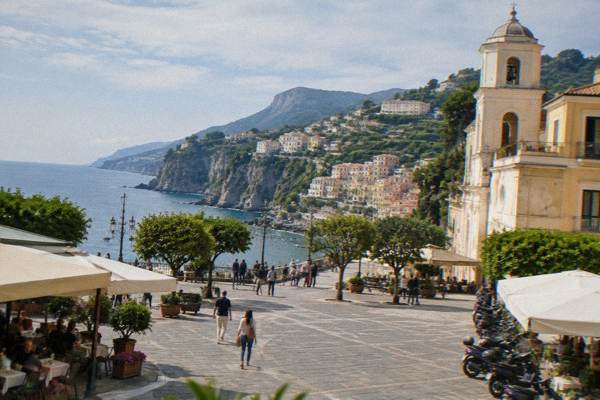
Which Is Nicer, Amalfi Or Sorrento?
An honest comparison of Amalfi and Sorrento as holiday bases and as gateways to Pompeii, Herculaneum and Vesuvius in Campania, Italy.
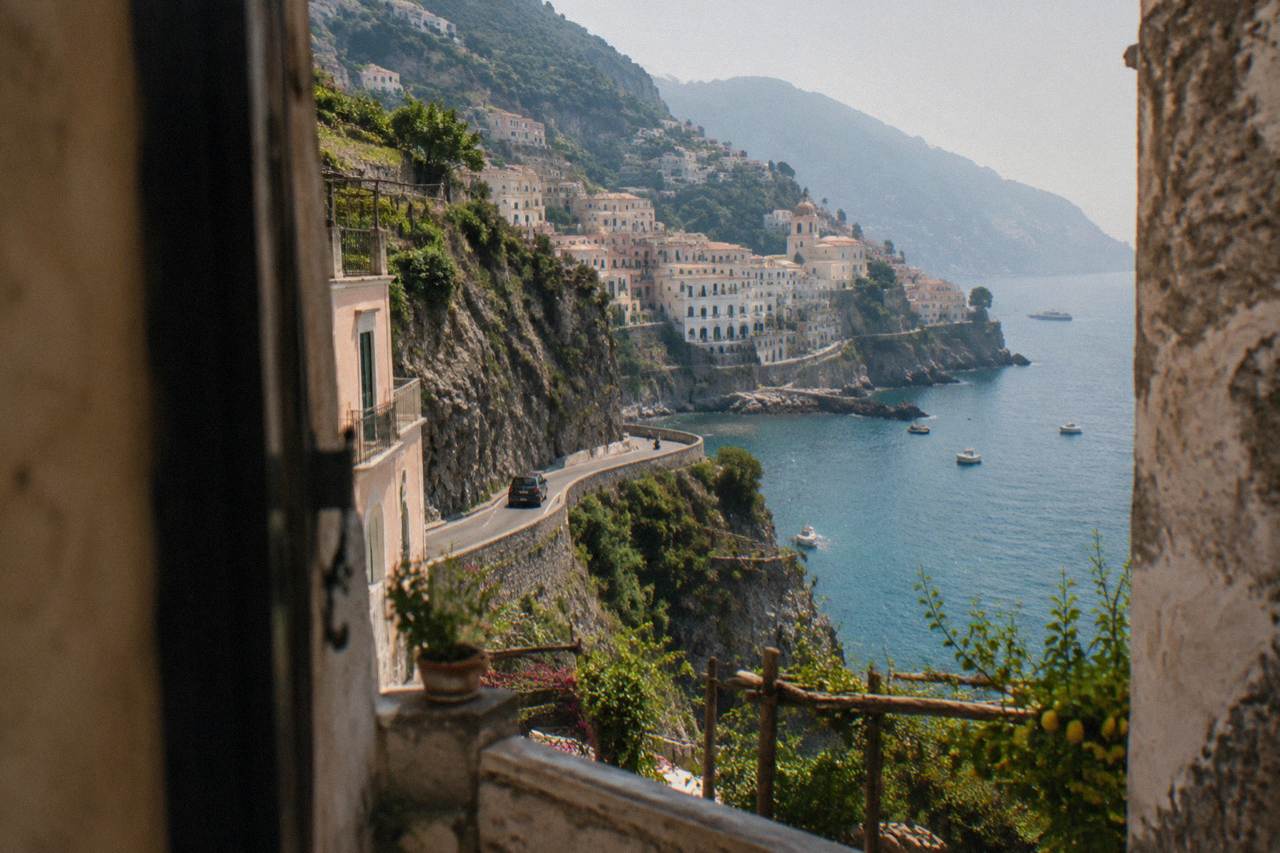
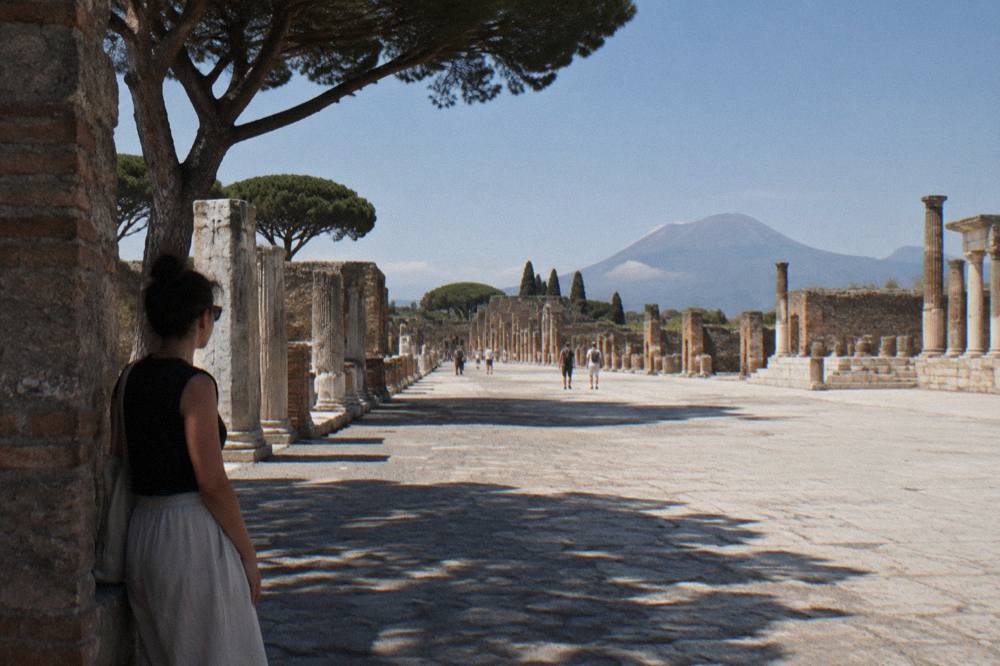
Travellers planning a trip around the Bay of Naples in Campania, southern Italy, almost always end up staring at the same map: the archaeological park of Pompeii, buried by Vesuvius in AD 79, sits inland from the coast, and the two famous cliff towns of the Sorrento Peninsula and the Amalfi Coast compete for the same hotel budget. Neither town wins on every count. Sorrento is a larger, flatter, better-connected town at the neck of its own peninsula, about 26 km by road from the Pompei Scavi-Villa dei Misteri station beside the excavations. Amalfi is smaller, steeper and more scenically dramatic, sitting at the mouth of a gorge on the coast road that bears its name.
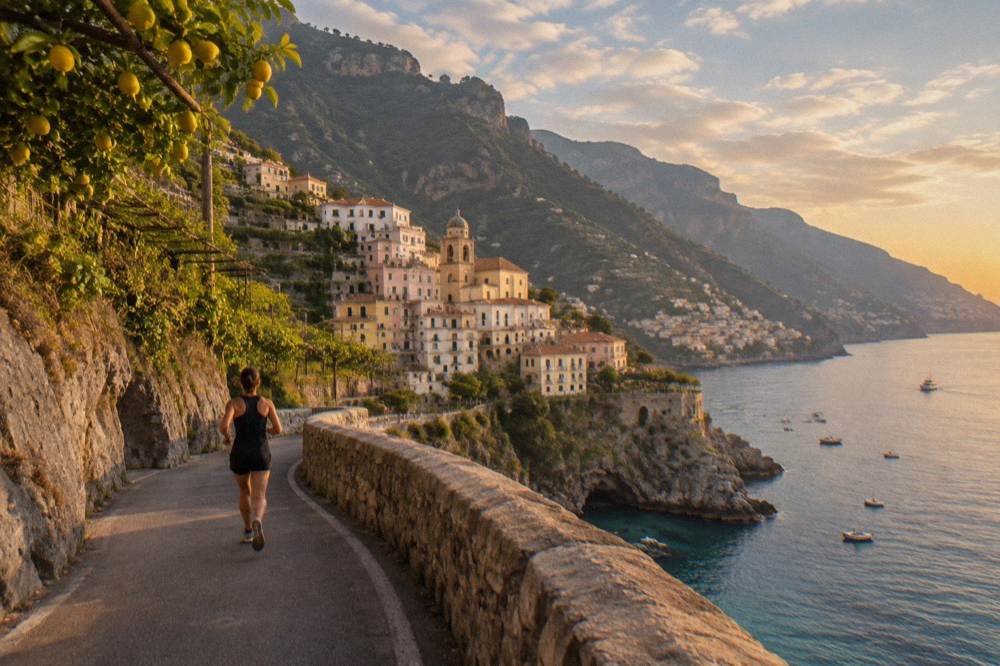
Which Is Nicer, Amalfi Or Sorrento?
Neither town is objectively nicer: Sorrento suits a trip built around Pompeii, Herculaneum and Mount Vesuvius, since it is the transport hub with direct rail access to the excavations, while Amalfi suits a holiday focused on the coast itself, with its cathedral, its gorge and its beaches. Choose Sorrento for practicality and easier logistics, and Amalfi for compact medieval drama and quieter evenings once the day crowds leave.
The two towns are often described as rivals, but they serve different itineraries. Sorrento sits on the north shore of the Sorrento Peninsula, facing Vesuvius and the Bay of Naples; its historic centre is a lattice of lanes around Piazza Tasso, and its marinas sit at the bottom of cliff lifts and long stairways. Amalfi sits on the south shore, roughly facing Salerno rather than Naples, and its town is gathered around a cathedral square in the hollow where a mountain gorge meets the sea. That geography is the root of every practical difference between them.
Scale matters too. Amalfi is a small town you can walk across in a short time, with a single main square and a beach strip at its foot. Sorrento is a full-sized town with a wide choice of hotels, restaurants and shops, and it functions as the region's western transport hub: trains, ferries and buses converge there, which is why so many day trips to Pompeii, Capri and the coast are sold from its gates. Readers weighing a base can dig into the detail in the Sorrento versus Naples question and the Pompeii versus Sorrento stay question.
What Kind Of Holiday Does Each Town Suit?
Sorrento suits travellers who want a comfortable base with lots of choice and easy movement: it is a working town with a big hotel stock, ferry access and a rail line toward the archaeological sites. Amalfi suits travellers who want one photogenic place to settle into: it is smaller, steeper and quieter at night, with a cathedral, a paper-mill history and a beach at the centre. A split stay, two or three nights in each, is the answer for a week or longer. For a short trip built around the ruins, Sorrento alone is the simpler plan.
Sorrento's strengths are practical. The Circumvesuviana railway starts beyond Naples and runs through to Sorrento, and scheduled times from the operator's own timetable data give 64 to 75 minutes between Napoli Garibaldi and Sorrento, with a median of 69 minutes. From Sorrento onward to Pompei Scavi-Villa dei Misteri, the station beside the excavations, the same data gives 34 to 40 minutes. That makes Sorrento the only coastal resort on this stretch with a direct rail link to the park gate, a point covered in more depth in the best way to visit Pompeii from Sorrento.
Amalfi's strengths are atmospheric. The town was once a maritime republic with its own code of sea law, and the striped cathedral that climbs the steps above the square still anchors the whole settlement. The trade-off is movement: the Amalfi Coast road is narrow, winding and congested in season, and no rail line reaches the coast. Anyone basing in Amalfi and visiting Pompeii by public transport changes at Sorrento or loops around through Salerno, which is why the question of covering Pompeii and the Amalfi Coast in one day comes up so often.
How Do Amalfi And Sorrento Compare As Bases For Pompeii?
Sorrento is the better base for Pompeii by a clear margin: the Circumvesuviana runs direct from Sorrento to Pompei Scavi-Villa dei Misteri in 34 to 40 minutes according to the operator EAV's timetable data. Amalfi has no rail link at all, so reaching Pompeii means a bus or ferry to Sorrento first, or a longer road journey via Salerno, and in season the coast road adds unpredictable delay.
| Journey (2026 scheduled data) | Connection | Scheduled time |
|---|---|---|
| Napoli Garibaldi to Sorrento | Circumvesuviana, direct | 64-75 min (median 69) |
| Napoli Garibaldi to Pompei Scavi-Villa dei Misteri | Circumvesuviana, direct | 29-35 min (median 29) |
| Sorrento to Pompei Scavi-Villa dei Misteri | Circumvesuviana, direct | 34-40 min |
| Sorrento to Pompei Scavi, by road | Driving, OpenStreetMap routing | 26 km, about 37 min |
| Amalfi to Pompeii | No direct rail; via Sorrento or Salerno | Not a verified single figure |
Two cautions belong with that table. First, the Campania Express rail service, which once offered a faster alternative on part of this network, has been suspended since 1 October 2026 until further notice, so the Circumvesuviana is the rail option that exists. Second, scheduled times come from EAV's own timetable data and describe the run between the named stations only; they are not door-to-door travel times for a hotel. The station for the excavations is Pompei Scavi-Villa dei Misteri, and the walk from its platform to the Porta Marina entrance is short enough that the whole question is examined in can you walk from Pompeii train station to the ruins.
For travellers who would rather not handle the trains at all, guided options remove the logistics entirely. A train-based guided morning from Sorrento, with entry and guide handled, is one of the more popular formats on the operator's live listing.
The selection above spans the three formats travellers actually compare: a full-day combined visit, a compact guided morning from Sorrento, and a two-site day from Naples. The Sorrento express format pairs naturally with a Sorrento base, since the meeting point sits in the town itself.
Which Is Easier To Reach From Naples And Rome?
Sorrento is the easier destination from Naples, since the Circumvesuviana runs directly from Napoli Garibaldi to Sorrento in a scheduled 64 to 75 minutes, while reaching Amalfi requires a ferry, a bus, or a private transfer along the coast road.
Arriving by air or rail at Naples puts Sorrento within a single transit ride, and the wider logistics are laid out in getting from Naples to Pompeii and in the dedicated pages on Sorrento to Pompeii and the Amalfi Coast to Pompeii. Rome-based travellers face a bigger commitment. The verified road figure of 234 km to Pompei Scavi, roughly 2 hours 40 minutes of driving, explains why a Rome day trip to this coast is a full-day undertaking rather than a casual outing; the honest framing is in is Pompeii worth the day trip from Rome.
Travellers who want both towns plus the ruins from a Roman base do have a single-day option in the form of a combined coach day trip that includes Pompeii, the Amalfi Coast and Sorrento, with live availability on Check availability the operator's listing.
For anyone structuring the trip from the Sorrento end instead, a guided Vesuvius-and-ruins day from Naples covers the two headline sights in one outing, and the format suits travellers who prefer to leave the transport planning to someone else.
Food, Beaches And Evening Life In Amalfi And Sorrento
Both towns eat well, but differently: Sorrento offers the wider restaurant choice, from harbour-side trattorias to the town's lemon-and-walnut specialities, while Amalfi's kitchen leans on seafood and the coast's own pasta tradition, gathered into a walkable handful of streets. Beaches are gravel-and-deckchair in both, small and organised rather than broad and sandy. Evenings in Sorrento are lively and social; evenings in Amalfi are quieter and sooner finished, since the day-trip crowds drain away by late afternoon. Neither town offers the nightlife of a city.
The beach question deserves honesty. The Amalfi Coast and the Sorrento Peninsula are rocky shores, and swimming means organised beach clubs with platforms and ladders, or small strips of dark shingle. Travellers dreaming of wide sand should adjust expectations or look elsewhere on this coastline. What the towns offer instead is water that is startlingly clear in the coves, and ferry access to swimming spots such as the Sorrento peninsula's coves from either base.
Weather shapes the choice more than many visitors expect. The coast in high summer is hot: climate normals for the Pompei grid point, computed from the Open-Meteo historical archive for 1991-2020, show July averaging about 28.7 C daily maxima and August about 29.4 C, with July also the driest month at about 16 mm of rain. November is the wettest month at about 180 mm. Those figures describe the bay's lowland climate rather than either town's seafront exactly, but they frame the season: dry, hot summers and a wet, mild shoulder season, covered in full in the site's weather and timing guidance on the Pompeii Travel Guide homepage.
| Month | About Tmax (C) | About Tmin (C) | About rain (mm) | Coastal read |
|---|---|---|---|---|
| July | 28.7 | 21.1 | 16 | Driest month, busiest beaches |
| August | 29.4 | 21.8 | 22 | Warmest maxima, peak crowds |
| September | 25.3 | 18.6 | 90 | Softer heat, sea still warm |
| October | 21.3 | 15.1 | 129 | Quieter, showers return |
| November | 16.9 | 11.5 | 180 | Wettest month, short days |
The terrace lemon groves between the two towns supply the region's limoncello, and both towns' shops sell it; the more useful souvenir strategy is to eat where the locals queue rather than where the coaches stop. For the archaeological side of the trip, the practicalities of touring the park with children or in heat are covered in the site's dedicated family and summer guides.
Which Is Nicer For A Day Trip Rather Than A Stay?
As a day-trip destination, Amalfi is the more rewarding single visit: one bus or ferry arrival, one cathedral, one gorge, one swim and one long lunch make a complete day. Sorrento as a day trip is underwhelming, because its virtues, choice and convenience, only pay off overnight. The reverse applies to Pompeii: Sorrento is the superior launching point, so the classic pattern is to stay in Sorrento and day-trip down the coast road to Amalfi rather than the other way round.
The coast road itself is the experience. The practical alternative to the bus is the seasonal ferry, which approaches both towns from the water and skips the road entirely.
Group day tours solve the road problem by putting a professional driver on it. A combined Pompeii and coast outing from Naples handles the ruins and the shoreline in one booked day, with the format shown below.
Readers planning a full week can also split the difference geographically: the middle of the peninsula places both coasts within reach, a strategy discussed in the best area to stay in Sorrento and, for island day trips, in whether Capri from Sorrento is worth it. The broader regional picture, including Positano and the coast as a destination in its own right, sits in the Amalfi Coast day-trip guide and the Sorrento day-trip guide.
One last decision-sharpening question: how much of the trip is the ancient world? If Pompeii, Herculaneum and Vesuvius are the spine of the itinerary, base in Sorrento and treat Amalfi as a beautiful detour, exactly as the Sorrento-to-Pompeii guide lays it out. If the trip is a coast holiday with one morning at the ruins, Amalfi rewards the stay and the ruins become the excursion, arranged through a guided day that collects the transport for you.
Common Questions About Amalfi And Sorrento
Which is nicer, Amalfi or Sorrento?
Amalfi is nicer as a place to be and a single-day destination: smaller, steeper, more dramatic. Sorrento is nicer as a base: bigger, flatter, better connected, and the only one of the two with a direct train to the Pompeii excavations. Choose by itinerary, not by postcard.
Can you visit Pompeii from both Amalfi and Sorrento?
Yes, but Sorrento is far easier. The Circumvesuviana runs from Sorrento to Pompei Scavi-Villa dei Misteri in a scheduled 34 to 40 minutes. From Amalfi there is no rail link, so the trip needs a bus or ferry to Sorrento first, or a road route around through Salerno.
Is Amalfi or Sorrento better for a first trip to the Bay of Naples?
Sorrento, for a first trip. It concentrates transport links toward Pompeii, Herculaneum, Vesuvius, Capri and the coast, and it carries a wider stock of hotels and restaurants. Amalfi repays a second visit once the headline sights are already ticked.
Is a split stay between Amalfi and Sorrento worth it?
For trips of a week or more, yes. Two or three nights in each gives you Sorrento's convenience for the ruins and Vesuvius plus Amalfi's evening calm and gorge, without daily runs up and down the coast road.
The final word is that the nicer town is the one whose job your trip needs done: Sorrento when the ancient sites lead the plan, Amalfi when the coast itself is the point, and both, split evenly, when the calendar allows.