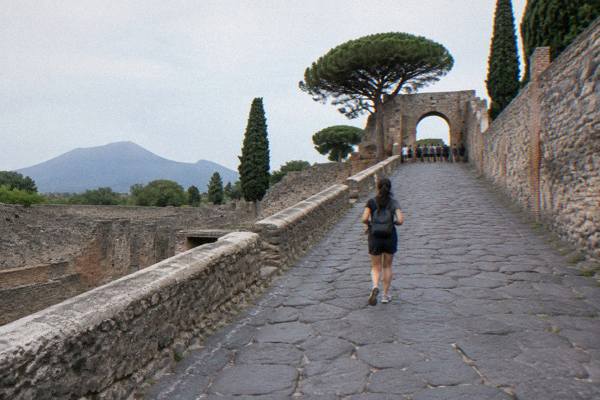
Sorrento To Pompeii
The Sorrento to Pompeii run is one of the shortest and easiest day trips on the Bay of Naples: a single local train line connects the resort town to the gate of a buried Roman city.
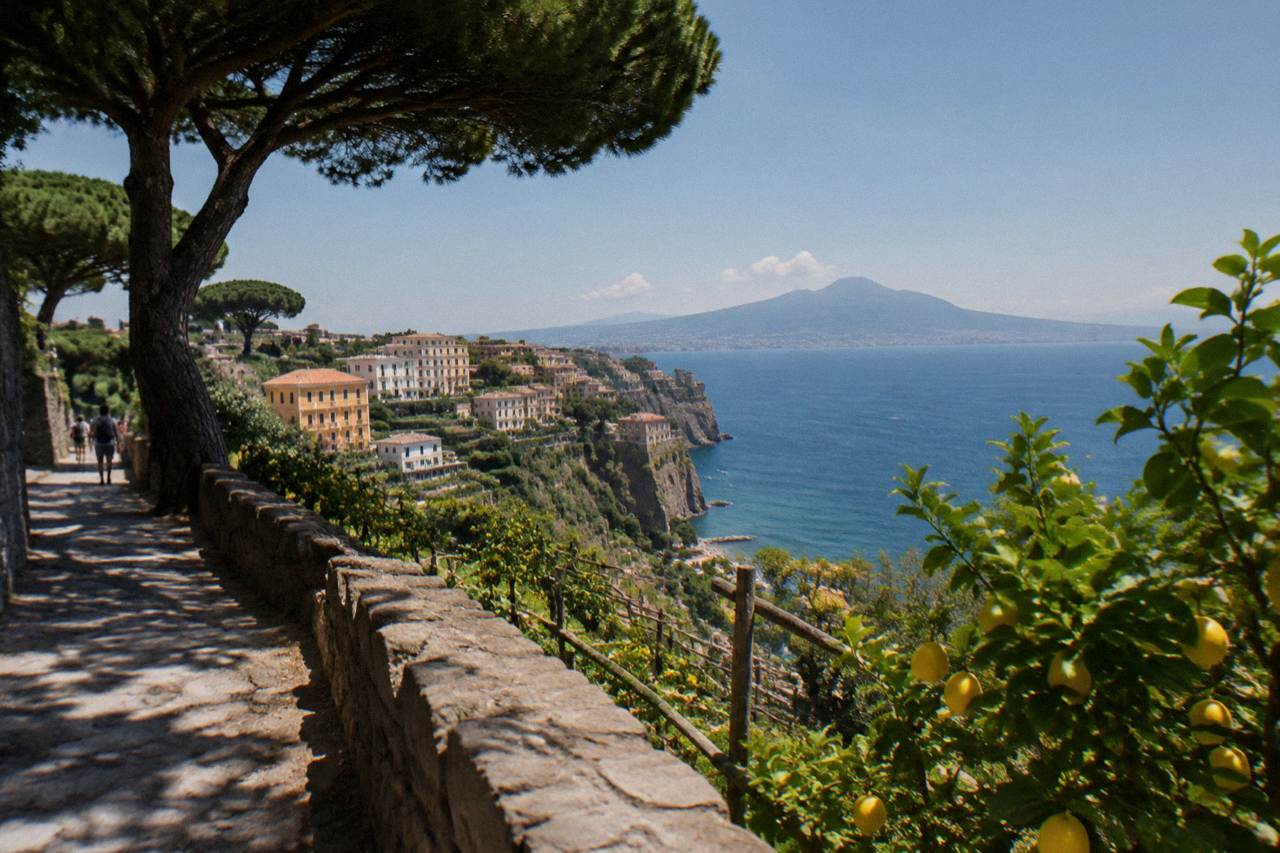
Short answer
The Circumvesuviana train from Sorrento to Pompei Scavi-Villa dei Misteri takes 34 to 40 minutes. A 2026 Pompeii Express ticket costs EUR 20 and a Pompeii+ ticket EUR 25, with a single EUR 25 ticket for all park sites from 1 January 2027. Campania Express trains have been suspended since 1 October 2026, so the local line is the rail option.
Sorrento sits on the southern rim of the Bay of Naples, and the archaeological park of Pompeii, the ancient Roman city buried by the eruption of Mount Vesuvius in AD 79, lies about 26 km away by road in Campania, southern Italy. Between them runs one narrow-gauge railway that has carried day-trippers for over a century, stopping, usefully for visitors, directly beside the excavations at the station called Pompei Scavi-Villa dei Misteri. This page sets out the whole journey in practical terms: the train, the tickets, the entrances, the guided options, and how the plan changes with the seasons. For the wider picture of the site itself, the Pompeii Travel Guide homepage gathers everything in one place.
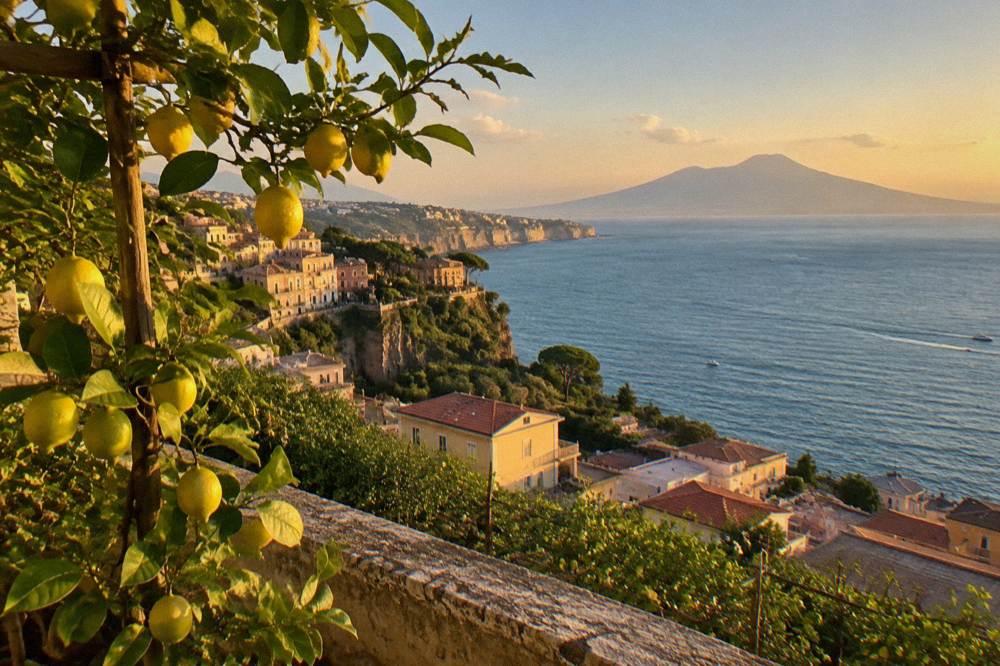
How Do You Get From Sorrento To Pompeii In Italy?
The only rail link is the EAV Circumvesuviana line from Sorrento to Pompei Scavi-Villa dei Misteri, a scheduled run of 34 to 40 minutes, and the Campania Express premium service is suspended since 1 October 2026 until further notice. By road the distance is about 26 km, roughly 37 minutes of driving on the Sorrento peninsula's winding coast road. The train wins on convenience because its station stands beside the Porta Marina entrance to the ancient city.
Sorrento's station is the southern terminus of the Circumvesuviana's Sorrento line, and every northbound train on it calls at Pompei Scavi-Villa dei Misteri. You change nothing, you cross nothing, and you step off within a short walk of the ticket office at Porta Marina. The full mechanics of the line, including its quirks and its rolling stock, are covered in the dedicated Circumvesuviana train explained guide.
EAV, the operator, states that the service has been suspended since 1 October 2026 until further notice, with refunds handled through its complaints form or the original seller.
Driving is possible but rarely sensible for a first visit. The coast road is narrow and busy in season, and parking near the excavations fills early, a topic the site's parking guide treats separately. For nearly everyone starting in Sorrento, the local train is the answer.
| Route | Mode | figure | Source basis |
|---|---|---|---|
| Sorrento to Pompei Scavi-Villa dei Misteri | Circumvesuviana train | 34 to 40 minutes | EAV timetable data, feed dated 30 September 2026 |
| Napoli Garibaldi to Pompei Scavi-Villa dei Misteri | Circumvesuviana train | 29 to 35 minutes (median 29) | EAV timetable data |
| Napoli Garibaldi to Sorrento | Circumvesuviana train | 64 to 75 minutes (median 69) | EAV timetable data |
| Sorrento to Pompei Scavi | Road, driving | 26 km, about 37 minutes | OpenStreetMap routing, not official |
| Campania Express Sorrento to Pompeii | Premium train | Suspended since 1 October 2026 | EAV notice |
How Long Is The Train From Sorrento To Pompeii?
The scheduled Circumvesuviana journey from Sorrento to Pompei Scavi-Villa dei Misteri takes between 34 and 40 minutes, according to the operator's own timetable data. Trains run along the Sorrento peninsula, through stations including Piano di Sorrento, Meta and Torre Annunziata, before reaching the excavations stop. Allow a full hour door to door from a hotel in central Sorrento to the queue at the park gate.
The figure comes from EAV's own published timetable feed, which is as close to a primary source as rail scheduling gets. It is a scheduled time, not a promise: the Circumvesuviana is a working commuter railway that carries schoolchildren and office workers alongside travellers, and it can run late in peak periods. Building slack into the day costs little when the journey itself is this short.
A useful detail is where to stand and what to watch for. The station for the excavations is announced as Pompei Scavi-Villa dei Misteri, and it comes shortly after the train turns inland around the base of Vesuvius. Getting off one stop early or late is the classic error, so listen for "Scavi" rather than simply "Pompei", which on this line belongs to the modern town's other stations. The site's guide to the Scavi station and its surrounds covers the arrival in detail.
Return journeys deserve a little planning too. The last thing a tired visitor wants is to miss the final departure and face an expensive taxi over the peninsula, so check the evening timetable at the station in the morning, or on the operator's own timetable pages, rather than trusting memory or a printed card in a hotel lobby.
Is A Guided Tour From Sorrento Better Than Going Alone?
A guided tour suits travellers who want the train, the skip-the-line entry and a trained archaeologist handled in one booking, while independent visiting suits the confident and the budget-aware. The site is vast, signage is thin, and a two-hour guided walk covers a coherent route that could otherwise take half a day of guesswork. Both approaches end at the same ruins; the difference is how much of the story arrives with you.
The case for a guide is about information density. Pompeii is an excavated area of 44 ha within a UNESCO inscribed property of 98 ha, and wandering it without interpretation reduces the world's richest Roman site to a pile of stones with occasional frescoes. An archaeologist-led small group walk turns a bakery counter, a crosswalk stepping stone and a faded wall inscription into a legible city. The trade-offs between the two styles, with costs considered honestly, are laid out in the site's guided tour versus self-guided comparison.
The case for independence is control. Arrive early, leave late, linger in the House of the Faun or the Garden of the Fugitives as long as the mood takes you, and spend nothing beyond the entry ticket. The answers page on touring Pompeii on your own deals with the practicalities, and the best way to visit from Sorrento question weighs the options for exactly this journey.
For travellers who want the train ride included, an express option runs from Sorrento by rail with a guide and a compact itinerary, finishing inside two hours. It is the natural fit for a Sorrento-based visitor who wants interpretation without surrendering the whole day.
Whatever you choose, book entry ahead. Tickets are nominative since 15 November 2024, a daily cap of 20,000 visitors applies, and identification can be checked at the gate. A same-day walk-up is possible in the shoulder season but is a gamble in summer.
Which Pompeii Tickets Do You Need For 2026 And 2027?
In 2026 the Pompeii Express ticket costs EUR 20 for the ancient city alone, Pompeii+ costs EUR 25 and adds the suburban villas route, and the 3-day ticket costs EUR 30 covering all park sites. From 1 January 2027 the structure changes: one EUR 25 ticket covers all park sites, valid 30 days, one entry per site, while Oplontis, the Stabiae museum and Boscoreale stay EUR 8 individually and the MyPompeii Card stays EUR 45.
The 2026 prices are in force from 12 January 2026 and end on 31 December 2026. Express holders who decide on the spot to see the suburban villas, the Villa of the Mysteries and Villa of Diomedes out beyond the Porta Ercolano entrance, can add that route for EUR 8, card payment only, at the Street of the Tombs entrance. Concessions matter here too: entry is free for under-18s and for everyone on the first Sunday of the month, and EU citizens aged 18 to under 25 pay a reduced EUR 2.
| Ticket (2026 prices, until 31 December 2026) | Price | What it covers |
|---|---|---|
| Pompeii Express | EUR 20 | The ancient city only |
| Pompeii+ | EUR 25 | City plus suburban villas, Villa Regina and Antiquarium at Boscoreale, shuttle |
| 3-day ticket | EUR 30 | Pompeii+ plus Oplontis, Villa Arianna, Villa San Marco, Stabiae museum, Boscoreale |
| Other sites individually (Oplontis, Stabiae museum, Boscoreale) | EUR 8 each | Single site entry |
| MyPompeii Card (annual) | EUR 45, EUR 10 reduced | Annual pass |
| Reduced, EU citizens 18 to under 25 | EUR 2 | All ticket types |
| Under 18, and everyone on the first Sunday of the month | Free | The ancient city |
The 2027 change was announced by the park on 14 September 2026 and simplifies everything: a single EUR 25 ticket for all park sites, valid 30 days from issue, one entry per site. The nominative ticket rule and the 20,000 daily cap are both retained. Nobody buying in 2026 needs to act on this yet, but anyone planning an early-2027 trip should ignore the old Express and Pompeii+ labels entirely.
| Element | 2026 (until 31 December) | From 1 January 2027 |
|---|---|---|
| Ticket structure | Express EUR 20, Pompeii+ EUR 25, 3-day EUR 30 | Single ticket, EUR 25 |
| Coverage | Tiered by ticket type | All park sites |
| Validity | Per ticket type | 30 days, one entry per site |
| Smaller sites (Oplontis, Stabiae, Boscoreale) | EUR 8 each, or in the 3-day ticket | EUR 8 each |
| MyPompeii Card | EUR 45 | EUR 45 |
| Nominative tickets and 20,000 daily cap | In force | Retained |
Full detail, including where each ticket is sold and how the free partner sites work, sits on the site's dedicated Pompeii ticket options page, and the free-entry rules are unpacked on the free entry days guide.
Which Entrance Should You Use Arriving From Sorrento?
Arriving by Circumvesuviana from Sorrento, the practical entrance is Porta Marina, a short walk from Pompei Scavi-Villa dei Misteri station, and it is one of the three ticket offices alongside Piazza Esedra and Piazza Anfiteatro. For the suburban villas route, the entrance is Porta Ercolano, at the Street of the Tombs, where Express holders can add that route for EUR 8.
Porta Marina is the oldest and closest gate and lands you at the bottom of the ancient city, near the Forum and the Baths, which suits the classic south-to-north walk. Piazza Anfiteatro at the eastern end suits travellers who want the Amphitheatre and the Praedia of Julia Felix first, though note the Praedia has been closed to the public since 7 September 2026 for maintenance, until further notice. Piazza Esedra serves the northern side and connects to the Antiquarium lift.
| Entrance | Where it is | Best for |
|---|---|---|
| Porta Marina | Closest to Pompei Scavi-Villa dei Misteri station | Arrivals from Sorrento, the Forum first |
| Piazza Esedra | Northern side | The Antiquarium, accessible exit route |
| Piazza Anfiteatro | Eastern end | The Amphitheatre, the "Pompeii for All" accessible route |
| Porta Ercolano, Street of the Tombs | Northwestern edge | The suburban villas route, the EUR 8 on-site add-on |
The "Pompeii for All" route matters for anyone with reduced mobility: entry is at Piazza Anfiteatro, with exit possible at Piazza Anfiteatro or Piazza Esedra via the Antiquarium lift. Planning the gate to match the route, rather than defaulting to the nearest entrance, saves a long hot walk across the site, and the map and orientation page makes the geometry obvious at a glance.
What Should You See Inside The Park On A Day From Sorrento?
Prioritise the Forum, the Basilica, the Villa of the Mysteries frescoes, the Lupanar, the House of the Faun mosaics and the Garden of the Fugitives casts; a focused route covers these in about half a day. Two hours shows you the Forum and one or two houses; a full day lets you add the amphitheatre end and the suburban villas. Depth beats coverage every time here.
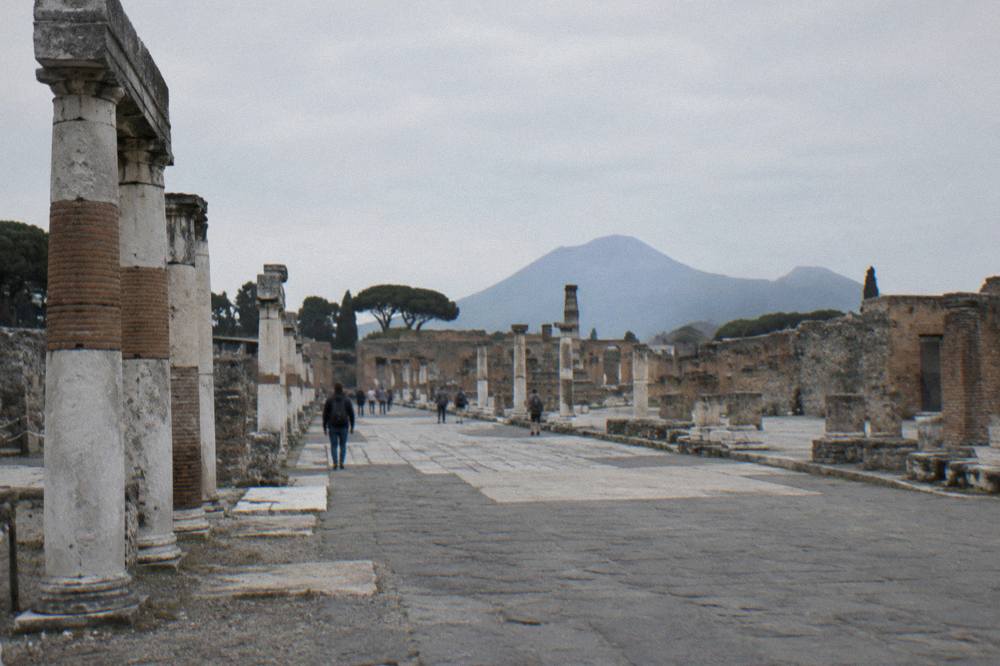
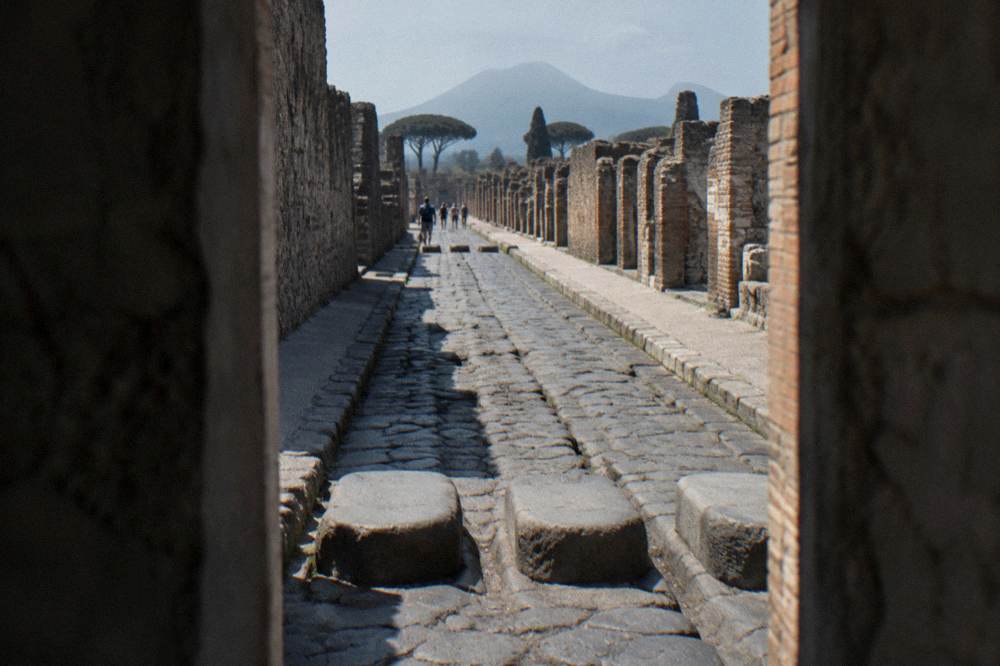
The classic arrival walk from Porta Marina runs up through the Marina Gate to the Forum, with Vesuvius framed behind the columns, then along the Via dell'Abbondanza towards the entertainment district. From there the choices branch: the Forum Baths and the Lupanar are close, the House of the Faun and House of the Vettii sit to the north, and the Amphitheatre and Large Palaestra occupy the eastern end. The half-day highlights route sequences this precisely.
Two closures shape current planning. The Praedia of Julia Felix has been closed since 7 September 2026, and there is no confirmed reopening date, so any itinerary older than that listing it as a stop needs adjusting. Beyond the walls, the suburban villas route to the Villa of the Mysteries remains the single finest fresco cycle on the site, which is exactly why the Pompeii+ ticket exists.
Lunch deserves a sentence of realism. Food inside the park is limited, and the site's eating in and around Pompeii guide covers what actually exists; carrying water is non-negotiable in summer, since the ancient streets offer very little shade and the stones radiate heat. Footwear matters more than almost anything else you wear, a point the what to wear guide develops.
Can You Combine Pompeii With Vesuvius Or Herculaneum In One Day?
Yes, comfortably: Sorrento's position on the Circumvesuviana loop makes a two-site day realistic, and a three-site day possible for early starters. Pompeii plus the Vesuvius crater trail works as a morning ruins, afternoon volcano pairing, while Pompeii plus Herculaneum suits travellers who want two cities rather than a climb. The pairing choice is really a legs-versat-interest question.
Vesuvius adds the view that explains everything you just walked through. The Gran Cono trail tickets are sold online only, in timed slots of 50 tickets every ten minutes bookable 30 days ahead, with the shortest route a two-hour round trip and the longest three hours. Access hours shift by month, 9-15 in January, February, November and December, up to 9-18 in July and August, and the path closes automatically on an orange weather alert or above, with automatic refund. The details, including the ticket types, live on the Vesuvius tickets guide and the crater trail page.
Herculaneum is the quieter alternative: smaller, darker-preserved, and reached on the same Sorrento line, though note its Villa dei Papiri and Ancient Theatre are both closed for works. Deciding between the two buried cities is a genuine dilemma, and the Pompeii versus Herculaneum comparison does it honestly. Ambitious travellers can attempt all three, and the two-day Pompeii, Herculaneum and Vesuvius itinerary exists because a rushed single day rarely does the trio justice.
Can You Combine Pompeii With Sorrento And The Amalfi Coast In One Day?
Pompeii plus a taste of the Amalfi Coast in one day is realistic from a Sorrento base, because the excavations sit between the peninsula and the coast road; adding Positano or Sorrento itself to the ruins day is a well-worn combination. Doing all three comfortably needs a driver or an organised day trip, since coastal buses and the site's fixed hours fight each other in high season.
This is the moment where handing the logistics to an operator earns its fee. A structured day that pairs the guided walk through the ruins with the coast road, with the timings pre-solved, removes the two hardest variables: the park's last-entry clock and the Amalfi drive. One such option, notably, runs from Rome rather than Sorrento, bundling Pompeii, Sorrento and the Amalfi Coast into a single escorted day, which is worth knowing about even for Sorrento-based readers who have friends or family starting in the capital. The site's Rome to Pompeii day trip guide covers that angle, and the rail version is separate on the Rome to Pompeii by train page.
Sorrento-based travellers can read the local framing on the tours from Sorrento roundup, and the coast question itself, whether Amalfi or Sorrento suits you better, is argued out on the Amalfi or Sorrento answers page.
For anyone weighing that Rome-based option seriously, the operator's live listing carries the current price and departure details: Check availability.
What If Your Journey Runs Through Naples?
Travellers arriving through Naples, including cruise passengers docked there, face a different geometry: the Circumvesuviana from Napoli Garibaldi reaches Pompei Scavi in 29 to 35 minutes, and the road distance is about 24 km. Cruise passengers on tight ship time often do better with a shore excursion built around the ship's clock than with self-managed trains, since missed sailing is not a recoverable error.
Naples is the transport hub of the whole region, and the Naples to Pompeii guide covers that leg in full. For passengers whose holiday is a ship rather than a hotel, the arithmetic changes: the walk from the cruise terminal to the Circumvesuviana station, the train, the site, and the whole sequence in reverse has to fit inside the ship's hours in port, with buffer. A dedicated shore excursion with a guide collapses that risk into a single booked commitment.
Even for land-based travellers, Naples is worth a sentence because Sorrento and Naples are the two great bases of the bay, and the Naples versus Sorrento base comparison decides that question better than a paragraph here can. What matters for this page is that everything from Sorrento passes Pompeii's orbit on the way to everywhere else.
When Is The Best Month To Travel From Sorrento To Pompeii?
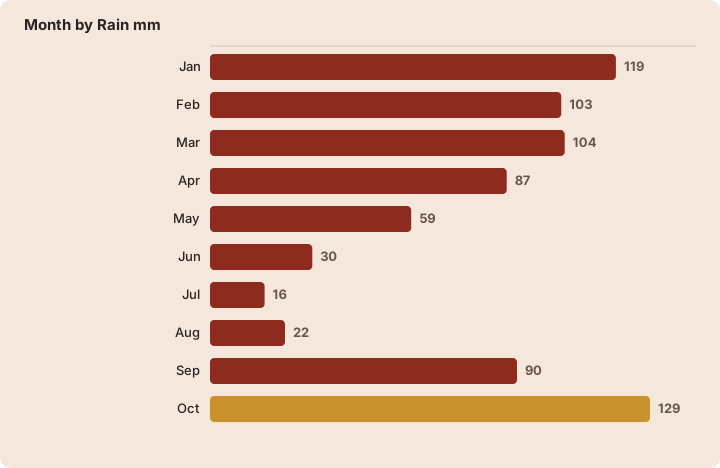
May and October are the strongest months for this trip: about 21.6 and 21.3 degrees mean daily maximum respectively, with 59 mm and 129 mm of rain. July and August bring mean daily maxima of 28.7 and 29.4 degrees with almost no rain, which is why the stones of Pompeii feel like an oven by midday. November is the wettest month at 180 mm; February the coldest at a 6.5 degree mean minimum.
These are 1991-2020 climate normals computed from the Open-Meteo historical archive for the Pompei grid point, a reanalysis grid rather than a weather station, so read them as "about" rather than as a forecast. What they describe is a classic Mediterranean pattern: a long dry summer, a wet late autumn, and mild winters that make Pompeii entirely visitable year round, with the park open daily except 25 December and 1 January.
| Month | Mean daily max C | Mean daily min C | Rain mm |
|---|---|---|---|
| Jan | 12.2 | 6.6 | 119 |
| Feb | 12.6 | 6.5 | 103 |
| Mar | 14.9 | 8.1 | 104 |
| Apr | 17.7 | 10.4 | 87 |
| May | 21.6 | 14.1 | 59 |
| Jun | 25.8 | 18.2 | 30 |
| Jul | 28.7 | 21.1 | 16 |
| Aug | 29.4 | 21.8 | 22 |
| Sep | 25.3 | 18.6 | 90 |
| Oct | 21.3 | 15.1 | 129 |
| Nov | 16.9 | 11.5 | 180 |
| Dec | 13.2 | 8.0 | 147 |
Hours shift with the seasons and matter more than the temperature. From 16 March to 14 October the park opens at 9:00 with last entry 17:30 and closes at 19:00; from 15 October to 15 March last entry falls to 15:30 with a 17:00 close. A winter day trip from Sorrento is entirely feasible on the 34 to 40 minute train, but the shortened site hours mean an early start, and the summer heat plan and the best time to visit guide treat the seasons at proper length.
Where Should You Base Yourself, Sorrento Or Pompei?
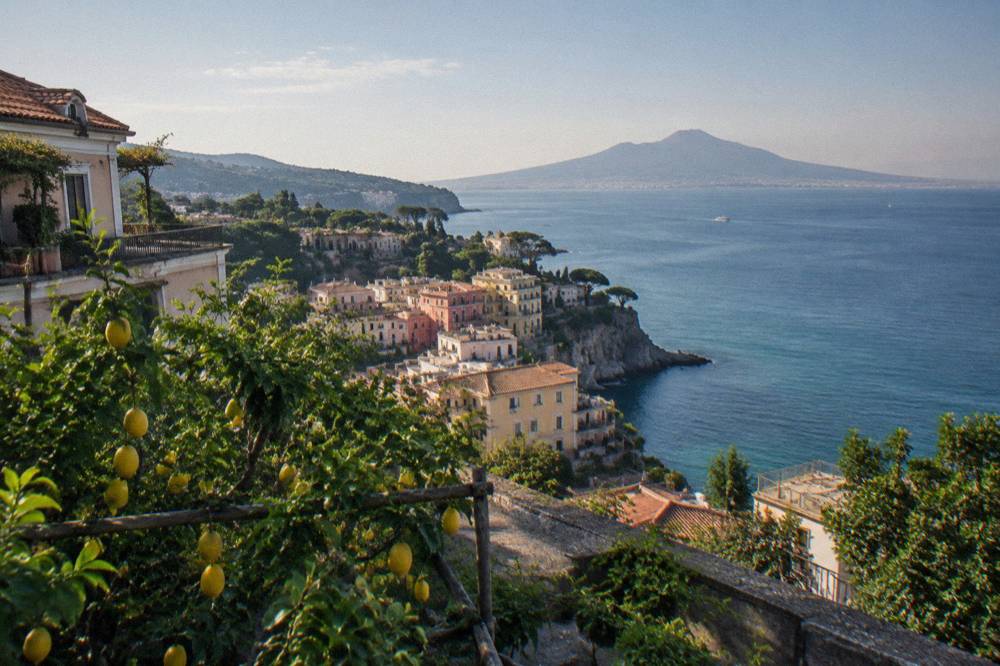
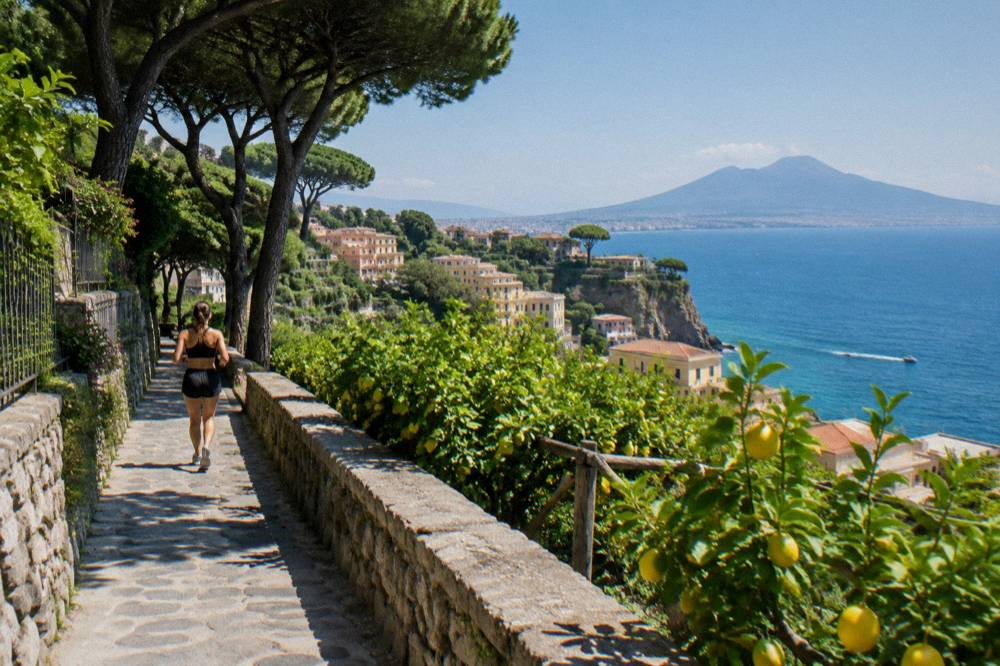
Sorrento is the stronger base for a Bay of Naples holiday and simply accepts Pompeii as one accessible day among several, while staying in modern Pompei puts you at the gate for dawn entry and nothing else in the evenings. The Circumvesuviana makes the two interchangeable for this one purpose, so the choice rests on what you want from the rest of your trip: coastal resort life versus proximity to the excavations.
Modern Pompei, with its Sanctuary and its working town rhythm, is practical and inexpensive and some travellers love it for exactly that; the where to stay in Pompeii guide covers the honest options. But its evenings are quiet in a way Sorrento's never are, and Sorrento offers the ferry to Capri, the coast road, and a dining scene worth returning to after a dusty afternoon among the ruins. The Sorrento versus Naples question and the overnight in Pompeii question both weigh the trade directly.
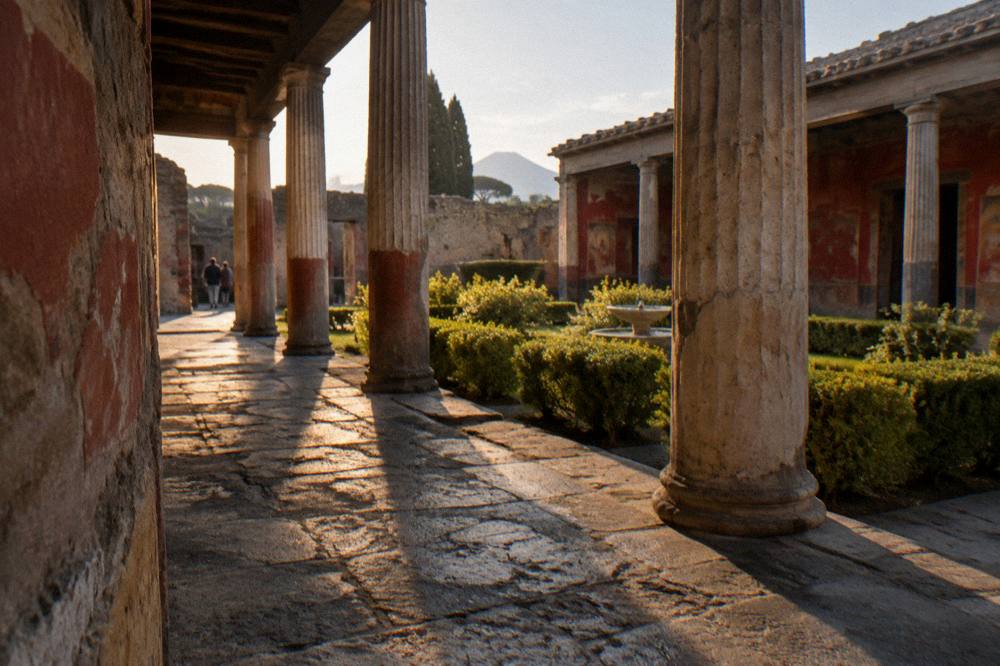
For a two-week or even one-week trip, the geometry favours Sorrento decisively: Pompeii, Herculaneum, Vesuvius, Capri and the Amalfi Coast all radiate from it on the same little railway and the same winding roads. The site's day trips from Sorrento collection lays out the full menu.
What Should You Pack For The Day Trip?
Carry water, sun protection, sturdy shoes with real grip, and a bag no larger than 30x30x15 cm, which is the park's permitted size; anything bigger goes to left luggage. Bring your passport or ID, since nominative tickets can be checked against it at entry, and cash or card for the on-site add-ons like the EUR 8 suburban villas route at Porta Ercolano. Nothing else is strictly needed.
The bag limit is enforced rather than theoretical, and it interacts badly with beach-minded travellers who arrive from Sorrento with a day bag packed for the coast. The full rules, drones, bare chests, pets and the rest, sit on the park's visitor regulations page and are summarised on this site's Pompeii tips page. Luggage storage options near the station are covered separately on the luggage storage guide, which matters for travellers checking out of Sorrento hotels on trip-day morning.
Shoes deserve their own sentence. Two millennia of basalt paving, worn smooth in the busy streets and loose in the quiet ones, punishes sandals and turns wet stone genuinely slippery after rain. This is the single item that most often determines whether a day at Pompeii ends at 11:00 or at closing time.
Common Questions About Travelling From Sorrento To Pompeii
How long is the train from Sorrento to Pompeii?
The Circumvesuviana train from Sorrento to Pompei Scavi-Villa dei Misteri takes 34 to 40 minutes according to EAV's timetable data. Allow about an hour door to door from central Sorrento to the park gate.
How much does it cost to enter Pompeii in 2026?
The Pompeii Express ticket costs EUR 20 and Pompeii+ costs EUR 25 in 2026, with a 3-day ticket at EUR 30. Entry is free for under-18s and for everyone on the first Sunday of the month, and reduced to EUR 2 for EU citizens aged 18 to under 25. From 1 January 2027 a single EUR 25 ticket covers all park sites.
Can you do Pompeii as a day trip from Sorrento?
Yes, easily. The 34 to 40 minute train each way leaves the better part of a day inside the park, and combining Pompeii with Vesuvius or Herculaneum is realistic for early starters.
Which Pompeii entrance is closest to the train from Sorrento?
Porta Marina, a short walk from Pompei Scavi-Villa dei Misteri station, and it has a ticket office, as do Piazza Esedra and Piazza Anfiteatro. The suburban villas route is entered at Porta Ercolano on the Street of the Tombs.
Is a guided tour of Pompeii worth it from Sorrento?
For a first visit, an archaeologist-led walk adds interpretation the ruins themselves do not supply, and a tour from Sorrento can bundle the train and skip-the-line entry. Independent visiting remains entirely viable for travellers who plan a route in advance.
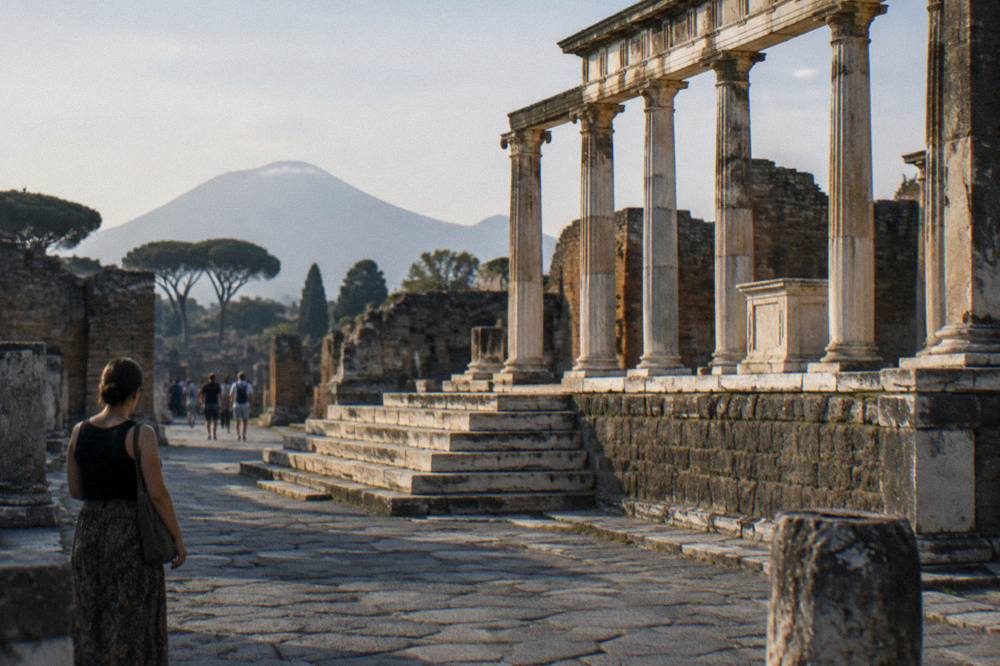
However you structure the day, the journey itself is the easy part. One train, under forty minutes, and you step off beside a city that stopped, traditionally dated to 24 August AD 79, and stayed stopped; everything else on this page is just about spending your hours there well.