Naples Vs Sorrento
Naples and Sorrento sit barely 50 km apart on the Bay of Naples, yet they offer two completely different holidays. One is a loud, layered, working port city with some of the best pizza and street life in Italy; the other is a manicured cliff-top resort of lemon groves and sea-view terraces. If your main goal is visiting Pompeii, the right base changes your trip.

Short answer
Naples puts you closer to Pompeii by train and costs less, with a direct Circumvesuviana ride of 29 to 35 minutes from Napoli Garibaldi. Sorrento is calmer, prettier and more tourist-focused, but the train to Pompeii takes 34 to 40 minutes and accommodation is pricier. Choose Naples for budget, nightlife and easy connections; choose Sorrento for a quieter, resort-style stay with a shorter hop to the Amalfi Coast.
Naples and Sorrento sit on opposite sides of the same bay, connected by a direct train that takes just over an hour, yet they feel like different countries. Naples is a dense, vertical port city with laundry strung across alleys, Vespas threading through traffic, and a street-food culture that runs from dawn until well past midnight. Sorrento is a small cliff-top town built on tourism, with neat rows of lemon trees, ceramic shops and hotel terraces that look straight across the water to Vesuvius. Both towns are in Campania, southern Italy, and both work as a base for visiting Pompeii. The question is which one suits the trip you actually want to take.

The decision matters more than it first appears. The train ride between them takes over an hour, and the cost difference in accommodation, food and tours adds up fast over a three- or four-night stay. A traveller who wants a budget city break with raw energy and the best pizza on earth will be miserable in Sorrento's polished hotel strip, just as someone who wants a quiet terrace and a spritz at sunset will find Naples overwhelming. This guide from Pompeii Travel Guide walks through the real differences: transport to the ruins, cost, atmosphere, food, day-trip reach and the kind of traveller each town actually works for.
How Long Does It Take To Get From Naples And Sorrento To Pompeii?
Naples is the closer base by train: the Circumvesuviana line from Napoli Garibaldi reaches Pompei Scavi-Villa dei Misteri station in 29 to 35 minutes. Sorrento sits further down the same line, and the ride to the same station takes 34 to 40 minutes.
The Circumvesuviana is the workhorse railway that connects Naples, Pompeii and Sorrento on a single line, and it is the only direct public-transport link between all three. Trains run frequently throughout the day, and the station you want is Pompei Scavi-Villa dei Misteri, which sits directly outside the Porta Marina entrance to the archaeological park. From Naples, the station is Napoli Garibaldi, the vast underground hub beneath the main rail terminal; from Sorrento, it is the single terminus station in the town centre. The Campania Express, a tourist-focused train with air conditioning and fewer stops that once ran the same route, has been suspended since 1 October 2026 until further notice, so the Circumvesuviana is currently the only rail option for this journey.
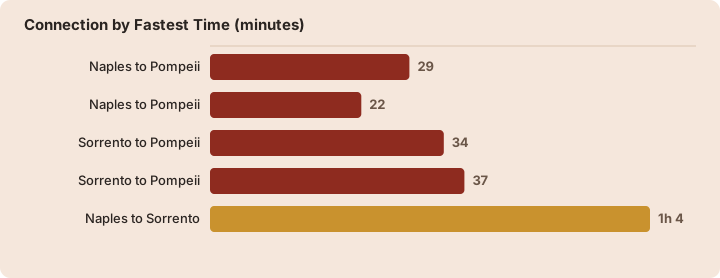
Driving times tell a different story. By road, Naples to Pompei Scavi is about 24 km and takes roughly 22 minutes in light traffic, while Sorrento to Pompei Scavi is about 26 km and takes around 37 minutes on the winding coastal roads. The road distance is similar, but the Sorrento drive is slower and parking at Pompeii is limited to paid lots near the entrances, none of which are guaranteed to have space by mid-morning in high season.
| Connection | Mode | Distance | Fastest Time |
|---|---|---|---|
| Naples to Pompeii | Circumvesuviana train | N/A | 29 min |
| Naples to Pompeii | Car | About 24 km | About 22 min |
| Sorrento to Pompeii | Circumvesuviana train | N/A | 34 min |
| Sorrento to Pompeii | Car | About 26 km | About 37 min |
| Naples to Sorrento | Circumvesuviana train | N/A | 64 min |
| Circumvesuviana Journey | Fastest Time | Median Time |
|---|---|---|
| Napoli Garibaldi to Pompei Scavi-Villa dei Misteri | 29 min | 29 min |
| Sorrento to Pompei Scavi-Villa dei Misteri | 34 min | N/A |
| Napoli Garibaldi to Sorrento | 64 min | 69 min |
The upshot is that Naples wins on pure transit speed to the ruins, but the margin is narrow, and for many visitors the ten-minute difference is not the deciding factor. What sways the decision is everything else about the two towns.
What Is The Atmosphere Like In Naples Versus Sorrento?
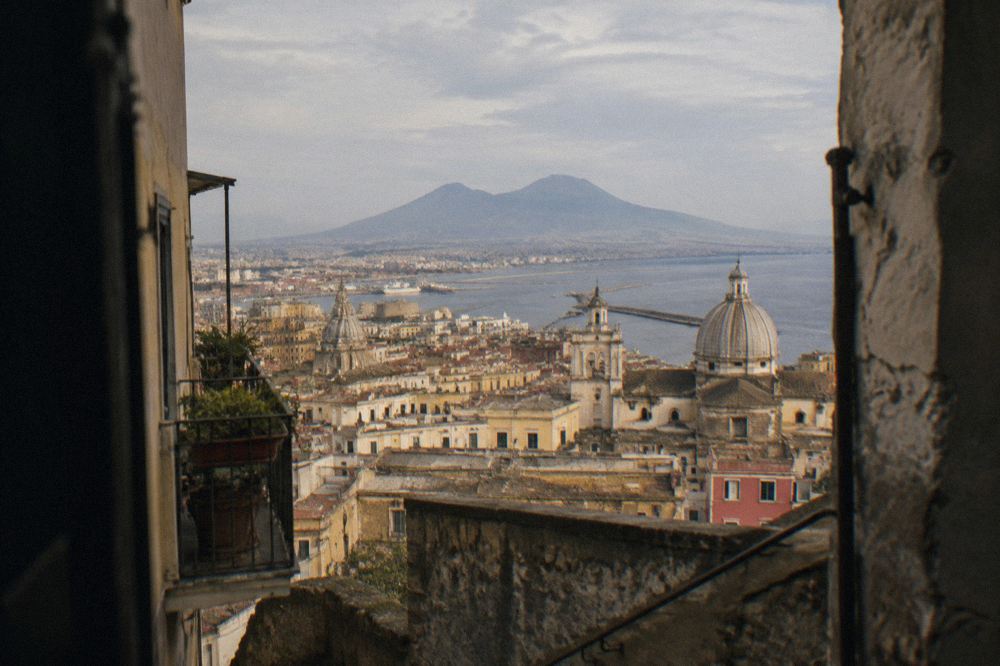
Naples is loud, dense, chaotic and deeply authentic: a working city where street markets, baroque churches and graffiti-covered palazzi sit side by side, and the energy runs from early-morning espresso at a stand-up bar to late-night pizza in a crowded alley. Sorrento is a manicured resort town built almost entirely around tourism, with cliff-top gardens, lemon-scented lanes, ceramic shops and a noticeably calmer, safer-feeling pace. Neither is objectively better; they appeal to opposite temperaments.
Naples is one of the oldest continuously inhabited urban centres in Europe. Its historic centre is a UNESCO World Heritage site, a dense grid of narrow streets where the ground floors are workshops, bakeries and pizzerias and the upper floors are apartments with washing strung between buildings. The noise level is high: scooters, street vendors, church bells and conversation all compete for airspace. Street life is the city's real attraction, from the fish market at Porta Nolana to the Spaccanapoli thoroughfare that slices through the old town. Naples does not perform for visitors; it just gets on with being Naples, and that rawness is exactly what draws travellers who find Sorrento too polished.
Sorrento is a small town perched on tufa cliffs above the Bay of Naples. Its centre is compact, walkable and geared toward visitors: the main drag, Corso Italia, is lined with hotels, limoncello shops and restaurants with English menus. The historic core around Via San Cesareo is prettier, with narrow lanes and artisan workshops, but even there the economy is tourism. Sorrento's great asset is its setting: the views across the bay to Vesuvius are spectacular, especially at sunset from the Villa Comunale park, and the town feels safe and relaxed after dark in a way that parts of Naples do not. The trade-off is that Sorrento can feel like a stage set in peak season, with few corners that are not catering to visitors.
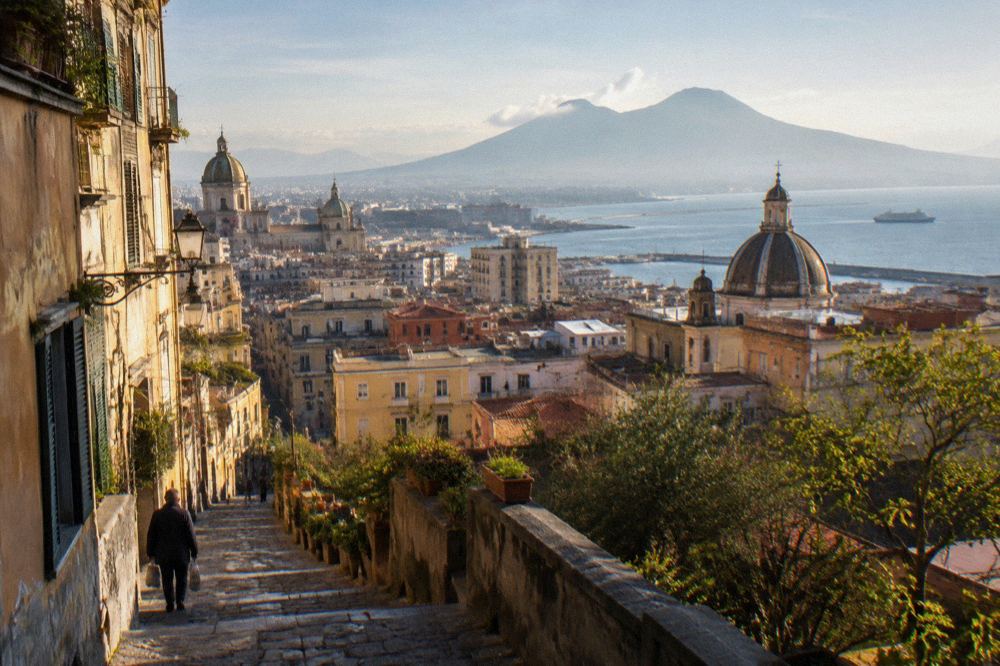
The traveller who thrives in Naples enjoys urban grit, improvisation and the sense of discovering a city rather than being served by one. The traveller who thrives in Sorrento wants a comfortable, beautiful base where everything works predictably and the hardest decision of the day is which flavour of gelato to order. Both are valid ways to visit Pompeii.
Which Base Costs Less, Naples Or Sorrento?
Naples is the cheaper base across every category that matters: accommodation, food, drinks and local transport all cost noticeably less than in Sorrento. A mid-range double room in central Naples is significantly cheaper than a comparable room in Sorrento, and a sit-down dinner with wine in Sorrento routinely runs 30 to 50 per cent more than its equivalent in Naples. The savings from staying in Naples over a four-night trip can cover the cost of a guided Pompeii tour for two people.
Accommodation is the biggest line item and the widest gap. Naples has a deep stock of hotels, B&Bs and short-let apartments across every price band, and competition keeps mid-range prices in check. Sorrento has far fewer rooms relative to demand, especially from April through October, and the town's reputation as a premium resort destination pushes rates higher. A simple guesthouse room in Sorrento often costs what a four-star hotel room costs in Naples. The difference narrows in the winter low season, but Sorrento still commands a premium.
Food tells the same story. Sorrento's restaurant prices are inflated by the tourist economy, and while the food is often good, a comparable dinner easily costs considerably more. Street food exists in Sorrento but is far less central to the culture than in Naples, where eating on the move is the norm.
Local transport costs are similar on the Circumvesuviana, but Naples has an integrated urban transport network of metro lines, funiculars and buses that makes getting around the city cheap. Sorrento is walkable enough that you rarely need transport inside the town, but reaching the Amalfi Coast by SITA bus or ferry adds cost that Naples-based travellers do not incur unless they make the same trip as a full day out. For a traveller whose main goal is Pompeii and who wants to keep the trip affordable, Naples is the clear financial winner.
Which Town Has Better Food?
Naples has a stronger, deeper and more affordable food culture than Sorrento, and it is one of the great eating cities of Italy. Pizza was born here, street food is a way of life, and the sheer density of excellent, inexpensive places to eat is unmatched on the Bay of Naples. Sorrento has good restaurants, many with sea views, and its own specialties such as gnocchi alla sorrentina and delizia al limone, but the dining scene is smaller, pricier and more oriented toward tourists.
Naples is synonymous with pizza, and the city's historic pizzerias, L'Antica Pizzeria da Michele, Sorbillo, Di Matteo and dozens of others, turn out blistered, soft-centred pies that are widely considered the best in the world. The classic order is a margherita or a marinara, each very affordable, and the experience of eating one in a noisy, tiled room in the old town is as much a cultural event as a meal. Beyond pizza, Naples has a street-food repertoire that runs from fried pizza (pizza fritta) and potato croquettes (crocche) to the rum-soaked babà and the shell-shaped sfogliatella pastry. The city's trattorias serve seafood and pasta dishes rooted in the cucina povera tradition: spaghetti alle vongole, pasta e patate, and the rich, slow-cooked ragù Napoletano.
Sorrento's food is more refined and more expensive, but it has its own strengths. The town is surrounded by lemon groves, and the local lemons, large, fragrant and thick-skinned, appear in everything from limoncello to the lemon-infused delizia al limone dessert. Gnocchi alla sorrentina, soft potato dumplings baked with tomato sauce, mozzarella and basil, is the town's signature dish and is genuinely excellent when made well. Seafood is fresh and well-prepared, and many restaurants have terraces with views that Naples pizzerias cannot match. The trade-off is value: a meal in Sorrento costs noticeably more than its equivalent in Naples and is not necessarily better.
| Food Experience | Naples | Sorrento |
|---|---|---|
| Signature dish | Pizza margherita | Gnocchi alla sorrentina |
| Street food culture | Extensive, all-day | Limited |
| Typical dinner cost | Inexpensive | Moderate to high |
| Best for | Budget eating, pizza, street food | Sea-view dining, lemon desserts |
| Coffee style | Stand-up bar, quick espresso | Sit-down café, relaxed |
For a food-focused traveller, Naples is the better choice by a wide margin. Sorrento's dining scene is perfectly pleasant, but it is not a destination for eating in the way Naples is, and visitors who base themselves in Sorrento often take a day trip into Naples specifically to eat. If food is a main reason for the trip, stay in Naples and visit Sorrento for a day.
Where Can You Take Better Day Trips From, Naples Or Sorrento?
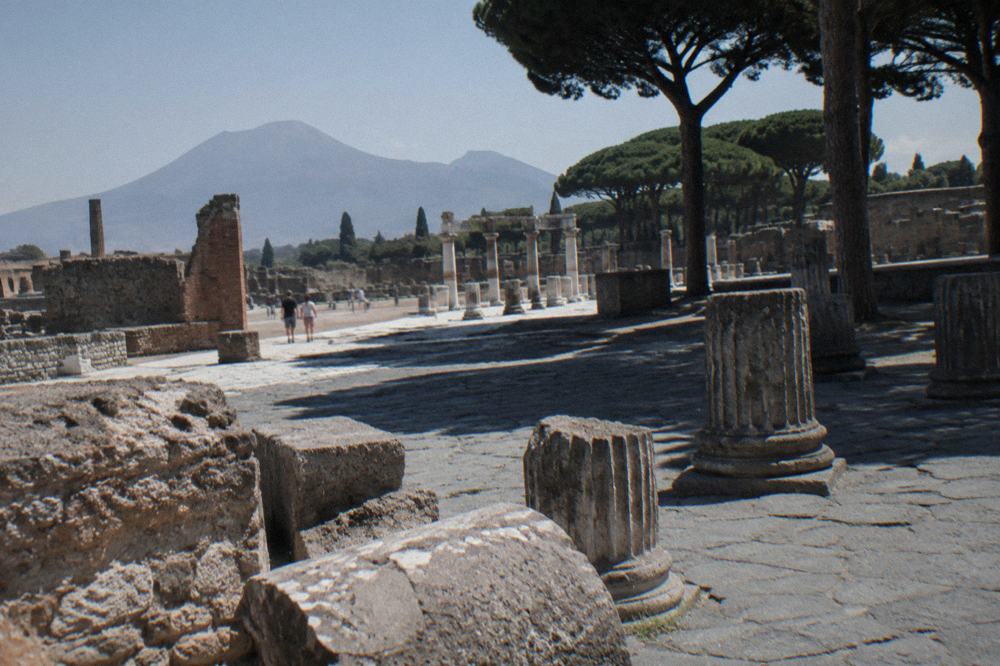
Naples is the stronger base for day trips to Pompeii, Herculaneum, Mount Vesuvius, the Naples National Archaeological Museum and Caserta. Sorrento is the stronger base for the Amalfi Coast, Capri and Positano. Neither town locks you out of the other's day trips, but the travel time and logistics tilt the balance: from Naples, Pompeii and Herculaneum are a short train ride; from Sorrento, the Amalfi Coast and Capri are a short ferry or bus ride.
Herculaneum is even closer: the Ercolano Scavi station is a short ride from Naples on the same line, and the site itself is a ten-minute walk downhill from the station. Mount Vesuvius is reachable by a combination of train and shuttle bus from either base, but the Naples-side logistics are slightly simpler because the bus connections from Ercolano Scavi are well-established. The Naples National Archaeological Museum, which holds the finest artefacts removed from Pompeii and Herculaneum, including the Alexander Mosaic and the Secret Cabinet, is in central Naples and is a must-see that Sorrento-based visitors must devote a full day to reach. The Royal Palace of Caserta, a vast Baroque palace often called the Versailles of Italy, is a short train ride north of Naples and impractical as a day trip from Sorrento.
Sorrento's day-trip advantage is the Amalfi Coast. The SITA bus from Sorrento threads along the cliff-hugging coastal road to Positano, Amalfi and Ravello, and the journey itself is part of the experience. Ferries and hydrofoils run from Sorrento's Marina Piccola to Capri, Positano and Amalfi in season, offering a faster and far more scenic alternative to the bus. From Naples, reaching the Amalfi Coast means either a long day on buses and trains or booking an organised tour that handles the transport. Capri is a straightforward ferry ride from Sorrento, taking about 20 to 30 minutes; from Naples, the ferry is longer and less frequent.
The choice hinges on what you want to see beyond Pompeii. A traveller whose secondary interests are Herculaneum, the archaeological museum and perhaps Caserta should stay in Naples. A traveller who wants to spend several days exploring the Amalfi Coast, with Pompeii as one stop among several, should stay in Sorrento. Organised tours bridge the gap in both directions: from Naples, a deluxe group tour bundles Pompeii and the Amalfi Coast into a single eight-hour day, and from Sorrento, a guided express tour by train handles the Pompeii logistics so you do not need to navigate the Circumvesuviana on your own.

What Is The Accommodation Like In Each Town?
Naples offers a wider range of accommodation across every price band, from budget hostels and guesthouses in the old town to grand seafront hotels on the Via Partenope. Sorrento's accommodation stock is smaller, more expensive and heavily skewed toward mid-range and upmarket hotels, many with pools, sea views and terraces. Naples suits travellers who prioritise location and value; Sorrento suits those who want a resort-style stay with amenities.
In Naples, the most atmospheric neighbourhoods for visitors are the Centro Storico, the Quartieri Spagnoli and the Chiaia district near the seafront. The Centro Storico puts you in the thick of the old town, steps from pizzerias and churches, but the streets are narrow and noisy, and rooms in historic palazzi often come with quirks such as small lifts or limited natural light. Chiaia and the lungomare are calmer and more upmarket, with sea views and higher prices. Naples also has a large supply of short-let apartments, which can be good value for families or groups who want a kitchen and more space.
Sorrento's accommodation clusters around the town centre and the cliff-top zone near the Villa Comunale. Hotels here tend to be traditional, family-run properties or larger four-star resorts with pools and gardens. Sea-view rooms command a significant premium, and in high season the best ones book out months ahead. Sorrento has fewer true budget options than Naples; a dorm bed or a basic private room is harder to find, and the floor for a decent double room is higher. The upside is that many Sorrento hotels feel like a holiday in themselves, with breakfast terraces overlooking the bay and lemon trees in the courtyards, which is exactly the experience some travellers are looking for.
| Accommodation Factor | Naples | Sorrento |
|---|---|---|
| Budget room availability | Good | Limited |
| Mid-range double room cost | Lower | Higher |
| Hotel with pool | Rare in the centre | Common |
| Sea-view room premium | Moderate | High |
| Apartment rentals | Widely available | Available, pricier |
| Best neighbourhood for visitors | Centro Storico, Chiaia | Town centre, cliff-top |
Neither town has a hotel that is verified as being directly beside a Pompeii entrance, and claims to the contrary that appear online should be treated with caution. If staying in the modern town of Pompei itself is an option, see the guide on whether to stay in Naples or Pompei for a fuller comparison.
Which Base Is Better For A Family With Children?
Sorrento is the easier base for families with young children: it is smaller, calmer, more walkable and has a higher concentration of hotels with pools and family-friendly facilities. Naples is better for families with older children or teenagers who can handle a busy urban environment and will appreciate the street food, the underground tours and the sheer energy of the city.
Sorrento's compact centre means less walking and fewer logistical headaches. The town is largely flat once you are up from the marina, the traffic is manageable, and the presence of gelaterie on every corner keeps morale high. Many hotels cater explicitly to families, with interconnecting rooms, pools and early dinner options. The ferry to Capri is a short, exciting boat ride that children tend to enjoy, and the Amalfi Coast bus, while winding, is an adventure in itself. The main drawback for families in Sorrento is the lack of a proper beach: the coastline is mostly cliffs, and the few bathing platforms are reached by lift or stairs.
Naples is more challenging with young children. The traffic is aggressive, the pavements are narrow and often blocked by parked scooters, and the noise level can be overwhelming for a tired toddler. The city's great family asset is its food: even the pickiest eater will usually accept pizza, and the street-food culture means you can eat well without sitting through a long restaurant meal. Older children and teenagers often respond well to Naples' underground tours, which explore the Greek and Roman tunnels beneath the city, and the funicular railways are a novelty that makes getting around feel like an attraction. The Naples underground is one of the city's best family activities and works for ages roughly eight and up.
For a family whose main goal is Pompeii and who wants a stress-free base with a pool, Sorrento is the safer choice. For a family that treats the base as part of the adventure and has older children who enjoy cities, Naples is more stimulating and costs less.
How Does The Nightlife Compare?
Naples has a genuine, late-running nightlife scene that ranges from aperitivo in Piazza Bellini to live music in the Vomero district and clubs that stay open past 3 am. Sorrento's nightlife is quieter and more contained: early-evening passeggiata, cocktails at a terrace bar, and a handful of late bars around the centre. Naples is for night owls; Sorrento is for sunset spritzes and an early bed before a day trip.
Naples after dark is one of the city's great pleasures. The ritual of the aperitivo, a pre-dinner drink with small plates of snacks, fills the bars of the Centro Storico and the Chiaia district from about 7 pm, and the atmosphere in Piazza Bellini, where students and locals spill out of bars onto the square, is one of the best free evenings in Italy. Dinner starts late, rarely before 8:30 pm and often later, and the pizzerias are still seating diners at 11 pm. The Vomero hill district has a cluster of wine bars and cocktail spots with views over the bay, and the clubs along the Via Partenope seafront run until the early hours. Naples is not a party resort in the Ibiza sense, but it is a city that stays awake, and a visitor who wants a lively evening every night will not run out of options.
Sorrento's evenings are gentler. The main event is the passeggiata along Corso Italia and through the Villa Comunale, where locals and visitors walk, talk and eat gelato as the sun sets over the bay. The bars around Piazza Tasso and the marina serve cocktails with views, and a few places stay open past midnight, but the scene is small and winds down early by big-city standards. For a traveller who wants one or two nice drinks in a beautiful setting and then a quiet walk back to the hotel, Sorrento is perfect; for one who wants a city that runs late, it is not.
Which Town Is Safer For A Solo Traveller?
Sorrento feels safer and is easier for a solo traveller, especially a woman travelling alone for the first time in Italy. Naples requires more street smarts: pickpocketing and bag-snatching are real risks around the central station and on crowded public transport, and some neighbourhoods are best avoided after dark. Neither town is dangerous in a way that should deter a prepared visitor, but the comfort level differs sharply.
Sorrento is a small, tourist-focused town where walking alone at night feels unremarkable. The centre is well-lit, the streets are busy with visitors until late, and the kinds of opportunistic crime that occur in Naples are far less common. Solo travellers in Sorrento can expect to feel comfortable in restaurants and bars, and the town's compact size means you are never far from your hotel.
Naples demands more awareness. The area around Napoli Centrale and Piazza Garibaldi is chaotic at all hours and is the city's main hotspot for petty theft: keep bags zipped and phones out of sight, and avoid lingering. The Circumvesuviana train has a reputation for pickpocketing, particularly on crowded carriages, and valuables should be worn under clothing, not in a back pocket or an outer bag compartment. The Quartieri Spagnoli and the narrow streets of the old town are safe to walk during the day and early evening but can feel intimidating late at night if you are alone and do not know the area. The city's wider reputation for organised crime has little bearing on a visitor's day-to-day experience; the real risk is opportunistic theft, not violent crime.
Naples is a city that rewards confidence and punishes distraction. A solo traveller who is comfortable in large, busy cities and takes standard precautions will have no trouble. A solo traveller who wants to feel completely relaxed walking back to their room at 11 pm will find Sorrento the easier choice.
How Do Naples And Sorrento Compare For A Short Trip Of Two Or Three Nights?
Naples works better for a very short trip of two or three nights where Pompeii is the main goal. The faster train connection means you lose less time in transit, and the city's compact historic centre can be explored in a single evening and morning without feeling rushed.
On a two-night trip built around a single full day at Pompeii, the logic of Naples is straightforward. Arrive on day one, explore the old town and eat pizza in the evening. Spend day two at the ruins, returning to Naples for a late dinner. Depart on day three. The train from the airport or the main rail station into the city is quick, and the Pompeii train is under half an hour each way. Nothing about the schedule feels tight, and the cost is low.
The same two-night trip from Sorrento is less efficient. The transfer from Naples airport or station to Sorrento takes over an hour by road or rail, eating into the first afternoon. The Pompeii train ride is only marginally longer, but the cumulative travel time over a short stay adds up, and the higher accommodation cost is harder to justify across just two nights. Sorrento comes into its own on a four- or five-night stay, where the slower rhythm becomes a feature rather than a drawback and there is time for a day on the Amalfi Coast, a morning on Capri and a relaxed evening or two in town.

For a trip of three nights or fewer where Pompeii is the priority, stay in Naples. For a trip of four nights or more where the coast, the food and the atmosphere matter as much as the ruins, Sorrento earns its premium. If the itinerary includes both Pompeii and Herculaneum in a single day, the Pompeii and Herculaneum in one day guide lays out the logistics from either base.
What Kind Of Traveller Should Choose Naples, And Who Should Choose Sorrento?
Choose Naples if you want a budget-friendly city break with world-class food, raw energy and the fastest train link to Pompeii. Choose Sorrento if you want a calmer, prettier resort base with sea views, a pool and easier access to the Amalfi Coast and Capri. The decision is less about Pompeii itself, which is easily reachable from either town, and more about what kind of holiday you want when you are not standing in the ruins.
Naples suits the traveller who values authenticity over comfort, who wants to eat well for little money, and who enjoys the hum of a real city. It is the right base for a food-focused trip, for a budget-conscious visit, and for anyone who plans to spend several days exploring Pompeii, Herculaneum and the archaeological museum. It is also the better base for a very short trip where transit time matters. The trade-offs are noise, grit and a higher need for street awareness.
Sorrento suits the traveller who wants a holiday that feels like a holiday: a comfortable room, a terrace breakfast, a swim before dinner and a sunset walk through manicured gardens. It is the right base for a multi-centre trip that mixes Pompeii with the Amalfi Coast and Capri, for a family with young children, and for anyone who finds Naples overwhelming. The trade-offs are higher costs, fewer budget eating options and a longer train ride to the ruins.
Some travellers split the difference and stay in both, spending two nights in Naples for the city and the museum, then moving to Sorrento for the coast. The Circumvesuviana connects the two in just over an hour, so the transfer is straightforward. For more on the practicalities of reaching Pompeii from each base, see the detailed guides on getting from Naples to Pompeii and getting from Sorrento to Pompeii.
Common Questions About Naples Vs Sorrento
Is It Nicer To Stay In Naples Or Sorrento?
Nicer is subjective. Sorrento is prettier, calmer and feels more like a resort, with cliff-top gardens and sea-view terraces. Naples is louder, grittier and far more authentic, with a historic centre that is a UNESCO World Heritage site and some of the best street food in Italy. If your idea of nice is a quiet hotel with a pool and a sunset spritz, Sorrento wins. If it is a city that feels alive at midnight with a pizza in one hand and a sfogliatella in the other, Naples wins.
Is It Better To Stay In Naples Or Sorrento For Pompeii?
Naples puts you closer to Pompeii by train: the Circumvesuviana from Napoli Garibaldi to Pompei Scavi-Villa dei Misteri takes 29 to 35 minutes, while the ride from Sorrento takes 34 to 40 minutes. The difference is small, and both towns work as a base. Naples is cheaper and has better food; Sorrento is calmer and prettier. The choice hinges on what you want from your evenings and your budget, not on the Pompeii logistics.
Can You Do A Day Trip From Naples To Sorrento?
Yes. The Circumvesuviana train runs directly from Napoli Garibaldi to Sorrento, taking 64 to 75 minutes. A day trip is feasible, but the train ride is long enough that a single day in Sorrento from Naples, or vice versa, feels rushed. Ferries also run between Naples and Sorrento in season, offering a more scenic but slower alternative.
Is Sorrento More Expensive Than Naples?
Yes, Sorrento is more expensive across every major category. A mid-range double room in central Naples is significantly cheaper than a comparable room in Sorrento for the same dates. Restaurant meals, drinks and even coffee cost more in Sorrento, which is a resort town built around tourism, while Naples is a working city with lower prices driven by local demand and competition.
Which Is Better For The Amalfi Coast, Naples Or Sorrento?
Sorrento is the better base for the Amalfi Coast. The SITA bus from Sorrento runs directly to Positano, Amalfi and Ravello along the coastal road, and ferries connect Sorrento's Marina Piccola to the same towns in season.
Is Naples Safe For Tourists?
Naples is safe for tourists who take standard urban precautions. Pickpocketing and bag-snatching are real risks around Napoli Centrale, on the Circumvesuviana train and in crowded tourist areas, so keep valuables secured and out of sight. Some neighbourhoods are best avoided late at night if you are alone and unfamiliar with the area. Violent crime against visitors is rare, and the city's wider reputation for organised crime does not affect the day-to-day experience of a tourist who stays in the central districts.
The right answer depends on the trip you actually want. If the idea of a loud, layered Italian city excites you, book Naples. If the idea of a lemon-scented terrace at sunset sounds like the trip you have been saving for, book Sorrento. Pompeii will be there either way, 29 or 34 minutes down the same train line, waiting exactly as it has for nearly two thousand years.