Why Has No One Lived In Pompeii For Almost 2000 Years?
Why the ancient city of Pompeii in Campania, Italy has stood empty since the eruption of Vesuvius in AD 79, and why nobody has ever rebuilt on the buried site.
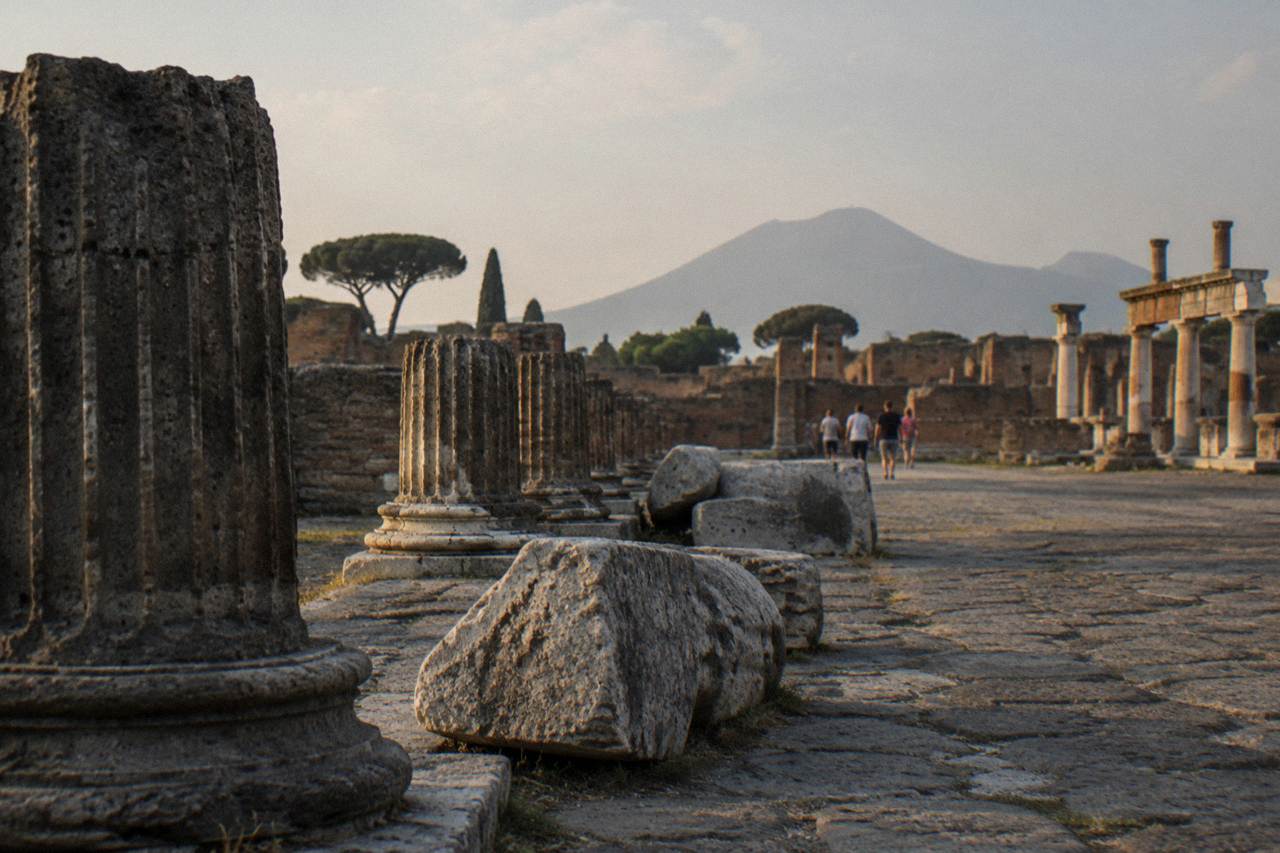
The ancient city of Pompeii, in Campania, southern Italy, about 24 km south-east of Naples, has held no permanent residents for close to two thousand years. Vesuvius buried it in AD 79, the centuries covered it, and excavation turned it into a protected ruin rather than a building plot. The modern town of Pompei, with its famous Sanctuary, grew up beside the site, never on top of it. That division between a living town and a dead city is the heart of the answer.
Why Has No One Lived In Pompeii For Almost 2000 Years?
No one has lived in Pompeii since the eruption of Vesuvius in AD 79 destroyed the city and buried it under metres of ash and pumice. Survivors who escaped never returned to rebuild on the toxic, unstable debris, and within a generation the site's location was lost. When excavation eventually uncovered the city, it had become an archaeological monument, protected by law, so resettlement was never an option. Today it is a state archaeological park, and the modern town of Pompei sits beside it.
The eruption traditionally dated to 24 August AD 79 ended urban life in Pompeii in a matter of days. Pliny the Younger's oldest manuscripts give 24 August as the date, though the park's own e-journal notes that 24 October has no evidentiary basis while also conceding that 24 August is not guaranteed either. Whatever the exact day, the outcome is not in dispute: the city and its population were overwhelmed by volcanic material.
Abandonment followed destruction. The debris that buried Pompeii was metres deep in places, hot when it fell and unstable afterwards. Roofs had collapsed under the weight of pumice. Removing that blanket to rebuild a functioning town would have demanded enormous labour for land that could be replaced more cheaply elsewhere on the fertile Bay of Naples. Rome did not resettle the site, and the memory of exactly where the city lay faded over the centuries.
What came next sealed the outcome. The buried outline passed into farmland and vineyards, and the site stayed undisturbed until organised excavation exposed street after street of a Roman city preserved in extraordinary detail. Once that began, the land's value changed completely: a buried city worth studying is worth more unexcavated than built over. Italian law now protects the whole property, which UNESCO lists with an excavated area of 44 ha inside a 98 ha inscribed property.
What Did The Eruption Of Vesuvius In AD 79 Leave Behind?
Vesuvius in AD 79 left a city frozen rather than flattened. Ash and pumice sealed buildings, frescoes, food and victims where they stood, which is why the excavated streets, the Forum, the baths and the villas look as though their owners stepped out moments ago. The same event buried Herculaneum and the villas of Oplontis and Stabiae, creating a cluster of protected ruins around the Bay of Naples rather than one site alone.
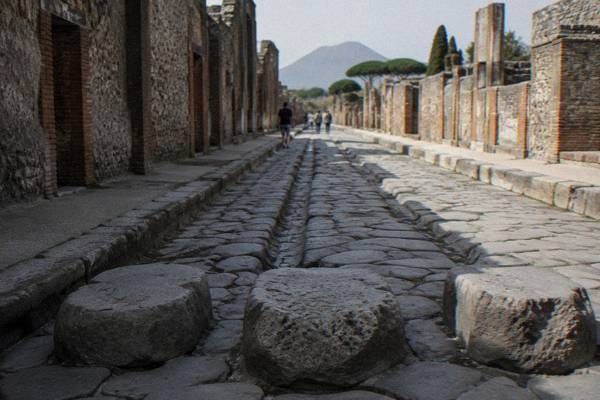
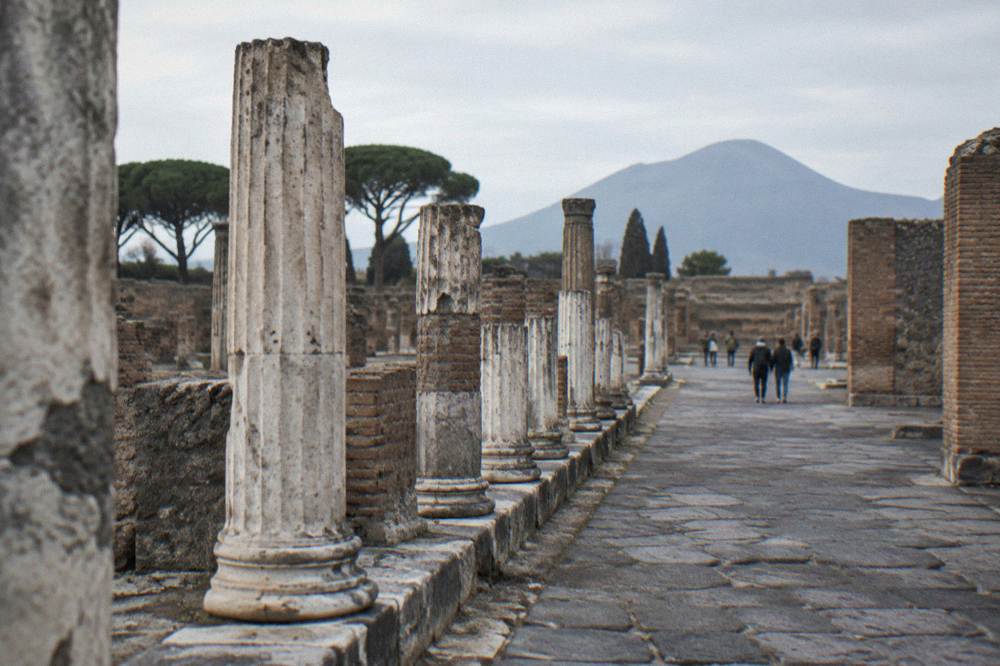
The preserving power of the eruption is what makes the emptiness visible today. Walk the site and the absence of inhabitants is everywhere: doorways without doors, gardens replanted to echo ancient layouts, and thermopolia counters without customers. The Garden of the Fugitives preserves casts of victims caught by the pyroclastic surge, a record of the eruption's human cost that no written source matches.
The scale of the buried landscape is easy to underestimate. UNESCO's listing for property 829 covers Pompeii, Herculaneum and Torre Annunziata together, with criteria (iii), (iv) and (v) recognising both the art and the vanished everyday life the sites document. Stretches of the ancient city have never been excavated at all, so parts of Pompeii still lie exactly as the eruption left them. If that hidden share interests you, our piece on why no bodies were found at Herculaneum covers the neighbouring question of how the sister site tells a different story of the same catastrophe.
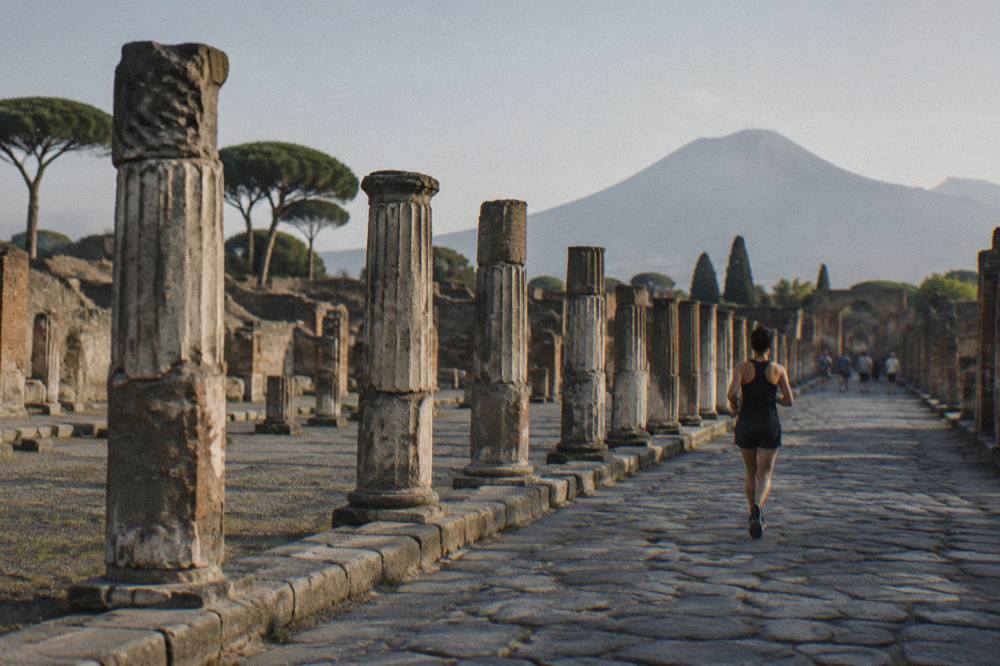
The visitor record shows how thoroughly the dead city replaced the living one. The park's own published figures count every year since 2022 above 2.9 million visitors to the Pompeii site alone.
| Year | Pompeii site visitors | All park sites combined |
|---|---|---|
| 2022 | 2,972,159 | n/a |
| 2023 | 3,985,424 | 4,079,235 |
| 2024 | 4,069,377 | 4,177,753 |
| 2025 | 4,000,090 | 4,118,926 |
A place receiving four million visitors a year is a working archaeological park, not a candidate for housing. The daily cap of 20,000 visitors, in force since 15 November 2024, exists precisely because the site is fragile and its streets were never designed for modern crowds.
Could Anyone Ever Have Moved Back Onto The Site?
In practice, no. Rebuilding on Pompeii would have meant digging a buried city out of hard volcanic debris with hand tools, on ground later recognised as being inside the danger zone of an active volcano, beside a coastline that had been physically altered by the eruption itself. No surviving population had the incentive, and once the site's archaeological value became clear, no state had the intention. The question today is not resettlement but conservation.
Start with the ground itself. The eruption did not simply dust the city with ash; it filled rooms, streets and cellars with pumice and welded parts of the deposit into a mass that had to be cut rather than shovelled. Any returning builder would face excavation before construction, on a site whose watercourses and shoreline had changed. Land nearby offered the same climate and soil without any of that cost. The full index of guides sits on Pompeii Travel Guide.
Then there is the volcano. Vesuvius has erupted repeatedly since antiquity, and it remains an active, closely watched mountain. Building a town on its flank, directly on top of a known destruction layer, is not a plan any authority has entertained since the site was identified. Naples grew on the plain to the north-west; the modern town of Pompei grew against the Sanctuary to the south, clear of the ruins.
Finally, the law closed the door. The excavated area of 44 ha is a state archaeological park, the wider property carries UNESCO protection, and park regulations govern everything from bag sizes to drone flights. Nothing in that framework contemplates residents. The park's regulations page, which sets the permitted bag size at 30x30x15 cm, makes the point by itself: this is a managed monument with entry rules, not a neighbourhood.
Does Anyone Live In Pompeii Today?
No one lives in the ancient city, which is an archaeological park with ticket offices at Porta Marina, Piazza Esedra and Piazza Anfiteatro. People do live next door: the modern town of Pompei is a working Campanian town with the pilgrimage Sanctuary of the Madonna at its centre, hotels, restaurants and the Circumvesuviana stations of Pompei and Pompei Scavi-Villa dei Misteri serving visitors. The spelling marks the divide: Pompeii is the ruin, Pompei is the town.
Visitors often arrive expecting a deserted landscape and find a substantial settlement instead. The modern town supports a year-round economy of hospitality and pilgrimage, and the Sanctuary draws its own crowds independent of the ruins. Staying in Pompei puts you within walking distance of the excavations, a trade-off our Naples or Pompei overnight question weighs in detail against basing yourself in the city.
The distinction matters practically as well as historically. Train stations carry the modern town's spelling, and the stop for the ruins is Pompei Scavi-Villa dei Misteri, on the Circumvesuviana line from Naples towards Sorrento. Scheduled times computed from the operator's own timetable data give the Napoli Garibaldi to Pompei Scavi run as 29 to 35 minutes. If you are weighing that journey against other options, the answer page on which train station is best for Pompeii covers the choice.
Inside the park itself, life is strictly temporary: guides, conservators, archaeologists and visitors move through daily, and everyone leaves at closing time. In the summer season, 16 March to 14 October, the site closes at 19:00 with last entry at 17:30, and from 15 October to 15 March it closes at 17:00 with last entry at 15:30. An empty city at night is part of the site's character, and nothing about that will change.
The two-day exploration angle deserves a mention here, because the emptiness is what rewards long visits. The Pompeii and Vesuvius elite tour from Naples pairs the abandoned city with the volcano that emptied it, lunch included, for travellers who want both halves of the story in a single day.
Will Pompeii Ever Be Inhabited Again?
Pompeii will not be lived in again. The excavated city is a permanent state archaeological park and a UNESCO World Heritage property, and every trend points towards more protection and more study, not less. What is genuinely debated is the opposite question, how much more of the buried city to excavate, and how to conserve what is already open, given four million visitors a year and the constant pressure of weather on exposed ruins.
Excavation today is selective and research-driven rather than sweeping. Opening new ground exposes fragile plaster and paint that decay faster in air, so archaeologists balance knowledge against preservation. The closed Praedia of Julia Felix, shut since 7 September 2026, shows the maintenance burden even a partly studied site carries. Meanwhile, the surrounding modern settlements continue to grow around the protected boundary, never across it.
For travellers, the emptiness is the attraction. You cannot rent a flat in a Roman street, but you can stand in one at dusk near closing time with almost nobody about, which is the closest experience on earth to walking through AD 79. Deciding whether to go with a guide or alone shapes that experience considerably, and our comparison of touring Pompeii on your own versus guided lays out the trade-offs. Booking ahead matters too: nominative tickets and timed entry mean the advance ticket question has a clear answer in high season.
Common Questions About Why No One Lives In Pompeii
Why has no one lived in Pompeii for almost 2000 years?
The eruption of Vesuvius in AD 79 buried the city under metres of volcanic debris. Survivors never returned, the site's location was lost, and once excavation uncovered it the ruins became a protected archaeological park, so resettlement never happened. The modern town of Pompei developed beside the site, not on it.
Did anyone survive the eruption of Pompeii?
Yes. The city's population fled during the early stages of the eruption, and refugees resettled elsewhere in Campania and beyond. Pompeii itself was never rebuilt, but the wider region recovered, and Naples continued to grow on the plain north of the volcano.
Is the modern town of Pompei the same place as ancient Pompeii?
No. The modern town of Pompei is a separate settlement beside the archaeological park, known for the Sanctuary of the Madonna. The spelling convention keeps them apart: Pompeii with two i's is the ancient city, Pompei is the living town and its train stations.
Do archaeologists or staff live inside the Pompeii park?
No. Staff work in the park during opening hours but nobody lives there. The site closes each evening, at 19:00 in the summer season and 17:00 in winter, and the ancient city stands empty overnight, every night.
Could Vesuvius erupt again and threaten the area?
Vesuvius is an active volcano and is monitored continuously, but no alert level or forecast is stated on this page. The park and the surrounding towns operate under civil-protection arrangements that assume future activity is possible.
How much of Pompeii is still buried?
Parts of the ancient city have never been excavated. The excavated area is 44 ha within a UNESCO inscribed property of 98 ha, and archaeologists now excavate selectively, weighing new discoveries against the cost of exposing fragile remains to the elements.
The empty city is not an accident of neglect but the outcome of two thousand years of choices: survivors who never came back, farmers who ploughed over buried streets, and a state that chose preservation over construction. Walking Pompeii today with a good guide, past doorways that have opened onto nobody since AD 79, you are seeing the rarest kind of place, a city whose last ordinary afternoon has never been followed by another.