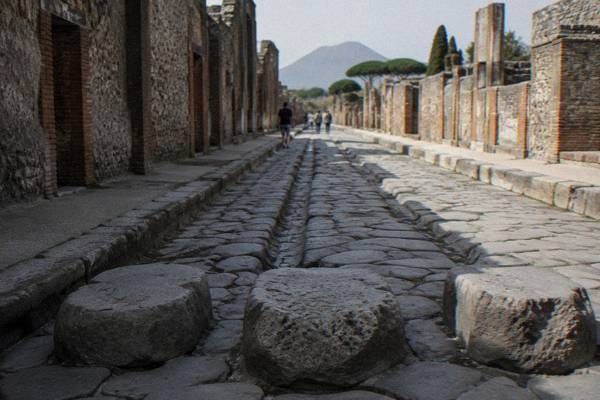
Garden Of The Fugitives
The Garden of the Fugitives in Pompeii is the corner of the ancient city where the eruption of Mount Vesuvius in AD 79 catches up with the people who tried to outlast it: a replanted vineyard inside the walls of a house and winery, with the plaster casts of those who sheltered there and did not escape, on display where they were found.
Short answer
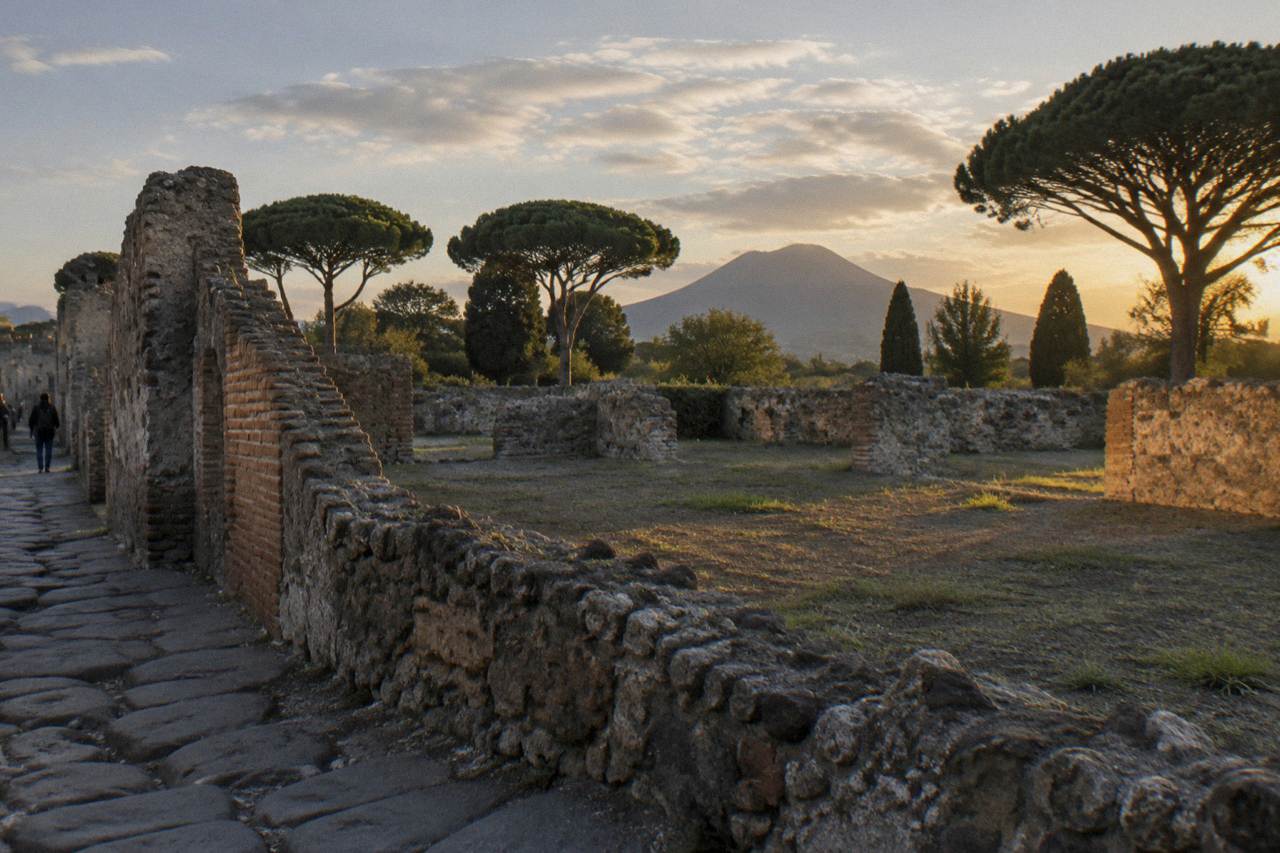
The Garden of the Fugitives is an excavated Pompeian vineyard and wine-production complex in the ancient city of Pompeii, Campania, Italy, about 24 km from Naples, where the plaster casts of victims of the AD 79 eruption are displayed in situ. A standard Pompeii Express ticket at EUR 20 in 2026 covers it, and the site sits in the south-western part of the excavations near Porta Marina.
The Garden of the Fugitives preserves a working vineyard of Roman Pompeii exactly where it stood, inside the walls of the ancient city that Mount Vesuvius buried in AD 79, in Campania, southern Italy, beside the modern town of Pompei and about 24 km by road from Naples. What makes it one of the most visited corners of the Parco Archeologico di Pompei is not the architecture. It is the people. The plaster casts of those who died here, caught in the final phase of the eruption as they tried to shelter in the garden, are displayed in glass cases on the spot where they were found, at the end of the rows of vines replanted along the original root trenches. Few places in the excavated city, which covers an area of 44 ha of a 98 ha inscribed UNESCO property shared with Herculaneum and Torre Annunziata, bring the human cost of the eruption so close.
What Is The Garden Of The Fugitives In Pompeii?
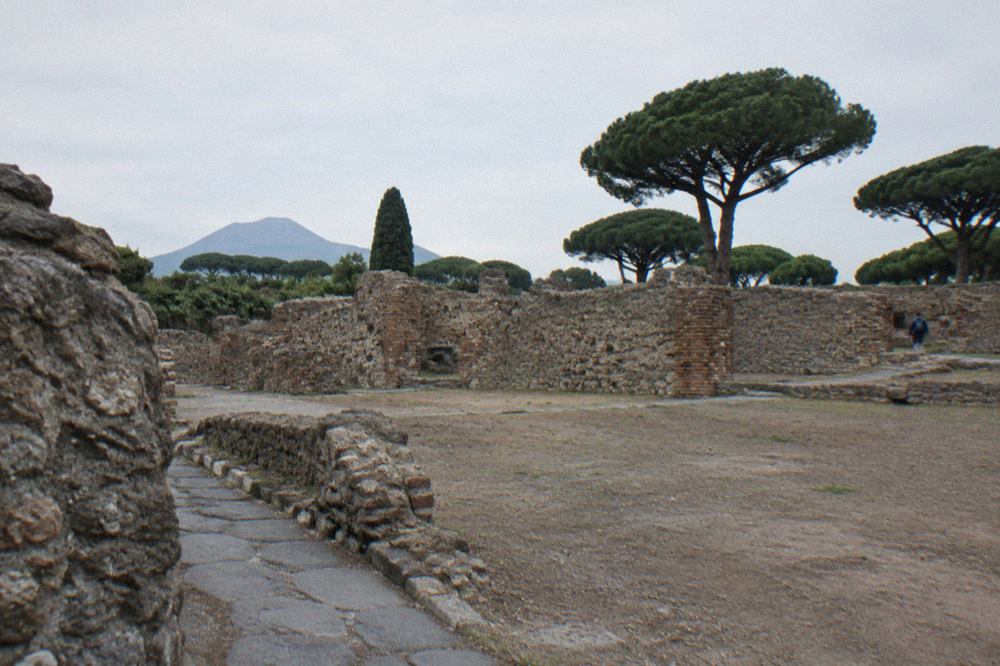
The Garden of the Fugitives is an excavated city block in the south-western sector of Pompeii, in Campania, Italy, that combines a replanted Roman vineyard, the remains of a wine-producing house, and the in-situ display of plaster casts of eruption victims from AD 79. The name refers to the people found here, who appear to have died while attempting to flee or shelter as the eruption entered its deadliest hours.
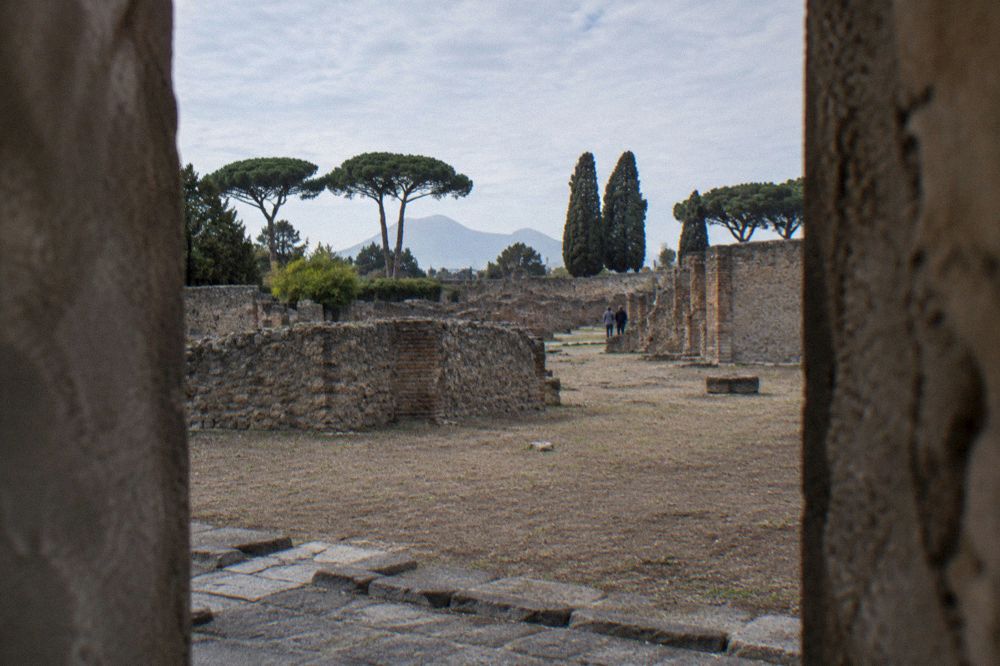
The block sits in an area of Pompeii where excavators uncovered a property whose garden had been planted as a vineyard, with the training trenches for the vines still readable in the soil. Rather than leaving the space as bare earth, the park replanted vines following those ancient trenches, so the visitor walks past rows of grapevines growing on roughly the same lines, and at something like the same density, as they grew in AD 79. The replanting is an interpretive choice, and an honest one: it is clearly a modern planting, not a survival, and it lets you read the space as a working garden rather than an empty shell.
Alongside the vines stand the casting cases. When the pyroclastic surges of the eruption reached Pompeii, victims were buried in fine ash that hardened around their bodies. Over centuries the organic material decayed, leaving voids in the hardened ash preserving the shape of each person at the moment of death. By pouring plaster into those voids, excavators recovered the forms of the dead with startling fidelity, down to clothing folds and, in the sharpest casts, facial features. At the Garden of the Fugitives several of these casts are exhibited where they were found, in the corner of the garden where the group died together.
The emotional register of the place is unusual for an archaeological park. Elsewhere in Pompeii you reconstruct daily life from rooms, frescoes and shop counters. Here the reconstruction stops and the event itself is in front of you. The park's own presentation treats the casts with dignity, and visitors are expected to do the same: the regulations for visitors, which also cover the 30x30x15 cm bag limit and the ban on drones without authorisation, apply to behaviour in this area as everywhere else.
Where To Find The Garden Of The Fugitives Inside The Archaeological Park?
The Garden of the Fugitives lies in the southwestern residential quarter of Pompeii, a walk of roughly ten to fifteen minutes inside the walls from the Porta Marina entrance, in the direction of the city walls near the edge of the excavations, close to other vineyard-related sites in this quarter of the city. The nearest ticket offices are Porta Marina, Piazza Esedra and Piazza Anfiteatro, and the park's printed and digital signage marks the casts from the main axis of the site.
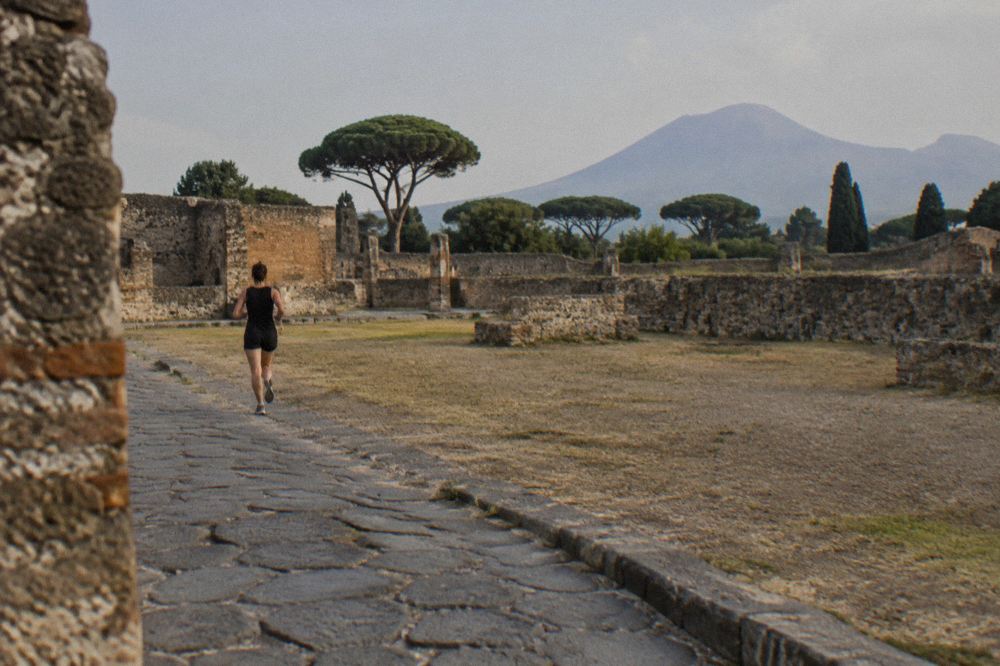
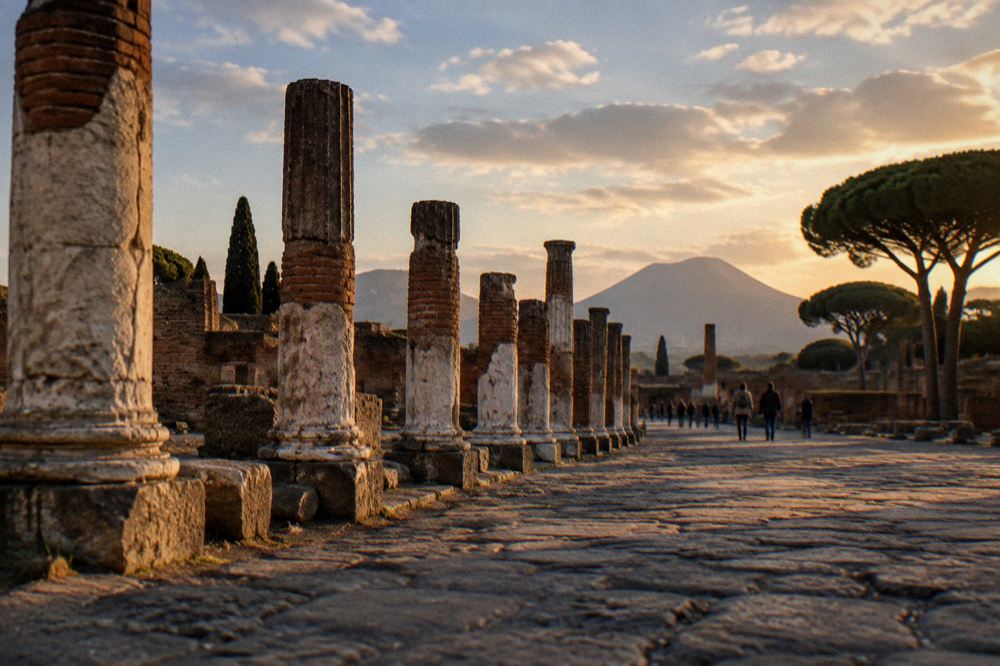
Finding it is genuinely part of the experience, because the garden sits off the busiest spine of the visit. Anyone arriving at Porta Marina, the entrance closest to the Pompei Scavi-Villa dei Misteri Circumvesuviana station, walks up the steep ancient street towards the Forum and then turns south through a quieter grid of blocks. The contrast matters: the Forum and the Forum of Pompeii absorb the crowds, while the streets that lead towards the garden return to the silence that defines the southern edge of the city. A look at the park map before arrival saves aimless wandering, since the excavated city is far larger than it looks from the gate.
The orientation matters for planning as much as for atmosphere. The Pompeii for All accessible route, designed for visitors with mobility difficulties, starts at Piazza Anfiteatro and uses the Antiquarium lift, and anyone with access needs should check the route against the garden's cobble-and-earth surfaces before counting it into an itinerary.
| Entrance | Ticket office | Best for reaching the Garden of the Fugitives |
|---|---|---|
| Porta Marina | Yes | Closest gate; west-first route reaches the garden within the first part of a visit |
| Piazza Esedra | Yes | Central arrival; garden fits mid-visit after the Forum quarter |
| Piazza Anfiteatro | Yes | East-first route; garden falls late in the visit; start of the Pompeii for All route |
| Porta Ercolano / Street of the Tombs | Add-on point for suburban villas | Express holders add the villas route here for EUR 8 |
The Circumvesuviana station Pompei Scavi-Villa dei Misteri serves the Porta Marina side, and scheduled running times computed from EAV's own GTFS data put Napoli Garibaldi to Pompei Scavi at 29 to 35 minutes. The Campania Express, once the comfortable alternative, has been suspended since 1 October 2026 until further notice, so the regional line and road transport are the rail options that remain.
For travellers who prefer a structured route over self-navigation, three products from the current roster cover this western half of the park well, alongside Herculaneum and Vesuvius combinations for bigger days:
What You Actually See At The Garden Of The Fugitives?
Visitors see a replanted vineyard laid out along the original Roman root trenches, the masonry of a wine-production establishment, and the glass-fronted cases containing plaster casts of the victims of the AD 79 eruption, positioned in the corner of the garden where they were discovered. The display is open with general admission during park hours.
The vines come first. The replanting follows the trenches the excavators documented, and the modern rows give the garden its shape: a rectangle of green in summer, of bare cordons in winter, framed by the low walls of the surrounding property. Interpretation on site explains the vineyard and the wine-making installations found in the block, which belonged to the productive side of a city that shipped wine in quantity. For anyone interested in the wider story of Vesuvian wine, the Villa of the Mysteries nearby carries some of the finest related decoration in the park, and the wine-tasting experiences around Vesuvius continue that tradition into the present day.
Then the cases. The casts are grouped where the group died, and their postures tell the story their names no longer can. Some lie curled, some lie extended, and the arrangement suggests a group overtaken together in the final surge rather than scattered casualties. Nothing in the display is dramatised: no reconstruction, no soundtrack, just the casts, the ash-coloured soil and the vines. Reviews of the site by visitors again and again single out this corner as the moment the scale of the disaster becomes individual.
Photography is permitted within the normal rules, though the park prohibits drones without authorisation and asks for respectful conduct around the casts. The light is at its best in the earlier part of the day, when the rows throw short shadows and the interior of the cases is not yet glare-filled.
How Were The Plaster Casts Of The Pompeii Victims Made?
The casts were made by pouring liquid plaster into voids left in hardened volcanic ash by the decayed bodies of the eruption victims, a technique developed during the excavation of Pompeii. The plaster fills the exact negative space, so the finished cast reproduces the person's final posture, clothing folds and, sometimes, facial detail.
The method rests on a simple geological accident. The ash and pumice that buried Pompeii settled around bodies, goods and wooden objects, then hardened. Over the following centuries the organic material decomposed, but the casing kept its shape, leaving a mould. Injecting plaster into that mould turns an absence into a presence: a body-shaped void becomes a body-shaped object. The same logic recovered the shapes of doors, furniture and tree roots across the city, which is how excavators mapped garden plantings, including vineyard trenches, with such precision.
At this garden the technique had its fullest application. The victims found here were cast in situ, and the group display preserves the spatial relationship between them: who lay next to whom, in which direction each fell. That spatial fidelity is what separates this display from casts moved into museums. Reading the group as a group, in the place where it formed, is the reason the corner carries the emotional weight it does.
The park has reflected publicly on how these casts should be treated. Its own e-journal and exhibition history discuss the ethics of displaying the dead, and the presentation at the garden errs towards restraint. Visitors who want the scientific background can pair the visit with the Naples National Archaeological Museum collections drawn from the Vesuvian sites, and with the park's Antiquarium, which contextualises finds from the excavations.
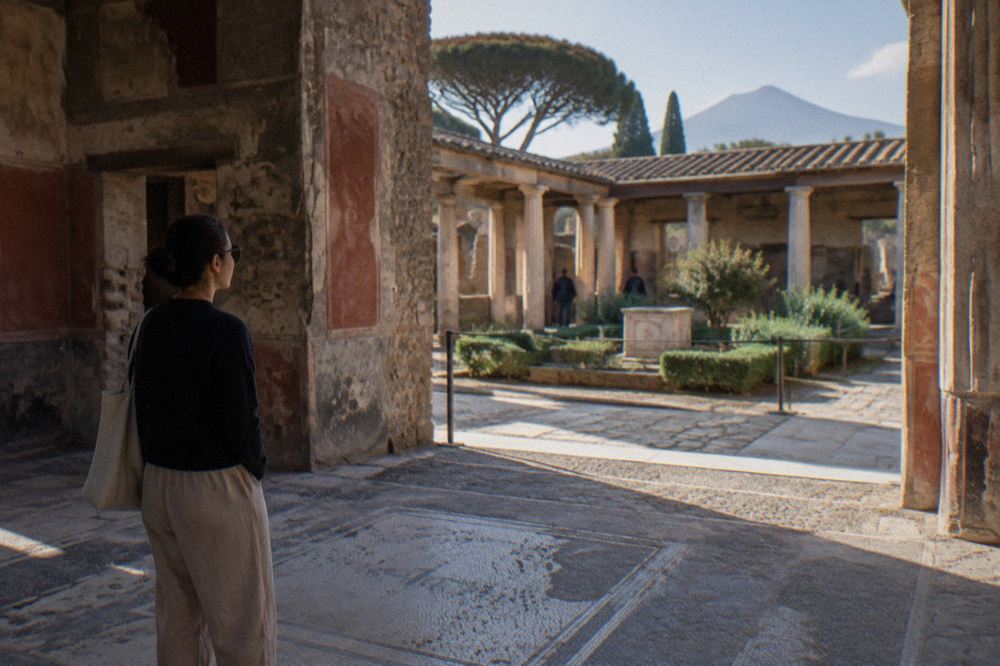
When Is The Best Time To Visit The Garden Of The Fugitives?
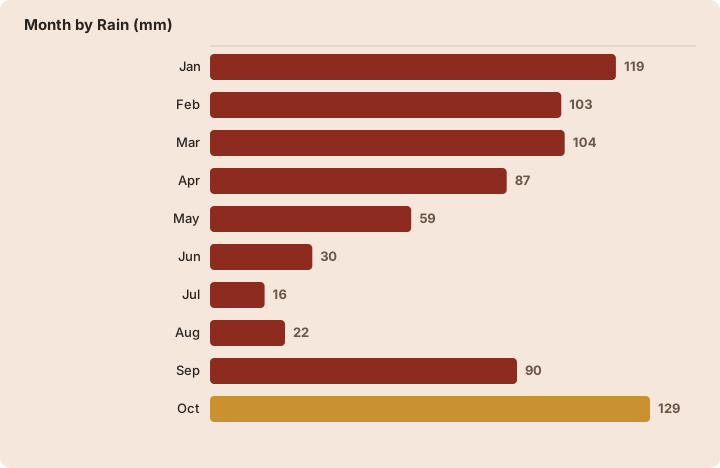
The garden is at its most comfortable and its quietest in the shoulder months of April, May, June, September and October, when temperatures in Pompei are moderate and rain is lighter than in late autumn and winter. Within a day, the first two hours after the 9:00 opening and the last hour before final entry are the calmest windows at the casts.
The climate data for Pompei, computed as 1991-2020 normals from the Open-Meteo historical archive at the local grid point, tell a clear seasonal story. July is the driest month with about 16 mm of rain and a mean daily maximum of about 28.7 C; August has the highest mean daily maximum at about 29.4 C; November is the wettest month with about 180 mm of rain. The garden is an open-air space with little shade, so summer afternoons are punishing on foot, and winter brings shorter hours. The full index of guides sits on Pompeii Travel Guide.
| Month | Mean daily max (C) | Mean daily min (C) | Rain (mm) |
|---|---|---|---|
| Jan | 12.2 | 6.6 | 119 |
| Feb | 12.6 | 6.5 | 103 |
| Mar | 14.9 | 8.1 | 104 |
| Apr | 17.7 | 10.4 | 87 |
| May | 21.6 | 14.1 | 59 |
| Jun | 25.8 | 18.2 | 30 |
| Jul | 28.7 | 21.1 | 16 |
| Aug | 29.4 | 21.8 | 22 |
| Sep | 25.3 | 18.6 | 90 |
| Oct | 21.3 | 15.1 | 129 |
| Nov | 16.9 | 11.5 | 180 |
| Dec | 13.2 | 8.0 | 147 |
The visitor figures underline the timing advice. The park publishes monthly numbers, and in 2024 the peak months were May with 516,923 visitors to the Pompeii site and September with 468,340, against February's 142,648 and December's 138,028. Arriving early matters more in those peak months: since 15 November 2024 the park has operated nominative tickets and a cap of 20,000 visitors per day, with time bands of 9:00-13:00 admitting up to 15,000 and 13:00-17:30 up to 5,000 during the 16 March to 14 October season.
| Year | Pompeii site visitors |
|---|---|
| 2022 | 2,972,159 |
| 2023 | 3,985,424 |
| 2024 | 4,069,377 |
| 2025 | 4,000,090 |
One free window deserves note: entry is free for everyone on the first Sunday of the month, year-round, and one such free Sunday in the past drew more than 36,000 visitors in a single day, the record peak cited by the park. A free Sunday is a gift to a tight budget and a warning to anyone seeking quiet at the casts.
Which Tickets And Hours Cover The Garden Of The Fugitives In 2026?
The Garden of the Fugitives is covered by ordinary Pompeii admission: in 2026 the Pompeii Express ticket costs EUR 20 for the ancient city alone, with no separate fee and no booking at the garden itself. Hours run 9:00 to 19:00 with last entry 17:30 from 16 March to 14 October, and 9:00 to 17:00 with last entry 15:30 from 15 October to 15 March, closed only 25 December and 1 January.
The 2026 tariff, in force since 12 January 2026, splits admission into tiers. Express covers the ancient city. Pompeii+ at EUR 25 adds the suburban villas route, the Villa Regina and the Antiquarium at Boscoreale with the shuttle. The 3-day ticket at EUR 30 adds Oplontis, the Stabiae villas and museum, and Boscoreale. The three smaller sites cost EUR 8 each individually, and the annual MyPompeii Card costs EUR 45. Reduced admission of EUR 2 applies to EU citizens aged 18 to under 25, entry is free for under-18s, and an Express holder can add the suburban villas route for EUR 8, card only, at the Porta Ercolano / Street of the Tombs entrance.
All of this changes on 31 December 2026. From 1 January 2027 the park sells one EUR 25 ticket covering all park sites, valid 30 days with one entry per site, while the smaller sites keep their EUR 8 individual price and the MyPompeii Card stays EUR 45. Nominative tickets and the 20,000 daily cap are retained. Nothing in the 2027 change touches what the Garden of the Fugitives itself costs to see: it stays inside ordinary admission.
| 2026 ticket | Price (EUR) | What it covers |
|---|---|---|
| Pompeii Express | 20 | The ancient city, including the Garden of the Fugitives |
| Pompeii+ | 25 | Express plus suburban villas route, Villa Regina, Antiquarium Boscoreale, shuttle |
| 3-day ticket | 30 | Pompeii+ plus Oplontis, Stabiae villas and museum, Boscoreale |
| Oplontis / Stabiae museum / Boscoreale | 8 each | Single smaller site |
| MyPompeii Card (annual) | 45 | Annual pass, EUR 10 reduced |
| Reduced (EU citizens 18 to under 25) | 2 | Applies across the tariff |
| Free | 0 | Under 18, and everyone on the first Sunday of the month |
| Season | Open | Last entry | Close |
|---|---|---|---|
| 16 March to 14 October | 9:00 | 17:30 | 19:00 |
| 15 October to 15 March | 9:00 | 15:30 | 17:00 |
Pompeii itself has no weekly closing day; only the smaller satellite sites close on Tuesdays. Identification may be checked at entry because tickets are nominative and non-transferable, and bags above 30x30x15 cm must go to left luggage. The full ticket rules live on the park's timetables and tickets page, and the practical planning detail is covered in this site's ticket guide.
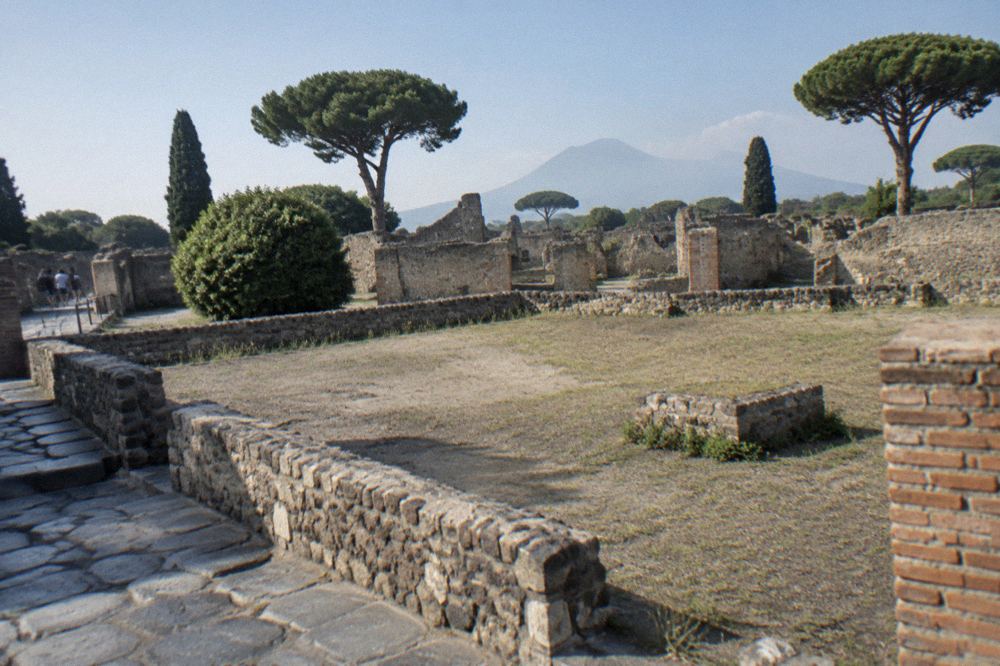
Which Tours Take You Past The Garden Of The Fugitives?
Small-group archaeologist tours of the western half of Pompeii and longer combined itineraries with Herculaneum or Vesuvius are the products that best fit a visit centred on this quarter of the city. The garden itself is an open site, so any guided walking route through the south-western blocks passes it, while self-guided visitors reach it with the same ordinary ticket.
Guided versus self-guided is a real decision here. The casts speak for themselves emotionally, but the vineyard, the wine production and the casting technique reward explanation, and an archaeologist-led walk adds exactly that layer. The featured product on this page is the Villa of the Mysteries tour led by an archaeologist, which spends a half-day in the same western sector of the park where the garden sits, pairing the suburban villa with the city blocks on the way: Check availability. Its live listing carries the current price, meeting point and cancellation terms.
Two other formats suit different travellers. A Herculaneum-focused small-group option with tickets included suits visitors combining the two sites over one or two days, and its details are on the operator's listing:
From Sorrento, a full-day priority-access itinerary covering both Pompeii and Vesuvius replaces navigation and ticket-buying with a single booking, which matters on a day that includes a crater walk:
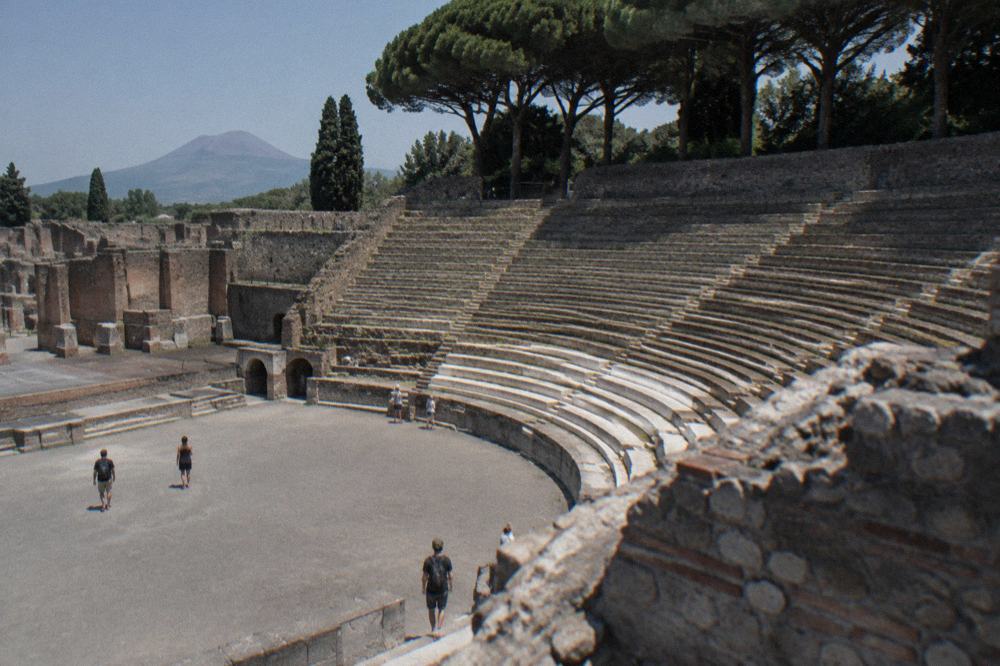
Which Sights Should You Combine With The Garden Of The Fugitives?
The natural pairings are the Villa of the Mysteries on the western edge, the Forum and its temples a short walk north-east, and the residential highlights of the central blocks, such as the House of the Faun and the House of the Vettii, all reachable on foot inside the park on one ordinary ticket.
Starting at Porta Marina, a route can run the Forum first, drop south to the garden while the legs are fresh, then climb back north through the residential streets to the grand houses, and finish at the Villa of the Mysteries near the Porta Ercolano side. The steepest section is the initial climb from Porta Marina; the rest of the loop is rolling rather than punishing.
| Sight | Character | Why it pairs with the garden |
|---|---|---|
| Forum of Pompeii | Civic and religious centre | Gives the public-life counterpoint to this private garden |
| Villa of the Mysteries | Suburban villa, fine frescoes | Same western sector; wine culture in decoration |
| House of the Faun | Grand city residence | Shows the elite domestic scale beside a productive garden |
| Stabian Baths | Oldest surviving baths complex | Rest stop point on the walk back north |
| Large Theatre and Odeon | Entertainment quarter | Fits an eastward extension of the loop |
| Pompeii Amphitheatre | Eastern edge of the city | Only sensible for a Piazza Anfiteatro arrival or a long visit |
Time budget honestly. The garden deserves twenty unhurried minutes; the loop above is a half-day at minimum, and the park rewards the slow pace. Visitors with a single short window should read the site's short-visit guidance rather than attempt everything. Travellers arriving on a cruise schedule have a dedicated plan for a Pompeii shore day's constraints in this site's cruise itinerary guide, and the Stabian Baths and the theatre quarter both sit conveniently on the return leg from the garden.
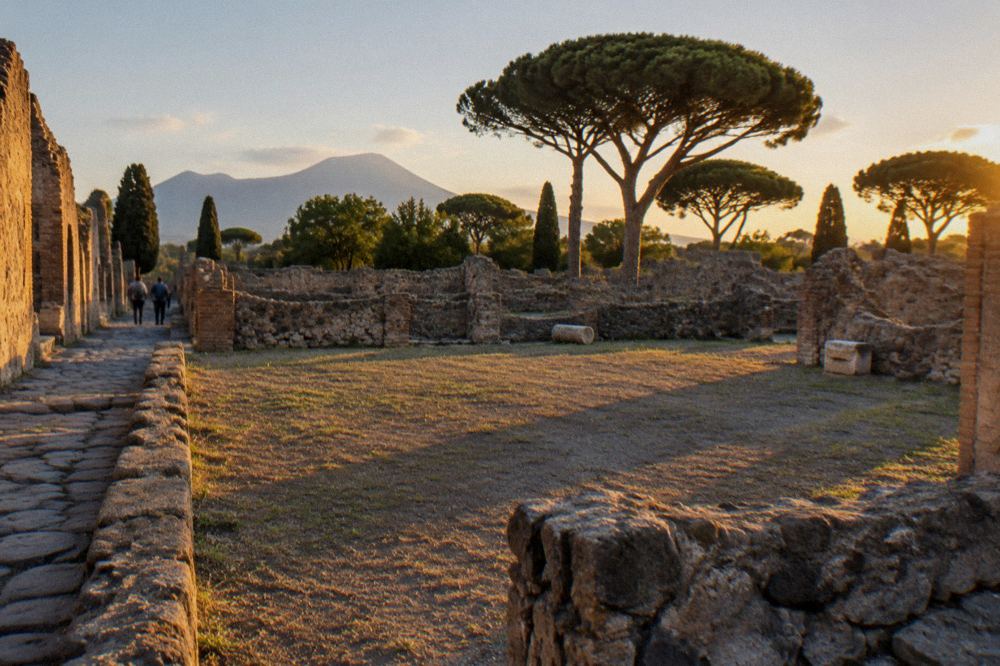
Was The Eruption That Killed The Fugitives In August Or October?
The traditional date of the eruption is 24 August AD 79, from the oldest manuscripts of Pliny the Younger's letters, but the park's own e-journal states that the alternative 24 October date has no evidentiary basis, tracing it to a 1929 misreading, while conceding that 24 August is not proven either. The date remains an open scholarly debate, and the park has not settled it.
This matters at the Garden of the Fugitives more than anywhere else, because the vines on display are part of the argument. Scholars who favour an autumn eruption have pointed to the state of harvests, fruits and wine-making equipment found in the city; those who defend the manuscript tradition treat such evidence as inconclusive.
For the visitor, the honest framing is the moving one: whenever in the year the eruption came, the people in this garden were caught in the final pyroclastic surges after hours or days of eruption, at a moment when escape had already become unlikely for anyone still inside the city. The casts record that moment regardless of the month. The wider story of the eruption and of Pliny the Elder, who died in the rescue attempt, is told in this site's history coverage and its account of the eruption date debate on the Vesuvius pages.
How Should You Behave At The Casts, And What Else Should You Know?
The casts are treated as human remains in the park's presentation: photography within the normal rules is allowed, touching and drones are not, bags above 30x30x15 cm must be left at left luggage, and identification may be checked at entry because tickets are nominative and non-transferable. There is no separate queue or fee at the garden itself.
A few practicalities round out the visit. The surfaces around the garden are the standard Pompeii mix of ancient paving and packed earth, so solid footwear matters, exactly as on the rest of the site. Shade is scarce in this quarter and the replanted vines offer little of it, so water and sun protection belong in the bag, within the size limit. There are toilets and refreshment points inside the park, and the modern town of Pompei, with its Sanctuary, lies just outside the walls for lunch afterwards; the site's practical tips guide covers facilities in detail.
Common Questions About The Garden Of The Fugitives
Is the Garden of the Fugitives included in the standard Pompeii ticket?
Yes. In 2026 the Pompeii Express ticket at EUR 20 covers the whole ancient city including the garden, with no separate fee at the site. From 1 January 2027 the single EUR 25 ticket covers all park sites, valid 30 days with one entry per site.
Can you see real bodies at the Garden of the Fugitives?
No. What you see are plaster casts poured into voids left in hardened ash by the decayed bodies of the AD 79 victims. The casts reproduce the victims' final postures and, in some cases, fine physical detail, and they are displayed where the group was found.
How long should you spend at the Garden of the Fugitives?
About twenty minutes for the casts and the vineyard, longer if a guide is explaining the casting technique and the wine production.
Where is the Garden of the Fugitives in Pompeii?
It lies in the south-western residential quarter of the excavations, within roughly a ten to fifteen minute walk inside the walls of the Porta Marina entrance, near the southern edge of the ancient city.
When is the best time of day to visit the casts?
The first two hours after the 9:00 opening and the final hour before last entry are the quietest. Between 16 March and 14 October last entry is 17:30; between 15 October and 15 March it is 15:30.
Is the Garden of the Fugitives suitable for children?
Yes with preparation. The casts are sobering and parents should brief children beforehand, but the park places no age restriction, entry is free for under-18s, and the open garden itself is approachable for families moving at an easy pace.
For travellers building a bigger Campania itinerary, the garden pairs naturally with Herculaneum, where the boat sheds hold their own victims of the same eruption, and with the Vesuvius crater trail, which shows the engine of the whole disaster. Every one of those combinations runs on the same simple principle as this corner of the city: ordinary admission, honest presentation, and the past left to speak for itself.