What Embarrassing Things Were Found In Pompeii?
From explicit brothel frescoes to crude political graffiti and phallic good-luck charms on every street corner, Pompeii's excavations have turned up finds that scandalised early archaeologists and still raise eyebrows today.
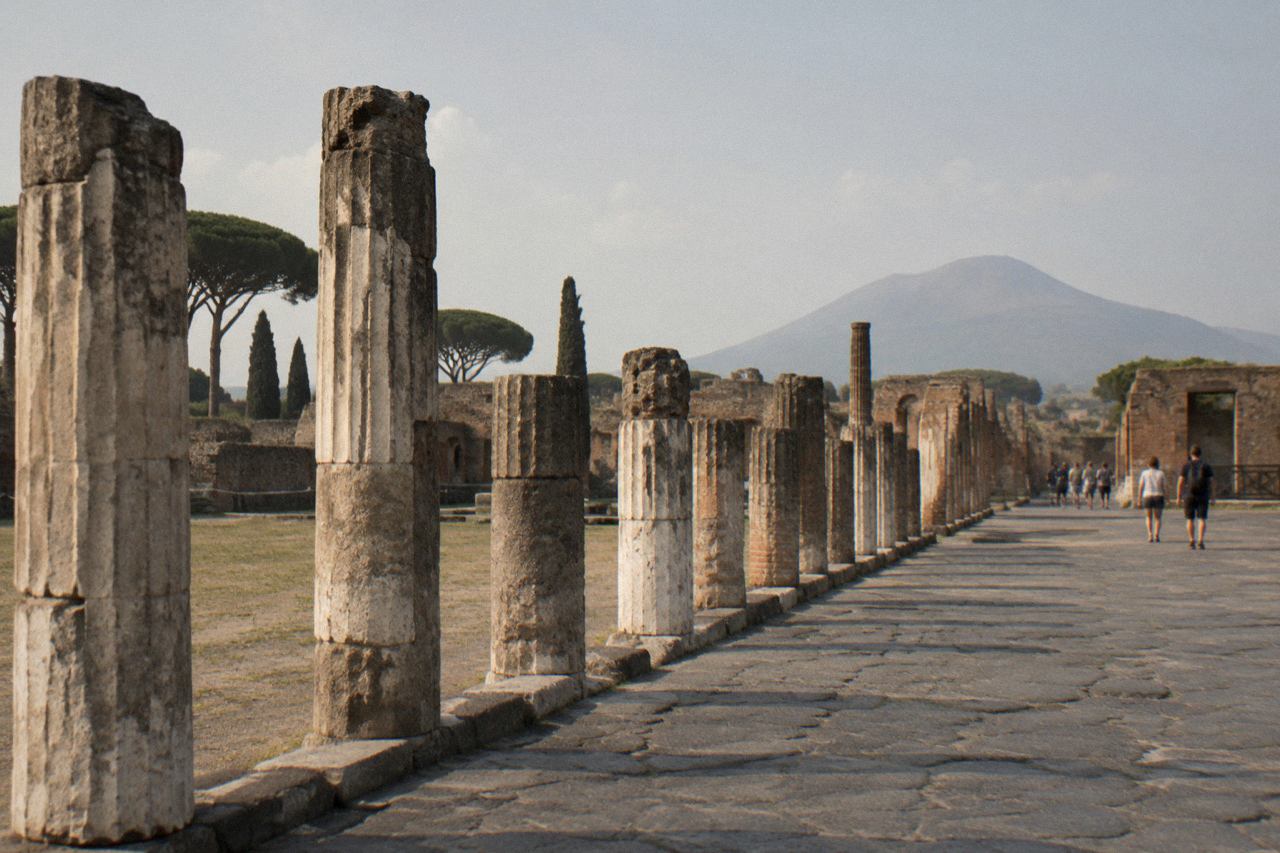
When excavators began clearing the volcanic debris from Pompeii in the early days of the digs, they expected to find marble statues, grand public buildings and the dignified remains of a classical civilisation. What they actually uncovered, buried under four to six metres of ash and pumice from the AD 79 eruption of Mount Vesuvius, included explicit sexual imagery on an industrial scale, crude political insults scratched onto public walls, and phallic symbols integrated into everyday objects from street pavements to bread ovens. The ancient Roman city in Campania, southern Italy, about 24 km south-east of Naples, turned out to have been a place where the line between public decorum and private appetite was drawn in a radically different place from the Europe of the excavators, and the resulting clash of sensibilities shaped how the site was presented to visitors for more than a hundred years.
What Embarrassing Things Were Found In Pompeii?
Pompeii's excavations uncovered a wealth of material that embarrassed the excavators: sexually explicit frescoes in brothels and homes, thousands of crude graffiti ranging from political insults to sexual boasts, phallic symbols carved into streets and hanging as good-luck charms from doorways, and erotic wind chimes shaped like male genitalia displayed openly in shops and homes. So extensive was this collection that it was locked away in the Naples Museum's Secret Cabinet for over a century.
The range of material that embarrassed or shocked the early excavators falls into several distinct categories, and understanding each one reveals as much about the attitudes of the time as it does about Roman daily life. The Roman approach to sexual imagery was fundamentally different from the Christian-influenced morality that shaped modern European culture. Images and objects that a curator of the Bourbon period considered obscene were, to a Roman of the period, often mundane, superstitious or even sacred. The phallus, for example, was not primarily a sexual symbol but a protective one: it was believed to ward off the evil eye, and its presence on a street corner, a bakery oven or a child's pendant carried roughly the same meaning as a horseshoe hung above a door in later European folk tradition. The modern distinction between erotic art and apotropaic imagery simply did not exist in the Roman world, and that category confusion is the root of almost every embarrassing discovery at Pompeii.
The first major wave of finds that caused institutional panic came from the brothels, particularly the purpose-built Lupanar in Regio VII, and from private homes whose bedroom frescoes left little to the imagination. The frescoes inside the Lupanar, painted onto the walls above stone bed platforms, depict sexual acts with a directness that made the earliest excavators order them covered over or removed entirely. Some were detached and taken to the museum in Naples, where they entered the Secret Cabinet and stayed there. Others were left in situ but were covered with wooden panels or curtains, and for decades visitors had to request special permission and sometimes pay an additional fee to see them. The idea that a Roman city preserved in volcanic ash might contain material unsuitable for mixed company was, to the scholars who ran the early digs, a genuine institutional crisis, and their solution was to hide the evidence rather than to study it.
Why Did Victorian Excavators Hide Pompeii's Erotic Art?
The explicit frescoes, statues, and objects from Pompeii were locked away in a Secret Cabinet due to the moral panic of the Bourbon monarchy and Catholic Church, who considered them obscene and a threat to public decency. Access was strictly limited to scholars with legitimate research purposes, with male and female visitors admitted separately, and the collection remained restricted for generations, treating this unparalleled record of Roman sexual culture as a state secret rather than an archaeological resource.
The irony of the Secret Cabinet is that it collected objects from across the entire spectrum of Roman life, not just the brothels. The curators swept up anything with sexual content regardless of its original function, mixing religious votives, domestic good-luck charms, bawdy household decorations and commercial brothel signage into a single locked room. A bronze tintinnabulum shaped like a winged phallus with bells hanging from it, which had hung in a shop doorway as a protective charm, sat beside an explicit fresco from a bedroom wall, as if the two objects belonged to the same category.
The reaction of early museum curators to Pompeii's erotic material was not unique to Naples. When the British Museum acquired a collection of Pompeian artefacts, it too sequestered the sexual material in a locked cabinet known informally as the Secretum, access to which required a personal application to the Keeper of Antiquities. The same pattern repeated in museums across Europe: the material was too important to destroy but too embarrassing to display, so it entered a kind of institutional purgatory where it was preserved but rendered invisible. The modern visitor to Pompeii who walks freely through the Lupanar and sees the frescoes in their original positions is experiencing something that was simply not available to earlier generations of tourists, and that fact is worth remembering when the frescoes seem less shocking than one might have expected. The distance between Roman openness and our own sensibilities has narrowed considerably in recent decades, and what remains genuinely surprising is how long the material was kept hidden rather than the material itself. For more on how the site has changed, see our article on what was recently found in Pompeii.
What Was Discovered Inside Pompeii's Brothels?
Inside Pompeii's only purpose-built brothel, the Lupanar, archaeologists found ten stone bed platforms and explicit frescoes above the doors that likely served as a visual menu for clients of diverse languages, along with slightly larger upstairs rooms accessed by a separate staircase, probably for higher-paying patrons.
The Lupanar is located at the intersection of two narrow streets in Regio VII, not far from the forum, and its design makes its function unmistakable. The ground-floor rooms are small, windowless and furnished only with a built-in stone bed that would have been covered with a thin mattress. The walls are covered in graffiti, much of it written by the sex workers themselves or by their clients, and the content ranges from the boastful to the obscene to the unexpectedly tender. One graffito records a client's satisfaction with a particular worker; another is a price list; a third is simply a name. The density of the writing suggests that clients spent time waiting in the narrow corridor and passed the minutes by scratching messages into the plaster, much as a modern pub toilet accumulates commentary on its walls.
The brothel frescoes are the single most famous example of embarrassing Pompeian art, but they were not the only sexual images in the city. The house also contains a small room decorated with erotic paintings that scholars believe may have been a private entertainment space, and the quality of the work is significantly higher than the functional images in the Lupanar. The Vettii frescoes are not embarrassing in the sense of being crude; they are embarrassing in the sense that they force the modern viewer to confront the fact that wealthy, respectable Roman citizens displayed sexual imagery in their homes as a matter of course, and that nobody at the time considered this remarkable.
| Find | Location | Original Function | Modern Display |
|---|---|---|---|
| Lupanar erotic frescoes | Lupanar, Regio VII | Visual menu for brothel clients | Visible in situ at Pompeii |
| Priapus fresco | House of the Vettii | Household prosperity symbol | Visible in situ at Pompeii |
| Tintinnabula (phallic wind chimes) | Various houses and shops | Apotropaic charms against evil eye | Naples Archaeological Museum |
| Phallic street markers | Paving stones across the city | Directional markers to brothels | Visible in situ at Pompeii |
| Erotic bedroom frescoes | Multiple private homes | Private decoration | Partly in situ, partly in museum |
| Secret Cabinet collection | Various sites | Mixed religious, domestic and commercial | Naples Archaeological Museum, fully open to the public |
A guided tour through Pompeii with an archaeologist makes these distinctions clear in a way that wandering alone cannot, because the context of each image is everything. What looks like pornography to a modern eye was often something closer to a talisman, a joke or a status symbol in its original setting. The Pompeii Travel Guide recommends visiting the Lupanar early in the day before the narrow corridor becomes crowded, as the space is small and the frescoes are best viewed with a few moments of quiet attention. If you want a guide who can explain exactly what you are looking at and why it was there, Check availability on a half-day trip from Naples that includes the brothel district and several of the private homes with their original frescoes still in place. For a broader look at how guided tours compare to independent visits, read our article on whether it is worth getting a guided tour of Pompeii.
What Did Pompeii's Graffiti Reveal About Private Lives?
Pompeii's graffiti reveal that private lives were startlingly frank and public: political endorsements sat beside sexual boasts, price lists next to personal insults, and writing on walls was a normal everyday act rather than vandalism, preserving the unfiltered voices of ordinary Romans saying exactly what they thought in language never meant to survive two millennia.
The most famous single piece of Pompeian graffiti is probably the one found on a wall in the basilica, which reads in Latin "I am amazed, O wall, that you have not collapsed under the weight of so much tedious writing." The self-awareness of the writer, complaining about the quantity of graffiti while adding to it, is so recognisably modern that it collapses the distance between the ancient world and the present in a single sentence. Other graffiti is less charming. One inscription outside a house on the Via dell'Abbondanza reads "Restituta, take off your tunic, show us your hairy parts," a piece of street-level harassment preserved in volcanic ash. Another records a sexual encounter in explicit detail, naming names and rating the experience. A third, found in a bar, is simply a price list for different sexual services, ranging from the equivalent of a few sesterces to considerably more for specialised acts.
The sheer volume of sexual and scatological graffiti in Pompeii forced early scholars to confront the fact that the ancient Romans they had been taught to revere as models of civic virtue were, in their daily lives, as coarse and as vulgar as any modern population. The Latin used in the graffiti is not the polished literary language of Cicero or Virgil but the living, colloquial speech of the street, full of slang, abbreviations and grammatical forms that classical textbooks did not teach. For linguists, the graffiti has been a goldmine, preserving a register of Latin that survives nowhere else. For the public of the time, it was a scandal, and many of the more explicit inscriptions were either omitted from early publications or translated into a sanitised Latin that obscured their meaning.
What Other Embarrassing Objects Were Found Across The City?
Beyond the brothels and graffiti, hundreds of phallic objects in bronze, terracotta, and stone were integrated into daily life as protective charms. Phallic wind chimes hung in shop doorways, children wore phallic amulets, and phallic symbols carved into paving stones served as directional markers to brothels, their ubiquity and lack of shame deeply confusing early excavators.
The tintinnabula deserve special mention because they encapsulate the Roman attitude towards sexual imagery more clearly than any other object type. A typical tintinnabulum is a bronze figurine of a winged phallus with a small bell hanging from the tip and additional bells suspended from chains attached to the wings or the base. They were hung in doorways and in the atria of houses, where they served the dual purpose of making a pleasant sound when the door opened and protecting the household from the evil eye. The phallus in this context was not erotic; it was apotropaic, a word that comes from the Greek for "turning away" and describes an object that deflects harm. The same logic placed phallic carvings on Roman city gates, on the undersides of bridges and on the equipment of Roman soldiers. The symbol was so common and so unremarkable to Romans that its presence on an object tells us almost nothing about the object's purpose; it is simply a sign that the owner wanted good luck.
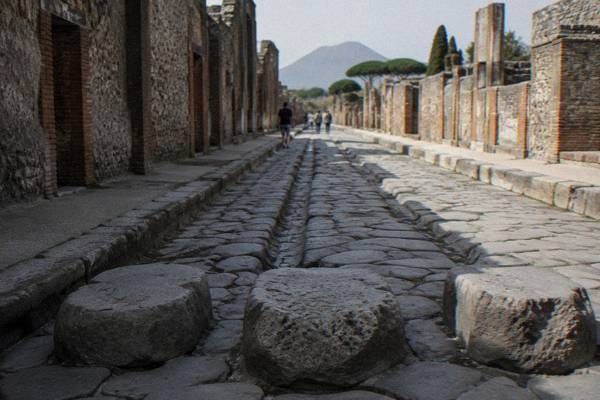
The street markers present a different kind of embarrassment. Carved into the stone paving blocks at several intersections in Pompeii are phallic shapes that point, arrow-like, towards the nearest brothel or entertainment district. These are not subtle; they are large enough to be visible from several metres away, and they were walked over daily by every resident of the city, including children. The markers have been interpreted as a form of advertising, directing potential customers to the commercial sex district in a city where literacy rates were low and visual signage was more effective than written directions. They are also, undeniably, a form of public sexual imagery that would be illegal in almost any modern city, and their presence on a street that tourists now walk with their families creates an awkwardness that is itself a kind of living demonstration of the cultural gap between Roman Pompeii and the present day.
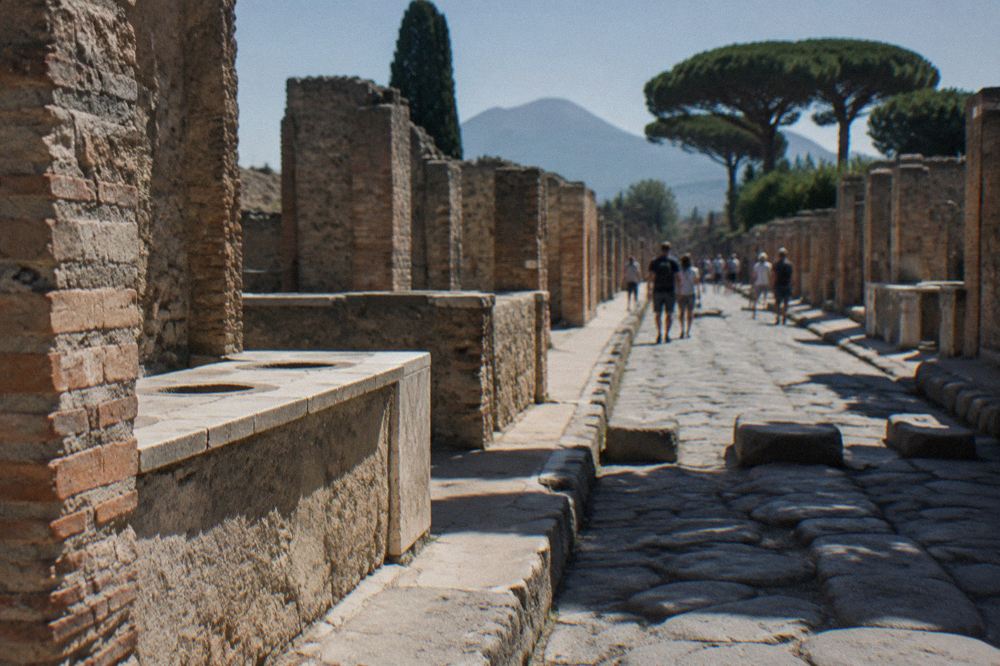
The thermal baths of Pompeii have also yielded embarrassing material, though of a different kind. The Suburban Baths, located just outside the Porta Marina, contain a changing-room fresco that depicts sexual acts in a sequence that some scholars have interpreted as a numbered list corresponding to lockers where patrons could store their clothes. The idea that a bather might remember which locker held his tunic by recalling the sexual position painted above it is either a practical mnemonic system or an elaborate joke at the bather's expense, and the scholarly debate on the question remains unresolved. What is not in doubt is that the fresco was visible to every man who used the baths, and that its presence in a public facility would have been unremarkable to its original audience.
The House of the Surgeon, one of the oldest houses excavated in Pompeii, contained a collection of surgical instruments that included a speculum and other gynaecological tools whose shapes are disconcertingly similar to their modern equivalents. The embarrassment here is not sexual but medical: the instruments are a reminder that Roman surgery was more advanced than the popular image of ancient medicine suggests, and that procedures most people assume are modern inventions were being performed in Pompeii two thousand years ago. The instruments are now in the Naples Archaeological Museum, and they form part of a display that also includes dental tools, bone saws and scalpels, all of which were found together in a single house and all of which testify to a level of surgical practice that surprises visitors who arrive expecting a more primitive medical culture.
The modern visitor to Pompeii encounters these embarrassing finds in a context that is very different from the one that greeted travellers a century ago. The Secret Cabinet in Naples is now open to all visitors over the age of fourteen, and its collection is displayed with detailed explanations that place each object in its original cultural setting. The Lupanar frescoes are visible to anyone who walks through the brothel, though the room is often crowded and the lighting is dim to protect the pigments. The street markers remain in place, worn by two thousand years of feet and weather but still unmistakably phallic. The graffiti has been catalogued, translated and published in full, and anyone with an interest in the subject can read the unexpurgated texts in the Corpus Inscriptionum Latinarum or in more accessible modern editions.
What has changed is not the material itself but the willingness of institutions to show it. The embarrassment that shaped the presentation of Pompeii for most of its modern history was a product of the moral standards of the excavators' own era, not of Roman culture, and as those standards have loosened, the finds have moved from the locked cabinet to the public gallery. They remain embarrassing in the sense that they reveal a side of Roman life that classical education traditionally preferred to ignore, but they are no longer hidden, and the modern consensus among archaeologists is that hiding them was a mistake that distorted the public understanding of the ancient world for generations. If you want to see the full range of what Pompeii has to offer, from the grand public buildings of the forum to the intimate frescoes of the Lupanar, Check availability on a guided tour that covers the sites most independent visitors miss.
Common Questions About Pompeii's Embarrassing Discoveries
Why Did The Romans Put Phallic Symbols Everywhere In Pompeii?
The phallus was primarily a protective symbol in Roman culture, believed to ward off the evil eye and bring good fortune. It was not considered erotic in the modern sense but apotropaic, meaning it deflected harm. This is why phallic images appear on street corners, in doorways, on children's jewellery and on bakery ovens: each placement was a form of supernatural insurance rather than a sexual statement. The confusion arises because modern Western culture categorises the phallus exclusively as a sexual symbol, whereas Romans saw it as a sign of protection and prosperity first, with any erotic connotation being secondary or entirely absent depending on the context.
Is The Secret Cabinet In Naples Still Closed To The Public?
No. The Gabinetto Segreto at the Naples National Archaeological Museum has been fully open to the general public for more than two decades, after generations of restricted access. Visitors aged fourteen and over can enter freely during normal museum hours, and the collection is displayed with detailed explanatory panels in Italian and English that provide the archaeological and cultural context for each object. The museum has also reintegrated many items that were originally removed from the Secret Cabinet into their proper historical collections, so that a bronze tintinnabulum now sits with other Roman domestic objects rather than in a locked room of decontextualised erotica.
Can Children Visit The Lupanar In Pompeii?
Yes, there is no age restriction on entering the Lupanar at Pompeii, and children walk through the brothel on standard visits every day. Parents should be aware that the frescoes above the ground-floor doorways are explicit, depicting sexual acts in a direct and unmistakeable style. The site does not provide warnings or screens, and the frescoes are visible to anyone who enters the narrow corridor. Many families choose to walk through quickly or to skip the Lupanar entirely, and a guide can advise on the best approach depending on the ages and sensitivities of the children in the group.
Were The Embarrassing Finds Only In Brothels, Or Were They In Ordinary Homes Too?
Sexual imagery and phallic symbols were found across the entire city, in wealthy private homes, in shops, in public baths, on street pavements and in the brothels. The House of the Vettii contains a prominent Priapus fresco in its entrance hall that every guest would have seen. Phallic wind chimes hung in ordinary shop doorways. Erotic frescoes decorated bedrooms in respectable family homes. The distribution of the material makes it clear that Roman attitudes towards sexual imagery were fundamentally different from modern ones: what we categorise as embarrassing or private was, to them, often public and unremarkable.
What Is The Most Embarrassing Single Graffito Ever Found In Pompeii?
There is no single consensus candidate, but one frequently cited example is a graffito found on a wall in the basilica that reads, in explicit Latin, a detailed boast about a sexual encounter with a named individual. The inscription names both parties and describes the act in language that Latin textbooks do not teach. Another strong contender is the price list for sexual services found in a bar, which itemises acts and their costs with the same matter-of-fact tone that a modern menu uses for food and drink. What makes these graffiti embarrassing is their public nature: they were written on walls that everyone in the city walked past, by people who clearly felt no shame about what they were writing.
Why Did It Take So Long For The Embarrassing Material To Be Made Public?
The material was suppressed for so long because the institutions that controlled access to Pompeii, the Bourbon monarchy and later the Italian state, were answerable to the Catholic Church and to a conservative public morality that could not accommodate the open display of Roman sexual culture. The Secret Cabinet was created under direct royal authority, and each successive regime found it easier to maintain the status quo than to confront the political and religious controversy that opening the collection would have provoked.
The embarrassing things found in Pompeii are, in the end, a mirror held up to the people who found them. The Romans who made and displayed these objects were not embarrassed by them, and the embarrassment belongs entirely to the modern viewers who projected their own taboos onto a culture that did not share them. Walking through Pompeii today, with the frescoes visible and the street markers underfoot and the graffiti translated in the guidebook, a visitor can choose to be shocked or can choose to see the city as its inhabitants saw it: a place where the boundaries between public and private, sacred and profane, and decent and indecent were drawn along lines that have almost nothing in common with our own.