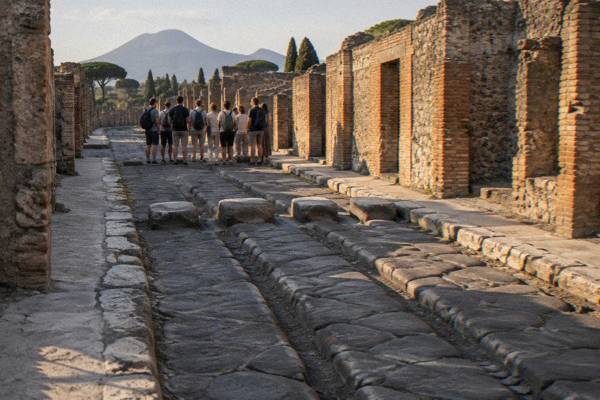
Porta Marina Pompeii
Porta Marina is the ancient sea gate of Pompeii and, today, the archaeological park's principal entrance in Campania, southern Italy, steps from the Pompei Scavi-Villa dei Misteri train station.
Short answer
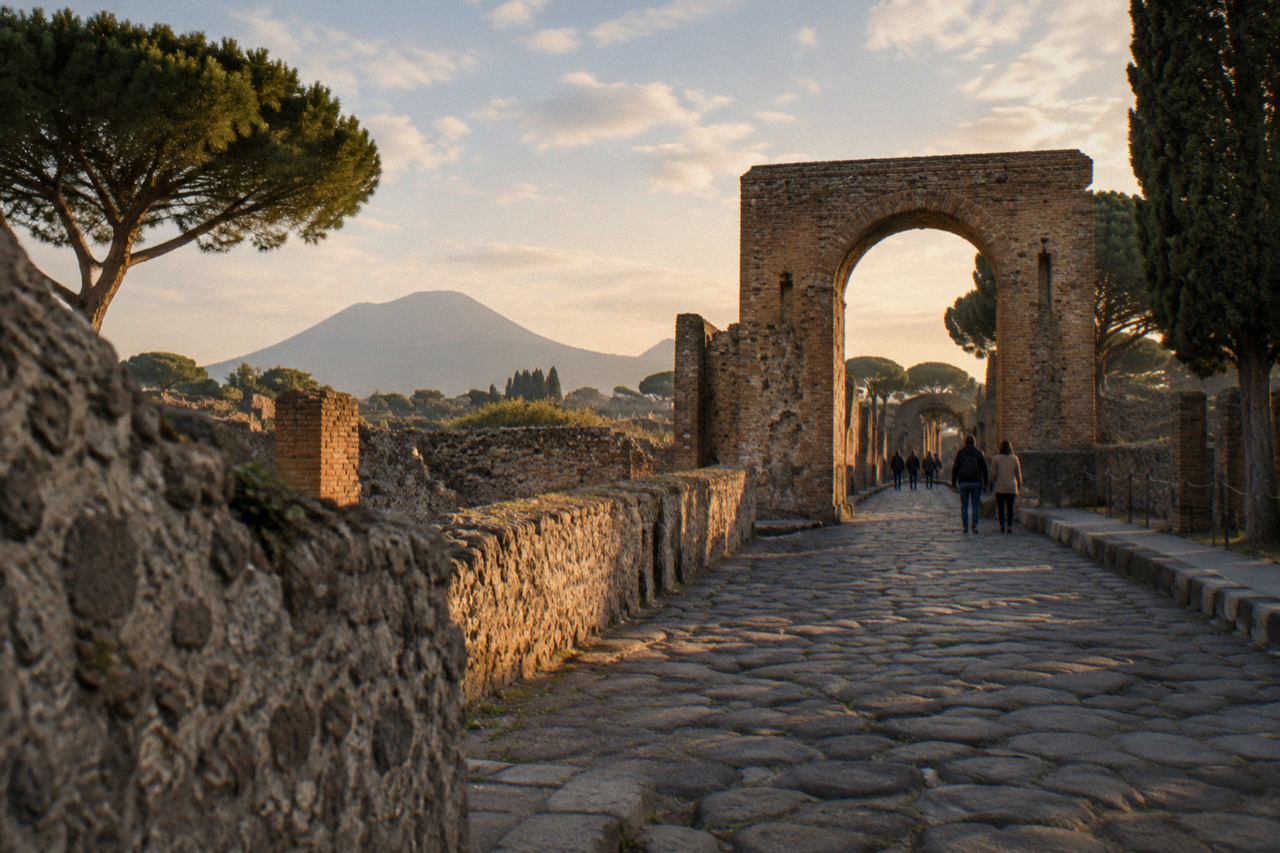
Porta Marina is one of the seven gates of ancient Pompeii and the main modern entrance to the archaeological park, about 24 km from Naples. In 2026 a Pompeii Express ticket costs EUR 20 and the Pompeii+ ticket EUR 25; from 1 January 2027 a single EUR 25 ticket covers all park sites. The gate sits beside the Pompei Scavi-Villa dei Misteri Circumvesuviana station.
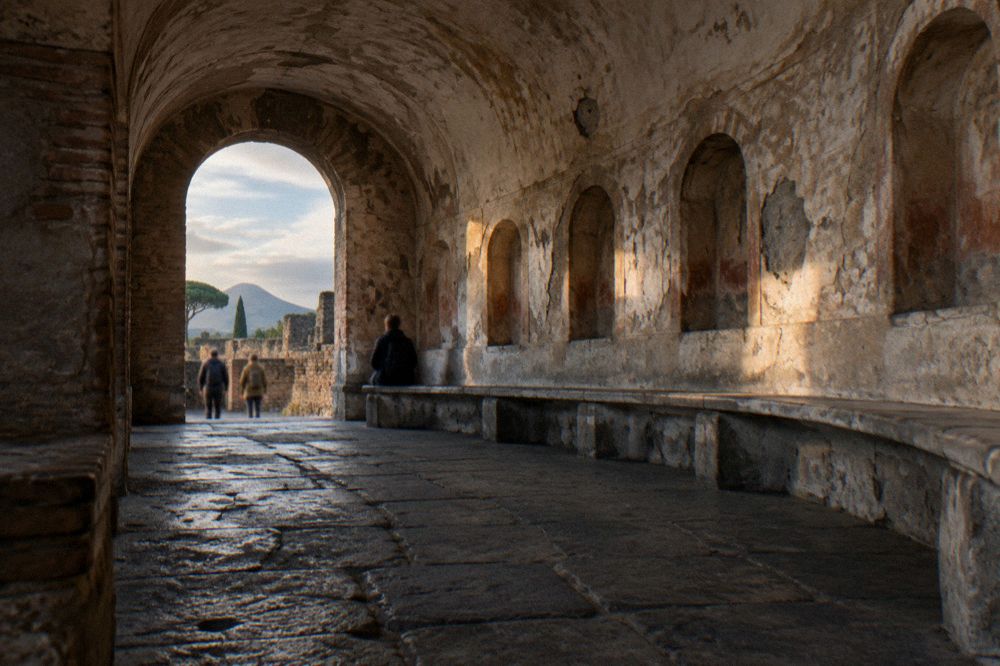
Porta Marina is the ancient sea gate on the south-western wall of Pompeii, the Roman city buried by the eruption of Mount Vesuvius in AD 79, and today the principal entrance and ticket office of the Parco Archeologico di Pompei in Campania, southern Italy. The gate stands beside the modern town of Pompei, about 24 km by road from Naples, and directly opposite the Circumvesuviana station Pompei Scavi-Villa dei Misteri, which is why travellers arriving by train from Naples or Sorrento pass through it by default. The name means "sea gate", and it is a small double passage: a wider arch for animals and carts, a narrower one for people on foot, both opening onto the steep climb up to the Terraces of M. Nonius Balbus and the city above.
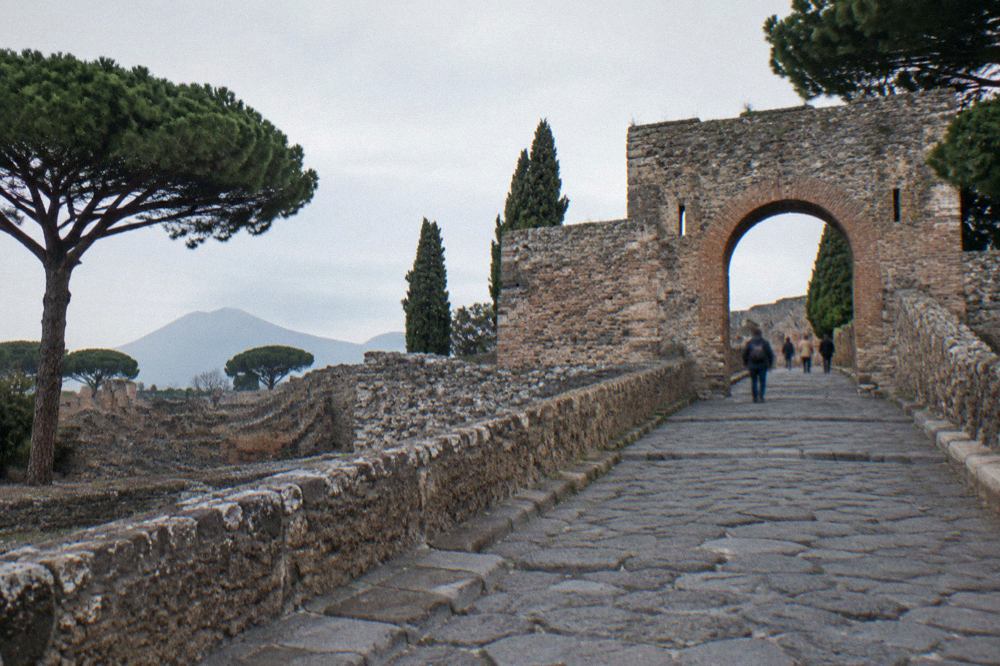
The editor's team at Pompeii Travel Guide treats Porta Marina as more than a doorway: it is the single best orientation point in the whole park, because everything a visitor needs to decide, tickets, entrances, timing and the first route uphill, converges on this one spot. This guide sets out what the gate is, how to enter there, what the 2026 and 2027 ticket systems mean at this door, and what to see in the first hour after walking through it.
What Is Porta Marina In Pompeii?
Porta Marina is one of the gates in the walls of ancient Pompeii, named for the direction of the sea, and it has served since the excavations opened to the public as the site's main modern entrance, with a ticket office, in the Campania region of southern Italy. The passage is a double gate cut through the city's defensive walls, with separate openings for carts and pedestrians, and it gives directly onto the steep street that climbs from the gate to the Terraces above. Its position beside the modern Circumvesuviana station Pompei Scavi-Villa dei Misteri, a 29 to 35 minute ride from Napoli Garibaldi on the Sorrento line, is what made it the default arrival door for rail travellers. The gate itself is Roman masonry, part of the same circuit of walls that enclosed the ancient city, whose excavated area measures 44 ha within a UNESCO inscribed property of 98 ha.
The eruption that sealed the city, traditionally dated to 24 August AD 79 on the strength of the oldest Pliny manuscripts, buried this whole south-western corner deep in volcanic material. The park's own e-journal notes that the alternative 24 October date has no evidentiary basis, so the August tradition stands as the conventional one. Walking up from the gate, a visitor is climbing the same ramp residents climbed, past structures that were two storeys below ground level before excavation.
Two modern functions attach to the gate now. First, it is one of the three ticket offices of the ancient city, alongside Piazza Esedra and Piazza Anfiteatro. Second, it is the start of the standard interpretive route: the antiquarium area, the Terraces of M. Nonius Balbus, and then the Forum, from which the rest of the city opens out. Visitors with mobility difficulties are instead directed to the "Pompeii for All" route, which begins at Piazza Anfiteatro, so Porta Marina is not the accessible entry.
How Do You Enter Pompeii At Porta Marina?
You enter Pompeii at Porta Marina by arriving at the Pompei Scavi-Villa dei Misteri Circumvesuviana station, crossing to the gate, buying or collecting a nominative ticket at the ticket office there, and passing the entry check, where staff may ask for the ID that matches the name on the ticket. Tickets are nominative and non-transferable under the system in force since 15 November 2024, and the site caps entry at 20,000 visitors per day. The gate is open in the summer season, 16 March to 14 October, from 9:00 with last entrance at 17:30 and closing at 19:00; in winter, 15 October to 15 March, last entrance is at 15:30 and the site closes at 17:00. Pompeii itself has no weekly closing day, and the site closes only 25 December and 1 January unless otherwise communicated.
The arrival sequence is short. The station exit faces the gate; the distance is a brief walk across the modern forecourt. Ticket offices at Porta Marina, Piazza Esedra and Piazza Anfiteatro all sell the same range, and online purchase through the vivaticket link on the park's page lets holders join the entry lane directly. Bag rules matter at this door more than any other, because day-trippers arrive straight off the train: the permitted bag size is 30x30x15 cm, and anything larger must go to left luggage before the turnstile. The same regulations bar drones without authorisation.
Time-slot capacity is managed across the day. Between 9:00 and 13:00 the cap is 15,000 entries, split 12,000 Express and 3,000 Plus; from 13:00 to 17:30 it is 5,000, split 3,000 and 2,000. What that means in practice is that an afternoon arrival at Porta Marina faces a thinner entry flow than a mid-morning one, and the last-entrance cutoff is enforced, not advisory.
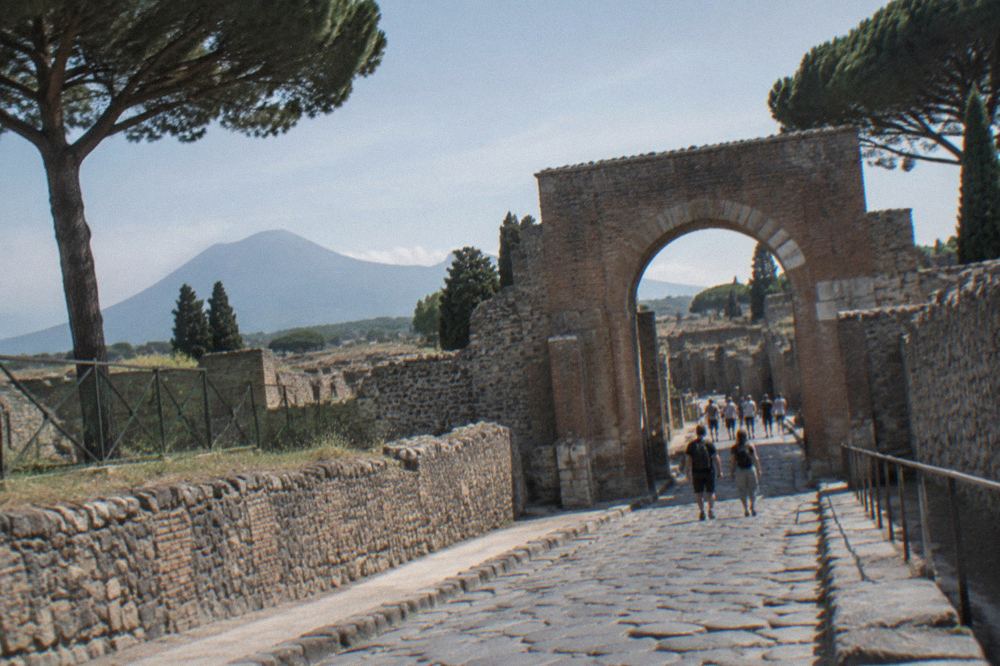
For travellers who prefer to have the entry handled before arrival, a prebooked product such as the entry ticket with audio guide covers admission and leaves only the ID check at the gate. Read more in the Pompeii guided tour or self-guided comparison.
What Tickets Do You Need At Porta Marina In 2026?
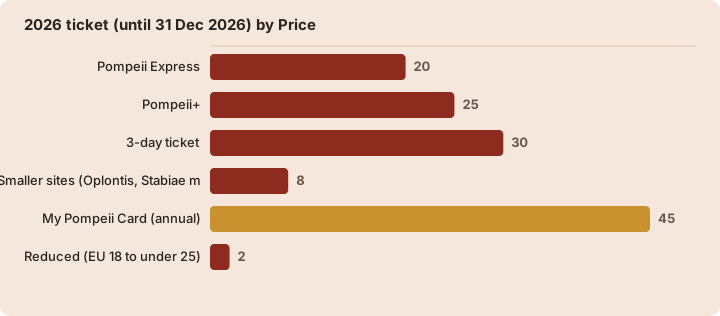
In 2026, until 31 December, the ticket you buy at Porta Marina is either the Pompeii Express at EUR 20, covering the ancient city only, or Pompeii+ at EUR 25, adding the suburban villas of the Mysteries and Diomedes, Villa Regina and the Antiquarium at Boscoreale plus the shuttle; a 3-day ticket costs EUR 30. From 1 January 2027 the park replaces this structure with a single EUR 25 ticket valid 30 days, one entry per site, across all park sites. Reduced admission is EUR 2 for EU citizens aged 18 to under 25, entry is free for under-18s, and everyone enters free on the first Sunday of the month. The three smaller park sites, Boscoreale, Oplontis and the Stabiae museum, remain EUR 8 individually in both systems.
The change, announced by the park on 14 September 2026, keeps two things visitors rely on: nominative tickets and the 20,000 daily cap. It removes the choice that currently faces a visitor at this gate, namely whether to pay EUR 5 more for the villas route. Under the 2026 system, an Express holder can still add the suburban villas route for EUR 8, card payment only, but only at the Porta Ercolano / Street of the Tombs entrance, not at Porta Marina itself, which is worth knowing before you queue.
| 2026 ticket (until 31 Dec 2026) | Price | What it covers |
|---|---|---|
| Pompeii Express | EUR 20 | Ancient city only |
| Pompeii+ | EUR 25 | City, suburban villas Mysteries and Diomedes, Villa Regina, Antiquarium Boscoreale, shuttle |
| 3-day ticket | EUR 30 | Pompeii+ plus Oplontis, Villa Arianna, Villa San Marco, Stabiae museum, Boscoreale |
| Smaller sites (Oplontis, Stabiae museum, Boscoreale) | EUR 8 each | Single site |
| My Pompeii Card (annual) | EUR 45 | Annual pass |
| Reduced (EU 18 to under 25) | EUR 2 | Same coverage as full ticket type |
Tickets are valid 30 days from issue for the free partner sites at Buccino, Lettere, Poggiomarino and Terzigno, a detail few first-time visitors know. Refunds exist only for extraordinary closure; ordinary rain is not one. The full detail on every ticket type is in the Pompeii tickets explained guide.
| Season (2026) | Opens | Last entrance | Closes |
|---|---|---|---|
| 16 Mar to 14 Oct | 9:00 | 17:30 | 19:00 |
| 15 Oct to 15 Mar | 9:00 | 15:30 | 17:00 |
What Should You See First After Porta Marina?
The first sights after Porta Marina are the Terraces of M. Nonius Balbus, reached by the stepped street that climbs from the gate, then the Forum of Pompeii, the civic heart of the ancient city, roughly ten minutes of uphill walking from the entrance; from the Forum the standard first-hour route runs to the Temple of Apollo and the Basilica before turning onto the main thoroughfare. The climb is genuine: the gate sits at the lowest point of the visitor route, and the basalt paving is worn and uneven, so shoes with grip matter more here than anywhere else in the first hour.
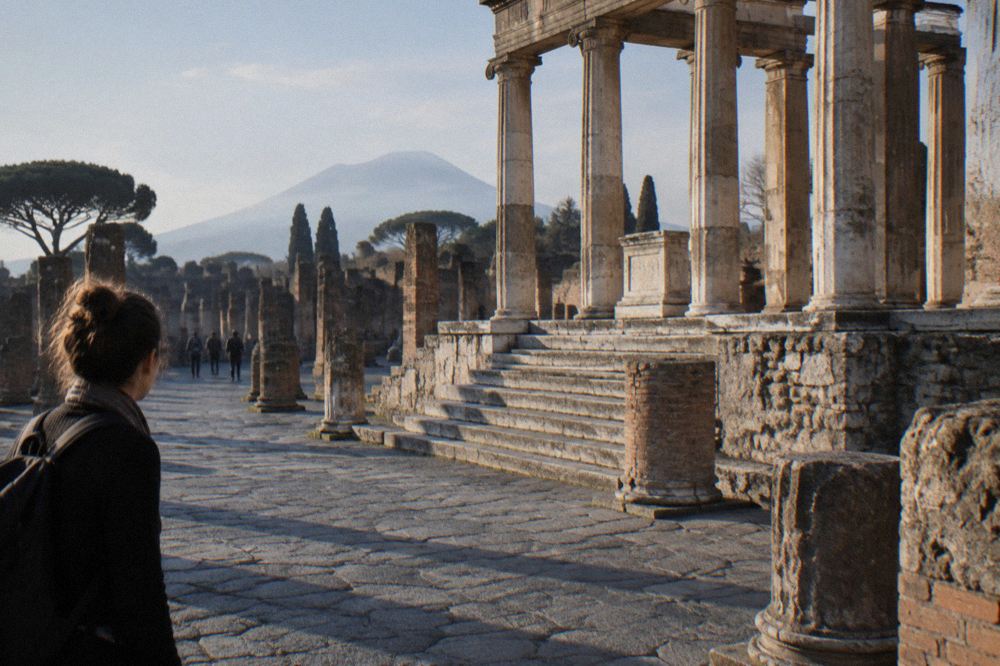
The Forum rewards the climb with the clearest first view in the park: colonnades on three sides, Vesuvius filling the northern skyline, and the public buildings that defined Roman civic life. The Temple of Apollo and the Basilica of Pompeii flank the square, and the Forum of Pompeii guide traces the full circuit.
Guided groups assemble at this gate precisely because the uphill narrative works: eruption, burial, excavation, city. A small-group tour with an archaeologist walks the same climb but opens the walls, the plaster and the graffiti as evidence rather than scenery, and the Pompeii tours from Naples guide lists the departures that use this entrance.
Why Is It Called The Sea Gate When The Sea Is Not There?
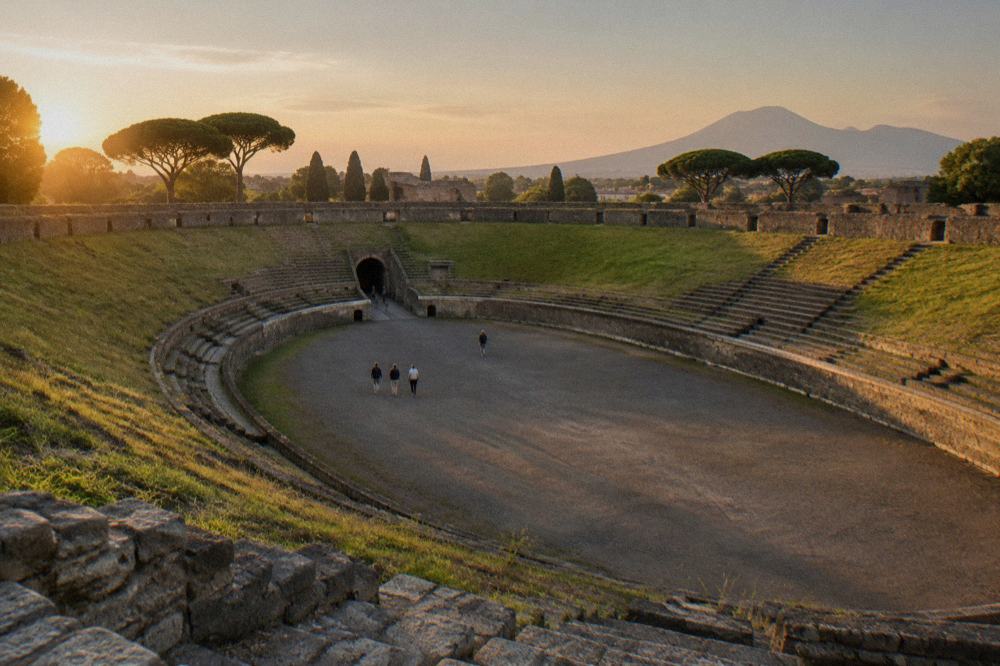
It is called the Sea Gate, Porta Marina, because the gate opened toward the Bay of Naples and the Roman shoreline, which in AD 79 lay far closer to the city wall than the modern coast does; centuries of volcanic deposits have since pushed the sea back, so a visitor today sees town and railway, not water, from the approach. The name is a fossil of the ancient topography: Pompeii in AD 79 was a coastal city, and the eruption that buried it also moved its shoreline. Herculaneum, the neighbouring site closer to the water, preserves the same relationship in sharper form.
The modern frame around the gate is functional rather than ancient: the Circumvesuviana viaduct, the station forecourt, the modern town of Pompei with its Sanctuary a short walk away. That layered setting is part of the answer to a question travellers ask in the where is Pompeii guide: the ancient city and the modern pilgrim town are two distinct places with one confusingly similar name, and Porta Marina is the seam between them.
When Is The Best Time To Use Porta Marina?
The best time to use Porta Marina is either at 9:00 opening, before the 9:00-13:00 slot fills toward its 15,000-entry cap, or after 13:00, when the daily cap drops to 5,000 entries and the entry flow thins; on free first Sundays the park has recorded more than 36,000 visitors in a single day, so those dates are the worst choice for this gate. Monthly figures for 2024 show the pattern across the year: May peaked at 516,923 visitors and October followed at 481,255, while November fell to 189,866 and January to 112,121, so shoulder months carry a real difference in crowding.
| Entry slot (16 Mar to 14 Oct) | Cap | Express share | Plus share |
|---|---|---|---|
| 9:00-13:00 | 15,000 | 12,000 | 3,000 |
| 13:00-17:30 | 5,000 | 3,000 | 2,000 |
Weather shapes the choice too. Pompei has a Mediterranean climate, and Open-Meteo 1991-2020 normals for the local grid point put August's mean daily maximum at about 29.4 C against February's mean minimum of about 6.5 C, with November the wettest month at about 180 mm of rain and July the driest at about 16 mm. The climb from the gate is exposed stone; an afternoon slot in July is a furnace, and a November morning can be damp underfoot. The Pompeii weather and best time to visit guide breaks this down month by month.
| Month (30-yr averages, about) | Mean daily max C | Mean daily min C | Rain mm |
|---|---|---|---|
| February | 12.6 | 6.5 | 103 |
| May | 21.6 | 14.1 | 59 |
| August | 29.4 | 21.8 | 22 |
| November | 16.9 | 11.5 | 180 |
How Does Porta Marina Compare With The Other Entrances?
| Entrance | Role | Best for |
|---|---|---|
| Porta Marina | Ticket office, main rail arrival | Train travellers, Forum-first routes |
| Piazza Esedra | Ticket office, eastern side | Amphitheatre-first routes |
| Piazza Anfiteatro | Ticket office, accessible entry | "Pompeii for All" route, mobility needs |
| Porta Ercolano / Street of the Tombs | Villas route entry | Suburban villas, EUR 8 add-on sales |
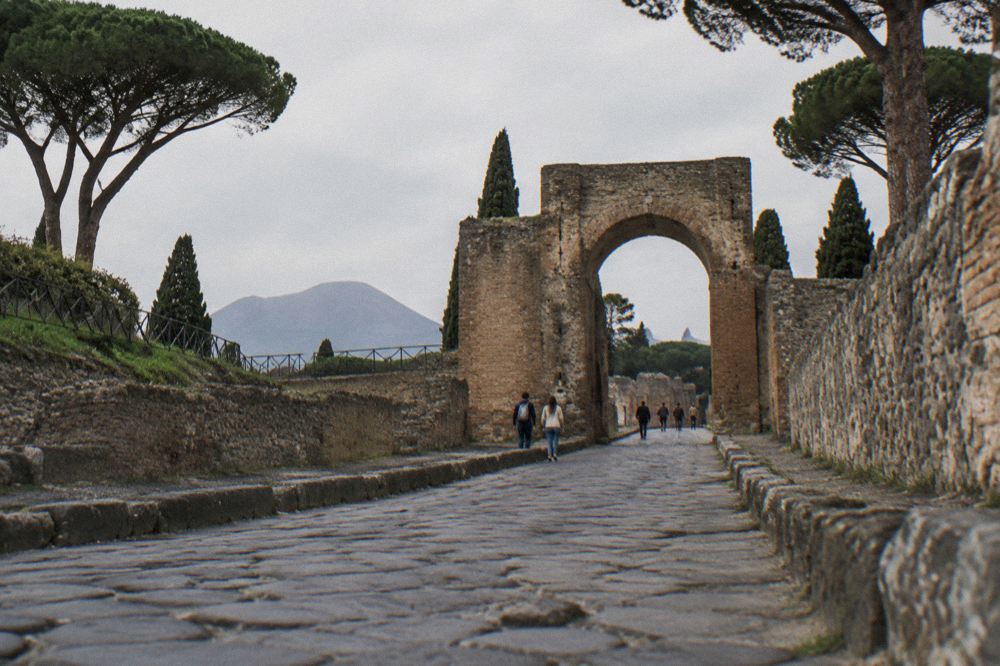
The Pompeii entrances compared guide works through the trade-offs, and the Pompeii map shows how the three doors divide the site. A visitor starting at Porta Marina who wants the Villa of the Mysteries should note it sits on the villas route beyond Porta Ercolano, a walk out through the north-west of the city, so it pairs naturally with an exit rather than an entrance.
Can You Arrive At Porta Marina Without A Tour?
Yes, you can arrive at Porta Marina entirely independently: buy a ticket online or at the office, ride the Circumvesuviana to Pompei Scavi-Villa dei Misteri, which takes 29 to 35 minutes from Napoli Garibaldi on the scheduled times computed from EAV's own timetable data, and walk in; no tour is required, and the park's own interpretive signage, the on-site Antiquarium and a rented audio guide cover the basic narrative. The trade-off is depth: an unguided visitor sees walls and streets, while a guided one gets the archaeology behind them, a balance weighed honestly in the answer page is it worth getting a guided tour of Pompeii. The Antiquarium near this entrance, covered in the Pompeii Antiquarium guide, carries the frescoes and objects that give the stones their context.
Independent travellers from Sorrento have the same line: the scheduled run from Pompei Scavi to Sorrento takes 34 to 40 minutes, so the gate works as a day-trip door from either direction. EAV, the operator, publishes the timetable for the line on its own site, and fares are shown at the point of sale. The Sorrento to Pompeii guide and the Circumvesuviana train guide cover the full journey planning.
| Journey to Pompei Scavi | Scheduled time | Source basis |
|---|---|---|
| Napoli Garibaldi to Pompei Scavi-Villa dei Misteri | 29 to 35 min | EAV timetable data, route 1 |
| Pompei Scavi to Sorrento | 34 to 40 min | EAV timetable data, route 1 |
| Road, Naples to Pompei Scavi | 24 km, about 22 min driving | Route planner on OpenStreetMap |
What Facilities Are At Porta Marina?
Facilities at Porta Marina centre on the ticket office, the entry lanes, left luggage for bags over the 30x30x15 cm limit, and the adjacent antiquarium area and bookshop inside the gate; there are toilets at this entrance, water points inside the park, and food options are limited within the walls, so day-trippers should plan accordingly. The Artebus shuttle, which serves the wider park, has luggage storage but no disabled access, which is one more reason the accessible route starts elsewhere, at Piazza Anfiteatro.
Practical items worth knowing before the queue: ID that matches the nominative ticket, since checks can happen at every entry; no bare chests; drones only with authorisation. Tickets are non-refundable except in extraordinary closure, and the 2026 prices printed above expire as a system on 31 December 2026, so a ticket bought in December follows the old structure and one bought in January the new single EUR 25 one. The Pompeii tips guide collects these in one place.
Is Porta Marina The Right Choice For A Cruise Day Or A Short Visit?
Porta Marina is the right choice for a short visit of two to three hours and for any arrival by train, because it starts the route at the bottom of the hill and puts the Forum within the first ten minutes; for cruise passengers on a tight clock, a shore excursion that handles transport from the port of Naples usually enters here too, and the fuller trade-offs are laid out in the dedicated cruise-day planning guide for this site. The half-day route from this gate is the classic one, mapped in the Pompeii half day highlights route, and it reaches the House of the Faun, the Lupanar and the Garden of the Fugitives on a loop that returns to the same side of the city. Cruise travellers can compare timings in the Pompeii cruise ship day guide.
Longer days change the calculus. A visitor pairing the city with the volcano should read Pompeii and Vesuvius in one day; one pairing it with the other buried town should read Pompeii and Herculaneum in one day, and the Pompeii vs Herculaneum guide explains which site answers which curiosity. All of those routes still begin, in the majority of cases, at this same gate by the station.
Common Questions About Porta Marina Pompeii
Is Porta Marina the main entrance to Pompeii?
Yes. Porta Marina is the principal entrance and a ticket office of the archaeological park, sitting directly beside the Pompei Scavi-Villa dei Misteri Circumvesuviana station, which makes it the default door for rail arrivals from Naples and Sorrento. Piazza Esedra and Piazza Anfiteatro are the other two ticketed entrances to the ancient city.
Can you buy tickets at Porta Marina?
Yes, there is a ticket office at Porta Marina selling the same range as the other offices. In 2026 that is the Pompeii Express at EUR 20, Pompeii+ at EUR 25 and the 3-day ticket at EUR 30 until 31 December, after which a single EUR 25 ticket covers all park sites. Online purchase through the park's vivaticket link is also available.
How far is Porta Marina from the train station?
Porta Marina stands directly opposite the Circumvesuviana station Pompei Scavi-Villa dei Misteri; the walk across the forecourt is brief. Scheduled journey times on the line are 29 to 35 minutes from Napoli Garibaldi and 34 to 40 minutes from Sorrento.
Is Porta Marina accessible for wheelchairs?
No. The accessible entry is Piazza Anfiteatro, where the "Pompeii for All" route begins, with exit possible at Piazza Anfiteatro or Piazza Esedra via the Antiquarium lift. Porta Marina involves a steep climb on worn ancient paving.
Why is it called Porta Marina if there is no sea?
Because in AD 79 the gate opened toward the Bay of Naples and the shoreline lay much closer to the city walls. Volcanic deposits from the eruption have since extended the land seaward, so the modern coast is farther away than the Roman one was.
Can I enter the suburban villas from Porta Marina?
No. The suburban villas route, covering the Villa of the Mysteries and Villa of Diomedes, is entered at Porta Ercolano / Street of the Tombs, where Express holders can add the route for EUR 8, card payment only, under the 2026 system. A Pompeii+ ticket already includes the villas.
Porta Marina remains the pragmatic heart of a Pompeii visit: the gate that meets the train, sells the ticket, and starts the climb into the buried city. Arrive with ID, a bag under 30x30x15 cm and a sense of which slot you are entering in, and the ancient sea gate does the rest.