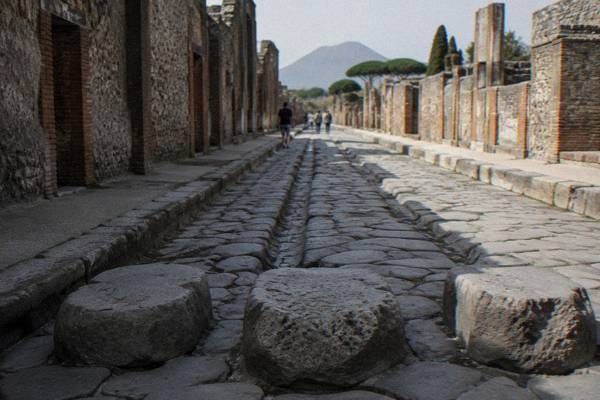
Pompeii House Of The Surgeon
The House of the Surgeon stands on one of Pompeii's principal inbound streets and takes its name from the surgical instruments uncovered there, a rare direct link between an ordinary Roman house and the medical trade of its owner.
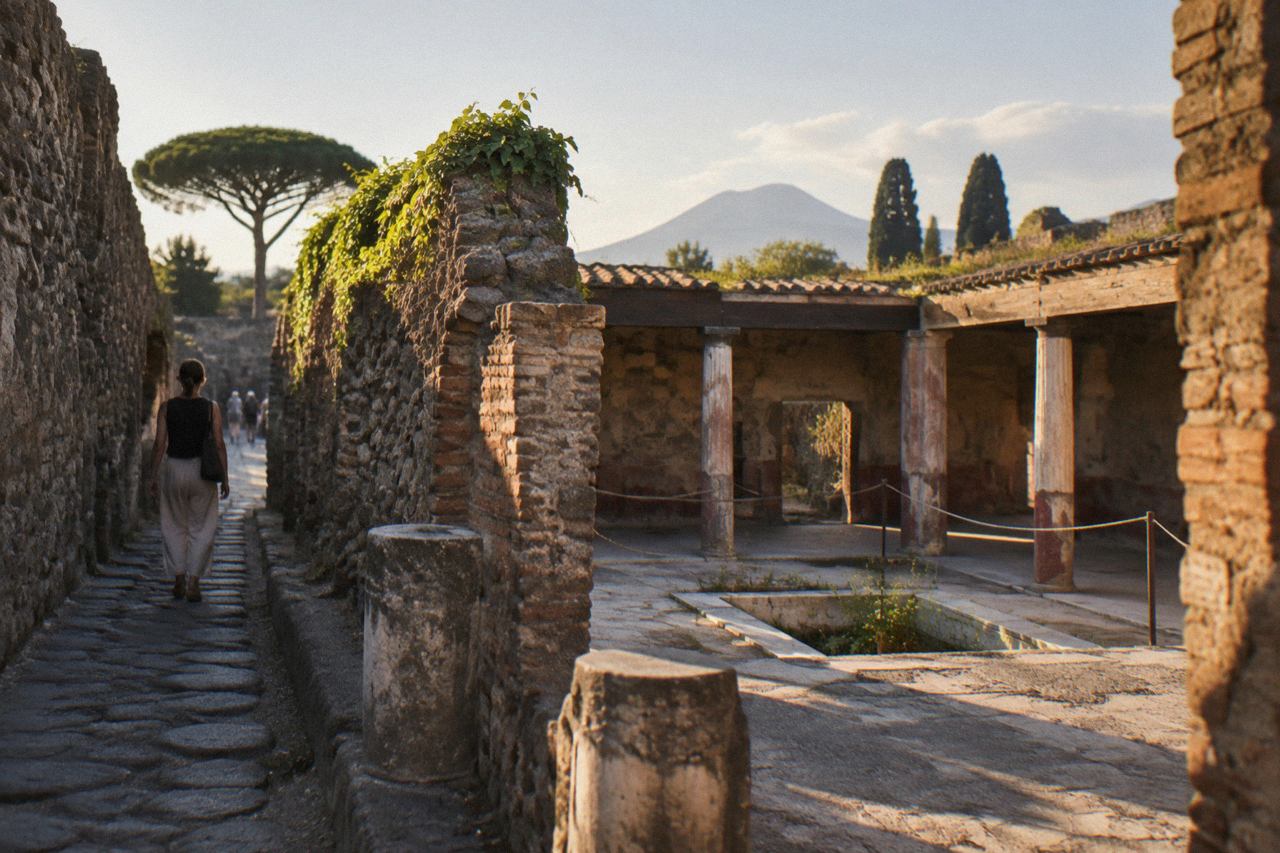
Short answer
The House of the Surgeon in Pompeii, Italy, is a modest Roman house named for the set of surgical instruments found there during excavation. Entry is covered by the park's Pompeii Express ticket, EUR 20 in 2026, and the house sits a short walk inside the Porta Marina entrance, about 24 km from Naples.
Pompeii, the ancient Roman city buried by the eruption of Mount Vesuvius in AD 79, lies in Campania, southern Italy, beside the modern town of Pompei and about 24 km by road from Naples. Among its hundreds of excavated houses, the House of the Surgeon earns its name from a discovery that archaeology rarely offers: the actual working tools of the man who lived there. The house stands toward the western side of the ancient city, near the stretch entered from the Porta Ercolano end, and it belongs to the same general admission as every other building inside the ancient city. This page covers what the house is, what was found in it, how to reach it from each entrance, and how it compares with the grander houses visitors usually queue for.
What Is The House Of The Surgeon In Pompeii?
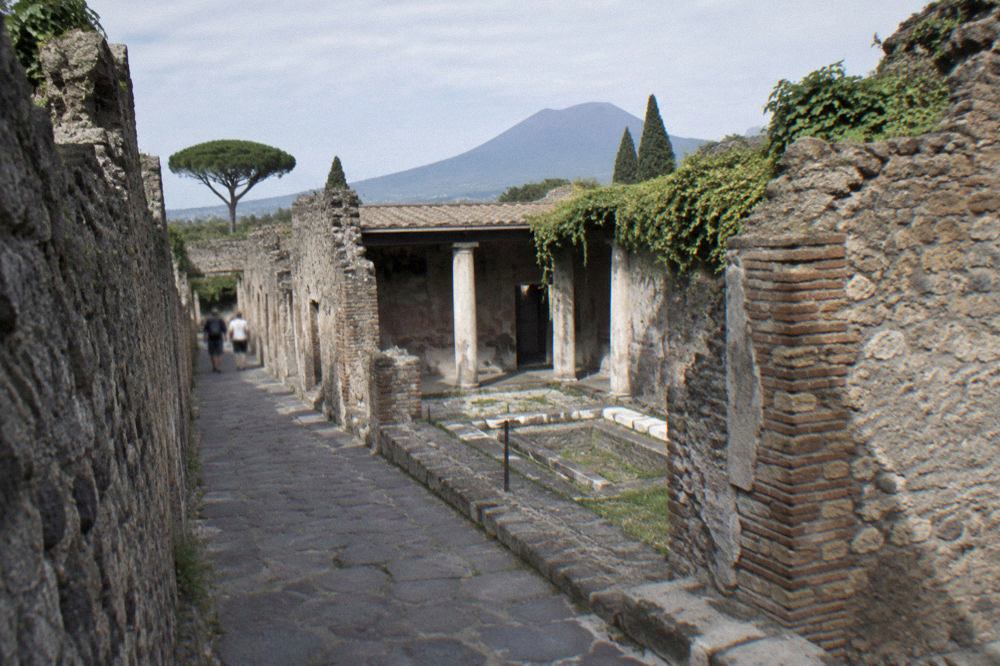
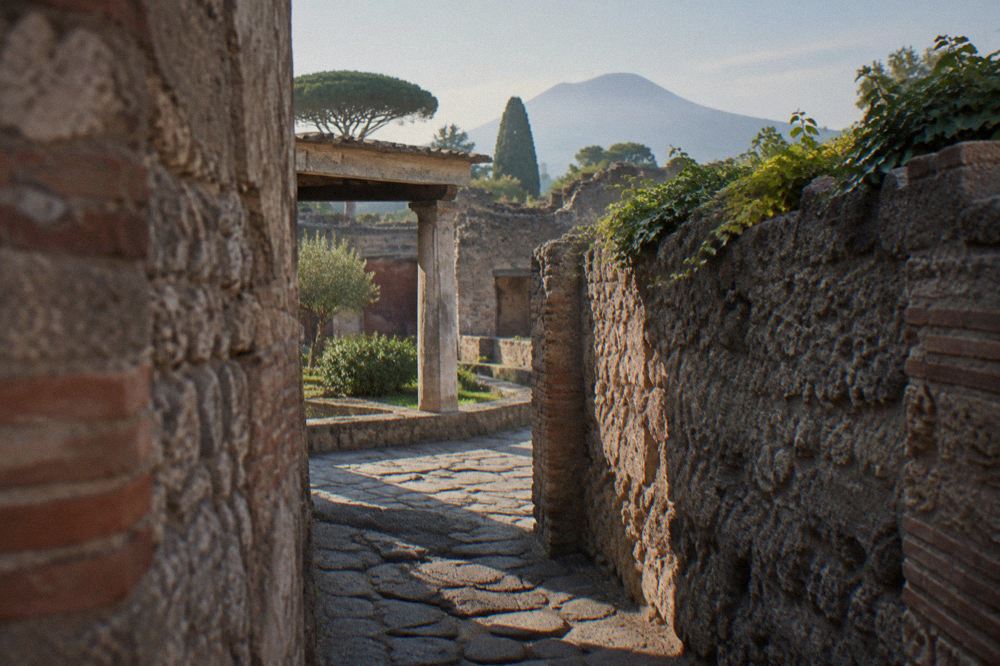
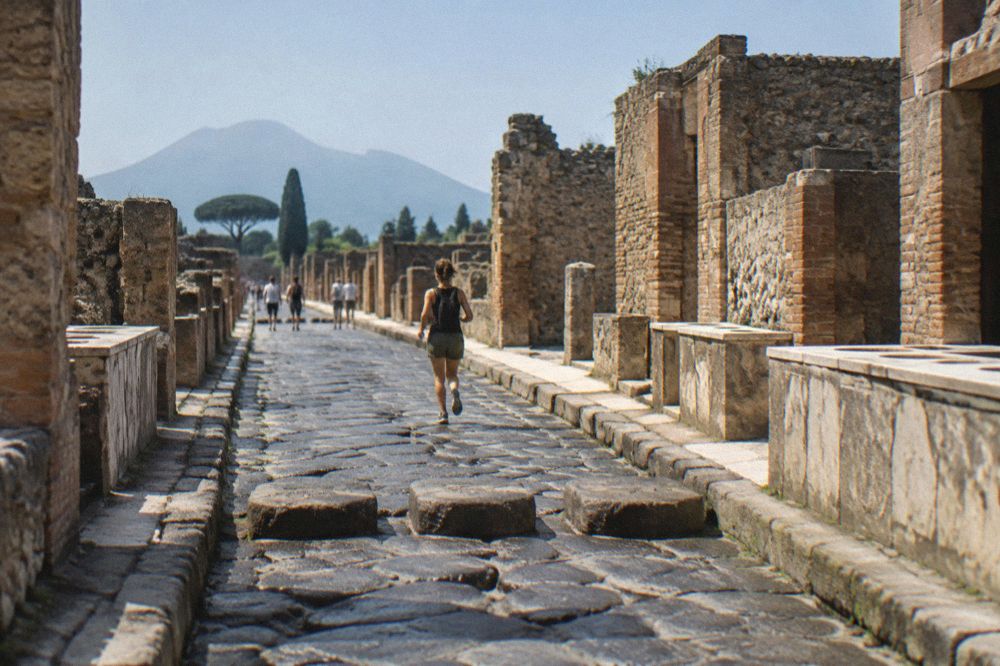
The House of the Surgeon is a relatively modest Roman dwelling toward the western side of Pompeii, Italy, named after a cache of surgical instruments uncovered during the early excavations of the city. It is not one of the monumental houses of Pompeii; its interest lies in the evidence it gives of a professional man, a practising physician, living and working in an ordinary city street before the eruption of AD 79. The find connected the house to medicine in a direct, physical way that inscriptions and frescoes rarely manage. The instruments themselves left the site long ago and are held in the collections of the National Archaeological Museum of Naples, which this site covers in its guide to the Naples Archaeological Museum. What remains on the street today is the architecture: a tufa-block atrium house of the kind built by Pompeii's middle-ranking families, standing on the approach that runs down from the Porta Ercolano area toward the heart of the city.
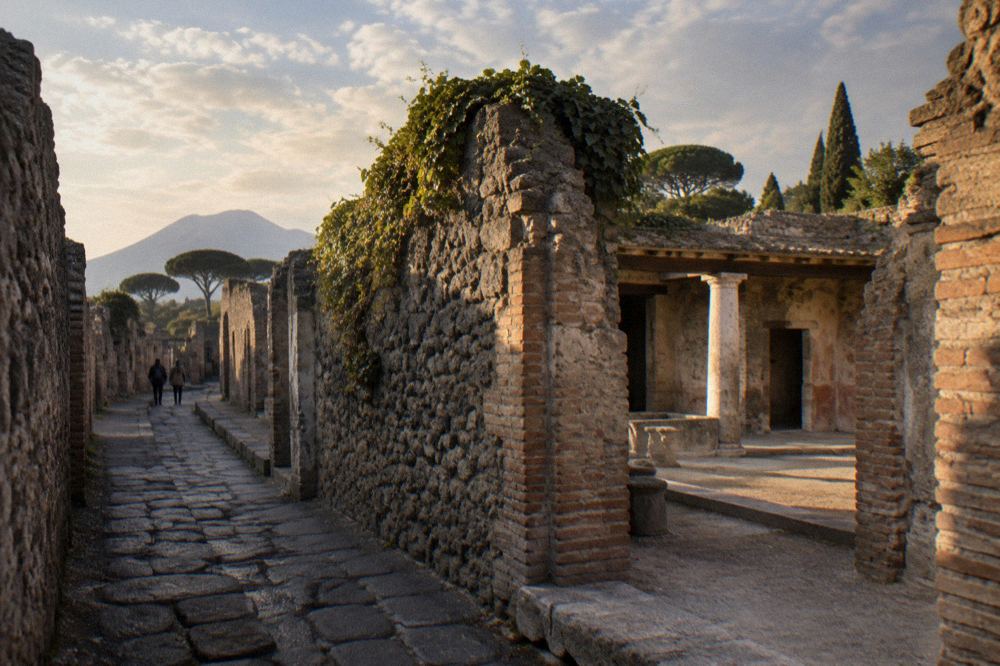
The house is a standard atrium plan, arranged around a central hall with a rain-opening in the roof and a shallow pool beneath it to catch the water. The construction, in large squared blocks of tufa, belongs to an older Pompeian building tradition than the plastered and painted houses that line the neighbouring streets. Visitors who have already walked through the House of the Faun or the House of the Vettii will notice the contrast immediately: those houses were statements of wealth, while this one is a workplace and a home in a single envelope. That contrast is exactly why the house earns a stop on a well-planned route.
Archaeologists value the house as a type specimen of an older urban house tradition, the kind of dwelling that made up the fabric of the city before the Roman colony and before the rebuilding boom that followed earlier seismic damage in the decades before the eruption. For a general visitor, the more memorable fact is simpler: a doctor lived here, saw patients here, and left his kit behind when the mountain buried the city. For orientation before arrival, the site's Pompeii map shows where the western streets run relative to the entrances.
Where Is The House Of The Surgeon And Which Entrance Serves It Best?
The House of the Surgeon stands toward the western side of the ancient city, on the long straight approach that enters near the Porta Ercolano end and runs down toward the Forum area, so the Porta Marina entrance serves it best: it is the closest ticket office to that end of the route. Pompeii's three ticket offices are at Porta Marina, Piazza Esedra and Piazza Anfiteatro, and a fourth named access point, the Porta Ercolano / Street of the Tombs entrance, exists for the suburban villas route. Arriving at Porta Marina puts a visitor on the road leading into that western stretch within minutes of the gate, which is why the house pairs naturally with the Villa of the Mysteries and the villas route for anyone entering from the west.
Visitors arriving by train use the Pompei Scavi-Villa dei Misteri station, which sits beside the Porta Marina entrance; the station stop is number 6049 on the Circumvesuviana line from Naples toward Sorrento. Scheduled running times computed from the operator's own timetable data give 29 to 35 minutes from Napoli Garibaldi to Pompei Scavi-Villa dei Misteri, with a median of 29 minutes. Anyone planning a fuller arrival plan can follow the site's coverage of Pompeii tickets and transport, which links onward to the dedicated pages.
The practical point is that house-hunting in Pompeii is an entrance problem before it is a navigation problem. Enter at the wrong gate and the same street costs half an hour of walking in the midday heat. The table below sets out what each entrance is for.
| Entrance (2026) | Ticket office | Best for the House of the Surgeon |
|---|---|---|
| Porta Marina | Yes | Best choice: closest gate to the western approach the house sits on |
| Piazza Esedra | Yes | Long walk west across the site first; better for Forum-first routes |
| Piazza Anfiteatro | Yes | Farthest option; suits an east-to-west full-day route |
| Porta Ercolano / Street of the Tombs | Add-on access | For the suburban villas route, EUR 8 add-on for Express holders, card only |
For travellers coming from Naples without a car, a guided transfer removes the entrance-choice problem altogether, since the guide sets the route from the gate that fits the plan. The half-day skip-the-line option is the site's featured pick for this itinerary.
What Was Found In The House Of The Surgeon?
The House of the Surgeon yielded a cache of Roman surgical instruments during the early excavations of Pompeii, a find that gave the house its modern name and its lasting significance among the city's domestic discoveries. The kit included probes, forceps and other implements recognisable to anyone familiar with modern surgical tools, and its recovery linked a house, an occupation and a person through objects rather than through decoration or inscription. The set is now held in the National Archaeological Museum of Naples rather than on the site itself, so a visitor standing in the atrium sees the architecture, while the instruments are studied in the museum's medicine galleries.
The discovery matters because Pompeii's grand houses speak through frescoes and mosaics commissioned by owners with money to spend on image, while a working kit like this speaks through use. It puts a named trade on an otherwise anonymous street house: this was a physician's premises, a place where patients were seen and treated. The e-journal of the Pompeii park itself has drawn attention to how much of the city's daily life is recovered exactly through this kind of domestic object, and the medical trade is among the best documented. Readers curious about how the broader picture of the destruction was pieced together can follow the site's account of Pliny the Elder and Vesuvius, which describes the eruption traditionally dated to 24 August AD 79, a date the park's own scholars note remains an open debate.
Roman medicine at the time of the eruption combined Greek theoretical training with practical craft, and instrument sets from the Vesuvian sites are among the primary evidence for how that craft was performed. Forceps, catheter-like tubes and bone levers from the Campanian finds show a level of specialisation that written sources alone cannot confirm. The table below places the find in the context of what the other great houses of the city are known for.
| Pompeii house (2026) | Known for | Type of evidence |
|---|---|---|
| House of the Surgeon | Medical instrument find | Working tools of a trade |
| House of the Faun | Alexander Mosaic, vast scale | Elite display and decoration |
| House of the Vettii | Frescoes, garden statuary | Merchant wealth after the earthquake era |
| House of Menander | Silver treasure, grand plan | Elite possessions |
| Villa of the Mysteries | Dionysiac fresco cycle | Ritual decoration |
Visitors who want the instrument story told in full usually pair the site with the Naples museum, and a guided day that includes both halves of that story is the natural format.
How Much Does It Cost To See The House Of The Surgeon?
Entry to the House of the Surgeon is covered by the standard Pompeii park ticket rather than any house-specific charge: EUR 20 for the Pompeii Express ticket in 2026, which covers the whole ancient city, with nothing extra to pay at any individual building including this one. There is no separate admission and no timed slot for this particular house; the time bands and the 20,000-visitors-per-day cap apply to the site as a whole, not to its individual streets or buildings. The prices in force from 12 January 2026 are shown below, and they end on 31 December 2026: from 1 January 2027 a single EUR 25 ticket covers all park sites, valid 30 days with one entry per site, while the three smaller sites stay at EUR 8 each and the MyPompeii Card stays EUR 45.
| Ticket (2026, in force to 31 Dec 2026) | Price | Covers |
|---|---|---|
| Pompeii Express | EUR 20 | Ancient city only, including the House of the Surgeon |
| Pompeii+ | EUR 25 | City plus suburban villas, Boscoreale and shuttle |
| 3-day ticket | EUR 30 | Pompeii+ plus Oplontis, Stabiae villas and museum, Boscoreale |
| Oplontis / Stabiae museum / Boscoreale | EUR 8 each | Individual smaller sites |
| MyPompeii Card | EUR 45 | Annual pass |
Reductions and free entry follow the park's general rules. Entry is free for everyone on the first Sunday of the month, year-round under the Domenica al Museo scheme, and free for visitors under 18 at any time. EU citizens aged 18 to under 25 pay a reduced EUR 2, and the same reduction applies to non-EU holders of an Italian residence permit. One recorded first-Sunday crowd gives a sense of what free days can mean: the park has counted more than 36,000 visitors on a single free Sunday, against the normal cap of 20,000 per day.
Tickets are nominative, non-transferable and non-refundable except in cases of extraordinary closure, and identity documents may be checked at any entry, per the park's regulations for visitors. Bags larger than 30x30x15 cm must be left in the left luggage facility. The site's dedicated page on Pompeii tickets and free entry days carries the full detail, and the practical rules on timing are worth knowing before the visit.
| Rule (2026) | Detail |
|---|---|
| Daily cap | 20,000 visitors per day, since 15 Nov 2024 |
| Morning band, 16 Mar to 14 Oct | 9:00-13:00, max 15,000 entries |
| Afternoon band, 16 Mar to 14 Oct | 13:00-17:30, max 5,000 entries |
| Winter hours, 15 Oct to 15 Mar | Open 9:00, last entry 15:30, close 17:00 |
| Summer hours, 16 Mar to 14 Oct | Open 9:00, last entry 17:30, close 19:00 |
When Is The Best Time Of Year To Visit The Western Houses?
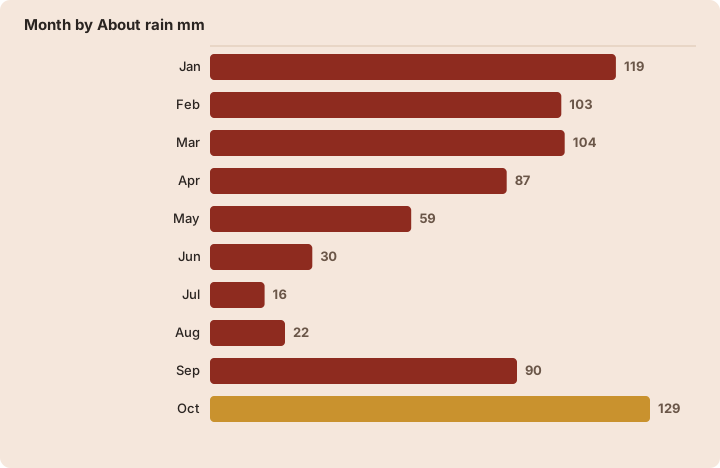
The best months to visit the House of the Surgeon and the rest of Pompeii are April, May, June, September and October, when the Pompei climate normals give mean daily maxima of about 17.7 to 25.8 C and rainfall of about 30 to 90 mm per month, avoiding both the July and August heat and the November peak in rain. The figures come from the 1991-2020 normals computed at the Pompei grid point from the Open-Meteo historical archive, a reanalysis grid rather than a weather station, so they should be read as "about" values. November is the wettest month at about 180 mm of rain, and July the driest at about 16 mm; August carries the highest mean daily maximum at about 29.4 C.
| Month | About Tmax C | About Tmin C | About rain mm |
|---|---|---|---|
| Jan | 12.2 | 6.6 | 119 |
| Feb | 12.6 | 6.5 | 103 |
| Mar | 14.9 | 8.1 | 104 |
| Apr | 17.7 | 10.4 | 87 |
| May | 21.6 | 14.1 | 59 |
| Jun | 25.8 | 18.2 | 30 |
| Jul | 28.7 | 21.1 | 16 |
| Aug | 29.4 | 21.8 | 22 |
| Sep | 25.3 | 18.6 | 90 |
| Oct | 21.3 | 15.1 | 129 |
| Nov | 16.9 | 11.5 | 180 |
| Dec | 13.2 | 8.0 | 147 |
The official visitor counts for 2024 show how the crowds track this calendar. May was the heaviest month at 516,923 visitors to the Pompeii site, with April at 466,344, September at 468,340 and October at 481,255, while November fell to 189,866 and February to 142,648. A visit in the cooler shoulder months therefore trades a little weather comfort against visibly thinner crowds. There is a shorter end to that argument too: the winter timetable closes the gates at 17:00 with last entry at 15:30, which cuts the walking day considerably. The full index of guides sits on Pompeii Travel Guide.
How Does The House Of The Surgeon Compare With Pompeii's Grand Houses?
The House of the Surgeon is smaller, older in its core construction and far less decorated than the showcase houses of Pompeii, and that is precisely its value: it shows the professional middle of the city rather than its elite apex. The House of the Faun occupies an entire insula with its famous Alexander Mosaic; the House of the Vettii is a fresco gallery; the House of the Tragic Poet and the House of Menander trade on painted decoration and treasure. Against these, the Surgeon's house offers solid masonry, a conventional plan and a story told by tools rather than by pictures.
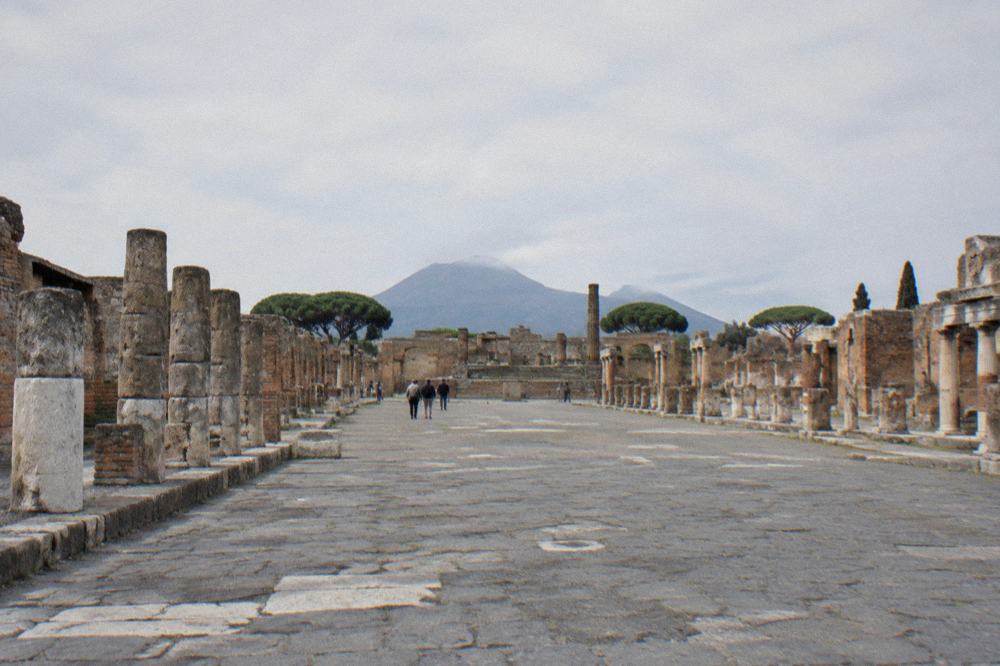
For route planning, the contrast works in the visitor's favour. The grand houses cluster in the central and eastern insulae, while the string of houses including this one sits on the western approach. A day that starts at Porta Marina can take the western houses first, reach the Forum via the Basilica of Pompeii and the Temple of Apollo, and finish among the painted houses before the legs give out. The site's route pages, including the Pompeii in one day itinerary, assemble exactly this kind of sequence.
Can You See The House Of The Surgeon On A Day Trip From Naples Or Sorrento?
Yes, the House of the Surgeon is comfortably reachable on a day trip from Naples or Sorrento, because the Pompei Scavi-Villa dei Misteri station sits beside the Porta Marina entrance, the gate closest to the western approach the house stands on, and scheduled Circumvesuviana times from Naples run 29 to 35 minutes to that station. From Sorrento the same line takes 34 to 40 minutes from Pompei Scavi, against 64 to 75 minutes for the full Sorrento-to-Naples leg, so either base works. The Campania Express, the premium alternative that once served the same corridor, has been suspended since 1 October 2026, and the operator has published no restart date, so planning should assume the Circumvesuviana only.
Road distances put the options in proportion: about 24 km and 22 minutes of driving from Naples, about 26 km and 37 minutes from Sorrento, and about 31 km and 30 minutes from Salerno, per routing data on OpenStreetMap. From Rome the driving distance is about 234 km, and the site's Rome day-trip pages treat that as a full-day undertaking. Cruise passengers calling at Naples work to a tighter clock, and the shore-excursion format exists precisely for that case; the site's cruise day guide covers the timings.
Guided day trips bundle the transport, the ticket and the route into one purchase, which matters most when the time budget is short. The trio below spans the formats: a half-day skip-the-line option, a three-site archaeology day, and a pizza-lunch version for a softer pace.
Between the Pompeii houses and the volcano that destroyed them, many travellers add Vesuvius itself. The Gran Cono trail is ticketed online only, at EUR 11.68 full and EUR 9.55 reduced as sold, with 50 tickets released every 10 minutes bookable 30 days ahead and 10 nominative last-minute tickets per slot from 30 minutes before each entry. Access hours shift by month, from 9-15 in January, February, November and December to 9-18 in July and August, and the path closes automatically on an orange weather alert or above. Those rules sit alongside the house-hunting itinerary well, since the mountain and the city explain each other.
What Should You Know Before Visiting The Western Houses?
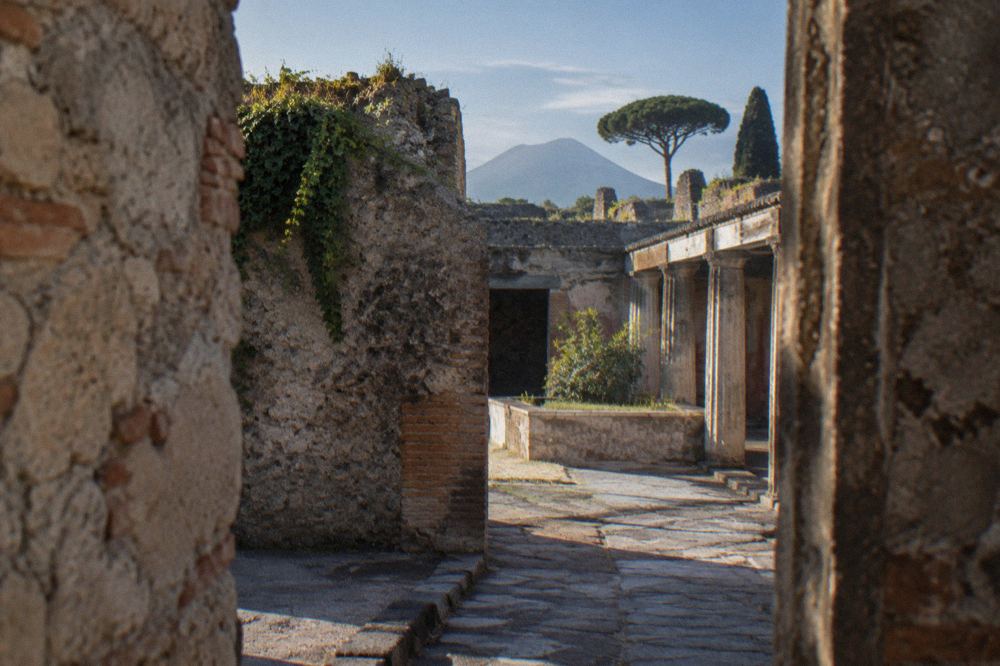
Before visiting the House of the Surgeon, know three things: your ticket must be nominative and carried with photo ID, your bag must be no larger than 30x30x15 cm, and the walking surface on the western streets is ancient basalt paving with high stepping stones, so solid footwear matters more than almost anything you pack. The park's regulations for visitors govern all three, and they apply at every entrance, not just the first one you use. There is no dress code beyond ordinary decency, and bare chests are not permitted inside the site.
Practical planning around food, water and time works better here than heroic scheduling. The site has refreshment points, covered on the page about eating in and around the park, but a morning entry at 9:00 with a planned exit before the afternoon band fills up is the pattern that serves a western-houses-first route. Visitors with mobility difficulties have a dedicated "Pompeii for All" route entering at Piazza Anfiteatro, with exits at Piazza Anfiteatro or Piazza Esedra via the Antiquarium lift, though the ancient paving itself is uneven underfoot. Families get a friendlier angle in the site's Pompeii with kids itinerary.
A final word on timing. The park has no weekly closing day; the page marks only the smaller sites at Oplontis, the Stabiae villas and museum as closed on Tuesdays. Pompeii itself closes on 25 December and 1 January unless otherwise communicated. Within the site, closures can appear at short notice: the Praedia of Julia Felix has been closed to the public since 7 September 2026, which is one more reason to keep a western-first plan flexible. Anyone wanting a second opinion on the trade-offs between the formats can read the site's comparison of guided versus self-guided visits, which frames the decision by budget and time rather than by dogma.
Common Questions About The House Of The Surgeon In Pompeii
What is the House of the Surgeon in Pompeii?
A Roman house toward the western side of the ancient city, named after a set of surgical instruments found there during the early excavations. It is a modest atrium house of tufa blocks, contrasting with the grand painted houses elsewhere in the city, and entry is included in the standard park ticket.
Can you see the surgical instruments at the house?
No. The instrument find is held in the National Archaeological Museum in Naples. What stands on the site is the house itself, its atrium plan and its older masonry construction.
How much does it cost to visit the House of the Surgeon?
Nothing beyond the park ticket: EUR 20 for the Pompeii Express ticket in 2026, which covers the whole ancient city. From 1 January 2027 the park moves to a single EUR 25 ticket covering all its sites. Entry is free on the first Sunday of each month and for visitors under 18.
Which entrance is closest to the House of the Surgeon?
Porta Marina, which is also the entrance beside the Pompei Scavi-Villa dei Misteri Circumvesuviana station. The western approach the house stands on runs inland from that side of the city.
Is the House of the Surgeon worth seeing compared with the bigger houses?
It depends on the route.
When was Pompeii destroyed?
The eruption of Mount Vesuvius that buried Pompeii is traditionally dated to 24 August AD 79. The park's own e-journal notes that the alternative October date has no evidentiary basis, while adding that the August date is not settled either, so the honest answer is a debated one.
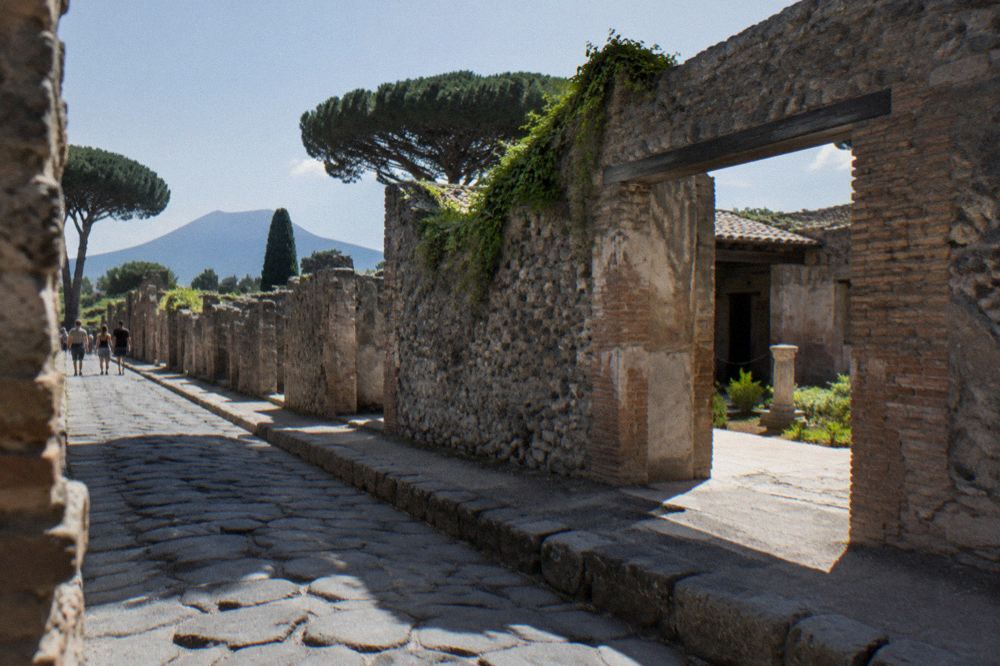
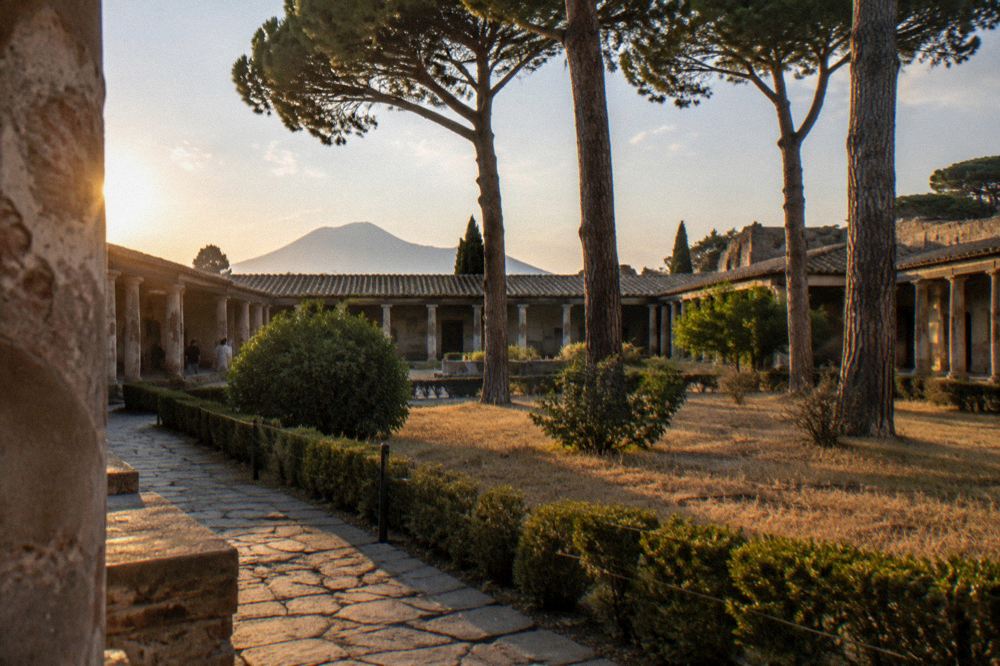
The House of the Surgeon rewards the visitor who has already seen the famous painted rooms and wants the rest of the picture: the working street, the professional household, the city as it was lived in rather than displayed. Enter at Porta Marina, walk the western approach while the morning is cool, and let the doctor's quiet house set the tone before the grander facades take over the afternoon.