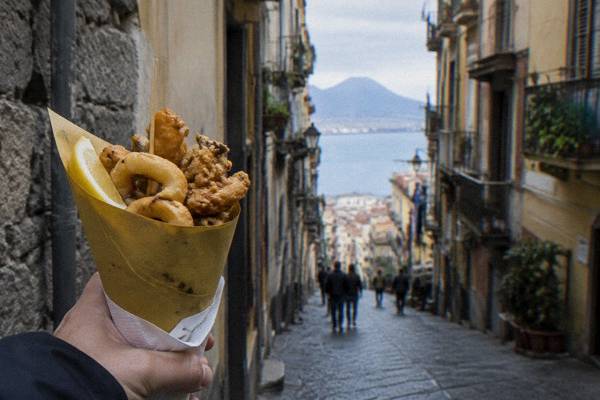
Naples Underground
Beneath the streets of Naples lies a second city of aqueduct tunnels, wartime shelters and catacombs, and it pairs naturally with a day at the buried Roman city of Pompeii.
Short answer
The Naples underground is a network of tunnels beneath central Naples, carved first as a Greek-era aqueduct and later reused as wartime shelter, joined by early Christian catacombs. Naples sits about 24 km by road from Pompeii, with the Circumvesuviana train covering Napoli Garibaldi to Pompei Scavi-Villa dei Misteri in 29 to 35 minutes, so one day can hold both a tunnel tour and the ruins.
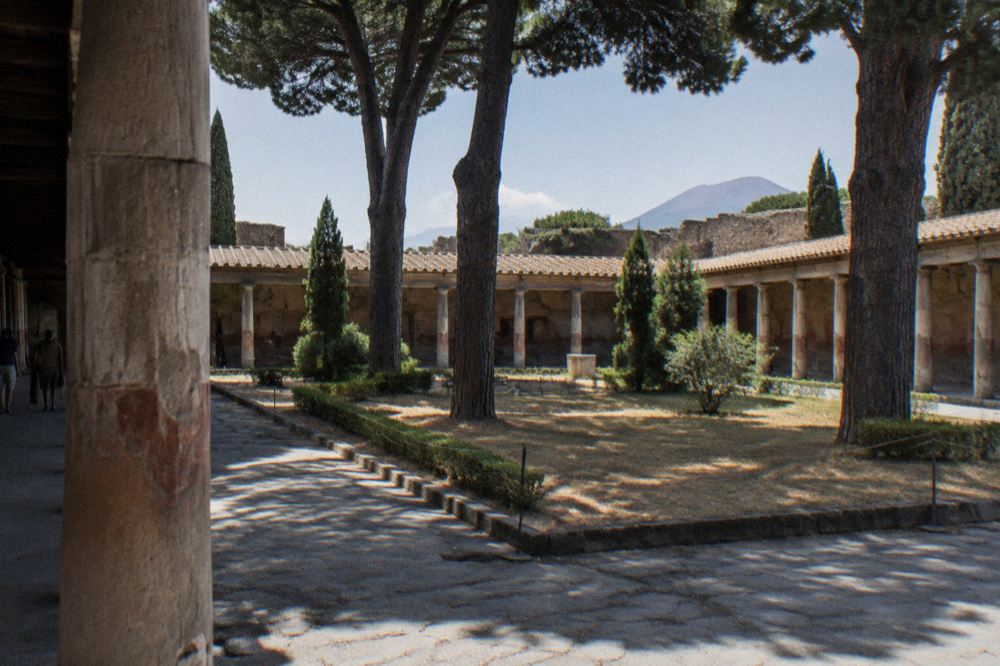
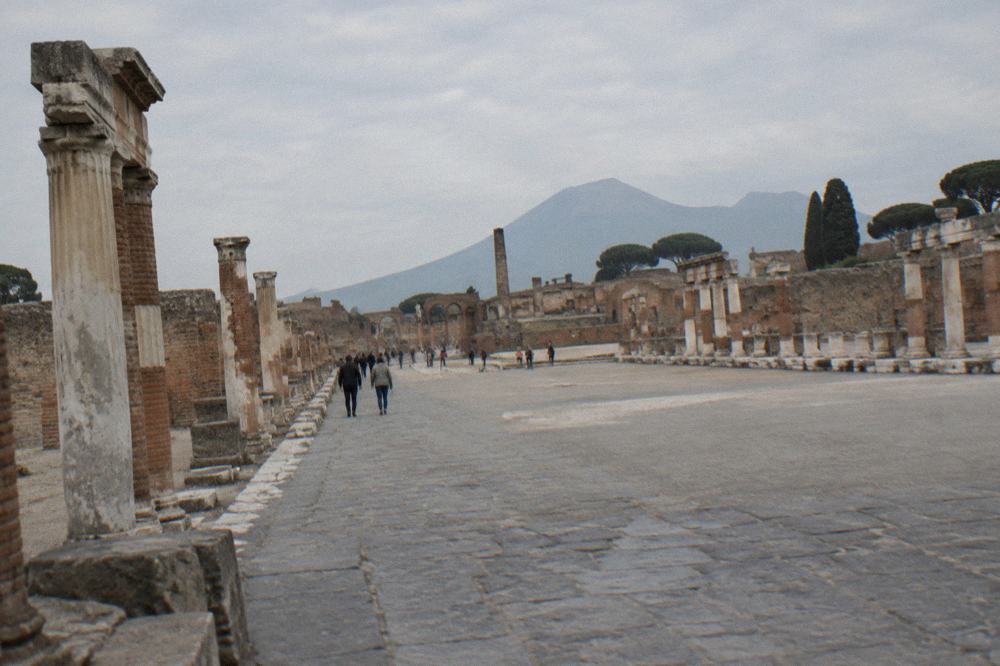
Naples keeps a second city under its pavements, and travellers who come for the buried Roman streets of Pompeii, the archaeological park in Campania, southern Italy, beside the modern town of Pompei and about 24 km by road from Naples, often find that the underground of Naples is the natural second half of the same story. One city was buried by the eruption of Mount Vesuvius in AD 79, traditionally dated to 24 August. The other was hollowed out deliberately, quarry by quarry and tunnel by tunnel, over many centuries, and then reused as an air-raid shelter and a place of burial. This page explains what the Naples underground is, which parts you can walk through, how to reach it from Pompeii or Sorrento, and how to fold it into a day that also includes the ruins.
This guide is written by the editorial desk of Pompeii Travel Guide from official park and operator sources, and every figure below, ticket price, train time and closure date, comes from those pages rather than from second-hand roundups.
What Is The Naples Underground And Why Does It Exist?
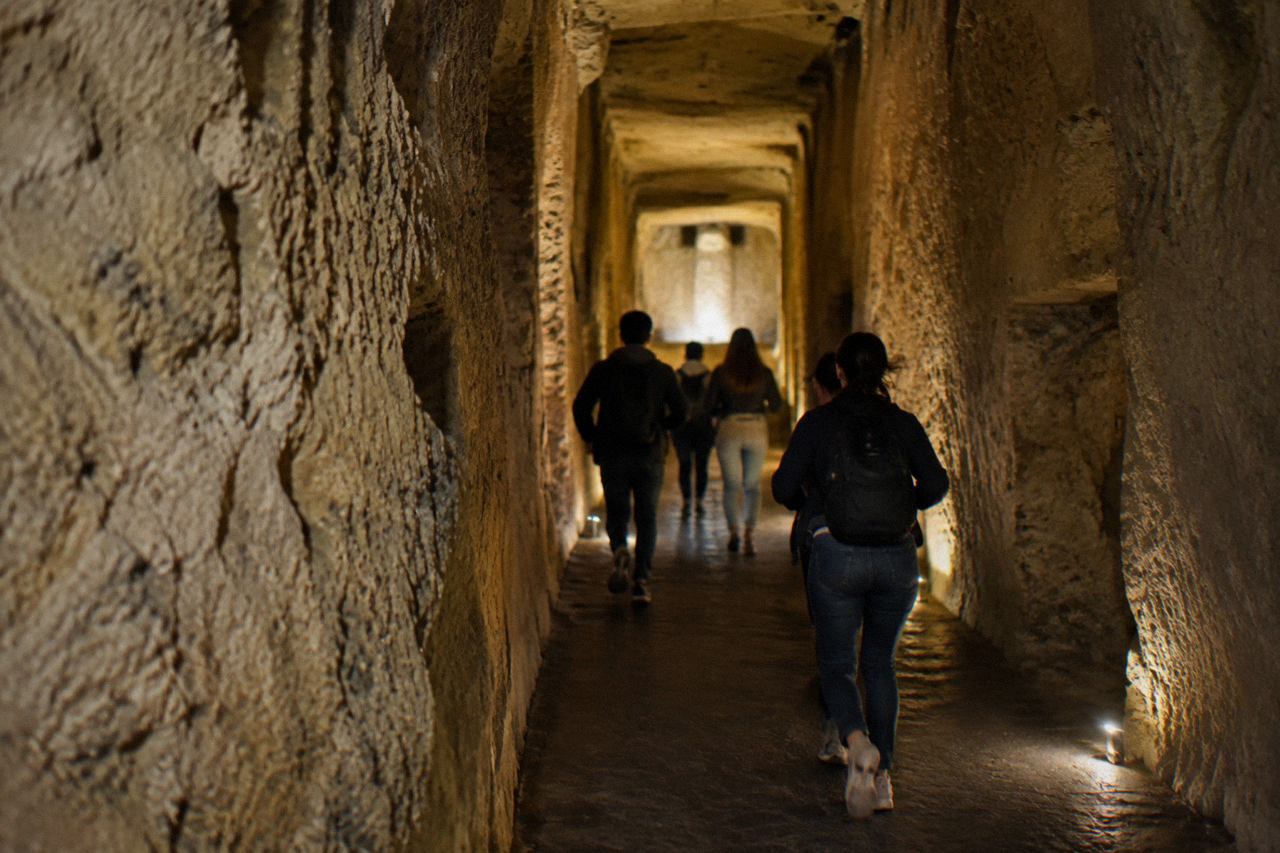
Beneath central Naples lies a man-made maze of tuff tunnels, chambers and cisterns, first cut as an aqueduct in the Greek era of the city, later extended by the Romans, then used for water storage, burial and, during the Second World War, as shelter from bombing raids. It is not a single attraction but a family of separate sites, each with its own entrance, its own tour and its own history.
The tuff links the two halves of this day trip more tightly than any itinerary does: the stone that sheltered wartime Neapolitans was quarried from the debris of the same volcano that buried Pompeii, and the aqueduct tunnels that carry visitors today were cut through it by hand. The tuff is soft enough to carve easily yet hardens on exposure to air, which is exactly why generations of builders kept going back under the city for their stone and their water.
There is no single body that runs everything underground. Some sections are run as guided walks by local associations, the catacombs are managed as a cultural route, and parts of the network, such as the western tunnels, sit beneath working infrastructure. The practical consequence for a visitor is simple: you cannot wander the underground freely the way you wander Pompeii. You join a guided visit, you descend with a group, and the route you get depends on which entrance you chose.
The experience rewards travellers who like their history physical. Walking a cistern corridor that once held the city's drinking water, with the chisel marks of the original cutters still visible in the walls, is a different register of history from standing in a Pompeian street. Both are essential, and the pairing is why so many visitors to the archaeological park add a Naples day. For the full picture of the park side, start with the Naples to Pompeii transport guide.
How Do You Get From Pompeii Or Sorrento To The Naples Underground?
The Circumvesuviana railway connects the excavations to central Naples directly: scheduled times from the operator EAV's own timetable data show Napoli Garibaldi to Pompei Scavi-Villa dei Misteri taking 29 to 35 minutes, with a median of 29, and Napoli Garibaldi to Sorrento taking 64 to 75 minutes. The station for the excavations is Pompei Scavi-Villa dei Misteri, next to the Porta Marina entrance. The Campania Express service is suspended since 1 October 2026, so the local Circumvesuviana trains are the rail option.
Napoli Garibaldi sits directly beneath Napoli Centrale, and the underground sites of central Naples are a short metro or walk away from there, which is why the train pairing works so well. EAV, the operator, announced new trains and a new timetable for the Vesuvian lines on 16 September 2026, so check the operator's own timetable pages before you travel rather than relying on printed schedules.
For travellers deciding where to sleep, the Naples or Sorrento base comparison matters here: basing in Naples makes an underground visit an evening or morning stroll, while basing in Sorrento adds the 34 to 40 minute Circumvesuviana hop from Pompei Scavi to Sorrento at the end of the day. Road routing, from OpenStreetMap data and not an official source, puts Naples 24 km and about 22 minutes' drive from Pompei Scavi, Sorrento 26 km and about 37 minutes, and Rome 234 km and about 2 hours 40 minutes, which is why a Rome-based traveller should think in organised-day-trip terms rather than self-drive.
| Journey | Scheduled time | Source |
|---|---|---|
| Napoli Garibaldi to Pompei Scavi-Villa dei Misteri | 29 to 35 minutes | EAV timetable data |
| Napoli Garibaldi to Sorrento | 64 to 75 minutes | EAV timetable data |
| Pompei Scavi-Villa dei Misteri to Sorrento | 34 to 40 minutes | EAV timetable data |
| Naples to Pompei Scavi by road | 24 km, about 22 minutes | OpenStreetMap routing |
| Sorrento to Pompei Scavi by road | 26 km, about 37 minutes | OpenStreetMap routing |
| Rome to Pompei Scavi by road | 234 km, about 2 hours 40 minutes | OpenStreetMap routing |
Cruising visitors face a different calculation, and the Pompeii cruise ship day itinerary covers the timings. For those with only a Rome hotel and one free day, an organised option such as the Pompeii, Sorrento and Amalfi Coast day trip from Rome exists, and Check availability on the operator's live listing if that is your situation.
Which Parts Of The Naples Underground Can You Actually Visit?
The visitable underground falls into three broad groups: the aqueduct and shelter tunnels under the historic centre, entered on guided walks that descend below street level; the early Christian catacombs, including the Catacombs of San Gennaro with their two levels of burial galleries; and the modern art stations of the Naples metro, where descending a commuter escalator doubles as visiting a commissioned artwork. Each is a separate ticket and a separate experience, and none of them is part of the Pompeii archaeological park.
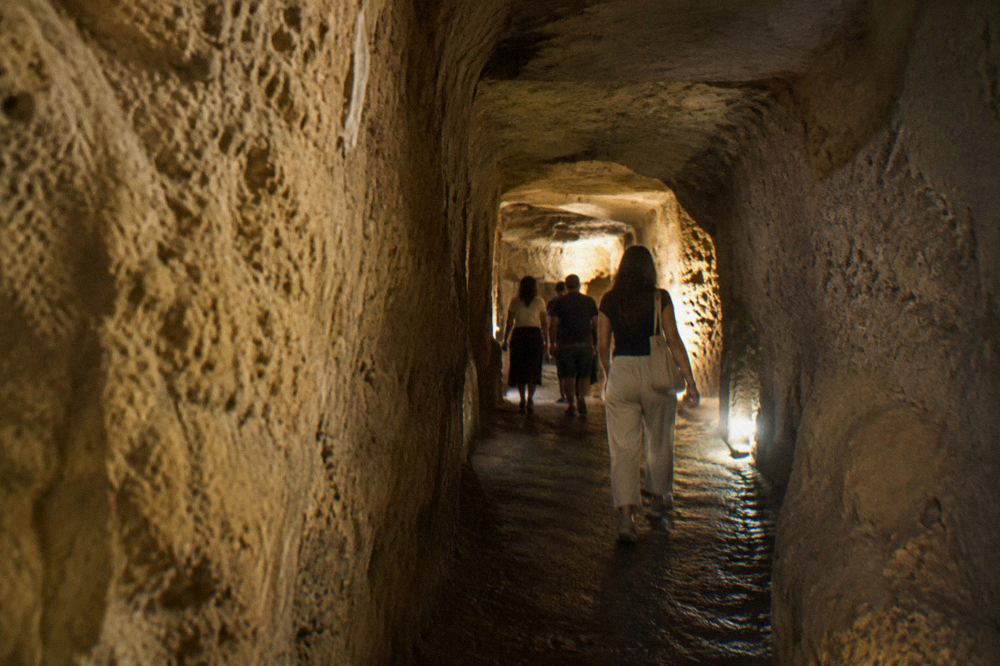
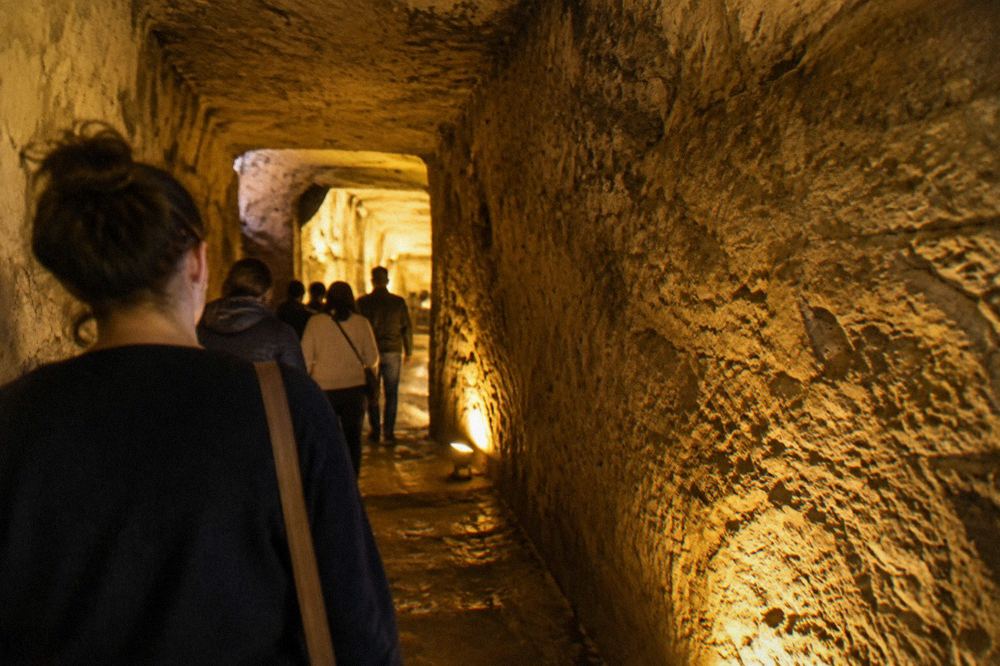
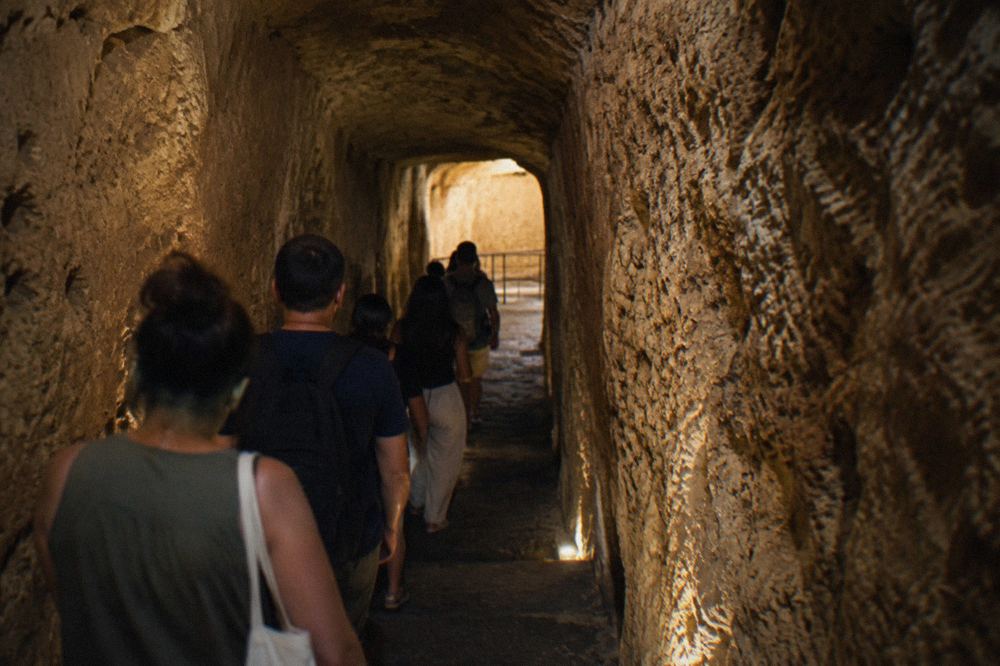
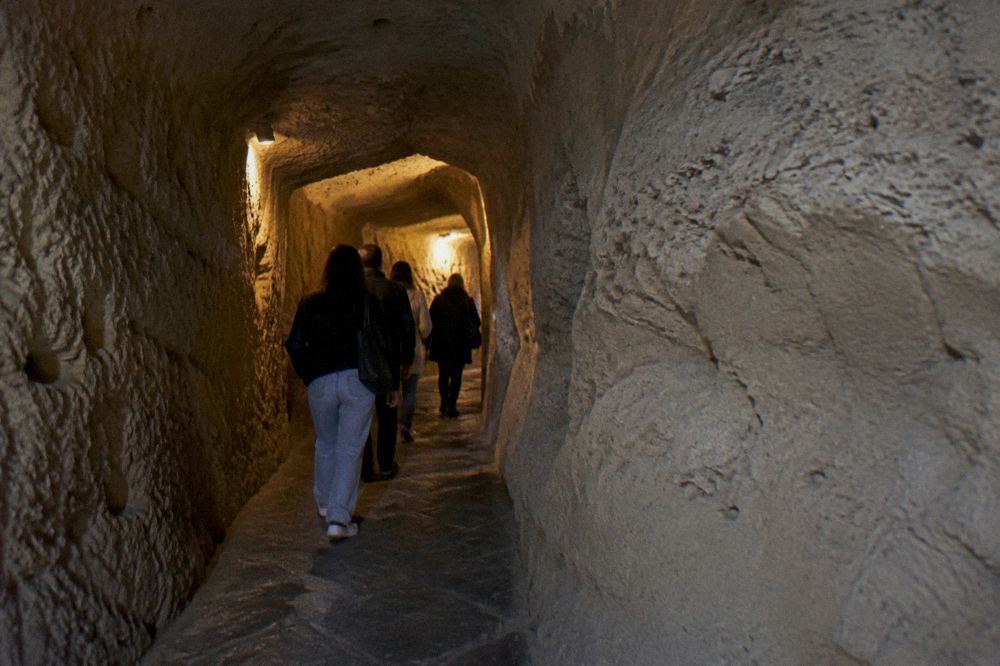
The historic-centre tunnels are the classic visit. You descend by stairway, sometimes by candle, into the network that supplied Naples with water for centuries and that families used as shelter during bombing raids in the Second World War, with hand-dug recesses and improvised bedding niches still visible along the walls. Parts of the route involve narrow passages and, in some sections, shallow water, so footwear and a jacket matter more than they do on a Pompeii street.
The catacombs sit a little outside the dense centre, on the Sanita side of the city, and form part of a wider cultural route through early Christian Naples. San Gennaro, the city's patron, was venerated here before his relics moved, and the galleries cut into the tuff run on two levels, wide and airy by catacomb standards rather than cramped. Visitors who want the full above-ground context of the city's churches, street food and sprawl should read what not to miss in Naples alongside this section.
The metro art stations are the third, easiest and cheapest-tasting slice of the underground. Several stations on the network double as galleries of contemporary commissioned work, and one of them is widely cited among the most striking underground spaces in Europe.
| Underground site | Type of experience | Access | Guidance in this guide |
|---|---|---|---|
| Historic-centre aqueduct and shelter tunnels | Guided walk below street level, stairway descent | Tour ticket with a private operator | Operator's site is the price authority |
| Catacombs of San Gennaro | Early Christian burial galleries on two levels | Ticketed cultural route visit | Allow a half morning |
| Metro art stations | Commissioned artworks inside working stations | Standard metro ticket | Open during metro hours |
| Bourbon-era tunnels beneath the palace district | Vaulted gallery tours of the historic tunnel | Separate ticketed tour | Distinct from the aqueduct walks |
How Difficult Is The Naples Underground For Visitors With Children Or Limited Mobility?
The historic-centre tunnel walks are genuinely physical: they involve steep stairways, narrow corridors, low ceilings and, on some routes, shallow standing water, and they are unsuitable for wheelchair users and hard work for small children. The catacombs are more forgiving, with wider galleries, while the metro art stations are fully step-free in the ordinary way a modern metro is. Pompeii, by contrast, offers its own accessibility route, with entry at Piazza Anfiteatro and an exit option at Piazza Esedra via the Antiquarium lift.
That contrast is worth planning around, because a family that manages the park's accessible route in the morning may not want candle-lit corridors in the afternoon. The park's regulations page describes the "Pompeii for All" route for visitors with mobility difficulties, entering at Piazza Anfiteatro, and the same page sets the bag limit at 30x30x15 cm, which matters because the same small-daypack discipline that serves you in the ruins serves you underground.
Families doing both sites in one stretch should also read the dedicated guidance on how long to spend in Pompeii and pair it with honest expectations below ground: the underground rewards sturdy shoes, a light layer and a tolerance for tight spaces. Anyone who finds narrow passages uncomfortable should choose the catacombs or the art stations, both of which deliver the buried-city idea without the squeeze.
Can You Combine The Naples Underground With Pompeii In One Day?
Yes, the pairing works well: the Circumvesuviana links Pompei Scavi-Villa dei Misteri with Napoli Garibaldi in 29 to 35 minutes, and the underground walks in the historic centre sit a short transfer from that station, so a morning at the ruins followed by an afternoon tunnel visit is the practical shape. The one hard constraint is Pompeii's timed entry system, which splits the day into a 9:00 to 13:00 band capped at 15,000 visitors and a 13:00 to 17:30 band capped at 5,000.
Those caps come straight from the park's timetables page for the 16 March to 14 October season, with the morning band divided into 12,000 Express and 3,000 Plus entries, and the afternoon into 3,000 and 2,000. Since 15 November 2024 the park has also operated nominative tickets and a 20,000 visitors-per-day cap, so booking ahead is not a courtesy, it is the mechanism that guarantees your slot. ID may be checked at every entry, and tickets are non-transferable. Reversing the day and ending among Roman streets rather than beneath Neapolitan ones is equally workable.
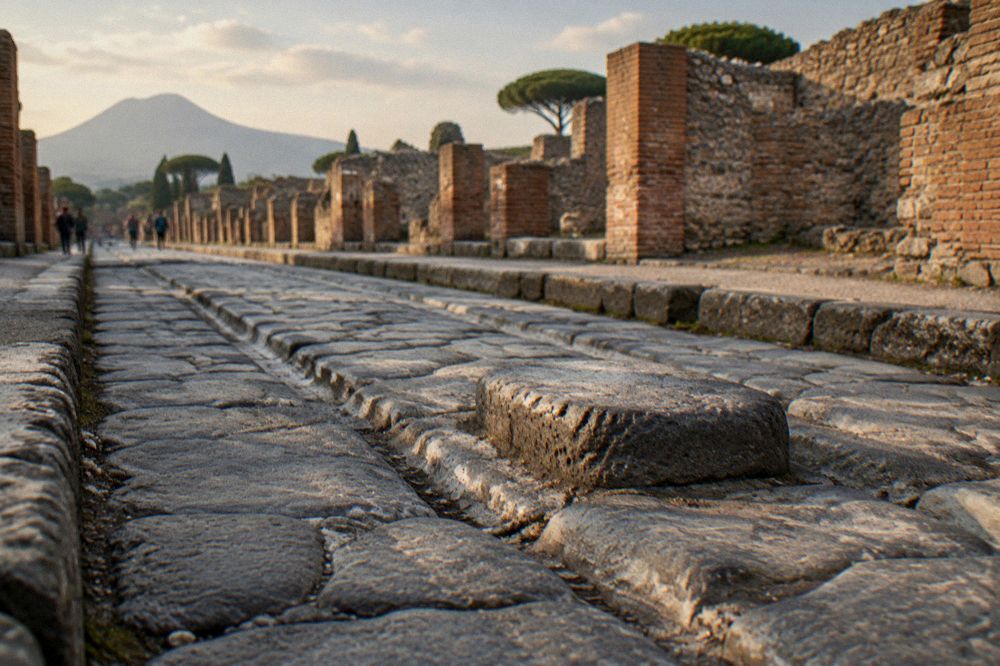
A realistic single day looks like this: an early Circumvesuviana train from Naples, a morning inside the excavations entering at Porta Marina, Piazza Esedra or Piazza Anfiteatro, a return train around mid afternoon, and an evening underground walk when the historic centre is at its most atmospheric. In the summer season the park closes at 19:00 with last entrance at 17:30, while from 15 October to 15 March last entrance pulls back to 15:30 and closing to 17:00, which makes the winter version of the day tighter at the ruins end and easier at the Naples end.
| Pompeii season (from the park's timetables page) | Opening | Last entrance | Closing |
|---|---|---|---|
| 16 March to 14 October | 9:00 | 17:30 | 19:00 |
| 15 October to 15 March | 9:00 | 15:30 | 17:00 |
| Daily entry band (16 March to 14 October) | Total cap | Express share | Plus share |
|---|---|---|---|
| 9:00 to 13:00 | 15,000 | 12,000 | 3,000 |
| 13:00 to 17:30 | 5,000 | 3,000 | 2,000 |
If one day in the ruins is not enough, the fuller question of whether Pompeii can be a day trip from Naples and the deeper two-day Pompeii, Herculaneum and Vesuvius itinerary both cover the trade-offs.
What Does A Naples And Pompeii Combination Cost In 2026?
Pompeii's 2026 tickets run EUR 20 for the Express, EUR 25 for Pompeii+, EUR 30 for the three-day ticket, and EUR 45 for the annual MyPompeii Card, with EUR 2 reduced entry for EU citizens aged 18 to under 25, free entry for under 18s, and free entry for everyone on the first Sunday of the month. These prices end on 31 December 2026: from 1 January 2027 a single EUR 25 ticket covers all park sites. Underground Naples prices are set by private operators.
The 2027 change, announced by the park on 14 September 2026, is worth knowing even if you travel this year, because any article that quotes you a 2026 price without the date is quoting you a price with an expiry. The three smaller park sites, Oplontis, the Stabiae museum and Boscoreale, stay EUR 8 individually under both systems, and the MyPompeii Card stays EUR 45. Nominative tickets and the 20,000 daily cap are retained.
| Ticket (2026, in force from 12 January 2026) | Price | Covers |
|---|---|---|
| Pompeii Express | EUR 20 | Ancient city only |
| Pompeii+ | EUR 25 | City, suburban villas route, Villa Regina, Antiquarium Boscoreale, shuttle |
| 3-day ticket | EUR 30 | Pompeii+ plus Oplontis, the Stabiae villas and museum, Boscoreale |
| Other park sites individually | EUR 8 | Oplontis, Stabiae museum, Boscoreale |
| MyPompeii Card (annual) | EUR 45 (EUR 10 reduced) | Annual park access |
| Reduced, EU citizens 18 to under 25 | EUR 2 | Proof required |
| Under 18 | Free | Applies to all tickets |
| First Sunday of the month | Free for everyone | Park policy, year-round |
Neighbouring sites follow their own price lists, and travellers adding Herculaneum or Vesuvius to the underground day should budget separately: Herculaneum is EUR 16 full with EUR 2 reduced, opens at 8:30 and, in the 16 March to 14 October season, takes its last entry at 18:00 before closing at 19:30, while the Vesuvius Gran Cono trail sells timed online-only tickets at EUR 11.68 full and EUR 9.55 reduced as sold, bookable 30 days ahead. Herculaneum's Villa dei Papiri and Ancient Theatre are both closed for works, so plan that visit around the open housing blocks and boat sheds. The Herculaneum tickets guide holds the detail.
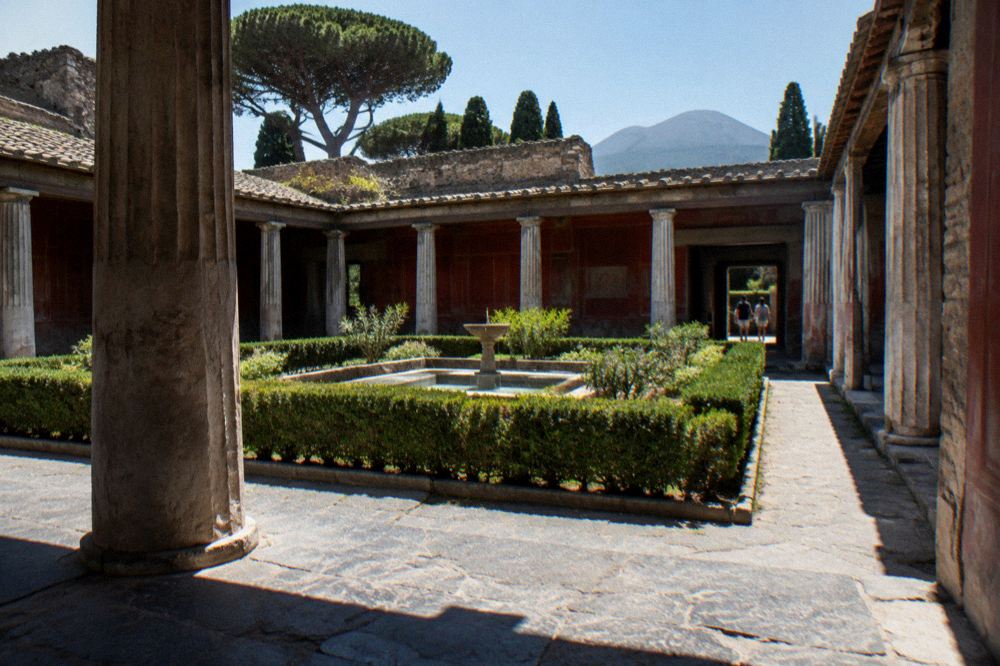
One cost that trips people up is the suburban villas add-on: Express holders can add the villas route for EUR 8, card payment only, at the Porta Ercolano / Street of the Tombs entrance, which is the only place that transaction happens. That route covers the Villa of the Mysteries and Villa of Diomedes, and the Villa of the Mysteries guide explains what you get for it.
What Else Should You See In Naples Around The Underground Visit?
The strongest complements are the National Archaeological Museum of Naples, which holds frescoes and mosaics lifted from Pompeii and Herculaneum, the historic centre's street-food lanes, and the seafront castles, all reachable on foot or one metro ride from the underground entrances. The museum question visitors ask is sequencing, and the standard advice is the museum either before the ruins, to learn what you are about to see, or after, to see the detached masterpieces in the comfort of a gallery.
The museum connection is not incidental: the finest wall paintings and mosaics from both buried cities ended up in Naples, so a underground-plus-museum day delivers the subterranean story and the buried-city art in a single city centre. The dedicated Naples National Archaeological Museum guide covers the collections, and the question of whether to visit the museum before or after Pompeii is answered at length on its own page.
The city rewards walkers in a way few others do, and a free, tip-based walk is a genuine budget option for the surface city. The Original Free Tour of Naples, Discover the Old Town with local guides, is run through GuruWalk by local guides and covers the old town on a pay-what-you-tip basis. It is a walk of Naples, not of Pompeii: no English-language free walk of the excavations exists, so do not mistake it for one. Beyond it, the street-food lanes are the other classic Naples hour, and the street food walking tour with a local guide is the bookable version of that wander.
For travellers digging further into the region's buried and volcanic themes, why Naples was not destroyed by Vesuvius answers the question this day trip inevitably raises, and the wider Naples day-trip page collects the coastal alternatives such as Capri and the Amalfi Coast.
When Is The Best Time Of Year For A Naples Underground And Pompeii Day?
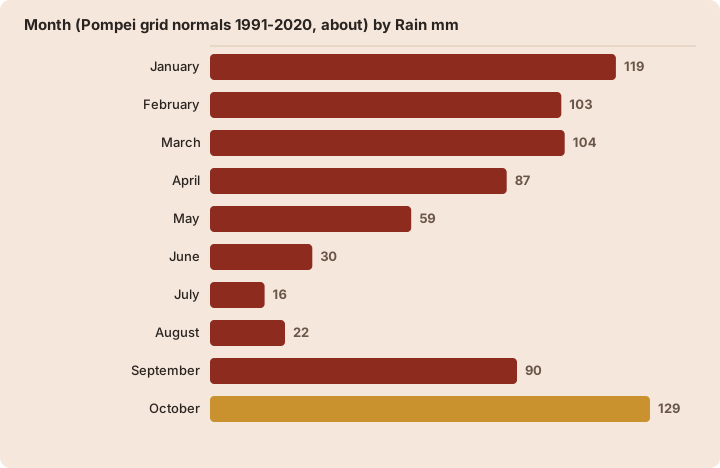
Pompei's climate, from Open-Meteo 1991-2020 grid normals rather than a weather station, runs from about 12.2 C average daily maxima in January to about 29.4 C in August, with November the wettest month at about 180 mm of rain and July the driest at about 16 mm, so spring and autumn give the pleasant overlap of warm streets and cooler tunnels, while high summer makes the underground's constant cool a relief and winter makes it the reliable half of the day.
The underground holds a steady temperature year round, which inverts the outdoor logic: on an August afternoon, when the excavations' unshaded stone pushes toward that 29.4 C average maximum, a tunnel walk is the cool half of the plan, while in February, when average nightly minima sit around 6.5 C, the tunnels are the warm refuge. Rain matters less underground than at the park, and the Vesuvius Gran Cono trail closes automatically on orange weather alerts or above, so a wet-day plan might swap the crater for the catacombs.
| Month (Pompei grid normals 1991-2020, about) | Mean daily max C | Mean daily min C | Rain mm |
|---|---|---|---|
| January | 12.2 | 6.6 | 119 |
| February | 12.6 | 6.5 | 103 |
| March | 14.9 | 8.1 | 104 |
| April | 17.7 | 10.4 | 87 |
| May | 21.6 | 14.1 | 59 |
| June | 25.8 | 18.2 | 30 |
| July | 28.7 | 21.1 | 16 |
| August | 29.4 | 21.8 | 22 |
| September | 25.3 | 18.6 | 90 |
| October | 21.3 | 15.1 | 129 |
| November | 16.9 | 11.5 | 180 |
| December | 13.2 | 8.0 | 147 |
Crowd logic points the same way. The park's own monthly counts for 2024 show May peaking at 516,923 visitors and October close behind at 481,255, against 112,121 in January, so the shoulder months that give you mild weather also give you the fullness the site's caps were designed for. Book the timed entry and the tunnel tour for the same morning you book the train, and the rest of the day takes care of itself. The best month to visit Naples question covers the city side of the same decision.
Common Questions About The Naples Underground
What is the Naples underground?
It is a network of tuff tunnels, cisterns and catacombs beneath central Naples, first cut as a Greek-era aqueduct, extended under the Romans, later used for burial and as Second World War shelter, and today visited on guided walks and through separate catacomb and metro-art sites.
Can you visit the Naples underground and Pompeii on the same day?
Yes. The Circumvesuviana links Pompei Scavi-Villa dei Misteri with Napoli Garibaldi in 29 to 35 minutes, so a morning in the excavations and an afternoon or evening tunnel walk is a standard pairing, with the park's timed entry bands the only real constraint.
Is the Naples underground suitable for children and wheelchair users?
The aqueduct tunnel walks involve steep stairs, narrow passages and on some routes shallow water, so they suit neither wheelchair users nor very small children. The catacombs are wider and easier, and the metro art stations are step-free in the ordinary way a modern metro is.
How much does the Naples underground cost?
The Pompeii side of the day costs EUR 20 to EUR 30 in 2026 depending on the ticket, changing to a single EUR 25 ticket from 1 January 2027.
Which Naples underground site should I choose if I only have time for one?
Choose the historic-centre aqueduct and shelter tunnels for the fullest sensory experience of the buried city, the Catacombs of San Gennaro for early Christian history in wider galleries, or a metro art station if you want the underground with no booking at all.
Buried twice over, once by volcano and once by centuries of city building, Pompeii and Naples between them offer the deepest single day of ancient history in Campania, and the underground is the half that visitors regret skipping. Pick your tunnel, book your timed entry at the park, and let the Circumvesuviana do the connecting.