Are There Toilets In Pompeii?
Yes, the archaeological park of Pompeii in Italy has modern visitor toilets. This guide covers where to find facilities, what to expect, and how to plan comfort stops on ancient stone streets.
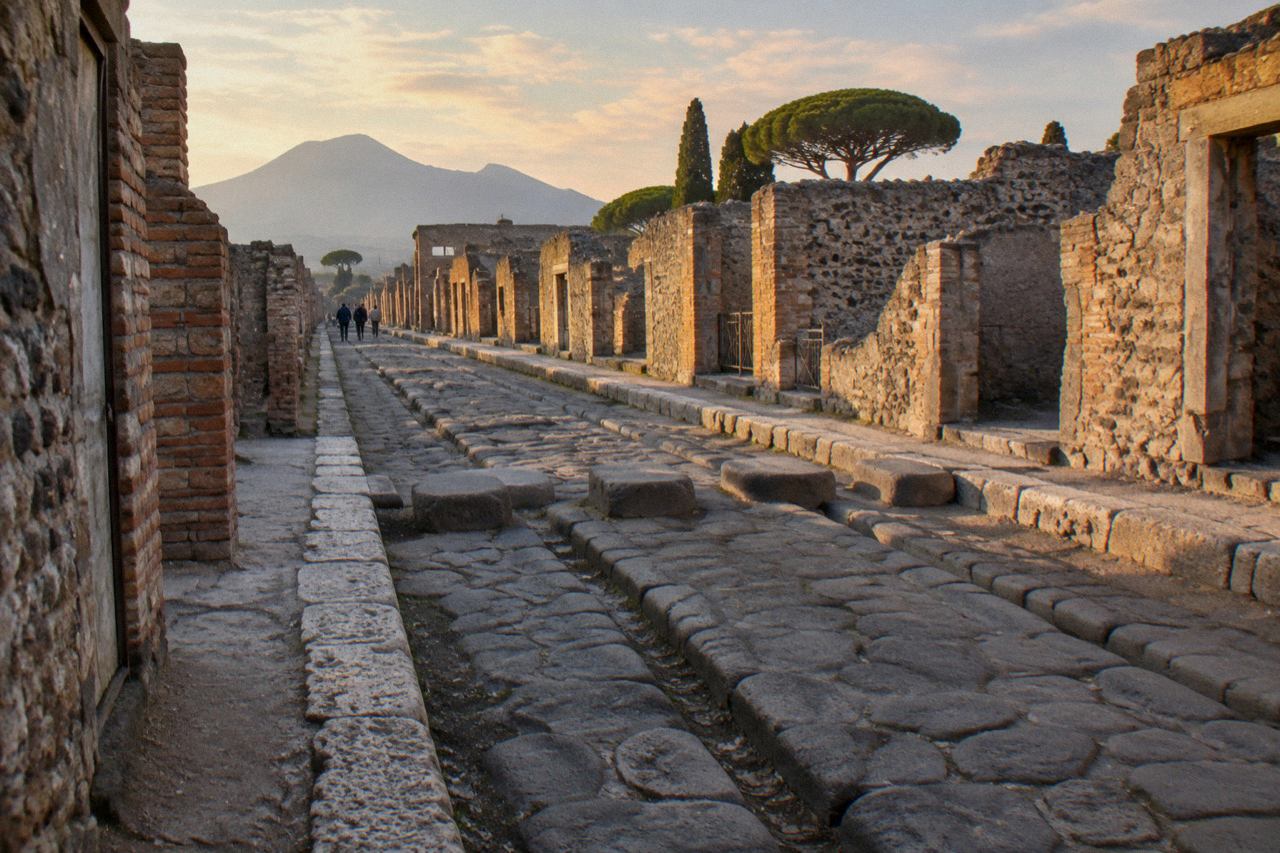
Pompeii, the ancient Roman city buried by the eruption of Mount Vesuvius in AD 79, is today an archaeological park in Campania, southern Italy, beside the modern town of Pompei and about 24 km by road from Naples. It is a vast open-air site of stone streets, ruined houses and scorched plaster, and visitors planning a day there reasonably wonder about the most basic facility of all. The short answer is reassuring: the park has modern toilets for visitors, distributed among its visitor areas, and a visit does not need to turn into an endurance exercise.
This page covers the modern facilities, the fascinating ancient latrines you will walk past, the practical rules that shape a comfort stop (including the park's strict bag policy), and how a planned route keeps toilets within reach. For the dedicated deep-dive on every facility in the park, see the companion guide to Pompeii toilets and visitor facilities.
Are There Toilets In Pompeii?
Yes. The archaeological park of Pompeii provides modern visitor toilets inside the site, placed at its visitor areas and entrance zones, and they are included with entry, so there is no extra charge. The park spreads across a large excavated area, so the practical point is not whether toilets exist but where the next one sits on your route, and that depends on which entrance you use and how far you wander from the main visitor spine.
The park operates under the Parco Archeologico di Pompei, and its visitor infrastructure has grown alongside its visitor numbers, which reached 4,069,377 at the Pompeii site in 2024 and 4,000,090 in 2025. A site receiving roughly four million people a year cannot function without modern sanitation, and it does not try to. Toilets sit at the visitor zones near the ticket-office entrances of Porta Marina, Piazza Esedra and Piazza Anfiteatro, together with the catering points.
What surprises many first-time visitors is the other kind of toilet in Pompeii: the ancient ones. The city contains Roman public latrines, marble-seated benches with a channel of running water beneath, and private toilets in houses and bath complexes. They are among the most photographed and most grimaced-at features of the ruins, and they say a great deal about Roman daily life. Those ancient latrines are, of course, strictly look-don't-use.
A sensible plan therefore has two layers: know where the modern facilities are by checking park signage as you enter, and know your own route. The site's streets are uneven Roman paving, which brings its own challenges, covered in detail in how difficult it is to walk in Pompeii.
Where Are The Modern Toilets Inside The Pompeii Park?
The modern toilets sit at the park's visitor areas: the zones around the three ticket-office entrances, Porta Marina, Piazza Esedra and Piazza Anfiteatro, together with the areas around the site's catering points. The park does not publish a fixed toilet map, so on arrival the reliable method is the entrance signage and staff, and the honest planning assumption is that facilities cluster at the edges and the catering zones rather than deep inside the ruins.
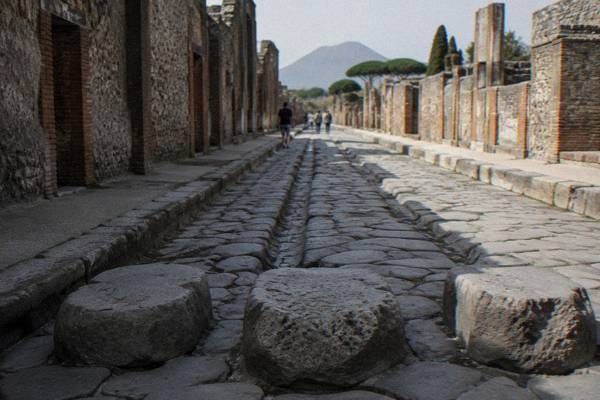
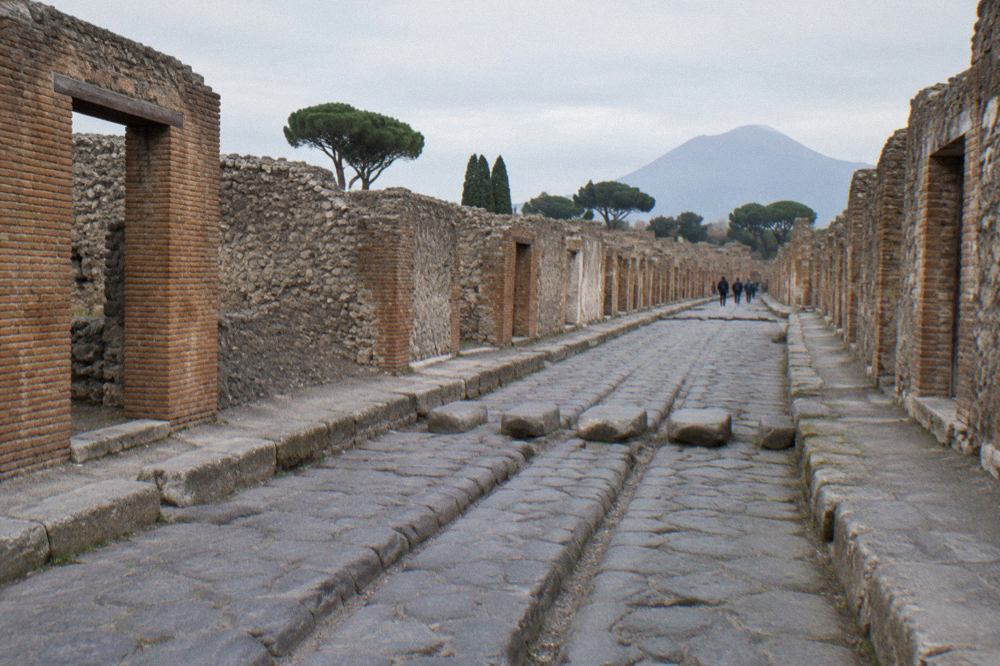
Treat that as a routing fact. The excavated area covers 44 ha, and the ancient streets inside it run long, straight and sun-baked. If you enter at Porta Marina, walk the length of the city to the amphitheatre end and only then realise you need a toilet, you are looking at a long walk back along Roman cobbles. The visitors who fare best build their route around one or two comfort stops at the visitor zones rather than hoping for a facility at every corner.
The park's own regulations page and timetables page, maintained at pompeiisites.org, are the authoritative sources for current visitor services, and staff at the ticket offices will point you to the nearest facility on the day. What the official pages also make clear is the rest of the practical picture: the park permits bags up to 30 x 30 x 15 cm and sends anything larger to left luggage, and tickets are nominative and checked against ID at entry.
| Facility at the Pompeii park | What the official information states |
|---|---|
| Modern visitor toilets | Available at the visitor areas and entrance zones; included with entry |
| Water and refreshment | Catering points within the site; see on-site signage for locations |
| Bag policy | Bags up to 30 x 30 x 15 cm permitted; larger bags go to left luggage |
| Left luggage | Provided for oversize bags per the park's visitor regulations |
| Daily visitor cap | 20,000 visitors per day, in force since 15 November 2024 |
| Opening (16 Mar to 14 Oct) | Opens 9:00, last entrance 17:30, closes 19:00 |
| Opening (15 Oct to 15 Mar) | Opens 9:00, last entrance 15:30, closes 17:00 |
One point worth knowing before you plan the day: the Artebus shuttle, which serves the wider park area, has luggage storage on board, which matters if you arrive from Naples or Sorrento with a suitcase you cannot take inside. Storage options around the site are covered on the facilities guide linked above.
A guided structure helps here more than people expect.
What Are The Toilets At Pompeii Actually Like?
Visitor reviews and the park's own service standards describe functional, maintained Western-style toilets at the visitor zones, not luxury facilities: expect the ordinary conditions of a very high-volume heritage site, with queues at peak times and at the lunch period. They are a world away from the ancient latrines a few streets away, and the gap between the two is part of what makes Pompeii such an unusual place to spend a day.
The honest framing is that Pompeii is an archaeological site first and a visitor attraction second. Toilets are housed in the modern service buildings at the entrance areas and catering points, and they serve enormous numbers in summer. In July and August the mean daily maximum temperature at the site runs about 28.7 and 29.4 C respectively, the site is largely unshaded, and hydration plus toilet planning go together: the more water you correctly drink, the more you need to know where the facilities are.
Peak crowding is predictable from the park's own published visitor data. May 2024 saw 516,923 visitors at the Pompeii site, October 481,255 and September 468,340, against 112,121 in January. A February weekday and an August holiday feel like different parks entirely. The time-slot system softens the crush at entry: from 16 March to 14 October the 9:00-13:00 window admits up to 15,000 visitors and the 13:00-17:30 window up to 5,000.
| Pompeii site month (2024 published data) | Visitors |
|---|---|
| May | 516,923 |
| October | 481,255 |
| September | 468,340 |
| April | 466,344 |
| July | 449,162 |
| August | 421,255 |
| January | 112,121 |
Practical advice that follows from the numbers: use the toilets at your entrance before you start, carry the permitted small bag with water, and time your mid-visit stop to a catering zone rather than the far end of the excavations. Visitors combining Pompeii with the wider region on a tight schedule, a question covered in the best tour for Pompeii, should note that guided groups usually build in a facilities stop.
Can You Use The Ancient Roman Toilets At Pompeii?
No, and nothing could be further from the point. The ancient latrines of Pompeii are archaeological remains, fenced or barriered where needed, and strictly for viewing: marble or stone bench seats with holes cut at intervals, a deep drainage channel below, and in the best-preserved cases the channels that once carried water through. They are two thousand years old, and they are among the most vivid everyday-life exhibits in the whole city.
Roman public latrines were communal by design: a row of users sat side by side on the bench, with nothing between them, and a channel of water running beneath the seats carried waste away into the drainage system. Pompeii preserves examples attached to the bath complexes and public buildings, and private houses had their own small toilets, often positioned near the kitchen or the service areas. The Stabian Baths, one of the city's great bathing complexes, are a good place to see how sanitation and bathing infrastructure intertwined; the dedicated Stabian Baths guide walks through them.
What the remains demonstrate is engineering, not just plumbing. The city's water supply, fed by an aqueduct and distributed through lead pipes and water towers that still stand along the streets, served fountains at street corners, baths, private houses and those latrine channels. A corner fountain is never far away on a Pompeii street, and the fountains are a large part of why Roman urban life here functioned at the density the ruins reveal.
Do not treat any of it as operational. The modern fountains and taps you may encounter at visitor areas are the park's additions; the ancient network is drained, dry and protected. The same respect rule covers the whole site, and it is enforced: the regulations prohibit removing material, flying drones without authorisation and entering barriered areas.
How Do You Plan Toilet Stops Around A Pompeii Visit?
Plan one stop at your entrance before starting, one at a mid-route catering zone, and one at your exit, and choose your entrance with your route in mind: Porta Marina on the Naples side, Piazza Esedra in the centre, Piazza Anfiteatro at the eastern end near the amphitheatre, with the Porta Ercolano / Street of the Tombs entrance serving the suburban villas route. Four hours between facilities is the wrong target on a hot day.
Ticket structure shapes the day too. In 2026 the Pompeii Express ticket covering the ancient city costs EUR 20, the Pompeii+ ticket covering the city plus the suburban villas route and associated sites EUR 25, and the 3-day ticket EUR 30; those prices end on 31 December 2026, when a single EUR 25 ticket for all park sites, valid 30 days with one entry per site, takes over, while the three smaller sites stay at EUR 8 individually and the MyPompeii Card stays at EUR 45. Entry is free for under-18s and for everyone on the first Sunday of the month, which is exactly the day the site is at its most crowded and the facilities most in demand: the park has recorded more than 36,000 visitors on a single free first Sunday.
Reduced EUR 2 entry applies for EU citizens aged 18 to under 25. None of these figures change where the toilets are, but they change how long the queues at them will be.
| Planning factor | 2026 figure | Note |
|---|---|---|
| Pompeii Express ticket | EUR 20 | Ancient city only |
| Pompeii+ ticket | EUR 25 | Adds suburban villas route and partner sites |
| 3-day ticket | EUR 30 | Adds Oplontis, Stabiae villas and Boscoreale |
| Smaller park sites | EUR 8 each | Oplontis, Stabiae museum, Boscoreale |
| From 1 January 2027 | EUR 25 single ticket | All park sites, 30 days, one entry per site |
| Free entry | Under 18; all on first Sundays | First Sundays draw the largest crowds |
Travellers arriving with luggage should know the 30 x 30 x 15 cm bag limit before they reach the gate, not at it. Arriving from Naples without a tour, the round-trip shuttle bus is a popular transport option that pairs with a planned entrance-side stop.
What Else Should You Know About Facilities At Pompeii?
Beyond toilets, the park's visitor services include catering points inside the site, left luggage for oversize bags, water fountains at visitor areas, and the accessible "Pompeii for All" route, which lets visitors with mobility difficulties enter at Piazza Anfiteatro and exit at Piazza Anfiteatro or Piazza Esedra via the Antiquarium lift. The site has no weekly closing day, closing only 25 December and 1 January unless otherwise communicated.
The accessibility route matters for facility planning because it defines a specific, supported path through the park rather than the full cobblestone network. Families weigh the same trade-offs, and the practicalities of routes, shade and stops are shared with the wider question of whether to tour Pompeii on your own, where pacing and route choice do the real work.
Two seasonal notes finish the picture. Winter hours from 15 October to 15 March (last entrance 15:30, close 17:00) compress the day, so facility stops need to be earlier than in summer. And the closure list changes: the Praedia of Julia Felix has been closed to the public since 7 September 2026 for maintenance, a reminder that individual buildings open and close while the visitor services continue.
Common Questions About Toilets In Pompeii
Are there toilets in Pompeii?
Yes. The archaeological park of Pompeii in Italy has modern visitor toilets at its visitor areas and entrance zones, included with entry. Plan stops around the entrances and catering points rather than expecting facilities deep inside the ruins.
Do the Pompeii toilets cost money?
No separate charge is published for the visitor toilets; they are part of the park's standard visitor services, which are covered by your entry ticket.
Can you use the ancient Roman latrines?
No. The ancient latrines are archaeological remains, viewed from behind barriers where provided. They are among the site's most interesting everyday-life exhibits, but they are two thousand years old and strictly not functional.
Where are the toilets located inside the site?
The park does not publish a fixed toilet map. Facilities sit at the visitor zones around the ticket-office entrances of Porta Marina, Piazza Esedra and Piazza Anfiteatro, together with the catering points; check signage and staff directions on arrival.
Are there queues for the toilets at Pompeii?
At peak times, yes. On summer days and free first Sundays, when the park has recorded more than 36,000 visitors, expect queues at the busiest facilities, and time your stops to the entrance zones outside the midday peak.
Does Pompeii have left luggage for big bags?
Yes. Bags larger than the permitted 30 x 30 x 15 cm go to left luggage under the park's visitor regulations, and the Artebus shuttle provides luggage storage on board.
The practical summary is straightforward. Yes, there are toilets in Pompeii, modern and included with entry, at the visitor zones. Build your route around two or three stops at those zones, respect the bag size limit, drink more water than feels necessary in summer, and give the ancient latrines the fascinated look they deserve from the right side of the barrier. That is the whole art of a comfortable day among the ruins of Pompeii Travel Guide's favourite subject.