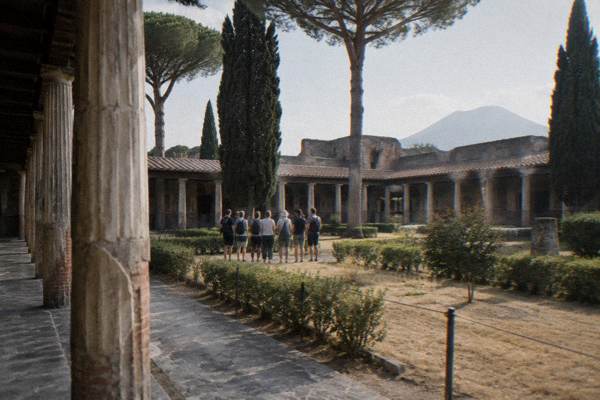
Can You Visit Pompeii And See The Bodies?
Yes, you can see the body casts of Pompeii on a normal visit to the archaeological park in Campania, Italy. This guide explains where the casts are, what they are made of, and how to plan a visit around them.
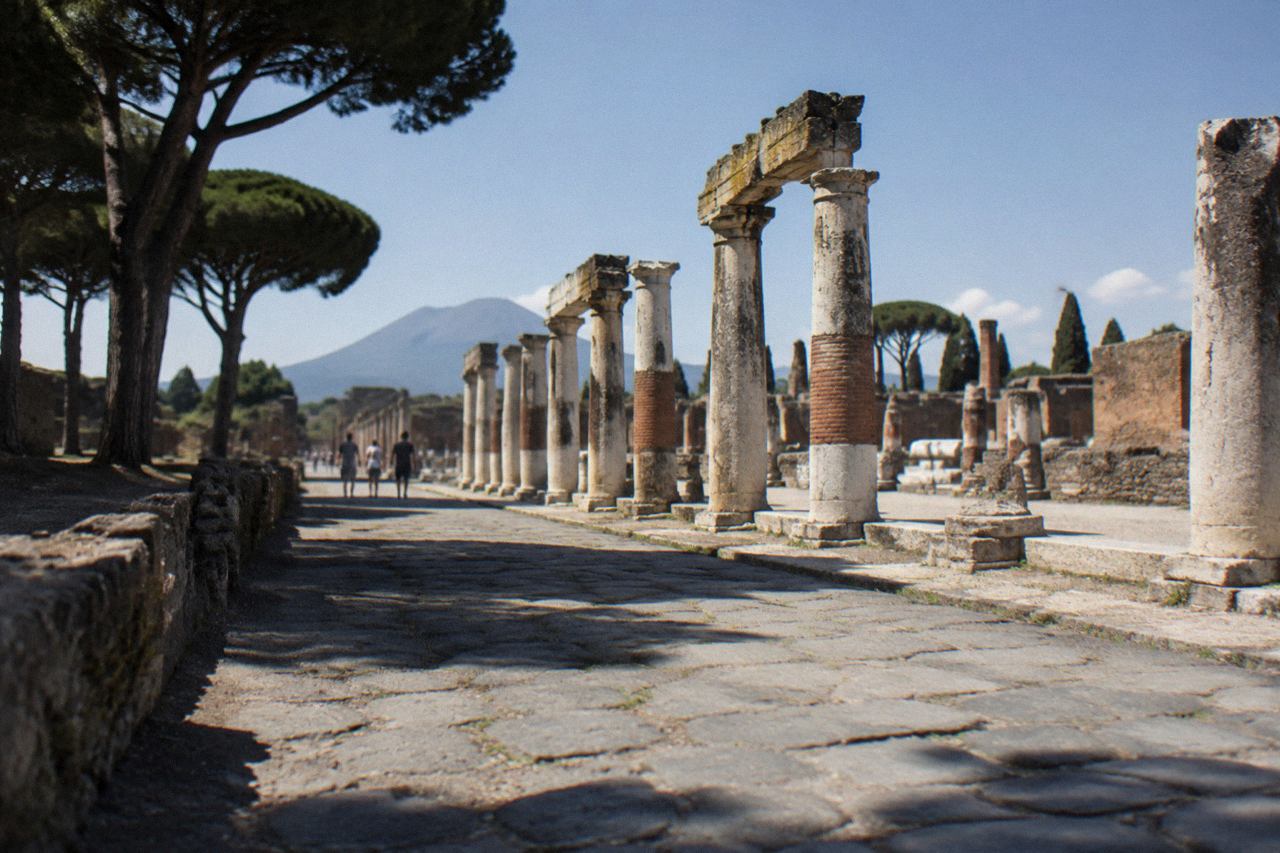
The ancient Roman city of Pompeii, buried by the eruption of Mount Vesuvius in AD 79 and now an archaeological park in Campania, southern Italy, sits beside the modern town of Pompei about 24 km by road from Naples. Visitors often arrive with one question beyond the ruins themselves: can the famous bodies be seen? They can. The casts of the victims, formed when ash hardened around the dead and left voids that excavators later filled with plaster, are displayed inside the park, and several are visible on a standard entry ticket. This page explains exactly where they are, what they are made of, and how to fit them into a day at the site.
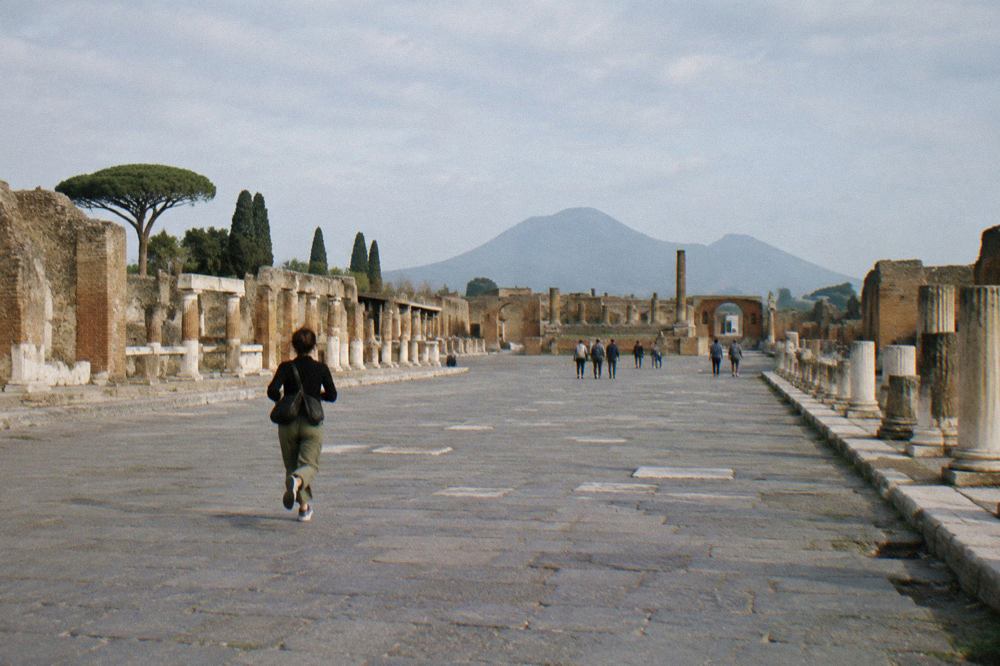
Can You Visit Pompeii And See The Bodies?
Yes, visitors to the archaeological park of Pompeii in Italy can see the bodies, or more precisely the plaster casts of the victims of the AD 79 eruption, on an ordinary entry ticket. Casts are displayed within the excavated city, and the Garden of the Fugitives holds casts in the position where they were found. The remains are not skeletal bodies standing in the street but plaster forms, hollow impressions of people who died in the pyroclastic surge.
The distinction matters, because it shapes what a visitor should expect. When Vesuvius erupted, traditionally dated to 24 August AD 79, layers of fine ash settled over the dead and hardened over time. The organic material decayed, leaving cavities in the compacted ash that preserved the shapes of the people, and in some cases the folds of their clothing. Excavators discovered that these voids could be filled with liquid plaster, which sets into an exact three-dimensional copy of the victim at the moment of death. That technique is why the park can show forms rather than skeletons alone.
Not every victim became a cast. The technique depends on the conditions of burial, and many of the dead have been recovered as skeletal remains, which are studied and exhibited under different arrangements. The casts are therefore a subset of the total dead, and the park presents them with that context rather than as spectacle. Visitor behaviour is expected to match: the displays are treated as graves, and the park's visitor regulations govern conduct on site like any other rule of the visit.
Where the recovered remains are held today is a question with a longer answer, and this site covers it separately in where the bodies from Pompeii are now, including the material held in Naples museums.
Where In The Park The Casts Are Displayed
The casts inside Pompeii are concentrated in two places reachable on a standard ticket: the Garden of the Fugitives, where casts of thirteen victims lie in situ beneath a shelter in the exact spot they were found, and the park's Antiquarium, whose displays have included individual casts and exhibit material recovered from the excavations. Locations can change with temporary exhibitions, so check the park's own visiting pages before a visit.
The Garden of the Fugitives is the emotional centre for many visitors. It preserves a group of victims who sheltered in a vineyard as the eruption overwhelmed the city, and the casts are shown where archaeologists found them rather than moved to a museum case. The display is protected by a roofed structure, and viewing is from the edge of the garden. Reaching it involves walking the ancient streets, on surfaces that are uneven; this site's guide to how difficult the walking in Pompeii is covers the ground conditions in detail.
The Antiquarium, the park's on-site museum near the Forum area, has served over the years as a display space for finds including casts, and touring exhibitions of Pompeii material have carried casts to museums around the world. Because loan exhibitions move, the reliable plan is to treat the Garden of the Fugitives as the anchor and check the park's announcements for anything additional during a planned visit. Closures happen: the Praedia of Julia Felix has been closed to the public since 7 September 2026 for maintenance, a reminder that individual buildings inside the park can drop off a route at short notice.
A guided tour is a practical way to reach the cast displays without route-finding in a 44-hectare excavated city. The Sorrento Skip-the-Line Pompeii Express Tour by Train runs from Sorrento by train with a guide who walks a planned route, and Check availability on the live listing for current departures.
The question of whether a guided route or an independent walk suits a visitor better has its own answer page, can you tour Pompeii on your own, which weighs ticketing, guiding and time.
Are The Pompeii Bodies Real Human Remains
The casts are plaster, but some contain human bone within the plaster matrix, confirmed by imaging studies of cast interiors, so they are simultaneously artworks of excavation science and graves. The forms seen lying in the Garden of the Fugitives are reproductions of the voids left by the dead; skeletal remains recovered at Pompeii and its neighbouring sites are curated separately. Visitors should treat every cast as a burial.
Modern scanning of the casts has changed how they are understood. Where early archaeology filled cavities and displayed the results with limited scrutiny, later imaging revealed bones sealed inside the plaster, teeth, and in some cases details of clothing and personal items. The casts are studied as sources in their own right, and the park's research publications discuss them as both archaeological evidence and human remains. For a visitor, the practical implication is respect: the park expects the displays to be approached as graves, not as photo props.
The neighbouring site of Herculaneum tells a different story about the same eruption, and the contrast is instructive. At Herculaneum the dead were found as skeletons rather than as cast voids, and this site explains why in why no bodies were found in Herculaneum, which covers the different burial conditions on that shore.
Planning the day well matters because the casts are one stop inside a very large site, and this site's guide to how long to spend in Pompeii sets out realistic time budgets for routes that include them.
How To Plan A Visit Around The Casts
Plan at least a half day inside the park, enter through a named ticket office at Porta Marina, Piazza Esedra or Piazza Anfiteatro, and build the Garden of the Fugitives into a walking route rather than treating it as a detour. In 2026 the Pompeii Express ticket costs EUR 20 and covers the ancient city; from 1 January 2027 a single EUR 25 ticket replaces the current structure. Free entry applies on the first Sunday of each month.
Ticketing around the casts needs one date-aware note. The 2026 prices in force are EUR 20 for the Pompeii Express ticket covering the ancient city, EUR 25 for the Pompeii+ ticket that adds the suburban villas, EUR 30 for the three-day ticket, and EUR 45 for the annual MyPompeii Card, with the smaller park sites at EUR 8 each. All of those end on 31 December 2026: from 1 January 2027 a single EUR 25 ticket covers all park sites, valid 30 days, one entry per site, with the smaller sites staying EUR 8 and the MyPompeii Card staying EUR 45. Entry is free for everyone under 18, free for all on the first Sunday of the month, and EUR 2 reduced for EU citizens aged 18 to under 25.
| Ticket (2026, in force to 31 Dec 2026) | Price | Covers |
|---|---|---|
| Pompeii Express | EUR 20 | The ancient city only |
| Pompeii+ | EUR 25 | City, suburban villas, Villa Regina, Antiquarium Boscoreale, shuttle |
| 3-day ticket | EUR 30 | Pompeii+ plus Oplontis, Stabiae villas and museum, Boscoreale |
| Other park sites (Boscoreale, Oplontis, Stabiae museum) | EUR 8 each | Single site |
| MyPompeii Card (annual) | EUR 45 | Annual pass, EUR 10 reduced |
The daily cap also shapes planning. Since 15 November 2024 the park has sold nominative tickets under a 20,000-visitor daily cap, and during the 16 March to 14 October season the entry slots are split at 13:00, with up to 15,000 entries in the morning block and up to 5,000 in the afternoon. Buying in advance is the practical response, and this site's answer on whether to buy Pompeii tickets in advance covers the mechanics, including whether you can just show up at Pompeii.
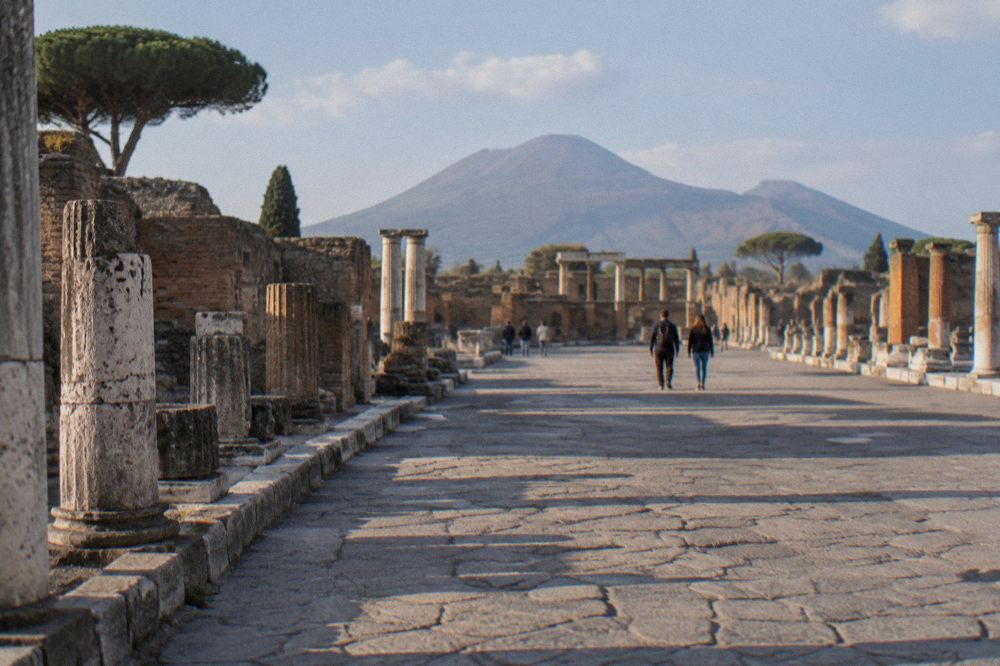
Visitor volumes give a sense of the crowds involved. The official visitor data table for the Pompeii site records 3,985,424 visitors in 2023, 4,069,377 in 2024 and 4,000,090 in 2025, and a single free first Sunday has drawn more than 36,000 people. The park is busy year-round.
| Year | Visitors to the Pompeii site | All park sites combined |
|---|---|---|
| 2023 | 3,985,424 | 4,079,235 |
| 2024 | 4,069,377 | 4,177,753 |
| 2025 | 4,000,090 | 4,118,926 |
A tour that pairs the city with the volcano gives the casts their full context, since the eruption that created them came from the mountain still overlooking the site. One such option combines a guided Pompeii walk with horse riding on the slopes of Vesuvius and lunch, starting in the Pompeii area.
Visitors with children, or anyone considering guiding generally, can weigh the options in this site's answer on whether a guided tour of Pompeii is worth it and its companion on the best tour for Pompeii.
Which Other Sites Around The Bay Hold Victims Of The Eruption
**Pompeii is not the only place the eruption's victims can be encountered: Herculaneum, on the western flank of Vesuvius beside the modern town of Ercolano, preserves the skeletons of victims who sheltered in the boat sheds by the ancient shore, visible on a Herculaneum ticket.
The Herculaneum boat sheds hold one of the most affecting displays in Bay of Naples archaeology. Dozens of skeletons were found under the arched shelters where people waited near the water for rescue that the eruption prevented, and the remains are presented at the site. Two parts of Herculaneum are currently closed for works, the Villa dei Papiri and the Ancient Theatre, so a visit plan should centre on the town excavations and the shore area. Herculaneum is open daily, closed only 1 January and 25 December, with full entry at EUR 16 and EUR 2 reduced for visitors aged 18 to under 25, free on first Sundays.
Fitting more than one site into a single day is possible but tight, and this site's answer on doing Herculaneum and Pompeii in one day works through the sequencing question, including whether to do Pompeii or Vesuvius first.
| Site | What the eruption left there | Visitor situation |
|---|---|---|
| Pompeii | Plaster casts of victims, several in situ in the Garden of the Fugitives | Open daily, no weekly closing day, closed 25 Dec and 1 Jan |
| Herculaneum | Skeletons in the ancient boat sheds by the shore | EUR 16 full entry, open daily, Villa dei Papiri and Ancient Theatre closed for works |
| Oplontis | Villa poppaea at Torre Annunziata, buried without victim displays | EUR 8, closed on Tuesdays |
| Stabiae villas | Villa Arianna and Villa San Marco at Castellammare di Stabiae | EUR 8, villas and museum closed on Tuesdays |
Common Questions About Seeing The Bodies At Pompeii
Can you visit Pompeii and see the bodies?
Yes. Plaster casts of the eruption's victims are displayed inside the archaeological park of Pompeii in Italy, and the Garden of the Fugitives shows casts in situ on a standard entry ticket. The forms are plaster taken from the voids the dead left in hardened ash, some containing bone inside the plaster.
Are the bodies in Pompeii real skeletons?
The casts are plaster, formed by pouring plaster into cavities left in the hardened ash by the dead. Imaging studies have confirmed that bone survives inside some casts, so they are both reproductions and graves. Skeletal remains recovered at Pompeii are curated separately from the display casts.
Where exactly are the casts displayed?
The Garden of the Fugitives holds casts of thirteen victims in the spot where they were found, under a roofed shelter on the ancient city's walking route. The park's Antiquarium has also displayed casts and excavation finds. Temporary exhibitions can move individual casts, so check the park's visiting pages before travelling.
Can children see the casts?
There is no age restriction on viewing the casts, and entry to the park is free for everyone under 18. Families regularly visit; this site's itinerary page for Pompeii with children suggests routes and pacing, and the displays are encountered in the normal flow of the site rather than behind a separate admission.
Do you see bodies at Herculaneum too?
Yes, in a different form. Herculaneum preserves skeletons of victims who sheltered in the boat sheds by the ancient shore, displayed at the site. The Villa dei Papiri and the Ancient Theatre at Herculaneum are closed for works, so plan around the town excavations and shore area.
The casts remain the most direct encounter any visitor to Campania can have with the human cost of the AD 79 eruption, and an ordinary ticket to the ancient city is all that stands between a traveller and the Garden of the Fugitives. Plan the route, book the named ticket in advance under the daily cap, and allow the site the half day it deserves; the rest of Pompeii Travel Guide covers the routes, the neighbouring sites and the volcano that made all of it necessary.