How Tall Were The People In Pompeii?
What the skeletal and cast evidence from Pompeii, the ancient Roman city buried by Vesuvius in AD 79 in Campania, Italy, can and cannot say about the height of its inhabitants.
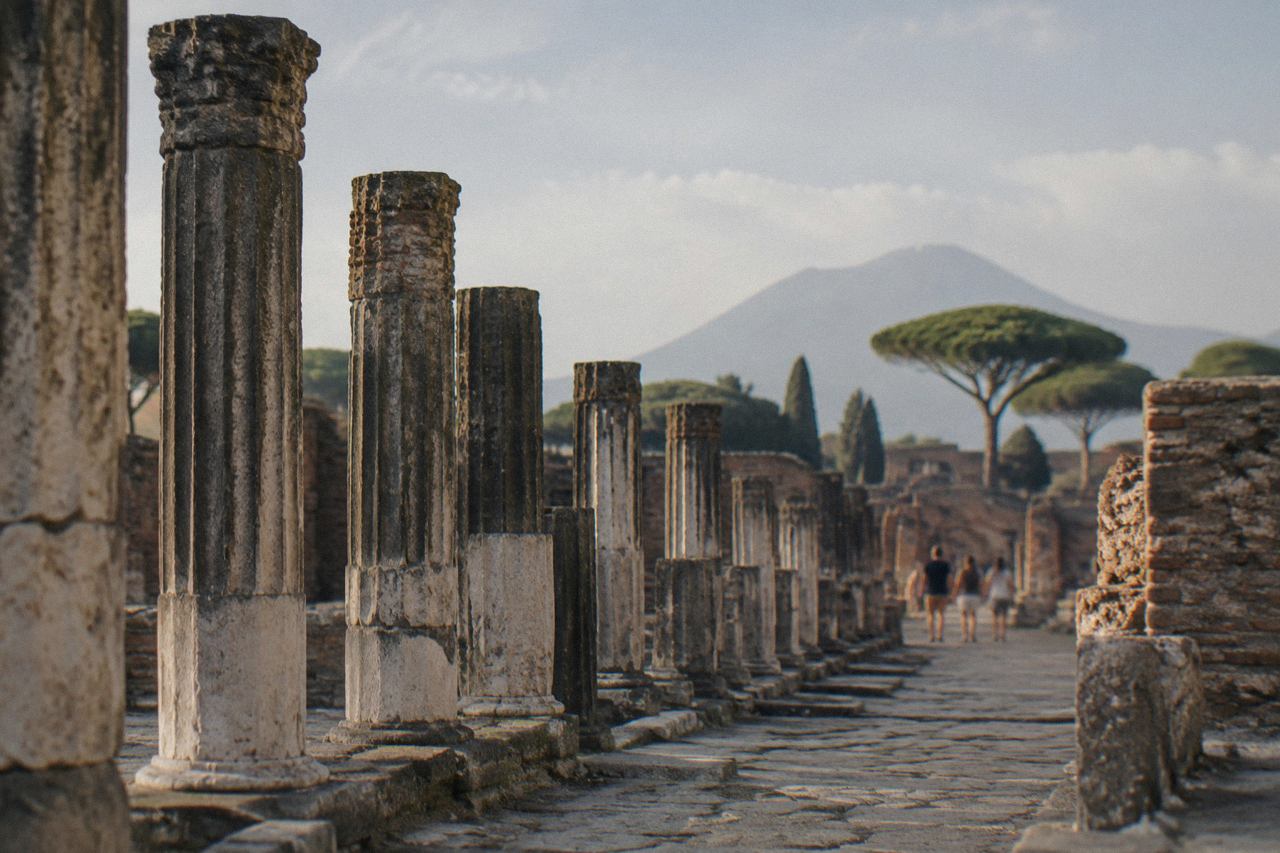
The ancient city of Pompeii, in Campania, southern Italy, about 24 km south-east of Naples and beside the modern town of Pompei, was buried by the eruption of Mount Vesuvius in AD 79, a date the park itself notes is traditionally placed on 24 August. That burial preserved something almost nowhere else survives on this scale: the people themselves, as skeletons and as the famous plaster casts made from the voids their bodies left in the volcanic ash. Anyone asking how tall the residents of this city actually were has to start there, with the physical remains, because no written Roman source records the measurements of ordinary Pompeiians.
How Tall Were The People In Pompeii?
No single number answers this, because the park has never published a standing average for its population, and archaeologists caution against one. Stature has to be read bone by bone from the skeletons excavated on the site, estimates from long bones vary between individuals, and the plaster casts, the most famous remains of all, preserve posture and posture only, not measurable bone length. What can be said is that the evidence for answering the question exists at Pompeii in greater quantity than at any comparable Roman city.
The honest version of the answer is a method, not a figure. Physical anthropologists estimate living stature from the length of the long bones, chiefly the femur and tibia, using regression formulas, and each skeleton yields its own estimate with a margin of error attached. Excavations at Pompeii have produced a large skeletal collection over the long history of digging on the site, but the individuals come from different neighbourhoods, different age groups and different walks of life, so pooling them into one "average Pompeian" flattens differences that were real: between men and women, between those who grew up well fed and those who did not, between the young and the fully grown.
That last point matters more than people expect. Growth in humans finishes in the late teens and early twenties, and the city's dead include children and adolescents, who were shorter than their adult neighbours for the simple reason that they had not stopped growing. Any honest statement about stature has to separate adults from juveniles first, something a casual walk through the site cannot do and a specialist study can.
For readers who want the fuller human story around the eruption, the companion piece on how many people died in Pompeii sets out what the excavated remains reveal about the death toll itself, and the page on why no bodies were found in Herculaneum explains why the neighbouring site, buried deeper and by hotter material, presents an entirely different kind of evidence.
What The Skeletons Excavated At Pompeii Can Tell Us
Skeletons are the only Pompeii remains from which stature can be estimated at all, because intact long bones carry the measurements anthropologists need. The city's skeletal record comes from the victims found where the eruption caught them, in houses, gardens and along the roads, and it is read individually rather than as a crowd. Every estimate carries a margin of error, and the collection spans men, women and children rather than a single uniform type.
The eruption that created this record is itself documented in a near-contemporary account. Pliny the Younger, whose uncle Pliny the Elder died in the rescue attempt, described the destruction in letters, and the oldest manuscripts of that text give the traditional date of 24 August AD 79. The park's own e-journal has since stated that the alternative date of 24 October, sometimes repeated elsewhere, has no evidentiary basis and stems from a 1929 misreading, while adding that 24 August is not guaranteed either. For the human remains, the exact day matters less than the manner of burial: a layer of ash and pumice that sealed bodies where they fell and, in many cases, left the bones in their original positions.
Reading stature from those bones is laboratory work. The femur is the usual starting point, and published Roman skeletal studies generally report that estimates from the same individual can shift depending on which formula is applied, which is why specialists quote a range rather than a point. The Pompeii collection has the added complication of excavation history: material uncovered in the earliest generations of digging was not always documented to modern standards, so the best-understood skeletons tend to be those from more recent, carefully recorded excavations. Visitors sometimes assume the site displays all of this. It does not. What the visiting public sees is a selection, and the study material lives in museum and research contexts, which is exactly why a single agreed figure for "the height of a Pompeian" has never been issued by the park.
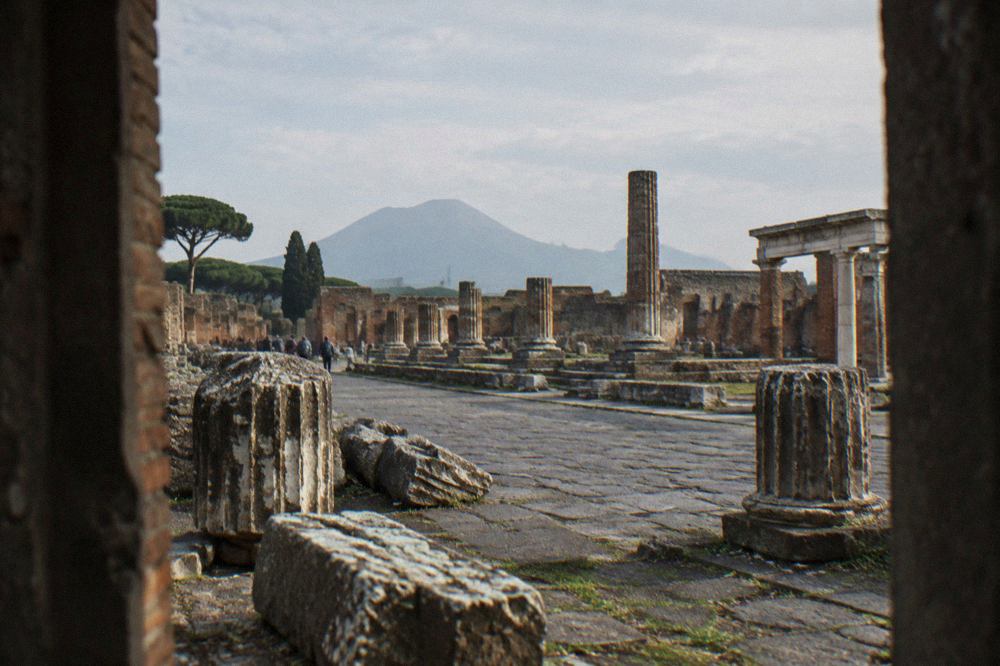
The scale of the site behind these questions is easy to underestimate. The excavated area open to study covers 44 ha within a wider inscribed property of 98 ha, according to the UNESCO listing for Pompeii, Herculaneum and Torre Annunziata. Within that area, the number of people passing through each year gives a sense of how intensively the place is now used:
| Year | Visitors to the Pompeii site | All park sites combined |
|---|---|---|
| 2022 | 2,972,159 | n/a |
| 2023 | 3,985,424 | 4,079,235 |
| 2024 | 4,069,377 | 4,177,753 |
| 2025 | 4,000,090 | 4,118,926 |
Those are the park's own official figures, and they underline why the site is managed the way it is, with nominative tickets and a cap of 20,000 visitors per day in force since 15 November 2024. If you are planning a visit around this evidence, the practical pages on tickets and timing and on buying tickets in advance cover the current structure, whose 2026 prices end on 31 December 2026 before a single EUR 25 ticket for all park sites begins on 1 January 2027.
Why The Plaster Casts Do Not Preserve Height
The plaster casts, made by pouring liquid plaster into cavities the bodies left in the hardened ash, are the most moving objects at Pompeii and the least useful for measuring stature. They record the outer shape of a person at the moment of death, often crouched or curled, and a curled body tells you nothing reliable about how tall it stood. Their value is human detail, gestures, clothing folds and footprints, not a tape-measure reading.
The casting technique was invented during the early excavations of the site, when diggers noticed hollow spaces in the ash and realised the organic material of bodies had decayed away leaving a mould. Filling those voids produced the figures familiar from photographs worldwide: the crouching forms, the embraces, the so-called pregnant woman whose identity and condition are discussed on the page about where the pregnant woman is preserved. Because the casts capture people in their final postures, nearly all of them foetal or prone, no straight-line body measurement can be taken from them. Where bones survive inside a cast, specialists can image and study them, and that is again laboratory work rather than something visible on a rail in the park.
This distinction between what the public sees and what researchers measure runs through the whole topic. The casts were made to preserve a human moment, and they do that superbly. Nobody pouring plaster in those early excavation seasons was thinking about stature estimation, and the plaster itself, layered over the void, adds thickness that makes any external measurement an overestimate even where a body lies straight. The lesson for a visitor is to treat the casts as testimony and the skeletons as data.
For the wider picture of the eruption's human cost, including why wool clothing survived on some victims, see why the Pompeii victims were wearing wool, and for the debate over the death toll's size, the exact-count page at how many people died in Pompeii.
A guided walk puts this evidence in front of you with someone who can separate the cast from the skeleton on the spot. Beyond the city itself, the stories around the eruption also reach the volcano's more recent outpouring, when Vesuvius erupted again in 1944, an event covered in how many people died when Vesuvius erupted in 1944.
Reading Stature From Doorways, Beds And Household Clues
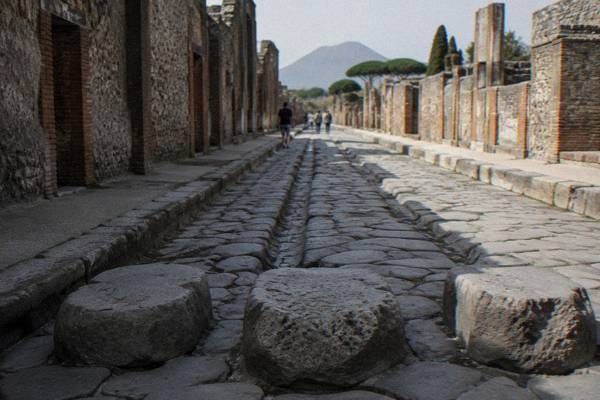
Visitors often try to gauge Roman height from their surroundings, low doorways, short beds and worn thresholds, and the method fails at every turn. Doorways were built to exclude draughts, night-time intruders and street noise, beds were framed for a reclining diner rather than a sleeping body, and thresholds were worn down by decades of feet. None of these features was sized to the top of a resident's head, so none can be read as a height record.
Take the doorway question first, because it is the one heard in the streets every day. A low entrance in a Pompeian house reflects building convention and security, a smaller opening is easier to close with a wooden door and harder to force, not the stature of the household. The same is true of bed frames: the Roman dining couch was designed for a reclining posture with the head raised on cushions, so its frame length runs shorter than the full height of anyone who used it. Even stair treads, which some visitors measure against their own stride, reflect standardisation of build rather than the legs of the people who climbed them.
Where the built environment does carry human traces, they are indirect. The wear patterns on stepping stones at crossings, the polished patches on counters such as the thermopolium on the Via dell'Abbondanza, and the graffiti scratched at reachable heights on walls all show where hands and feet habitually landed. The graffiti are a genuine height clue in one narrow sense: letter lines tend to sit within a comfortable arm's reach of a standing writer, so a band of graffiti on a wall tells you roughly where adult shoulders were, though the reach of a child scribbling low on the same wall muddies even that. The dedicated page on what the graffiti in Pompeii says covers the writing itself, which ranges from election notices to insults, and the accidental evidence of who held the stylus is a side effect rather than a census.
The practical conclusion is that context beats measurement for a visitor. Nothing you can see from a rope barrier will hand you a number in centimetres, and anything a guide quotes will be an estimate from the skeletal literature, not a figure the park has ratified for its own dead.
Where To See The Human Evidence At Pompeii Today
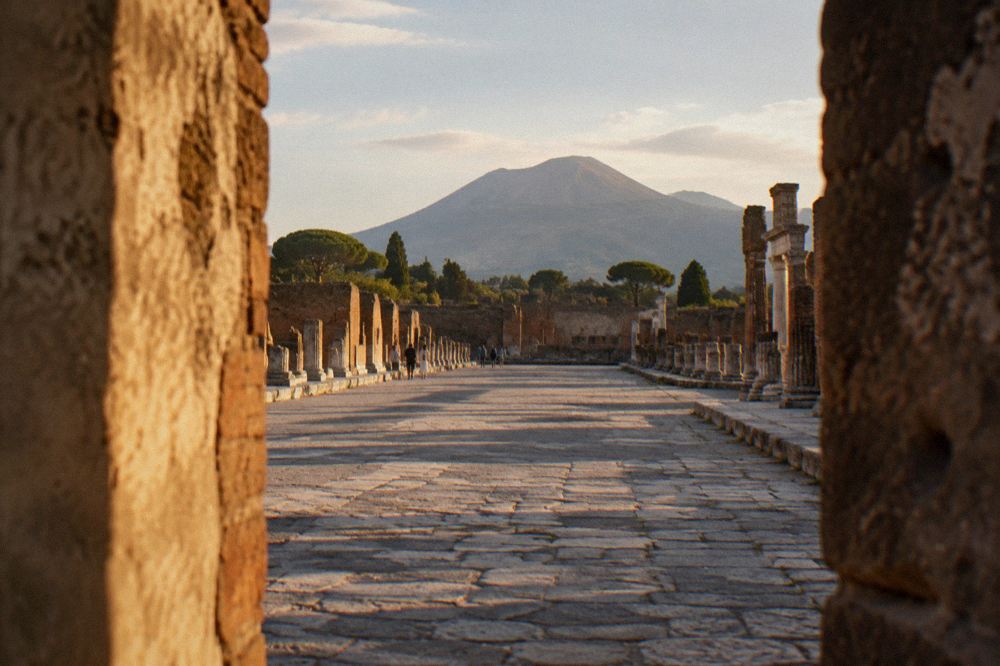
The human remains on display at Pompeii are concentrated in a small number of locations, principally the Antiquarium, the site's museum near the Porta Marina entrance, where casts and skeletal material are exhibited with explanation, and the Garden of the Fugitives, where casts remain in the position the victims were found. Everything else that answers the height question lives in study collections rather than on open display.
The Antiquarium is the natural first stop for anyone with this question, because it gathers the explanatory material the streets cannot give you. The Garden of the Fugitives, by contrast, keeps its casts in situ, a row of forms exactly where the ash fixed them, and it is the single most direct encounter with the eruption's victims the park allows. Both require walking the site, which is uneven underfoot, basalt cobbles, stones and unshaded streets, so the practical guidance on footwear and on how difficult the walking in Pompeii is is worth reading before you go, as is the page on what to wear, less a dress code than advice for heat and hard ground.
Two seasonal realities shape the visit. Under the hours in force from 16 March to 14 October the site opens at 9:00 with last entrance at 17:30 and closing at 19:00, while from 15 October to 15 March last entrance is 15:30 and closing is 17:00. And the climate, about which the Pompei grid-point normals from the Open-Meteo 1991-2020 archive give a picture, puts July and August at mean daily maxima of about 28.7 and 29.4 degrees, with November the wettest month at about 180 mm of rain and July the driest at about 16 mm:
| Month | Mean daily max, C | Mean daily min, C | Rain, mm |
|---|---|---|---|
| Jul | 28.7 | 21.1 | 16 |
| Aug | 29.4 | 21.8 | 22 |
| Nov | 16.9 | 11.5 | 180 |
| Feb | 12.6 | 6.5 | 103 |
Those are 30-year averages for the area, computed from a reanalysis grid rather than a weather station, so they describe the general pattern rather than any day's forecast. Their relevance here is simple: standing in front of casts in August heat is a different experience from February rain, and the evidence looks the same either way.
Walking the site with a specialist changes how much of this you absorb. The small-group archaeologist-led Pompeii tour, this site's featured walk for the ancient city, puts the human evidence in the hands of someone trained to read it, and you can Check availability alongside the fuller comparison in what the best tour for Pompeii is.
Common Questions About Pompeii Body Height
How tall were the people in Pompeii?
No park-published average exists. Stature is estimated skeleton by skeleton from long bones, each with a margin of error, and the collection spans men, women and children, so any single figure would be a false precision.
Can the plaster casts be measured for height?
No. The casts record bodies in crouched or prone final postures, and the plaster adds its own thickness. Only bones surviving inside some casts can be studied, and only in laboratory conditions.
Do the low doorways show Romans were short?
They do not. Pompeian doorways were built low for draught control and security, not to match the height of residents, so a lintel tells you about building convention rather than stature.
Where can the human remains be seen at Pompeii?
The Antiquarium near the Porta Marina entrance displays casts and skeletal material with explanation, and the Garden of the Fugitives preserves casts in the position the victims were found. The rest of the collection is held for study.
Is there a museum that explains the skeletal evidence?
The site's own Antiquarium is the place to start, and the Naples National Archaeological Museum holds major Pompeii material from the earliest excavations, including wall paintings and objects removed from the city over the centuries.
Did children count in the skeletal sample?
Yes, and their inclusion is why pooled averages mislead. Growth finishes in the late teens and early twenties, so juveniles in the sample were shorter than adults for reasons that have nothing to do with the population's adult stature.
The height question turns out to be a lesson in how archaeology works: the most visible remains, the casts, cannot answer it, and the remains that can, the skeletons, are measured one individual at a time in places the public does not go. This Pompeii Travel Guide treats that honestly, and if the topic draws you to the site itself, the pages on touring Pompeii on your own and on whether a guided tour is worth it will help you decide how to stand in front of the evidence with the best possible interpreter beside you.
The story of Pompeii's people is still being written, and the height of any one of them will always be an estimate with a margin, but the ground that holds the answer is open to visitors every day of the year except 25 December and 1 January, waiting for whoever walks it next.