How Many People Died In Pompeii
No verified death toll exists for Pompeii. Here is what the archaeological record, the park's own data and current research actually support, and how to see the evidence for yourself in Campania, Italy.
Short answer
No verified death toll for Pompeii exists. The remains of over a thousand victims have been recovered inside the excavated area of 44 hectares, while roughly a third of the ancient city is still buried, so any single figure is an estimate, not a fact. The park publishes visitor numbers and ticket rules, but no official count of the dead.
Pompeii, the ancient Roman city buried by the eruption of Mount Vesuvius in AD 79 and now an archaeological park in Campania, southern Italy, sits beside the modern town of Pompei about 24 km by road from Naples. The eruption is traditionally dated to 24 August AD 79, a date scholars still debate, and it preserved the city with a completeness that has no real parallel. One question dominates every visitor's preparation: how many people died there. The honest answer is that nobody knows, and any page that prints a confident figure is printing a guess. This guide sets out what the evidence supports, where the remains can be seen, and how the question shapes a visit today.
How Many People Died In Pompeii?
No one knows exactly how many people died in Pompeii, because no verified death toll for the disaster exists, and none can be honestly stated even today. Any specific figure presented as a firm fact would be guesswork rather than history. The honest answer is that the exact number of people who died in Pompeii remains unknown and likely always will. The remains of more than a thousand victims have been recovered within the excavated area of 44 hectares, yet part of the ancient city still lies buried and an unknown share of the population fled before the end, so any total figure is an estimate built on assumptions about population and escape rather than a count. The park publishes no official number of the dead, and no ancient source gives one.
The reason the question stays open is structural. Excavation has never been completed, so the dead still inside the buried portions of the city have never been counted and never could be until those areas are dug. At the same time, an unknown share of the population fled before and during the eruption, and those people left no trace in the city itself. Ancient accounts describe the disaster but give no census of the lost. The result is two unknowns pulling against each other, and honest sources stop there.
What can be counted is the archaeological record: the victims recovered so far, their locations, and, in recent years, their genetic profiles. Those findings are real, dated and published, and they are far more interesting than a round number. The site's own storytelling leans on this too, because the human remains are among the stops visitors ask for by name, alongside the frescoes and the forums.
If you want the deeper dig into the counting question, the site's dedicated answer page on the exact death count debate takes the numbers apart in detail, and the guide to the body casts of Pompeii explains how the plaster casts that carry the story were actually made.
Where Are The Remains Of The Dead Visible Today?
Visible remains cluster at a small number of named places inside the excavated city, chiefly the Garden of the Fugitives, where casts of victims who fell in the final phase are displayed in situ, and at Herculaneum, where skeletons were found in the boat sheds by the ancient shore. At Pompeii itself, the casts of adults and children caught in the ash are the strongest single encounter with the human cost of the eruption, and the park presents them in the spots where they were found. Not every victim location is open at all times, and some houses close for maintenance: the Praedia of Julia Felix, for example, has been closed to the public since 7 September 2026 until further notice.
The casts deserve a moment of explanation before you stand in front of them. They are not the bodies themselves. Ash hardened around the dead, the organic material decayed away, and later archaeologists poured plaster into the voids to recover the shapes, down to clothing folds and, in some cases, final gestures. That technique is why the figures feel so immediate: a person mid-step, a child beside an adult. The guide linked above walks through the method and the ethics.
Skeletal remains are a different category and a different experience. Bones survive where soft tissue does not, and Herculaneum, buried deeper and differently, yielded skeletons in the vaulted boat sheds near the ancient waterline, where people had gathered apparently waiting for a rescue by sea. For comparison between the two sites and how each preserves its dead, read Pompeii versus Herculaneum compared, because the difference is not just scale, it is the nature of the evidence itself.
Planning the visit around these locations works best with a map in hand: the three ticket entrances are Porta Marina, Piazza Esedra and Piazza Anfiteatro, and the victims' locations are spread across the city rather than gathered in one corner. The Pompeii site map explained shows the layout, entrances and the streets that connect the key stops.
What Does Modern Research Say About The Victims?
Modern research has shifted from counting victims to understanding them: genetic analysis of skeletal remains has begun to test assumptions about who died together, and the park's own e-journal has re-examined even the date of the eruption, reporting that the traditional alternative date of 24 October has zero evidentiary basis and stems from a 1929 misreading. A charcoal graffito found in 2018, which many scholars date to mid-October, reopened the date debate without settling it. Meanwhile the physical evidence keeps being restudied with tools the first excavators never had.
The genetic work matters because the older interpretations relied on impressions: a victim found near a child was assumed to be a mother, bodies close together were read as families. Testing has shown that some of those pairings do not hold up, which changes the human story without changing the count of the dead. The honest framing is that research is ongoing and each study refines the picture rather than completing it.
The date question connects directly to the death toll question. If the eruption came in autumn rather than late summer, the number of people present in the city, residents and visitors alike, would differ, and so would every downstream estimate of casualties. The park's position, as stated in its journal, is that 24 August rests on the oldest manuscripts of Pliny the Younger and that 24 October rests on nothing. Neither is settled.
For readers following the story into the modern era, the site also covers deaths in the 1944 Vesuvius eruption, a very different event with a very different record, and the question of famous victims at Pompeii, where the evidence is thinner than the internet suggests.
How Did The Eruption Kill Its Victims?
The eruption killed in two broad ways: a sustained fall of pumice and ash that collapsed roofs and drove people to shelter, and later, fast-moving surges of hot gas and debris that killed those still in the city almost instantly. The pattern visible in the archaeological record, victims found indoors under collapsed structures and victims found outdoors in the final layers, matches the sequence described in the ancient letters of Pliny the Younger, the primary written account. No verified count exists for either group.
The distinction matters when you walk the site. The people who died under roofs were overwhelmingly those who stayed indoors as the pumice piled up, and their remains are found in buildings. The people caught by the surges died in the open or on stairways, in positions that suggest they were moving when the end came. The Garden of the Fugitives belongs to this second group. Reading the site with that sequence in mind turns a walk through ruins into a walk through a timeline.
It also explains why Herculaneum looks different. Buried deeper and closer to the volcano, it preserved organic material, wood, food, fabric, that Pompeii's conditions destroyed, and its dead were concentrated at the shore rather than scattered through the streets. The two sites together give the fullest picture of the disaster that exists anywhere.
To stand at the source of it all, the crater trail above the Bay of Naples is a separate visit with its own rules, covered in the guide to Vesuvius tickets and access. The two experiences pair naturally, and plenty of visitors do both in one trip.
Who Were The People Who Died?
The people who died were ordinary visitors and local residents whose lives were cut short in a single tragic event; their stories, preserved through memorials and records, remind travelers that this site is, above all, a place of remembrance rather than spectacle.
What strikes researchers is how ordinary the dead are. They are not a sample of the rich or the unlucky few; they are people who, for reasons of circumstance, timing or choice, were still in the city when the final phase arrived. Some carried keys, coins and small valuables, the possessions of people who expected to return or to barter their way to safety. Others carried nothing.
The debate about the eruption's date feeds in here too. A city in late summer holds a different population than a city in mid-autumn, with different numbers of seasonal workers, traders and travellers passing through. Until the date question is resolved, every reconstruction of who was present carries that uncertainty inside it.
For the practical side of a modern visit, from arrival logistics to what to wear on the volcanic stone streets, the collection at Pompeii visiting tips is the site's planning hub, and the routes in getting from Naples to Pompeii cover the approach used by the majority of independent travellers.
How Busy Is Pompeii Compared With The Numbers Of The Dead?
Pompeii today is far busier with the living than it ever was crowded with the dead: the visitors who now stream through its streets each year vastly outnumber the victims who perished in the eruption, meaning you will be sharing the ruins with crowds that easily dwarf the ancient death toll.
| Year | Pompeii site visitors |
|---|---|
| 2022 | 2,972,159 |
| 2023 | 3,985,424 |
| 2024 | 4,069,377 |
| 2025 | 4,000,090 |
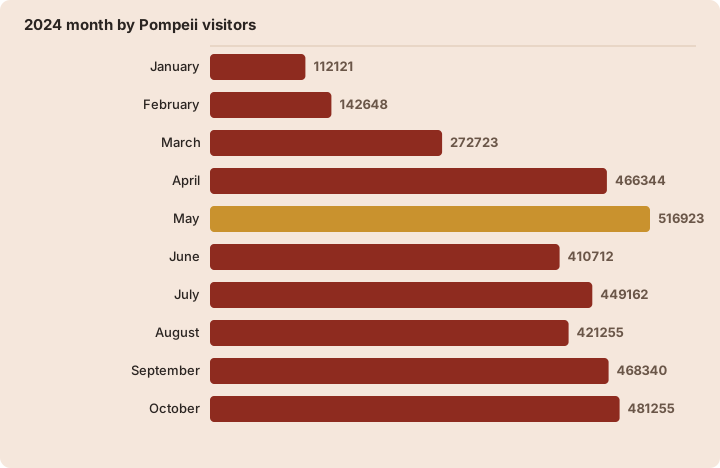
The monthly pattern matters more than the annual total for anyone planning a trip. Visiting between November and February means far fewer people on the same streets, with shorter winter hours as the trade-off.
| 2024 month | Pompeii visitors |
|---|---|
| January | 112,121 |
| February | 142,648 |
| March | 272,723 |
| April | 466,344 |
| May | 516,923 |
| June | 410,712 |
| July | 449,162 |
| August | 421,255 |
| September | 468,340 |
| October | 481,255 |
| November | 189,866 |
| December | 138,028 |
The daily flow is split into two time bands in the summer season, from 16 March to 14 October: 09:00 to 13:00 allows up to 15,000 entries, and 13:00 to 17:30 allows up to 5,000. Arriving for the afternoon band is the single simplest way to share the site with fewer people, at the cost of less time before the 19:00 close.
| Time band (16 Mar to 14 Oct) | Maximum entries |
|---|---|
| 09:00-13:00 | 15,000 |
| 13:00-17:30 | 5,000 |
Free first Sundays deserve a caution. Entry is free for everyone on the first Sunday of the month, and the park itself reports more than 36,000 visitors on one such day, the record figure it publishes. Free Sunday is therefore the most crowded way in, not a quiet bargain.
What Do Tickets And Rules Look Like For Seeing This Today?
In 2026 the Pompeii Express ticket costs EUR 20 for the ancient city alone, the Pompeii+ ticket costs EUR 25 adding the suburban villas route, and the 3-day ticket costs EUR 30 covering Oplontis, the Stabiae sites and Boscoreale, with free entry for under-18s and a EUR 2 reduced rate for EU citizens aged 18 to under 25. From 1 January 2027 this structure is replaced by a single EUR 25 ticket valid 30 days across all park sites with one entry per site, while Oplontis, the Stabiae site and Boscoreale stay at EUR 8 each and the MyPompeii Card stays at EUR 45.
| Ticket (2026, ends 31 Dec 2026) | Price | Covers |
|---|---|---|
| Pompeii Express | EUR 20 | Ancient city only |
| Pompeii+ | EUR 25 | City, suburban villas, Villa Regina, Antiquarium Boscoreale, shuttle |
| 3-day ticket | EUR 30 | Pompeii+ plus Oplontis, Stabiae villas and museum, Boscoreale |
| Other sites individually | EUR 8 | Oplontis, Stabiae museum or Boscoreale |
| MyPompeii Card (annual) | EUR 45 | Annual pass, EUR 10 reduced |
Since 15 November 2024 tickets are nominative, non-transferable and non-refundable except for an extraordinary closure, and ID may be checked at every entry. Bags larger than 30 x 30 x 15 cm go to left luggage, drones need authorisation, and bare chests are not permitted. Hours run 9:00 to 19:00 with last entry at 17:30 in the summer season, and 9:00 to 17:00 with last entry at 15:30 from 15 October to 15 March. Full details sit in the site's Pompeii ticket options explained guide.
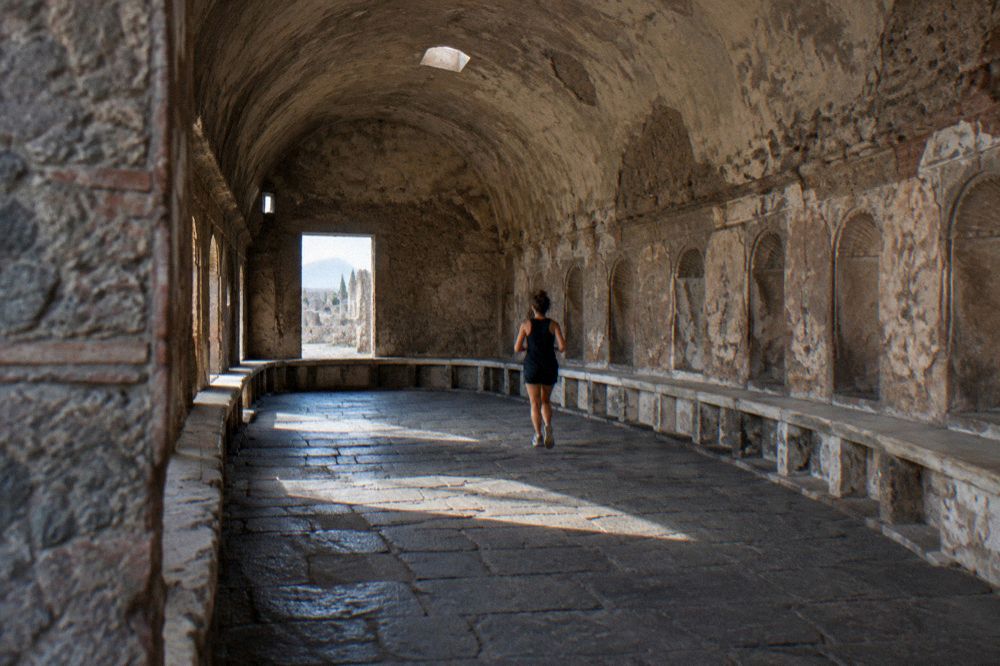
The related product for this page is the entry ticket with an audio guide, a self-paced option that suits a visit built around the victims' locations, since you can linger at the casts and move quickly past stretches of wall. You can read the full write-up on the site's page for the Pompeii entry ticket with audio guide, or go straight to the operator: Check availability.
Guided formats make a difference for this particular subject. An archaeologist-led walk can explain at each stop what the remains do and do not show, which is exactly the context the death toll question needs, and the site's comparison of guided versus self-guided visits lays out the trade-offs honestly. This Pompeii Travel Guide article keeps to what the evidence supports for the same reason.
How Do You Plan A Visit Around The Victims' Story?
Plan a half day minimum inside the city, enter through Porta Marina for the classic route or Piazza Anfiteatro to start near the Garden of the Fugitives, and build the walk around the casts, the forum and one house with victims or skeleton evidence, using the time-slot rules and the 20,000 daily cap to pick your window. Visitors with mobility difficulties enter at Piazza Anfiteatro on the "Pompeii for All" route and can exit at Piazza Esedra via the Antiquarium lift.
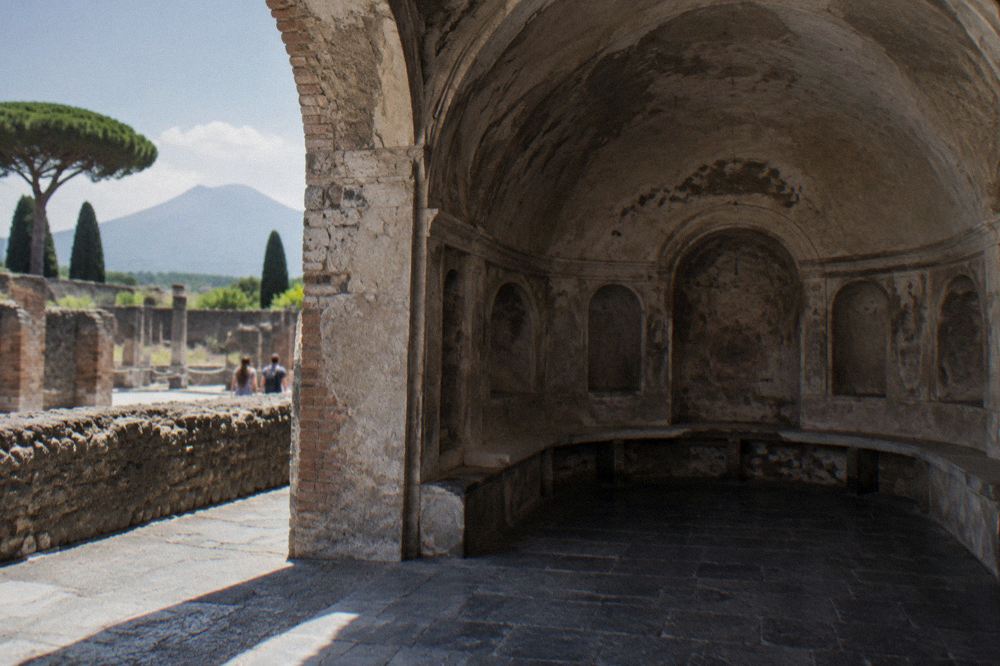
Season matters. Pompei has a Mediterranean climate: about 29.4 C average daily maximum heat in August, the warmest month, and about 6.5 C average minimum in February, the coldest nights. November is the wettest month at about 180 mm of rain and July the driest at about 16 mm. The planning guide to Pompeii weather and the best time to visit carries the full month-by-month picture.
| Month | About Tmax C | About Tmin C | About rain mm |
|---|---|---|---|
| January | 12.2 | 6.6 | 119 |
| April | 17.7 | 10.4 | 87 |
| July | 28.7 | 21.1 | 16 |
| October | 21.3 | 15.1 | 129 |
Getting there is straightforward. The Circumvesuviana railway serves the Pompei Scavi-Villa dei Misteri station opposite the Porta Marina entrance on its Naples to Sorrento line, with scheduled journeys from Napoli Garibaldi taking between 29 and 35 minutes; note that the Campania Express service has been suspended since 1 October 2026. Approaches from other bases are covered in the guides for Sorrento to Pompeii, the Amalfi Coast to Pompeii and Rome to Pompeii as a day trip.
For a visit that pairs the crater with the city, the Vesuvius ticket product below covers the crater access with a digital guide, and its details render in the card:
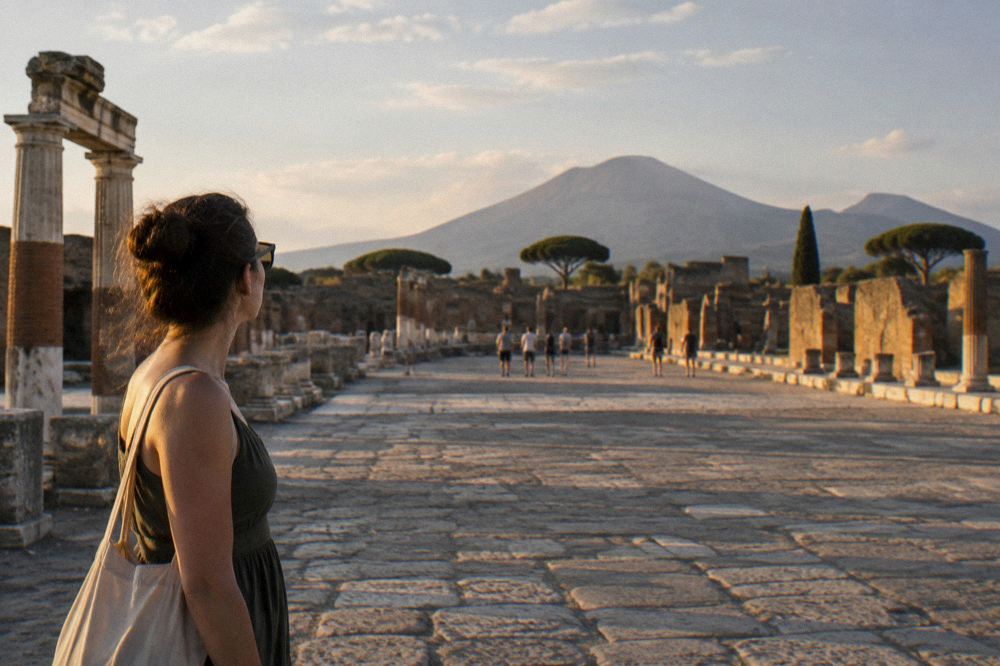
One more consideration for this subject specifically: go slowly. The remains are real people, and the park presents them as such. Visitors who rush between photo stops tend to report the visit blurring; visitors who stop, read and let the sequence of the eruption sink in tend to leave with the story intact. The question of how many people died stays unanswerable, but who they were and how their last hours unfolded is written plainly in the streets, and those streets reward attention more than speed.
Whichever format you choose, the three options below are the ones this site compares for a first visit built around this story: the self-paced audio guide ticket, the two-site archaeologist small group, and the independent Vesuvius crater ticket.
Common Questions About How Many People Died In Pompeii
How many people died in Pompeii?
No verified death toll exists. The remains of more than a thousand victims have been recovered in the excavated area of 44 hectares, and part of the ancient city is still buried, so any total figure is an estimate rather than a count.
Is there an official death count for the AD 79 eruption?
No. The park publishes visitor statistics and ticket data, but no official count of the dead, and no source from antiquity gives one.
Can you see the bodies of the victims at Pompeii?
Yes. Plaster casts of victims are displayed in situ, most famously at the Garden of the Fugitives, and skeletal evidence exists at both Pompeii and Herculaneum, where skeletons were found in the boat sheds by the ancient shore.
When did Vesuvius erupt and destroy Pompeii?
The eruption is traditionally dated to 24 August AD 79 from the oldest manuscripts of Pliny the Younger. The park's own e-journal states that the alternative date of 24 October has zero evidentiary basis, while noting that 24 August is not necessarily correct either.
Is the death toll higher at Pompeii or Herculaneum?
No verified comparison exists. The two sites preserve different evidence: casts and scattered remains at Pompeii, and concentrated skeletons in the boat sheds at Herculaneum, which was buried closer to the volcano.
The number will stay unknown, and that is itself the finding: a city large enough that its dead have never been fully counted, preserved well enough that each one recovered can still be studied as an individual. Walk it with that in mind and Pompeii gives back far more than a statistic ever could.