Is Paestum, Italy Worth Visiting?
An honest assessment of Paestum's Greek temples and archaeological site for travellers already planning a Pompeii trip in Campania, with comparisons and itinerary advice.
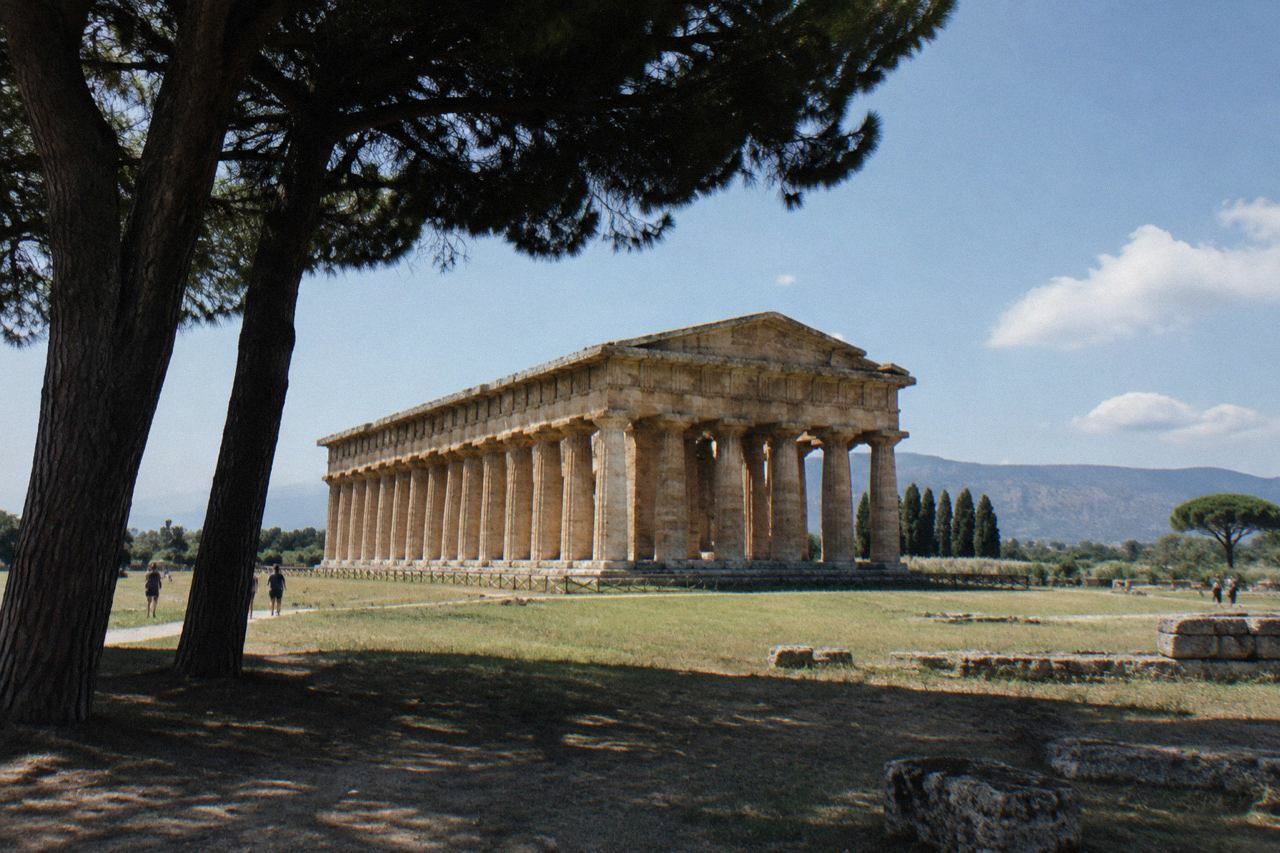
It was a Greek colony before Rome absorbed it, and its three standing Doric temples rank among the most complete Greek temples surviving anywhere in the world.
Is Paestum, Italy Worth Visiting?
Yes, for travellers who want monumental Greek architecture in near solitude, and no, for those expecting another Pompeii. Paestum offers three dramatically complete Doric temples, a small archaeological museum, flat walking through open ground, and crowds far thinner than the Roman sites to the north. It rewards a half day rather than a full one, and it pairs naturally with the coast road rather than competing with the excavated city. Decide based on what the day is for: spectacle and space, or streets and stories.
The honest framing matters because Paestum is frequently oversold as a "second Pompeii", which it plainly is not. Pompeii is an entire Roman city frozen mid-life: bakeries with carbonised loaves, graffiti, election notices, bath complexes, an amphitheatre. Paestum is a sanctuary landscape. You walk a walled Greco-Roman civic space whose temples were already ancient when Vesuvius erupted in AD 79, traditionally dated to 24 August. The experiences are complementary, not substitutes.
How Does Paestum Compare With Pompeii?
The two sites differ in civilisation, state of preservation and mood. Pompeii is a Roman city buried in AD 79 and excavated across 44 hectares, dense with houses, shops and everyday detail. Paestum is a Greek-founded city whose temples survive standing, set in open grass with wide horizons and a fraction of the footfall. Pompeii needs hours and stamina; Paestum needs an unhurried walk and a willingness to stand still and look up. Both are covered by a combined itinerary only if the day is long.
A useful comparison table, restricted to what the verified sources support:
| Dimension | Paestum | Pompeii |
|---|---|---|
| Origin | Greek colony, later Roman city | Roman city, Samnite roots |
| Signature sight | Three standing Doric temples | Streets, houses and frescoed villas across 44 excavated hectares |
| Burial event | None; declined and silted over | Buried by the Vesuvius eruption of AD 79, traditionally dated 24 August |
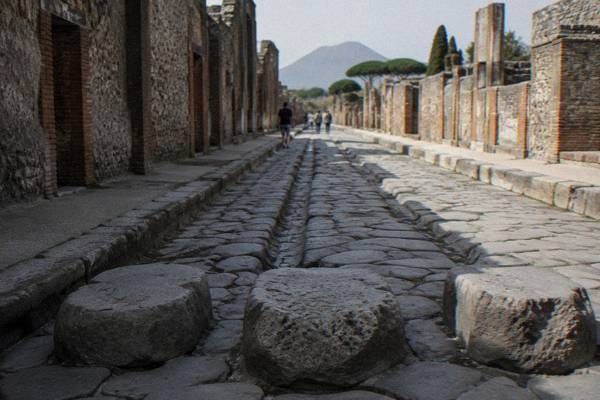
| Terrain | Flat, open, largely unshaded ground | Roman paving stones, uneven surfaces, stone stepping crossings |
| Typical visit shape | Half day, temples plus museum | Half day minimum; see our how long to spend in Pompeii advice |
The contrast in atmosphere is the real argument. Pompeii in high season carries timed-entry crowds under a 20,000-visitor daily cap, and its stone streets hold heat through the afternoon; the Open-Meteo 1991-2020 normals put August's mean daily maximum at the Pompei grid point at about 29.4 C. Paestum's temples stand in a breeze-swept field where, on an ordinary weekday, the loudest thing is grass. Travellers who found Pompeii overwhelming often describe Paestum as the day that restored their enthusiasm for ruins.
How To Combine Paestum With A Pompeii Trip?
Yes, but give each site its own day: Paestum works best as a second-day destination if you have two or more days in Campania, or as the cultural stop on a route heading toward the southern coast. Our verified road distances put Pompei Scavi 24 km from Naples and 31 km from Salerno, and Salerno is the natural gateway for the run south to Paestum; a one-day Pompeii-plus-Paestum double is too ambitious to recommend.
Geography is the deciding factor. Salerno, 31 km by road from the Pompei Scavi station area, lies on the way toward Paestum, so a two-day plan runs naturally: day one at Pompeii or Herculaneum, day two Salerno and Paestum, with the coast beyond for anyone with a third day. For a fuller route plan, the Paestum day trip guide covers the site in detail.
Guided products help where self-planning gets thin. The featured option on this page, a private tour from Rome that combines Pompeii, Positano and the Amalfi Coast with a boat ride, suits travellers who begin in the capital and want the coast leg handled entirely; details and live pricing are on Check availability. Readers starting from Naples should also read our assessment of whether Pompeii works as a Naples day trip.
For Pompeii itself, tickets reward planning. The 2026 structure in force since 12 January 2026: Express EUR 20 for the ancient city only; Pompeii+ EUR 25 adding the suburban villas, Villa Regina, the Boscoreale Antiquarium and the shuttle; a 3-day ticket at EUR 30; Oplontis, the Stabiae museum and Boscoreale at EUR 8 each; the My Pompeii Card at EUR 45. Entry is free for under-18s and for everyone on the first Sunday of the month, with a EUR 2 reduction for EU citizens aged 18 to under 25. From 1 January 2027 this ends: one EUR 25 ticket, valid 30 days, one entry per site, with the smaller sites staying at EUR 8 and the card at EUR 45.
| Pompeii ticket (2026, ends 31 Dec 2026) | Price | Covers |
|---|---|---|
| Pompeii Express | EUR 20 | The ancient city only |
| Pompeii+ | EUR 25 | City plus suburban villas, Villa Regina, Boscoreale Antiquarium, shuttle |
| 3-day ticket | EUR 30 | Pompeii+ plus Oplontis, Stabiae villas and museum, Boscoreale |
| Other park sites | EUR 8 each | Oplontis, Stabiae museum, Boscoreale individually |
| My Pompeii Card | EUR 45 | Annual pass, EUR 10 reduced |
Tickets are nominative, carry the 20,000 daily cap introduced on 15 November 2024, and may be checked against ID at entry, per the park's visitor regulations. On Paestum's own entry terms our pack verified nothing, so check the site's official listing rather than any third-party summary.
Travellers weighing Pompeii against the coast in a single day may find our answer on covering Pompeii and the Amalfi Coast in one day the more relevant question, since Paestum only enters the picture once that single-day squeeze is abandoned.
What To Expect At The Paestum Archaeological Site?
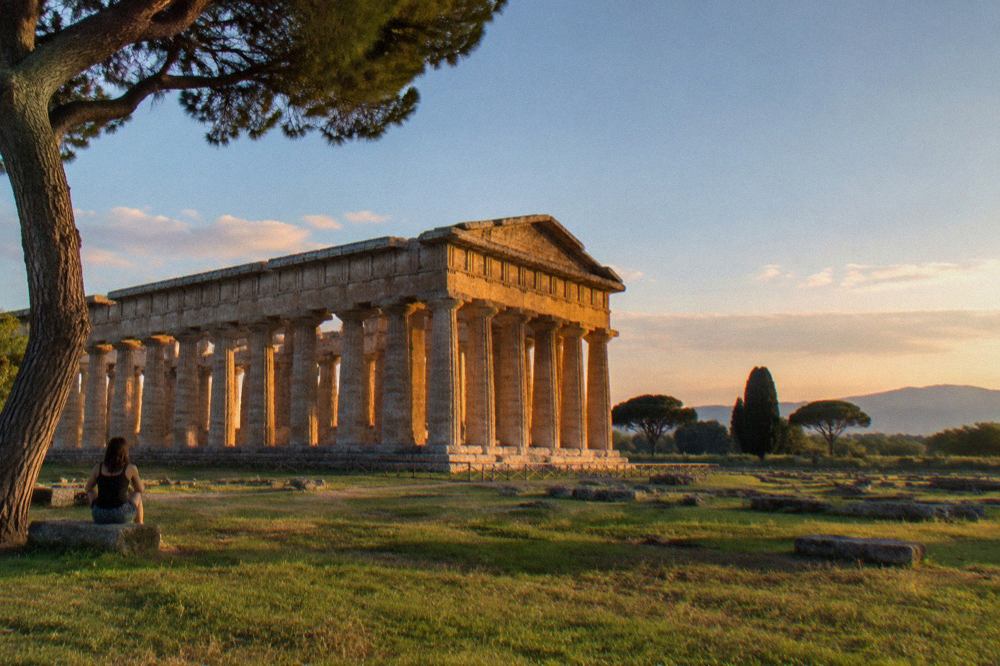
Expect a walled ancient city in a park-like setting: three temples dedicated in the Greek period, a Roman forum area, the remains of an amphitheatre, and an archaeological museum beside the entrance. The walking is flat and unhurried, shade is limited, and the scale rewards early or late light when the stone glows. Allow a comfortable half day for the site and museum together, longer in summer heat.
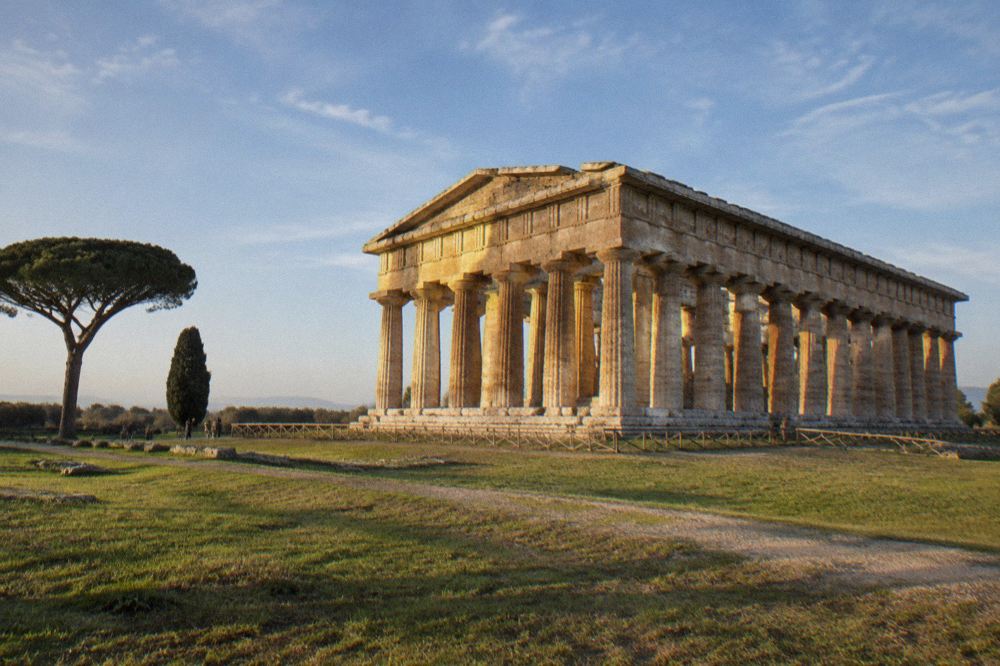
The temples are the draw, and their completeness is the point: columns standing to their full height, entablatures largely intact, silhouettes recognisable from a distance. The site's wall circuit survives impressively, and the modern town of Capaccio-Paestum, with its hotels and buffalo-mozzarella farms, sits just outside. The museum completes the visit with metopes and tomb paintings recovered from the area.
Season shapes the experience. Using the Pompei grid-point normals as the nearest verified climate reference, July is the driest month at about 16 mm of rain and August the warmest at a mean daily maximum of about 29.4 C, while November is the wettest at about 180 mm. Spring and autumn give the most comfortable temple-gazing conditions on any sensible reading of those numbers. For what to wear on the stone and dust, our dress code advice for Pompeii transfers directly, as does the guidance on how difficult the walking is, with Paestum's flat terrain the easier of the two by a wide margin.
Planning Your Campania Itinerary Around Paestum?
Build Paestum into the second or third day of a Campania stay, after Pompeii and Vesuvius, using Salerno as the hinge. A three-day shape runs Pompeii on day one, Herculaneum or Vesuvius on day two, and Paestum with the southern coast on day three. Cruise passengers and single-day visitors should skip Paestum; the Pompeii day is the safer promise to keep.
For cruise travellers weighing shore time, the Pompeii excursion decision comes first: read whether a guided Pompeii tour is worth it and which Pompeii tour is best. Paestum, for a ship day, is a specialist choice rather than a default.
Independent-minded readers should also weigh touring Pompeii on your own, since Pompeii rewards self-direction in ways Paestum, being smaller and more self-explanatory, does not demand. And anyone tempted to squeeze everything should read whether Herculaneum and Pompeii fit in one day before adding a third site to the same sentence.
The final planning note is transport. The Campania Express rail service has been suspended since 1 October 2026, so coastal rail plans built on older guidebooks need rechecking; the Circumvesuviana line remains the rail spine for the Vesuvian sites, with scheduled runs from Napoli Garibaldi to Pompei Scavi-Villa dei Misteri taking 29 to 35 minutes per the operator's published timetable data. For Paestum itself, consult the operator's timetable by name rather than any remembered figure.
The verdict, then, is conditional but warm. Paestum is worth visiting for anyone with a spare half day in Campania and an appetite for Greek architecture at its most intact; it is not worth shoehorning into a schedule that already strains to hold Pompeii, Vesuvius and the coast. Give it the slower day, and it will feel like the quietest room in Italy's loudest region.
Common Questions About Paestum
Is Paestum, Italy worth visiting?
Yes, if Greek temples in peaceful surroundings appeal and your Campania trip has a spare half day. Paestum holds three of the most complete Doric temples surviving anywhere, a good museum, and far smaller crowds than Pompeii. It is not a substitute for Pompeii, which offers an entire buried Roman city across 44 excavated hectares, but a complement for a second or third day.
Can you visit Paestum and Pompeii in one day?
It is possible on paper but not recommended. Pompeii alone rewards three or more hours on uneven stone, and Paestum sits well south of the Bay of Naples circuit, past Salerno, which is 31 km by road from the Pompei Scavi station area. Two days, with Salerno as the hinge, give both sites the attention they deserve.
What is Paestum famous for?
Paestum is famous for its three standing Greek Doric temples, among the best preserved Greek temples in the world, within the walls of a Greek-founded city later Romanised. Its museum and the surrounding buffalo-mozzarella country round out a visit.
Is Paestum less crowded than Pompeii?
Yes, markedly.
Which site should I choose if I only have one day?
Choose Pompeii for the buried-city experience, or Paestum if you have already seen a major Roman site and prefer monumental architecture in calm surroundings. The answer depends on whether the day is for streets and frescoes or for temples and sky.
For the wider region, the homepage of Pompeii Travel Guide carries the full range of planning resources, from ticket strategy to Vesuvius hikes and the coast. Paestum earns its place in that landscape precisely because it is different: quieter, flatter, older in its stones, and best enjoyed as the day the itinerary slows down.