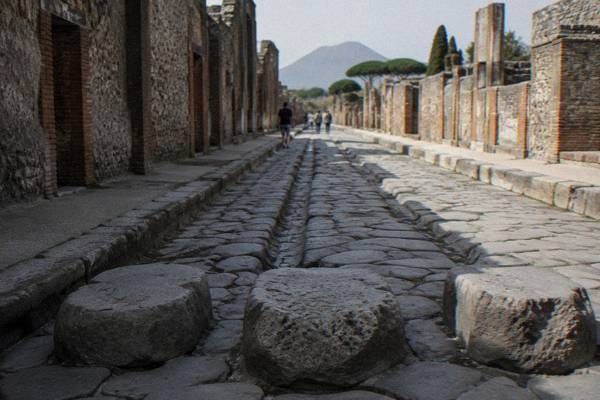
What Did The DNA Reveal About Pompeii?
What ancient DNA extracted from Pompeii casts revealed about identity, ancestry and family ties in the Roman city buried by Vesuvius in AD 79.
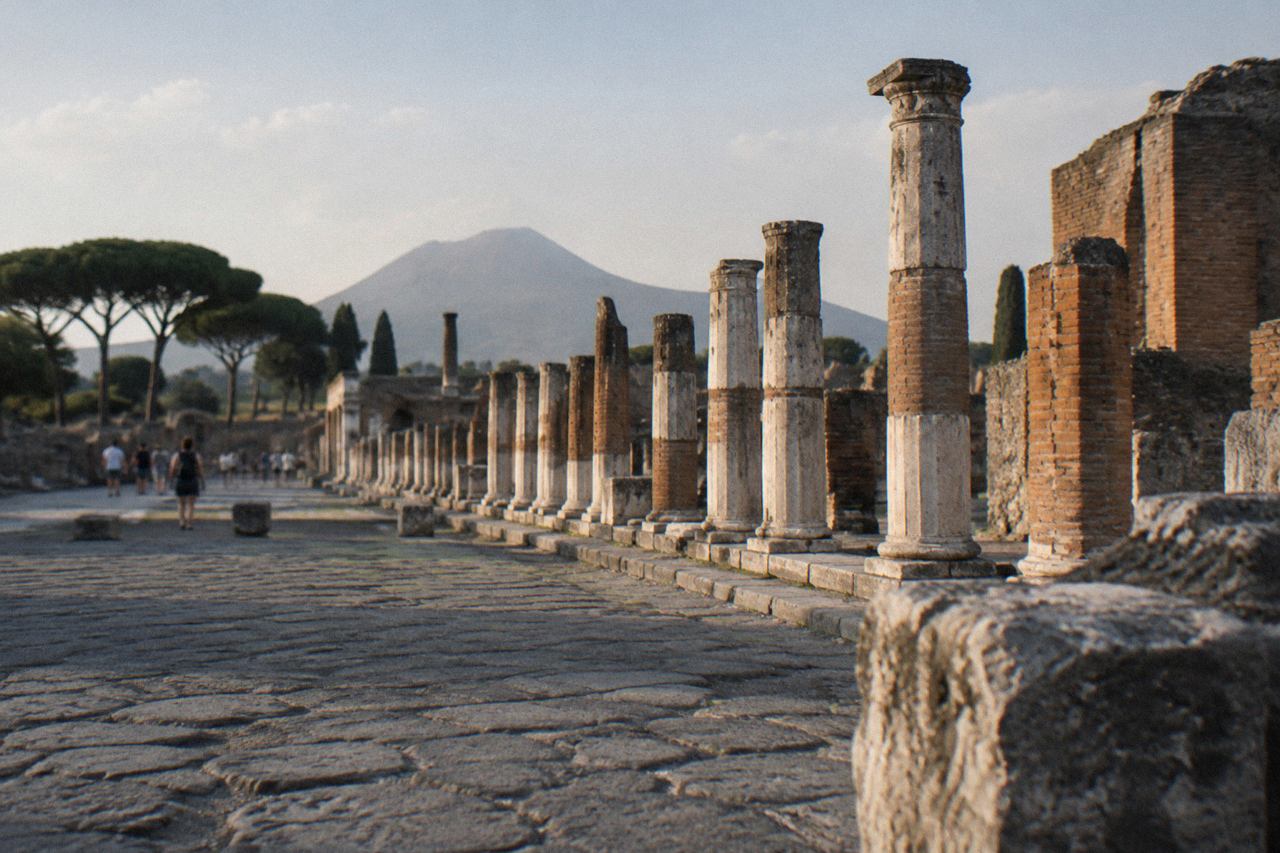
The plaster casts of Pompeii, the ancient Roman city buried by the eruption of Mount Vesuvius in AD 79 and now an archaeological park in Campania, southern Italy, about 24 km from Naples, have been photographed, filmed and described for well over a century. What they could not do, until recently, was speak in their own biological voice. Ancient DNA changed that. Genetic material recovered from bones sealed inside the casts has corrected assumptions the archaeological literature had repeated for generations, and the corrections cut against the grain of how the victims had always been narrated.
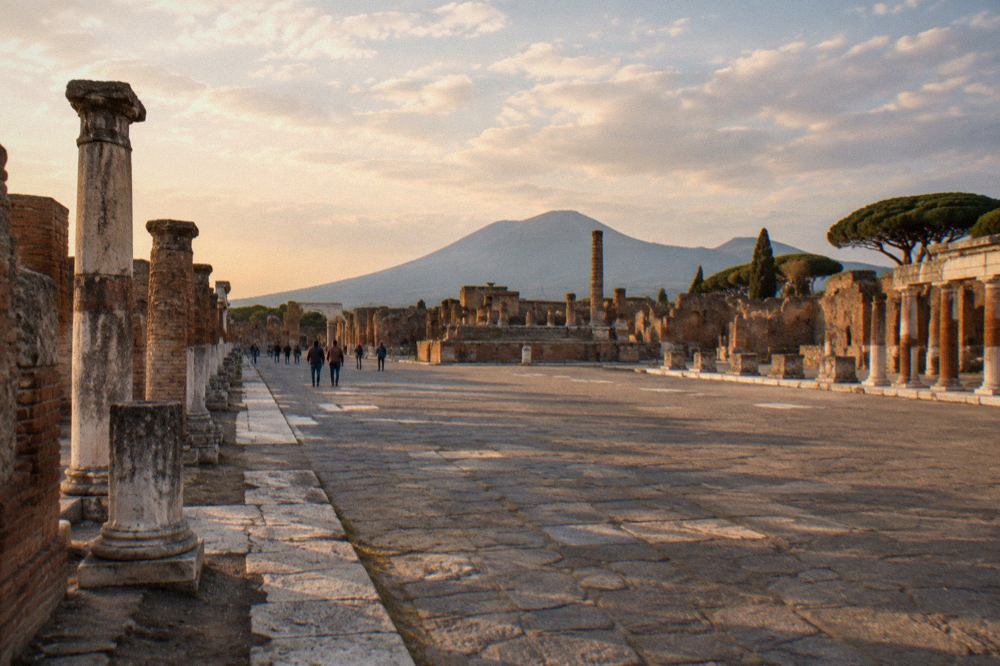
What Did The DNA Reveal About Pompeii?
Ancient DNA extracted from the Pompeii casts revealed that several long-held identifications of the victims were simply wrong: individuals described for decades as mothers, daughters and sisters included adult men, people with no family relationship to the people they died beside, and one person whose genome points to ancestry from the Black Sea region. The findings, published in Current Biology, also confirmed that the victims carried broadly central and eastern Mediterranean genetic backgrounds.
The story begins with the casts themselves. When Giuseppe Fiorelli developed the technique of pouring plaster into the voids the victims' bodies left in the hardened ash, the result was emotionally powerful but interpretively risky. A cast shows a posture, an outline, an impression of age. It does not show sex, ancestry or kinship. For generations archaeologists filled that gap with plausible narratives, and those narratives hardened into fact in guidebooks and documentaries. DNA gave the casts a way to answer back.
The genetic work focused on casts recovered from the House of the Cryptoporticus and surrounding Insula 10, excavated in the nineteen-seventies. Researchers drilled into the bone sealed within the plaster, extracted surviving DNA fragments, and compared the genomes they recovered against each other and against ancient and modern reference populations. The results were published in Current Biology and widely reported across the international press.
Two results drew the headlines. First, the cast long known as "the Jewellery Lady", so called because she wore a gold bracelet and was interpreted as a mother protecting a child, was male, and the child beside that adult was not a biological relative. Second, at least one recovered genome carried a substantial component of ancestry best matched to populations around the Black Sea, a reminder that Pompeii, a port-side commercial city on the Bay of Naples, drew people from across the Roman world.
Which Pompeii Casts Were Tested For DNA?
The tested casts come from the House of the Cryptoporticus and the surrounding Insula 10 in Regio I, a cluster of victims excavated in the nineteen-seventies. The research team sampled bone preserved inside the plaster of multiple individuals, including the famous "Jewellery Lady" cast and the adults and children found grouped together with them. Not every cast yielded usable DNA: preservation across the group was uneven, and the strongest genome came from one adult male. Each sampled individual was re-examined for sex, ancestry and kinship against the group.
The choice of Insula 10 was deliberate. The victims there died in a second surge phase, in conditions that sealed bone inside the ash matrix before it fully degraded, which gave the laboratory something to work with. Casts made in the classic Fiorelli-era manner, where bone was often damaged or removed during casting, hold far less recoverable material.
What the re-examination found, case by case, was a pattern of mistaken identity. Assumptions built on jewellery, posture and proximity, the traditional tools of cast interpretation, failed when tested against chromosomes. The table below sets the traditional reading against the genetic result.
| Cast | Traditional reading | What DNA showed |
|---|---|---|
| The "Jewellery Lady" (gold bracelet, Insula 10) | A mother, associated with the child cast nearby | An adult male; no biological relationship to the child |
| The child cast beside the bracelet wearer | Her child | Not biologically related to the adult beside them |
| Grouped adult-and-child casts of Insula 10 | Presumed family units | At least one pairing unrelated by blood |
| Adult male cast with the best-preserved bone | Untested assumption | Genome recovered; broadly Mediterranean ancestry with a Black Sea component |
The broader lesson is methodological as much as human. Jewellery is not a sex test. Proximity in death is not a kinship test. The narratives the casts invited were always hypotheses, and DNA is the first tool able to check them directly.
For travellers planning to see the site themselves, a guided visit makes the difference between walking past a cast and understanding which questions it can and cannot answer. The Pompeii Travel Guide homepage collects the practical basics, and a Naples-based guided option such as the skip-the-line day trip with a guide pairs transport with an archaeologist-trained commentary, or you can Check availability for your dates.
How Ancient DNA Survives In A Volcanic Burial
DNA survives in Pompeii's bones only in fragments, because the eruption's heat and the centuries that followed broke the genetic material into short, chemically damaged pieces. The laboratory recovery relies on sequencing those fragments many times over and reassembling them computationally, then authenticating the result against the damage patterns unique to ancient DNA. The rock-like ash matrix helped by sealing bone quickly, and the plaster poured around it kept fragments in place. Recovery is therefore uneven: some casts yield readable genomes, others yield nothing usable.
The volcanic context cuts both ways. Rapid burial protected skeletal material from the weathering that destroys DNA at open-air sites, but the heat of the pyroclastic surges, the same phenomenon explored in our answer to how hot Pompeii got during the eruption, degraded the molecules themselves. What survives is short, broken and scarce, which is why the work proceeds cast by cast rather than across the whole collection.
Authentication matters because modern contamination is the great hazard of the field. Every handling of a cast since excavation, archaeologists, restorers, museum staff, leaves traces of modern DNA. Laboratories screen for that contamination and accept only sequences showing the characteristic damage signature of genuine ancient molecules. This is also why earlier claims about Pompeian genetics, made before these methods matured, were treated with caution and later revised.
Why does this matter to a visitor? Because the casts on display in the park and in museums are not just emotional objects; they are scientific ones, and every new sampling campaign has to weigh knowledge against consuming irreplaceable bone. The park treats them accordingly, and visitors are asked to do the same.
Visitors pairing a Pompeii visit with the volcano itself often book a combined day, and the two-site itinerary described on our Pompeii and Vesuvius planning guide explains the sequencing logic.
What The Genomes Say About Ancestry And Migration
The Pompeii genomes recovered so far show people whose genetic backgrounds sit squarely within the diversity of the Roman Mediterranean, including one individual with a clear Black Sea ancestry component and others matching central and eastern Mediterranean profiles. The findings support the picture of Pompeii as a highly mobile port-side city rather than an isolated Campanian town, and they align with the historical record of trade, slavery, migration and freedman communities across the Bay of Naples at the time of the city's destruction.
The Black Sea signal deserves the emphasis it received. A person whose ancestry traces to the region of the Black Sea, dying in Pompeii in AD 79, embodies the reach of Roman networks: goods, soldiers, enslaved people and merchants moved along those routes, and genes moved with them. The jewellery this individual wore signals local prosperity; the genome signals distant origins. Together they dismantle the tidy assumption that a wealthy-looking woman of Pompeii was necessarily born of Pompeii.
The results also feed a wider reassessment of identity in Roman Campania. Pompeii's walls carry everyday written messages, a world described in our collection on what the graffiti in Pompeii said and the languages those writers used, and the genetic evidence now sits alongside the written record as a second, independent witness to who actually lived there.
| Evidence type | What it records | Example from Pompeii | Limits |
|---|---|---|---|
| Plaster cast | Body position, posture, apparent age | The grouped casts of Insula 10 | No sex, kinship or ancestry information |
| Grave goods and jewellery | Wealth, taste, cultural affiliation | The gold bracelet of the "Jewellery Lady" | Was misread as a marker of female sex |
| Written records (graffiti, wax tablets) | Language, names, transactions | Election notices and personal messages on walls | Name and self-description, not biology |
| Ancient DNA | Sex, kinship, ancestry | Black Sea component in one Insula 10 genome | Fragmentary, sample still small |
Does DNA Change The Story Of The Eruption Itself?
DNA does not change the mechanics of the AD 79 eruption, but it sharpens the human picture inside it: who died together, who was unrelated despite dying side by side, and who in the final hours was a recent arrival rather than a lifelong resident. The eruption's date remains debated, with the traditional manuscript reading of 24 August and the alternative October reading unresolved, and genetics contributes nothing to that argument. What genetics contributes is a correction to the social story told around the casts.
The eruption's physical sequence, the surge phases, the burial, the deaths in Insula 10, is documented through stratigraphy and the study of the deposits, a chronology traced in our guide to when Vesuvius erupted. The park's own e-journal has weighed in on the date question, noting that the October date rests on a misreading introduced centuries later, while leaving the August date itself open to debate. DNA does not touch this argument at all.
Where the human picture changes is in the households. A dying group reinterpreted as unrelated individuals, a presumed mother revealed as an unrelated man, changes how the last hours are narrated. Were these neighbours sheltering together? Enslaved people and owners? Guests and hosts? The genetics cannot say, but it removes the false certainty and returns honest questions to the foreground.
The number of dead remains its own contested question, one addressed in detail across our survival and casualty pages, including whether anyone survived Pompeii and the darker human record collected in a disturbing fact about Pompeii. DNA studies sample a handful of individuals; the dead numbered far more.
Can You See The DNA-Studied Casts When You Visit Pompeii?
Yes, casts from the archaeological park's collection are displayed inside Pompeii, and the Insula 10 material belongs to the park's holdings, though individual casts rotate between on-site display, the Antiquarium and travelling exhibitions, so no specific cast can be guaranteed on a given day. The park also holds casts recovered across the city, from the Garden of the Fugitives group to isolated figures. Visitor access runs through the named entrances at Porta Marina, Piazza Esedra and Piazza Anfiteatro.
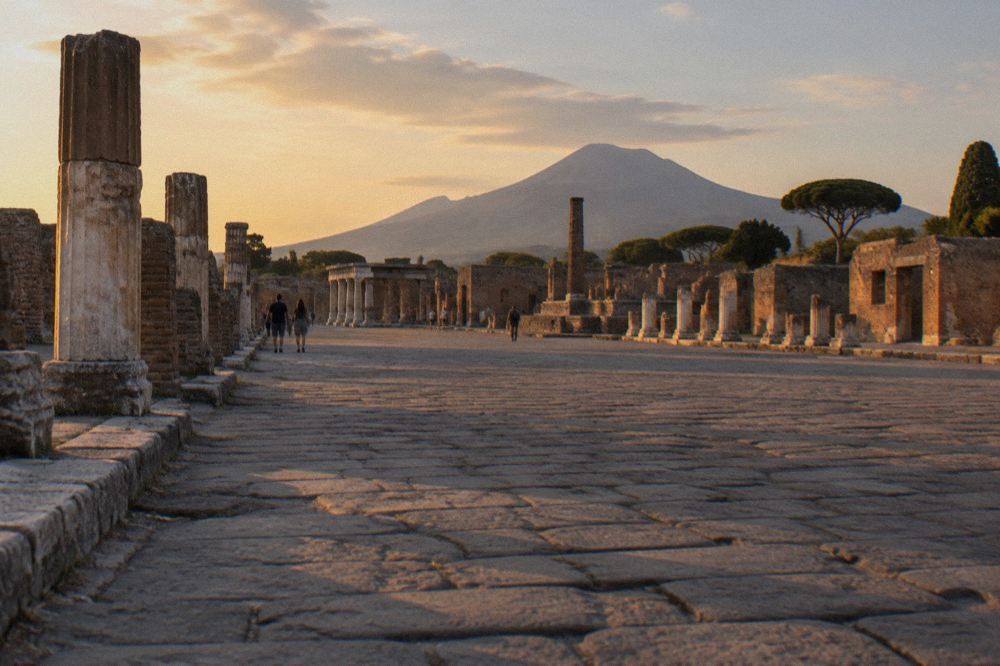
Practical framing helps here. The park sold a Pompeii Express ticket at EUR 20 in 2026 for the ancient city alone, with the Pompeii+ ticket at EUR 25 adding the suburban villas, and from 1 January 2027 a single EUR 25 ticket covers all park sites, valid 30 days with one entry per site. Entry is free for under-18s and for everyone on the first Sunday of the month, and a reduced EUR 2 rate applies to EU citizens aged 18 to under 25. The full ticket detail sits on our Pompeii ticket options page.
A guided walk adds the interpretive layer that casts cannot supply on their own. A guide who has followed the DNA story can point at a grouped cast and explain exactly what the genetics corrected, which turns a moment of horror into a moment of evidence. The two-site Naples itinerary below pairs the ruins with the volcano that killed them.
What DNA Still Cannot Tell Us About Pompeii
Ancient DNA cannot tell us names, life stories, personalities or causes of death, and the Pompeii sample remains small, a handful of individuals from one insula out of a city of thousands. It cannot identify cast individuals with historical persons named in inscriptions, cannot confirm family units beyond the people sampled, and cannot settle the eruption-date debate. The findings correct specific mistaken identifications and add ancestry data; they do not reconstruct the city's population as a whole.
This restraint matters. Popular coverage of the DNA stories sometimes slides from "one genome shows Black Sea ancestry" to "Pompeii was full of Black Sea migrants", a leap the evidence does not support. One individual is one data point. Likewise, the reversal of the "Jewellery Lady" identification corrects one cast's story, not the whole corpus of cast interpretation.
There is also an ethical frontier. Further sampling consumes bone that can never be replaced, and the park weighs each request against the knowledge it might yield. Future studies will likely broaden the sample, and the picture may shift again, which is exactly how honest science reads: provisional, specific and open to correction, unlike the confident cast narratives it replaced.
Common Questions About Pompeii DNA
What did the DNA reveal about Pompeii?
It revealed that several victims had been misidentified for decades: one famous cast, long read as a mother with a child, was an adult male unrelated to the child, and at least one genome carries Black Sea ancestry. The findings, published in Current Biology, also placed the Pompeii victims within the broader genetic diversity of the Roman Mediterranean.
Whose DNA was tested?
Bone preserved inside plaster casts from the House of the Cryptoporticus and surrounding Insula 10 of Regio I, victims who died in the later surge phases of the AD 79 eruption and were cast in plaster after excavation in the nineteen-seventies.
Can DNA tell who the victims were by name?
No. DNA can indicate sex, kinship between sampled individuals and broad ancestry, but it cannot match a cast to a named Roman, and the Pompeii sample covers only a small number of individuals from one city block.
Does the DNA prove when Vesuvius erupted?
No. The eruption date remains an open scholarly debate between the traditional manuscript date of 24 August AD 79 and the later-proposed October reading, which the park's own e-journal says lacks evidentiary basis. Genetics contributes nothing to that question.
Are the DNA-studied casts on display in Pompeii?
The casts belong to the archaeological park's collection and are displayed in the park and its Antiquarium, but individual casts rotate, including to travelling exhibitions, so a specific cast cannot be guaranteed on any given visit.
If the DNA findings change one thing for the visitor, it should be this: the casts reward attention, not assumption. Every figure lying in the ash was a real person whose story modern science is still patiently correcting, one fragment at a time, and seeing them in person, with a guide who knows which stories have already been overturned, is the fullest way to meet them.