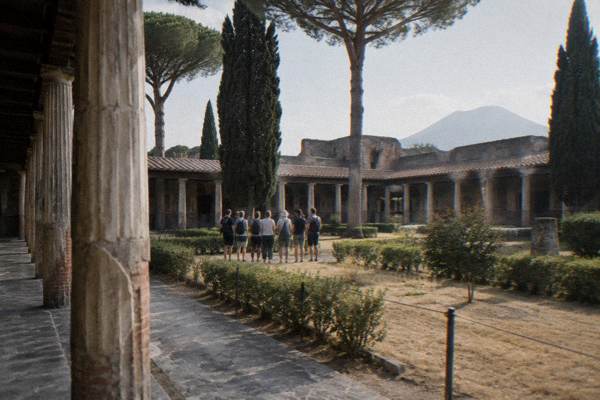
Did Anyone Survive Pompeii
The eruption of Mount Vesuvius in AD 79 buried the Roman city of Pompeii in Campania, southern Italy, but the city did not die with everyone inside it. Survivors are documented in Roman letters, resettlement records and the very absence of bodies in parts of the ruins.
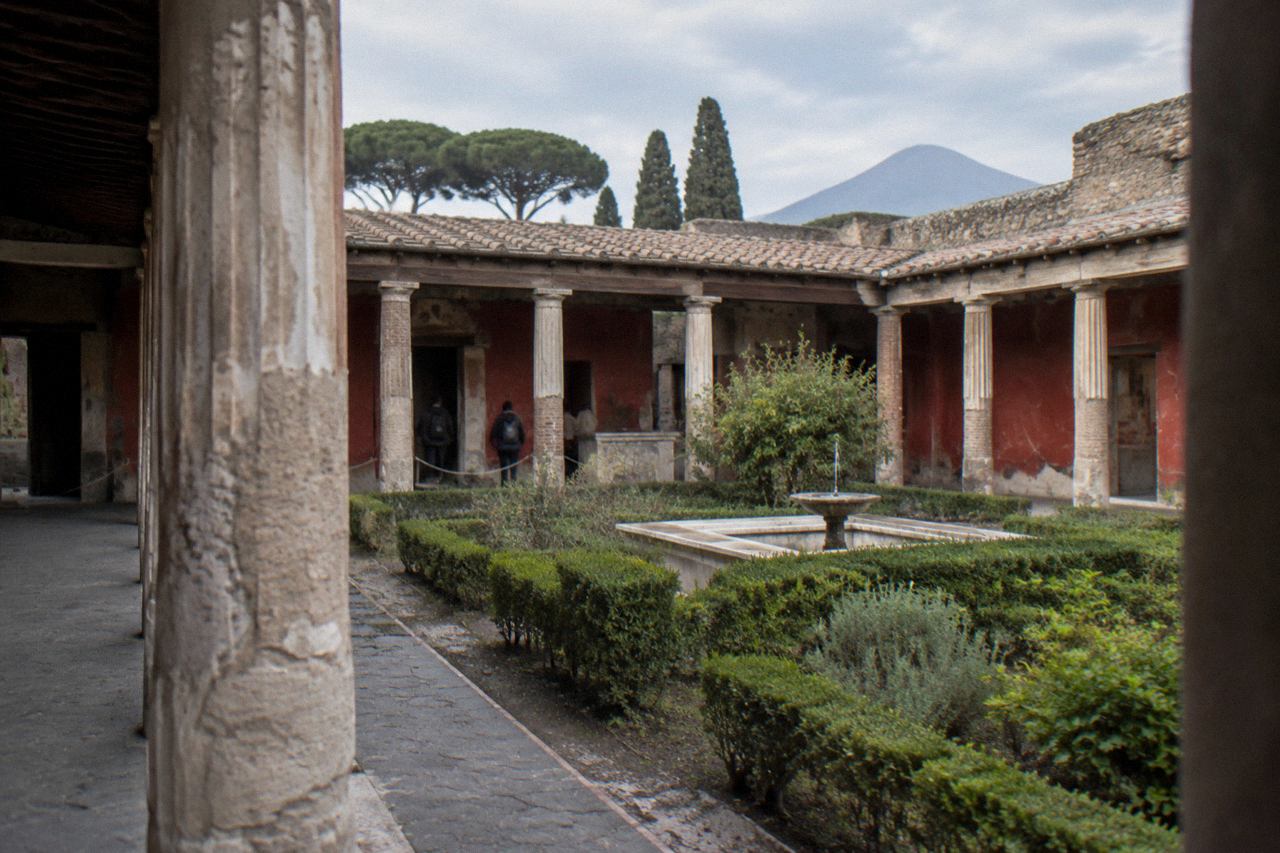
Short answer
Yes, a large share of Pompeii's population survived the AD 79 eruption. Roman letters and resettlement patterns show residents fleeing before and during the disaster, and communities of exiles appearing in towns across Campania afterwards. The site, about 24 km south-east of Naples, holds the evidence both of those who escaped and those who did not.
Pompeii, the ancient Roman city buried by the eruption of Mount Vesuvius in AD 79, sits in Campania, southern Italy, beside the modern town of Pompei and about 24 km by road from Naples. The question people ask first, before the mosaics and the bakeries, is simpler: did anyone survive? The answer is yes, and the evidence for it is written into Roman correspondence, into the towns around the Bay of Naples, and into the ruins themselves. This guide sets out who escaped, how, where they went, and how you can read that story on the ground today.
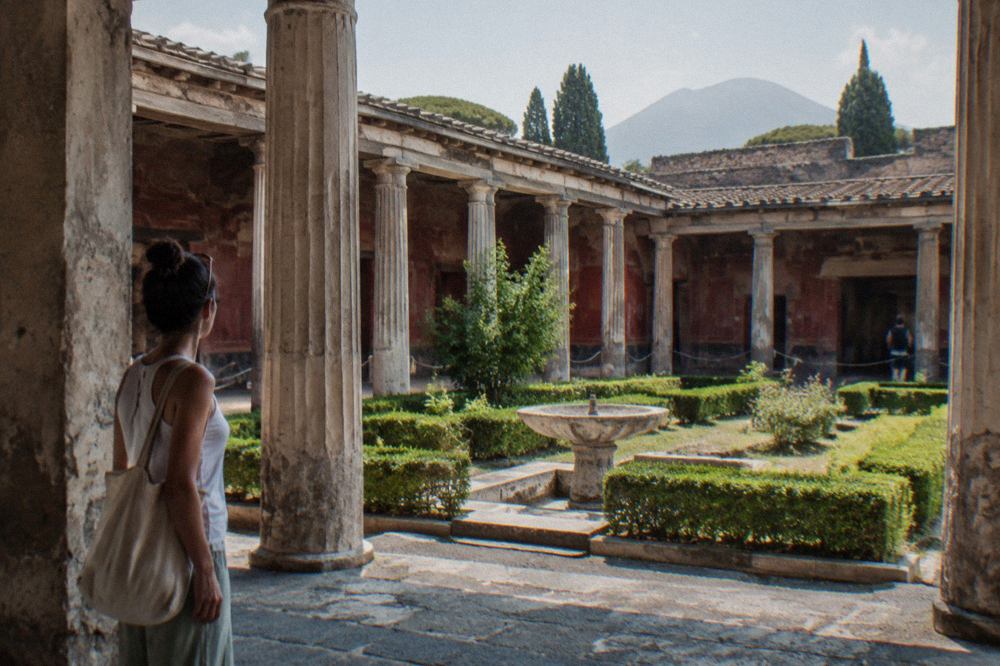
Did Anyone Survive The Eruption Of Pompeii?
Yes, many people survived. The eruption traditionally dated to 24 August AD 79, a date scholars still debate, unfolded over many hours, and that slow beginning gave a large portion of the city's population time to leave. Roman letters describe refugees on boats and families fleeing inland, and towns across Campania afterwards held communities of Pompeian exiles. Survival was not luck alone; it was largely a decision made early, on foot, cart or boat, before the deadliest phase of the eruption reached the city.
The strongest written evidence comes from Pliny the Younger, whose letters describing the eruption survive in the oldest manuscripts. He was staying across the bay at Misenum when the cloud first rose, and his family debated whether to flee as ash began to fall. His uncle, Pliny the Elder, sailed towards the eruption and died there; the nephew lived, and his account, written for the historian Tacitus, is the reason we know what the eruption looked like at all. The fuller story of that rescue attempt is covered in our page on whether Pliny survived Pompeii, and the eruption's chronology and its date debate sit in when Vesuvius erupted and how the date is debated.
What the letters make plain is that the disaster was not a single moment. The first hours produced a towering cloud and a rain of light pumice stones, uncomfortable but survivable, especially for anyone who left quickly. The lethal surge phases came later. People who hesitated, sheltered under roofs that eventually collapsed, or were trapped by accumulating debris were the ones the excavations later found. Archaeologists separate the two groups every time they dig: those who fled, and those who could not.
The proportions cannot be fixed. What can be said with confidence, from the letters and from the resettlement evidence below, is that the survivors were numerous enough to form visible, named communities elsewhere in the region within years of the disaster.
| Kind of evidence | What it shows | Where it is found |
|---|---|---|
| Pliny the Younger's letters | Eyewitness flight from Misenum and a rescue voyage towards the eruption | Roman correspondence addressed to Tacitus |
| Resettlement communities | Named groups of Pompeian exiles in neighbouring towns | Inscriptions and civic records across Campania |
| Absence of remains in parts of the city | Areas where people left before the lethal phases | The excavated city, 44 hectares of it |
| The body casts and skeletons | Those who stayed too long | The site itself and itsAntiquarium displays |
How Did People Escape The Eruption Of AD 79?
Escape happened in three main ways: by sea, by road, and by early departure on foot before the worst of the ash fall. The harbour areas and the coastal roads carried people away in the first hours, while the inland routes towards Nuceria and beyond took cartloads of families and possessions. The single common factor among those who survived is that they moved before the pyroclastic surges reached the city walls, because once those arrived there was no surviving them outdoors.
The letters describe a landscape of departure. Pliny the Elder ordered warships launched, partly from scientific curiosity and partly because a friend trapped at the coast had sent word asking for rescue. That friend and her household were among those waiting by the sea for a rescue that saved some and not others. Further along the coast, ordinary families loaded carts, and the roads east and north out of the city carried a stream of them, many with household goods that archaeologists have found abandoned along the way when the load slowed the escape.
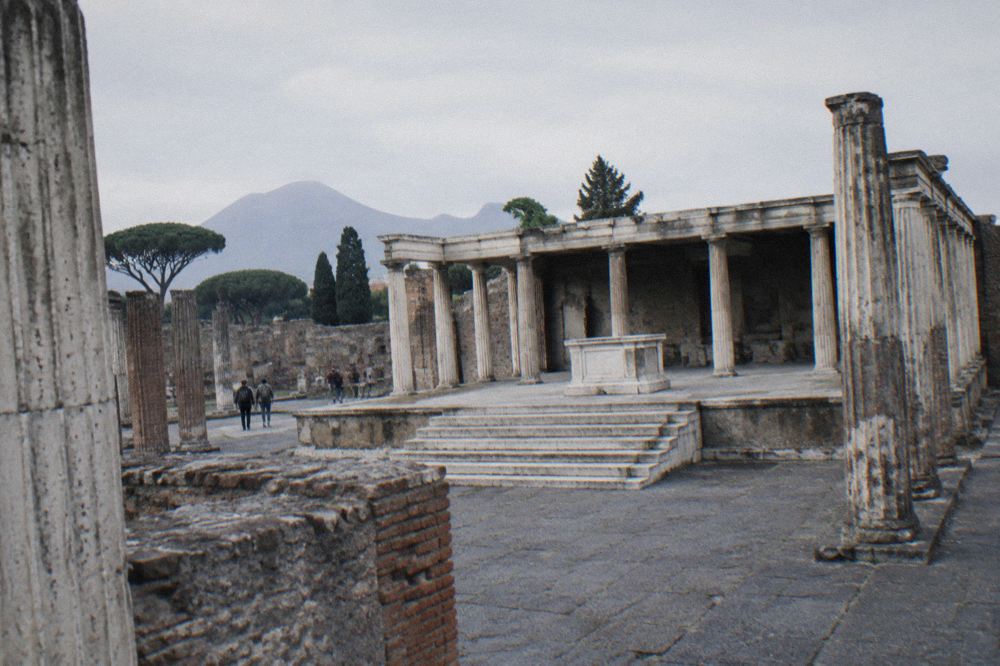
Timing decided everything. The eruption column rose and pumice fell for hours, and during that window the streets were passable, if increasingly difficult, and the exits usable. The letters record people tying pillows to their heads against the falling stones, a detail that tells you both how long that phase lasted and how determined people were to keep moving through it. When the column later collapsed and the hot surges swept across the area, survival outdoors ended within moments, and the people still inside the city died where they stood or lay.
For planning your own visit to this same coastline, the routes survivors used are still the routes you will use: the modern town of Pompei grew around the shrine that later stood on the road network the Romans built. Our guides cover the practical versions, including getting from Naples to Pompeii, the route from Sorrento, coming from the Amalfi Coast, and the longer journeys described in a Rome to Pompeii day trip and Rome to Pompeii by train.
| Escape method | Who used it | How it went |
|---|---|---|
| Boat from the coast | Households near the harbour, and those awaiting rescue by sea | Possible only in the early hours; the sea became impassable as the eruption intensified |
| Cart on the road network | Families with goods, those with children and older relatives | Slow but survivable if departure came early |
| On foot inland | Those without transport, including many household servants | Worked when started promptly; the roads east stayed usable longest |
| Sheltering indoors | Those who hesitated or could not travel | Fatal in the later phases as roofs collapsed and surges arrived |
The survivors' story is the reason a guided walk of the city rewards you with more than a self-guided wander: an archaeologist-led small group can point at a doorway and tell you which way its household ran. The featured option on this site, the Pompeii small-group tour with an archaeologist, covers exactly these streets, and you can Check availability on the operator's live listing.
What Evidence Shows Survivors Of Pompeii?
Three kinds of evidence prove survival: the letters of Pliny the Younger, the inscriptions recording Pompeian exiles in other Campanian towns, and the distribution of the dead inside the city itself, which shows gaps where whole districts clearly left before the end. No single piece is decisive alone, but together they establish that a substantial population walked away and reappears in the historical record afterwards, rebuilding lives under new town walls.
The inscriptions are the quietest and strongest proof. Communities of Pompeians appear in the civic records of towns inland and along the coast, identified by their origin, and some held on to their identity for a generation. Roman society marked people by their home city in ways that survived displacement, and those markers let later historians trace the diaspora. The pattern fits what you would expect from a mass evacuation followed by a mass return that never happened: the city was never rebuilt, so its people stayed where they had fled.
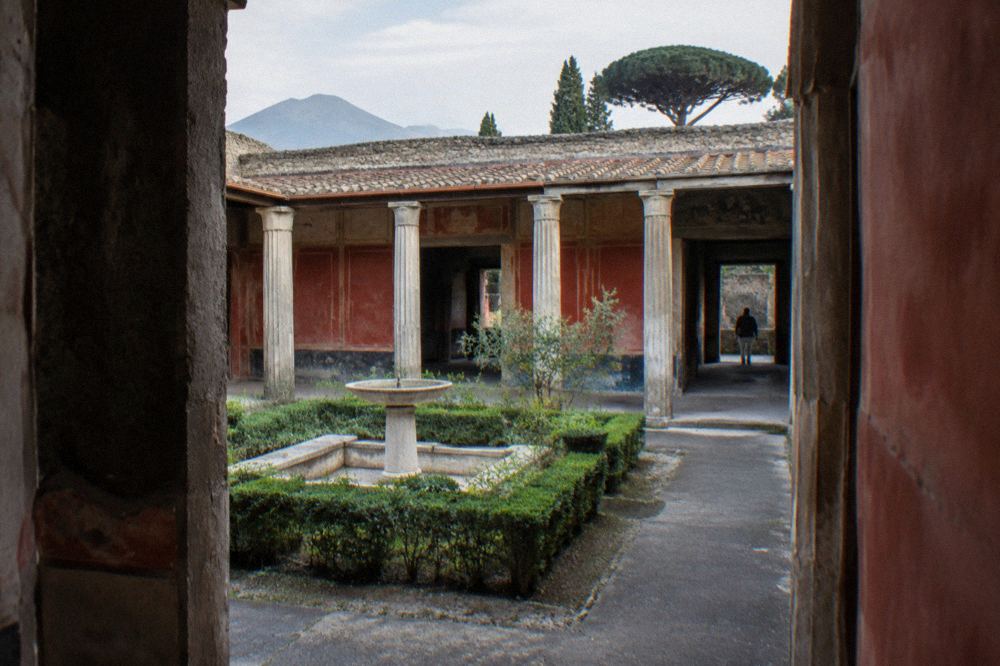
Inside the city, the archaeology tells the same story by absence. The excavated area, 44 hectares of the ancient city according to UNESCO's listing for Pompeii, Herculaneum and Torre Annunziata, contains a large number of dead, but not in every house and not evenly spread. Whole blocks show clear signs of orderly departure, valuables taken, doors closed, rooms empty of remains. The dead cluster in the places you would predict for a late departure: near gates, in garden areas where people gathered during the pumice fall, and in rooms where families waited out the ash.
Modern science has added a further layer. The casts made from the voids left by the dead, a subject covered in depth in our guide to the Pompeii body casts, have been studied with techniques that read the skeleton beneath the plaster, and the site has drawn DNA work described in what the DNA revealed about Pompeii. The graffiti on the city's walls, painted and scratched by the living city, gives a sense of the community that was interrupted, and our page on what the graffiti in Pompeii said collects it. None of this names survivors individually; collectively it shows a population large enough that its escape left a hole.
| Source | Type | What it contributes to the survival question |
|---|---|---|
| Pliny the Younger's letters | Eyewitness prose | Flight from the eruption zone described hour by hour |
| Civic inscriptions of Campanian towns | Official records | Named Pompeian exile communities after AD 79 |
| Distribution of remains in the excavated city | Archaeological | Empty districts indicating early, successful evacuation |
| Casts and skeletal study | Scientific | Identification of who the dead were and how they died |
Walking the evidence with a guide changes how the site reads, because the empty houses mean nothing until someone explains why they are empty. For a deeper cut, the Villa of Mysteries tour with an archaeologist extends the same guided approach to the villa quarter by the ancient road out of the city, the direction in which many survivors walked.
Where Did The Survivors Of Pompeii Go After The Eruption?
Survivors scattered into the towns of Campania and beyond, with inscriptions placing Pompeian communities in inland cities such as Nuceria and in settlements along the coast, while wealthier families relocated to Rome and other Italian towns with relatives or business ties. Some returned to the edge of the buried city to retrieve belongings, and some looters tunneled into the ash, but the city itself was never rebuilt, so the diaspora became permanent for nearly everyone who had fled.
The resettlement pattern followed Roman social logic. Freedmen and artisans moved to the nearest working towns, where their trades were in demand after the region lost one of its commercial centres. Elite families, whose networks stretched across Italy, went further afield; the letters and civic records show them resurfacing in municipal life elsewhere, sometimes generations later still bearing the family names attested on Pompeian walls and tombstones. The modern question of whether anyone lives on the old city ground today has its own answer, in whether anyone lives in Pompeii now, and the answer runs through this same diaspora: the ancient city stayed empty, and the modern town of Pompei grew up beside it, not on it.
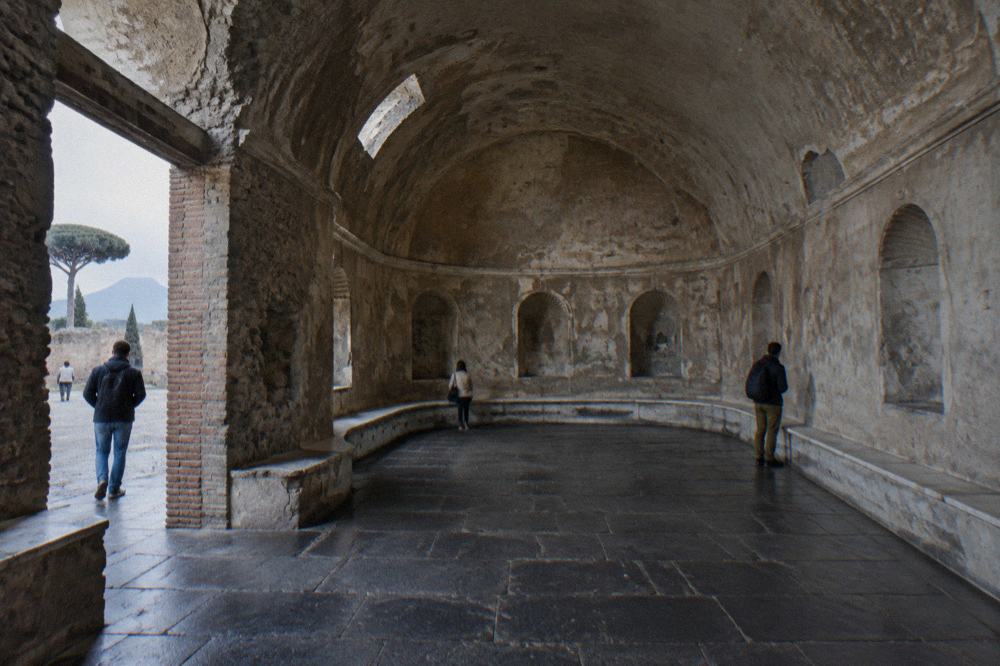
Return visits happened, cautiously. Ash settling into a stable surface, people dug down into rooms below, and tunneling into the buried city for marble, bronze and household valuables went on long before anything resembling archaeology existed. That is one reason the excavated city holds gaps in its record: what the eruption preserved, early diggers partly reclaimed for the survivors' descendants. The absence of a systematic early record of the site is itself part of the survivor story, a city stripped by the people who remembered where the wealth was buried. Everything else covered here is indexed on Pompeii Travel Guide.
The regional economy absorbed the shock better than the city did. Neighbouring towns received the exiles, their skills and their demand for housing, and the Bay of Naples remained a wealthy, populated coast. That resilience is visible today in how many substantial Roman sites sit within a short distance of one another, from Herculaneum, which suffered a different and deadlier fate, to the villa sites at Oplontis and Stabiae. Our comparison of the two famous buried cities, Pompeii versus Herculaneum, explains why the survival rates at the two places differed so sharply.
| Destination type | Who went there | What the record shows |
|---|---|---|
| Inland Campanian towns | artisans, freedmen and families of modest means | Named Pompeian exile communities in inscriptions |
| Coastal settlements | households with local trade ties | Pompeian names reappearing in civic lists |
| Rome and further cities | elite families with wide networks | Municipal careers of people of Pompeian origin |
| The edge of the buried city | returnees and later diggers | Digging into the ash for valuables, long before modern excavation |
Who Did Not Survive Pompeii, And Why?
The people the excavations found are those who stayed too long: families sheltering under collapsing roofs, individuals immobilised or unwilling to abandon property, servants chained or locked indoors, and those caught outdoors when the pyroclastic surges arrived. Death came in two main ways in the city, roof collapse under the weight of accumulated pumice, then the lethal heat of the surges, and the positions of the remains let archaeologists tell the two apart with confidence.
The distinction matters because it explains the survivors too. Everyone found under a fallen roof had hours, in principle, in which to leave, and the reasons they did not run from merely bad to heartbreaking: chains, injury, duty to a master, the belief that the shower of stones would stop, or the simple physical impossibility of moving an invalid or a household of children at walking pace under falling debris. The city's own social structure decided who could flee, and Roman slavery put some people last in that queue.
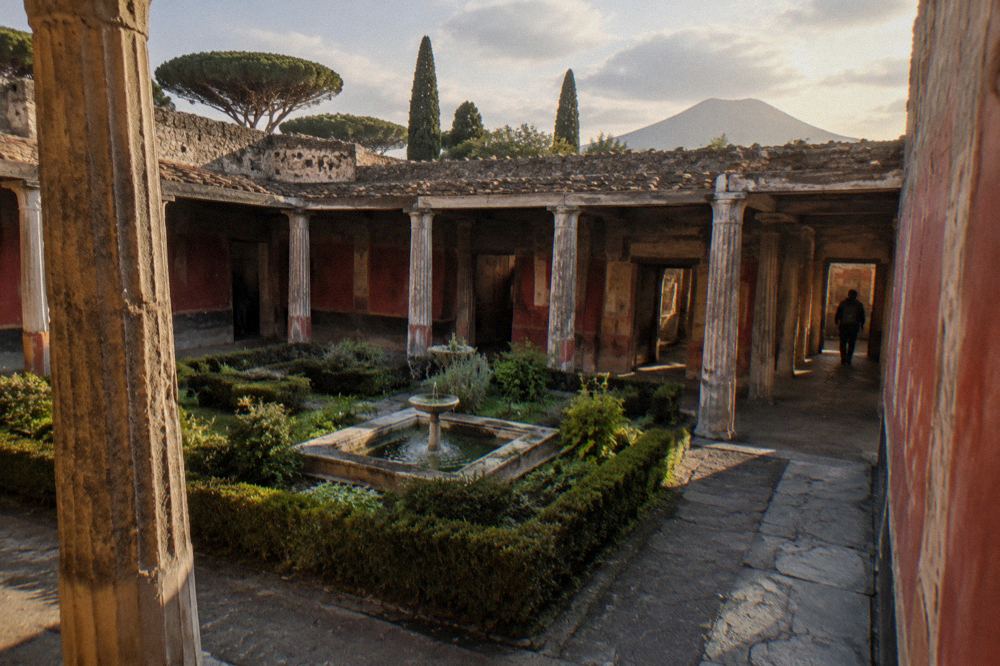
The surges ended the question for everyone remaining. When the eruption column failed and hot ash clouds raced across the ground, survival outdoors became impossible in the moments they took to cross a district, and the remains found in the open, in gardens and along walls and near the gates, mark people who had held out through the pumice phase and were caught at the end. The state of the remains in the neighbouring city of Herculaneum, where people sheltering in vaulted boat sheds by the shore died together in the surge, shows the same physics with cruel clarity; the question of how hot Pompeii got is covered in its own page, and this guide prints no figure beyond what that page holds.
What the dead did not know, and what some of them may have sensed, was that Vesuvius was a volcano at all. The question of whether the city had any warning is treated in whether Pompeii knew Vesuvius was going to erupt: the region had lived through generations of tremors, and the mountain was covered in vineyards, which says something about how it was read at the time.
| Cause of death in the city | Phase of the eruption | Where the remains were found |
|---|---|---|
| Roof and wall collapse under pumice | The long falling-stone phase | Inside buildings, under structural debris |
| Pyroclastic surges | The final phases | In open spaces, gardens, along walls and near gates |
| Entrapment | Throughout | Immobilised persons, locked or chained individuals indoors |
How Do You See The Story Of Survival At Pompeii Today?
You read it in three places inside the park: at the gates and the road out of the city, which show the escape routes; in the emptied districts where whole blocks of houses stand free of remains; and in the Antiquarium and the cast displays, which show the people the escape failed. The park covers 44 excavated hectares with entrances named Porta Marina, Piazza Esedra and Piazza Anfiteatro, and the suburban villas route runs from the Porta Ercolano / Street of the Tombs entrance.
The gates are the honest starting point. Stand under one and look down the road that leaves the city, and you are looking at the survivors' corridor, the same width, the same stones, the same slope they dragged carts up. Inside, the houses that closed their doors behind departing families still read as closed, rooms tidy by disaster standards, and a guide can pick them out. The contrast is the point of a visit: this is a city that both emptied and did not, and both halves of that sentence are visible.
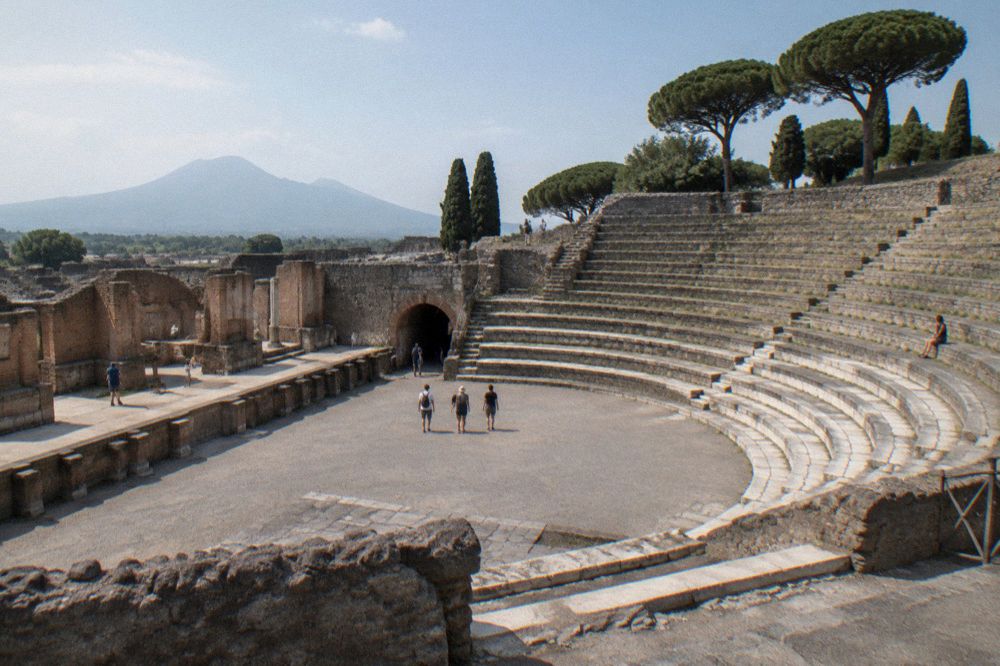
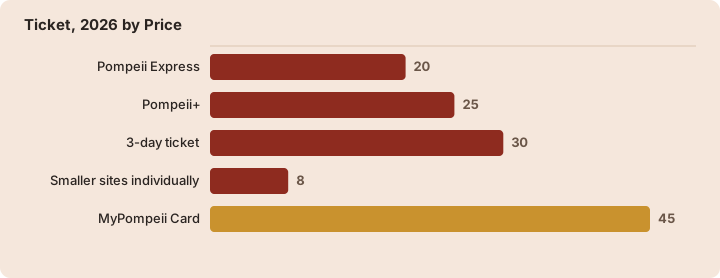
Planning figures come with dates attached. In 2026 the park's tickets are structured as Pompeii Express at EUR 20 for the ancient city only, Pompeii+ at EUR 25 including the suburban villas and other partner benefits, a 3-day ticket at EUR 30 covering the wider park sites, the smaller sites at EUR 8 each, and the MyPompeii annual card at EUR 45. From 1 January 2027 this structure ends and a single EUR 25 ticket for all park sites, valid 30 days with one entry per site, takes its place, with the smaller sites staying at EUR 8 and the card at EUR 45. Entry is free for under-18s and for everyone on the first Sunday of the month, and EU citizens aged 18 to under 25 pay EUR 2. The full detail lives in our Pompeii ticket guide, and the map of entrances is in the Pompeii map page.
| Ticket, 2026 | Price | Covers |
|---|---|---|
| Pompeii Express | EUR 20 | The ancient city only |
| Pompeii+ | EUR 25 | City, suburban villas route, partner benefits |
| 3-day ticket | EUR 30 | Pompeii+ plus Oplontis, the Stabiae sites and Boscoreale |
| Smaller sites individually | EUR 8 | Oplontis, the Stabiae museum, Boscoreale |
| MyPompeii Card | EUR 45 | Annual pass |
A smaller practical note for the same walk: the park's winter hours, from 15 October to 15 March, run 9:00 to 17:00 with last entrance at 15:30, and the summer schedule from 16 March to 14 October runs to 19:00 with last entrance at 17:30. The Praedia of Julia Felix has been closed to the public since 7 September 2026 for maintenance, so route plans that counted on it need adjusting. Both facts matter when your day hinges on catching a train back, and the rail detail is in our Circumvesuviana guide; note the Campania Express has been suspended since 1 October 2026 until further notice.
For visitors pairing the two cities, the Herculaneum small-group tour with an archaeologist, ticket included, is the counterpart walk through the place where the surge caught people at the shore. Its comparison with the Pompeii side of the story, gate by gate and shed by shed, is the sharpest lesson in how the same eruption killed differently in different spots.
Can You Trace The Survivor Story Across The Region In One Trip?
Yes, and it makes a coherent two-part day: the Pompeii side shows the evacuation and the dead left behind, while the Herculaneum side, a short hop along the same railway line, shows the surge's victims by the shore, and the Vesuvius slopes between them carry the villas and vineyards the survivors fled through. Combined tours covering the city and the volcano exist from Naples, and the region's short distances, Naples 24 km and Sorrento 26 km by road from the site, make a multi-site day realistic.
The classic pairing is Pompeii and Vesuvius, standing in the city in the morning and on the volcano's shoulder in the afternoon. The Gran Cono trail is ticketed online only, sold at EUR 11.68 full and EUR 9.55 reduced as sold, with 50 tickets per 10-minute slot bookable 30 days ahead and last-minute tickets nominative since 11 April 2026; the trail closes automatically on an orange weather alert, with automatic refund. Full detail sits in the Vesuvius ticket guide. The deeper geology and date debate remain in our eruption chronology page, which this story leans on throughout.
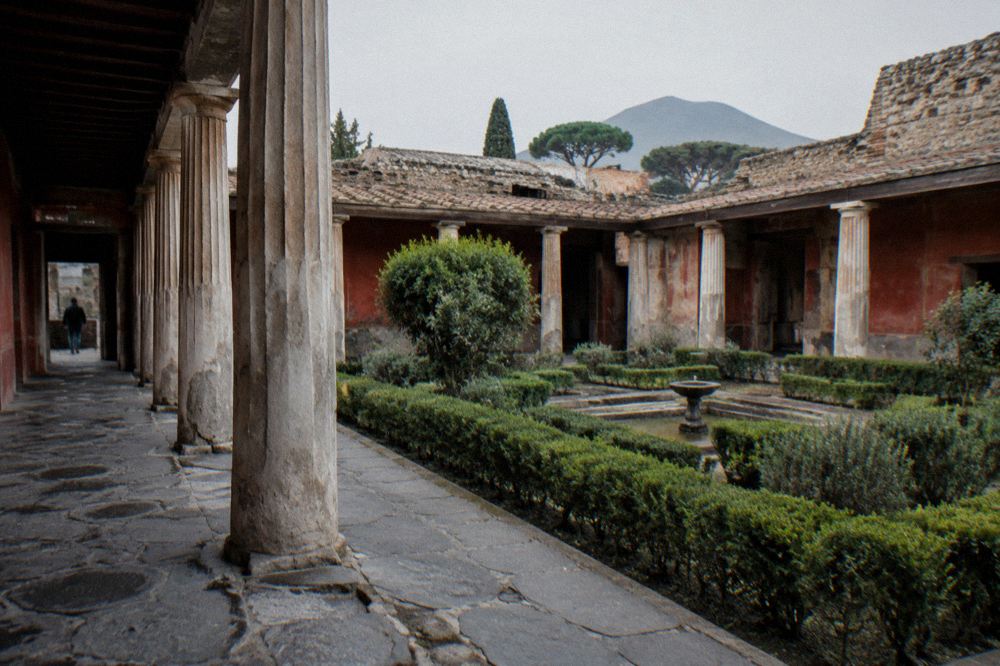
Visitor numbers show how central this circuit has become. The official park figures record 2,972,159 visitors to Pompeii in 2022, 3,985,424 in 2023, 4,069,377 in 2024 and 4,000,090 in 2025, and all park sites together passed four million in each of those last three years. In 2024 the peak months were May at 516,923 and September at 468,340, while November fell to 189,866 and December to 138,028. The daily cap of 20,000 visitors, in force since 15 November 2024, keeps the busiest days from swamping the narrow survivor streets, and nominative tickets mean your ID travels with you. If a long day from the capital appeals, the Rome day-trip guide covers it end to end.
| Year | Pompeii visitors | All park sites |
|---|---|---|
| 2022 | 2,972,159 | n/a |
| 2023 | 3,985,424 | 4,079,235 |
| 2024 | 4,069,377 | 4,177,753 |
| 2025 | 4,000,090 | 4,118,926 |
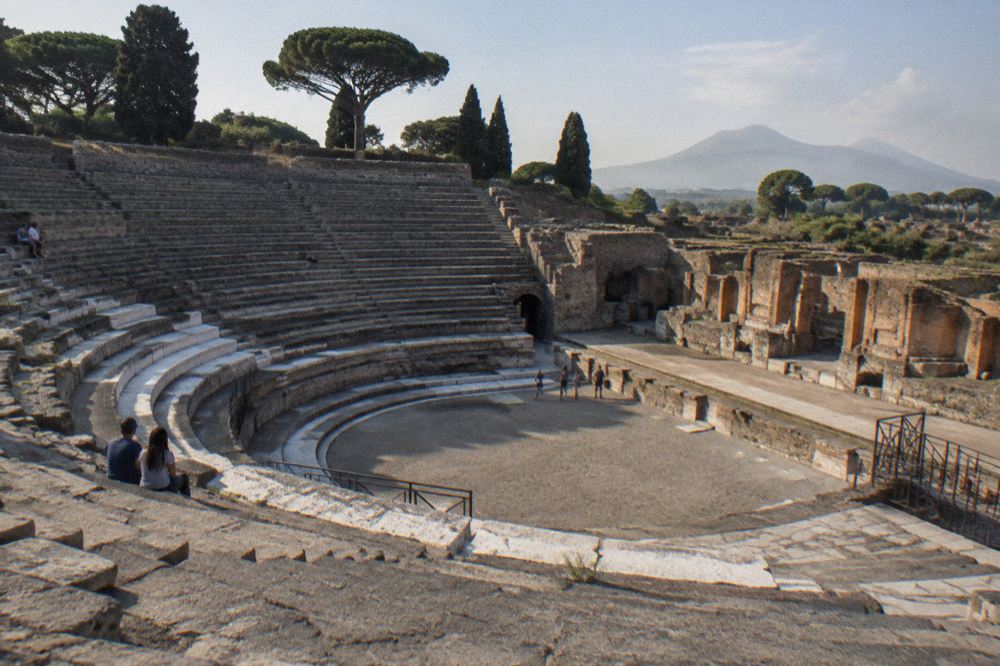
The survivor story also frames where to eat and sleep on such a trip. The modern town beside the ruins answers the practical questions in where to eat in Pompei and where to stay in Pompei, both of which sit on the same ground the exiles crossed leaving the city. A day that walks the escape road in the morning and eats on it at lunch closes the circle neatly.
For travellers who want the volcano and the city in one guided sweep, the exclusive Pompeii and Vesuvius tour with lunch from Naples stitches the two halves of the story together, the city the people fled and the mountain they fled from, without the logistics of doing it alone.
Common Questions About Surviving Pompeii
Did anyone survive Pompeii?
Yes. A substantial share of the city's population escaped before the lethal phases of the AD 79 eruption, by boat, cart and on foot, and communities of Pompeian exiles appear in the inscriptions of neighbouring Campanian towns afterwards.
How did people escape the eruption of AD 79?
They left early, by sea from the coast, by cart along the road network, or on foot inland, during the long phase of pumice fall. Once the pyroclastic surges arrived, escape from the city was no longer possible.
Where did the survivors of Pompeii go?
Into the towns of Campania and beyond: inscriptions place Pompeian communities in inland cities such as Nuceria and along the coast, while elite families relocated further afield using wider social networks.
Why did some people not survive Pompeii?
Those the excavations found were people who stayed too long, whether because they were immobilised, enslaved, unwilling to abandon property, or simply convinced the ash fall would pass, and were caught either by collapsing roofs or by the final surges.
Did Pliny survive the eruption?
Pliny the Younger survived and wrote the eyewitness letters that describe the eruption; his uncle Pliny the Elder sailed towards the disaster and died on the coast. The full account is in our dedicated answer page on Pliny.
Can you see the evidence for survivors at Pompeii today?
Yes, in the gates and exit roads, in the districts that emptied without remains, and in the casts and displays that show those the escape failed, across the 44 excavated hectares of the park in Campania, Italy.
The survivors are the least legendary part of the story, and the easiest to stand inside.