What Is A Disturbing Fact About Pompeii?
The most disturbing facts about Pompeii, from the plaster casts of its victims to the disputed date of the AD 79 eruption, explained from verified sources.
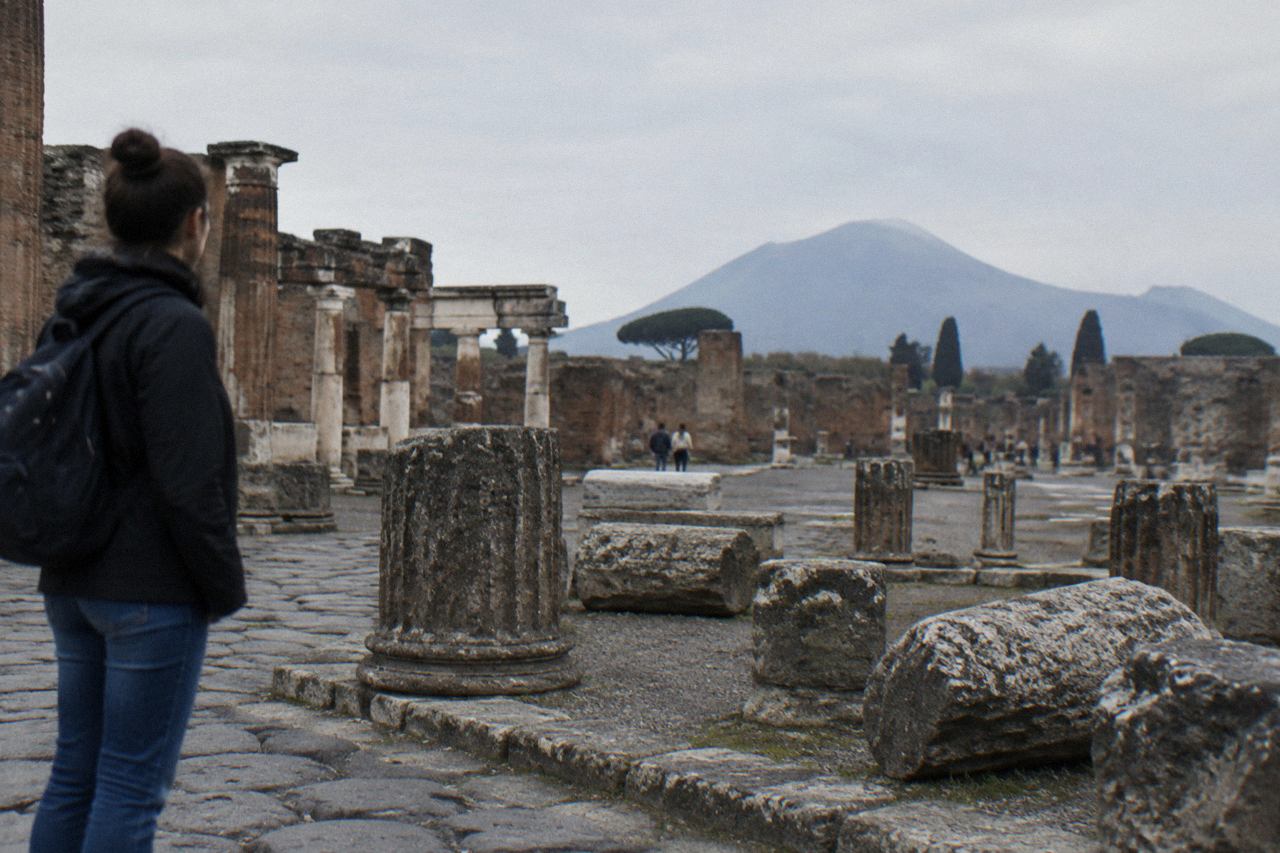
Pompeii, the ancient Roman city buried by the eruption of Mount Vesuvius in AD 79, lies beside the modern town of Pompei in Campania, southern Italy, about 24 km by road from Naples. It is the most visited archaeological site in this part of Italy and one of the disturbing ones, because the destruction it preserves is human. The city did not simply fall into ruin. It was sealed, with its residents, under volcanic material, and excavators later developed a technique that brings those residents back into view.
What Is A Disturbing Fact About Pompeii?
The most widely cited disturbing fact about Pompeii is that the voids its victims left in the hardened volcanic debris were filled with plaster by excavators, producing casts that preserve people, and animals, in the posture of their deaths. Some casts show people covering their mouths or curled on the ground. The technique, developed during excavation of the buried city in Campania, southern Italy, means the site displays not skeletons behind glass but the final moments of named, unnamed, ordinary residents.
The casts are the reason Pompeii registers differently from a museum. A skeleton is evidence; a cast is a person mid-gesture. Excavators noticed that layers of volcanic material had hardened around organic bodies, and that when those bodies decayed they left cavities. By pouring plaster into those cavities they recovered the shape of the person, sometimes down to clothing folds and facial expression. The results include adults, children and dogs, and a number of them are displayed at the site itself.
What makes the casts harder to look at is their specificity. These are not abstractions about a disaster 2,000 years ago. They are individuals caught at the moment the pyroclastic surge reached them, in some cases sheltering together, in others alone in a corner of a room. Guides at the site handle this material carefully, and a good archaeologist-led tour explains what is actually known versus what is invention, which is a distinction the internet does not always make.
If you want the practical side of a visit, the ticket structure and the 2027 changeover are covered in detail on the Pompeii tickets and prices guide.
Why The Plaster Casts Of Pompeii Disturb Visitors So Much
The casts disturb visitors because they collapse the distance between the ancient world and the present. A cast of a crouching person, or of a child alongside an adult, is not a reconstruction painted by an artist; it is a direct physical record of a real death in AD 79. Visitors who expected architecture come face to face with the residents themselves, and that shift, from city to people, is what stays with travellers afterwards.
Some of the best known casts come from the Garden of the Fugitives, where a group of people was overtaken together, and from other locations across the excavated area. The posture tells a story of heat and ash rather than a long fall of debris, which is itself a disturbing correction: death at Pompeii came fast, in phases, and the people found in the ash layers generally died of heat and asphyxiation rather than being crushed slowly.
There is also an ethical debate around the casts that honest coverage should mention. Displaying human remains, even in plaster form, raises questions about consent and dignity, questions the archaeological park manages by controlling how casts are exhibited and photographed. Visitors respond differently. Some find the casts the single worthwhile reason to come; others need to prepare themselves before entering the rooms where casts are shown, and families with young children often plan around them.
Modern science keeps adding to the picture rather than softening it. Recent DNA work has challenged older assumptions about who was found with whom, including some long-repeated claims about relationships between bodies recovered together. The DNA findings about Pompeii are covered in a separate article, and they matter here because they show how much of the emotional story told about the casts was assumption rather than evidence.
The Eruption Date Itself Is A Disturbing Dispute
A quieter disturbing fact is that the date of the catastrophe is not settled. The traditional date, 24 August AD 79, comes from the oldest manuscripts of Pliny the Younger's letters, but a charcoal inscription found in 2018, which many scholars date to mid-October, reopened the debate. The park's own e-journal states that 24 October has no evidentiary basis, while also noting that 24 August is not guaranteed to be right.
That is an uncomfortable position for a site visited by millions. The eruption that killed a Roman town cannot be pinned to a day, because the copyists who transmitted Pliny's letters left conflicting numbers and the physical evidence is contested. The charcoal graffito, mentioned above, is treated by the park as part of an open scholarly debate rather than proof, and the park's current position leans away from the October date without confirming August.
| Evidence | What it says | Status |
|---|---|---|
| Pliny the Younger's oldest manuscripts | 24 August AD 79 | Traditional date |
| Charcoal graffito found in 2018 | Dated by many scholars to mid-October AD 79 | Open debate, not proof |
| Park's e-journal | 24 October has no evidentiary basis; 24 August not necessarily correct | Current scholarly position |
The dispute matters because it changes the picture of the victims' last day. An autumn eruption means cooler weather, different clothing, different activities on the morning the mountain broke. The well-known image of a summer town caught mid-afternoon is partly narrative convenience. What is not disputed is the mechanism: Vesuvius buried Pompeii under pumice and then hot pyroclastic material, preserving the city at the scale of doorways, frescoes, bread in ovens and people.
This is also why claims circulating online should be treated with care. The site has an unusually large amount of folklore attached to it, from invented body counts to romantic stories about paired skeletons.
Disturbing Details From Everyday Life In The Buried City
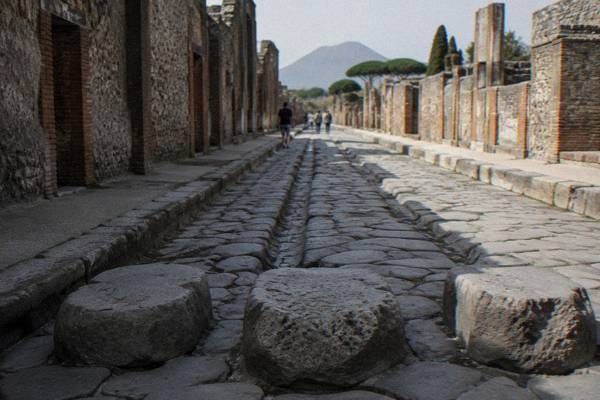
Beyond the casts, Pompeii disturbs through its everyday details: loaves of bread found carbonised in ovens, a dog still chained at the moment of death, graffiti that includes insults and explicit boasts, and the lupanar, the purpose-built brothel, with its painted menu. The city was not a ruin of marble temples but a working commercial town, and the ash preserved its ordinary, sometimes ugly, street life.
The graffiti deserves particular attention because it is unedited. Pompeii's walls carry election notices, insults aimed at named individuals, greetings between friends and plenty of sexual content. Scholars treat the corpus as one of the richest surviving records of ordinary Roman writing, precisely because no one curated it. Visitors can read a fuller account in the guide to Pompeii's graffiti style coverage on this site, and the surviving panels are among the stops most guides single out.
Everyday commerce is equally well preserved and, in places, grim. The thermopolia, the snack bars with counters sunk into jars, show a town that ate standing up in the street. One famous counter carries a picture that has been read in recent scholarship as a reminder to customers to settle their tab, an ordinary frustration frozen in paint. The Bakery of Modestus yielded carbonised loaves still in the shape modern bakers would recognise.
| Detail found at Pompeii | What it shows |
|---|---|
| Carbonised loaves in the Bakery of Modestus | Bread left in ovens as the eruption began |
| Chained dog cast | Animals that could not flee when the surge arrived |
| Lupanar wall paintings | A purpose-built brothel with explicit frescoes |
| Street graffiti | Insults, election slogans and sexual boasts by named residents |
| Garden of the Fugitives casts | A group overtaken together in a garden |
Some practical realities of the modern site carry echoes of this. The Praedia of Julia Felix, one of the grandest properties in the city, has been closed to the public since 7 September 2026 for maintenance, so a section travellers may have read about in older coverage is currently inaccessible. Closures and openings at a site this large change often enough that checking the park's own pages before a visit saves disappointment.
How To Visit Pompeii Respectfully With These Facts In Mind
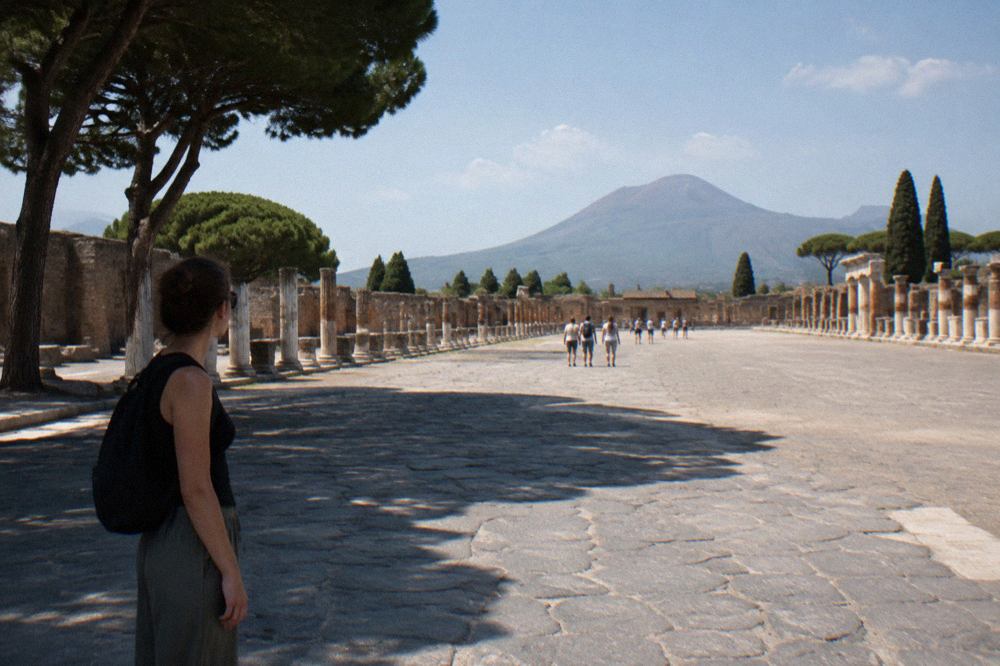
Visiting Pompeii with its disturbing history in mind means treating the casts as graves rather than photo opportunities, wearing appropriate clothing for an exposed site, and reading at least a little before arrival so the frescoes and graffiti mean something. The site covers 44 excavated hectares of stone streets with almost no shade, and the difference between a hollow walk and a memorable one is usually preparation and a guide who knows what is actually evidenced.
Practical planning matters more than visitors expect. The park applies a daily cap of 20,000 visitors, in force since 15 November 2024, with nominative tickets, and identification may be checked at entry. Ticket prices changed in January 2026 and change again on 1 January 2027, when a single EUR 25 ticket covering all park sites replaces the current tiered structure. These figures are listed on the park's ticketing page and summarised on the tickets guide linked above, so there is no need to rely on second-hand summaries.
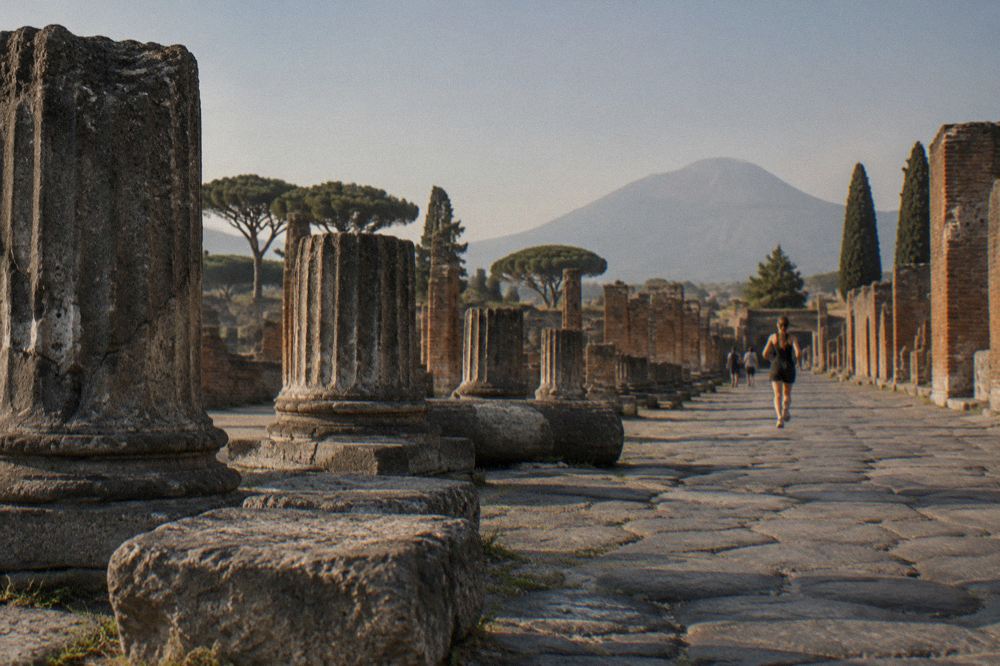
Clothing and stamina are covered in the advice on what to wear to Pompeii and on how difficult the walking is, but the short version is sturdy shoes, water and sun protection, because summer highs at the site average about 29C in July and August. Whether a guided visit suits you is a fair question at this point: an archaeologist-led tour turns the disturbing details into an explained story instead of a string of unlabelled horrors. The skip-the-line guided tour led by an archaeologist is this site's featured option for that reason, and Check availability covers current dates and pricing.
A final word on the ethical side. Photography of the casts is permitted in the areas where they are displayed, but many guides ask visitors not to pose cheerfully beside them, and the park's regulations ask for basic decorum across the site. The people preserved here did not choose to become exhibits. Treating the excavated city as a cemetery with streets, which is effectively what it is, is the approach that sits best with both the archaeology and the memory of the residents, and it is the note that Pompeii Travel Guide tries to strike across all of its coverage.
Common Questions About Disturbing Facts About Pompeii
What is a disturbing fact about Pompeii?
The plaster casts are the disturbing fact people remember: excavators filled the voids left by victims' bodies in the hardened volcanic debris, recovering people in the posture of death, sometimes covering their mouths or sheltering together. The site displays these casts, which makes a visit feel less like a museum and more like standing in a cemetery.
Are the bodies at Pompeii real?
The casts are not bones. They are plaster poured into cavities left in the volcanic material after the bodies decayed, which is why they preserve posture, clothing folds and sometimes facial detail. Skeletal remains have also been found and studied, and recent DNA analysis has revised some older assumptions about who was found with whom.
When did Vesuvius destroy Pompeii?
The eruption is traditionally dated to 24 August AD 79, from the oldest manuscripts of Pliny the Younger's letters. A charcoal graffito found in 2018, which many scholars date to mid-October, reopened the debate. The park's own e-journal states that 24 October has no evidentiary basis while also cautioning that 24 August is not necessarily correct.
Is Pompeii suitable for children?
Many families visit without problems, but the casts and some explicit frescoes, notably in the lupanar, are worth reviewing before you go. Parents usually manage the visit by choosing which buildings to enter and briefing children that the casts are real records of people who died, not horror displays.
Can you see the casts on a normal visit?
Yes. Casts are displayed within the archaeological park, including the group known from the Garden of the Fugitives. Displays change over time, and one large property, the Praedia of Julia Felix, has been closed since 7 September 2026 for maintenance, so check the park's site before relying on any single stop.
The disturbing facts about Pompeii are, in the end, the reason it is worth the trip from Naples or Sorrento: nowhere else preserves an ordinary Roman town, and its residents, at the moment everything stopped. Walk it slowly, read a little first, and treat what you see as evidence rather than entertainment.