How Hot Did Pompeii Get?
How hot Pompeii gets in summer, what the eruption of AD 79 did to the city, and how to plan around heat at the archaeological park in Campania, Italy.
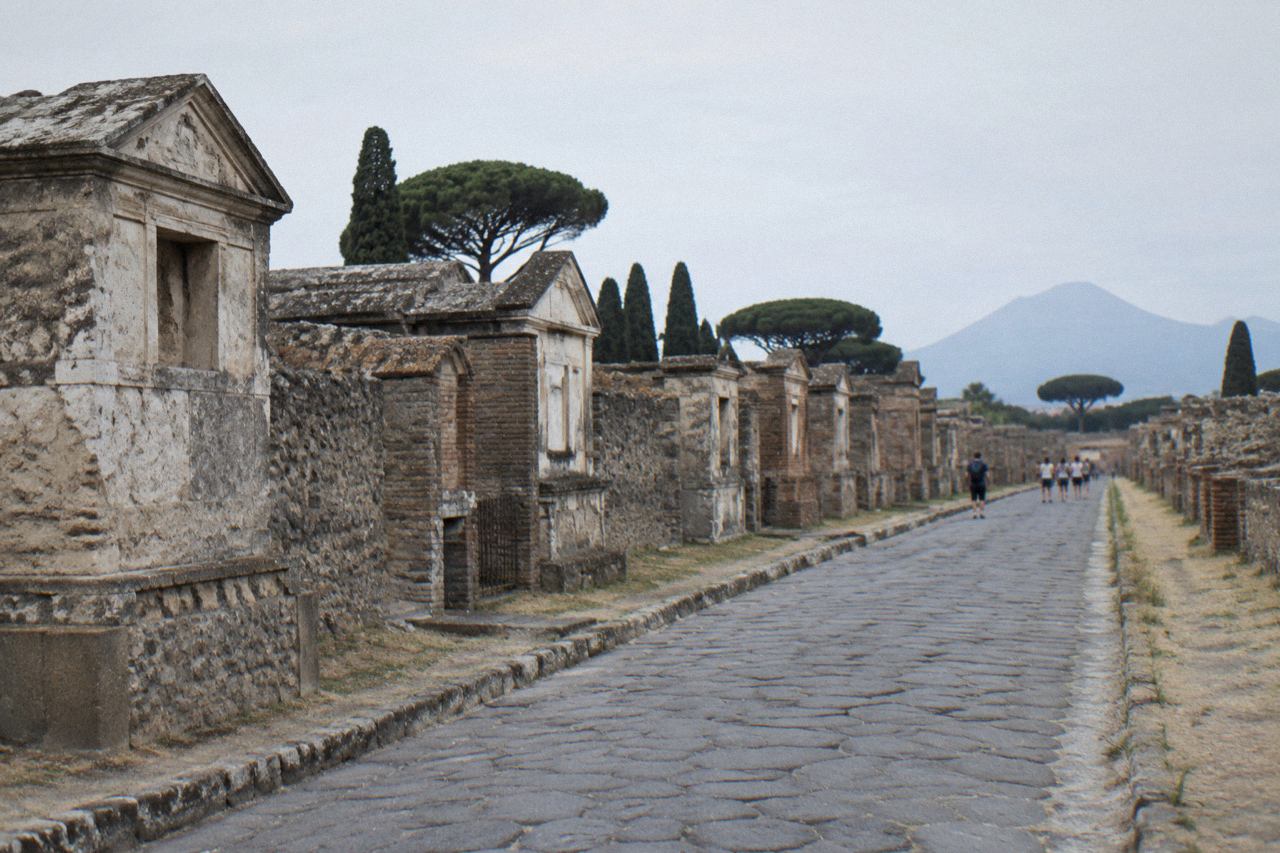
Pompeii, the ancient Roman city buried by the eruption of Mount Vesuvius in AD 79, sits in Campania, southern Italy, beside the modern town of Pompei and about 24 km by road from Naples. The question of how hot it gets has two distinct meanings, and both matter to a traveller. One is the Mediterranean summer heat that falls on the excavated streets between roughly June and September, which shapes when to walk the site and what to carry. The other is the volcanic heat of the eruption itself, which ended the city in a single day and left the ash that preserved it.
How Hot Did Pompeii Get?
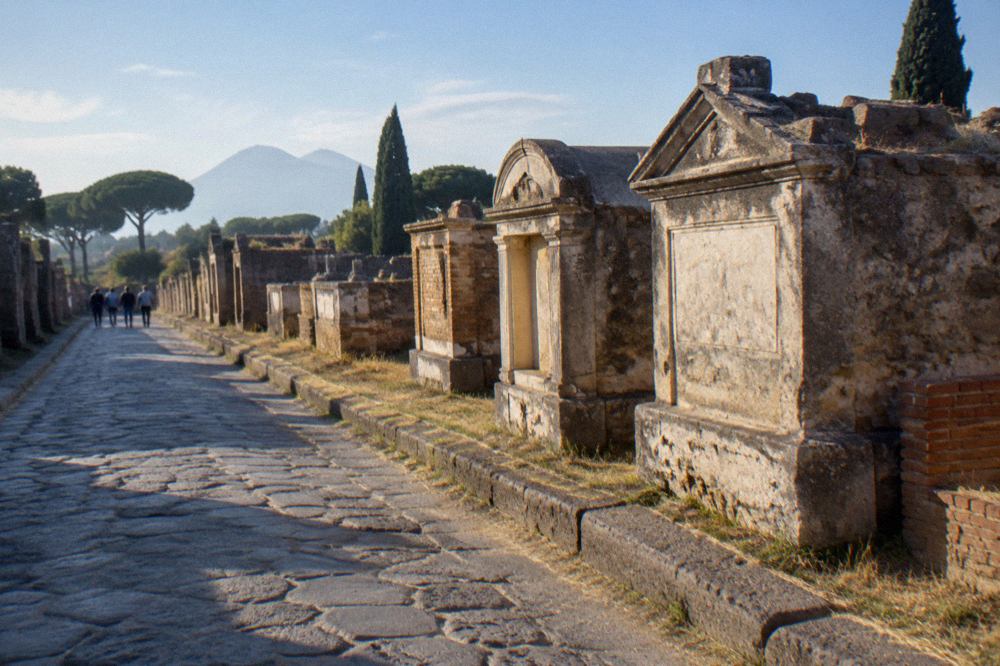
In the eruption of AD 79, traditionally dated to 24 August, the heat that destroyed Pompeii came from the volcano rather than the weather: pyroclastic surges and ashfall swept down from Vesuvius and buried the city, killing those who had not fled, and the heat was intense enough to char wood and organic material in place. No verified temperature figure for those surges appears in the park's own published material, so this page reports the event and its effects without inventing a number.
The destruction was fast and thermal in nature. A column of ash and pumice rose from Vesuvius and rained down on the city for hours, and later a surge of hot ash and gas swept across the ground at speed. The people who died in the surge were overcome by heat and ash together, and the layers that settled over the city were metres deep. The traditional date of 24 August comes from the oldest manuscripts of Pliny the Younger's letters; the park's own e-journal states that a rival date of 24 October has no evidentiary basis and results from a 1929 misreading, while also noting that 24 August is not necessarily settled. The debate is open, and this page leaves it open.
What the heat did to the city is visible in what survived it. Bread carbonised in a bakery oven, wooden doors and beams reduced to charcoal, and a charcoal graffito found in 2018, dated by many scholars to mid-October of AD 79, is part of what reopened the date debate. The ash itself was the preservative: it sealed the city so thoroughly that when excavators emptied the cavities left by organic material, they could cast the shapes of victims and objects in plaster. Those casts are the reason a question about heat at Pompeii is also a question about how the city died, which is covered in full in the guide to who survived the eruption and the account of Pliny the Younger's uncle.
How Hot Does Pompeii Get In Summer Today?
At the Pompei grid point, 1991-2020 climate normals show a mean daily maximum of about 29.4 C in August, about 28.7 C in July and about 25.8 C in June, with mean daily minimums of about 21.8 C, 21.1 C and 18.2 C respectively. These figures come from the Open-Meteo historical archive, an ERA5 reanalysis grid rather than a weather station, so each is an "about" figure for the area, not a reading taken inside the excavations.
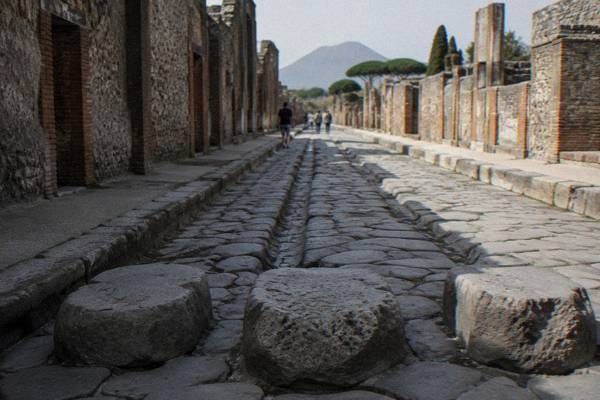
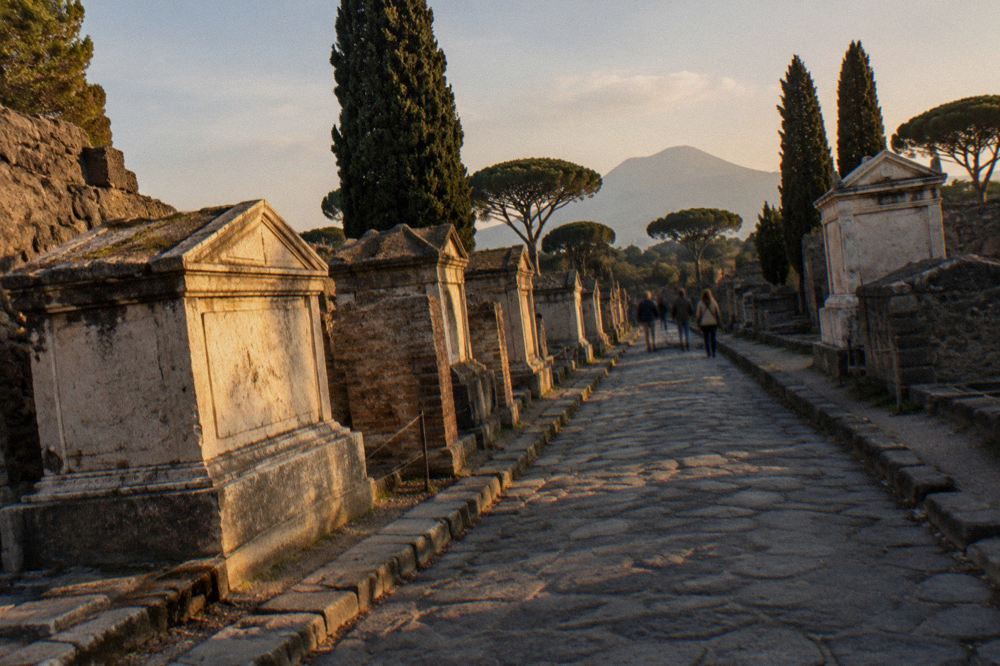
The excavated city has essentially no shade. The streets are stone, the walls are stone, and the summer sun reflects off both, so the felt heat on the site runs above the air temperature in the middle of the day. The normals below are the honest baseline for planning: they describe the climate of the Pompei area across thirty years, month by month, and they are the same data that underpin the site's wider advice on timing a visit.
| Month | Mean Daily Max (C) | Mean Daily Min (C) | Rain (mm) |
|---|---|---|---|
| Jan | about 12.2 | about 6.6 | 119 |
| Feb | about 12.6 | about 6.5 | 103 |
| Mar | about 14.9 | about 8.1 | 104 |
| Apr | about 17.7 | about 10.4 | 87 |
| May | about 21.6 | about 14.1 | 59 |
| Jun | about 25.8 | about 18.2 | 30 |
| Jul | about 28.7 | about 21.1 | 16 |
| Aug | about 29.4 | about 21.8 | 22 |
| Sep | about 25.3 | about 18.6 | 90 |
| Oct | about 21.3 | about 15.1 | 129 |
| Nov | about 16.9 | about 11.5 | 180 |
| Dec | about 13.2 | about 8.0 | 147 |
Read the table before generalising from it. August is the warmest month by mean daily maximum at about 29.4 C, and February the coolest by mean daily minimum at about 6.5 C. November is the wettest month at 180 mm of rain and July the driest at 16 mm. Rain matters as much as heat: the wettest months are October through December, and a downpour on ancient stone streets is its own planning problem.
The practical reading of these normals is simple: a visit in June or September buys roughly three degrees cooler afternoons than August, with September rain at 90 mm against August's 22 mm as the trade-off. The question of how September specifically feels at the site is answered in full in how hot Pompeii is in September, and the wider question of when to go is covered by the seasonal picture above rather than repeated here.
Which Hours Of The Day Are Hottest At The Excavations?
The park opens at 9:00 year-round, and in summer the hours to avoid are the early afternoon: from 13:00 to closing the site runs on the smaller afternoon entry band, the stone has had five hours of sun on it, and the mean daily maximum of about 29.4 C in August is an afternoon figure, not a morning one. Entering at 9:00 and finishing the walk by early afternoon is the standard heat strategy for the excavations.
The park's own entry structure rewards the early start. Between 16 March and 14 October the last entrance is at 17:30 and the site closes at 19:00, and the current slot page splits the day at 13:00, with a larger morning allowance and a smaller afternoon one. That split exists to spread crowds, but it works for heat too: a 9:00 entry puts the Forum, the baths and the long decumanus streets underfoot while the morning is still the cooler half of the day.
| Season | Opening | Last Entrance | Closes | Heat Picture (1991-2020 Normals) |
|---|---|---|---|---|
| 16 Mar to 14 Oct | 9:00 | 17:30 | 19:00 | About 25.8 C to 29.4 C mean daily max from June to August |
| 15 Oct to 15 Mar | 9:00 | 15:30 | 17:00 | About 12.2 C to 16.9 C mean daily max from November to January |
Winter is a different calculation. From 15 October the site closes at 17:00 with last entry at 15:30, and the mean daily maximum falls to about 12.2 C in January, with the coldest nights around 6.5 C in February. Heat stops being the constraint and rain takes over, with November at 180 mm the wettest month in the normals. The site has no weekly closing day of its own, and it closes on 25 December and 1 January unless otherwise communicated.
A guided route helps here, because a guide who knows the site walks a loop rather than a wander, and in heat a shorter, well-chosen loop beats an exhaustive one. The Pompeii Travel Guide editorial desk points readers with limited heat tolerance to the skip-the-line archaeologist-led tour, which starts at the excavations themselves rather than requiring a transfer, and to the comparison of guided and self-guided visits for the trade-offs.
What Did The Eruption's Heat Actually Do To The City?
The heat of AD 79 did not burn Pompeii in the way a fire burns a town: it buried it. Ashfall and pumice rained down for hours, then pyroclastic surges of hot ash and gas crossed the city, killing the people still present and carbonising organic material where it stood, and the sealed layers preserved the city's shapes, from doorframes to victims, until excavation began centuries later. The heat preserved as much as it destroyed.
The evidence is material rather than statistical. Wooden beams and doors survived as charcoal, bread was found carbonised inside bakery ovens, and wall plaster and frescoes were sealed under ash rather than washed away. The plaster casts of victims were made by pouring plaster into voids the ash had held stable, which is only possible because the burial was rapid, fine-grained and undisturbed. The story of the body casts and the guide to the eruption date carry those topics in full, and the question of whether residents knew an eruption was coming fills in the human side of the day.
What can be stated is the mechanism, the speed of burial and the preservation that followed, all of which the archaeological record supports directly.
How Do You Visit Pompeii When It Is Hot?
Enter at 9:00, carry water, and finish the walking by early afternoon: the site is unshaded stone, the summer mean daily maximum runs to about 29.4 C in August, and the park permits bags only up to 30x30x15 cm, so a large water pack is not an option inside. The entrances to know are Porta Marina, Piazza Esedra and Piazza Anfiteatro, and the suburban villas route is reached through the Porta Ercolano / Street of the Tombs entrance.
The bag rule is the detail that surprises people in summer. The regulations page sets the permitted size at 30x30x15 cm, with larger bags sent to left luggage, so the practical answer is a small bottle refilled at the site's fountains and taps rather than a day pack of supplies. Footwear matters as much as liquid: the question of how difficult the walking is covers the uneven Roman paving, and the dress-code answer settles what to wear, which is less about modesty rules than about sun and stone.
For travellers who want the heat handled for them, a tour with a midday pause changes the shape of the day.
Travellers arriving from Rome face the heat question in a second form, since the day is long before any walking starts. The verdict on the day trip from Rome weighs the travel time, and the coast-and-Pompeii combinations from Rome spread the day across shade and stone.
Common Questions About Heat At Pompeii
How hot did Pompeii get?
Two answers apply. In the eruption of AD 79 the heat came from pyroclastic surges and ashfall, which killed the remaining residents and carbonised organic material; no verified temperature figure for the surges is published by the park, so none is printed here. Today the site's area shows a mean daily maximum of about 29.4 C in August against about 12.2 C in January, from 1991-2020 climate normals.
Is August too hot to visit Pompeii?
August has the highest mean daily maximum in the normals at about 29.4 C, and the excavations are largely unshaded stone, so the site is at its most demanding then. The park still counted 421,255 visitors in August 2024. The workable approach is a 9:00 entry with the walking finished by early afternoon, water in a bag within the 30x30x15 cm limit, and a route planned in advance.
What is the hottest month at Pompeii?
August, at a mean daily maximum of about 29.4 C and a mean daily minimum of about 21.8 C, from the 1991-2020 normals for the Pompei grid point. July follows at about 28.7 C and is the driest month at 16 mm of rain, so the two peak-heat months differ mainly in rainfall.
Does it ever get cold at Pompeii?
Yes. The mean daily minimum falls to about 6.5 C in February and the mean daily maximum to about 12.2 C in January, and November is the wettest month at 180 mm of rain. Winter visits run on shorter hours, with last entrance at 15:30 and closing at 17:00 from 15 October to 15 March.
Did the eruption's heat destroy everything made of wood?
The wood did not vanish, it changed: beams, doors and furniture were carbonised by the heat and burial, and charcoal is what survived to be excavated. A charcoal graffito found in 2018, dated by many scholars to mid-October of AD 79, is one such survival, and it is part of the still-open debate over the eruption date, on which the park's own journal holds that 24 October has no evidentiary basis.
Heat at Pompeii is really two stories, one meteorological and one volcanic, and both are answered by the same site: the summer sun on the streets is a planning problem with a 9:00 solution, and the heat of AD 79 is the reason there are streets to walk at all.