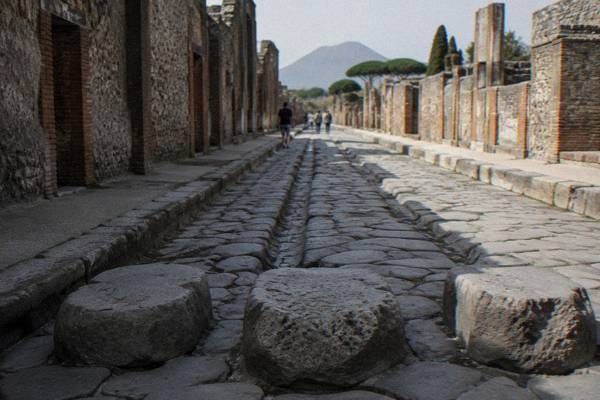
What Did The Graffiti In Pompeii Say?
The walls of Pompeii, the ancient Roman city buried by Vesuvius in AD 79 in Campania, Italy, carry thousands of handwritten messages: election posters, love notes, insults, jokes and ads. Here is what they say.
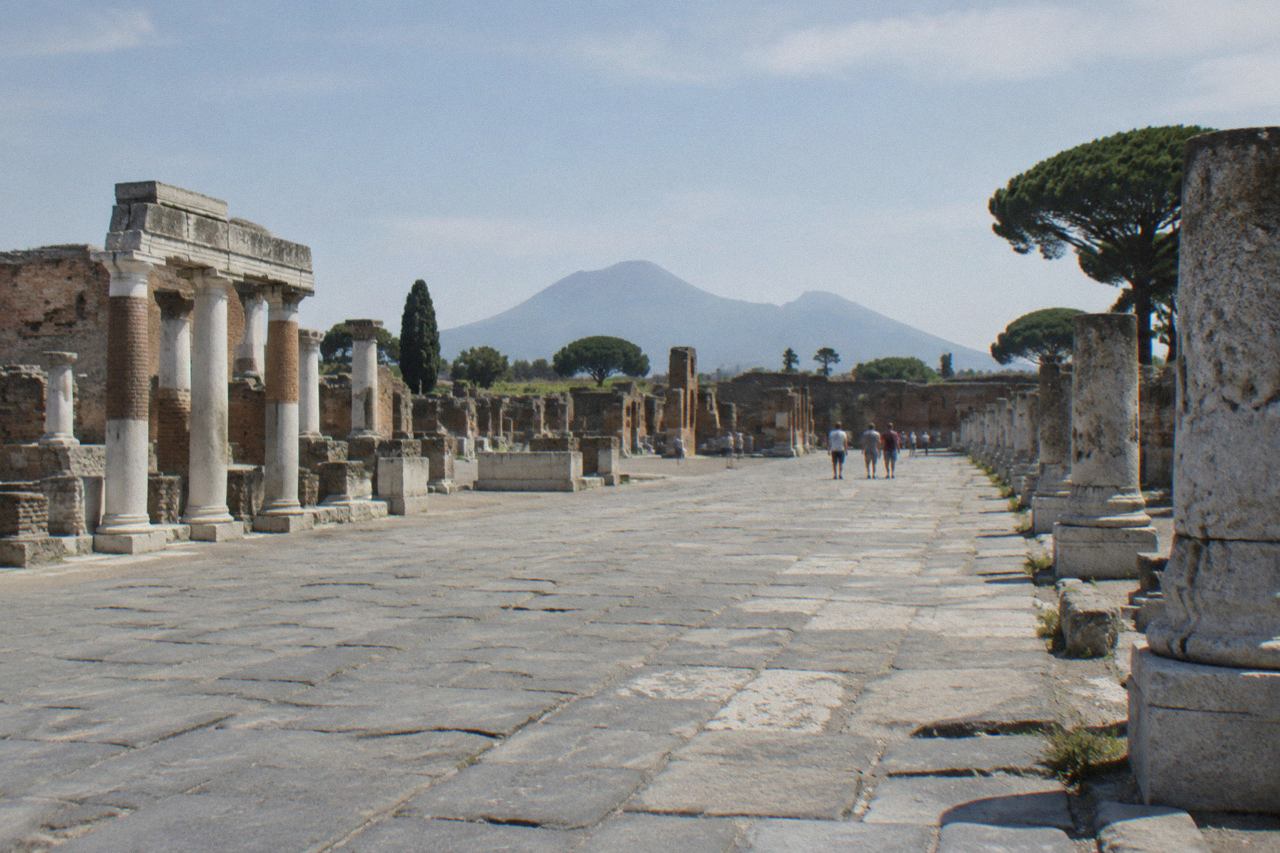
Pompeii, the ancient Roman city buried by the eruption of Mount Vesuvius in AD 79, lies in Campania, southern Italy, beside the modern town of Pompei and about 24 km by road from Naples. Among the reasons the site feels so unusually alive is that its walls talk. Excavation has recovered thousands of handwritten inscriptions, painted and scratched, that record everything from political sloganeering to love complaints. Together they form one of the richest bodies of everyday writing to survive from the Roman world, and this page sets out what they say, where they appear, and how to read them on a visit.
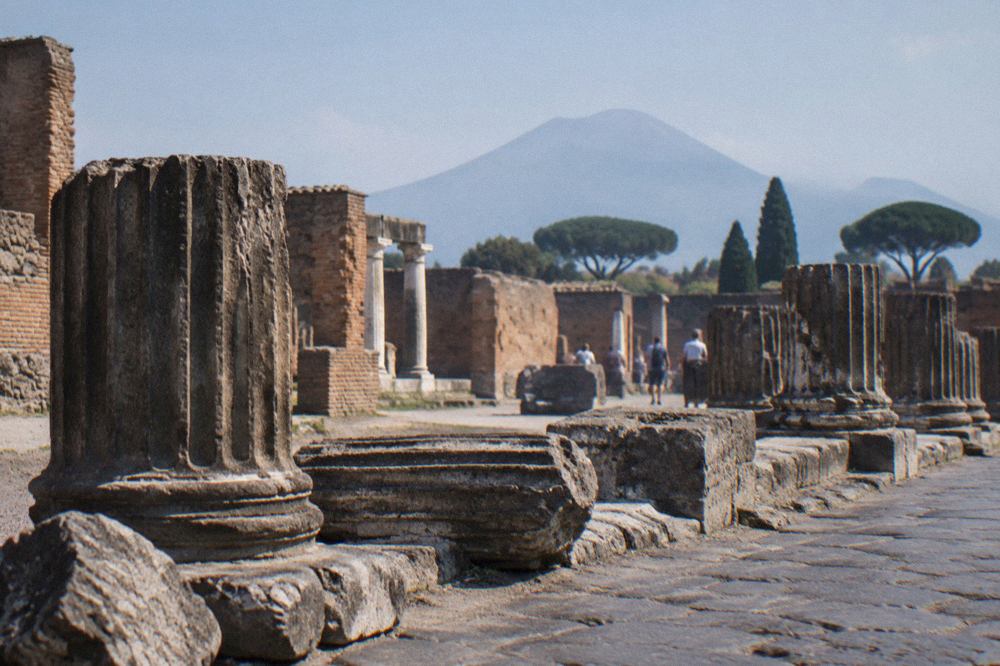
What Did The Graffiti In Pompeii Say?
Written in ink, paint and charcoal, Pompeii's graffiti said almost everything a city could say: vote for this candidate, this gladiator won so many bouts, I was here, I love a girl who does not love me, this tavern will cheat you, these rooms are to let, and health wishes to the reader. Election notices and name-greetings form the two clearest categories, followed by gladiator advertisements, love messages, insults, jokes and practical notices about lodgings and lost property, written mostly in Latin with some Greek mixed in.
The short answer is that almost nothing was too trivial to write on a wall. The people of Pompeii used the plastered fronts of houses, shop counters, tomb monuments and public buildings as a public noticeboard. Because the city was sealed by volcanic debris in AD 79, traditionally dated to 24 August, a date scholars still debate, the writing survived alongside the buildings it was written on.
The inscriptions are usually divided into two broad kinds. Painted notices, done by professional sign-writers in tall red or black letters, carried the formal messages: candidate recommendations, announcements of games, rental offers. Scratched or charcoal notes, added by hand at street level, carried the informal ones: greetings, jokes, taunts, doodles and remarks that a modern reader would recognise instantly as the voice of someone bored, smitten or annoyed.
Where The Messages Appear And Who Wrote Them
Graffiti appears on house fronts along the busiest streets, on shop counters and bar facades, in the theatre corridor, in the brothel, on tomb monuments outside the gates, and inside private houses where guests scribbled on fresh plaster. The painted notices were commissioned; the scratched notes were spontaneous. Writers identified themselves by name and sometimes by trade or affection, and greetings naming the writer were a convention of the culture, not an act of vanity peculiar to one vandal.
The typical painted election notice ran along the façade at eye height, where a walker could not miss it, recommending a candidate for office and naming the group behind the recommendation. The same walls collected replies and rival endorsements, sometimes layered one over another as campaigns came and went. Scratched messages cluster where people waited: near entrances, in queues, at counters, in dark corners. The bar walls of Pompeii are famous for exactly this, jokes and mock warnings aimed at the proprietor and at other customers.
The writing was not the work of a hidden subculture. Literacy in a Roman trading town reached far enough down the social scale that a tavern keeper, a slave, a sailor or a child with a stylus could leave a line on a wall. That breadth is what makes the corpus valuable: it records voices that formal Roman literature almost never quotes. For the language itself, Latin with Greek loanwords and phrases, see the companion page on what language they spoke in Pompeii.
The categories below are the standard ones used in modern scholarship on the Pompeian inscriptions, presented without invented wording: no two surviving texts are alike, and translations vary, so the table describes each kind of message rather than quoting one.
| Kind of message | Where it typically appears | What it conveys |
|---|---|---|
| Election notice | House façades on main streets | A named candidate praised and urged for office, with the endorsing group named |
| Gladiator advertisement | Public walls near the amphitheatre and forum | Fighters named, with their win records and the games promised |
| Greeting or "I was here" | Anywhere at hand height, in scratches | A name plus a greeting, sometimes naming a friend or a place of origin |
| Love message or complaint | House walls, garden porticoes | Affection declared, often one-sided, sometimes bitter |
| Insult or joke | Bar counters and street corners | Taunts aimed at named locals, humour at a tavern's expense |
| Practical notice | Shop fronts and gate areas | Rooms to let, items lost or found, goods and services offered |
For the fullest treatment on this site, the dedicated guide to Pompeii's graffiti works through the categories in depth, street by street.
The Charcoal Note That Reopened The Date Debate
A charcoal graffito found in 2018, dated by many scholars to mid-October of AD 79, appears to record work done after the traditional eruption date of 24 August, reopening the scholarly argument over when Vesuvius destroyed the city. The park's own e-journal maintains that the rival date of 24 October rests on a 1929 misreading with no evidentiary basis, while also noting that 24 August is not necessarily correct either, so the debate, like the graffito itself, remains evidence of a question rather than proof of an answer.
The reason a single charcoal line could shake a centuries-old date is that the traditional one rests on manuscripts, not on an inscription from the city itself. The oldest copies of Pliny the Younger's letters give nonum kal. Septembres, which counts back to 24 August. Copying errors in later manuscripts produced competing readings, and the 1929 misreading gave the October date its foothold in popular accounts. The park's journal article, citing Foss 2022, dismantles the October reading while declining to certify August.
The 2018 find matters because it is a datable object inside the ruin rather than a line in a library. If the charcoal note really was written in mid-October, the eruption would fall after that, which is the argument many scholars draw from it. The park's own position on the graffito has not been stated on an official page, so this page presents it only as a find that reopened the question. Readers who want the eruption story in full will find it in the guide to when Vesuvius erupted, and the deeper question of whether the city had warning in the account of whether Pompeii knew Vesuvius was going to erupt.
The debate also changes how the graffiti itself is read. A wall full of election notices fits an autumn campaign season as easily as a summer one, and some scholars have used seasonal details in the inscriptions, harvest references and clothing remarks among them, as circumstantial evidence in the date argument. None of that settles anything, but it shows how a body of everyday writing can carry unexpected evidential weight.
What The Graffiti Reveals About Everyday Life
The wall messages reveal a town that was noisy, competitive, literate and vain in ways that feel contemporary: hard-fought local elections, celebrity fighters with fan followings, landlords advertising rooms, customers mocking bars, lovers complaining, and friends leaving name-checks the way social media tags work today. They show ordinary people, not emperors, speaking in their own words, which is precisely what survives nowhere else in the Roman record for a whole urban community.
The election notices are the largest formal group, and they show how local politics worked: candidates needed public endorsement, and the endorsements name the endorsers, trade guilds, neighbours, religious associations, even women supporting a candidate. Gladiator advertisements belong to the same promotional culture, naming fighters and boasting of victories to sell seats at the games. Together these painted texts are advertising in nearly the modern sense, commissioned, placed for foot traffic, and competitive.
The scratched notes supply the private texture. They complain about prices at the bar, tease acquaintances by name, mourn, flirt and boast. They record travel: sailors and visitors name their home towns. They also show multi-lingual street life, with Greek appearing alongside Latin, which matches the port and trade character of the town on the Bay of Naples.
The date debate itself can be tabulated from verified sources, and it is worth setting out cleanly because so much casual writing about Pompeii gets it wrong:
| Item in the date debate | Year | Status of the evidence |
|---|---|---|
| Oldest Pliny manuscripts give nonum kal. Septembres, 24 August | AD 79 | Traditional manuscript date, still not guaranteed correct |
| Misreading of a Pliny manuscript produces the 24 October date | 1929 | No evidentiary basis, per the park's e-journal citing Foss 2022 |
| Park e-journal article on the destruction date | 2022 | Rejects 24 October, leaves 24 August unproven |
| Charcoal graffito found, dated by many scholars to mid-October | 2018 | Reopened the debate |
| Eruption that sealed the city and its walls | AD 79 | Traditionally dated to 24 August, a date scholars still debate |
How To See The Graffiti On A Visit Today
To see the graffiti today, walk the main streets slowly at eye height and check bar counters, theatre corridors, and house fronts instead of only the famous floor mosaics; consider a guide, since faded paint and faint scratches are easy to pass without explanation. Original inscriptions survive in place but are fragile, some of the clearest texts sit in museums, and the excavated 44 hectares reward a planned route over wandering.
A private tour led by an official guide suits this particular interest well, because reading a wall of election notices rewards someone who can point out where to look and what the abbreviations mean. This site's editorial line on that choice is set out in the page on whether Pompeii is best with a guided tour and on touring Pompeii on your own, and the practical differences between the two styles are compared in the guide on guided versus self-guided visits.
Two practical notes from the park's current rules. Bags larger than 30x30x15 cm go to left luggage, which matters if you arrive from Naples or Sorrento with luggage, and the entrances with ticket offices are Porta Marina, Piazza Esedra and Piazza Anfiteatro. The 2026 ticket structure, the Pompeii Express at EUR 20, Pompeii+ at EUR 25 and the 3-day ticket at EUR 30, ends on 31 December 2026; from 1 January 2027 a single EUR 25 ticket covers all park sites, valid 30 days, one entry per site, while Oplontis, the Stabiae sites and Boscoreale stay EUR 8 each and the MyPompeii Card stays EUR 45. Entry is free for under-18s and for everyone on the first Sunday of the month.
Reading The Walls For Yourself
Reading Pompeii's walls for yourself takes patience more than training: stand close, read the tall painted letters first, then hunt the fainter scratches at hand height, and remember that the original colours, reds and blacks against white plaster, were far louder than the ghosts you see now. Reproductions and museum displays show the texts at full strength, and the scholarship on them is vast, so a little preparation multiplies what a half day on the stones can teach.
The editorial desk of Pompeii Travel Guide suggests pairing the walls with two threads of context. The first is language: the inscriptions are working Latin, abbreviated and slangy, closer to speech than to the classical texts studied in school. The second is forensics: writing on walls has become evidence in modern research too, most visibly in the genetic work on the victims, covered in the page on what the DNA revealed about Pompeii, and in the survival stories pieced together in the guide on whether anyone survived Pompeii.
Keep expectations honest as well. Exposure, excavation and two centuries of visitors have faded the painted notices badly, and the clearest reading experience often comes from mounted panels, publications and museum presentations rather than from the wall itself. What the original surfaces still deliver, even as ghosts, is the physical fact of the handwriting: the reach of the arm, the height of the writer, the spot chosen at a doorway or a counter. That is the part no book reproduces, and it is the reason the graffiti remain one of the site's quietest and strongest experiences.
Planning the day around the walls is straightforward. The busiest hours fill the narrow streets first, so an early entry through Porta Marina buys calm for close looking, and the time-slot rules, 9:00 to 13:00 capped at 15,000 entries and 13:00 to 17:30 capped at 5,000 through the current season, reward booking ahead, a decision examined in whether to buy Pompeii tickets in advance. Between sections, the practical pages on toilets in Pompeii and how difficult the walking is answer the two questions that shape any long day on the stones.
Common Questions About Pompeii Graffiti
What did the graffiti in Pompeii say?
Election notices urging votes for named candidates, gladiator advertisements with fighters' win records, greetings and "I was here" name-checks, love messages and complaints, insults and tavern jokes, and practical notices such as rooms to let. The texts are in Latin with some Greek, written in paint, ink, charcoal or scratchwork on house fronts, counters, tombs and public buildings.
Who wrote the graffiti in Pompeii?
Ordinary residents and visitors: sign-writers hired for painted notices, and passers-by of many trades and statuses for the scratched notes, including tradespeople, sailors, slaves and women endorsing candidates or leaving greetings. Named self-identification was a normal convention of the culture.
Can you still see the graffiti in Pompeii today?
Yes, in place but heavily faded, on house façades, bar counters and theatre corridors across the 44-hectare excavated area. Original paint survives only as traces, so guided reading, mounted panels and museum presentations often show the texts more legibly than the walls themselves do.
Did any graffiti change what is known about the eruption?
A charcoal graffito found in 2018, which many scholars date to mid-October of AD 79, reopened the debate over the eruption date. The park's own e-journal rejects the 24 October reading as a 1929 misreading with no evidentiary basis, while stopping short of certifying the traditional 24 August, so the question remains open.
Do the Pompeii graffiti contain the eruption date?
No. No inscription states the date of the eruption. The traditional 24 August AD 79 comes from the oldest manuscripts of Pliny the Younger, and the graffiti only contribute circumstantial evidence, such as the 2018 charcoal note, to an argument that scholars have not settled.
The walls of Pompeii say what people always say when given a surface and something to declare: notice me, vote for him, she does not love me back, this bar waters its wine. That the declarations were sealed under volcanic ash in AD 79, and can still be read in the streets of Campania, is what turns an archive of small human remarks into one of the most direct encounters with the Roman everyday that anywhere offers.