What Is The Best Preserved Villa In Pompeii?
The Villa of the Mysteries is the best preserved villa in Pompeii, with frescoes still standing where they were painted. Here is why it survived, how to visit it in 2026 and what else to see.
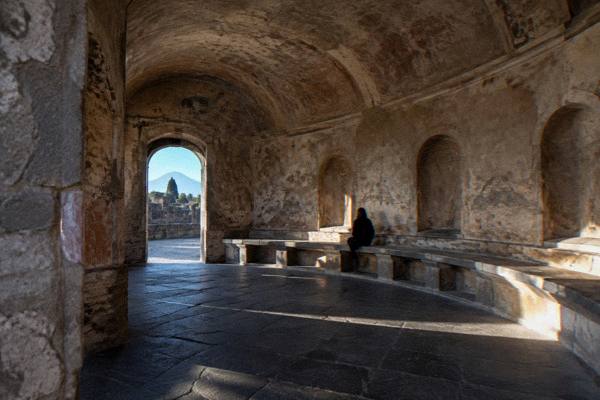
Pompeii, the ancient Roman city buried by the eruption of Mount Vesuvius in AD 79, holds dozens of houses and villas, but only one stands out for sheer completeness: the Villa of the Mysteries. This suburban villa, standing just beyond the city walls on the north-west edge of the archaeological park in Campania, southern Italy, still has its roofless but upright walls, its courtyard, its wine-pressing room and above all the most famous fresco cycle to survive the disaster. Visiting it is a different experience from walking the crowded streets of the Forum, and it is close enough to the Pompei Scavi-Villa dei Misteri Circumvesuviana station to be a first or last stop on any route. This page sets out why the villa survived so well, what you actually see, and how the 2026 ticket structure covers it.
What Is The Best Preserved Villa In Pompeii?
The best preserved villa in Pompeii is the Villa of the Mysteries, a large Roman suburban villa lying outside the Porta Ercolano gate on the Street of the Tombs, about 24 km from Naples. It is included in the park's Pompeii+ ticket for 2026.
The villa takes its name from the frescoes themselves. The painted scenes, showing life-size figures engaged in what scholars interpret as rites connected to the cult of Dionysus, gave the house a name it never had in antiquity. The building was a working farmhouse as much as a residence: excavations revealed a wine press, storage jars set into the ground and servants' quarters alongside the grand reception rooms. That mix of luxury and agriculture is one reason the villa feels so complete, because it documents an entire rural economy, not just decoration.
In scale, too, it stands apart from the townhouses of the city. The excavated area of Pompeii covers 44 hectares within an inscribed UNESCO property of 98 hectares, and the Villa of the Mysteries sits at the margin where the ancient city met its farmland. Readers planning a full day can pair it with the routes described in the villas of Vesuvius route itinerary, which strings together the grand suburban houses around the bay. The villa also has its own detailed page, what is unique about the Villa of the Mysteries in Pompeii, for the fresco cycle itself.
Why The Villa Of The Mysteries Survived So Well
The villa survived because of where it stands and how it was buried. Lying outside the city walls on slightly rising ground, it was sealed by the early phase of the AD 79 eruption, the fine pumice fall, rather than scoured by the later pyroclastic surges that collapsed roofs deeper inside the city. Its thick rural walls, built for storage and work as much as display, took the weight of the deposit without caving in, so walls and plaster reached the excavators standing.
The burial sequence matters more than luck. The eruption, traditionally dated to 24 August AD 79 in the oldest manuscripts of Pliny the Younger, began with a sustained fall of light pumice that drifted south-east and piled up in deep, dry layers. Buildings inside the crowded city blocks collapsed under that load, and the surges that followed finished the work. The villa, set apart with open ground around it, filled rather than crumpled. When excavation reached it, conservators found wall paintings of a completeness that the city houses could not match.
There is a second reason, one less often mentioned. The villa lay outside the area reoccupied and stripped for building materials after the eruption, and outside the densest ancient salvage tunnels. House owners returning to Pompeii after AD 79 dug into their own properties to recover marble, statues and metal, and later builders quarried the city's exposed walls for stone. A farmhouse beyond the gate, buried deeper and further from the road, was simply not worth the effort of emptying. What the looters ignored, the archaeologists inherited.
How To Visit The Villa Of The Mysteries In 2026
To visit the Villa of the Mysteries in 2026 you need the Pompeii+ ticket at EUR 25, which covers the ancient city plus the suburban villas route, or a Pompeii Express ticket at EUR 20 with the villas route added for EUR 8, card only, at the Porta Ercolano / Street of the Tombs entrance. These 2026 prices end on 31 December 2026; from 1 January 2027 one EUR 25 ticket covers all park sites, valid 30 days, one entry per site.
The route is simple once you know it. From the Porta Marina entrance, walk north through the city to the Porta Ercolano gate and out onto the Street of the Tombs; the villa stands a short distance along it on the right. Coming by train, the villa is the nearest major monument to the Pompei Scavi-Villa dei Misteri station, which makes it an easy first stop if you arrive from Sorrento or Naples. The Circumvesuviana Napoli to Pompei Scavi service takes 29 to 35 minutes from Napoli Garibaldi on the scheduled times computed from the operator's own timetable data.
| 2026 ticket | Price | Covers the Villa of the Mysteries? |
|---|---|---|
| Pompeii Express | EUR 20 | No, ancient city only; villas add-on EUR 8 at Porta Ercolano |
| Pompeii+ | EUR 25 | Yes, city plus suburban villas route and shuttle |
| 3-day ticket | EUR 30 | Yes, Pompeii+ plus Oplontis, Stabiae villas and Boscoreale |
| From 1 Jan 2027 | EUR 25 | Yes, single ticket, all park sites, 30 days, one entry per site |
Free entry applies to visitors under 18 and to everyone on the first Sunday of the month, and EU citizens aged 18 to under 25 pay a reduced EUR 2, all as stated on the park's official ticketing page. Full detail on every option, including the My Pompeii Card at EUR 45, sits on the Pompeii tickets explained guide. Visitors weighing a guide against going alone will find the trade-offs set out in is it worth getting a guided tour of Pompeii and can you tour Pompeii on your own.
For a self-guided visit at your own pace, the entry ticket with an audio guide is the simplest product covering the whole city; Check availability for your dates. If you would rather have the villas unpacked by a specialist, small-group tours led by an archaeologist run inside the park.
The choice between the two approaches usually comes down to time. An audio guide lets you linger in the fresco room as long as you like, while a guided small group keeps you moving and points out details, such as the restoration work on the Second Style panels, that a first-time visitor would walk straight past. Either way, the villas route must be on your ticket before you pass Porta Ercolano, because the add-on there is card payment only.
Which Other Houses And Villas In Pompeii Are Remarkably Intact?
Inside the city walls of Pompeii, the House of the Faun and the House of the Vettii stand as the best preserved grand houses, with the first famous for its Alexander Mosaic and the second famous for its brilliantly coloured Fourth Style frescoes.
The House of the Faun occupies an entire city block and gives the clearest sense of what a wealthy Roman townhouse was: two atria, a peristyle garden, the famous dancing faun statue in its pool, and the mosaic floor copy of the Alexander battle scene, whose original is in the Naples museum. The House of the Faun guide page and the house-by-house attraction pages cover each in depth, including the forum of Pompeii and the house of the Vettii where relevant. The Vettii, two freedmen brothers who grew rich in trade, filled their restored house with painted panels that survived with unusual brightness.
A comparison of the headline candidates shows why the Villa of the Mysteries keeps the crown.
| Building | Location in the park | State of preservation | Access in 2026 |
|---|---|---|---|
| Villa of the Mysteries | Outside Porta Ercolano, Street of the Tombs | Walls and full fresco cycle standing | Pompeii+ or Express with EUR 8 add-on |
| House of the Faun | Inside city, Regio VI | Structure and mosaics (copies in situ) | Included in every city ticket |
| House of the Vettii | Inside city, near Porta Ercolano side | Rich Fourth Style frescoes | Included in every city ticket |
For travellers with limited time, the question of how much of the city to attempt is answered in how long to spend in Pompeii, and the shortest sensible route is in the Pompeii in 2 hours itinerary. Those basing themselves in Sorrento or Naples can compare logistics in can Pompeii be a day trip from Naples.
What About The Suburban Villas And The Villas Beyond Pompeii?
Herculaneum's Villa of the Papyri is in a different league of fame but is closed for works, along with Herculaneum's Ancient Theatre, so it cannot be visited at present.**
The Villa of Diomedes, a short walk from the Villa of the Mysteries, is a suburban residence with a swimming-pool-sized garden basin and a stairway designed to frame views from the apartments above, an early essay in the architecture of leisure that the Oplontis villa perfected. Oplontis itself, reachable on the 3-day ticket or at EUR 8 individually, and from 1 January 2027 within the single EUR 25 park ticket, holds a painted garden room and pool complex that rival anything in Pompeii. The Oplontis guide page covers it in detail.
For the wider picture, the Villa of the Papyri page explains what lies beneath Herculaneum and why its closed state matters, while Herculaneum tickets sets out that site's own EUR 16 entry, reduced EUR 2 for EU citizens aged 18 to under 25, and its free first-Sunday entry. Comparing the two sites side by side is worthwhile before committing a day: see Pompeii vs Herculaneum and, for the ambitious, whether you can do Herculaneum and Pompeii in one day.
Should The Villa Of The Mysteries Be On Your Route?
Yes: if you have half a day or more at Pompeii, the Villa of the Mysteries should be on your route, because it is the one monument in the park where a Roman villa's decoration survives as a whole rather than as fragments. Set aside roughly the final hour of your visit, exit through Porta Ercolano onto the Street of the Tombs, and see the frescoes before the walk back to the train station, which stands minutes away.
Summer visitors should reverse that advice: the villa's unroofed rooms and the long approach offer little shade, so in July and August, when mean daily maxima at Pompei reach about 29.4 C on the 1991-2020 averages, going early is kinder. The Pompeii in summer heat plan covers timings, water and shade in depth. November is the wettest month at about 180 mm of rain on the same normals, and July the driest at about 16 mm, so the fresco rooms, which are at least under cover in part, are a good wet-weather anchor too.
Practical questions crowd in near the end of any visit plan. Are there toilets in Pompeii? Yes, and their locations matter on a long day. Is the terrain manageable? How difficult it is to walk in Pompeii answers that honestly, and what to bring is covered by what to wear to Pompeii. The one-stop overview of every question from tickets to entrances is the homepage of Pompeii Travel Guide, which links each topic guide in order.
Common Questions About The Best Preserved Villa In Pompeii
Is the Villa of the Mysteries the best preserved Roman villa anywhere near Pompeii?
Many archaeologists give that title to the villa of Poppaea at Oplontis in Torre Annunziata, a separate park site reachable on the 3-day ticket in 2026 or the single EUR 25 ticket from 1 January 2027. Within Pompeii itself, the Villa of the Mysteries holds the title clearly.
Whichever ticket you choose, the practical order stays the same: book in advance where you can, keep the villas route on your ticket rather than improvising an add-on at the gate, and give the frescoes the last unhurried hour of your day at Pompeii rather than the first rushed twenty minutes.