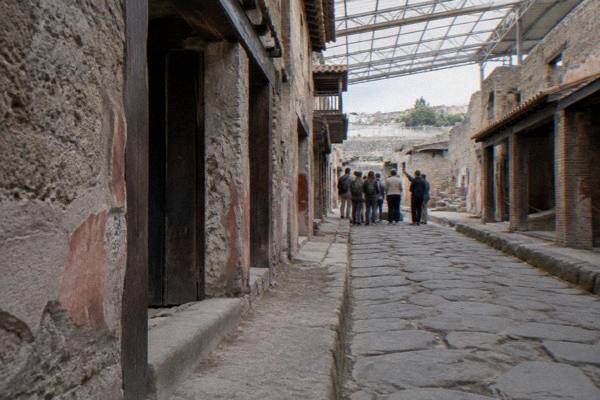
Herculaneum Tickets
Herculaneum, the smaller Roman town buried by the same AD 79 eruption of Vesuvius that destroyed Pompeii, sits inside the modern town of Ercolano in Campania, southern Italy. Its ticket system is separate, cheaper and simpler than Pompeii's, and in 2026 it carries two closures every buyer should know about before paying.
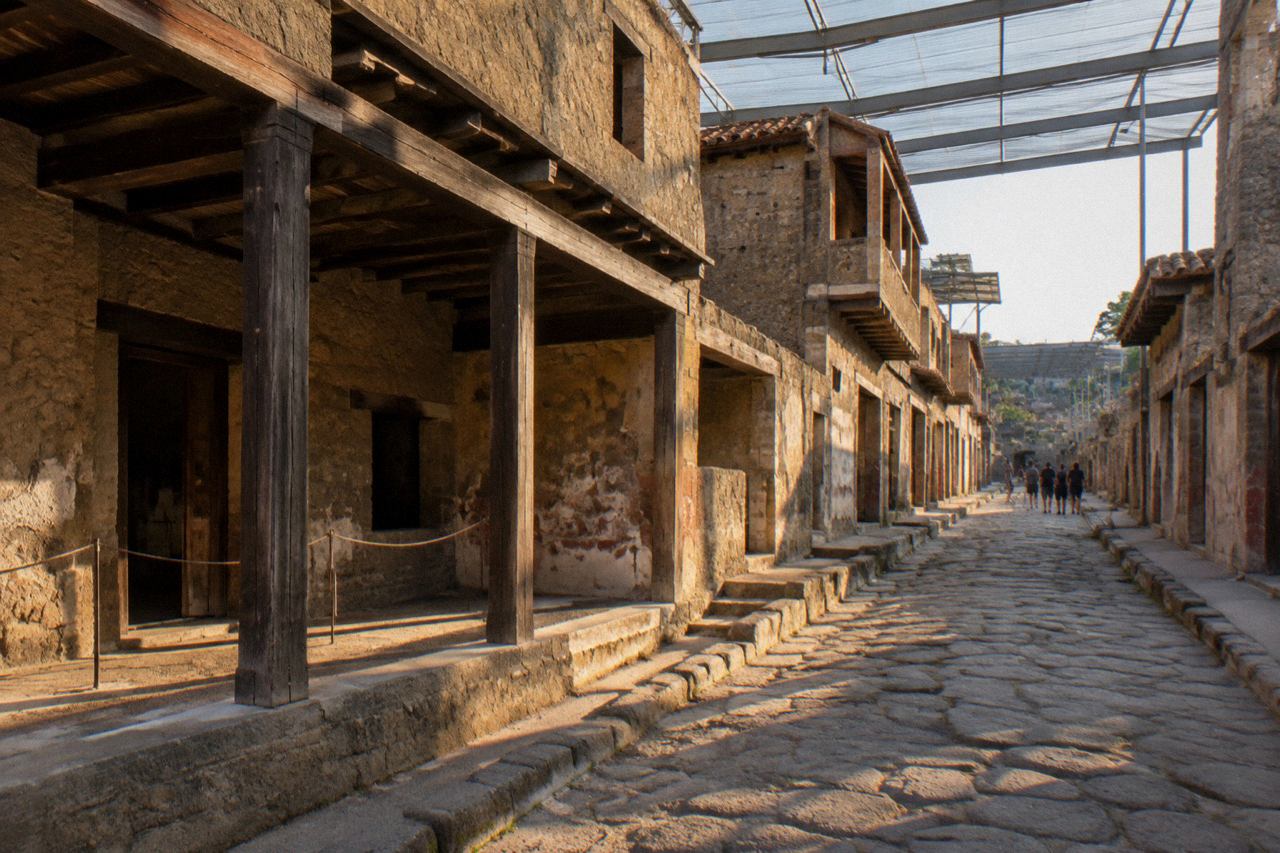
Short answer
A full-price Herculaneum ticket costs EUR 16 in 2026, with a EUR 2 reduced rate for visitors aged 18 to 25. Entry is free on the first Sunday of each month and on 25 April, 2 June and 4 November. The site opens daily at 08:30 and closes at 19:30 in summer and 17:00 in winter. The Villa dei Papiri and the Ancient Theatre are closed.
Herculaneum is the smaller, better-sheltered sister city of Pompeii, buried by the eruption of Mount Vesuvius in AD 79 and now an archaeological park inside the modern town of Ercolano, on the northern shore of the Bay of Naples in Campania, southern Italy. Where Pompeii sold more than four million tickets in 2025, Herculaneum runs on a quieter, cheaper and structurally simpler system: one full price, one reduced price, a short list of free days, and no timed-entry bands. That simplicity is exactly why the details that do exist, the season switch in mid-October, the four free days a year and the two standing closures, are worth knowing before you stand at the ticket office in Ercolano. This guide lays out every figure on the official Herculaneum ticketing page, sets it beside Pompeii's 2026 structure so you can plan both, and explains where a guided option makes sense.
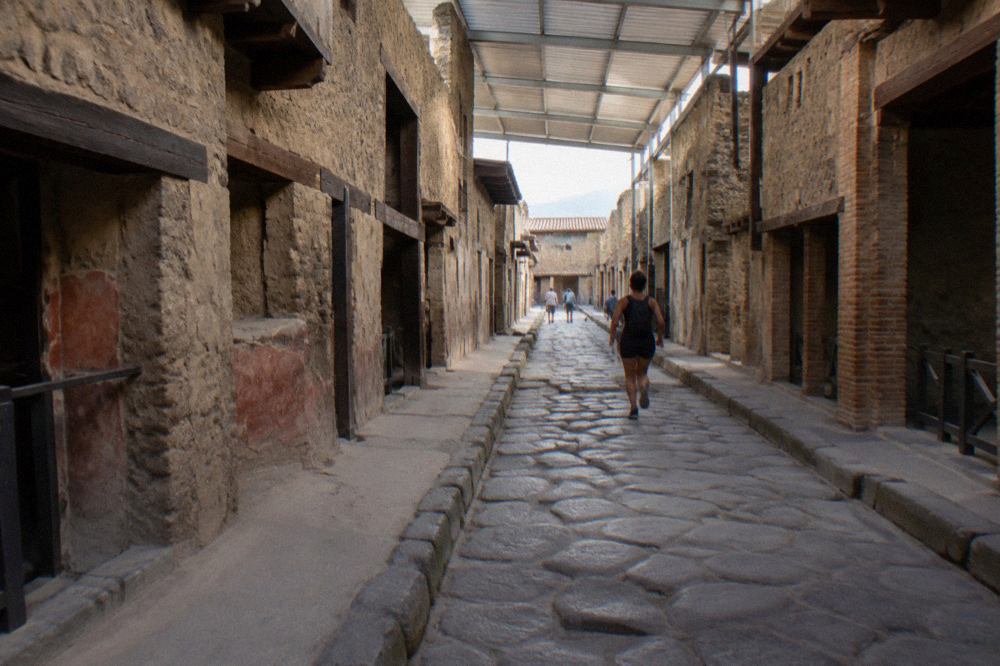
How Much Do Herculaneum Tickets Cost In 2026?
A full-price Herculaneum ticket costs EUR 16, and the only reduced rate is EUR 2 for visitors aged 18 to 25, as published on the site's official ticketing page. Children and young visitors under 18 enter free, as they do at Pompeii. There is no multi-day Herculaneum pass, no express variant and no villa add-on in 2026: one price covers the whole excavated town, and the free partner-site logic that applies to Pompeii tickets does not apply here.
The pricing is refreshingly flat. Where Pompeii's 2026 system runs three tiers, Express at EUR 20, Pompeii+ at EUR 25 and a 3-day ticket at EUR 30, Herculaneum has a single gate price of EUR 16 that covers the entire excavated area. The EUR 2 reduced ticket is limited to visitors aged 18 to 25; unlike Pompeii's reduced rate, the Herculaneum page does not tie it to EU citizenship or a residence permit, so any visitor in that age band can ask for it. Under-18s enter free without a paid ticket.
| Ticket type | 2026 price | Who qualifies |
|---|---|---|
| Full price | EUR 16 | All adult visitors |
| Reduced | EUR 2 | Visitors aged 18 to 25 |
| Free | EUR 0 | Visitors under 18 |
| Free days | EUR 0 | Everyone, first Sunday monthly, 25 April, 2 June, 4 November |
One point of planning discipline: on free days no reservation exists for Herculaneum. The free ticket is collected at the ticket office on the day itself, which means the entrance area in Ercolano carries the crowd that the free price attracts. If your date is fixed and your time is short, a paid day with a set arrival time is the calmer choice. The companion guide to Pompeii ticket types and prices covers the equivalent logic for the larger site, where time bands and a 20,000-visitor daily cap change the arithmetic.
When Is Herculaneum Free To Enter?
Herculaneum is free on the first Sunday of every month, year-round, and additionally on 25 April, 2 June and 4 November, with the free ticket collected at the ticket office on the day and no advance booking. The free entry applies to every visitor, not only to EU citizens or residents. There is no obligation to pay for a guided tour on a free day, and the free ticket covers the same excavated area as the paid one.
The first-Sunday scheme is the Italian state museums' "Domenica al Museo" tradition, and Herculaneum follows it every month without a seasonal cut-off. The three extra dates are Herculaneum's own: 25 April is Liberation Day, 2 June is Republic Day and 4 November is National Unity Day, all public holidays in Italy, which is why they pair a day off work with free culture. Stack that against Pompeii's rulebook, where the free day is the first Sunday only, and Herculaneum looks slightly more generous.
| Free entry date | Frequency | Ticket procedure |
|---|---|---|
| First Sunday of the month | Monthly, all year | Collect free ticket at the office on the day |
| 25 April | Annual | Collect free ticket at the office on the day |
| 2 June | Annual | Collect free ticket at the office on the day |
| 4 November | Annual | Collect free ticket at the office on the day |
The trade-off is predictability. Free days draw the largest crowds of the month, and Herculaneum's entrance corridor through Ercolano is narrow, so a free Sunday in high summer means queueing on a steep residential street. Visitors weighing whether free entry is worth the crowd should read should you buy Pompeii tickets in advance; the reasoning about paid-versus-free days transfers directly, even though Herculaneum sells no timed slots of its own.
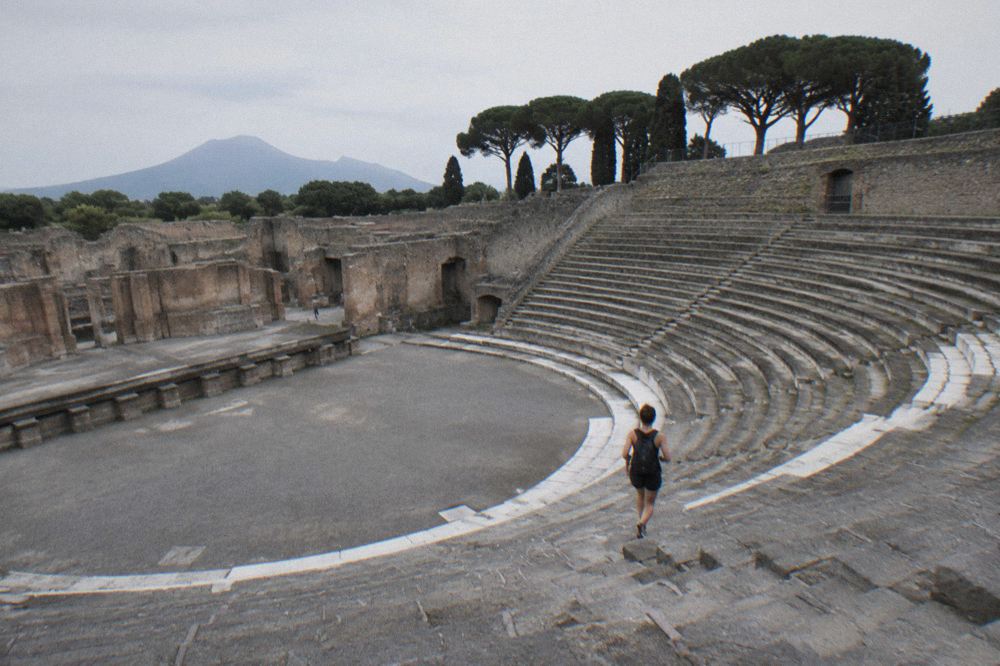
Choosing between paying EUR 16 and gambling on a free day is also where a tour with the ticket bundled in starts to make sense. The three options below cover the main approaches: a guided Herculaneum visit with tickets included from Naples, a Pompeii specialist tour if the larger site is your priority, and a second Herculaneum small-group format for comparing styles.
What Are Herculaneum's Opening Hours?
Herculaneum opens daily at 08:30 and closes at 19:30 from 16 March to 14 October, with last entry at 18:00, and at 17:00 from 15 October to 15 March, with last entry at 15:30. The site is open every day of the week and closes fully only on 1 January and 25 December. There is no Tuesday closure at Herculaneum; that rule applies to Oplontis and the Stabiae villas and museum, not here.
The seasonal switch happens on the same dates as Pompeii's, mid-March and mid-October, which makes combined planning easy. But note the difference in closing times: Herculaneum's summer closing of 19:30 is later than Pompeii's 19:00, and its 08:30 opening is half an hour earlier than Pompeii's 09:00.
| Period | Opens | Last entry | Closes |
|---|---|---|---|
| 16 March to 14 October | 08:30 | 18:00 | 19:30 |
| 15 October to 15 March | 08:30 | 15:30 | 17:00 |
| Closed dates | 1 January and 25 December | Closed all day | Closed all day |
Last entry matters more than closing time. With last entry at 18:00 in summer and a site that rewards slow looking at painted interiors, arriving after 17:00 means choosing between the boat sheds and the House of the Deer rather than seeing both. The practical floor for a real visit is covered in is two hours enough for Herculaneum, and the honest answer is that two hours is a brisk highlight run, not a full exploration.
Which Parts Of Herculaneum Are Closed In 2026?
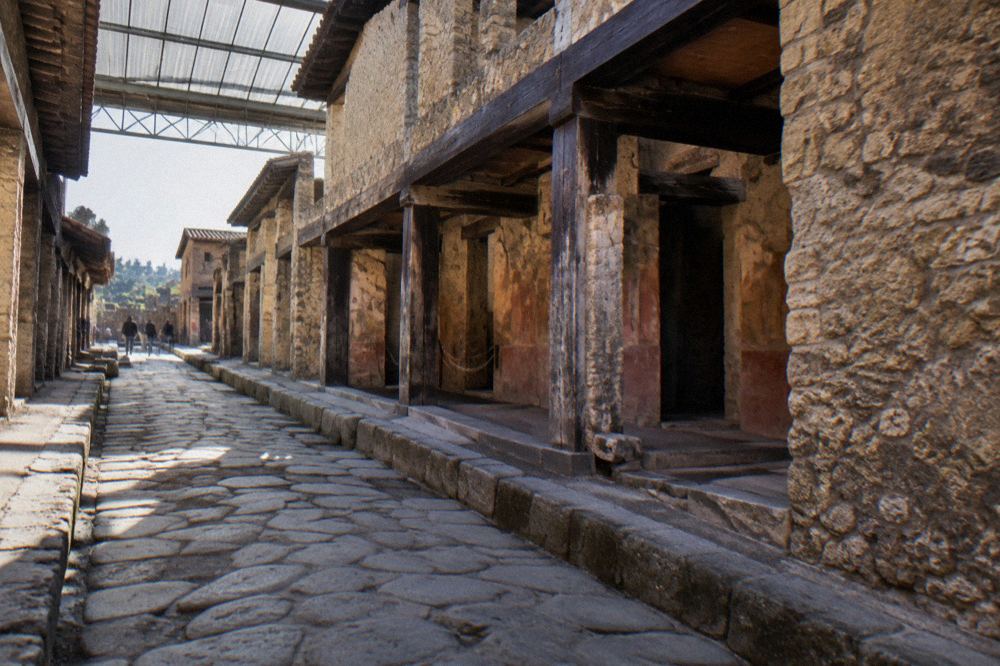
Two named areas of Herculaneum are closed as of October 2026: the Villa dei Papiri is closed for works and the Ancient Theatre is closed until further notice, both stated on the official ticketing page. No reopening date is published for either. Every other excavated area, including the boat sheds with their skeletons and the principal houses along the decumanus, remains on the standard EUR 16 ticket.
This is the single most important fine print on a Herculaneum ticket in 2026. The Villa dei Papiri, the grand seafront villa famous for its lost library of carbonised scrolls and its bronze sculpture collection, sits at the north-west edge of the property and is a standard stop on older itineraries and older guidebooks. Anyone booking with a mental picture drawn from a documentary filmed years ago should recalibrate: the villa is behind hoarding, and the theatre, reached by the historic tunnel descent, is likewise shut.
| Area of Herculaneum | Status in 2026 | Published reopening |
|---|---|---|
| Villa dei Papiri | Closed for works | None stated |
| Ancient Theatre | Closed until further notice | None stated |
| Boat sheds and skeletons | Open | Not applicable |
| Houses along the decumanus | Open | Not applicable |
| Suburban baths and terrace houses | Open | Not applicable |
The good news is that what remains open is the substance of the site. The boat sheds, where the skeletal remains of shelter-seeking residents are displayed under glass, are open and are covered by the Herculaneum boat sheds guide. The questions visitors most often ask on seeing them, including are the Herculaneum skeletons real or fake and why no bodies were found at Herculaneum in the Pompeii sense, have their own answers pages on this site. For background on the closed villa itself, the Villa of the Papyri article explains what is behind the hoarding and why the site matters to scholars.
How Do Herculaneum Tickets Compare With Pompeii Tickets?
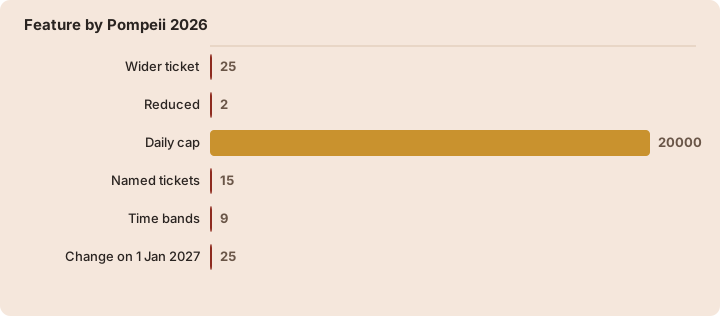
In 2026 Herculaneum's full ticket is EUR 16 against Pompeii's EUR 20 Express, EUR 25 Pompeii+ and EUR 30 three-day tickets, and Herculaneum sells only one ticket type while Pompeii sells three. Pompeii caps entry at 20,000 visitors a day with nominative tickets and time bands; Herculaneum has no daily cap, no time bands and no named-ticket rule on its page. From 1 January 2027 Pompeii collapses to a single EUR 25 ticket, but Herculaneum's separate structure is unaffected.
The comparison matters because nearly everyone visiting one site visits the other. Pompeii's 2026 structure, verified on the park's own ticketing page, is tiered by scope: EUR 20 for the ancient city alone, EUR 25 adding the suburban villas and the Boscoreale excursion with shuttle, EUR 30 for a three-day version including Oplontis and the Stabiae sites. Herculaneum sits outside that ladder entirely, with its own EUR 16 gate price and its own operator, so no Pompeii ticket, at any 2026 tier, includes Herculaneum. The sites are separate parks with separate ticket offices. Other pages covering the same trip are gathered on Pompeii Travel Guide.
| Feature | Herculaneum 2026 | Pompeii 2026 |
|---|---|---|
| Wider ticket | None (single ticket) | EUR 25 Pompeii+, EUR 30 three-day |
| Reduced | EUR 2, ages 18 to 25 | EUR 2, EU citizens 18 to under 25 |
| Daily cap | None stated | 20,000 visitors |
| Named tickets | Not on the page | Yes, nominative since 15 Nov 2024 |
| Time bands | None | 9:00-13:00 and 13:00-17:30 |
| Change on 1 Jan 2027 | None announced | Single EUR 25 ticket, all park sites |
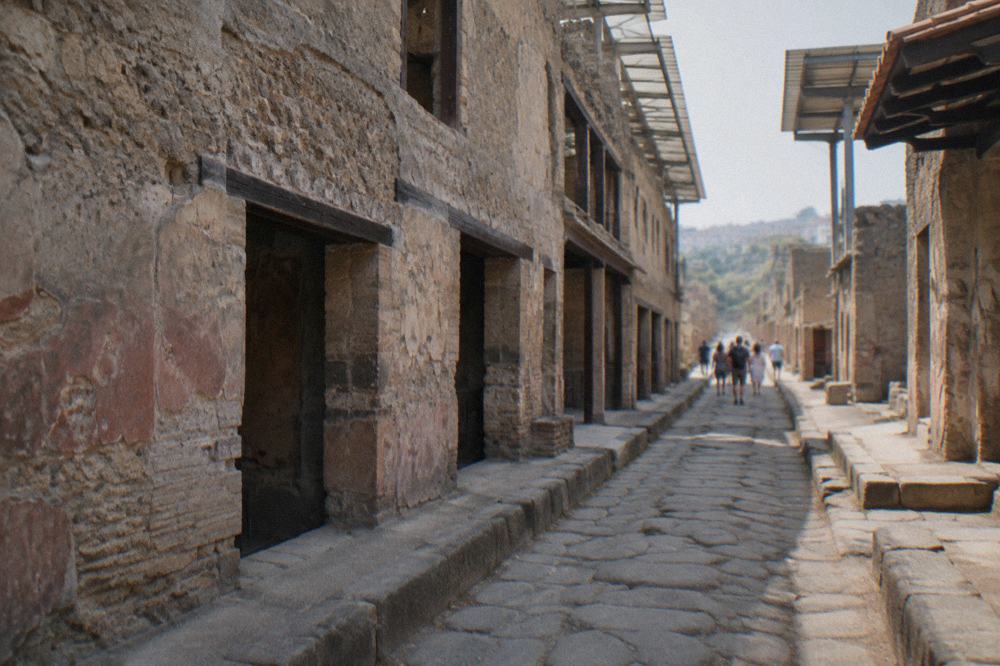
The deeper contrast is experiential rather than financial, and it is laid out fully in Pompeii versus Herculaneum compared. Herculaneum is smaller, darker in its preservation, richer in carbonised wood and fabric, and visitable at an unhurried pace in half a day. Pompeii is a whole city with an amphitheatre, a forum and long streets of wheel-worn stone. If you can only choose one, that guide walks the decision; if you want both in a single day, can you do Herculaneum and Pompeii in one day answers it with the travel times that make it realistic.
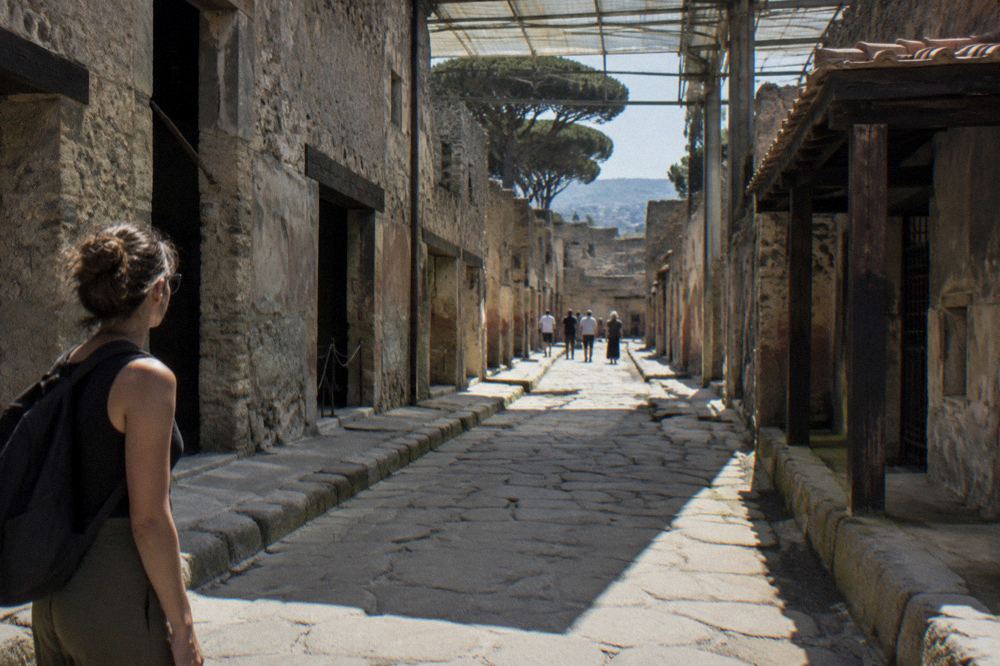
For travellers who decide a guided visit is the right format, the two-site question has its own tour product. The Pompeii and Herculaneum small-group tour below runs both sites with an archaeologist as the guide, which suits a first-time visitor who wants the contrast explained on the ground rather than read about the night before.
Should You Buy Herculaneum Tickets In Advance?
Herculaneum sells no advance timed tickets of its own in 2026: the free-day tickets are collected on the day, and paid entry is bought at the ticket office or through tours and resellers that bundle a ticket with a guide. Buying ahead therefore means buying a product, not a slot. Visitors who want certainty on a summer morning or a cruise day generally do better with a ticket-included tour than with an unaccompanied advance purchase.
That is the honest state of the system. Pompeii's nominative tickets and daily cap create a real reason to book ahead there; Herculaneum's page publishes no cap, no bands and no sell-out mechanism, so the risk at the gate is queue time, not unavailability. The queue risk is not trivial in July and August, when the entrance stair in Ercolano funnels a wide footpath into a single gateway, but it is a different problem from Pompeii's, and it is solved differently: arrive at 08:30, or buy a guided product that walks past the ticket window.
The featured option on this page is the guided Herculaneum tour from Naples with tickets included, which pairs the entry ticket with a guide and transport from the city, removing both the queue and the connection question in one booking. Its full description, with the current price and rating rendered from the operator's live listing, is on the Herculaneum guided tour from Naples page, and you can Check availability for your dates directly. Visitors already based along the coast can compare the Naples to Pompeii and Sorrento to Pompeii connection guides for the wider travel picture.
What Is Open Around Herculaneum In The Modern Town?
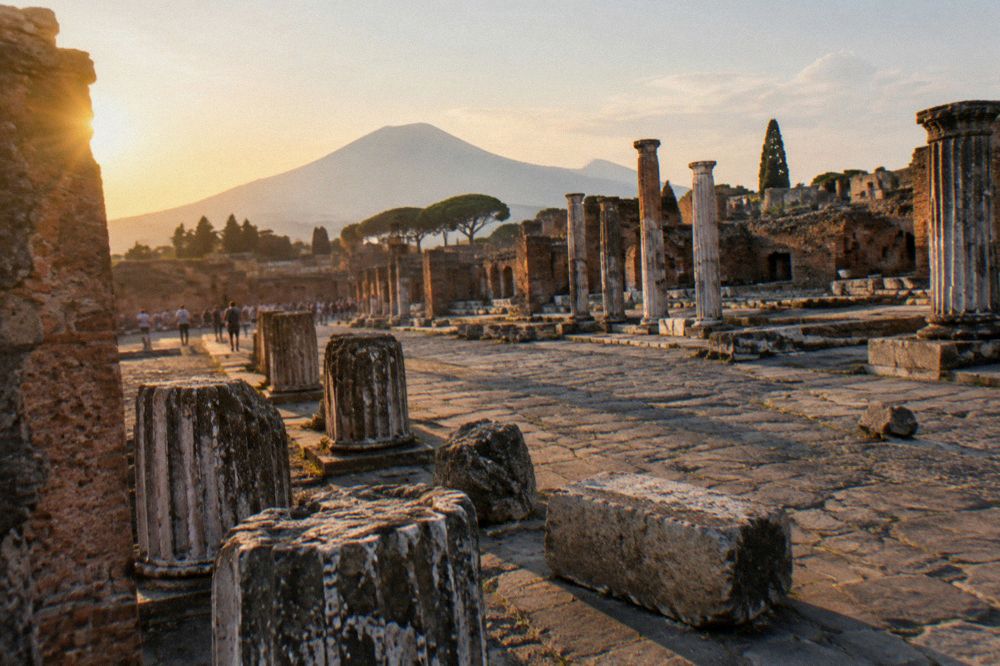
The modern town of Ercolano wraps the excavation on a steep hillside between the Circumvesuviana railway and the sea, and its main street leads directly down to the site entrance. The town is a functioning residential suburb of the Naples metropolitan area, not a tourist resort: eating, parking and access options are practical rather than picturesque. Vesuvius itself rises immediately behind the town, and its Gran Cono trail tickets are sold online only in 2026.
Visitors arriving by train walk downhill from Ercolano station through ordinary streets, and the descent sets expectations correctly: this is Ercolano the town, a working place whose distinction is that an entire Roman city lies at its feet. The pairing that draws travellers here is the double header of Herculaneum below and Vesuvius above, and the volcano's ticketing has its own strict rules: online-only timed purchase, 50 tickets released per ten-minute slot, bookable up to 30 days ahead, and automatic closure with refund when an orange weather alert is issued. Those rules are unpacked in the companion guides to Mount Vesuvius tickets and buying Vesuvius tickets on the day.
| Question about the Herculaneum visit | Where this site answers it |
|---|---|
| Two hours, is that enough? | Is two hours enough for Herculaneum |
| Both sites in one day? | Can I do Herculaneum and Pompeii in one day |
| Why is it less famous? | Why is Herculaneum not as famous as Pompeii |
| Are the skeletons real? | Are the skeletons in Herculaneum real or fake |
| Still being dug? | Is Herculaneum still being excavated |
| What is the town called today? | What is Herculaneum called today |
Each of those has a dedicated answer page on this site, linked from the questions above through the answers section. The serious reader's route is the main Herculaneum attraction guide, which covers what to see inside the excavation once the ticket question is settled. The excavation continues to produce scholarship, by the way: is Herculaneum still being excavated addresses the state of the dig, and what Herculaneum is called today settles the Ercolano naming, a small point that confuses ticket buyers every day of the year.
Which Herculaneum Ticket Plan Fits Which Traveller?
A visitor aged 26 or older touring independently should plan on the EUR 16 full ticket at the gate, arriving at 08:30 in high season; a visitor aged 18 to 25 pays EUR 2; an under-18 pays nothing. Travellers on a fixed schedule, a cruise day or a single-day two-site plan should plan on a ticket-included guided tour instead, because it converts the queue and the timing risk into a booked commitment. Free days suit flexible visitors who accept crowds for EUR 0.
That is the whole decision, compressed. The independent route is cheap and pleasant outside peak weeks, and Ercolano is an easy half-day from Naples on the Vesuvian lines. The guided route costs more but pays back in certainty, and the archaeologist-led format suits anyone who wants the carbonised wood and the stratigraphy explained rather than merely seen. Cruise passengers have a narrower calculus, covered in depth by this site's Pompeii shore excursion planning guide, since a late ship arrival can wreck an unescorted itinerary.
| Traveller | Best 2026 plan | Why |
|---|---|---|
| Independent adult | EUR 16 at the gate, arrive 08:30 | Cheapest, no cap or time bands |
| Visitor aged 18 to 25 | EUR 2 reduced at the gate | Same ticket, lower price |
| Family with under-18s | Pay adults only | Under-18s free |
| Fixed-date or cruise visitor | Ticket-included guided tour | Queue and timing risk removed |
| Flexible, crowd-tolerant | First Sunday or 25 April, 2 June, 4 November | Free entry, collected on the day |
| Two-site day tripper | Guided two-site product or early start | Herculaneum opens 08:30, later last entry |
For travellers coming from further afield, the planning guides for the Rome to Pompeii day trip and Rome to Pompeii by train cover the long-distance logic, and the same reasoning extends to adding Herculaneum. Travellers who prefer the Villa of Mysteries end of the Pompeii story, the suburban villa with the famous fresco cycle, may instead find the three-hour specialist walk below a better fit than a second archaeological park on the same ticket, since it stays inside Pompeii's own boundaries and goes deep rather than wide.
Common Questions About Herculaneum Tickets
How much do Herculaneum tickets cost?
A full-price Herculaneum ticket costs EUR 16 in 2026. The only reduced rate is EUR 2 for visitors aged 18 to 25, and under-18s enter free. There is a single ticket type covering the whole excavated area, with no express or multi-day variants.
When is Herculaneum free to enter?
Entry is free on the first Sunday of every month and on 25 April, 2 June and 4 November. The free ticket is collected at the ticket office on the day, with no advance booking, and it covers the same areas as the paid ticket.
What are Herculaneum's opening hours?
From 16 March to 14 October the site opens at 08:30, takes its last entry at 18:00 and closes at 19:30. From 15 October to 15 March it opens at 08:30, takes its last entry at 15:30 and closes at 17:00. It closes fully on 1 January and 25 December.
Which parts of Herculaneum are closed?
The Villa dei Papiri is closed for works and the Ancient Theatre is closed until further notice, as stated on the official ticketing page, with no reopening dates published. The boat sheds, the houses along the decumanus and the rest of the excavated town remain open on the standard ticket.
Does a Pompeii ticket include Herculaneum?
No. Pompeii and Herculaneum are separate archaeological parks with separate ticket offices and separate price structures in 2026, and no Pompeii ticket tier includes Herculaneum entry. Each site's ticket must be bought separately.
Can you buy Herculaneum tickets in advance?
Herculaneum publishes no advance timed-ticket system of its own in 2026; free-day tickets are collected on the day and paid entry is bought at the office or bundled into guided tours with tickets included. Booking ahead therefore means booking a guided product rather than a slot.
Get those five facts right and the rest of the day in Ercolano, from the boat sheds to the frescoed rooms up the slope, takes care of itself.