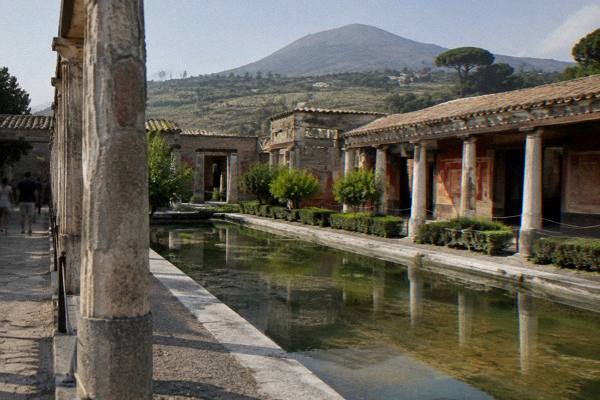
Oplontis
Oplontis is a Roman villa site at Torre Annunziata on the Bay of Naples, buried by the same AD 79 eruption of Vesuvius that destroyed Pompeii, and famous for the frescoes of the Villa Poppaea.
Short answer
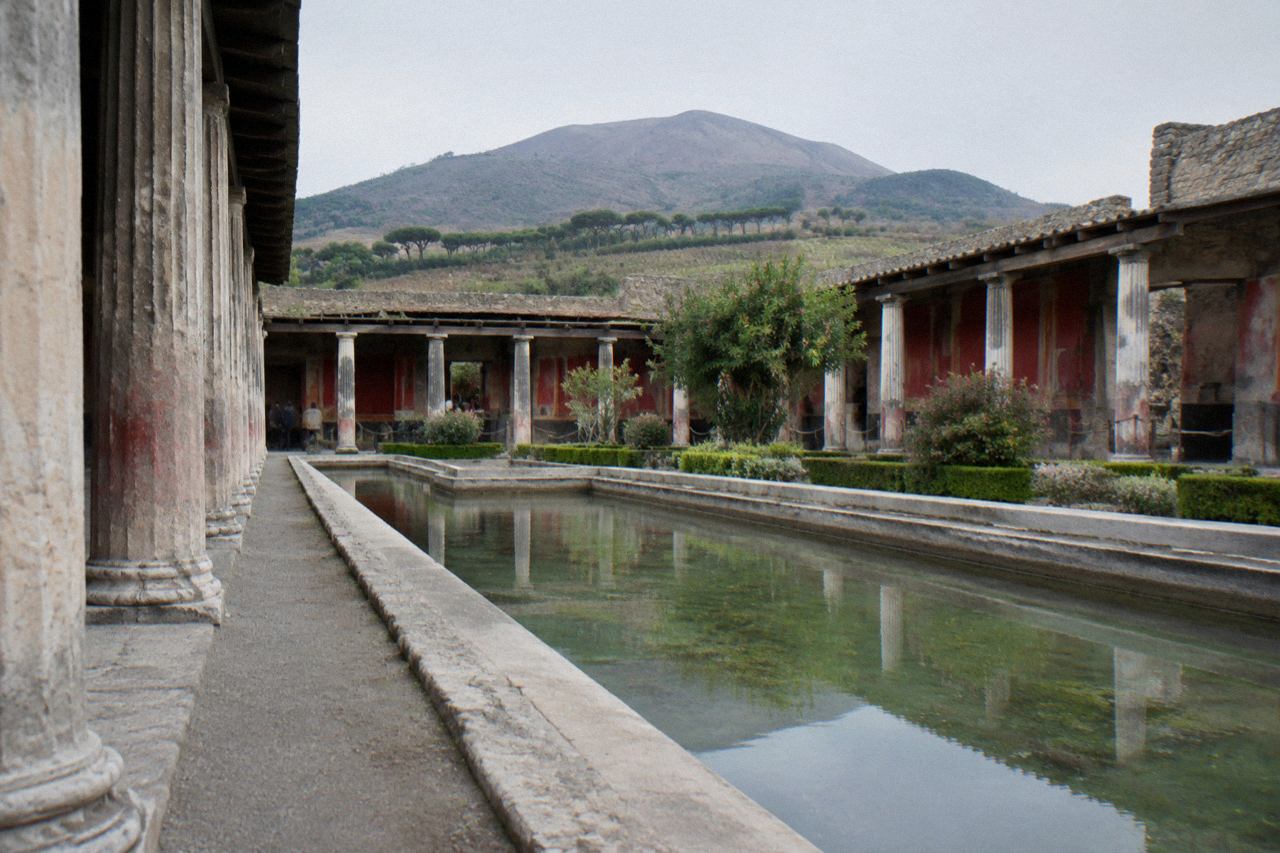
Oplontis is the archaeological site of the Villa Poppaea at Torre Annunziata in Campania, southern Italy beside Pompei. A 2026 ticket costs EUR 8 and the site is closed on Tuesdays. It is part of the same UNESCO listing as Pompeii and Herculaneum and is known for some of the best preserved Roman frescoes in Italy.
The heart of the site is the Villa Poppaea, a vast seafront residence with some of the finest frescoes to survive anywhere in the Roman world. It shares its UNESCO World Heritage inscription with Pompeii and Herculaneum under listing number 829, recognised under criteria (iii), (iv) and (v), with an inscribed property of 98 hectares.
What Is Oplontis And Who Lived In The Villa Poppaea?
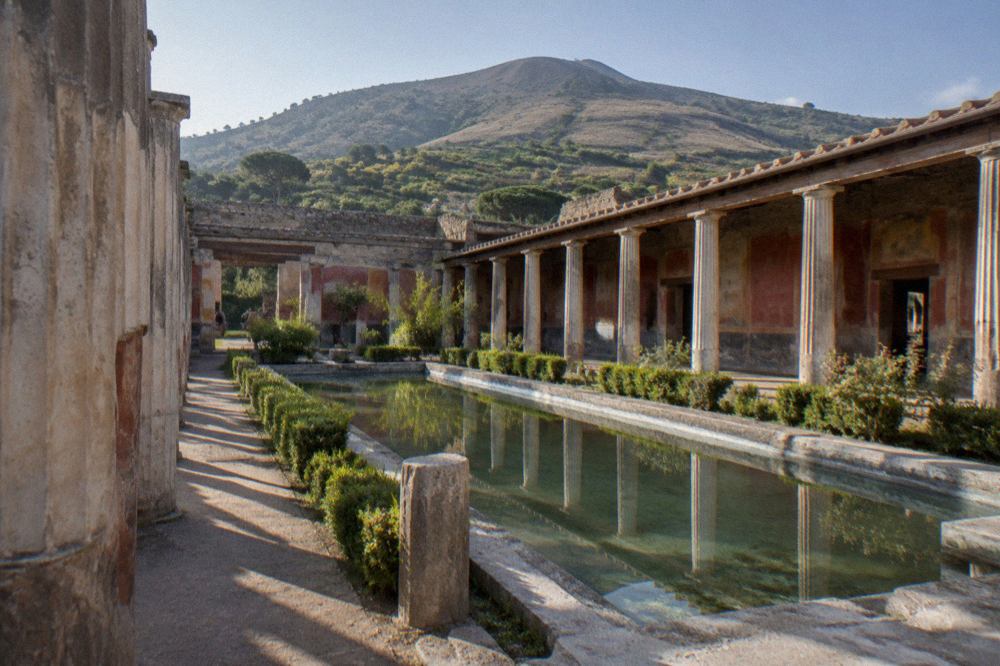
Oplontis is the archaeological area at Torre Annunziata, Italy, whose centrepiece is the Villa Poppaea, a luxury Roman villa buried by Vesuvius in AD 79, traditionally dated to 24 August. It is usually identified as the seaside home of Poppaea Sabina, wife of the emperor Nero, based on an amphora bearing her name found on the site. Excavation of the villa uncovered about 100 rooms, a vast surviving swimming pool, and fresco cycles in the Second and Third Pompeian styles.
The name "Oplontis" itself appears on the Peutinger Table, a medieval copy of a Roman road map, as a dot on the coast between Herculaneum and Pompeii, but archaeologists have never settled what kind of settlement it labelled. What the excavations found instead was a strip of elite suburban villas along the Roman shoreline, of which the largest, now called Villa A or the Villa Poppaea, was still under renovation when the eruption caught it. Scaffolding holes, piles of building materials and half-finished plaster tell that story: the owners were away, and the builders dropped their tools and fled.
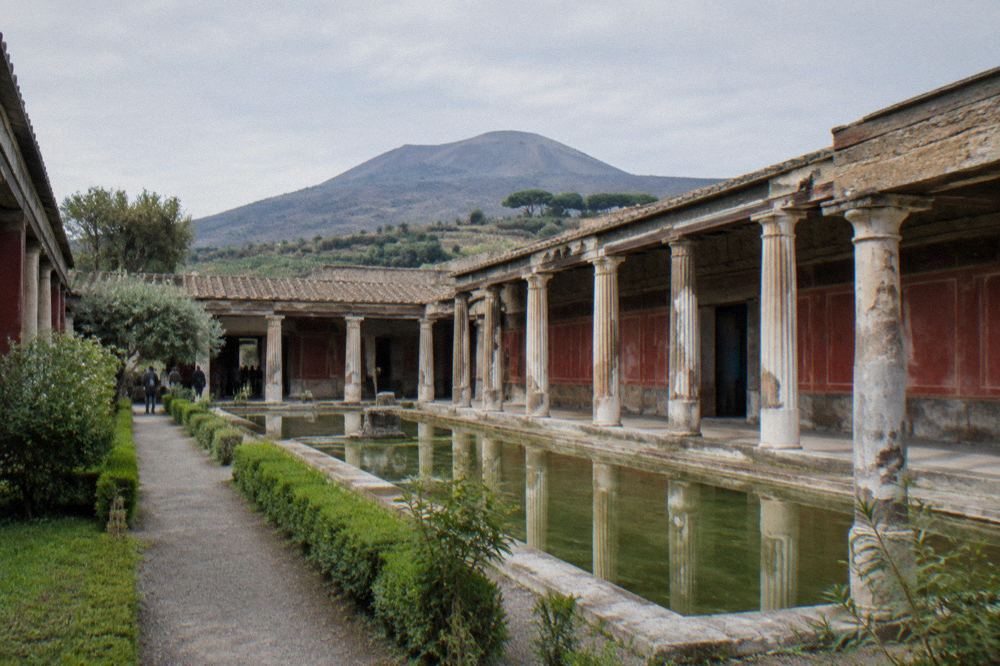
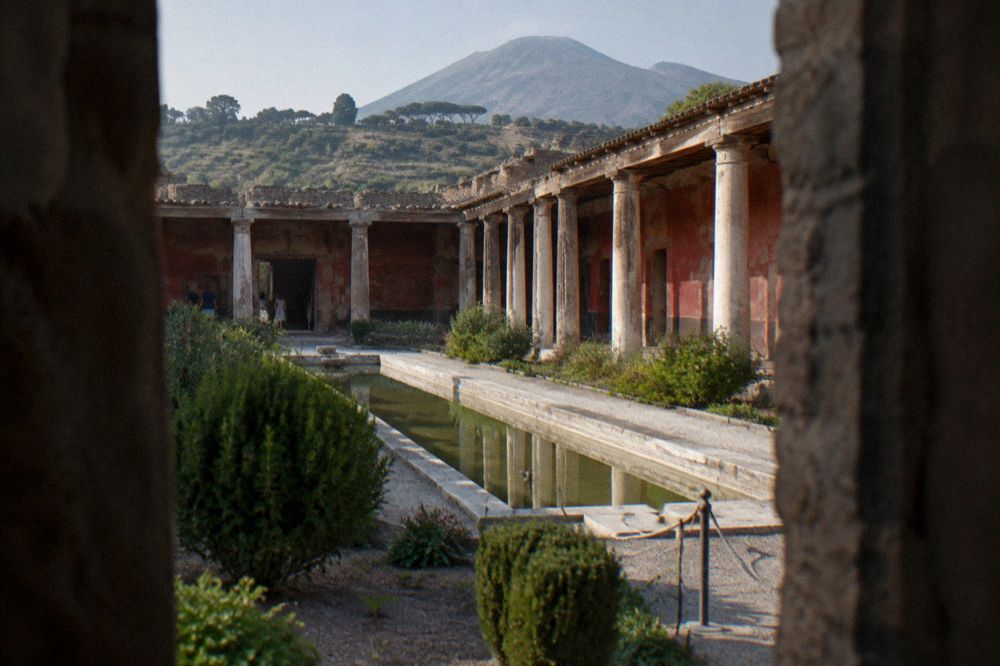
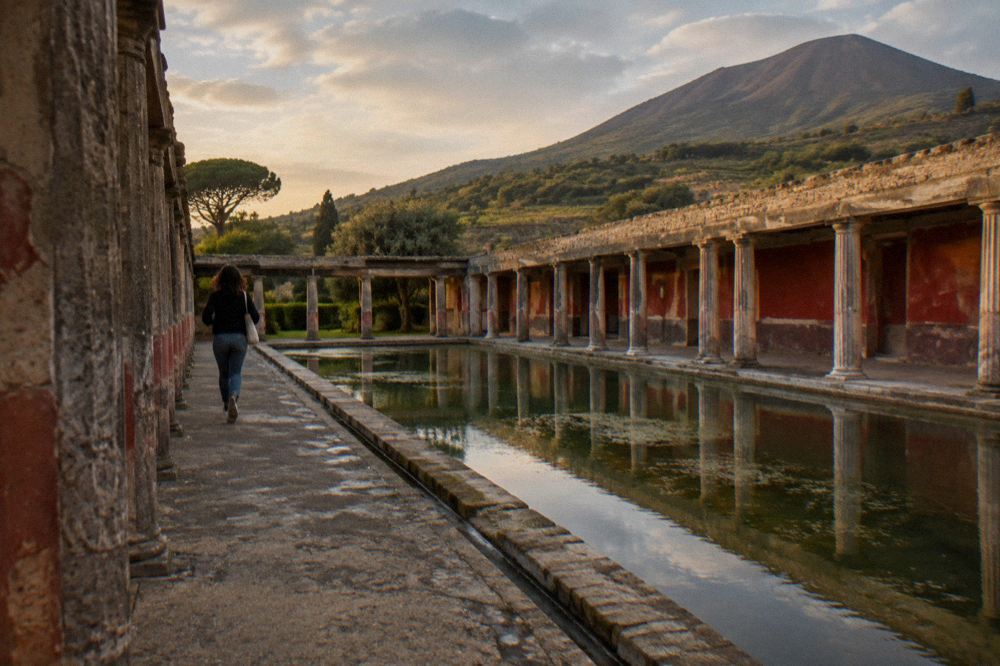
The villa's decoration is the reason art historians cross the world for it. The Second Style walls in the atrium imitate marble panelling and stage architecture in painted form; the garden rooms open onto a painted colonnade of birds, fountains and topiary that doubled the real garden beyond; and the surviving pool, immense by any domestic standard, ran along a portico facing the sea that the eruption pushed back by several hundred metres. Unlike the crowded streets of Pompeii, these are rooms you can stand in and hear quiet.
A second building, Villa B or the Villa of Lucius Crassus Tertius, was a commercial structure on the ancient shore with storage rooms and the skeletons of people who sheltered there with jewellery and coins, and a Roman bath complex under the modern Terme Nunziante quarter completes the area. Only Villa A is a routine ticketed visit; check what is open on the park's own pages before promising yourself the second villa.
How Much Are Oplontis Tickets In 2026 And When Is It Open?
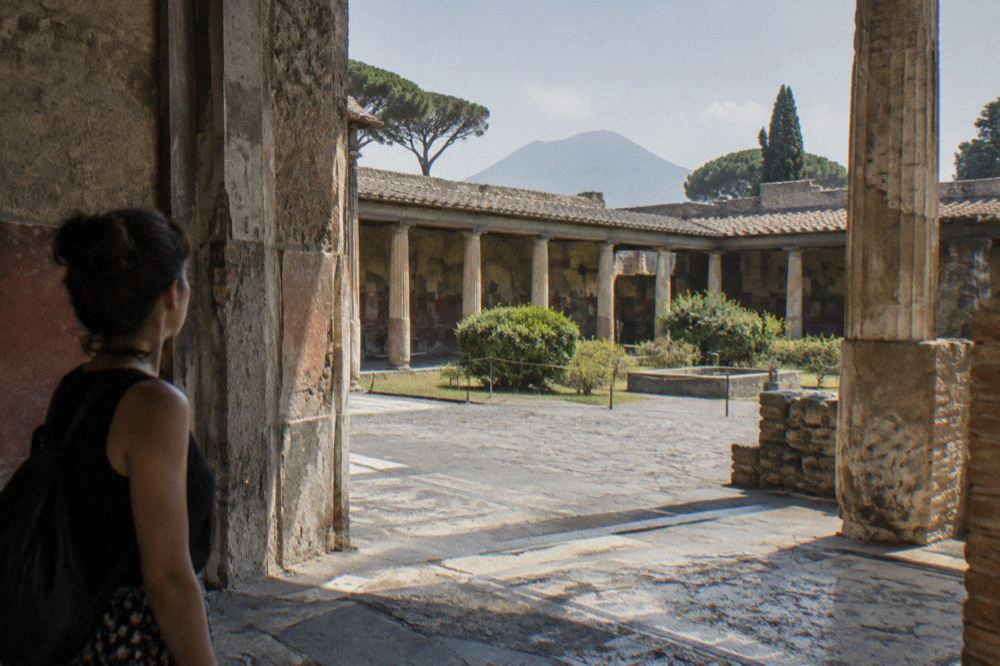
In 2026 a standalone Oplontis ticket costs EUR 8, while the Pompeii 3-day ticket at EUR 30 includes Oplontis alongside Pompeii, the Stabiae sites and Boscoreale, and those prices end on 31 December 2026. From 1 January 2027 a single EUR 25 ticket covers all park sites, valid 30 days with one entry per site, while Oplontis stays EUR 8 bought individually. Oplontis is closed on Tuesdays, and entry is free for under 18s and for everyone on the first Sunday of the month.
That pricing structure is the single most useful thing to understand before you travel, because the 2026 and 2027 systems work differently. In 2026 you either buy the small site on its own at EUR 8, or you fold it into the 3-day Pompeii ticket at EUR 30 if you are visiting the wider circuit. From 1 January 2027, per the park's release of 14 September 2026, one EUR 25 ticket admits you to every site in the archaeological park, Oplontis included, valid 30 days and one entry per site; the three smaller sites, Oplontis, the Stabiae museum and Boscoreale, also remain available individually at EUR 8, and the MyPompeii Card stays at EUR 45. Reduced entry of EUR 2 applies to EU citizens aged 18 to under 25, and nominative tickets, introduced with the 20,000 daily visitor cap on 15 November 2024, mean your name goes on the ticket and identification can be checked at the entrance.
Opening hours follow the same seasonal calendar as the wider park, but the weekly closure on Tuesdays catches out plenty of travellers who turn up midweek. The park's timetable page marks only Oplontis, the Stabiae villas and the Stabiae museum as closed on Tuesdays, so plan around it. First Sundays are free under the Domenica al Museo programme, year-round, with no seasonal cut-off stated on the official page, and the same free days also apply at Herculaneum, where 25 April, 2 June and 4 November are free as well.
| Ticket (2026 prices, in force to 31 December 2026) | Price | What It Covers |
|---|---|---|
| Oplontis standalone | EUR 8 | Oplontis only |
| Pompeii Express | EUR 20 | Ancient city of Pompeii only |
| Pompeii+ | EUR 25 | Pompeii city plus suburban villas, Antiquarium and shuttle |
| 3-day ticket | EUR 30 | Pompeii+ plus Oplontis, Stabiae villas and museum, Boscoreale |
| Reduced (EU citizens 18 to under 25) | EUR 2 | Same coverage as the full ticket type |
| Under 18 | Free | Same coverage as the full ticket type |
| First Sunday of the month | Free | Everyone, Domenica al Museo |
| Season | Opening Hours | Last Entry | Weekly Closure |
|---|---|---|---|
| 16 March to 14 October | 9:00 to 19:00 | 17:30 | Tuesdays |
| 15 October to 15 March | 9:00 to 17:00 | 15:30 | Tuesdays |
If you would rather not carry cash or queue at a small provincial ticket office, an entry ticket with a digital guide can be held in advance through the operator's live listing, and the site's own pages link the official vivaticket channel for direct booking. A ticket product is also the simplest add-on if you are building a wider Vesuvian itinerary.
An entry ticket with a digital guide for Oplontis, sold on this site's tour pages at the Oplontis ticket page, pairs the EUR 8 admission with commentary on the villa's fresco styles and history, useful at a site where wall panels carry limited labelling. Check availability
What Will You Actually See Inside The Villa Poppaea?
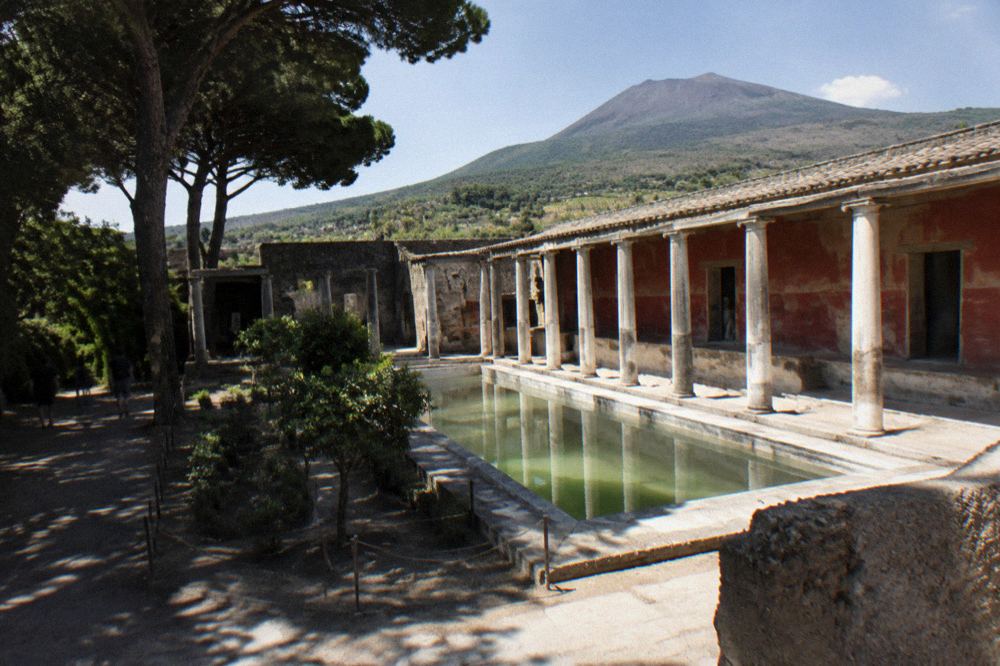
The visit is a loop through roughly 100 excavated rooms of one villa: the atrium with its Second Style marble imitation, the garden rooms with painted colonnades full of birds and fountains, the immense swimming pool and its portico, servants' quarters with plain white walls, and a series of service corridors that show the building mid-renovation when the eruption buried it. The frescoes are the headline, and they are seen in situ, not behind glass.
Stand in the atrium first and read the walls as the Romans intended: the Second Style painters faked marble blocks, cornices and colonnades so convincingly that the flat plaster reads as deep architecture. Move to the garden rooms and the style flips, with slender architectural frames opening onto painted gardens where birds perch, fountains play and every plant species is rendered botanically accurately. Art historians treat these garden rooms as among the most important survivals of Roman interior decoration, precisely because the villa was sealed rather than rebuilt or stripped.
Then walk the pool. Its full length of still water, edged in Roman concrete with column bases along the portico, aimed at a sea view that the AD 79 shoreline provided before the eruption moved the coast. The scale tells you who lived here: this was not a farmhouse but an imperial-grade pleasure estate. Beyond the pool the servants' side of the house turns plain, with white walls, small cells and the bone beds of a working household, and renovation debris still lies where the builders left it, scaffolding sockets empty in the walls.
There is no body cast display here, and no café inside the excavated area, so plan refreshment around the visit in modern Torre Annunziata. What Oplontis offers instead is intimacy: rooms where the painted plaster runs continuously around all four walls, in a site you can walk in about an hour without meeting a tour group at every doorway. For the cast displays and the dense urban fabric, pair this visit with Pompeii itself; the contrast between villa life and city life is the point of seeing both, and the Garden of the Fugitives in Pompeii carries the human story that Oplontis deliberately does not.
How Does Oplontis Compare With Pompeii And Herculaneum?
Oplontis is the specialist choice: one elite villa, about an hour to see, with the finest frescoes of the three sites and no urban streets, while Pompeii is a whole ancient city needing four hours or more, and Herculaneum is a compact, better preserved town of about a third of Pompeii's scale. A full Herculaneum ticket costs EUR 16 in 2026 against Oplontis at EUR 8, and Herculaneum is open daily while Oplontis closes on Tuesdays.
Travellers deciding between the Vesuvian sites usually have a half day and one question: architecture or city life? Pompeii, with an excavated area of 44 hectares inside a 98-hectare inscribed property, is the only one of the three that can absorb a full day, and its visitor figures show it, with 4,000,090 entries in 2025. Herculaneum, at EUR 16 full price, gives you carbonised wood, upper storeys and the boat sheds where skeletons sheltered, in a site that fits comfortably into two hours. Oplontis gives you neither city, but a single villa whose painted decoration outranks both, and whose quiet rooms let you actually look.
Note two closures if you are combining sites in 2026: Herculaneum's Villa dei Papiri and its Ancient Theatre are closed for works, both listed on the official ticketing page, so the Herculaneum visit is the town excavations and the boat sheds rather than the villa famous for its scrolls. Neither closure touches Oplontis, which strengthens the case for adding it on a day when the headline sites are delivering less than their full footprint.
| Site | 2026 Ticket | Scale | Best For | Open |
|---|---|---|---|---|
| Oplontis, Villa Poppaea | EUR 8 | One villa, about 100 rooms, about 1 hour | Frescoes, pool, quiet rooms | Closed Tuesdays |
| Pompeii ancient city | EUR 20 Express | 44 ha excavated, half to full day | Streets, forum, amphitheatre, casts | Daily except 25 Dec and 1 Jan |
| Herculaneum | EUR 16 full, EUR 2 reduced 18 to under 25 | Compact town, about 2 hours | Carbonised wood, boat sheds, skeletons | Daily except 1 Jan and 25 Dec |
| Stabiae villas and museum | EUR 8 | Cliff-top villas at Castellammare di Stabiae | Rural villas, sea views | Closed Tuesdays |
| Boscoreale, Villa Regina | EUR 8 | Rustic working villa and antiquarium | Countryside life, wine press | Closed Tuesdays |
For the full comparison between the two headline sites, the site's Pompeii versus Herculaneum guide covers the trade-offs in depth, and the park tickets guide explains the 2026 ticket ladder and the 2027 single-ticket change line by line. The short version for Oplontis is simple: it is the cheapest of the three, the least crowded, and the one that rewards a slow look rather than a long walk.
How Do You Get To Oplontis From Naples, Sorrento Or Pompeii?
Oplontis sits at Torre Annunziata, between Naples and Sorrento on the Circumvesuviana railway's Naples to Sorrento line, reached from the station at Torre Annunziata, with the site a short walk from the station. By road the site is on the coast road between Naples and Sorrento. The Campania Express rail service has been suspended since 1 October 2026 until further notice, so do not plan around it.
The verified timetable data from EAV's own feed, computed from the feed dated 30 September 2026, gives 29 to 35 minutes from Napoli Garibaldi to Pompei Scavi-Villa dei Misteri with a median of 29, and 64 to 75 minutes from Naples to Sorrento with a median of 69. What matters for planning: the line runs frequently enough that Oplontis pairs naturally with Pompeii in one day, and the Circumvesuviana guide covers tickets and the Pompei Scavi station in detail.
Do not build any part of the trip on the Campania Express, the premium limited-stop service that used to link Naples, Pompei and Sorrento: EAV's own page states it has been suspended from 1 October 2026 until further notice, with refunds available through EAV's complaints form or the original seller. EAV announced new trains and a new Vesuvian lines timetable on 16 September 2026, but beyond the announcement headline no new schedule figures have been confirmed, so plan on the published timetable and nothing else.
By road, the driving distances verified on routing data for the Bay of Naples put Naples 24 km from the Pompei Scavi area with about 22 minutes of driving, Sorrento 26 km with about 37 minutes, and Rome 234 km with about 159 minutes; Oplontis at Torre Annunziata sits between Naples and Sorrento on the same coastal corridor. Parking and coach drop-off details for the villa are best checked on the park's own visiting pages, since operational details at a small site change more often than the big-site rules. Many travellers instead fold Oplontis into a guided day that handles the transfers, and a small-group archaeologist format works well here; one widely used option across the bay's smaller sites is Herculaneum with an archaeologist, which covers the same tier of buried site with the same kind of specialist guide.
When Is The Best Time To Visit Oplontis?
Oplontis has no summer shade to speak of, so heat matters more here than in Pompeii's streets.**
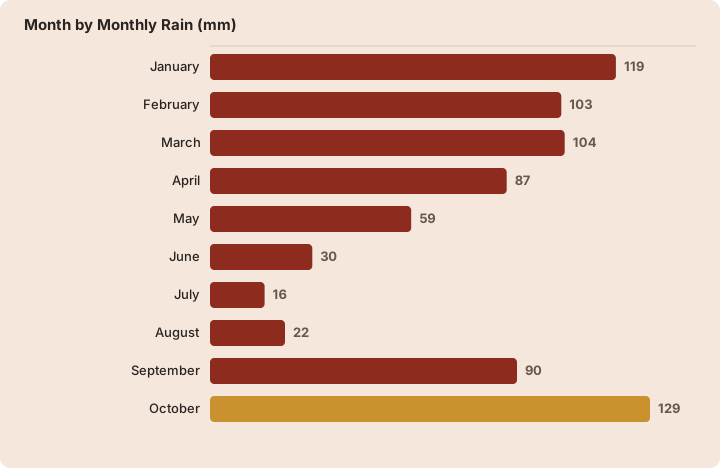
The climate figures come from the Open-Meteo historical archive at the Pompei grid point, 40.75 N, 14.49 E, computed as 1991 to 2020 normals from reanalysis data rather than a weather station, so every number is an "about". The pattern is classic Mediterranean: a dry, hot core from June to August, a wet shoulder from October to December, and mild springs and autumns. November's 180 mm makes it the wettest month of the year, with December second at 147 mm, and July the driest at 16 mm.
What that means for a villa visit is direct. The Villa Poppaea is an open excavated complex: the pool area and gardens are unshaded, and the painted rooms, while roofed, are small and can get airless by early afternoon in high summer. A morning arrival in July or August, in line with the park's 9:00 opening, is the sensible shape of the day; in April, May or October you can arrive any time before last entry at 17:30 in the summer season and still enjoy the walk. Winter visits, with last entry at 15:30 from 15 October, are perfectly feasible at about 12 to 13 C maxima, and the frescoes look exactly the same.
| Month | Mean Daily Max (C) | Mean Daily Min (C) | Monthly Rain (mm) |
|---|---|---|---|
| January | about 12.2 | about 6.6 | about 119 |
| February | about 12.6 | about 6.5 | about 103 |
| March | about 14.9 | about 8.1 | about 104 |
| April | about 17.7 | about 10.4 | about 87 |
| May | about 21.6 | about 14.1 | about 59 |
| June | about 25.8 | about 18.2 | about 30 |
| July | about 28.7 | about 21.1 | about 16 |
| August | about 29.4 | about 21.8 | about 22 |
| September | about 25.3 | about 18.6 | about 90 |
| October | about 21.3 | about 15.1 | about 129 |
| November | about 16.9 | about 11.5 | about 180 |
| December | about 13.2 | about 8.0 | about 147 |
Crowds barely exist here in any season, which is the site's quiet advantage over its neighbours: Pompeii's official monthly counts for 2024 show 516,923 entries in May and 481,255 in October against 112,121 in January, a near five-fold swing, whereas Oplontis never approaches its bigger neighbour's pressure even at peak. The one date to avoid without a plan is the first Sunday of the month: entry is free everywhere, and the park's own communications record more than 36,000 visitors at Pompeii on a single free Sunday in November 2024, so if you are touring several sites on that day, start early and expect queues at the ticketed neighbours even though Oplontis itself stays manageable.
How Long Should You Spend At Oplontis And What Else Is Nearby?
Allow about one hour to 90 minutes for the Villa Poppaea itself, or up to two hours if you read every painted room slowly; travellers pairing it with Pompeii in one day should treat Oplontis as a morning or late-afternoon add-on of fixed length. Nearby, the Stabiae villas and Boscoreale's Villa Regina complete the same 3-day ticket tier at EUR 8 each in 2026, and the modern Sanctuary at Pompei and the Vesuvius national park sit within the same corridor.
The villa is compact by design. Unlike Pompeii, where the honest minimum is two hours and the comfortable visit is four or more, Oplontis has a defined loop and a finite number of rooms, so the visit length is set by your appetite for the frescoes rather than by distances underfoot. Most itineraries slot it either before Pompeii on a first day, when the villa's decoration frames everything you later see painted in the city's houses, or after Pompeii on a second day, when quiet walls are a relief after the crowds at the House of the Vettii and the Villa of the Mysteries.
The neighbourhood rewards the detour. Torre Annunziata itself is a working town, but the wider circuit of buried villas is remarkable: the cliff-top Stabiae villas at Castellammare di Stabiae, with Villa Arianna and Villa San Marco on their terrace above the sea; the rustic Boscoreale villa, a working farm with its wine press, which shows the rural economy the elite villas depended on; and, on the heights above everything, Mount Vesuvius, whose Gran Cono trail sells timed online tickets at EUR 11.68 full as sold, with 50 tickets per 10-minute slot bookable 30 days ahead. The eruption that made all of these sites is traditionally dated to 24 August AD 79 from Pliny the Younger's oldest manuscripts, while the park's own e-journal holds that a 24 October date, the result of a 1929 misreading, has no evidentiary basis; the debate remains open and no visit depends on its outcome.
| Nearby Site | 2026 Ticket | Distance In Visit Time | Notes |
|---|---|---|---|
| Pompeii ancient city | EUR 20 Express | Half to full day | 4,000,090 visitors in 2025 |
| Herculaneum | EUR 16 | About 2 hours | Villa dei Papiri and Ancient Theatre closed for works |
| Stabiae villas and museum | EUR 8 | About 2 hours | Closed Tuesdays |
| Vesuvius Gran Cono | EUR 11.68 full as sold | Excursion 2 to 3 hours return | Online timed tickets only, closes on orange weather alert |
Should You Visit Oplontis On A Tour Or On Your Own?
On your own is entirely practical at Oplontis: it is a single villa with one route, a EUR 8 2026 ticket and no way to get lost, while a tour mainly adds interpretation of the frescoes and solves transport between the dispersed Vesuvian sites. Choose a guided format if you want the decoration explained or you are combining Oplontis with Herculaneum and Vesuvius without a car; choose independent entry with a digital guide if you are confident on the Circumvesuviana and want the cheapest, quietest visit.
The self-guided case is strong. The site's own ticketing is simple, the loop is obvious, and the freestanding entry product sold on this site, the Oplontis entrance ticket with digital guide, covers both admission and commentary in one purchase. Travellers already confident with the Circumvesuviana line, or based in Sorrento where the Sorrento to Pompeii guide lays out the approach, can reach Torre Annunziata station and be inside within minutes of arriving. Independent visits also let you linger in the garden rooms, which is where the villa rewards patience.
The guided case is about the frescoes and the logistics. A guide who can read the Second and Third Style painting cycles turns walls into a narrative of wealth, taste and renovation interrupted; without that, some visitors see pretty plaster and move on. Guided formats also bundle the awkward transfers: Oplontis, Herculaneum and Vesuvius are on different transport limbs, and a day tour that strings them together saves two or three train connections. The entry ticket plus guide format sold on this site's pages, Pompeii entry ticket and guided tour with an archaeologist, is the Pompeii-side equivalent of the same idea, pairing admission with a specialist guide.
For travellers weighing the guided question at the main site first, the guided versus self-guided comparison works through the trade-offs, and the conclusions transfer to Oplontis almost unchanged: guidance buys interpretation, independence buys time. Whatever you choose, book or buy before the day at a site that opens limited days, and remember the Tuesday closure when you set the itinerary.
Between the ticket changes, the Tuesday closure and the suspended rail link, the planning picture for Oplontis moves more than the villa's walls ever will, so it pays to lock the practical decisions before travel. The three formats below, the Oplontis ticket with digital guide, a Sorrento train express tour of Pompeii and a Vesuvius horse-riding day, cover the three common shapes of a Bay of Naples visit that includes this villa: independent, city-focused and full-day adventure.
Common Questions About Oplontis
Is Oplontis worth visiting?
Yes, if frescoes and quiet rooms appeal to you more than crowds. Oplontis holds some of the best preserved Roman wall painting in Italy, in a villa you can see in about an hour, for EUR 8 in 2026. It is not a substitute for Pompeii, whose excavated area covers 44 hectares, but it is the strongest add-on in the park.
How do I get to Oplontis from Naples?
Take the Circumvesuviana railway from Napoli Garibaldi towards Sorrento and alight at Torre Annunziata, the stop for the site, a short walk from the entrance. schedule data for the line gives 29 to 35 minutes from Naples to Pompei Scavi-Villa dei Misteri with a median of 29. Check EAV's own timetable for current times and fares.
Is Oplontis included in the Pompeii ticket?
In 2026, only the 3-day ticket at EUR 30 includes Oplontis; the Express ticket at EUR 20 covers the ancient city alone, and Pompeii+ at EUR 25 adds the suburban villas but not Oplontis. From 1 January 2027 the single EUR 25 ticket covers every park site including Oplontis, valid 30 days, one entry per site.
Is Oplontis open every day?
No. Oplontis is closed on Tuesdays, along with the Stabiae villas and museum, per the park's timetable page, and the whole park closes on 25 December and 1 January unless otherwise communicated. Winter hours from 15 October run 9:00 to 17:00 with last entry at 15:30; summer hours from 16 March run to 19:00 with last entry at 17:30.
Who lived in the Villa Poppaea at Oplontis?
The villa is usually identified as the seaside residence of Poppaea Sabina, wife of the emperor Nero, after an amphora bearing her name was found during excavation. The identification is widely repeated but rests on that single find, and the building's sheer scale, about 100 rooms and an immense pool, is imperial grade in any case.
How long does a visit to Oplontis take?
About one hour to 90 minutes for the standard loop, up to two hours if you study the painted rooms in detail. There is no cast display or museum inside the excavated area, so the frescoes and the pool are the whole of the visit, and the compact footprint makes it easy to pair with Pompeii or Herculaneum on the same day.
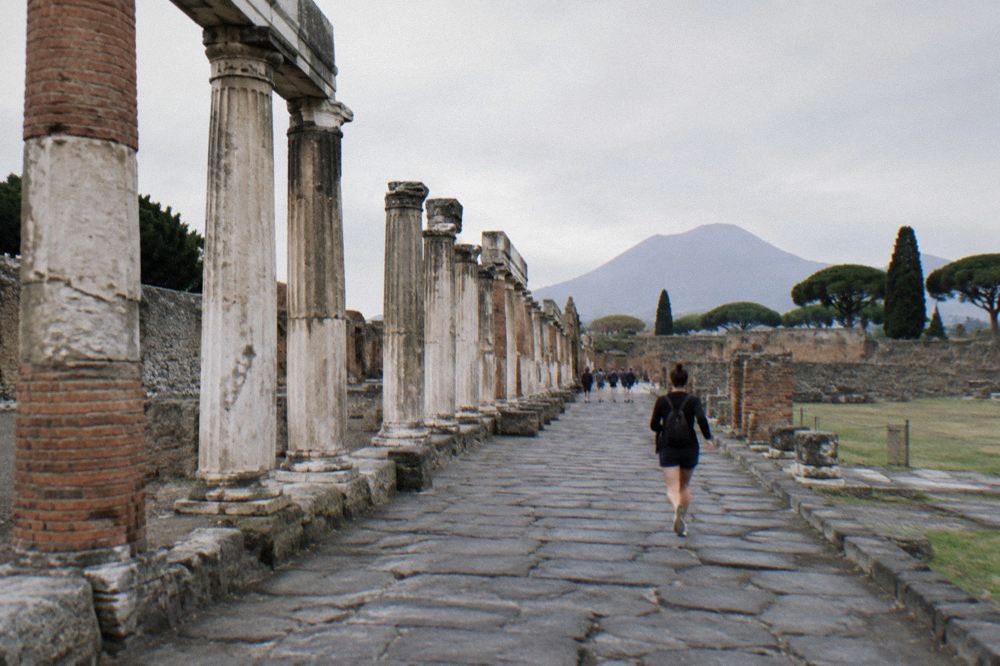
Oplontis is the site that rounds out the Bay of Naples. Pair it with Pompeii for the city, Herculaneum for the town, and Vesuvius for the cause, and you will have seen the eruption's full range of outcomes, painted walls and all, on the strength of one rail line and a EUR 8 ticket in 2026. This Pompeii Travel Guide carries the rest of the itinerary, from the Villa of the Mysteries back at Pompeii to the practical planning pages on tickets and the site map, so build the day around the frescoes while the villa's rooms stay this quiet.