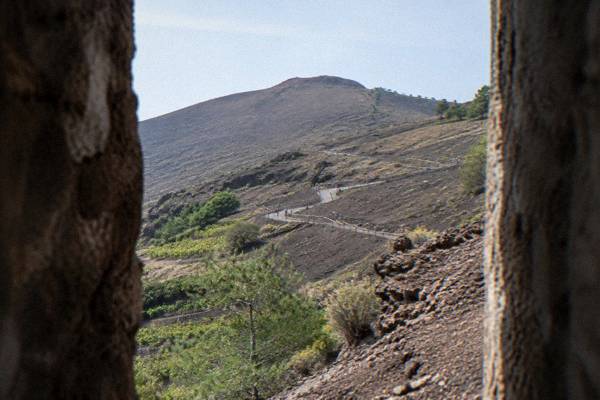
Which Is Bigger, Vesuvius Or Etna?
Vesuvius and Etna compared for Pompeii visitors: which volcano is bigger, what that means for your day, and the Vesuvius numbers that matter when planning.
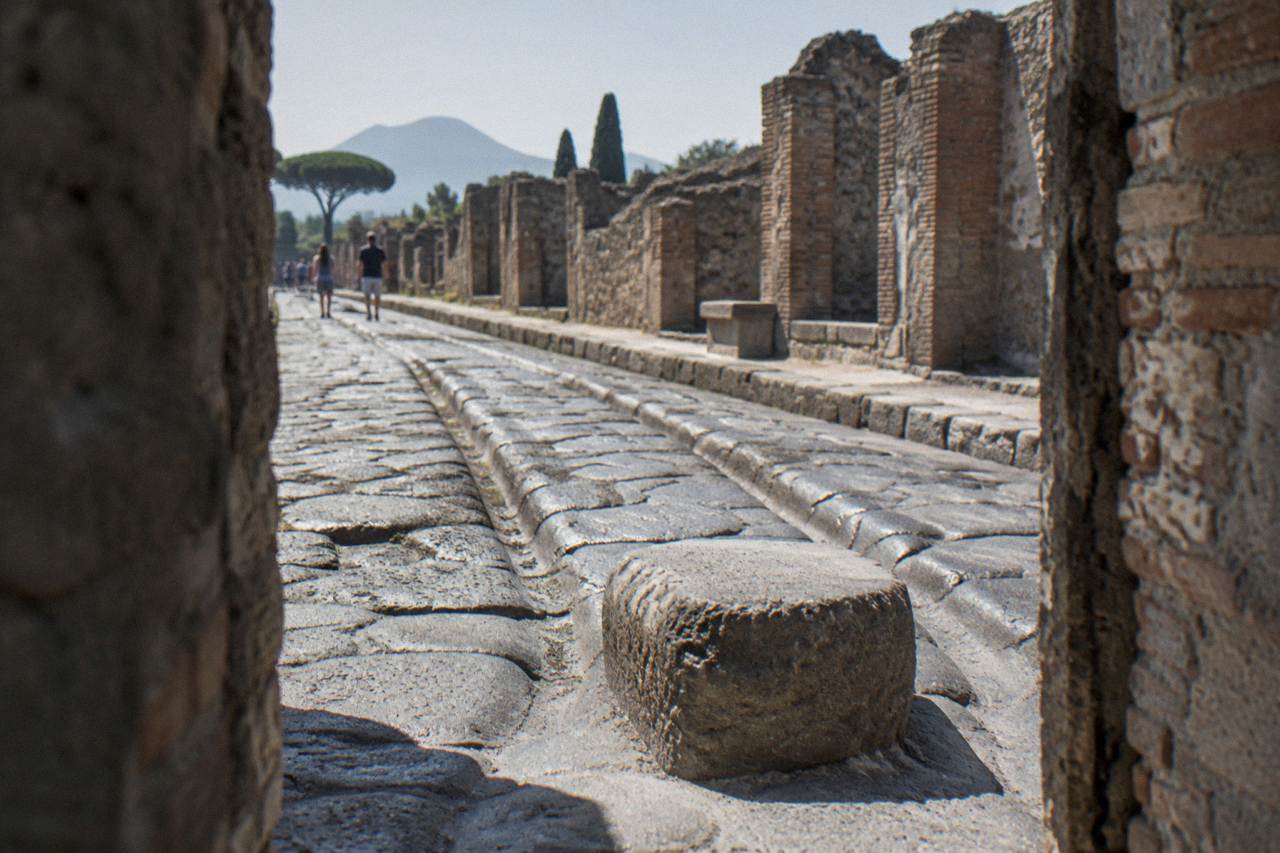
Etna is bigger than Vesuvius on every measure that geographers use, and the gap is not close. This page sets out the comparison honestly, using figures the park authorities publish for Vesuvius, and then covers what the size difference actually means for a visit.
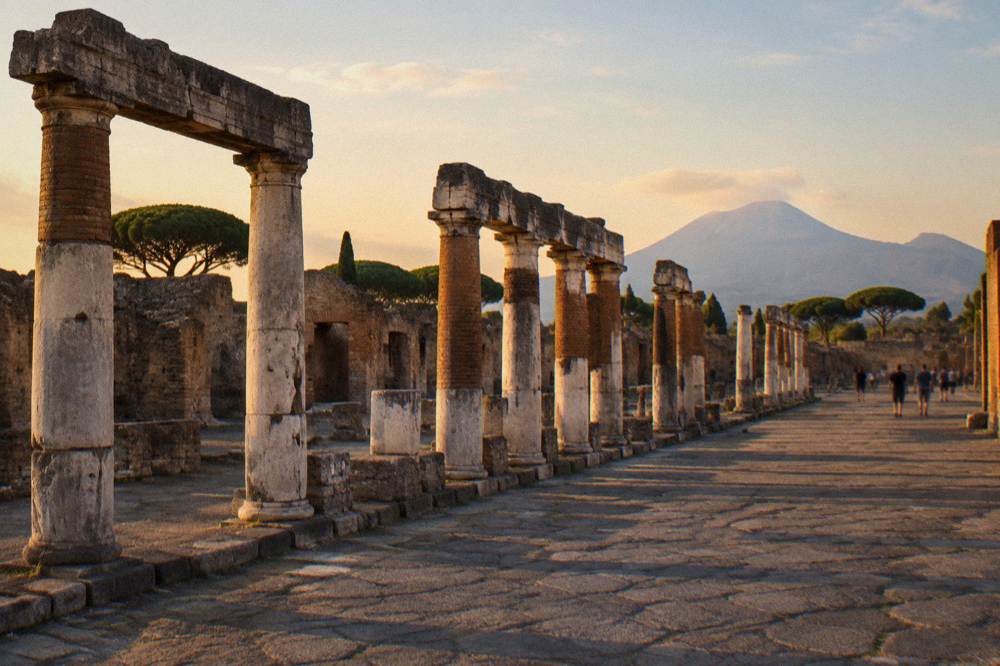
Which Is Bigger, Vesuvius Or Etna?
Etna is bigger than Vesuvius, and by a wide margin: Etna in Sicily is one of the largest active volcanoes in Europe, with a base tens of kilometres across, while Vesuvius, beside Pompeii in Campania, southern Italy, is a comparatively small, steep cone. Etna exceeds Vesuvius in height, footprint, volume and eruption scale, so the two are simply not in the same size class.
The size gap shows up most vividly in how the two mountains behave. Etna erupts frequently and at length, with lava flows that can run for weeks or months down its flanks; whole towns on its slopes live with intermittent ashfall as a routine part of Sicilian life. Vesuvius, by contrast, is famous for a single catastrophic event, the eruption of AD 79 that buried Pompeii and Herculaneum, traditionally dated to 24 August. For more on the eruptive history, read the guide to when Vesuvius erupted and the answer to will Vesuvius erupt again.
There is a second, smaller-scale comparison worth making, because it is the one visitors actually face. Within Vesuvius itself, the "Gran Cono", the great cone, is the summit crater everyone photographs, and the national park that manages it runs a tightly controlled access system. Etna's visitor offer, by contrast, is spread across a much wider mountain with multiple approaches on the Sicilian side, which no day visitor from the Bay of Naples can realistically reach. If your base is Naples, Sorrento or the modern town of Pompei, Vesuvius is the volcano you will actually meet, and its modest size is precisely what makes it visitable in half a day.
What The Vesuvius Numbers Mean For A Visit
In short, the figures point to one practical takeaway: Vesuvius draws heavy crowds, and those crowds shape the visit as much as the views do. Treat the numbers as a planning tool: book ahead, aim for early or late in the day, and expect queues on peak days rather than a quiet walk to the crater rim.
| Months | Gran Cono Access Hours |
|---|---|
| January, February, November, December | 09:00-15:00 |
| March and October | 09:00-16:00 |
| April, May, June, September | 09:00-17:00 |
| July and August | 09:00-18:00 |
Booking rules matter as much as hours. Tickets are sold online only, through the national park's official ticketing page, at EUR 11.68 full and EUR 9.55 reduced as sold, with the regulation text showing EUR 10 and EUR 8 as the base price. Ten last-minute tickets per slot go on sale from 30 minutes before each slot and have been nominative, tied to the visitor's name, since 11 April 2026. Groups enter 60 at a time, in three sub-groups of 20. Children under 6 go free, and reduced rates apply to visitors under 25 and to residents of the 13 park municipalities. The ticket office and the path close automatically when an orange weather alert is issued or higher, and refunds in that case are automatic. The full booking picture, including what you can and cannot buy on the day, is covered in whether you can buy Vesuvius tickets on the day and the Vesuvius tickets guide.
| Vesuvius Gran Cono Booking Rules | Figure |
|---|---|
| Full ticket, as sold | EUR 11.68 |
| Reduced ticket, as sold | EUR 9.55 |
| Tickets per 10-minute slot | 50 (plus 10 last-minute) |
| Booking window | Up to 30 days ahead |
| Group size per slot | 60 (three groups of 20) |
| Daily visitor cap range | 2,160 to 3,240 |
| Crater walk, shortest route | About 2 hours return |
| Crater walk, longest route | About 3 hours |
A question that follows naturally from the size comparison is whether a walk up the cone is worth it at all, given that the mountain is modest and the crater is viewed from the rim rather than descended. The honest answer, developed at length in is it worth going up Vesuvius, is that the crater rim view across the Bay of Naples, with Pompeii laid out below, is the single best vantage point for understanding the AD 79 story. The walk itself is described in detail in how long the walk up Vesuvius is, and the temperature at the top, often markedly cooler than the shore, is covered in whether it is cold at the top of Vesuvius.
Can You Combine Pompeii And Vesuvius In One Day?
Yes, and the small size of Vesuvius is exactly why. The standard pairing is Pompeii in the morning, when the excavated city is cooler and the queues at Porta Marina, Piazza Esedra and Piazza Anfiteatro are shorter, followed by a timed afternoon slot on the crater trail. A guided day tour from Naples that bundles the Pompeii excavations, the Vesuvius crater walk and a pizza lunch exists precisely because the two sites sit close together; its duration, price and rating are shown on its live listing.
That bundled day is the most popular way visitors to this site's destination experience both halves of the story: the buried city and the volcano that buried it. The Pompeii and Vesuvius day tour from Naples with pizza lunch handles transport between the Pompeii entrances and the crater trailhead, which removes the trickiest planning decision of the day, and you can Check availability for your dates. A fuller route plan, including timing and entrances, is in the Pompeii and Vesuvius in one day itinerary, and a slower two-day version covering Herculaneum as well is the two days Pompeii, Herculaneum and Vesuvius itinerary.
If you would rather build the day yourself, the order question, Pompeii first or Vesuvius first, has a real answer that depends on season and transport, and it is argued in whether to do Pompeii or Vesuvius first. Driving is possible part of the way up; see can you drive up Mount Vesuvius for how the road and parking work. What you should not do is plan to take a stone home: whether you can take a rock from Vesuvius covers the park rules, which forbid it.
There is also a slower, food-centred alternative that uses the volcano's lower slopes instead of its rim. The national park around Vesuvius is wine country, and a lunch-and-tasting option inside the park pairs an organic meal with wines grown on the volcanic soil. It is described on the Vesuvius wine tasting guide.
Why The Smaller Volcano Dominates A Pompeii Trip
Vesuvius dominates a Pompeii trip not through size but through proximity and history: the volcano looms directly above the buried city, and its AD 79 eruption, traditionally dated to 24 August, froze Pompeii in place. Etna is larger, yet it buried no Roman city that draws four million visitors a year, with Pompeii recording 4,000,090 visits in 2025, so the excavations and the crater together fill guidebooks and itineraries across the Bay of Naples.
The visitor figures deserve a moment, because they are the clearest evidence of how the two volcanoes differ in travel terms. The Pompeii archaeological park's official data shows 2,972,159 visitors in 2022, 3,985,424 in 2023, 4,069,377 in 2024 and 4,000,090 in 2025, with monthly peaks in May 2024 at 516,923. The pattern is unambiguous: the Vesuvius story, city and volcano together, is one of the most visited archaeological destinations in the world, and the crater walk is its natural second act. This site, Pompeii Travel Guide, exists because that story needs planning: tickets, entrances, trains and timed crater slots all interact.
It is also worth being precise about what the AD 79 date claim should look like. The traditional date from Pliny the Younger's oldest manuscripts is 24 August AD 79; the park's own e-journal states that the 24 October date has no evidentiary basis, while adding that 24 August is not necessarily settled either. The eruption's human cost and the events of 1944, the last eruption, are separate questions, covered in how many people died when Vesuvius erupted in 1944 and whether Pompeii's residents knew an eruption was coming. Why Naples survived in 1944 while other communities suffered is its own story in why Naples was not destroyed by Vesuvius.
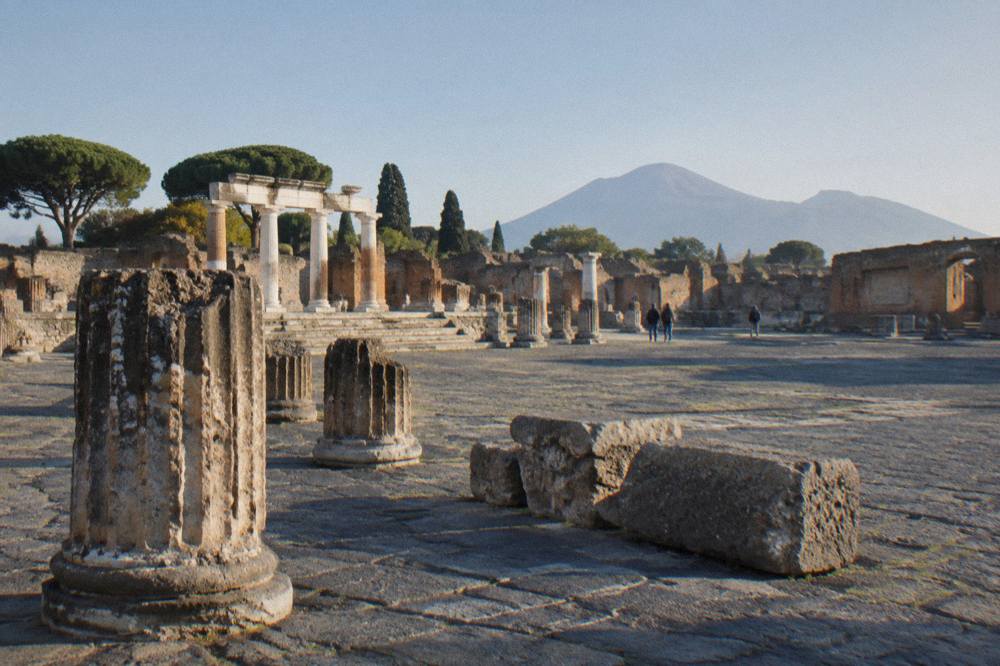
For visitors with a second day, the deeper Vesuvius material rewards the time. The Mount Vesuvius guide covers the volcano as a destination in full, the crater trail guide describes the paths in detail, and the practical how-to-visit guide walks through the booking mechanics step by step. If the hike itself is the draw, the Vesuvius hike guide covers routes, season and kit.
One further angle completes the picture for travellers who want more than the crater. The Villa of the Mysteries, at the western edge of Pompeii, is one of the best-preserved buildings in the ancient city, and a dedicated three-hour tour with an archaeologist covers it in depth. The tour is run as a small-group walk; its price, rating and duration render on its live listing rather than in this prose.
Common Questions About Vesuvius And Etna
Which is bigger, Vesuvius or Etna?
Etna is bigger than Vesuvius on every measure: height, base width, volume and eruption scale. Vesuvius is a compact cone beside Pompeii in Campania, southern Italy; Etna is a huge stratovolcano in Sicily.
Can you visit Vesuvius from Pompeii in the same day?
Yes. The crater trail takes about 2 hours return by the shortest route, and timed slots run from 09:00 to as late as 18:00 in July and August, so a morning in Pompeii and an afternoon on the crater is a standard pairing. Guided day tours from Naples bundle both plus lunch.
Is the Vesuvius walk difficult?
The Gran Cono walk is short but on loose volcanic ground, rising to the crater rim. It takes about 2 hours return on the shortest route and up to 3 hours on the longest. Footwear matters more than fitness; see the dedicated walking-difficulty coverage on this site.
Do Vesuvius tickets sell out?
They can. Slots are capped at 50 tickets per 10 minutes plus 10 last-minute tickets per slot, with daily caps of 2,160 to 3,240 visitors. Booking up to 30 days ahead is possible and is the safe course in spring and summer.
Which volcano destroyed Pompeii?
Vesuvius. The eruption, traditionally dated to 24 August AD 79, buried Pompeii and Herculaneum. Etna played no part in it; Etna is in Sicily, hundreds of kilometres from the Bay of Naples.
The short version: Etna wins on size, Vesuvius wins on story, and only one of them sits above the buried city that brings travellers to Campania in the first place. Plan the crater walk around its timed slots and monthly hours, pair it with the excavations, and the smaller volcano will feel plenty big enough from the rim.