Who Is The Lady Of Pompeii?
The phrase 'lady of Pompeii' has no single official meaning: it usually points to the plaster casts of victims of the AD 79 eruption, above all the pregnant woman cast. This page explains who she is, how the casts were made and where to see them.
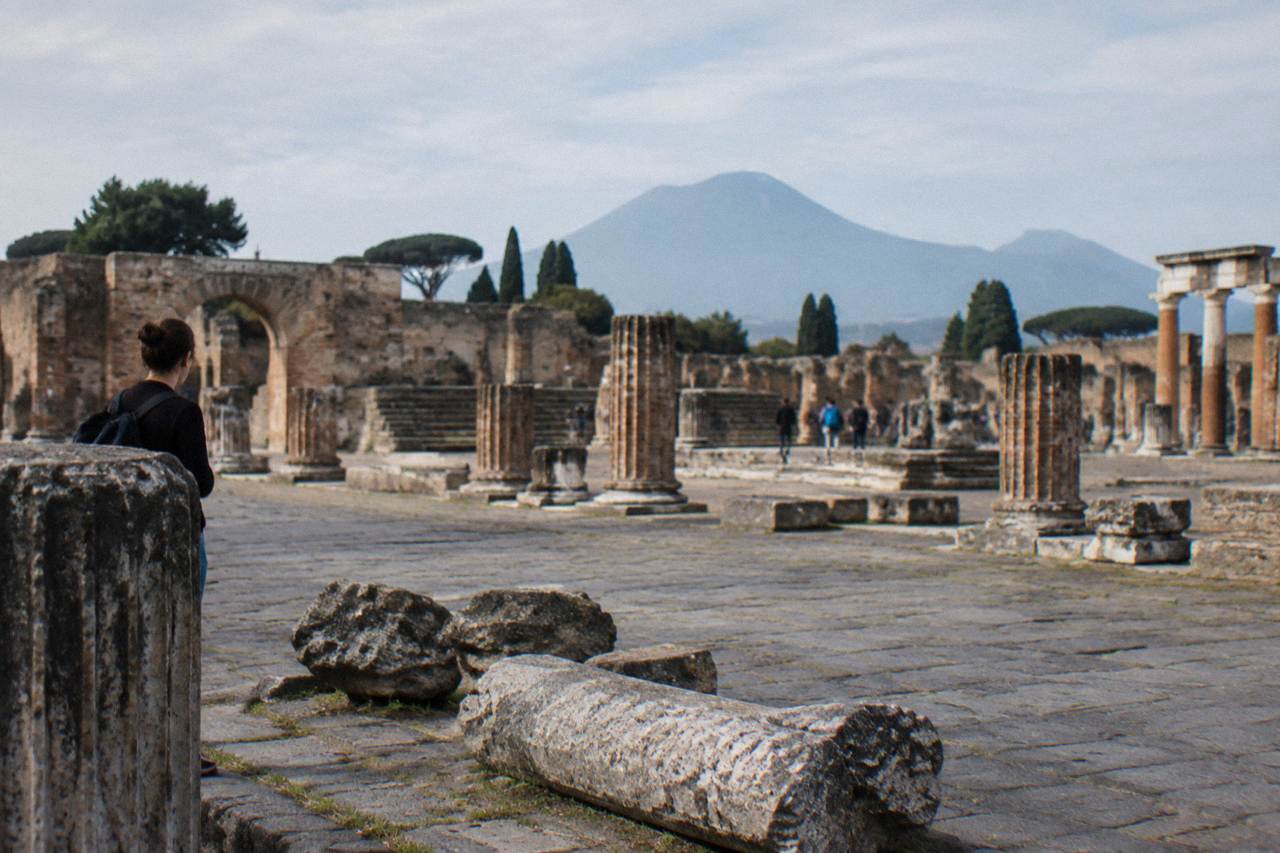
The phrase "the lady of Pompeii" does not name an official exhibit, a named Roman woman or a single catalogue entry in the archaeological park of Pompeii, the ancient Roman city buried by the eruption of Mount Vesuvius in AD 79 in Campania, southern Italy. It is a visitor's phrase, and it settles, in ordinary use, on one thing: the plaster casts of the eruption's victims, and above all on the cast of a pregnant woman found near one of the city gates, a figure so well known that this site keeps a separate answer page about where the pregnant woman in Pompeii is kept's neighbouring questions. This page untangles the phrase properly: what it means, which figures it covers, how the casts were made, and what a visitor who wants to see them today should plan for.
Who Is The Lady Of Pompeii?
"The lady of Pompeii" is a popular label, not a museum title: it usually refers to the plaster cast of a pregnant woman who died in the eruption of Mount Vesuvius in AD 79, one of the casts made by pouring liquid plaster into cavities the victims' bodies left in the volcanic ash. The park holds these casts among its displays, and the pregnant woman is the single figure visitors attach the phrase to, though writers sometimes extend it to any female victim cast.
No Roman source names her. The city's destruction, traditionally dated to 24 August AD 79 on the manuscript evidence of Pliny the Younger's letters, killed residents whose identities died with them, and the casts preserve posture, clothing folds and silhouettes rather than names. The park's own e-journal has examined the eruption-date question closely and reports that the alternative 24 October date has no evidentiary basis, while acknowledging that 24 August is not settled beyond doubt either; whatever the exact day, the woman the phrase points to was caught in the pyroclastic surge that ended life in the city.
The phrase also travels loosely. Search results and social posts sometimes use "the lady of Pompeii" for the so-called Lady of Oplontis, a cast from the villa site at Torre Annunziata some kilometres away, and occasionally for the jewelled skeleton finds of earlier excavations. Those are different discoveries at different sites, and treating them as one figure muddies the record. Within the boundaries of the ancient city itself, the pregnant woman cast is the figure the phrase means.
For visitors who want the context rather than a single object, a small-group guided walk is the practical route, and the one this site features is the Pompeii small group tour with an archaeologist, whose tour page lists what is covered; the roster entry appears again below beside two full-day alternatives.
What The Victim Casts Actually Are?
The casts are plaster and resin copies of the spaces human bodies left in the hardened ash: flesh decayed inside the sealed deposit, leaving voids that excavators learned to fill with liquid plaster, producing exact relief images of people in their final moments. Roughly a hundred casts and cast groups have been made across the site's excavation history, and they remain the park's most confronting displays.
The technique belongs to Giuseppe Fiorelli, a director of the excavations, whose insight that the ash held body-shaped cavities turned the deposit itself into a mould. Earlier diggers had struck bone and emptied the voids; Fiorelli poured in plaster and let the deposit speak. Later work refined the method, and modern restorers use resin as well as plaster, with imaging now used to read the cavities before anything is cast.
What the casts show is posture, not personality. A raised arm, a crouched spine, the draping of a tunic, the outline of sandals: these survive in relief. Colour, features and identity do not. That limit is worth stating plainly, because popular retellings assign the pregnant woman cast a story, a status and even a name, and none of that exists in the record. What exists is a body position that tells researchers she was near the end of a pregnancy when the surge reached her, at a location by the city's gates where a group of fugitives fell together.
The gallery treatment has changed over the years. Casts have been displayed in the Antiquarium, in the Forum granary area and in temporary exhibitions, and individual pieces move for conservation and for loans; the park's visitor-dates table records the site drew 4,000,090 visitors in 2025, a volume that shapes how and where such objects can be shown. Checking the park's own visiting pages for current display locations is the reliable way to find a given cast on a given day.
| Term visitors use | What it actually refers to | Where it belongs |
|---|---|---|
| The lady of Pompeii | The pregnant woman victim cast | The ancient city of Pompeii |
| The Lady of Oplontis | A cast from the villa site at Torre Annunziata | Oplontis, a separate park site |
| The fugitives of the garden | A group of casts from the Garden of the Fugitives | The ancient city of Pompeii |
| The embracing couple | A paired cast of two victims found together | The ancient city of Pompeii |
| The Lady of the jewellery finds | Skeletons recovered with gold ornaments in early digs | Museum collections, not the casts |
How Do You See The Casts On A Visit Today?
Visitors see the casts inside the archaeological park at Pompeii, in the display areas of the excavated city, reached through the ticket offices at Porta Marina, Piazza Esedra or Piazza Anfiteatro; there is no separate "lady of Pompeii" museum, and no cast is viewable outside the park's own displays or named loans. A standard 2026 ticket covers the ancient city, and a guided walk puts the casts in context.
The practical question is what to buy and when to come, and 2026 is a year of two systems. The 2026 prices in force since 12 January are the Pompeii Express at EUR 20 for the ancient city alone, Pompeii+ at EUR 25 adding the suburban villas route, and the 3-day ticket at EUR 30 covering Oplontis, the Stabiae sites and Boscoreale as well; from 1 January 2027 a single EUR 25 ticket replaces that structure, valid 30 days with one entry per site. The smaller sites stay at EUR 8 individually, the annual My Pompeii Card stays at EUR 45, and the nominative ticket and the 20,000 visitors per day cap both remain. Entry is free for under-18s and for everyone on the first Sunday of the month, with a EUR 2 reduced rate for EU citizens aged 18 to under 25. The full index of guides sits on Pompeii Travel Guide.
| Ticket (2026, ends 31 December 2026) | Price | Covers |
|---|---|---|
| Pompeii Express | EUR 20 | The ancient city only |
| Pompeii+ | EUR 25 | City plus suburban villas route |
| 3-day ticket | EUR 30 | City, villas, Oplontis, Stabiae, Boscoreale |
| Oplontis / Stabiae museum / Boscoreale individually | EUR 8 each | One smaller site each |
| My Pompeii Card (annual) | EUR 45 | Annual park access |
| Single ticket (from 1 January 2027) | EUR 25 | All park sites, 30 days, one entry per site |
Reading the casts alone is possible, and this site has a separate answer on whether you can tour Pompeii on your own, but a guide earns their fee at exactly this point: an archaeologist can explain what a posture reveals, what the surge did, and why Fiorelli's method matters, which is the difference between staring at plaster and understanding a death. The featured small-group tour above covers this ground with entry included.
For travellers with a full day, combining the city with the volcano that destroyed it is the natural pairing, and a one-day tour from Naples that adds a Vesuvius climb and a pizza lunch is the most-booked way to do it; the roster entry below carries the live figures.
If that Naples pairing tempts you, is a guided day from the city the right format for you?
Is The Lady Of Pompeii A Real Person You Can Identify?
No. No inscription, no household record and no DNA finding has attached a name to the pregnant woman cast or to any other victim cast, and the park does not present any cast under a personal name. The casts are anonymous by nature, and any article naming "the lady of Pompeii" as a specific Roman woman is inventing the one thing the archaeological record cannot give.
This matters because the phrase invites exactly that invention. A silhouette so human in its final posture pulls readers toward biography: a merchant's wife, a priestess, a fugitive from a nearby farm. The evidence supports none of it. What the study of the casts does support is demographic reading: the presence of a late pregnancy, the pattern of victims falling in family groups near gates, and the overlap of victims with the objects they carried, keys, lanterns, coins, which tell researchers people were fleeing with what they could lift.
Debate about the eruption itself stays open in the same way. The traditional date of 24 August AD 79 comes from the oldest manuscripts of Pliny's letters; the park's e-journal reports that the 24 October alternative rests on a 1929 misreading and has no evidentiary basis, while a charcoal inscription found in 2018 reopened scholarly argument without settling it. The honest position is a debated date and an unnamed dead, and the site answers the wider toll in its page on how many people died in Pompeii.
What Should You Know Before Going To Look For Her?
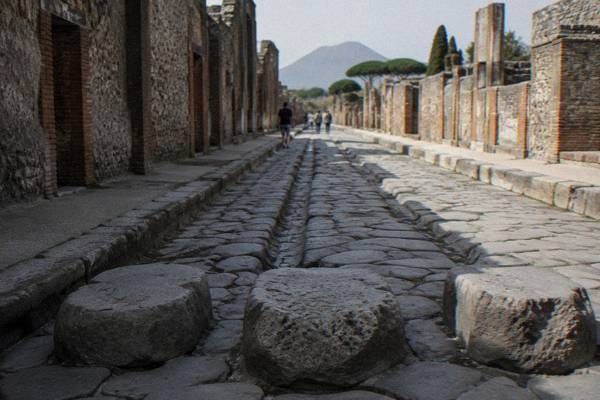
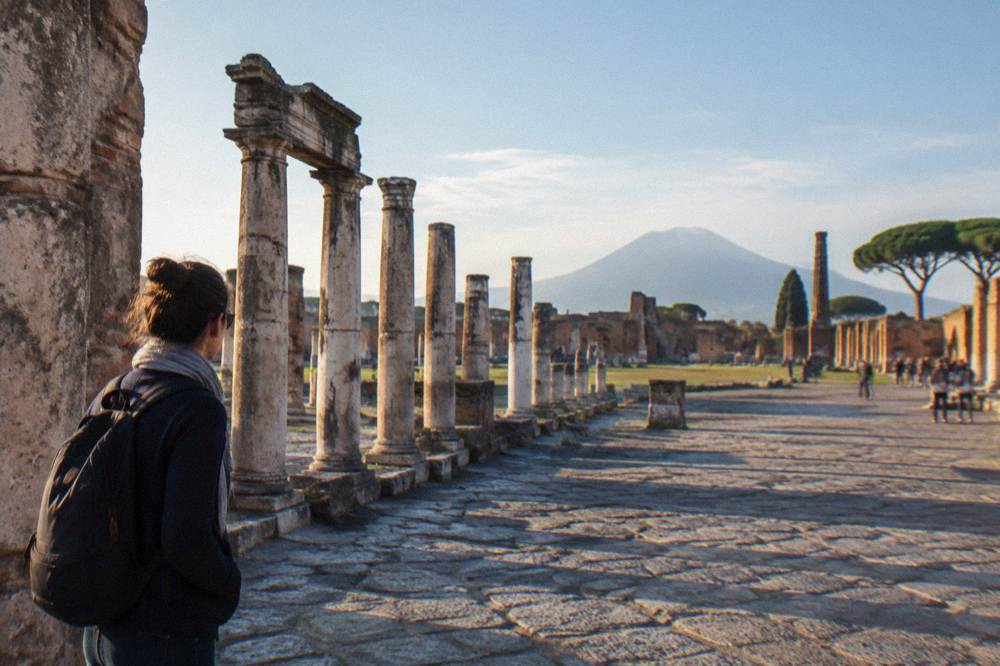
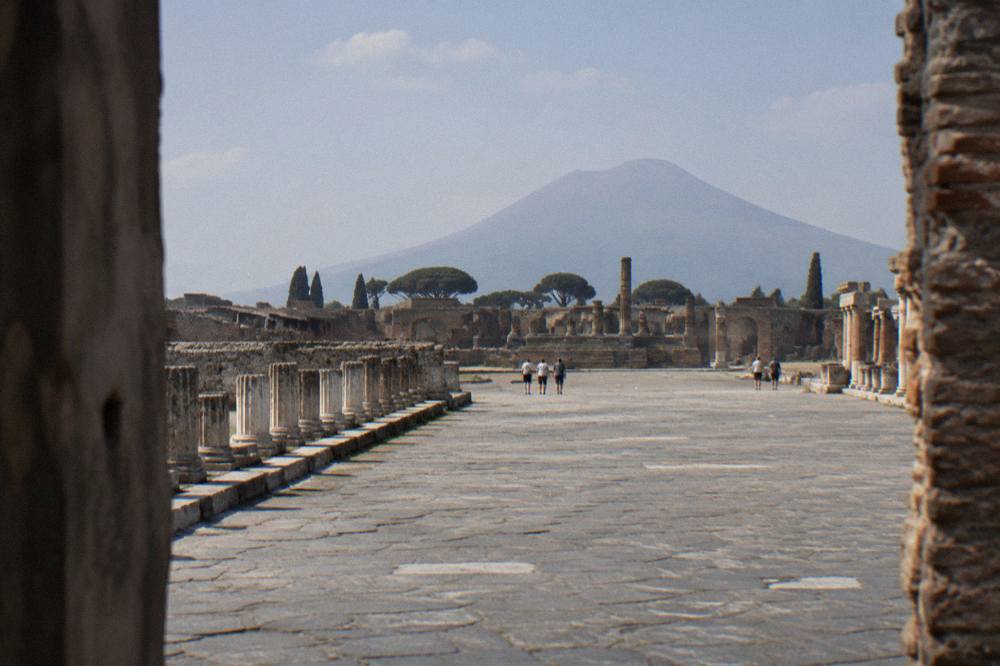
Plan a half-day minimum, carry water and shade in the warmer months, and expect stone streets with stepping stones rather than modern paving; the excavated area covers 44 hectares within a 98-hectare UNESCO-inscribed property, so distance and heat are the real constraints, not ticket queues. Buy in advance for the busiest months, and check the park's pages for where casts are currently displayed.
The setting is open and largely unshaded. Open-Meteo's 1991-2020 normals for the Pompei grid point put August's mean daily maximum at about 29.4 C and July's at about 28.7 C, with July the driest month at about 16 mm of rain and November the wettest at about 180 mm; spring and autumn are the comfortable middle, and the site's guide to Pompeii's weather and seasons carries the full picture. Footwear and sun protection matter more than dress codes, a question this site answers separately, and the "Pompeii for All" accessible route runs from Piazza Anfiteatro for visitors with mobility difficulties, with exit possible at Piazza Esedra via the Antiquarium lift.
Two closures are worth knowing in late 2026: the Praedia of Julia Felix has been closed to the public since 7 September 2026 for maintenance, and the Campania Express train service has been suspended since 1 October 2026, which changes rail plans from Naples or Sorrento. Standard Circumvesuviana services to the Pompei Scavi-Villa dei Misteri station continue, with scheduled run times from Napoli Garibaldi of 29 to 35 minutes according to the operator's own timetable data. Ticket timing and advance purchase are covered in this site's answer on whether to buy Pompeii tickets in advance.
For visitors weighing a guide against going alone, the cost-benefit and format questions are laid out in the site's page on whether a guided tour of Pompeii is worth it, and the small-group archaeologist format this article features is the one whose figures render below.
Common Questions About The Lady Of Pompeii
Who is the lady of Pompeii?
The phrase is a popular label, not an official one: it usually means the plaster cast of a pregnant woman who died in the eruption of AD 79, made by pouring plaster into the cavity her body left in the ash. She has no recorded name, and the park presents the cast without a personal identity.
Is the lady of Pompeii a real body?
No cast shows a real body. The organic remains decayed inside the hardened ash, leaving a void; excavators filled that void with plaster or resin to produce an exact copy of the person's final posture. Bone is sometimes present within casts, but the visible surface is the copy.
Where are the body casts of Pompeii displayed?
Inside the archaeological park, in its display areas such as the Antiquarium and the Forum granary zone, with individual pieces sometimes moved for conservation or loaned exhibitions. Because placement changes, check the park's own visiting pages for current locations on the day of a visit.
How were the Pompeii casts made?
The excavator Giuseppe Fiorelli recognised that the ash held body-shaped cavities and poured liquid plaster into them; once set, the surrounding deposit was removed, leaving a relief figure in the exact posture of death. Modern restorers use resin and imaging alongside the original method.
Does anyone know her name?
No. No inscription, document or analysis has named any victim cast, including the pregnant woman. Stories that assign her a status or biography are invention, and the archaeological record supports only what the posture and location of the cast show.
Can you visit Pompeii and see the casts on a day trip?
Yes. The park sits about 24 km by road from Naples and beside the modern town of Pompei, with Circumvesuviana trains to Pompei Scavi-Villa dei Misteri, and the ancient city is a practical half-day visit that a full-day tour can pair with Vesuvius or the coast.
The lady of Pompeii, in the end, is a name visitors gave to silence: a cast that preserves a final posture and nothing else, standing for the thousands who died in the city without a recorded name. Seeing her in place, inside the buried city beside the streets she tried to leave by, is the reason the phrase keeps its pull, and the practical pages linked above cover everything else a visit needs, from tickets to trains to whether a guide is worth it on the day.