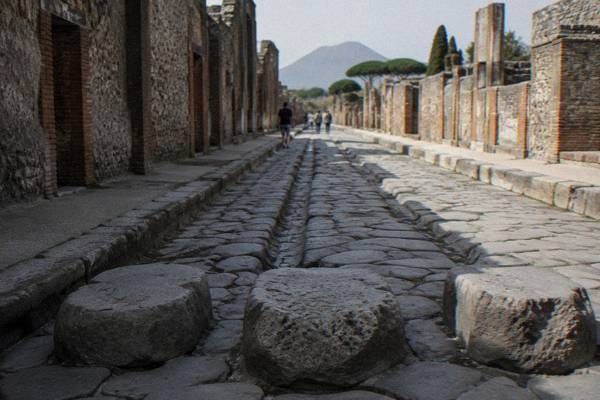
Pompeii Antiquarium
The Pompeii Antiquarium is the museum building inside the archaeological park of Pompeii, the ancient Roman city buried by Vesuvius in AD 79 in Campania, southern Italy. This guide covers what the museum holds, where it stands in relation to the Porta Marina and Piazza Esedra entrances, and how ticket prices, time slots and accessibility rules shape a visit.
Short answer
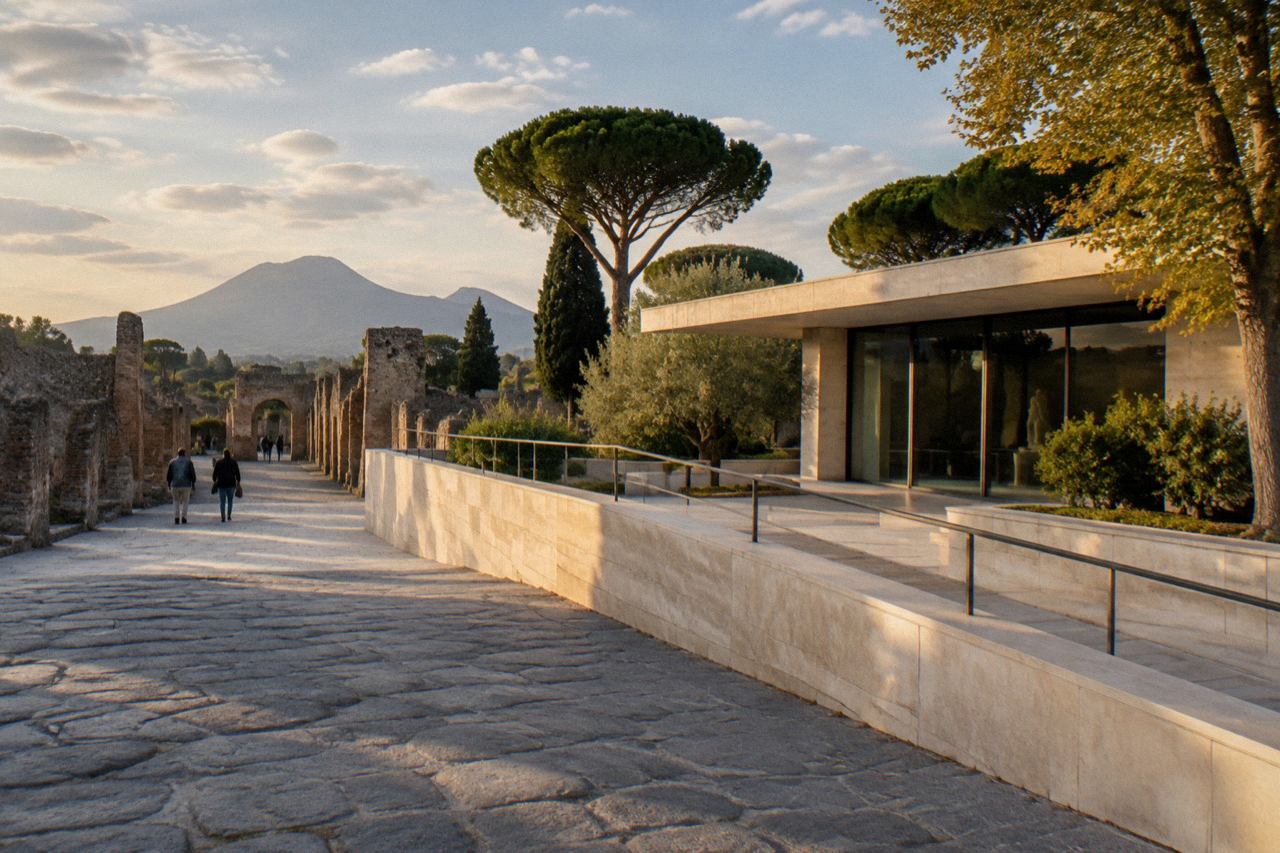
The Antiquarium is the on-site museum of the Pompeii archaeological park in Campania, Italy, reached through the Porta Marina, Piazza Esedra or Piazza Anfiteatro entrances. A 2026 Pompeii Express ticket costs EUR 20, rising to a single EUR 25 ticket for all park sites from 1 January 2027. Summer hours run to a 17:30 last entry; winter last entry is 15:30.
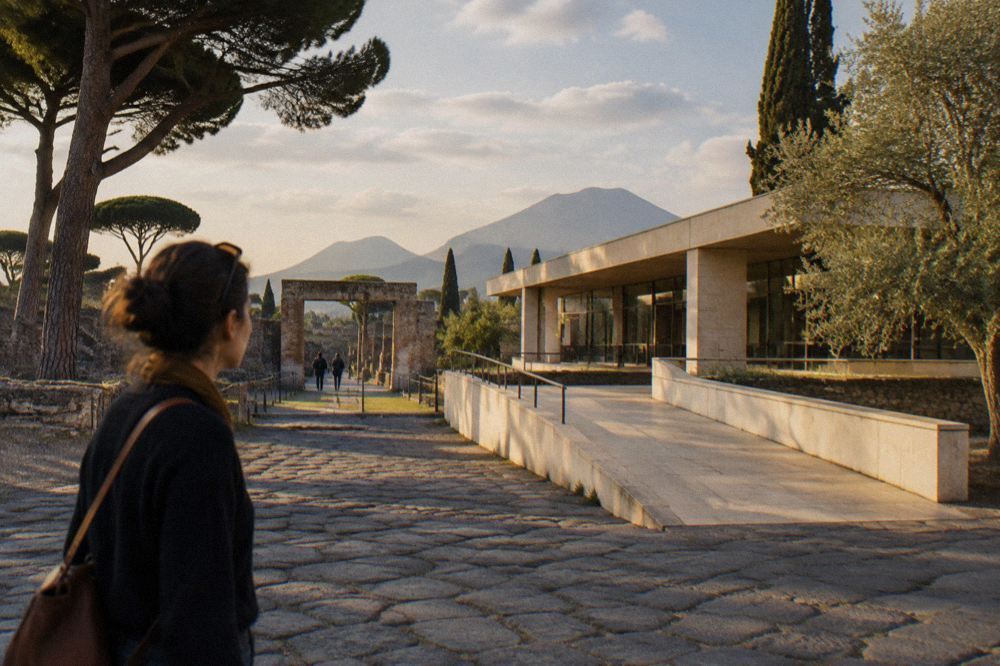
The Pompeii Antiquarium is the museum building inside the Parco Archeologico di Pompei, the ancient Roman city buried by the eruption of Mount Vesuvius in AD 79, in Campania, southern Italy. The park sits beside the modern town of Pompei, about 24 km by road from Naples, and the museum gives the excavated city a roofed counterpart: a place where fragile finds, explanatory displays and context sit together while the streets outside stay sun-baked and open. For anyone building a day around the ruins, the Antiquarium is the natural anchor point, close to an entrance and to the accessible route the park runs for visitors with mobility difficulties.
What Is The Pompeii Antiquarium?
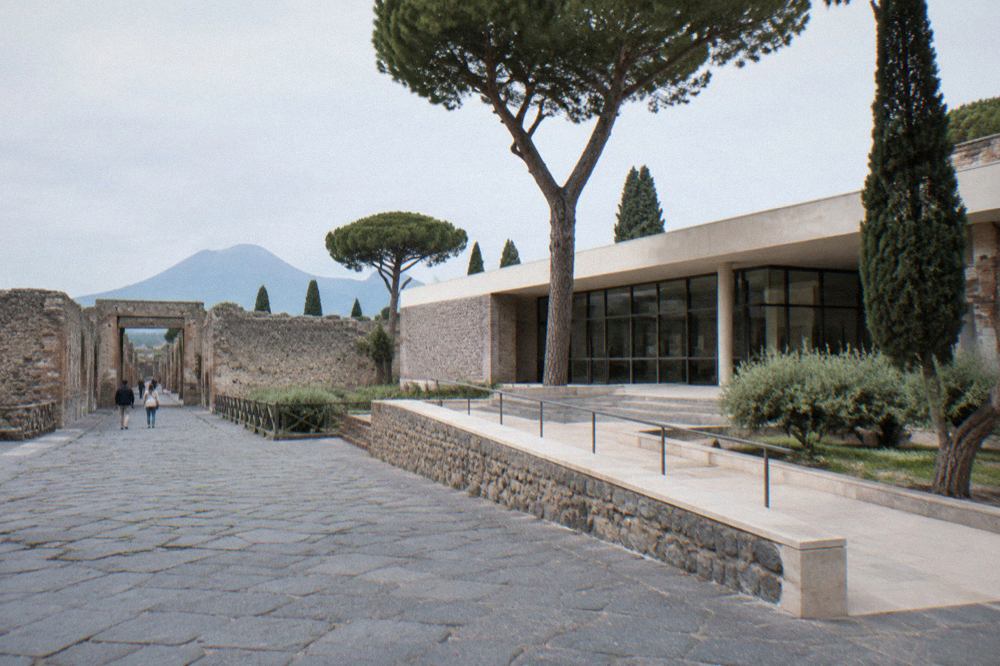
The Pompeii Antiquarium is the exhibition building of the Pompeii archaeological park in Campania, Italy, holding finds and displays that interpret the ancient city buried by Vesuvius in AD 79. It stands inside the excavated area of 44 hectares recorded by UNESCO for the inscribed property, and it works as the indoor half of a visit: streets and houses outside, objects and explanations inside. The park's excavated 44 ha sits within a 98 ha inscribed property shared with Herculaneum and Torre Annunziata.
A visit to Pompeii is largely an outdoor experience. The Forum, the baths, the tavern counters and the residential streets are all open to the sky, and in summer the stone radiates heat back at you from every direction. The Antiquarium exists because an excavated city cannot tell its whole story in the open air. Small finds, delicate fresco fragments, worked objects and the interpretive material that puts them in sequence belong behind walls, in controlled conditions, arranged so a visitor can move from the street-level experience of the ruins to the object-level experience of a museum.
The museum also serves a practical purpose in the park's layout. The park's regulations page names it in connection with the accessible route: visitors with mobility difficulties enter at Piazza Anfiteatro and may exit at Piazza Anfiteatro or Piazza Esedra via the Antiquarium lift. That single sentence from the park's own visiting information tells you something useful about where the building sits and how the park thinks about it, as a node on a route as much as a destination in itself.
Context matters here too, because the eruption date shapes every label in the building. The park's tradition dates the destruction to 24 August AD 79, following the oldest manuscripts of Pliny the Younger. The park's own e-journal, discussing the question openly, states that the alternative 24 October date has no evidentiary basis and results from a 1929 misreading, while adding that 24 August is not necessarily settled either. A museum about the city's end inherits that live scholarly debate.
Where Is The Antiquarium Inside The Pompeii Archaeological Park?
The Antiquarium sits inside the excavated city, connected in the park's own documentation to the Piazza Esedra side of the site through the accessible-route lift, with the park's three ticket offices at Porta Marina, Piazza Esedra and Piazza Anfiteatro. The excavated area covers 44 ha. Porta Ercolano and the Street of the Tombs serve the separate suburban villas route, which Express ticket holders can add for EUR 8, card only, at that entrance.
Orientation is the first problem at Pompeii, and the museum helps solve it. The three named ticket entrances divide the site into three approaches, and the Piazza Esedra and Piazza Anfiteatro ends bracket the accessible route that runs past the Antiquarium. The park's Pompeii map page gives the full picture, but in planning terms the practical point is simple: if you enter at Piazza Anfiteatro, you are at the end of the city where the amphitheatre stands, and the route west toward the Forum and Porta Marina is a long walk on Roman paving.
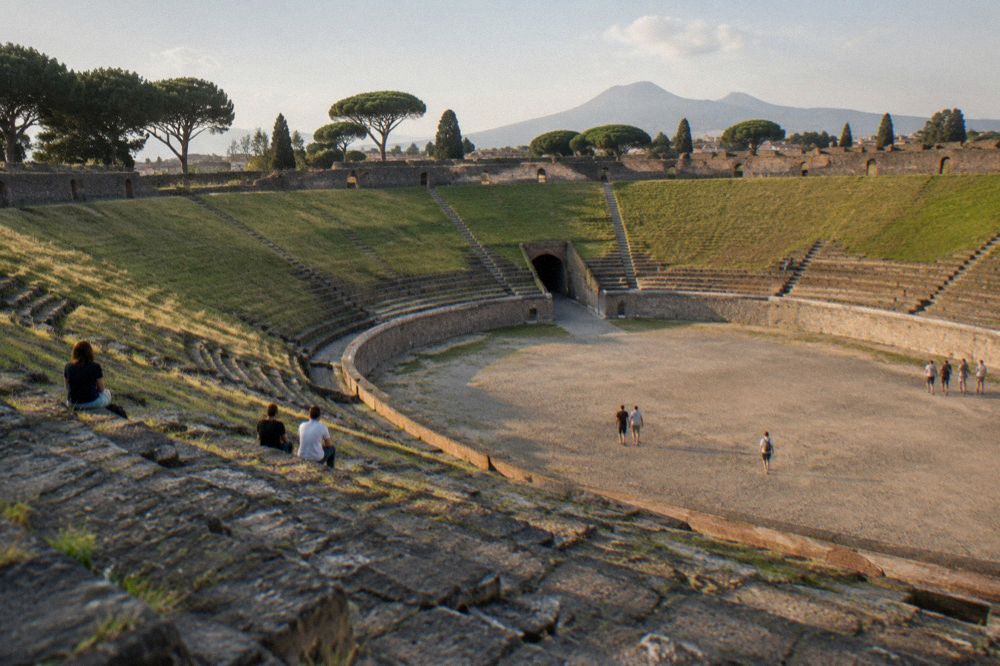
That walk is worth planning around. The Pompeii Amphitheatre anchors the eastern end of the city, and the Forum of Pompeii anchors the western end near Porta Marina. Visitors who want the museum in the middle of the day rather than at the end can plan a west-to-east or east-to-west sweep and treat the Antiquarium as the midpoint stop, with shade, seats and displays instead of another kilometre of basalt paving.
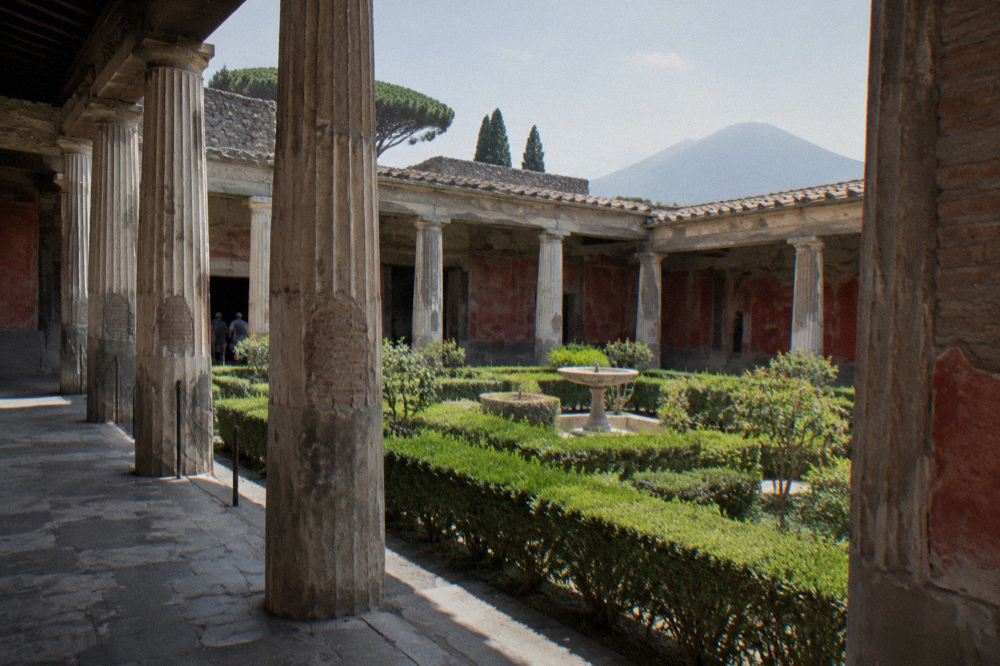
For visitors arriving from Sorrento by train, the station is Pompei Scavi-Villa dei Misteri, which sits by the Porta Marina side of the park. An express guided option from Sorrento, the Pompeii Express Guided Tour by Train, Check availability to see live times, pairs the rail journey with a guided walk of the ruins, which many travellers prefer before exploring the museum independently. Scheduled Circumvesuviana times computed from EAV's own data put Sorrento to Pompei Scavi at 34 to 40 minutes, so the western entrance is the natural first contact point for Sorrento-based visitors.
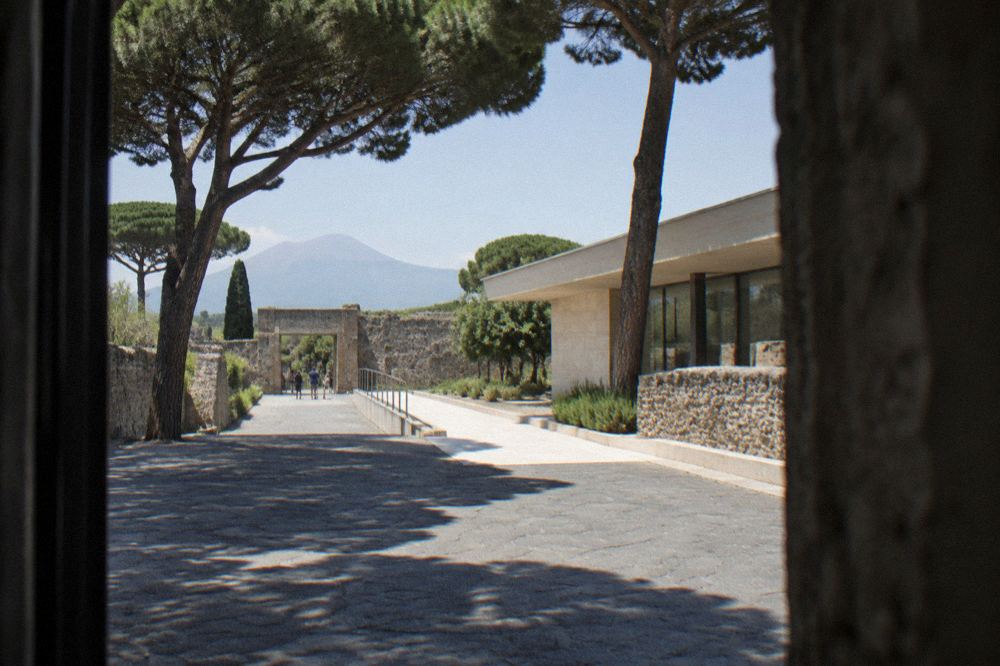
What Can You See Inside The Antiquarium?
The Antiquarium displays artefacts and interpretive material from the ancient city, moving the story from the outdoor ruins to objects recovered from them: items of daily life, decorative finds and the explanatory framing the open site cannot carry. It is the roofed, curated counterpart to walking the streets, and its content is drawn from the same excavation the rest of the park presents. The park closed the Praedia of Julia Felix to the public on 7 September 2026 for maintenance, which pushes still more interpretive weight onto the museum spaces.
What a museum adds to a ruins visit is sequence and scale. In the streets, everything is simultaneous: a bakery beside a bath beside a tavern, all at full size, all weathered. In a museum case, the same city appears at the scale of the hand: the objects people used, the materials they chose, the decoration they lived with. The House of the Vettii and the House of the Faun show what elite interiors looked like in place; a museum shows the portable world that furnished them.
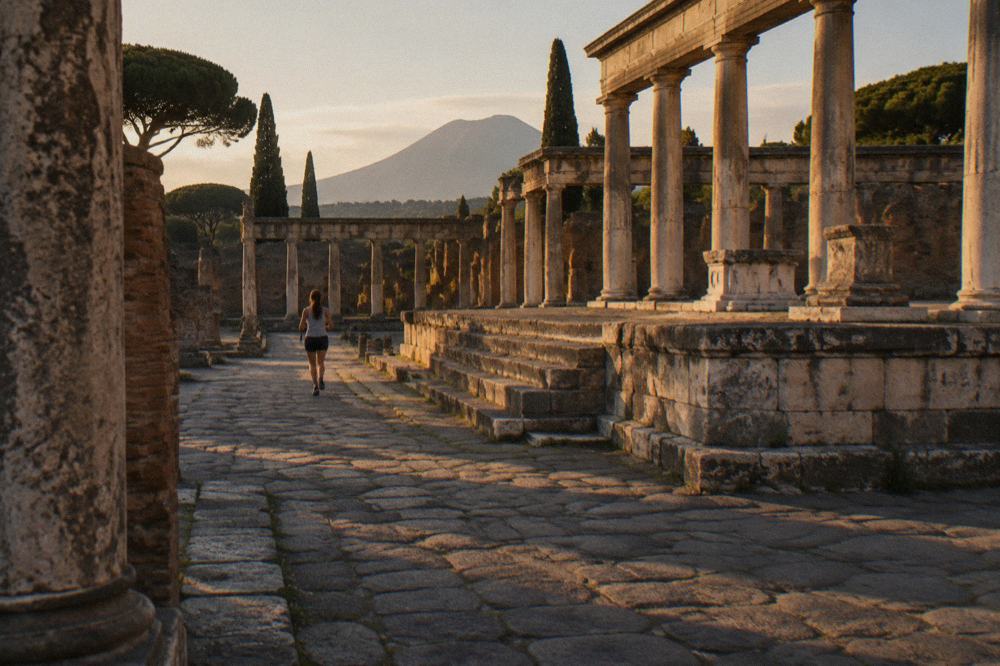
Visitors often ask about the famous body casts, and the park does display casts in the excavated area: the Garden of the Fugitives preserves the plaster casts of victims in the position they died, on the site itself. The Antiquarium's role is different, presenting the recovered material culture rather than repeating the casts, and the honest planning advice is to see both: the site for the event, the museum for the city that preceded it.
One more thing belongs in any honest description of the current park. The Villa of the Mysteries, reached through the suburban villas route from the Porta Ercolano / Street of the Tombs entrance, holds some of the finest surviving Roman frescoes anywhere, and a museum visit and a villa visit answer different questions. The villa shows painting in its architectural setting; the museum strips objects down to the object itself.
Do Pompeii Tickets Include The Antiquarium?
In 2026 the Pompeii Express ticket for the ancient city costs EUR 20, Pompeii+ costs EUR 25 and the 3-day ticket costs EUR 30, with smaller sites at EUR 8 each and the MyPompeii Card at EUR 45; from 1 January 2027 a single EUR 25 ticket covers all park sites, valid 30 days, one entry per site. Reduced entry is EUR 2 for EU citizens aged 18 to under 25, and under-18s enter free, as does everyone on the first Sunday of the month.
The 2026 structure is straightforward but short-lived, and the park has published the replacement openly. The table below restates the 2026 prices in force since 12 January 2026 and the single-ticket change announced for 1 January 2027.
| Ticket (2026, in force to 31 Dec 2026) | Price | Covers |
|---|---|---|
| Pompeii Express | EUR 20 | Ancient city only |
| Pompeii+ | EUR 25 | City, suburban villas, Villa Regina, Antiquarium Boscoreale, shuttle |
| 3-day ticket | EUR 30 | Pompeii+ plus Oplontis, Stabiae villas, Stabiae museum, Boscoreale |
| Oplontis / Stabiae museum / Boscoreale individually | EUR 8 each | Single smaller site |
| MyPompeii Card (annual) | EUR 45 | Annual pass, EUR 10 reduced |
| Single ticket from 1 Jan 2027 | EUR 25 | All park sites, 30 days, one entry per site |
Note the distinction that trips people up: the Antiquarium Boscoreale named in the Pompeii+ ticket belongs to the Boscoreale villa site in the wider park, not to the Antiquarium inside Pompeii itself. The two share a name and a function but sit at different sites. Full detail on every option, including the free partner sites valid for 30 days from issue, is on the Pompeii tickets guide.
Tickets are nominative, with identity documents checked at entry, and the park applies a cap of 20,000 visitors per day, in force since 15 November 2024. Tickets are non-transferable and non-refundable except in the case of extraordinary closure. Bags larger than 30x30x15 cm go to left luggage, and the regulations page is explicit that drones need authorisation and bare chests are not permitted.
For travellers combining both buried cities, a two-site small-group tour led by an archaeologist covers Pompeii and Herculaneum in one structured day, with tickets handled by the operator.
What Are The Pompeii Opening Hours And Time Slots?
From 16 March to 14 October Pompeii opens at 9:00 with last entry at 17:30 and closes at 19:00; from 15 October to 15 March last entry is 15:30 and closing is 17:00. The site has no weekly closing day, only Oplontis and the Stabiae villas and museum close on Tuesdays, and Pompeii closes on 25 December and 1 January unless otherwise communicated. Winter hours from 15 October mean a much shorter visiting day.
The seasonal swing is large and catches out visitors every autumn. The park's own timetable page sets the two blocks below, and the practical consequence for a museum stop is that in winter the whole visit, ruins and Antiquarium together, must fit inside a day that ends at 17:00.
| Season | Opens | Last entry | Closes |
|---|---|---|---|
| 16 Mar to 14 Oct | 9:00 | 17:30 | 19:00 |
| 15 Oct to 15 Mar | 9:00 | 15:30 | 17:00 |
Inside the summer season the park also splits the day into entry bands with caps. From 16 March to 14 October the 9:00 to 13:00 band carries a maximum of 15,000 visitors, split 12,000 Express against 3,000 Plus, and the 13:00 to 17:30 band carries 5,000, split 3,000 against 2,000.
| Time slot (16 Mar to 14 Oct) | Max visitors | Express share | Plus share |
|---|---|---|---|
| 9:00-13:00 | 15,000 | 12,000 | 3,000 |
| 13:00-17:30 | 5,000 | 3,000 | 2,000 |
The afternoon band's lower cap has a planning implication: an afternoon entry is the quieter way in, and a late-day museum visit benefits twice, from thinner crowds in the galleries and softer light outside when you re-emerge. First Sundays complicate this, because free entry under the Domenica al Museo scheme applies year-round, and the park's record peak, more than 36,000 visitors in a single free Sunday, shows what those days can become. Avoid the first Sunday if a calm museum hour matters to you.
An entry-ticket-plus-archaeologist-guided-tour option bundles the ticket with a guide, which removes both the queue question and the orientation problem in one step.
Is The Antiquarium Accessible For Visitors With Limited Mobility?
Yes, the park runs a dedicated accessible route: visitors with mobility difficulties enter at Piazza Anfiteatro and may exit at Piazza Anfiteatro or Piazza Esedra via the Antiquarium lift, per the park's visiting regulations. The ancient streets themselves are uneven Roman paving, so the lift-linked route is the reliable way through. The Artebus shuttle offers luggage storage but no disabled access, which matters for visitors carrying bags.
Honesty about Pompeii's surface is necessary. The city's roads are original stone, rutted by two millennia, and crosswalks are raised stepping stones. Wheelchair and walker users are not facing a modernised site but a genuinely ancient one, and the park's answer is the named route above rather than a claim that everything is flat. Plan around the Piazza Anfiteatro entry, use the Antiquarium lift to change level, and treat the museum as the most predictable part of the day.
Bags play into this too. The 30x30x15 cm limit means anything larger goes to left luggage before you enter, and travellers combining a museum visit with a same-day departure from the area should build the bag drop into the timetable. The practical order is station, left luggage, ticket office, site, museum.
How Busy Does Pompeii Get Around The Museum?
The Pompeii site recorded 4,069,377 visitors in 2024 and 4,000,090 in 2025, after 3,985,424 in 2023 and 2,972,159 in 2022, per the park's official visitor-data table. Across all park sites the totals were 4,177,753 in 2024 and 4,118,926 in 2025. The 20,000 daily cap, in force since 15 November 2024, is the ceiling that keeps individual days manageable.
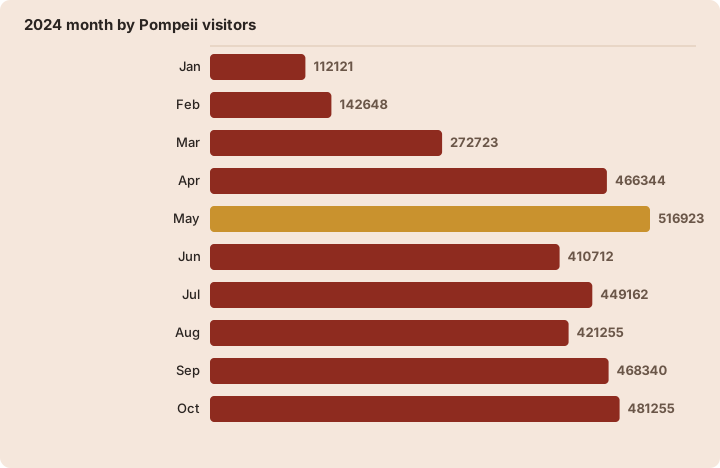
Four million annual visitors on 44 excavated hectares is the defining fact of a modern Pompeii visit. The monthly breakdown for 2024 shows the shape of the year, and it is not the shape most guidebooks assume: May, not July or August, was the busiest month.
| 2024 month | Pompeii visitors |
|---|---|
| Jan | 112,121 |
| Feb | 142,648 |
| Mar | 272,723 |
| Apr | 466,344 |
| May | 516,923 |
| Jun | 410,712 |
| Jul | 449,162 |
| Aug | 421,255 |
| Sep | 468,340 |
| Oct | 481,255 |
| Nov | 189,866 |
| Dec | 138,028 |
October at 481,255 and September at 468,340 both outrank August, which contradicts the instinct that summer equals peak. For a museum-heavy visit, the shoulder months deliver the same open hours as high summer, with the 19:00 close, and a materially better ratio of visitors to gallery space. November and December drop to a fraction of the peak, but the winter timetable's 15:30 last entry eats the long afternoons.
How Do You Get To Pompeii And The Antiquarium?
By train, the Circumvesuviana line from Napoli Garibaldi to Pompei Scavi-Villa dei Misteri takes 29 to 35 minutes on scheduled times computed from EAV's own data; from Sorrento the Pompei Scavi run takes 34 to 40 minutes. By road, driving distances to Pompei Scavi are about 24 km from Naples, 26 km from Sorrento and 31 km from Salerno. The Campania Express rail service has been suspended since 1 October 2026, so the Circumvesuviana and road options carry the load.
The suspension of the Campania Express is the single biggest recent change to arrival logistics, and it is dated: suspended from 1 October 2026 until further notice, with refunds via the operator's form or original seller. Travellers who read older advice describing a comfortable dedicated tourist train should treat that as out of date.
| Route | Scheduled journey time | Notes |
|---|---|---|
| Napoli Garibaldi to Pompei Scavi-Villa dei Misteri | 29 to 35 min | Circumvesuviana, EAV GTFS data |
| Pompei Scavi to Sorrento | 34 to 40 min | Circumvesuviana |
| Naples to Pompei Scavi by road | 24 km, about 22 min | OSRM driving estimate |
| Sorrento to Pompei Scavi by road | 26 km, about 37 min | OSRM driving estimate |
| Salerno to Pompei Scavi by road | 31 km, about 30 min | OSRM driving estimate |
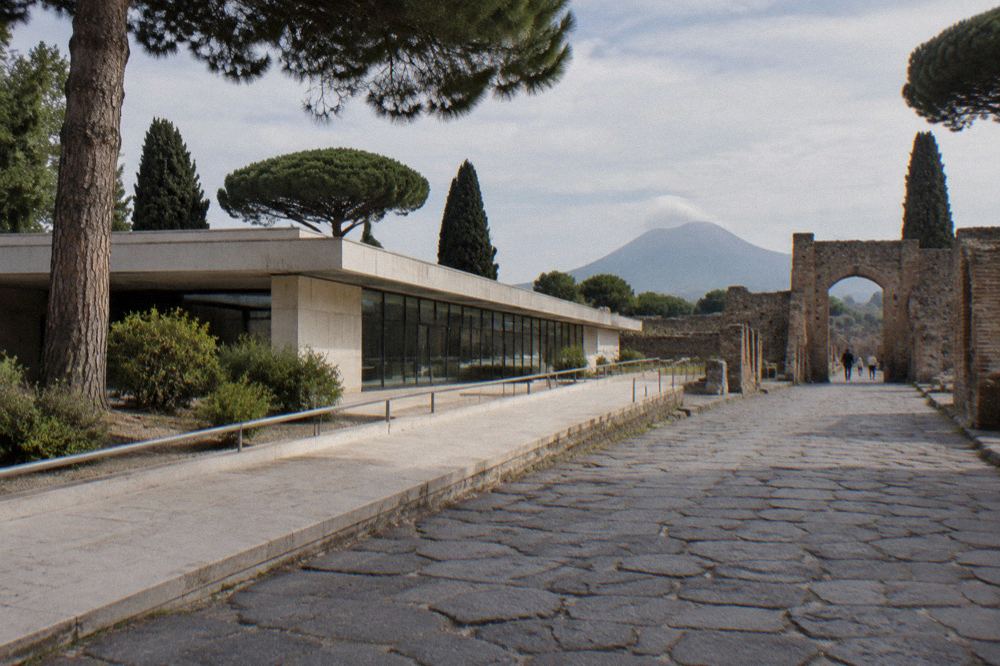
Arrival by train puts you at the Porta Marina end, arrival by car at whichever car park you choose, and both end at a named ticket office. From there the site opens up, and the museum sits within walking distance of the western entrances, reachable without crossing the whole city.
Travellers with a full day and an appetite for something beyond the standard walk can pair the ruins with horse riding on the slopes of Vesuvius, with lunch included, an option that turns the day into a two-landscape trip: buried city in the morning, live volcano slopes in the afternoon.
When Is The Best Time Of Year To Visit The Antiquarium?
The Pompei climate averages show May at about 21.6 C daily maximum with 59 mm of rain and October at about 21.3 C with 129 mm, against August at about 29.4 C with 22 mm; November is the wettest month at about 180 mm and July the driest at about 16 mm. These are 1991-2020 grid-point normals from the Open-Meteo archive, not station readings. Shoulder months offer warm days without the August peak heat.
A museum visit is a heat strategy as much as a culture stop. August's 29.4 C average daily maximum, with stone surfaces adding to it, makes a shaded gallery the sensible midday destination. The monthly picture below helps pick the window.
| Month | Mean daily max (C) | Mean daily min (C) | Rain (mm) |
|---|---|---|---|
| Apr | 17.7 | 10.4 | 87 |
| May | 21.6 | 14.1 | 59 |
| Jun | 25.8 | 18.2 | 30 |
| Jul | 28.7 | 21.1 | 16 |
| Aug | 29.4 | 21.8 | 22 |
| Sep | 25.3 | 18.6 | 90 |
| Oct | 21.3 | 15.1 | 129 |
| Nov | 16.9 | 11.5 | 180 |
September and October stand out for a museum-inclusive visit: summer hours still apply to 14 October, heat is off its peak, and the 2024 visitor table shows those months busy but not at the May maximum. From mid-October the winter timetable cuts the day short, and November's 180 mm of rain makes indoor time a larger share of any visit, though a rainy week is arguably the week the Antiquarium earns its keep.
How Does The Antiquarium Fit Into A Wider Campania Trip?
The Antiquarium belongs inside a Pompeii day, and Pompeii itself sits about 24 km from Naples and 26 km from Sorrento by road, within a wider park network that includes Herculaneum EUR 16 full entry in 2026, Oplontis, the Stabiae sites and Boscoreale at EUR 8 each. From 1 January 2027 the single EUR 25 ticket covers all park sites, which makes a multi-site museum-and-ruins circuit materially simpler to buy.
Herculaneum deserves its own comparison. Its full ticket is EUR 16, reduced EUR 2 for visitors aged 18 to 25, it is open daily with hours that mirror Pompeii's seasonal split, and free days there include every first Sunday plus 25 April, 2 June and 4 November. Two of its headline features, the Villa dei Papiri and the Ancient Theatre, are closed for works, which is worth knowing before you plan a two-museum day; the Herculaneum guide covers the detail.
Beyond the buried cities, the region's other anchors are the volcano itself, covered in the Mount Vesuvius guide, where Gran Cono tickets are sold online only at EUR 11.68 full, and the modern town of Pompei with its Sanctuary, a working pilgrimage destination beside the ancient one. A pattern that works well: ruins in the morning when the light is low and the legs are fresh, the Antiquarium over the midday heat, and Vesuvius or the coast afterwards.
Common Questions About The Pompeii Antiquarium
Is the Pompeii Antiquarium included with a Pompeii ticket?
The Antiquarium sits inside the Pompeii archaeological park and is reached with a park ticket. In 2026 the Pompeii Express ticket costs EUR 20, Pompeii+ EUR 25 and the 3-day ticket EUR 30, and from 1 January 2027 a single EUR 25 ticket covers all park sites, valid 30 days with one entry per site.
Where is the Antiquarium in relation to the park entrances?
The park's three ticket offices are at Porta Marina, Piazza Esedra and Piazza Anfiteatro. The accessible route named in the park's regulations runs from Piazza Anfiteatro, with an exit option at Piazza Esedra via the Antiquarium lift, so the museum sits between those two ends of the city.
What are Pompeii's opening hours?
From 16 March to 14 October the site opens at 9:00, last entry is at 17:30 and closing is at 19:00. From 15 October to 15 Mar it opens at 9:00, last entry is at 15:30 and closing is at 17:00. Pompeii closes only on 25 December and 1 January unless otherwise communicated.
Is the Pompeii Antiquarium accessible for wheelchair users?
Partly, through a dedicated route. The park's regulations state that visitors with mobility difficulties enter at Piazza Anfiteatro and may exit at Piazza Anfiteatro or Piazza Esedra via the Antiquarium lift. The ancient streets remain uneven Roman paving throughout.
When is the best time to visit Pompeii and the museum?
September and October combine summer hours, with the 19:00 close to 14 October, warm weather off the August peak of about 29.4 C mean daily maximum, and visitor levels below the May peak. The 2024 monthly data shows October at 481,255 visitors against May at 516,923.
How long should I allow for the Antiquarium?
Treat it as the indoor middle of a Pompeii day rather than a separate destination. A full park visit with a museum stop fits comfortably inside the summer day from 9:00 to 19:00; in winter the 15:30 last entry means the museum and ruins must share a shorter schedule.
Whatever the shape of the day, buy in advance where you can: nominative tickets, the 20,000 daily cap and the time-slot bands all reward a decided plan over an improvised arrival. This Pompeii Travel Guide page has covered the museum's place in the park; the rest of the site covers every street, villa and ticket question the city raises.