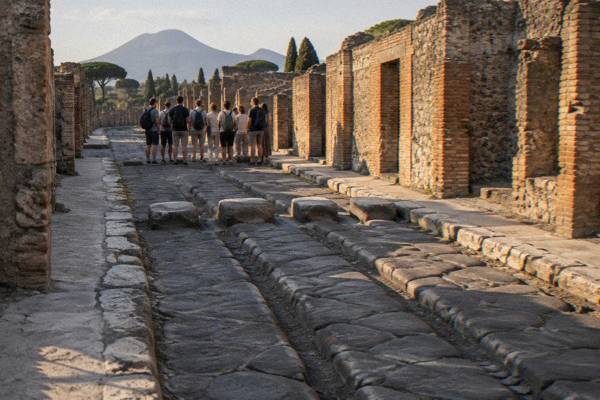
Why Is Pompeii Called Sin City?
The origin of Pompeii's Sin City nickname, what the brothels and erotic frescoes really show, and how to see the evidence yourself in the archaeological park in Campania, Italy.
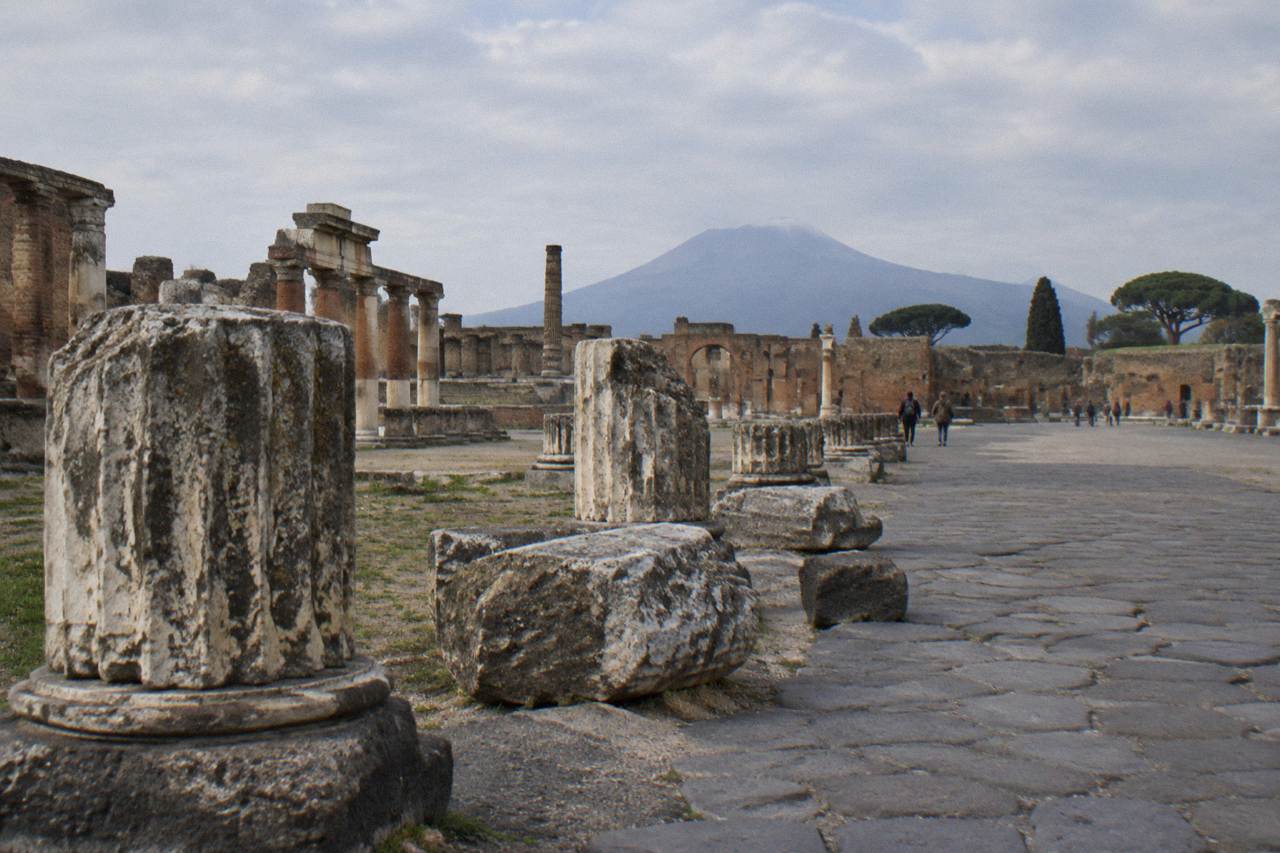
Pompeii, the ancient Roman city buried by the eruption of Mount Vesuvius in AD 79 and now an archaeological park in Campania, southern Italy, earned the Sin City label through what archaeologists pulled out of its volcanic ash rather than through anything the Romans themselves would have recognised as a name. The ruins sit beside the modern town of Pompei, about 24 km by road from Naples, and they hold a brothel with explicit frescoes, phallic charms set into pavement stones, and thousands of scratched sexual jokes and advertisements on plaster walls. Victorian-era excavation reports treated this material as scandal, locked the raciest pieces away from public view, and the combination of censorship and curiosity fixed the city's racy reputation in the popular imagination, where it has stayed ever since.
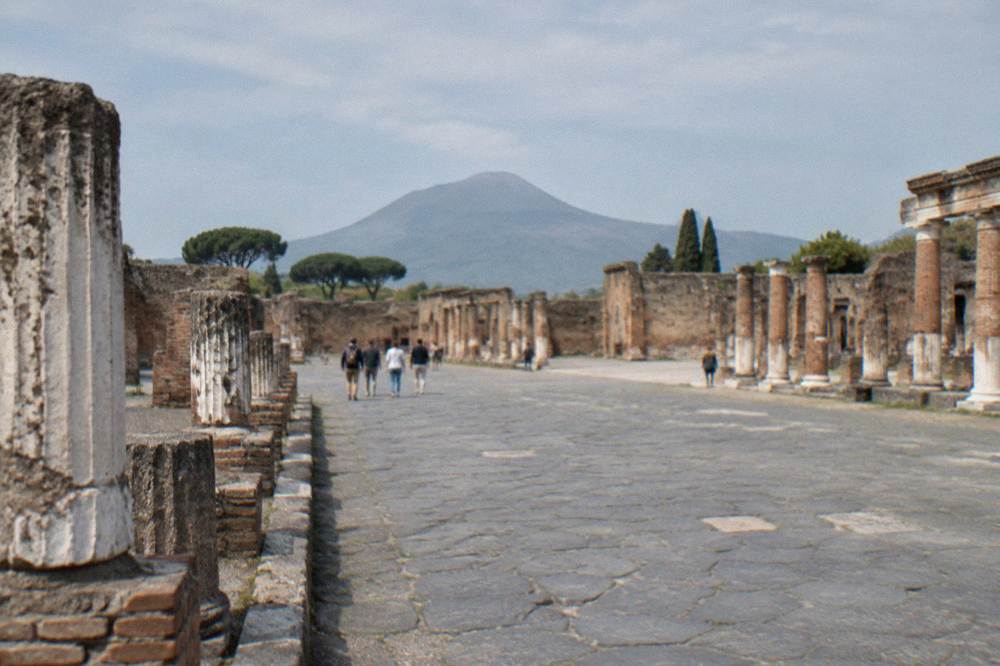
Why Is Pompeii Called Sin City?
Pompeii is called Sin City because the volcanic ash that destroyed it in AD 79 also preserved its brothels, explicit wall paintings and sexual graffiti in extraordinary detail, and the scholars who excavated the site in the earliest generations of digging reacted to that material with censorship rather than explanation. Locked museum cabinets and coy guidebooks made the erotic finds famous, and modern travel writing compressed the story into a two-word nickname that frames a whole Roman city as a red-light resort.
The nickname is modern, and it is not official. No Roman source calls Pompeii a city of sin, and the park's own signage, published by the Parco Archeologico di Pompei, discusses the erotic material as ordinary evidence of Roman urban life rather than as a scandal. The label belongs to the same family of shorthand as "the city that Vesuvius froze", a compression invented for headlines and tour-bus patter.
What made the shorthand stick was the sheer completeness of the preservation. Ash and pumice sealed upper storeys, wall plaster, wooden fittings and street surfaces, which almost no other Roman site can offer. That includes the interiors of buildings the Romans themselves used for paid sex, and it includes the graffiti those same Romans scratched onto the plaster while the city was alive.
The eruption itself is traditionally dated to 24 August AD 79, following the oldest manuscripts of Pliny the Younger's letters. The park's own e-journal notes that an alternative October date has no evidentiary basis, so any story tying the nickname to a precise eruption anniversary stands on sand. The date debate is a reminder that even the city's final day is still being argued over by scholars.
What The Brothels And Frescoes Actually Show?
The core physical evidence is a purpose-built brothel, the Lupanar, with masonry beds and a series of small explicit paintings above the doorways, plus erotic frescoes in the suburban Villa of the Mysteries and the changing-room wall of the Stabian Baths, and roughly thousands of graffiti lines, sexual jokes included, scratched across the city's plaster. Together they show a city where sex was sold, advertised and joked about openly, not a city defined by it.
The Lupanar is the building that anchors the nickname. It is a purpose-built structure with small rooms off a central corridor, stone platforms that served as beds, and a series of painted panels above the door lintels showing different sexual positions. Archaeologists read those panels less as decoration than as a service menu, a practical way for non-Italian-speaking customers to point at what they wanted in a port town drawing traders from across the Mediterranean.
The graffiti matters just as much. Scratched into the plaster of the Lupanar's walls and corridors are names, boasts, complaints and crude remarks, written by both clients and the women who worked there. This site's collection of Pompeii's graffiti and wall writing covers the full range, from election notices to insult poetry, and the sexual lines are one strand of a much larger written record.
Elsewhere the famous material is often mislabelled. The erotic scenes in the Villa of the Mysteries, outside the Porta Ercolano entrance along the Street of the Tombs, belong to a debate about religious initiation, not commerce, and scholars still argue over their meaning. The phallic images carved on paving stones and painted on shop fronts were, in the Roman reading, good-luck charms and signs of prosperity rather than invitations. Taking every explicit image as evidence of vice is the simplest mistake the Sin City label encourages.
A guided walk changes how this evidence reads. The entry ticket and archaeologist-led tour that this site features puts a trained archaeologist between you and the plaster, and the guides are generally the ones who point out that the brothel beds are stone, that the building had no windows to the street, and that the city's bakeries, fulleries and election slogans vastly outnumber the sexual material.
Where Did The Erotic Finds Go After Excavation?
The excavators who first opened Pompeii removed large quantities of erotic material from the site and placed it in the National Archaeological Museum in Naples, where for generations the most explicit pieces were held in a restricted section closed to women, children and the general public, accessible only by special permission. That act of hiding, more than the finds themselves, turned ordinary Roman objects into legendary ones and exported the Sin City idea across Europe.
The restricted collection became known as the Secret Cabinet or Secret Museum. Access required permission from museum authorities, and the rules were applied inconsistently for well over a century, before the material was finally put on permanent open display in Naples in the modern era. Every refusal reinforced the idea that Pompeii hid something exceptional, and guidebook writers happily repeated the framing.
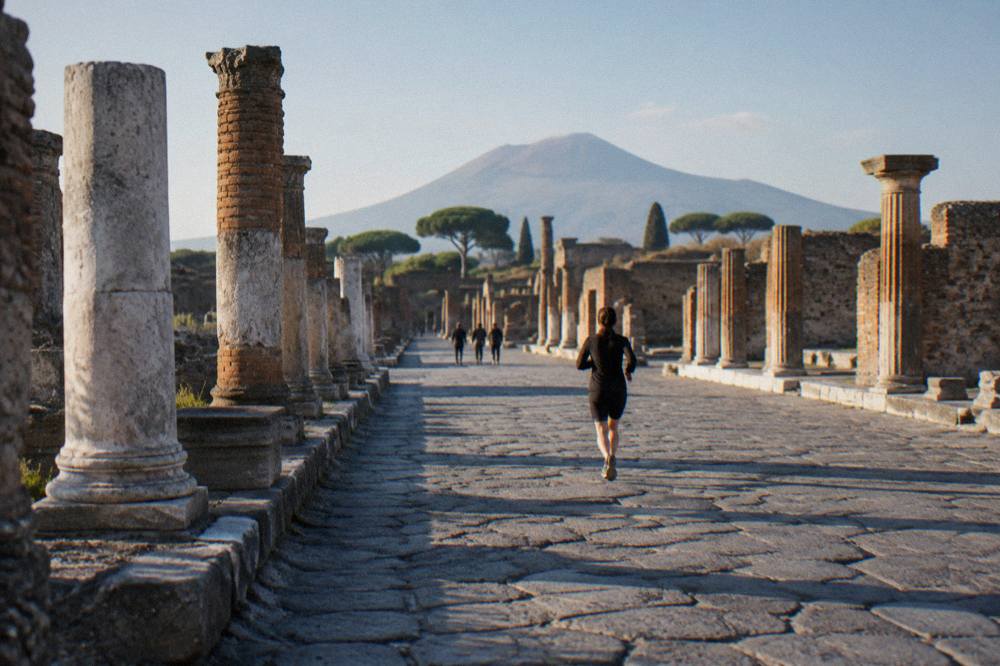
The pattern was not unique to Naples. Reproductions of Pompeii's erotic frescoes circulated in privately printed catalogues for wealthy collectors, and whole industries of fakes and exaggerations grew up around the locked material. By the time open scholarship replaced the censorship, the popular image of Pompeii as a pleasure town had been running for generations, and it was far too useful to travel journalism to abandon.
The site's guide to the Naples National Archaeological Museum explains what a visitor can see there today, since much of the celebrated material still lives in Naples rather than at Pompeii itself. What remains in situ, in the Lupanar and the bath changing rooms, is a fraction of what was removed.
How The Nickname Took Hold In Modern Travel Culture?
The Sin City nickname is a product of modern tourism marketing, borrowed from the Las Vegas advertising slogan and applied to Pompeii because sex sells headlines. Newspaper roundups, quiz shows and list articles found that "the Roman Sin City" generated more clicks than any accurate phrase about everyday urban commerce in the Roman world, and the label detached itself almost entirely from the archaeological record it claims to describe.
Modern usage flattens two very different things into one. The first is the real evidence of prostitution in a Roman port city, which archaeologists treat as unremarkable for the ancient Mediterranean world. The second is the Victorian censorship story, which is a chapter in the history of archaeology rather than of Rome. Conflating them produces a claim the ruins cannot support: that Pompeii was uniquely debauched among Roman towns.
The comparison problem is the tell. Herculaneum, buried deeper by the same eruption in AD 79 and readable through the guide to Herculaneum versus Pompeii, preserves domestic and everyday material in even finer detail, yet no one calls it a sin city. The difference is not the evidence but the storytelling, and Pompeii's greater fame gave the storytellers a bigger stage.
Pop culture did the rest. Novels, documentaries and social media clips recycle a small set of images, the brothel frescoes above all, until a city of roughly 44 hectares of excavated streets, houses, theatres, baths and shops is known to casual audiences mainly through its smallest and least representative buildings. The park's own visitor statistics, published openly, tell the opposite story about why people actually come.
Is The Sin City Label Fair To The Real Pompeii?
Measured against the archaeological record, the label is a distortion. Excavation has uncovered temples, a forum, two theatres, an amphitheatre, several bath complexes, dozens of bakeries and fulleries, taverns, gardens and grand private houses, while the buildings linked to prostitution are a handful among hundreds. The site that UNESCO lists with Herculaneum and Torre Annunziata is inscribed for its evidence of Roman urban life, criteria three, four and five, not for its red-light reputation.
The numbers make the point sharply. Pompeii received 4,000,090 visitors in 2025, following 4,069,377 in 2024, 3,985,424 in 2023 and 2,972,159 in 2022, according to the park's published visitor data. People come in the millions for the wholeness of a Roman city: the wheel-rutted streets, the plaster casts of the victims, the mosaic floors. The nickname is bait; the city is the hook.
| Year | Pompeii site visitors | All park sites combined |
|---|---|---|
| 2022 | 2,972,159 | n/a |
| 2023 | 3,985,424 | 4,079,235 |
| 2024 | 4,069,377 | 4,177,753 |
| 2025 | 4,000,090 | 4,118,926 |
There is also a historical correction worth making. Prostitution in the Roman world was legal, taxed in various periods and visible in ways that startled later Christian Europe, but Pompeii was a mid-sized commercial town of the same character as dozens of others on the Italian coast. The shock recorded in the earliest excavation reports is a record of the reporters' values, not of Roman behaviour.
The park, for its part, leans into accuracy rather than scandal. Context panels discuss the Lupanar plainly, the bodies and their stories are presented with care, and the temporary closures and rotations that affect any working excavation, such as the Villa dei Papiri and the Ancient Theatre at Herculaneum being closed for works, are posted openly on official pages rather than hidden.
How To See The Evidence For Yourself Today?
To see the material behind the nickname, enter the archaeological park through Porta Marina, Piazza Esedra or Piazza Anfiteatro, walk the Lupanar near the forum and Stabian Baths area, and plan a second stop at the National Archaeological Museum in Naples, where the removed erotic sculptures and frescoes are displayed openly. A Pompeii+ or 3-day ticket in 2026 also covers the suburban villas route from the Porta Ercolano entrance along the Street of the Tombs.
The in-site evidence sits within comfortable walking distance of the main entrance, though the paving is uneven and the site is large, so comfortable shoes and water matter more than modesty concerns. The park's regulations cap bags at 30x30x15 cm, and identity documents may be checked because tickets are nominative.
| 2026 ticket | Price | What it covers |
|---|---|---|
| Pompeii Express | EUR 20 | The ancient city only |
| Pompeii+ | EUR 25 | City, suburban villas, Villa Regina and Boscoreale Antiquarium, shuttle |
| 3-day ticket | EUR 30 | Pompeii+ plus Oplontis, the Stabiae villas and museum, Boscoreale |
| My Pompeii Card | EUR 45 | Annual pass, EUR 10 reduced |
Entry is free for under-18s and for everyone on the first Sunday of the month, and EU citizens aged 18 to under 25 pay a EUR 2 reduced rate.
Reading before you go sharpens the visit considerably. This site's overview of touring Pompeii on your own versus with a guide sets out the trade-offs, and the editors' general introduction at Pompeii Travel Guide collects the practical pages on entrances, hours and what to wear in one place. The ruins reward preparation, and the Sin City story rewards checking.
Common Questions About Pompeii's Sin City Nickname
Why is Pompeii called Sin City?
Pompeii is called Sin City because excavations uncovered brothels, explicit frescoes and sexual graffiti preserved by the AD 79 eruption of Vesuvius, and Victorian-era censorship of those finds turned them into a legend that modern travel writing compressed into a nickname. The label describes the reaction of later Europe far more than it describes the Roman city itself.
Is the Lupanar in Pompeii still open to visitors?
Yes, the Lupanar is part of the standard visit inside the archaeological park. It is a small building with masonry beds and explicit doorway paintings, and it can be reached on foot from the main entrances at Porta Marina, Piazza Esedra or Piazza Anfiteatro. Access can rotate with conservation work, so check the park's official communications before a visit built around one specific building.
Where are Pompeii's erotic artefacts kept today?
Many of the sculptures, frescoes and objects removed during the earliest excavations are held in the National Archaeological Museum in Naples, in what was historically the restricted Secret Cabinet. The collection is now on open public display there, while a smaller share of the evidence, including the Lupanar paintings and bath changing-room frescoes, remains in place at Pompeii.
Was prostitution legal in Roman Pompeii?
Prostitution in the Roman world was legal and visible in public culture, and Pompeii's graffiti, advertisements and purpose-built premises reflect that openness. The scandalised reading of the evidence came from the early European excavators and museums, whose own social values treated the material as vice rather than as ordinary urban history.
Does the Sin City nickname match what archaeologists found?
Only partially. The excavated city contains temples, a forum, theatres, an amphitheatre, baths, bakeries, fulleries and hundreds of houses, while the buildings directly tied to prostitution number just a few. Archaeologists treat the erotic material as one ordinary strand of Roman urban life, and the park presents it that way rather than as the city's defining feature.
Whether you arrive on a short independent visit or on a full-day excursion from Naples, Sorrento or Rome, the evidence is the same evidence: a locked-away scandal in the museum era is an open-air classroom in 2026. The volcano preserved a whole city, vice and virtue together, and the honest verdict on the nickname is that it sells the place short by exactly the amount of wonder it leaves out. Walk the full streets, read the plaster, and judge the Romans on what they built rather than on what a locked cabinet once let you imagine.