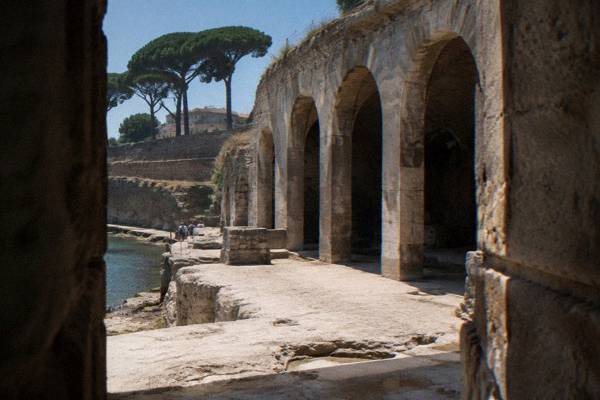
Villa Of The Papyri Herculaneum
The Villa of the Papyri is the grandest Roman villa found at Herculaneum, the city buried alongside Pompeii by the eruption of Vesuvius in AD 79 and now an archaeological site in Campania, southern Italy.
Short answer
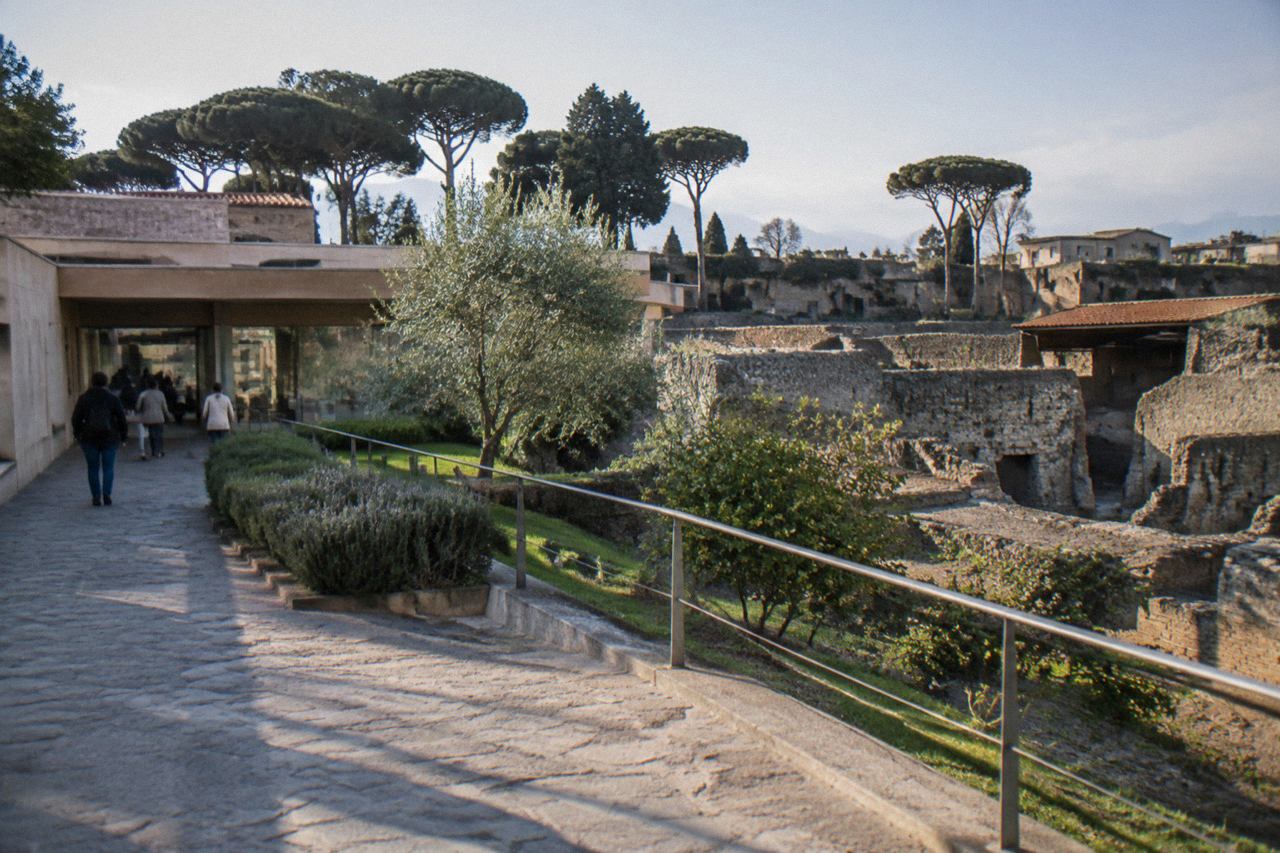
The Villa of the Papyri stands at the northwest edge of the Herculaneum archaeological park in Ercolano, Italy. It is closed for works, as is the site's Ancient Theatre, so today's visitors see it from outside or through its story. Herculaneum itself is open daily, EUR 16 full and EUR 2 for EU citizens aged 18 to 25 in 2026, free on the first Sunday of the month.
The Villa of the Papyri is the single grandest house ever uncovered at Herculaneum, and it gave the site its most famous find: a library of carbonised papyrus scrolls, still being read with modern imaging two centuries after they came out of the ground. This guide sets out what the villa is, why you cannot walk through it right now, and how to build a Herculaneum visit around everything the site still offers.
What Is The Villa Of The Papyri At Herculaneum?
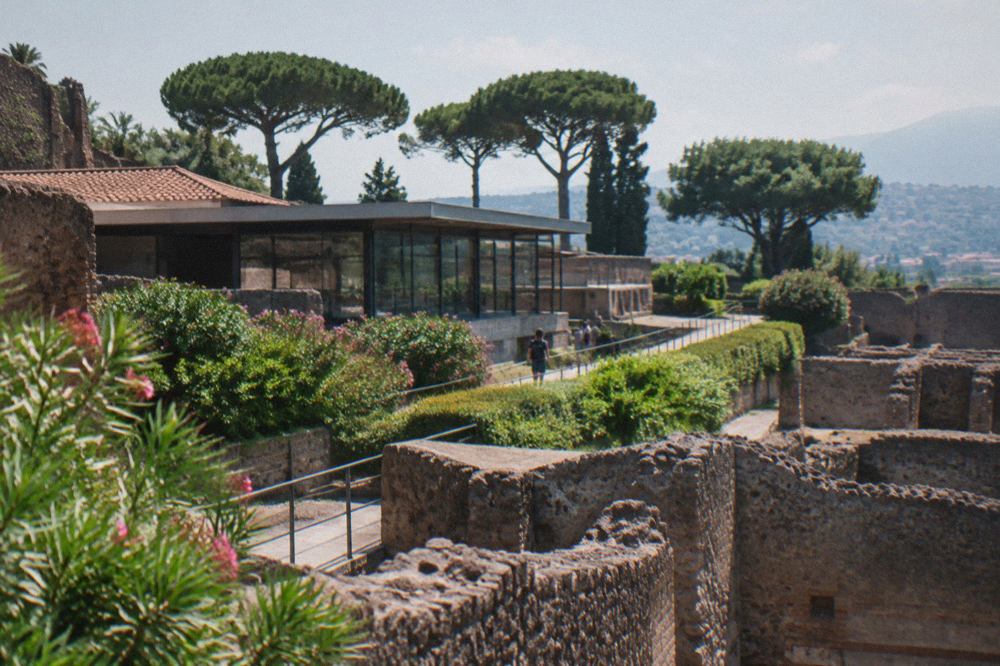
The Villa of the Papyri is a vast seaside Roman villa at the northwest edge of Herculaneum, buried by the same AD 79 eruption of Vesuvius that destroyed Pompeii and only partly excavated to this day. It takes its name from a unique find: a whole library of carbonised papyrus scrolls, preserved in a way no other Roman villa has matched. The eruption is traditionally dated to 24 August AD 79, a date the park's own journal treats as manuscript tradition rather than settled fact.
The villa belonged to the level of Roman society that owned real estates by the sea, with a long colonnaded terrace looking out over the Bay of Naples toward Naples itself. Excavators reached it through tunnels during the early Bourbon exploration of the site, a phase of archaeology that recovered its marble and bronze sculptures before the villa was partly reburied and then only partially re-exposed by later open-air digging. Much of the building still lies beneath the modern town of Ercolano above it, which is why a large share of the villa has never been seen by anyone alive. The neighbourhood around the site, covered in the Ercolano area guide, grew up directly on top of the ancient city.
What makes the villa exceptional among the buried houses of the Bay of Naples is the library. Carbonised papyrus does not survive in the archaeological record elsewhere in any comparable quantity, and the villa's collection is the only substantial Roman library to have been physically recovered from a private house of the period. The scrolls are discussed further down this page, because their ongoing reading is the reason the villa keeps its place in world news even while closed. For the wider site around it, the Herculaneum attractions guide covers the houses, baths and boat sheds that a visitor actually walks through today.
Is The Villa Of The Papyri Open To Visitors?
No. The Villa of the Papyri is closed for works at Herculaneum, and the site's Ancient Theatre is likewise closed until further notice, so neither can be entered on a present-day visit. The closures are stated on the official Herculaneum ticketing page, which is the page to check before any trip because re-opening dates have not been announced. Everything else at Herculaneum, the houses, the terrace, the boat sheds and the frescoed rooms, remains part of the open-air route.
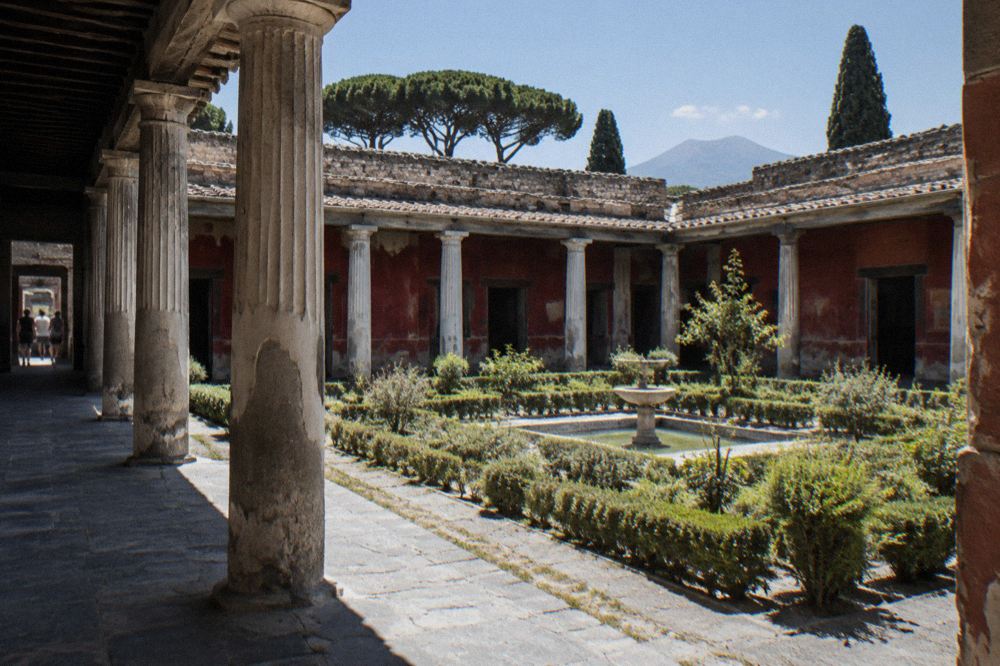
Visitors sometimes arrive expecting a second Pompeii and are surprised by how compact Herculaneum is; the question why is Herculaneum not as famous as Pompeii has as much to do with scale as with fame. The closure of the villa and the theatre does not gut the visit: the open part of the site holds some of the best-preserved domestic interiors in the Roman world, with wooden doors, screens and staircases that the ash of Herculaneum preserved and Pompeii's different burial conditions did not. Plan on the basis that the villa is something you see from the perimeter and understand, not something you enter.
The two closures sit on the official page beside the ticket prices and hours, which keeps them easy to re-check close to a travel date. Work programmes at buried sites move slowly and announcements come through the park's own channels rather than tour operators, so the ticketing page is the primary source. The table below gathers the closures that matter to a Herculaneum visit in one place.
| Closed feature at Herculaneum | Status | Notes |
|---|---|---|
| Villa of the Papyri | Closed for works | No re-opening date announced |
| Ancient Theatre | Closed until further notice | No re-opening date announced |
| Rest of the site (houses, terrace, boat sheds) | Open | Normal opening route |
The three options above are the formats that pair well with this page: a small-group Herculaneum walk with an archaeologist and the ticket included, a Pompeii villa-focused alternative for the day after, and a combined day tour from Naples for travellers who want Herculaneum, Pompeii and Vesuvius in one booked package.
Where Is The Villa Of The Papyri And How Do You Reach It?
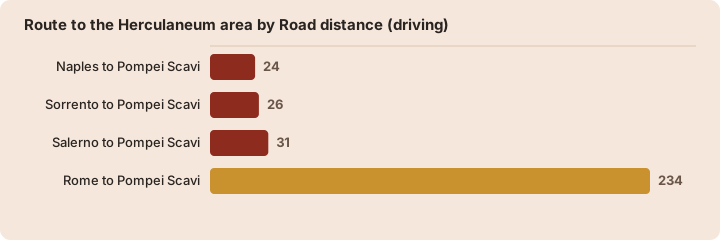
The villa lies at the northwest edge of the Herculaneum excavations in Ercolano, on the seaward side below the modern town, within the same archaeological park as the rest of the site and reached through the same entrance. Ercolano sits on the Naples to Sorrento railway line, and the site's station is named Ercolano Scavi; the Campania Express service on that corridor has been suspended since 1 October 2026, so the ordinary local trains are the rail option. Naples is about 24 km away by road.
The station stop for Pompeii itself is Pompei Scavi-Villa dei Misteri, which serves the ancient city of Pompeii and is a different site altogether; travellers mixing both cities should keep the two station names straight, and the guide to trains from Naples to Pompeii is not the route advice for Herculaneum. Scheduled local rail times computed from the operator's own data put the Napoli Garibaldi to Pompei Scavi run at 29 to 35 minutes, which gives a sense of the corridor's scale; Ercolano is on the same line, nearer to Naples than Pompei. Fares and frequencies are published by the operator and are best read on its own timetable pages rather than second-hand.
The operator states the service has been suspended from 1 October 2026 until further notice, with refunds available through the operator's complaints form or the original seller. Local stopping trains continue to serve the Vesuvian line corridor, and the announcement of 16 September 2026 of new trains and a new timetable for those lines signals investment in exactly this route, though the detailed new schedules had not been published when the announcement was made.
| Route to the Herculaneum area | Road distance (driving) | Approximate driving time |
|---|---|---|
| Naples to Pompei Scavi | 24 km | 22 minutes |
| Sorrento to Pompei Scavi | 26 km | 37 minutes |
| Salerno to Pompei Scavi | 31 km | 30 minutes |
| Rome to Pompei Scavi | 234 km | 159 minutes |
The road figures in the table are driving distances computed on OpenStreetMap routing, and they describe the Pompei Scavi end of the corridor rather than door-to-door Ercolano journeys; they are included to show the geography of the Bay of Naples, with Naples, Sorrento and Salerno all within a short drive of both buried cities.
What Did The Villa Of The Papyri Look Like?
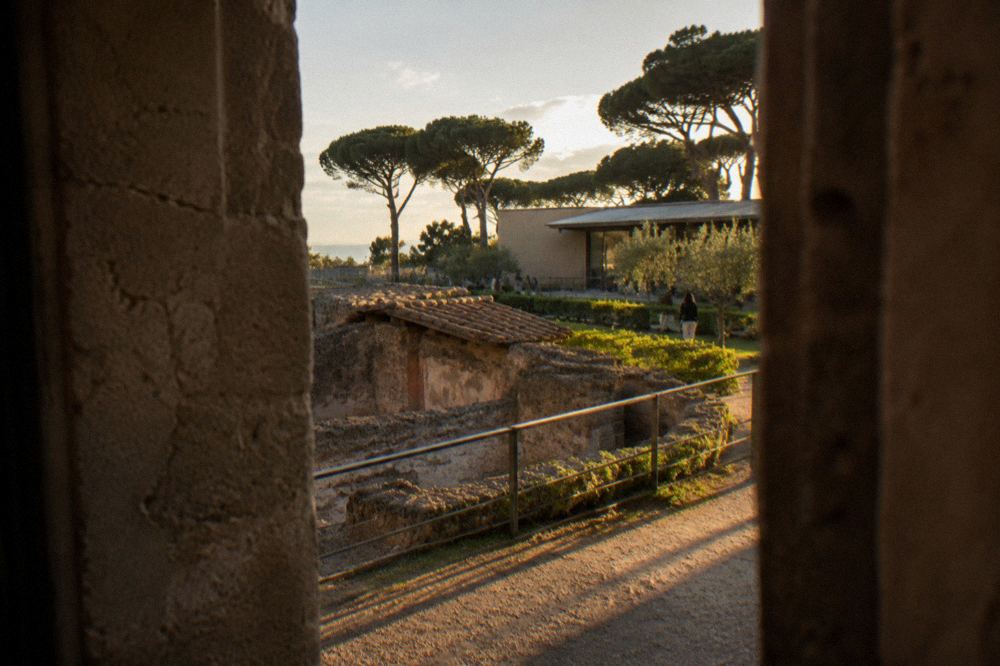
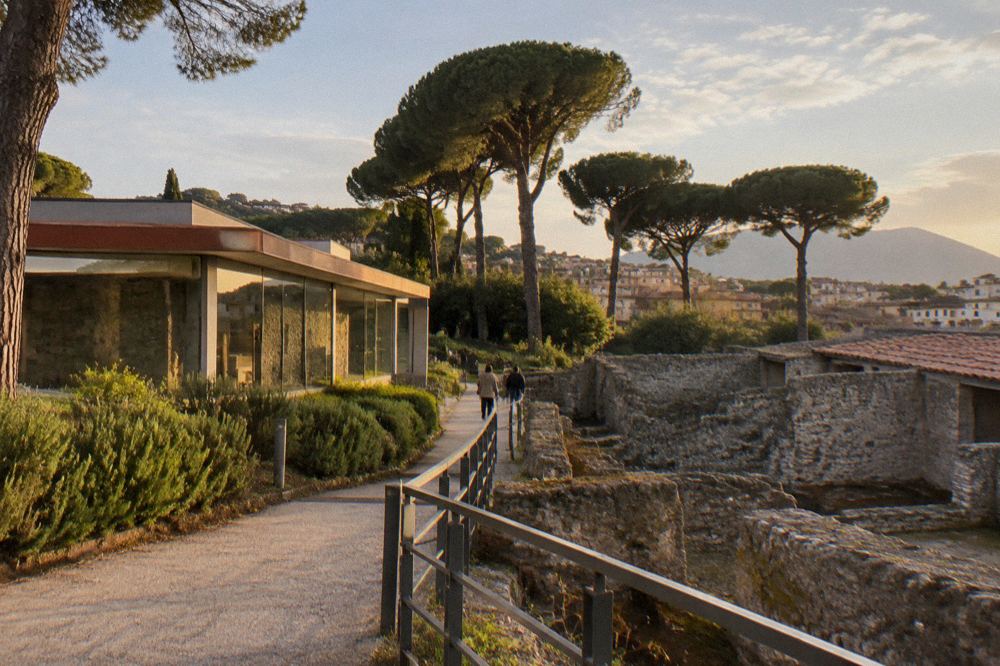
The villa was built on terraces stepping down toward the sea, with a long colonnade, a barrel-vaulted suite of rooms and a collection of sculpture in bronze and marble recovered during the early tunnel excavations and now held in museum collections. Its plan influenced at least one famous modern reconstruction: the Getty Villa in California was modelled on published drawings of the villa. The parts still unexcavated lie under modern Ercolano.
The bronzes and marbles from the villa became foundational pieces of the Bourbon collections that fed the museum now known as the Naples National Archaeological Museum, where visitors today can see material from the whole Vesuvian area under one roof.
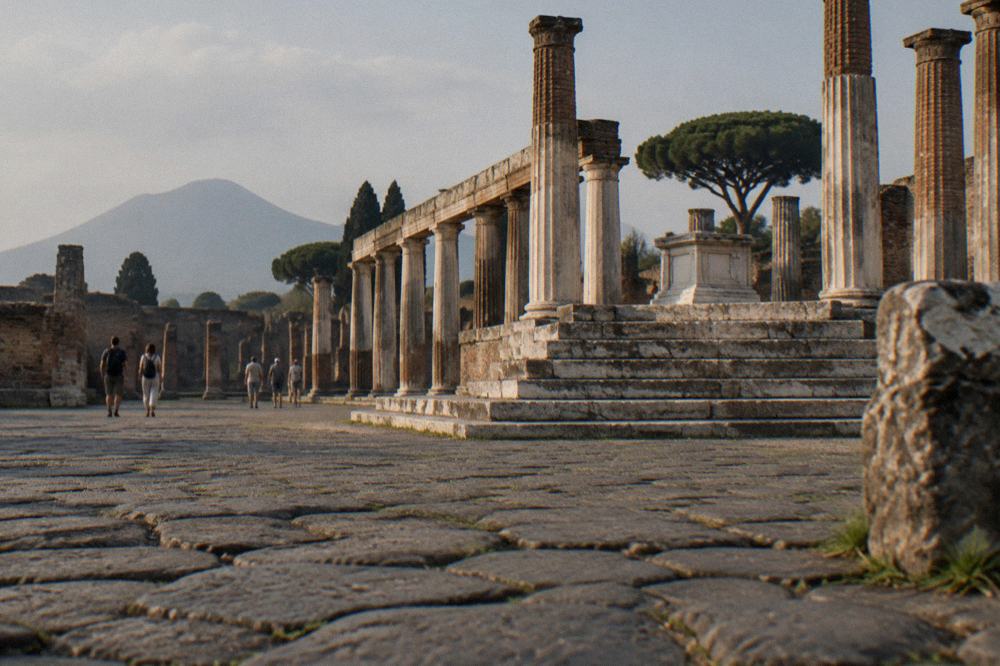
Comparing villas helps set the scale of ambition here. Pompeii itself has the Villa of the Mysteries, covered in its own Villa of the Mysteries guide, a suburban villa outside the walls with the famous Dionysiac frescoes; the question of what is the best preserved villa in Pompeii and the piece on what is unique about the Villa of the Mysteries cover that side of the Bay.
| Feature | Villa of the Papyri, Herculaneum | Villa of the Mysteries, Pompeii |
|---|---|---|
| Setting | Terraced seaside villa at the city's northwest edge | Suburban villa outside the walls, near the Pompei Scavi station |
| Claim to fame | Carbonised papyrus library and recovered sculpture | Dionysiac fresco cycle |
| Access in 2026 | Closed for works | On the Pompeii+ suburban villas route |
| Excavation state | Partly unexcavated under modern Ercolano | Cleared and open |
The Scrolls Of The Villa: What Has Been Read So Far?
The villa's library consists of carbonised papyrus rolls, unreadable as ordinary books because the eruption's heat charred them, and subjected since to a long series of attempts to unroll and then to scan them. Modern imaging has made it possible to read writing inside rolls without opening them, and the work continues: the reading is an active research field, not a finished story.
For the deeper background on where the scrolls' reading stands, the site's Herculaneum scrolls page follows the research; the essentials for a visitor are that the library made the villa permanently famous, that the objects themselves are not on display inside the Herculaneum park, and that the villa's closure has no bearing on the research, which works on material already recovered.
The connection to the eruption is worth holding precisely. The same surge that carbonised the papyri preserved Herculaneum's wooden fittings and, at the shoreline, the skeletons in the Herculaneum boat sheds; the questions are the skeletons in Herculaneum real or fake and why were no bodies found in Herculaneum explain how the two cities' dead came to be preserved so differently. The eruption date, traditionally 24 August AD 79, remains an open scholarly question: the park's own journal states the 24 October date that circulates widely has no evidentiary basis, and this page follows the park in not settling the matter.
Herculaneum Tickets And Opening Hours For 2026
Herculaneum's full ticket is EUR 16 in 2026, with a EUR 2 reduced rate for EU citizens aged 18 to under 25; entry is free for everyone on the first Sunday of each month and additionally on 25 April, 2 June and 4 November. Summer season hours, 16 March to 14 October, run 8:30 to 19:30 with last entry at 18:00; winter hours run 8:30 to 17:00 with last entry at 15:30. The site closes on 1 January and 25 December.
| Herculaneum ticket, 2026 | Price | Who it applies to |
|---|---|---|
| Full | EUR 16 | Standard adult entry |
| Reduced | EUR 2 | EU citizens aged 18 to under 25 |
| Free days | EUR 0 | Everyone, first Sunday monthly, plus 25 April, 2 June, 4 November |
Free-day tickets at Herculaneum are collected at the ticket office on the day, with no reservation, which is a different arrangement from Pompeii's timed online system; the Herculaneum tickets guide covers the practical detail, and the comparison page on Pompeii versus Herculaneum sets the two sites' systems side by side. For context on the bigger neighbour, Pompeii's 2026 prices, EUR 20 Express, EUR 25 Pompeii+, EUR 30 for the three-day ticket, end on 31 December 2026: from 1 January 2027 a single EUR 25 ticket covers all park sites, valid 30 days with one entry per site, while the MyPompeii Card stays at EUR 45. That change concerns the Pompeii park, not Herculaneum's separate ticketing, but anyone combining both sites in one trip should know it is coming.
| Season | Hours | Last entry |
|---|---|---|
| 16 March to 14 October | 8:30 to 19:30 | 18:00 |
| 15 October to 15 March | 8:30 to 17:00 | 15:30 |
A guided small-group walk with the entry ticket included is the simplest way to spend those hours, since the Herculaneum small-group tour with an archaeologist bundles both, and Check availability shows live dates and prices on the operator's listing.
For independent travellers, the simple entry ticket with an optional audio guide above is the lighter alternative: it covers admission to the same open circuit and leaves the pace entirely to the reader.
How To Plan A Day Around Herculaneum And The Villa
Budget a half day for Herculaneum and the villa, arriving for the 8:30 opening in summer to beat the heat on the exposed terraces, then spend the afternoon at Pompeii or the Vesuvius crater, since all three sit on the same corridor between Naples and Sorrento; that corridor is why the combined Pompeii and Herculaneum itinerary in one day works.
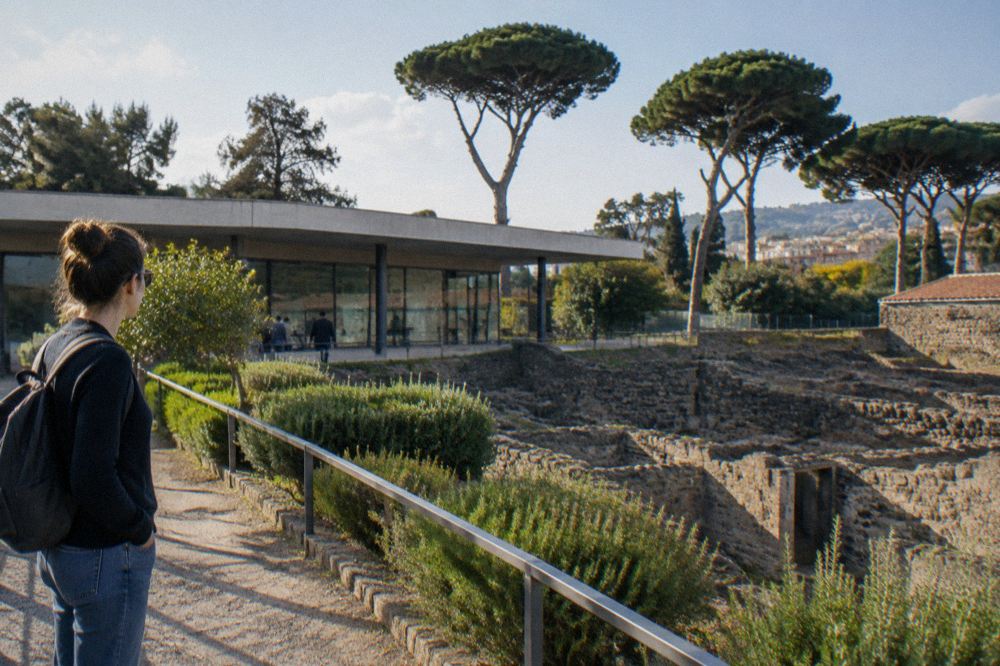
Order matters. Herculaneum's excavated hollow is deeper and more shaded than Pompeii's open streets, but both are largely unshaded summer sites, and the climate record for the area, computed from 1991-2020 reanalysis data at the Pompei grid point, shows August averaging a daily maximum of about 29.4 C and July about 28.7 C with only about 16 mm of rain, while November is the wettest month at about 180 mm. That pattern argues for early starts and for treating the hottest midday hours as museum or lunch time, an approach the Pompeii in summer heat plan works through in detail. Footwear belongs in the same conversation: the ancient paving is uneven, and the page on what to wear to Pompeii applies equally at Herculaneum.
| Month | Mean daily maximum (C) | Mean daily minimum (C) | Rain (mm) |
|---|---|---|---|
| July | about 28.7 | about 21.1 | about 16 |
| August | about 29.4 | about 21.8 | about 22 |
| November | about 16.9 | about 11.5 | about 180 |
Travellers coming from further afield have realistic options too. Rome is 234 km away by road, and the Rome to Pompeii day trip guide covers the pattern that pairs the rail journey with a booked excursion; a Rome-based traveller who wants Herculaneum specifically should look for a tour that names it, not one that treats it as an interchangeable stop. From Sorrento, the Sorrento to Pompeii guide describes the same corridor from the other end. Whether Herculaneum is still being excavated is a live question bound up with the villa itself: the unexcavated mass beneath Ercolano is where any future villa rooms would be found.
What Remains To Be Discovered Under Ercolano?
A substantial part of Herculaneum, including a large share of the Villa of the Papyri, still lies buried beneath the modern town of Ercolano, and the excavated area visitors walk is only a portion of the ancient city. What is certain is that the villa's lowest levels and further rooms have never been cleared, and the town above makes any new excavation a slow, negotiated undertaking.
This is the open frontier of the villa's story. Excavation beneath a living town is a different order of problem from digging open farmland, and the modern approach to the Vesuvian sites favours conservation and study of what is already exposed over new clearance. The question of how much of Pompeii still lies buried today is the Pompeii version of the same issue, and the new discoveries page tracks what has actually been confirmed at the park rather than rumoured. For the villa, the honest position is that its greatest discoveries may still be in the ground: the library that made it famous was found in one corner of the building, and the possibility that more waits below Ercolano is why researchers keep returning to the site's history and plans.
Common Questions About The Villa Of The Papyri
Can you visit the Villa of the Papyri?
No. The villa is closed for works at Herculaneum, and the site's Ancient Theatre is likewise closed until further notice. The rest of the Herculaneum park remains open on its normal route.
Where is the Villa of the Papyri?
At the northwest edge of the Herculaneum excavations in Ercolano, Italy, on the Bay of Naples, within the same archaeological park as the rest of the site.
Why is the Villa of the Papyri famous?
For its library of carbonised papyrus scrolls, the only substantial Roman private library recovered from a buried house, together with the bronze and marble sculpture found during the early tunnel excavations.
How much are Herculaneum tickets in 2026?
EUR 16 full, EUR 2 reduced for EU citizens aged 18 to under 25, and free for everyone on the first Sunday of each month plus 25 April, 2 June and 4 November.
Is the Villa of the Papyri fully excavated?
No. A large part of the villa still lies beneath the modern town of Ercolano and has never been cleared, which is why the building's full plan is known only from early tunnel records and partial later excavation.
Can you combine the Villa of the Papyri with Pompeii?
You can combine the two cities in one day, but the villa itself is closed, so the pairing is Herculaneum's open circuit plus Pompeii's streets, with the villa's story told from the perimeter.
The Villa of the Papyri rewards a visitor who arrives knowing what it is and what state it is in: a closed but unmatched Roman villa whose library keeps it at the centre of Vesuvian archaeology, sitting inside an open site that loses nothing else to its absence. Check the official ticketing page for the latest on the works before you set out, and if a guided walk with the entry included suits your plans, the small-group archaeologist tour above is the pairing this Pompeii Travel Guide rates for the site.