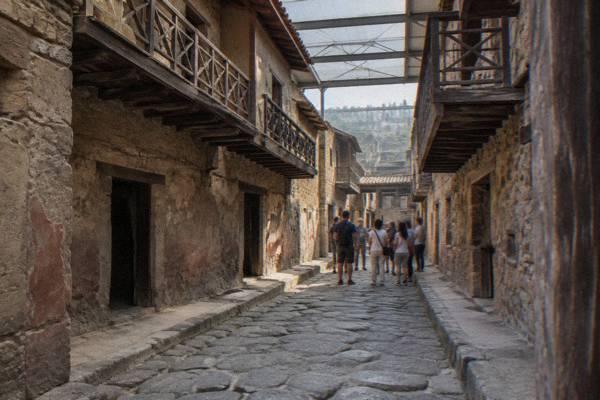
Herculaneum Vs Pompeii
Pompeii and Herculaneum were both buried by the same eruption of Mount Vesuvius in AD 79, yet they offer sharply different visits: one is a whole Roman city of 44 excavated hectares, the other a compact, better-preserved town. This guide compares the two on tickets, hours, preservation, travel time and effort, for travellers choosing between them or planning to see both.
Short answer
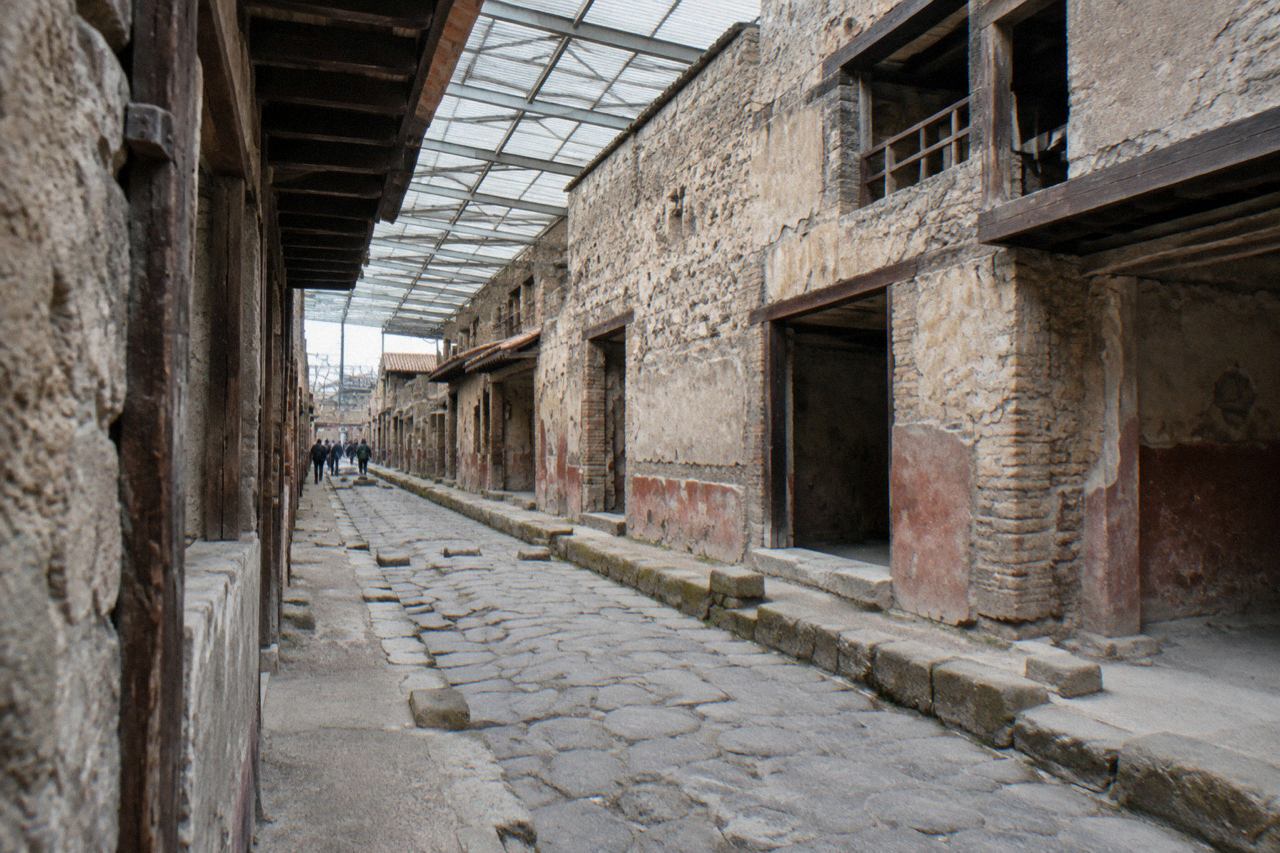
Pompeii is the full ancient city, 44 excavated hectares of streets, forums and villas, with a Pompeii Express ticket at EUR 20 in 2026 and a daily cap of 20,000 visitors. Herculaneum is smaller and better preserved, with entry at EUR 16 and carbonised wood and roofs intact. The two sit about 15 minutes apart on the same Circumvesuviana line, and many travellers see both in one day.
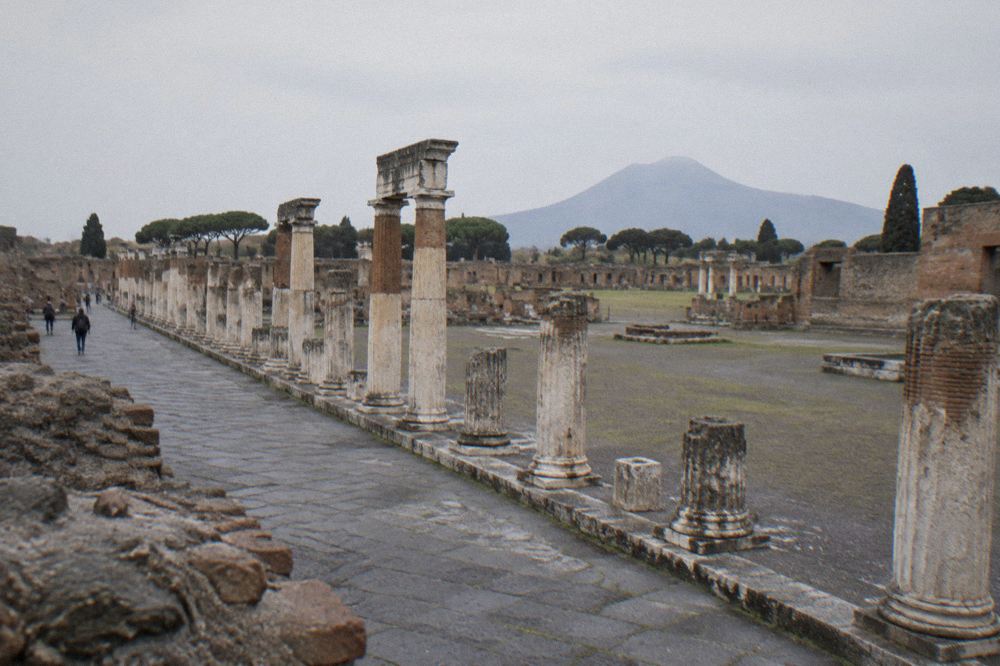
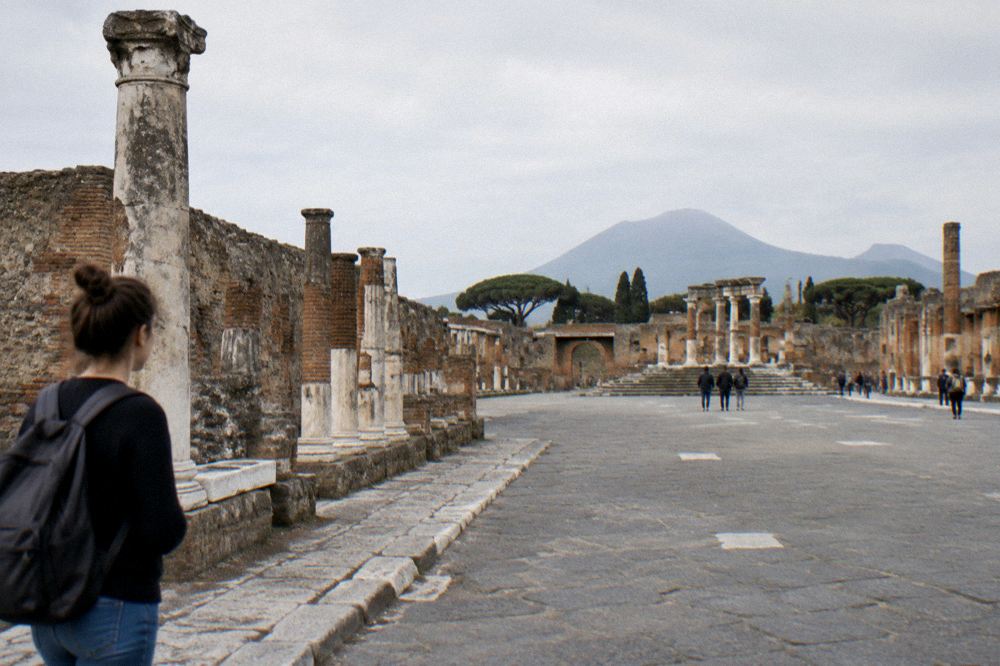
Pompeii and Herculaneum are the two great Roman cities buried by the same eruption of Mount Vesuvius in AD 79, both now archaeological parks in Campania, southern Italy, within easy reach of Naples. Pompeii, beside the modern town of Pompei about 24 km from Naples, is the vast one: 44 excavated hectares of streets, temples, brothels, bakeries and amphitheatres, capped at 20,000 visitors a day since 15 November 2024. Herculaneum, at modern Ercolano on the same Bay of Naples, is the compact one, sealed by volcanic material that preserved wood, doorframes and upper storeys in a way Pompeii's ash never did. Choosing between them, or working out whether to attempt both, is one of the most common planning questions for this coast, and the honest answer depends on your time, your stamina and what kind of ruin moves you. For a fuller orientation to the region, the Pompeii Travel Guide homepage collects the routes, ticketing rules and tour comparisons in one place. This page settles the head-to-head: size, cost, preservation, logistics and which traveller each site genuinely suits.
Which Is Better, Herculaneum Or Pompeii?
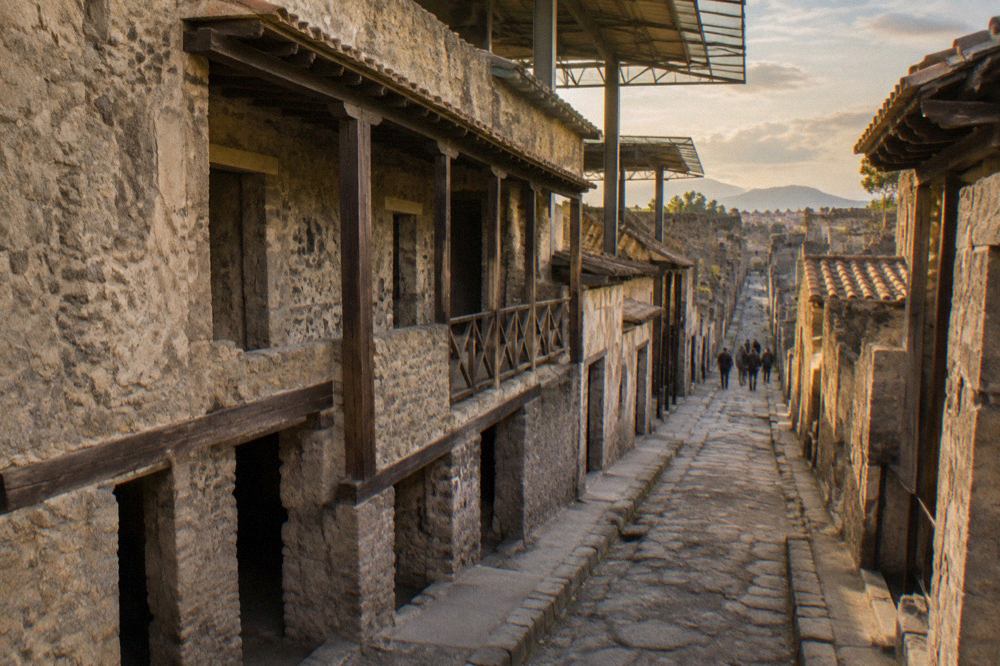
Neither site is simply better: Pompeii is the essential choice for scale and variety, a whole Roman city with 4,069,377 visitors in 2024, while Herculaneum is the better choice for preservation and intimacy, with carbonised beams, staircases and window frames that Pompeii lost entirely. Travellers with half a day and an interest in daily domestic life lean Herculaneum; travellers who want forums, amphitheatres and the sense of a metropolis lean Pompeii. If your day allows it, the strongest visit is both, in one combined itinerary.
The comparison matters because the two sites are not versions of each other. Pompeii was a substantial city, a commercial and political centre whose excavated area alone covers 44 hectares inside a UNESCO inscribed property of 98 ha, shared with Herculaneum and Torre Annunziata under listing 829. Herculaneum was a smaller seaside town, and its excavated portion is a fraction of Pompeii's, with a significant share of the ancient town still lying beneath the modern streets of Ercolano above. That difference in scale drives everything else: walking times, crowd tolerance, how many hours you need and how tired you will be at the end.
The second difference is the manner of burial. Vesuvius buried Pompeii largely in ash and pumice, which collapsed roofs and upper floors but left walls, frescoes and street plans legible. Herculaneum was smothered in a far hotter, denser material that carbonised timber rather than burning it away, so doorframes, beds, shutters and even food residues survived. Standing in a Herculaneum house feels closer to entering a building; standing in a Pompeii street feels closer to walking a city. Neither effect substitutes for the other, which is exactly why the pairing is worth the effort when time allows. The question of why Herculaneum is not as famous as Pompeii has a long history tied to excavation timelines and tourism infrastructure, not to any inferiority of the ruins.
How Do The Two Sites Compare At A Glance?
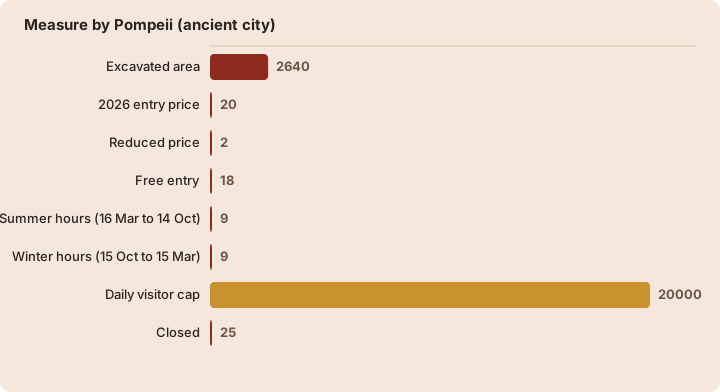
On hard numbers, Pompeii's excavated area covers 44 hectares against Herculaneum's much smaller exposed town; Pompeii's 2026 entry is EUR 20 for the ancient city only, Herculaneum's is EUR 16; Pompeii admits up to 20,000 visitors a day; and both are closed only on 25 December and 1 January. Hours differ slightly, with Pompeii open 9:00 to 19:00 in the summer season and Herculaneum 8:30 to 19:30. The table below holds the figures.
| Measure | Pompeii (ancient city) | Herculaneum |
|---|---|---|
| 2026 entry price | EUR 20 Pompeii Express, city only | EUR 16 full, EUR 2 reduced ages 18 to 25 |
| Reduced price | EUR 2 for EU citizens aged 18 to under 25 | EUR 2 for ages 18 to 25 |
| Free entry | Under 18; everyone on the first Sunday of the month | Under 18; first Sunday plus 25 Apr, 2 Jun, 4 Nov |
| Summer hours (16 Mar to 14 Oct) | 9:00 to 19:00, last entry 17:30 | 8:30 to 19:30, last entry 18:00 |
| Winter hours (15 Oct to 15 Mar) | 9:00 to 17:00, last entry 15:30 | 8:30 to 17:00, last entry 15:30 |
| Daily visitor cap | 20,000 (since 15 November 2024) | No verified comparable cap |
| Closed | 25 Dec and 1 Jan | 1 Jan and 25 Dec |
Two warnings travel with these numbers. First, the Pompeii prices are 2026 prices: from 1 January 2027 the Express, Pompeii+ and 3-day structure is replaced by a single EUR 25 ticket valid 30 days across all park sites, one entry per site, while Herculaneum is a separate park and is unaffected by that change. Second, closures bite at Herculaneum specifically: the Villa dei Papiri is closed for works and the Ancient Theatre is closed until further notice, so neither should appear on a current itinerary. At Pompeii, the Praedia of Julia Felix has been closed to the public since 7 September 2026 for maintenance.
For visitors who would rather have the comparison handled for them, a combined small-group tour led by an archaeologist exists that covers both sites, and it is the article's featured pick: the Check availability link shows the live price and dates on the operator's listing. A two-site tour solves the hardest part of the pairing, which is not the walking but the logistics of two entrances, two ticket rules and a train leg in between. The alternative approach, a Pompeii-only archaeologist small group tour, is covered in the guide to Pompeii guided tours versus self-guided visits for readers who want depth at one site instead.
What Do Tickets And Time Slots Really Cost In 2026?
In 2026 Pompeii charges EUR 20 for the Express ticket covering the ancient city only, EUR 25 for Pompeii+ including the suburban villas route, and EUR 30 for the 3-day ticket adding Oplontis, the Stabiae sites and Boscoreale; Herculaneum charges EUR 16 full and EUR 2 reduced for ages 18 to 25. From 1 January 2027 Pompeii collapses to a single EUR 25 ticket for all its sites, valid 30 days. Time slots at Pompeii split at 13:00.
| Pompeii ticket, 2026 | Price | What it covers |
|---|---|---|
| Pompeii Express | EUR 20 | Ancient city only |
| Pompeii+ | EUR 25 | City, suburban villas route, Villa Regina, Antiquarium and shuttle |
| 3-day ticket | EUR 30 | Pompeii+ plus Oplontis, Villa Arianna, Villa San Marco, Stabiae museum, Boscoreale |
| Other park sites individually | EUR 8 | Boscoreale, Oplontis, Stabiae museum |
| MyPompeii Card (annual) | EUR 45 (EUR 10 reduced) | Annual pass |
| Express holders adding villas route | EUR 8 | Card only, at the Porta Ercolano / Street of the Tombs entrance |
The slot split behind the pricing deserves its own paragraph: Pompeii's morning block, 9:00 to 13:00, admits up to 15,000 visitors, of which up to 12,000 are Express holders and 3,000 Plus, while the afternoon block, 13:00 to 17:30, admits up to 5,000, split 3,000 and 2,000. That asymmetry is a planning tool, and it is developed below in the crowd section.
The denominational detail matters more than people expect. Pompeii tickets are nominative, tied to the holder, with ID checks possible at every entry, and they are non-transferable and non-refundable except in extraordinary closure. Herculaneum, a separate park under a separate administration, has its own entry rules and its own free days: beyond the first Sunday of the month, entry is free on 25 April, 2 June and 4 November, with tickets collected on the day rather than reserved. The full Herculaneum ticketing picture, including the closures that affect the current visit, is laid out in the Herculaneum tickets guide, and the Pompeii side, including the 2027 change in full, is in the Pompeii ticket options explained page. Neither site's ticket covers the other, and no verified combined public ticket for both parks exists.
Planning around the 13:00 slot split is the quiet advantage in this comparison. An afternoon arrival at Pompeii often meets thinner crowds, while Herculaneum, with no verified slot system, rewards the earliest possible start in high season. The Naples to Pompeii transport guide covers how the timing works out from the city.
Which Site Is Better Preserved?
Herculaneum is decisively the better-preserved site: its volcanic fill carbonised timber, so roofs, beds, doorframes, shelving and even organic remains survived, while Pompeii's ash collapsed upper storeys and left walls and frescoes but almost no wooden fabric. Pompeii compensates with sheer completeness of urban form. In preservation terms Herculaneum wins; in scope terms Pompeii has no rival among the two.
| Preservation aspect | Pompeii | Herculaneum |
|---|---|---|
| Standing wall height | Variable, many walls to full height, upper floors largely lost | Substantial multi-storey fronts survive |
| Timber and wood | Almost none survived | Carbonised beams, doors and furniture survive |
| Frescoes and mosaics | Extensive, across houses, baths and public buildings | Extensive in houses, generally finer in domestic interiors |
| Roof structures | Collapsed in the ash fall | Preserved in a significant number of buildings |
| Organic finds | Rare | Documented, including food residues and textiles |
| Overall impression | A city of streets and public monuments | A town of houses and shops at close quarters |
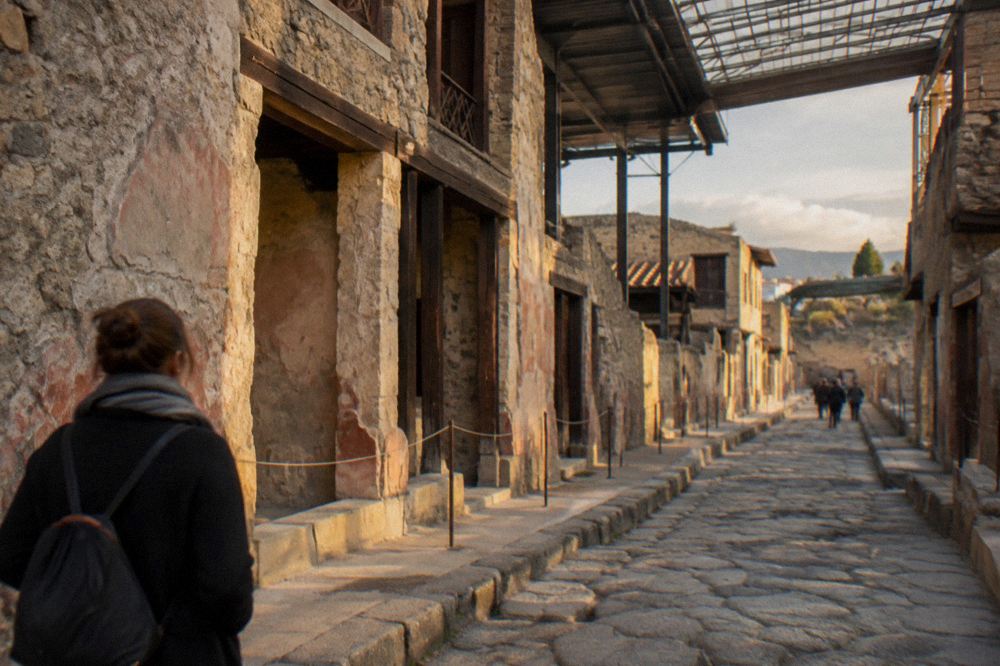
The visitor experience follows from that table. At Pompeii you walk the Via dell'Abbondanza, stand in the Forum, climb through the Amphitheatre and queue for the House of the Vettii, and the pleasure is in the accumulation of a whole urban world. At Herculaneum you descend a modern walkway to a town that reads at eye level: you look up at a second storey, you see window shutters and doorposts as they were. The famous boat sheds, where skeletons of shelter-seekers were found, sit at the ancient shoreline, and the site's signature villa, the Villa of the Papyri, is currently closed for works, a fact to check before promising it to anyone. Readers drawn by the human remains question can follow up on whether the skeletons in Herculaneum are real or fake and why no bodies were found in Herculaneum.
Preservation also drives the emotional register. Herculaneum's domesticity is intimate to the point of unease: beds, benches and doorways look usable. Pompeii's grandeur is more abstract, and its body casts, treated fully in the Pompeii body casts guide, carry the human weight instead. Neither register is better; they are different artefacts of the same eruption, whose traditional date of 24 August AD 79 remains the manuscript tradition while the park's own e-journal notes that a 24 October date has no evidentiary basis.
How Hard Is The Walking At Each Site?
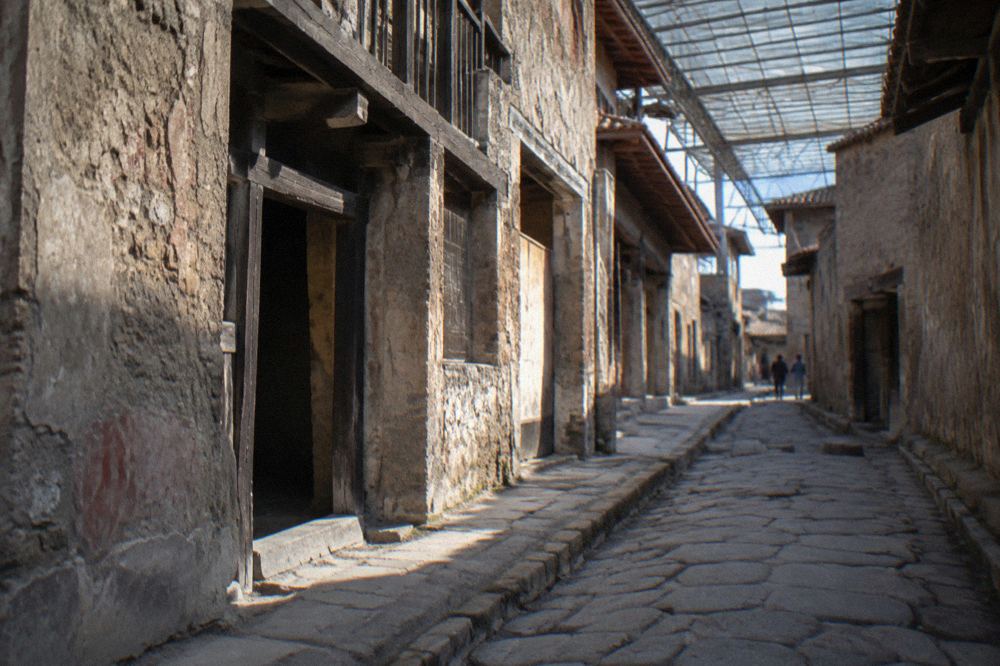
Pompeii is the harder walk by a wide margin: 44 excavated hectares of uneven Roman paving stones, largely unshaded, where a highlights circuit alone takes about two hours; Herculaneum's exposed town is compact, typically visited in around two hours, with modern walkways above the ruins. Pompeii offers its "Pompeii for All" route from Piazza Anfiteatro for visitors with mobility difficulties, while Herculaneum has no equivalent verified accessible route in the facts.
The paving question deserves its own sentence, because it surprises people. Pompeii's streets are crossed by deep stepping stones, and the basalt paving is worn into ridges after two millennia; solid closed shoes matter far more than they do at Herculaneum, where the internal network is shorter and partly reconstructed. Shade is the other asymmetry: Pompeii in July and August, when mean daily maxima at the Pompei grid point run about 28.7 and 29.4 degrees Celsius against 1991 to 2020 normals, is an endurance exercise, while Herculaneum's smaller circuit lets you retreat sooner. The what to wear to Pompeii and Pompeii in summer heat guides treat both topics in depth, and the difficulty of walking in Pompeii question covers the paving directly.
The effort factors stack up clearly when read side by side. Pompeii's core is a large multi-hour circuit with limited shade across the open city and a minimum for highlights, four or more for depth. Herculaneum's core is compact, with shorter internal routes, stepped areas, and a shorter overall exposure even though shade is equally limited. Underfoot, Pompeii's ancient basalt paving with stepping stones contrasts with Herculaneum's stepped but briefer network. Bag rules matter only at Pompeii, where the permitted size is 30x30x15 cm with larger bags to left luggage; no figure beyond that is verified for Herculaneum.
A skip-the-line guided tour led by an archaeologist softens the Pompeii effort in a specific way: the guide sets a route matched to the group's pace, which matters when a wrong turn at Pompeii costs twenty minutes of unshaded walking. The how long to spend in Pompeii page helps you size the visit honestly before committing.
Which Site Is Easier To Reach?
Both sites sit on the same Circumvesuviana Naples to Sorrento line: the Pompei Scavi-Villa dei Misteri station serves Pompeii, with scheduled times of 29 to 35 minutes from Napoli Garibaldi, and the Ercolano station serves Herculaneum a few stops earlier. The Campania Express, which once served both, has been suspended since 1 October 2026, so the local line and road transport are the current options.
| Journey (scheduled or road figures from the facts) | Time | Source basis |
|---|---|---|
| Circumvesuviana Napoli Garibaldi to Pompei Scavi-Villa dei Misteri | 29 to 35 minutes | EAV timetable data, feed dated 2026-09-30 |
| Circumvesuviana Pompei Scavi to Sorrento | 34 to 40 minutes | Same timetable data |
| Road, Naples to Pompei Scavi | 24 km, about 22 minutes | Route calculation, not official |
| Road, Sorrento to Pompei Scavi | 26 km, about 37 minutes | Route calculation, not official |
| Road, Salerno to Pompei Scavi | 31 km, about 30 minutes | Route calculation, not official |
| Campania Express Naples to Sorrento | Suspended since 1 October 2026 | Operator notice |
By road, the driving distances in the table place Naples 24 km and Sorrento 26 km from Pompei Scavi, with Salerno 31 km out, though these are route calculations rather than official figures. The Circumvesuviana train guide holds the full practical picture, including which station name to match on departure boards. Herculaneum's stop is Ercolano, from which the site is signposted on foot, and the surrounding modern town is covered in the Ercolano area guide. Travellers coming from further afield should start with the Rome to Pompeii day trip or Rome to Pompeii by train pages, both of which account for the suspension; the Sorrento and Amalfi Coast approaches have their own pages at Sorrento to Pompeii and Amalfi Coast to Pompeii.
Can You Visit Pompeii And Herculaneum In One Day?
Yes, and it is a well-established pairing: the two sites share one rail line, the Circumvesuviana, with a short hop between Pompei Scavi and Ercolano, and a realistic single-day plan gives Pompeii the morning, roughly two to three hours on a highlights route, and Herculaneum the afternoon, about two hours, timed against last-entry clocks of 17:30 at Pompeii and 18:00 at Herculaneum in summer. The plan fails in winter, when last entries pull back to 15:30 at both.
| Stage of a two-site day (summer hours) | Plan | Watch point |
|---|---|---|
| Morning, Pompeii | Arrive for the 9:00 opening at Porta Marina | Morning slot carries up to 15,000 entries |
| Late morning | Highlights circuit: Forum, baths, one major house | Stepping stones and shade, plan shoes |
| Midday | Circumvesuviana from Pompei Scavi toward Ercolano | Hold time for the platform leg |
| Afternoon, Herculaneum | Compact circuit, about two hours | Villa dei Papiri and Ancient Theatre closed |
| End of day | Last entry 18:00, site closes 19:30 | Winter last entry is 15:30 instead |
The sequencing question, whether to do Pompeii or Vesuvius first has a cousin here: Pompeii first is the standard advice because its scale punishes a late start, while Herculaneum's smaller circuit absorbs an afternoon well. The fuller treatment, with timings and a worked route, is the Pompeii and Herculaneum in one day itinerary, and the direct question can I do Herculaneum and Pompeii in one day carries the short answer. A guided version removes the timing risk entirely, and the featured two-site tour on this page is built around exactly that constraint; its Check availability link shows the current dates.
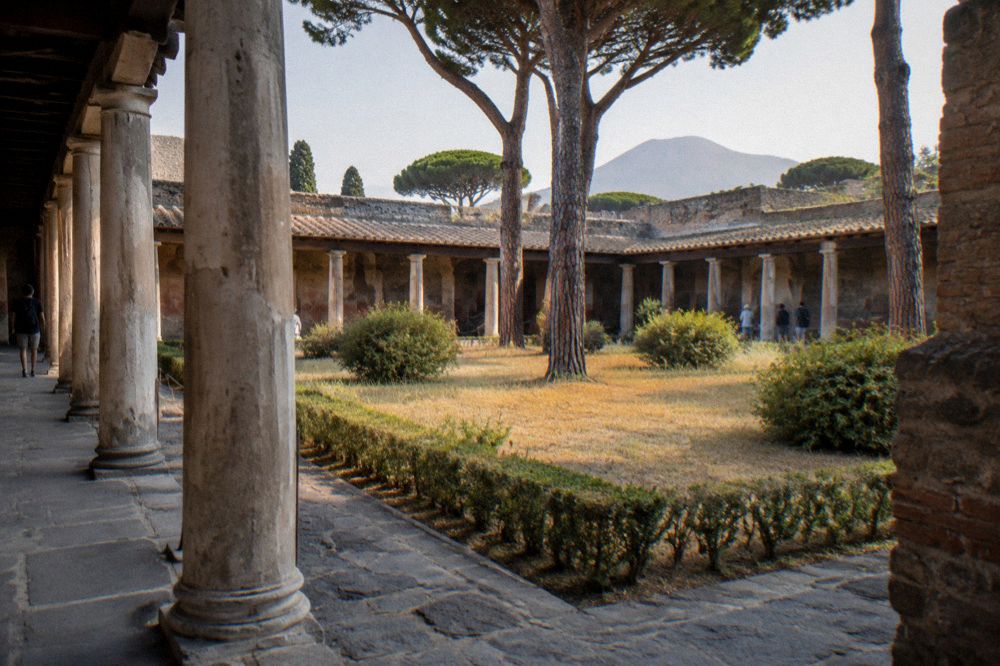
For a Pompeii-first morning with the entry ticket and a guide bundled, the entry-ticket-plus-archaeologist option is the volume pick in the roster, with the figure rendering on the tile above. The two-day alternative, adding Vesuvius, is laid out in the two days Pompeii, Herculaneum and Vesuvius plan, and Vesuvius access has its own rules: the Gran Cono trail sells timed tickets online only, EUR 11.68 full as sold, closing automatically on orange weather alerts, all covered in the Vesuvius tickets guide.
Which Site Suits Which Traveller?
Choose Herculaneum if you have limited time, want the strongest preservation, prefer smaller crowds, are based in Naples for a half-day, or are visiting with family members who cannot manage hours of unshaded paving; choose Pompeii if you want the full ancient city, its amphitheatre, theatres and forum, or if this is likely your only Roman site on this coast. Cruise passengers on tight clocks and anyone deciding between bases should read the pairing pages before locking a plan.
| Traveller situation | Better fit | Reason |
|---|---|---|
| Half a day from Naples | Herculaneum | Compact circuit, quick rail hop |
| Full day, one site only | Pompeii | 44 hectares, unmatched urban scope |
| Photography of interiors | Herculaneum | Carbonised fabric and finer domestic rooms |
| First-time visitor to the region | Pompeii | The city defines the destination |
| Limited mobility or stamina | Pompeii's accessible route, or a short Herculaneum visit | "Pompeii for All" enters at Piazza Anfiteatro |
| Pairing with Vesuvius in one day | Pompeii-based combo tours | Established tour products exist for the pairing |
| Cruise passenger at Naples port | Either, by timing | Shore excursion products cover both |
Cruisers have a dedicated treatment in the Pompeii cruise ship day guide, and families in the Pompeii with kids itinerary. The base-city question, whether to sleep in Naples, Sorrento or modern Pompei itself, is handled in where to stay in Pompei and the Naples vs Sorrento pages, since both sites are reachable from any of them on the same line.
For travellers whose real choice is between the second site and Vesuvius rather than between the two cities, the Pompeii and Vesuvius day tour with pizza lunch from Naples is the roster's budget-format answer to that trade-off, with price, rating and duration rendering on the tile. The pairing logic, eruption context included, is covered from the mountain's side in the Mount Vesuvius guide and the story of when Vesuvius erupted.
What Are The Crowds Like At Each Site?
At Pompeii, October and May were the heaviest months on record for 2024, making those the peak times to expect congestion.**
The yearly totals tell the headline story on their own. Pompeii recorded 2,972,159 visitors in 2022, then 3,985,424 in 2023, 4,069,377 in 2024 and 4,000,090 in 2025, a plateau above four million held across the last two counted years, with the all-park totals slightly higher still: 4,079,235 in 2023, 4,177,753 in 2024 and 4,118,926 in 2025.
The monthly rhythm underneath those totals is worth reading once. Pompeii's 2024 figures rise from 112,121 in January to a May peak of 516,923, hold between 410,712 and 449,162 through the summer, reach 481,255 in October and then collapse to 189,866 in November and 138,028 in December. The practical reading: November through February is the quiet season, at the cost of winter hours and earlier last entries, while the free first Sundays, year-round, can put serious numbers through the gates, with the record day topping 36,000. Crowd-avoidance tactics that survive contact with these figures are simple: arrive at opening, book the afternoon slot, avoid free Sundays in peak months, or go in the November to February window. The best time to visit page folds in the climate normals, including the detail that November is the wettest month at about 180 mm of rain against 16 mm in July, from 1991 to 2020 grid data.
Common Questions About Herculaneum Vs Pompeii
Is Herculaneum better than Pompeii?
Herculaneum is better preserved, with carbonised wood and standing upper storeys, and it is far quicker to visit. Pompeii is vastly larger, a full ancient city across 44 excavated hectares, with the amphitheatre, theatres, forum and major houses. Neither is simply better: Herculaneum suits a shorter, more intimate visit, Pompeii a longer, bigger one.
Can you visit both Pompeii and Herculaneum in one day?
Yes. Both sites sit on the same Circumvesuviana line, and a summer plan of Pompeii in the morning and Herculaneum in the afternoon works against last entries of 17:30 and 18:00 respectively. In winter, when both last entries pull back to 15:30, one site is the realistic choice.
Which site has better preserved houses?
Herculaneum. Its burial material carbonised timber rather than destroying it, so doorframes, beds, shutters and roof structures survive. Pompeii preserves more frescoes and mosaics across a far larger number of buildings, but almost no wooden fabric.
How much do tickets cost in 2026?
Pompeii charges EUR 20 for the Express ticket covering the ancient city, EUR 25 for Pompeii+ and EUR 30 for the 3-day ticket in 2026. Herculaneum charges EUR 16 full and EUR 2 reduced for ages 18 to 25. From 1 January 2027, Pompeii moves to a single EUR 25 ticket for all its park sites, valid 30 days.
Is Herculaneum less crowded than Pompeii?
Pompeii's verified counts, above four million visitors a year since 2023 with a 20,000 daily cap, make it the busier site by any measure available.
Anything closed right now that I should plan around?
Yes. At Herculaneum the Villa dei Papiri is closed for works and the Ancient Theatre is closed until further notice. At Pompeii the Praedia of Julia Felix has been closed since 7 September 2026 for maintenance. The Campania Express train has also been suspended since 1 October 2026, which affects how you reach either site.
The head-to-head resolves cleanly once the figures are on the table: Pompeii for the city, Herculaneum for the preservation, and the Circumvesuviana line joining them closely enough that the strongest day on this coast is often the one that refuses to choose.