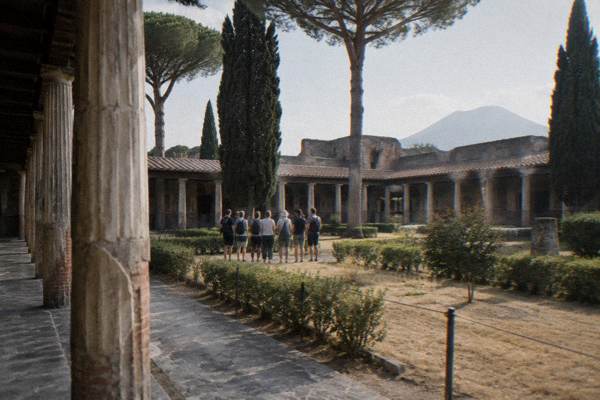
Why Is Pompeii Not Fully Excavated?
Why roughly half of the ancient city of Pompeii in Italy is still buried, why archaeologists choose not to dig it all up, and what a visitor can actually see today.
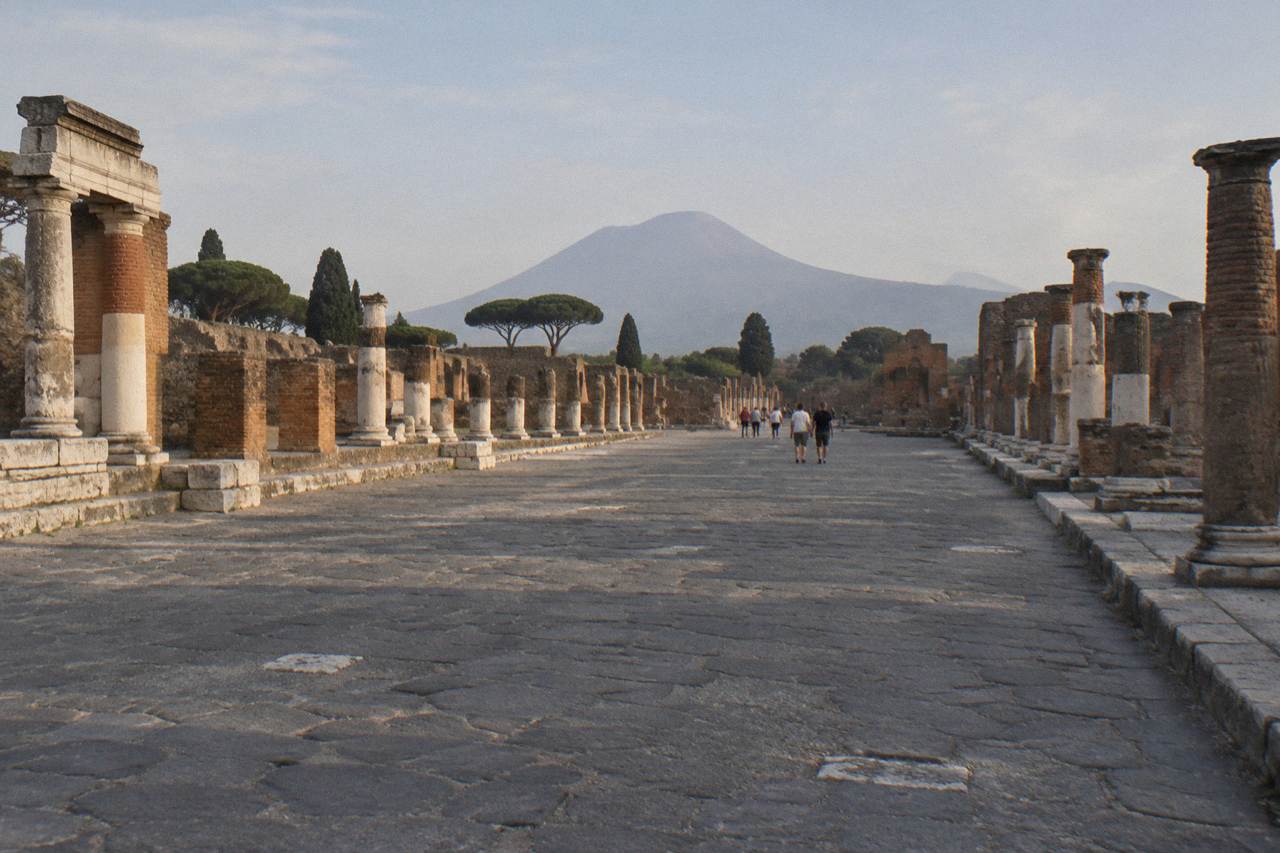
Pompeii, the ancient Roman city buried by the eruption of Mount Vesuvius in AD 79, lies in Campania, southern Italy, beside the modern town of Pompei and about 24 km by road from Naples. What surprises a good number of first-time readers is not how much of it has been dug out, but how much has not. UNESCO's listing for the site records an excavated area of 44 ha within an inscribed property of 98 ha, so a large share of the ancient city is still sealed under volcanic debris, and the archaeological park that manages the site intends to keep a good part of it that way.
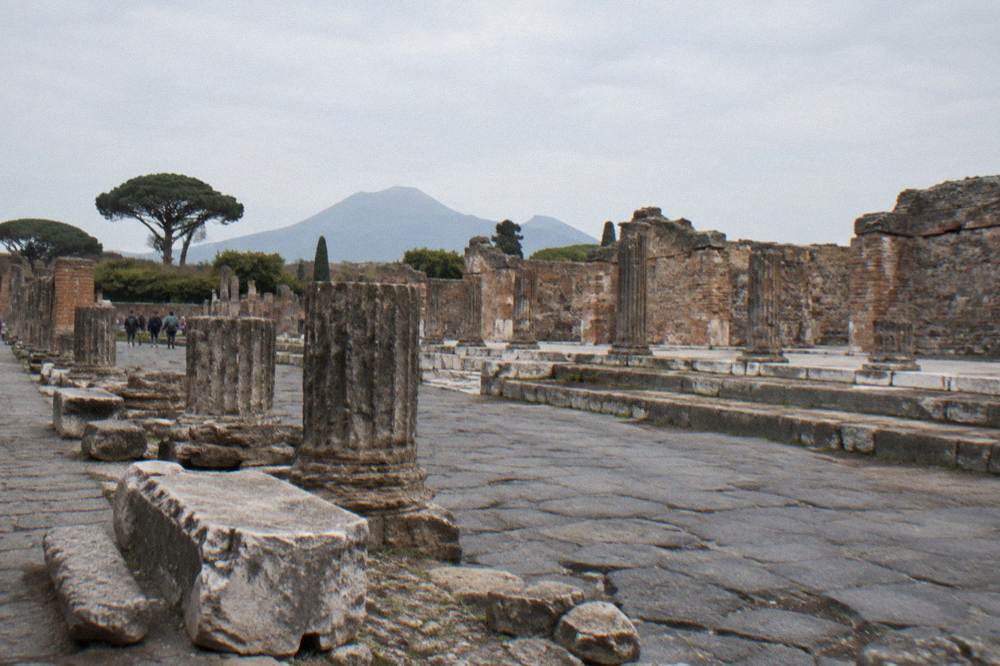
Why Is Pompeii Not Fully Excavated?
Pompeii is not fully excavated because modern archaeology treats burial as protection rather than obstruction: the volcanic debris that sealed the city also preserves its frescoes, organic material and structural fabric, and exposure to air, rain, sun and millions of visitors accelerates decay. Excavation is also expensive, slow and destructive by definition, since digging removes the very layers that carry information. The park's current strategy prioritises conservation, documentation and restoration of what is already open over opening new ground.
The reasoning has changed a great deal over the history of the dig. The earliest excavations, begun under the Bourbon monarchy, were close to treasure hunting: walls were cut through, tunnels driven to wall paintings, and anything judged unglamorous was backfilled or discarded. Digging faster meant destroying evidence nobody yet knew how to read. That history is the first reason the profession became cautious.
A second reason is the arithmetic of exposure. Once a painted room or a wooden door frame comes out of the ground it begins to deteriorate, and it deteriorates faster under four million pairs of feet a year than under four metres of pumice. The park's own visitor table records 4,000,090 visitors to the Pompeii site in 2025, after 4,069,377 in 2024 and 3,985,424 in 2023. Every additional roofless house opened to the public is a new conservation liability, not just a new attraction.
The third reason is money and priorities. Excavating a city block is the cheap part; stabilising it, roofing it, staffing it and keeping drains working through Campanian winters is the permanent cost. The park's published programme in recent years has put resources into the Great Pompeii Project's restoration work and into research digs that answer specific questions, rather than into stripping the remaining ground bare. For what a visit to the open city involves in practice, the how difficult is it to walk in Pompeii answer covers the terrain, and the can you tour Pompeii on your own answer covers the self-guided option.
How Much Of Pompeii Still Lies Buried Today?
UNESCO's listing for Pompeii, Herculaneum and Torre Annunziata records an excavated area of 44 ha and an inscribed property of 98 ha, so a little over half the property's ground is still under volcanic deposits, with a buffer zone of 1,788.79 ha around it. The buried share of the ancient city within that property has never been fully exposed, and the park makes no promise that it ever will be. The figure comes from the official UNESCO listing text, not from estimates circulating on travel blogs.
| Measure | Figure | Source basis |
|---|---|---|
| Excavated area of Pompeii | 44 ha | UNESCO World Heritage listing 829 |
| Inscribed property area | 98 ha | UNESCO World Heritage listing 829 |
| Buffer zone | 1,788.79 ha | UNESCO World Heritage listing 829 |
| Pompeii visitors 2025 | 4,000,090 | Park's official visitor data table |
| Pompeii visitors 2024 | 4,069,377 | Park's official visitor data table |
| All park sites total 2025 | 4,118,926 | Park's official visitor data table |
The unexcavated ground is not an empty lot waiting for shovels. It holds the eastern and northern reaches of the ancient city, whole insulae where gardens, workshops and modest houses are believed to survive in conditions archaeologists describe as the best possible: sealed, stable and undisturbed.
What is certain is that the buried portion is the archaeology of the future. Techniques that did not exist a generation ago, from ground-penetrating radar to the analysis of organic residues, can now read buried layers without removing them. Every decade that ground stays sealed is a decade in which those methods improve. Digging it all now would spend, irreversibly, an archive that keeps gaining value.
Why Does Keeping Pompeii Buried Protect It?
Burial protects Pompeii because the metres of pumice and ash that fell in AD 79 are chemically stable and physically protective: they exclude oxygen and ultraviolet light, hold temperature and humidity steady, and shield fragile surfaces from rain and foot traffic. Excavation reverses all four conditions at once. Conservation science therefore treats the volcanic blanket as a permanent storage layer, and exposes new areas only when a roof, drainage and a maintenance plan already exist.
The evidence for this is written across the open city. Wall paintings that spent nineteen centuries in the dark fade and flake in Italian sun within years of exposure. Timber that survived carbonised begins to crumble once the surrounding earth is removed. Ancient drainage that once worked begins to pool water against walls that were never designed to stand uncovered. Restoration, from the Great Pompeii Project onward, has been about correcting exactly this class of damage, much of it inherited from eras that dug first and asked questions later.
There is also an ethical argument that has grown stronger in the profession. Excavation without full publication destroys information permanently: a trench dug and never written up is knowledge simply deleted. Modern standards require that a dig team commit to documentation, specialist analysis and publication before a single layer comes off. That standard alone caps the pace of digging at a fraction of what the earliest methods allowed, and that is by design rather than by accident.
For travellers, the practical question is what the open 44 ha already offers. The Pompeii tickets and prices guide explains the 2026 options, from the EUR 20 Express covering the ancient city to the EUR 25 Pompeii+ with the suburban villas and the EUR 30 three-day ticket, and the same guide flags the single EUR 25 ticket that starts on 1 January 2027.
The tour linked above is one way to see the excavated city with a guide who can point at the unexcavated mounds and explain what lies beneath them. Its operator's live listing carries the current price and availability, and the tour page on this site, Sorrento skip-the-line Pompeii express by train, describes what it covers.
Is Pompeii Still Being Excavated Now?
Yes, Pompeii is still being excavated, but selectively and for research rather than for display: the Regio V programme on the city's northern edge has uncovered streets, houses and human remains since work resumed there, and fresh finds are announced by the park on a rolling basis. What has ended is the old model of opening whole districts for tourism. Today's digs are targeted, fully staffed by specialists, and immediately followed by conservation and protective roofing.
The Regio V work has been the clearest demonstration of the modern approach. Rather than excavate and walk away, the programme combined traditional digging with archaeobotanical sampling, digital documentation and protective covering, and it deliberately stopped where the evidence thinned. Finds from the area, from frescoed shrines to the harness of a military horse, came with full scientific publication. The site's new discoveries at Pompeii guide tracks what has been announced and what it means.
Elsewhere in the buried landscape the park is just as likely to be re-covering as uncovering. Known houses can be backfilled temporarily if their condition worsens, and maintenance closures of already-open buildings are routine: the Praedia of Julia Felix, closed since 7 September 2026, is a current example of a great excavated house withdrawn for works rather than a new one brought into the light.
The pattern extends across the Vesuvian sites. Herculaneum, the smaller and deeper-buried neighbour described in is Herculaneum still being excavated, follows the same conservation-first logic, with its Villa dei Papiri and Ancient Theatre both closed for works at present. The era of racing to open ground is over across the whole park system.
What Can A Visitor See Of The Buried Half Of Pompeii?
A visitor can see the edges of the buried city directly: from points along the northern and eastern circuit the unexcavated ground rises as grassy plateaus over the streets and houses still sealed inside, and the contrast with the standing ruins is visible on any walking route. Beyond those views, the buried half is present indirectly, in the site's shape, its unfinished boundary and the way the ancient walls stop abruptly at the excavation face. Nothing below those surfaces is accessible to the public.
| 2026 ticket | Price (until 31 December 2026) | What it covers |
|---|---|---|
| Pompeii Express | EUR 20 | The excavated ancient city |
| Pompeii+ | EUR 25 | City plus suburban villas, Villa Regina, Antiquarium Boscoreale and shuttle |
| 3-day ticket | EUR 30 | Pompeii+ plus Oplontis, the Stabiae villas and museum, Boscoreale |
| MyPompeii Card | EUR 45 | Annual pass, EUR 10 reduced |
From 1 January 2027 the Express, Pompeii+ and 3-day structure is replaced by a single EUR 25 ticket valid 30 days with one entry per site, while Oplontis, the Stabiae site and Boscoreale stay EUR 8 individually and the MyPompeii Card stays EUR 45. The dates matter here because the ticket you buy is, in effect, your permit to the excavated share: the buried share has no ticket, no entrance and no schedule, and never has had.
The best way to grasp the scale is spatial. The open city is already a full day's walking for anyone following a complete route, and the Pompeii in one day itinerary fills every daylight hour without touching the buried ground. Stand at the excavation face near the unexcavated bank and the geometry becomes obvious: the Roman streets run, then stop, and beyond the stop line the land simply rises, holding its secrets.
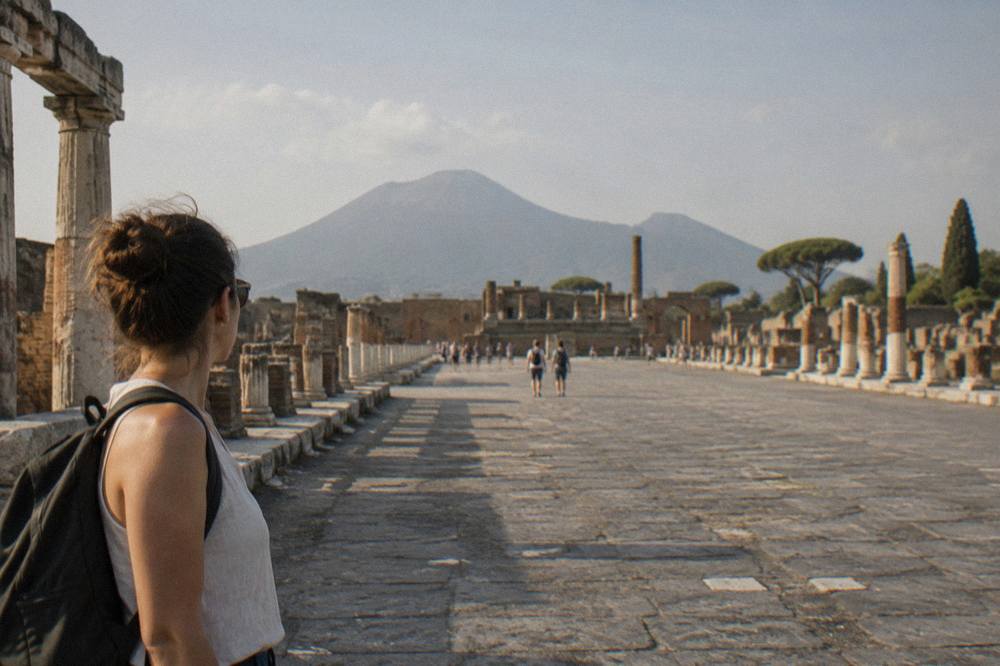
Whether to book ahead for the open half is a separate question, and the should you buy tickets in advance answer covers the 20,000 daily cap and time-slot system that nominative tickets introduced in November 2024. Anyone weighing a guided option against going alone can compare on the is a guided tour worth it page, or browse the full selection on the tours hub.
Will Pompeii Ever Be Fully Excavated?
On present policy, no. The park's leadership and the wider archaeological profession treat the unexcavated ground as a research reserve to be sampled deliberately, not a debt to be cleared, and no official plan exists to expose the whole city. Full excavation would also demand roofs, drainage and staff at a scale that no funding line supports, while multiplying the conservation burden that current budgets already strain to meet. Selective research digs will continue; wholesale clearing will not.
The deeper answer is that the question itself has changed. Earlier generations of visitors asked when the rest would come out; today's archaeologists ask what a future laboratory will be able to read that today's cannot. Non-invasive survey improves steadily, and each generation gets more information per square metre destroyed. On that logic the buried half is safest exactly where it is, under the blanket Vesuvius threw over it in AD 79, traditionally dated to 24 August, a date the park's own journal still treats as an open question rather than a settled fact.
Common Questions About Unexcavated Pompeii
Why is Pompeii not fully excavated?
Because burial protects it. The volcanic debris preserves frescoes, organic material and structures, while exposure to weather and millions of yearly visitors destroys them; excavation is also costly, destructive and only as good as the documentation that follows it, so the park digs selectively for research rather than for display.
How much of Pompeii is still buried?
UNESCO records an excavated area of 44 ha inside an inscribed property of 98 ha, so a large share of the ancient city remains under volcanic deposits, with a buffer zone of 1,788.79 ha around the whole property.
Is Pompeii still being dug up today?
Yes, selectively. Research excavations such as the Regio V programme continue, but they are targeted, staffed by specialists and immediately followed by conservation works, not by the mass opening of new districts for tourists.
Can you visit the unexcavated part of Pompeii?
No. The buried ground has no entrance or ticket; visitors see its edges as grassy plateaus beyond the standing ruins.
Why do archaeologists want to keep it buried?
Because excavation is irreversible and future techniques will read buried layers better than today's can. Leaving the ground sealed preserves intact streets, houses and organic remains for methods, and for research questions, that do not yet exist.
Whatever the pace of digging, the open city rewards a full day on its own, and the buried half gives it a rare quality: an archaeological site that still holds its future in reserve. For anyone planning the journey, Pompeii Travel Guide collects the ticket, transport and itinerary pages in one place, and the interactive site map shows how the excavated streets relate to the sealed ground beyond them.