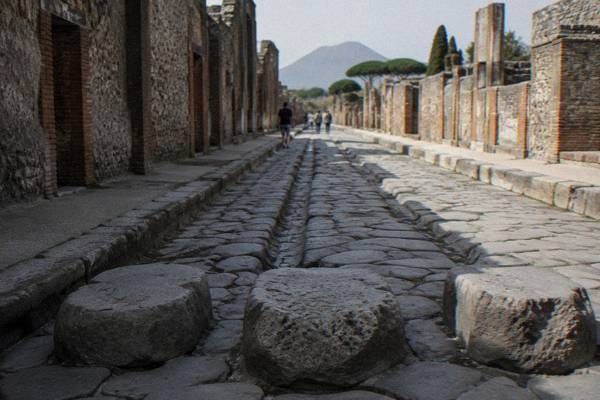
Pompeii New Discoveries
Pompeii, the ancient Roman city buried by Mount Vesuvius in AD 79 and now an archaeological park in Campania, southern Italy, never stops changing. This guide separates the real, documented developments from the rumours.
Short answer
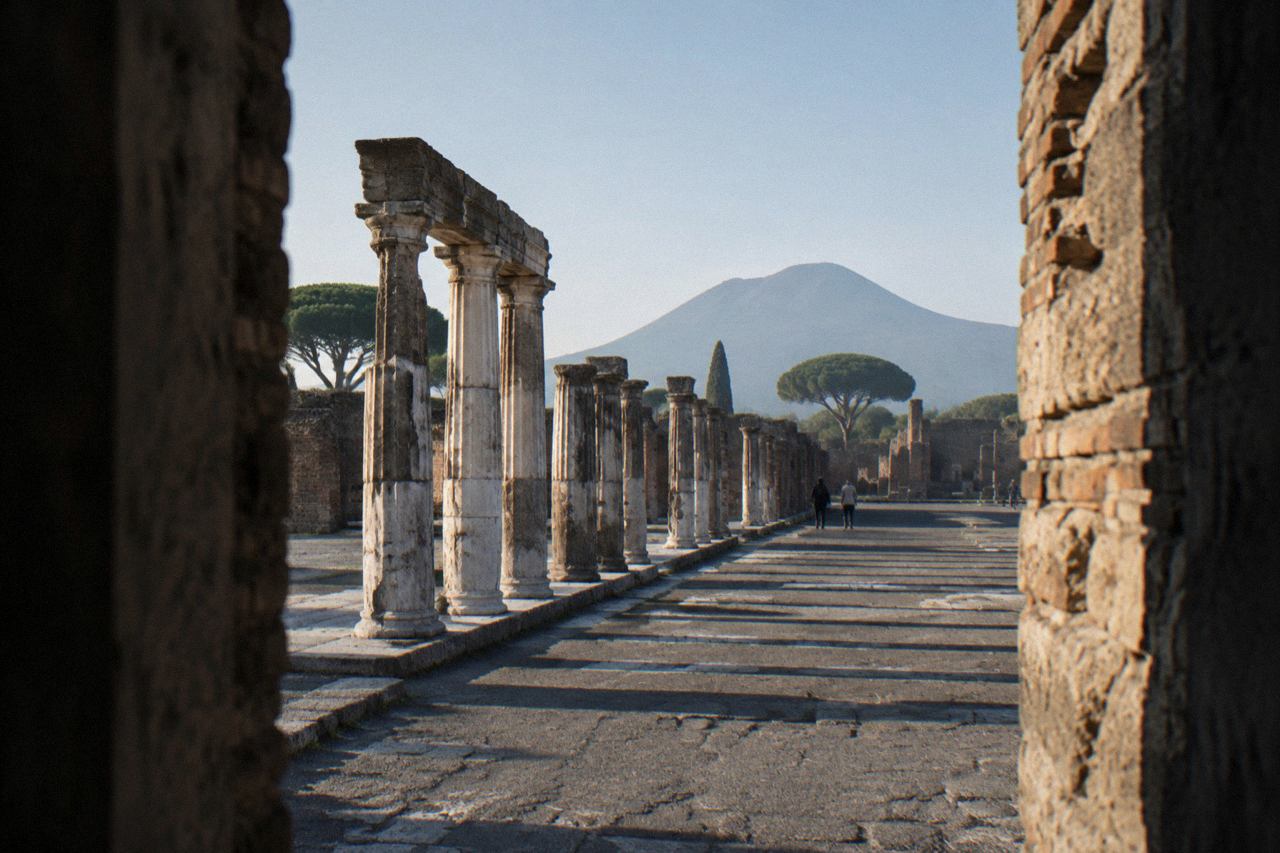
The newest verified developments at Pompeii are not newly opened houses but system changes: a single EUR 25 all-sites ticket from 1 January 2027, the Praedia of Julia Felix closed since 7 September 2026, and a renewed scholarly debate over the eruption date, traditionally 24 August AD 79. The excavated area covers 44 ha of a 98 ha inscribed property, so a share of the city still lies buried.
Pompeii, the ancient Roman city buried by the eruption of Mount Vesuvius in AD 79, lies in Campania, southern Italy, beside the modern town of Pompei and about 24 km by road south-east of Naples. It is one of the few archaeological sites in the world where "what is new" is a serious, year-on-year question: excavations continue, the park reorganises its ticketing, houses open and close for conservation, and scholarly debates about the destruction itself resurface in the park's own publications. Sifting the real developments from recycled rumour matters here more than at nearly any other destination, because plenty of confident claims circulate about Pompeii that no official page supports.
This guide does that sifting. It covers the eruption-date debate the park itself reopened, the true extent of what is excavated and what is still buried, the verified visitor figures, the ticket system change arriving on 1 January 2027, the closures in force right now, and how to plan a visit around what you can actually see.
What Is Actually New At Pompeii Right Now?
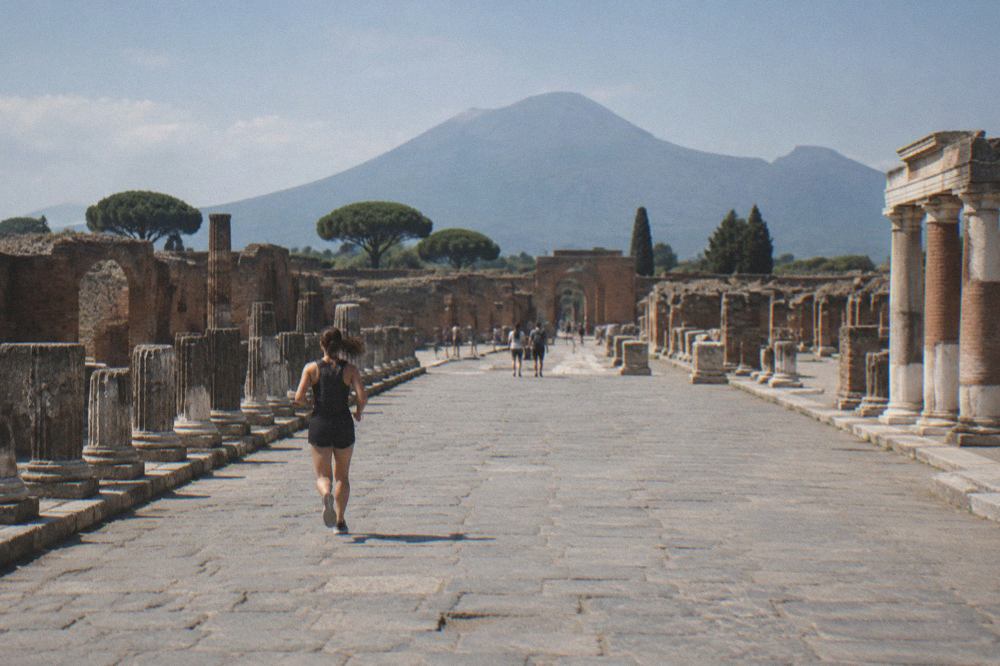
The genuine news at Pompeii in late 2026 is structural rather than a single new attraction: the Praedia of Julia Felix closed to the public on 7 September 2026 for maintenance until further notice, a single EUR 25 ticket covering all park sites takes effect on 1 January 2027, and no newly opened or reopened house has been confirmed on an official page. Visitors should plan around what is verifiably open, not around blogs promising fresh discoveries.
The park communicates changes through dated releases on pompeiisites.org, and those releases are the only reliable source for what a visitor will find. The closure of the Praedia di Giulia Felice, announced for Monday 7 September 2026, is a good example: a substantial and much-visited complex is simply off the itinerary for an unknown period. Meanwhile the opposite case also occurs, with claims of reopened houses or brand-new domus circulating online while no official page confirms any of them.
What is reliably "new" for a visitor is therefore the park's evolving system rather than a fresh room of frescoes. Time-slot entry, nominative tickets and the 20,000 visitors-per-day cap have been in force since 15 November 2024, and they changed how a visit feels: you pick a slot, you carry ID, and the busiest first-Sunday free days can be intense, with a recorded peak of more than 36,000 visitors on one free Sunday. For the practical side of entries and timing, the Pompeii history companion and the ticketing detail further down this page cover what you need.
The broader context of ongoing excavation is real even when no specific new house is open. The Regio V new excavations area is the park's active research front, and finds from it regularly reach the press even when the areas themselves are not part of the standard visitor route. Treating excavation news as a reason to visit, rather than a promise of a specific new room, is the realistic frame.
Is The Eruption Date Of Pompeii Actually 24 August Or 24 October?
The traditional date, from Pliny the Younger's oldest manuscripts, is 24 August AD 79, while the park's own e-journal states that 24 October has no evidentiary basis and traces it to a 1929 misreading; the park also notes 24 August is not necessarily correct either. The question remains an open scholarly debate, and no visitor should trust a source that settles it.
This is the most consequential "new discovery" conversation at Pompeii, and it is genuinely live. Pliny's letters give the date as "nonum kalendas Septembres", which works out to 24 August in the oldest manuscript tradition. The October alternative, widely repeated online, rests in part on a 2018 charcoal inscription found at Pompeii that many scholars read as dated to mid-October, after the supposed August eruption.
What the park has published, in its e-journal, is a discussion of the destruction date that calls the 24 October claim a 1929 misreading with, in the journal's words, no evidentiary basis, while adding the careful caveat that 24 August is not guaranteed to be right either. The practical takeaway for a visitor is simple: any tour, book or website that announces a definitive date is overreaching.
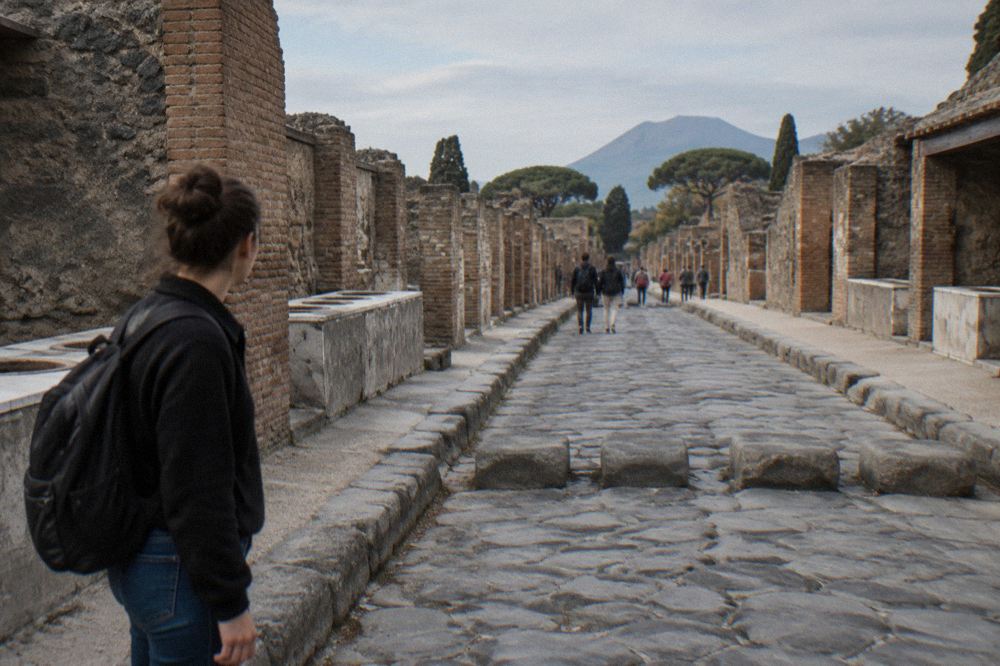
The date matters beyond trivia because it anchors every interpretation of the site, from what people were wearing to which season's goods were in the shops. The famous impressions of victims, some wearing heavier clothing than an August day would suggest, are part of the argument October advocates lean on; the story of the Pompeii body casts covers how those casts were made and what they can and cannot tell us. A good guide will present the debate as a debate. The best guides, including archaeologist-led small groups such as the site's featured small group tour with an archaeologist, tend to know exactly which way the current scholarship leans.
Three tour formats suit this kind of visit differently. The archaeologist-led small group keeps the focus on interpretation; a signature tour pairing Pompeii with Vesuvius wine and lunch turns the day into a fuller regional experience; and a Capri combo suits travellers packing the coast into one long day.
How Much Of Pompeii Is Still Buried Today?
The excavated area of Pompeii covers 44 hectares, inside an inscribed UNESCO property of 98 hectares with a buffer zone of 1,788.79 hectares, so a large share of the ancient city has never been uncovered. The UNESCO listing covers Pompeii, Herculaneum and Torre Annunziata together under criteria (iii), (iv) and (v).
Those figures come from the UNESCO listing itself and are the only size claims worth repeating. The verified picture is striking enough: within the 98-hectare inscribed property, the 44 excavated hectares are what visitors walk, and the remainder is either backfilled, unexcavated, or under modern construction at the edges.
Why does so much remain buried? Excavation, once the point of the exercise, is now approached in reverse: the park's current philosophy prioritises conservation, documentation and stabilisation over opening new ground, because every house exposed to air and weather begins to deteriorate. Ongoing work in areas like Regio V is as much about securing previously trenched ground as about fresh digging. That is why "they keep finding new things" and "a large share is still under the earth" are both true at once.
| Measurement | Figure | Source basis |
|---|---|---|
| Excavated area of Pompeii | 44 ha | UNESCO listing text |
| Inscribed property (Pompeii, Herculaneum, Torre Annunziata) | 98 ha | UNESCO listing text |
| Buffer zone | 1,788.79 ha | UNESCO listing text |
| UNESCO criteria | (iii), (iv), (v) | UNESCO listing text |
| Daily visitor cap in force | 20,000 visitors | Park release, since 15 Nov 2024 |
The buried share is not dead ground. It is the site's research reserve, and decisions about when, or whether, to excavate more are among the most debated questions in Italian archaeology. For now, a visitor sees an ancient city that is fully large enough to exhaust a day; the question of whether Pompeii is worth visiting is answered elsewhere on this site, and the honest answer is that the 44 excavated hectares beat nearly anyone's stamina.
What Do The Visitor Numbers Say About Pompeii's Popularity?
Pompeii recorded 2,972,159 visitors in 2022, 3,985,424 in 2023, 4,069,377 in 2024 and 4,000,090 in 2025, so attendance has roughly stabilised around four million per year after the post-pandemic surge. Across all park sites combined the totals were 4,079,235 in 2023, 4,177,753 in 2024 and 4,118,926 in 2025.
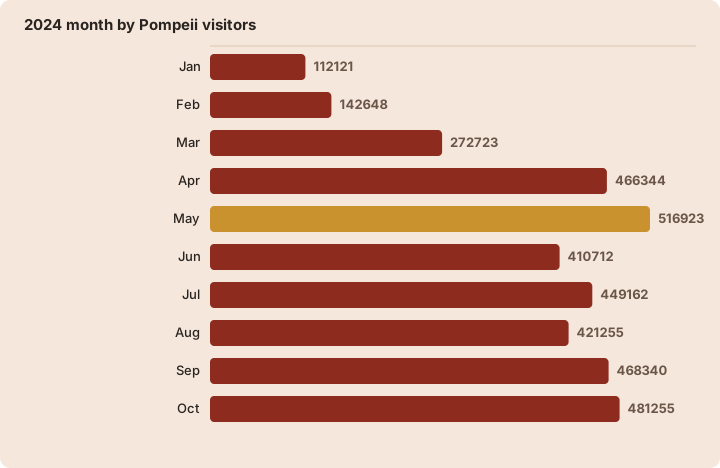
The park publishes its own visitor data table, which is rare and valuable: it lets a prospective visitor see the seasonality of the site rather than guess at it. The 2024 monthly figures for Pompeii itself show the pattern clearly. May peaked at 516,923 visitors, with September at 468,340 and October at 481,255 close behind, while November fell to 189,866 and December to 138,028. The shoulder season, October especially, delivers near-peak crowds with more comfortable temperatures.
| Year | Pompeii site visitors | All park sites combined |
|---|---|---|
| 2022 | 2,972,159 | not stated in the table |
| 2023 | 3,985,424 | 4,079,235 |
| 2024 | 4,069,377 | 4,177,753 |
| 2025 | 4,000,090 | 4,118,926 |
| 2024 month | Pompeii visitors |
|---|---|
| Jan | 112,121 |
| Feb | 142,648 |
| Mar | 272,723 |
| Apr | 466,344 |
| May | 516,923 |
| Jun | 410,712 |
| Jul | 449,162 |
| Aug | 421,255 |
| Sep | 468,340 |
| Oct | 481,255 |
| Nov | 189,866 |
| Dec | 138,028 |
Read against the daily cap of 20,000, the numbers explain the park's crowd management. The 13:00-to-17:30 afternoon slot admits at most 5,000 under the current split, which makes late afternoon the quietest mainstream option on a busy day. The first Sunday of each month, when entry is free for everyone, is the pressure point: the recorded single-day peak above 36,000 came on one of those Sundays, and a visitor who values calm should treat free days as a trade-off rather than a bargain. The full lowdown on Pompeii tickets and free days covers the rules.
What Changes For Tickets On 1 January 2027?
From 1 January 2027 a single EUR 25 ticket replaces the current Express, Plus and 3-day structure and covers all park sites, valid 30 days with one entry per site, while Oplontis, the Stabiae museum and Boscoreale stay at EUR 8 individually and the MyPompeii Card stays at EUR 45; nominative tickets and the 20,000 daily cap are retained.
This is the single biggest practical change at Pompeii in years, announced by the park on 14 September 2026. Until 31 December 2026 the 2026 prices remain in force: Pompeii Express at EUR 20 for the ancient city only, Pompeii+ at EUR 25 adding the suburban villas route and Villa Regina with the Antiquarium at Boscoreale plus shuttle, and the 3-day ticket at EUR 30 extending to Oplontis, the Stabiae villas and museum and Boscoreale. Express holders can still add the suburban villas route for EUR 8, card only, at the Porta Ercolano / Street of the Tombs entrance. Other pages covering the same trip are gathered on Pompeii Travel Guide.
| Ticket | 2026 price (to 31 Dec 2026) | From 1 Jan 2027 |
|---|---|---|
| Pompeii Express (ancient city only) | EUR 20 | replaced by single ticket |
| Pompeii+ (city, villas, Boscoreale) | EUR 25 | replaced by single ticket |
| 3-day ticket (all park sites) | EUR 30 | replaced by single ticket |
| Single all-sites ticket | not available | EUR 25, 30 days, one entry per site |
| Oplontis / Stabiae museum / Boscoreale | EUR 8 each | EUR 8 each |
| MyPompeii Card (annual) | EUR 45 (EUR 10 reduced) | EUR 45 |
The 30-day validity with one entry per site is the detail worth noting: the new ticket is not a three-day pass in disguise but a one-visit-per-site passport across the park's locations. For a visitor doing Pompeii plus one or two satellite sites, the arithmetic improves; for a visitor who only wants the ancient city, the entry price effectively rises from EUR 20 to EUR 25.
Booking a tour rather than a bare ticket sidesteps some of this planning, since an included-entry guided product handles the slot and the queue for you, and the archaeologist-led format is the one this site features for visitors who want the excavation story told properly.
What Is Closed At Pompeii And Its Sister Sites Today?
According to the latest official information, no other confirmed closure affects the main Pompeii visitor route today, so the standard itinerary remains unaffected. At the same time, no newly opened or reopened house has been confirmed on an official page for Pompeii or its sister sites, so any rumored reopenings should be treated with caution until an official announcement appears.
Closures are announced in dated park releases, and the two above are the ones a 2026 visitor will actually notice. The Praedia di Giulia Felice is a large and significant complex, so its absence changes some itineraries and guided routes. At Herculaneum, which is a separate site at Ercolano with its own EUR 16 ticket, the Villa dei Papiri and Ancient Theatre closures have been in place for works; the site is otherwise open daily with seasonal hours, 8:30 to 19:30 in summer with last entry at 18:00, and 8:30 to 17:00 in winter with last entry at 15:30, closed only 1 January and 25 December. Herculaneum is free every first Sunday along with 25 April, 2 June and 4 November, with tickets collected on the day.
It is worth being equally sceptical in the other direction. The park's own communications pages are the arbiter, and the honest summary is: two closures, one big ticket change, an active excavation front, and a lively date debate.
| Site or feature | Status | Since / dates |
|---|---|---|
| Praedia of Julia Felix, Pompeii | closed for maintenance until further notice | 7 Sep 2026 |
| Villa dei Papiri, Herculaneum | closed for works | current listing |
| Ancient Theatre, Herculaneum | closed until further notice | current listing |
How Do You Plan A Visit Around What Is Open?
Planning around what is open comes down to checking official sources before you lock in your itinerary: confirm operating hours and any seasonal closures on each attraction's official website, call or email the local visitor center for the latest updates, book timed-entry tickets in advance where required, and build flexible backup options into each day so a single unexpected closure does not derail your plans.
Seasonal timing interacts with the weather. From the Open-Meteo 1991-2020 archive grid for the Pompei point, August has the highest mean daily maximum at about 29.4 C and July the lowest rainfall at about 16 mm, while November is the wettest month at about 180 mm and October still carries about 129 mm. Combined with the visitor table above, the data argues for late September and October as the sweet spot: highs about 21.3 C in October, near-peak attendance but under the August ceiling, and the long summer hours still in force to 14 October.
| Period | Opening hours | Last entrance |
|---|---|---|
| 16 Mar to 14 Oct | 9:00-19:00 | 17:30 |
| 15 Oct to 15 Mar | 9:00-17:00 | 15:30 |
Guides versus going alone is a real decision at a site this dense, and the guided tour versus self-guided comparison lays out the trade-offs. What the "new discoveries" angle adds is that interpretation changes fast: a guide working the site week after week knows which houses are open this month and which way the dating debate is currently argued, which no printed guidebook can match.
For travellers who prefer a structured product with everything handled, an entry ticket plus archaeologist guide format is the volume seller, and it is described on its own page.
How Do You Get To Pompeii To See It?
Pompeii sits about 24 km by road from Naples (roughly 22 minutes driving), 26 km from Sorrento (about 37 minutes) and 31 km from Salerno (about 30 minutes), with Rome 234 km away; the Circumvesuviana railway serves Pompei Scavi-Villa dei Misteri station, with scheduled journeys from Napoli Garibaldi taking 29 to 35 minutes.
Those road figures come from routing on OpenStreetMap and the rail times from the operator's own schedule data, so they are planning figures rather than promises. The Circumvesuviana Napoli to Sorrento line calls at Pompei Scavi-Villa dei Misteri, the stop for the excavations, at stop 6049 on the network; from the Scavi stop to Sorrento the scheduled time is 34 to 40 minutes. One thing has changed on this front that matters: the Campania Express, the premium alternative train service, has been suspended since 1 October 2026 until further notice, with refunds available through the operator's complaints form or the original seller. Do not build a plan around it.
Each approach has its own page on this site with the detail: the Naples to Pompeii run, the Sorrento to Pompeii connection, the Amalfi Coast to Pompeii options, and the two Rome pages covering the day trip and the train route. The operator EAV announced new trains and a new timetable for the Vesuvian lines in September 2026, though only the announcement itself is confirmed so far, so treat any specific service-boost figure you read elsewhere with caution.
| Route | Road distance | Driving time (approx.) |
|---|---|---|
| Naples to Pompei Scavi | 24 km | 22 min |
| Sorrento to Pompei Scavi | 26 km | 37 min |
| Salerno to Pompei Scavi | 31 km | 30 min |
| Rome to Pompei Scavi | 234 km | 159 min |
For cruise passengers the calculus is different again, since the port of Naples sits close to the motorway and the Circumvesuviana; the Pompeii shore excursion guide covers the timings that work from a ship.
Which Tour Turns The Discoveries Into A Day Out?
A small group tour led by an archaeologist is the format that engages most directly with new research at Pompeii; a full-day signature tour adds Vesuvius wine and lunch from Naples for a regional experience; and from Sorrento a train-based express tour keeps the day short. Tour prices, ratings and durations render from the operator listings, not from this page's prose.
The trio at the end of this page reflects those three shapes of day. The archaeologist-led small group is the pick for a visitor whose interest is the excavation and the scholarship, because the guide's training maps directly onto what the park publishes. The signature tour from Naples suits a traveller who wants Pompeii, the volcano that destroyed it and the wine grown on its slopes in a single, unhurried day. The Capri combo is a different animal entirely, packing the ruins and the island into one long day for visitors with limited time on the Bay of Naples.
Food and wine around Pompeii have their own draws. The vineyards on Vesuvius's slopes grow in soil the eruption created, and a tasting there is arguably the most direct sensory link to AD 79 a visitor can have; the where to eat at Pompeii page covers both the park's own options and the town. Where to sleep is covered by the where to stay at Pompeii guide, from the modern town of Pompei itself to bases in Naples or Sorrento.
What Should You Read Or Prepare Before Visiting?
Read three things in order of usefulness: the park's own visiting information pages for tickets, hours and regulations; a current guidebook or this site's history of Pompeii for context; and nothing at all that promises a specific newly opened house, a settled eruption date or night tours, because none of those is confirmed. Prepare for sun, walking surfaces and the bag-size limit of 30x30x15 cm.
Preparation at Pompeii is mostly physical and temporal. The site is largely unshaded, the ancient paving is uneven, and the summer hours mean you can be on volcanic stone at the hottest part of the day; the weather and best time to visit guide covers the monthly picture, so use it for footwear and water planning. Comparing Pompeii with Herculaneum before choosing, or deciding to do both, is covered by the Pompeii versus Herculaneum guide.
The intellectual preparation is what this page exists for. Pompeii rewards visitors who arrive knowing that the site is a living research project: the ground under the unexcavated share, the date on the wall inscriptions, the houses closed this season and the ticket changing next season are all part of the same story. The park of 2027 will not be the park of a decade ago, and a visitor who understands that will read the ruins differently, and will not be disappointed when a blog's promised "new discovery" turns out to be an older find or an unverified claim.
Common Questions About New Discoveries At Pompeii
Have archaeologists found anything new at Pompeii recently?
Excavation and research continue, notably in the Regio V area, and the park announces finds through dated releases.
Is the eruption date of Pompeii now known to be 24 October?
No. The park's own e-journal states that 24 October has no evidentiary basis and traces the date to a 1929 misreading, while also noting that the traditional 24 August from Pliny's manuscripts is not guaranteed either. The debate remains open.
How much of Pompeii is still buried?
The excavated area covers 44 hectares inside a 98-hectare UNESCO inscribed property that also includes Herculaneum and Torre Annunziata, so a substantial share of the ancient city has never been excavated.
Is anything at Pompeii closed right now?
Yes. The Praedia of Julia Felix has been closed to the public since 7 September 2026 for maintenance until further notice, and at Herculaneum the Villa dei Papiri and the Ancient Theatre are closed for works. The main Pompeii visitor route is otherwise unaffected.
Do Pompeii tickets change in 2027?
Yes. From 1 January 2027 a single EUR 25 ticket covers all park sites, valid 30 days with one entry per site, replacing the Express, Plus and 3-day tickets. Oplontis, the Stabiae museum and Boscoreale remain EUR 8 each, and the MyPompeii Card stays at EUR 45.
How crowded is Pompeii getting?
The park's own data shows 4,000,090 visitors in 2025 after 4,069,377 in 2024 and 3,985,424 in 2023, so attendance has stabilised around four million a year. A daily cap of 20,000 visitors applies, with afternoon entry capped at 5,000 under the current 13:00 slot split.
Pompeii's real discoveries today are less about a single fresco and more about a site that keeps rewriting its own rules: a ticket system overhauled for 2027, an eruption date the park itself refuses to settle, a large share of a city still under the earth, and four million people a year walking the rest. Plan from the park's own dated announcements, book around what is verifiably open, and the newest thing at Pompeii will be what you notice yourself.