Are There Any Descendants Of Pompeii Still Alive?
The honest answer to whether descendants of Pompeii's residents live today, what happened to the survivors of AD 79, and why no bloodline can be proven, for visitors to the archaeological park in Campania, Italy.
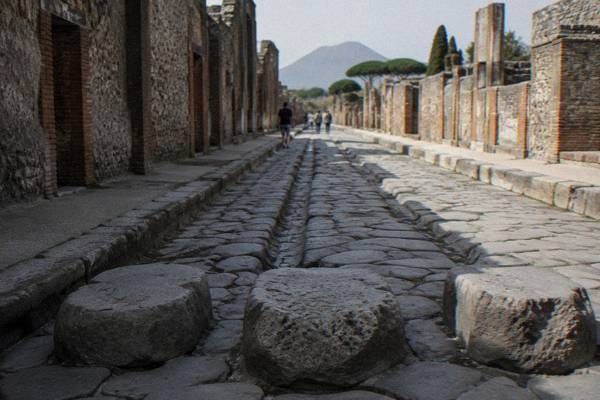
Pompeii, the ancient Roman city in Campania, southern Italy, was buried by the eruption of Mount Vesuvius in AD 79, an event traditionally dated to 24 August. Nobody has lived inside the ancient city for close to two thousand years; it is now an archaeological park beside the modern town of Pompei, about 24 km by road from Naples. That raises a question visitors ask often: do the people who walked these streets have living descendants today?
Are There Any Descendants Of Pompeii Still Alive?
Almost certainly yes, in the broad sense that people whose ancestors came from this corner of Campania are alive today, but no, in the sense that no family can prove a bloodline to a specific Pompeii resident. No register of the city's inhabitants survived the eruption, no ancient census of survivors exists, and the modern town of Pompei was rebuilt long after AD 79, so a verifiable chain from a named Pompeian to a living person cannot be constructed with the evidence we have.
The distinction matters. When people ask about descendants they usually picture someone who can say "my great-great ancestor lived in the House of the Faun." Nothing in the archaeological record supports a claim of that kind. The city's population at the moment of the eruption is itself unknown, and the identities of those who escaped were never recorded in a document that has come down to us.
What can be said is narrower. Genetic continuity at the regional level is entirely plausible. Individual descent from a Pompeii household is unprovable with current evidence.
Who Lived In Pompeii Before The Eruption Of AD 79?
Pompeii was a living Roman city of ordinary households, freedmen, merchants and visiting traders rather than a single noble clan, and its people were drawn from across the Roman world, including local Campanians and families with roots elsewhere in Italy and the eastern Mediterranean. That mix is precisely why no single line of descent could ever stand for "the Pompeii bloodline." The city's dead and its survivors were people of the Bay of Naples, not a closed population.
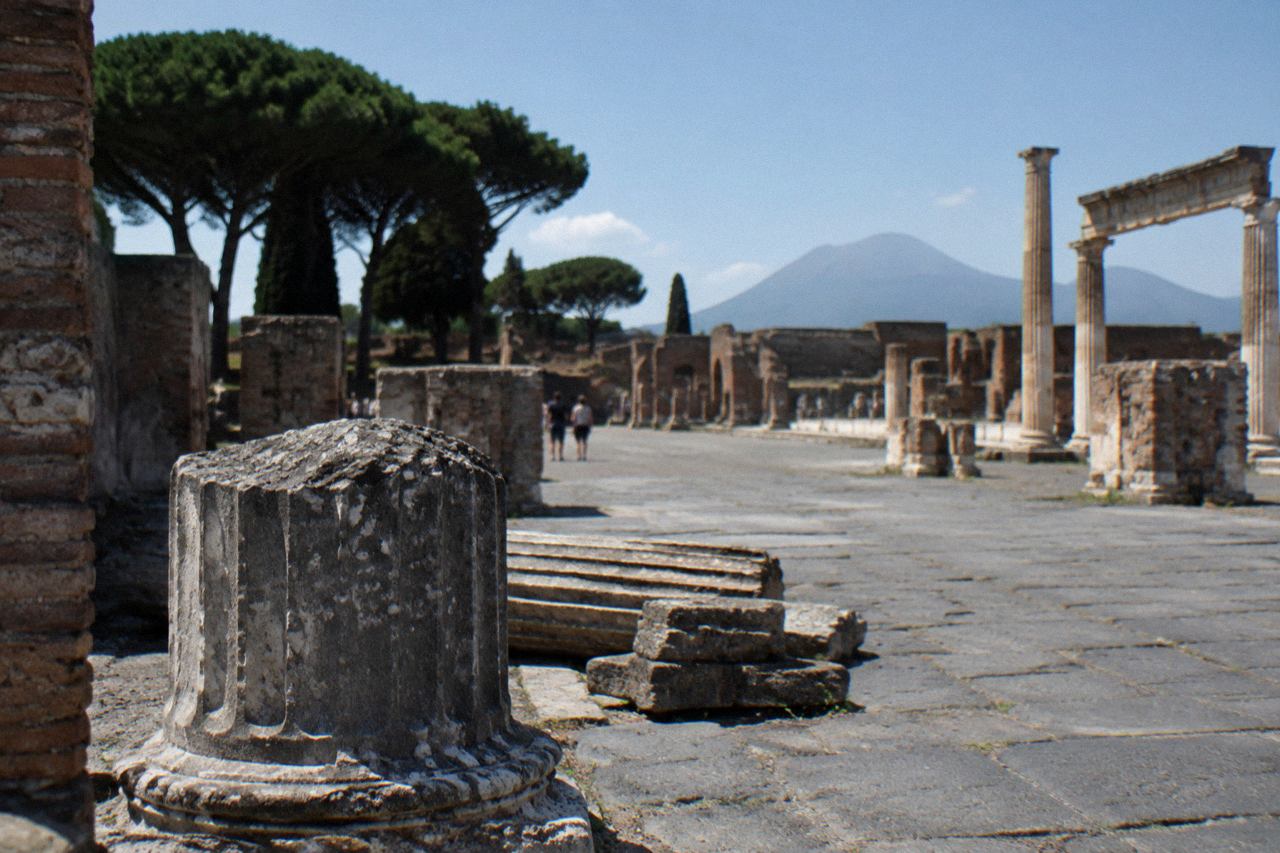
The excavated area covers 44 hectares, within a UNESCO inscribed property of 98 hectares, and the ruins preserve houses, shops, bakeries and taverns rather than palaces of a ruling dynasty. Graffiti on the walls records names, greetings, election notices and jokes, a glimpse of individuals, yet none of these names connects to any genealogy that survived antiquity. For a wider look at what the city's buildings show, see the Pompeii Travel Guide homepage, which covers the park as a whole.
The eruption itself killed a portion of the population and spared others. The plaster casts at the Garden of the Fugitives preserve the shapes of some of those who died, and questions about them are answered separately, including how the city's remains are displayed today. Much of the ancient city also still lies under the ground, which is its own story: the page on how much of Pompeii still lies buried covers what excavation has and has not reached.
The audio-guide entry option is a natural fit for this kind of visit. The streets you would walk are the same ones whose residents are the subject of the question, and an audio commentary names what each building was without requiring you to imagine a vanished population from bare walls alone. Details, prices and availability sit on the operator's live listing, or you can Check availability alongside the internal entry ticket with audio guide page.
Did Anyone From Pompeii Survive The Eruption?
Yes. The eruption did not kill the entire population: people fled during the hours or days before and while the city was being buried, and the letters of Pliny the Younger, the principal eyewitness account, describe escape by sea and by road from the Bay of Naples. The exact number who escaped from Pompeii itself is not recorded anywhere in the surviving evidence, so no figure, ancient or modern, can honestly be printed.
Pliny the Younger's account survives in his letters, and the oldest manuscripts date the eruption to 24 August AD 79, a date the park's own e-journal treats as traditional rather than certain, noting that a competing October date has no evidentiary basis. His uncle, Pliny the Elder, died during the rescue attempt; that story is told in its own right on the Pliny the Elder and Vesuvius guide from this site's wider collection.
Survivors are the ancestors that would matter for this question. The refugees who reached neighbouring towns melted into the Roman world within a generation or two, as refugees did throughout the empire, and with no surviving civic register of Pompeii there is no thread to pull.
Where Did The Survivors Of Pompeii Go?
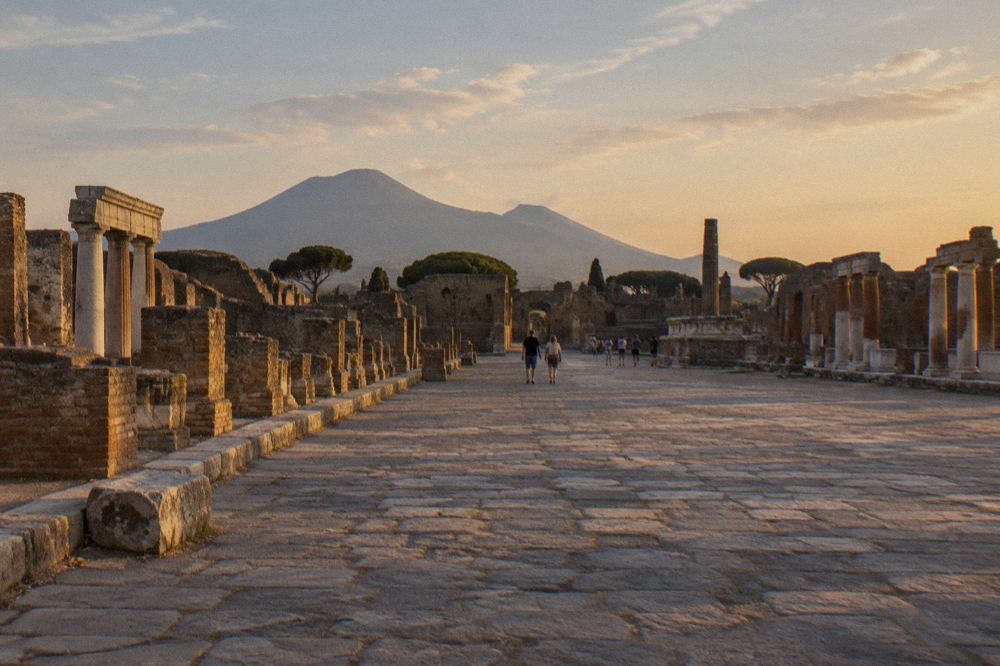
The surviving evidence does not record a single organised resettlement of Pompeii's refugees, so no destination can be named from the sources in hand, and any specific town claimed as "where the Pompeians went" would be invention. What the record does show is that the wider Vesuvian area kept its population: Herculaneum, Oplontis and the Stabiae villas were destroyed alongside Pompeii, while towns beyond the ashfall continued as living Roman communities into the medieval period and beyond.
The neighbouring buried sites tell a parallel story and are covered elsewhere on this site. Herculaneum, the modern Ercolano, is still being excavated today, a process described on the page is Herculaneum still being excavated. The people of the region endured more than one catastrophe; the same landscape that buried the cities in AD 79 has supported towns, vineyards and farms continuously since.
The park's own modern history is easier to trace than any ancient family. Visitor numbers published by the park show how thoroughly the dead city has been repopulated by the living, if only for a day at a time:
| Year | Visitors to the Pompeii site |
|---|---|
| 2022 | 2,972,159 |
| 2023 | 3,985,424 |
| 2024 | 4,069,377 |
| 2025 | 4,000,090 |
The park now manages that flow with a cap of 20,000 visitors per day, in force since 15 November 2024, together with nominative tickets checked against identification at entry. Planning around the cap, the ticket types and the free first Sundays of the month is covered on the Pompeii tickets and prices guide, which carries the current figures.
Can DNA Testing Trace Pompeii Bloodlines Today?
Ancient DNA has been recovered from human remains at Pompeii and can describe the ancestry of individuals who died in the eruption, but it cannot connect them to living people, because no living person can document an unbroken family line back to a named or unnamed Pompeii resident. DNA proves relatedness only when two samples, one ancient and one modern, can be compared across a chain that history has to supply, and in Pompeii's case that chain is missing.
The plaster casts, made by pouring plaster into voids left in the ash by decomposed bodies, preserve body shapes rather than bone in every case, which limits what genetics can recover. Where bone does survive, study of it is ongoing research, and results about the ancestry of Pompeii's dead belong to the slow world of peer-reviewed archaeology rather than to a family tree website.
A comparison makes the limit clear. With a king or a noble line, documents let historians bridge the centuries between a tested skeleton and tested living descendants. Pompeii offers ordinary households, a catastrophe, silence, and then eighteen centuries of unrecorded mixing across Campania. The genetics could be right in front of researchers and there would still be no way to recognise it as "Pompeii" rather than "southern Italy."
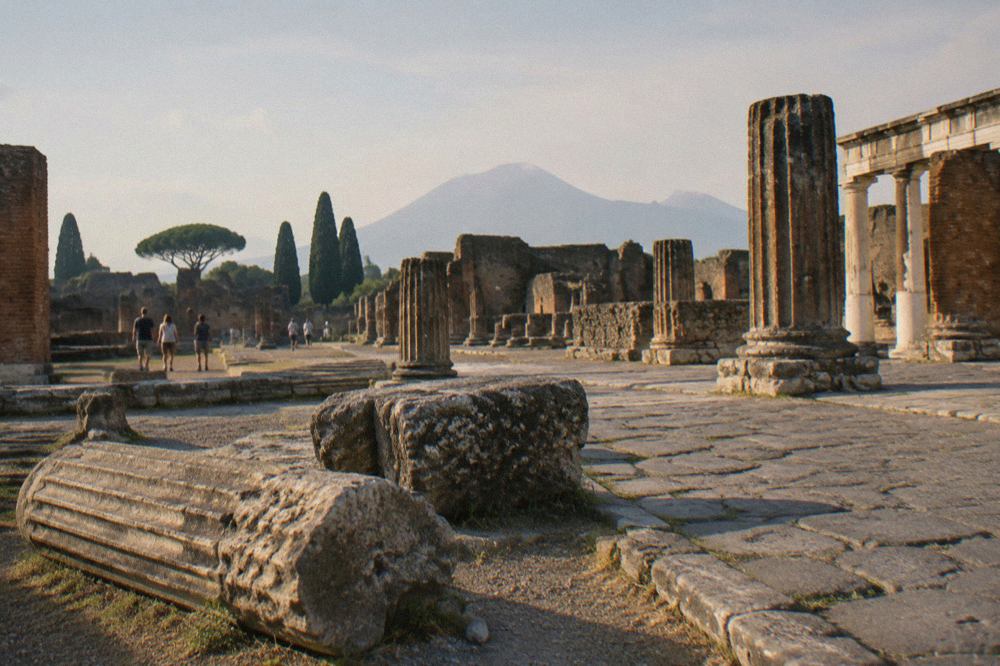
For visitors, this is the emotional heart of the site. The people are gone, the buildings remain, and standing in a doorway worn smooth by ancient feet is the closest contact the evidence permits. If you are planning the practical side, the questions of whether to buy tickets in advance and whether you can tour Pompeii on your own are both answered in detail on their own pages.
Is The Region Itself A Kind Of Living Heir?
In every way that does not require a blood test, yes: the Bay of Naples around Vesuvius has been inhabited without interruption since long before AD 79, the modern town of Pompei stands beside the excavations, and the language, farming and street life of the area descend in a continuous line from the Roman communities the eruption scattered. A visitor who wants to meet "descendants of Pompeii" in this looser sense meets them at every café between the park entrance and the Circumvesuviana station.
The climate that supported those communities is measurable. Open-Meteo's 1991-2020 normals for the Pompei grid point show about 119 mm of rain in January, about 16 mm in July, and a highest mean daily maximum of about 29.4 C in August, a Mediterranean pattern that would have been broadly familiar to the city's farmers.
| Measure | Figure |
|---|---|
| Excavated area of Pompeii | 44 ha |
| UNESCO inscribed property (Pompeii, Herculaneum, Torre Annunziata) | 98 ha |
| Daily visitor cap, in force since 15 Nov 2024 | 20,000 |
| Pompeii site visitors, 2025 | 4,000,090 |
Visitors with a full day sometimes pair the ancient city with the volcano that destroyed it. A combined day trip from Naples with lunch included is one such option, and its figures render on its own page:
Common Questions About Pompeii Descendants
Are there any descendants of Pompeii still alive?
No verifiable descendant of a specific Pompeii resident exists. People from Campania alive today almost certainly carry ancestry from the region's Roman-era population, but the documentary chain needed to prove descent from a named Pompeian was destroyed with the city.
Did everyone in Pompeii die in the eruption?
No. Eyewitness letters from Pliny the Younger describe people fleeing by sea and road, and the survivors resettled elsewhere in the Roman world. The number who escaped from Pompeii itself was never recorded.
Does anyone live in Pompeii now?
Nobody lives inside the ancient city, which is an archaeological park. The modern town of Pompei sits beside it, about 24 km from Naples, and is fully inhabited.
Can DNA from Pompeii bodies be matched to living relatives?
Not at present. Ancient DNA can describe the ancestry of individuals who died, but without a documented family line running from antiquity to a living person, no match can be recognised.
Is the modern town of Pompei descended from the ancient city?
The modern town grew up around a sanctuary long after the eruption, and its population is drawn from the wider region. It is a neighbour and heir in culture, not a village of direct, documented Pompeii descendants.
The honest final word is that Pompeii's descendants are everywhere and nowhere: in the population of Campania at large, in every street of the modern town of Pompei, and in nobody whose family tree can be traced back through the ash of AD 79 to a name on a Pompeian wall.