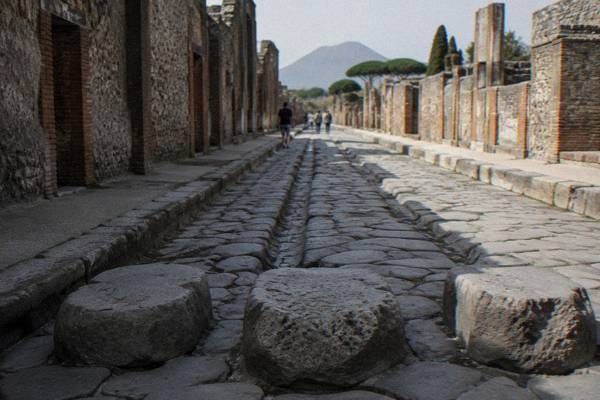
Pompeii Casts
The plaster casts of Pompeii are among the most confronting objects from any archaeological site on earth: hollow forms made by pouring plaster into voids left in the volcanic deposits by people who died in the eruption of Mount Vesuvius in AD 79. This guide explains how they were made, where to see them in the ancient city of Pompeii in Campania, southern Italy, and how to plan a visit around them.
Short answer
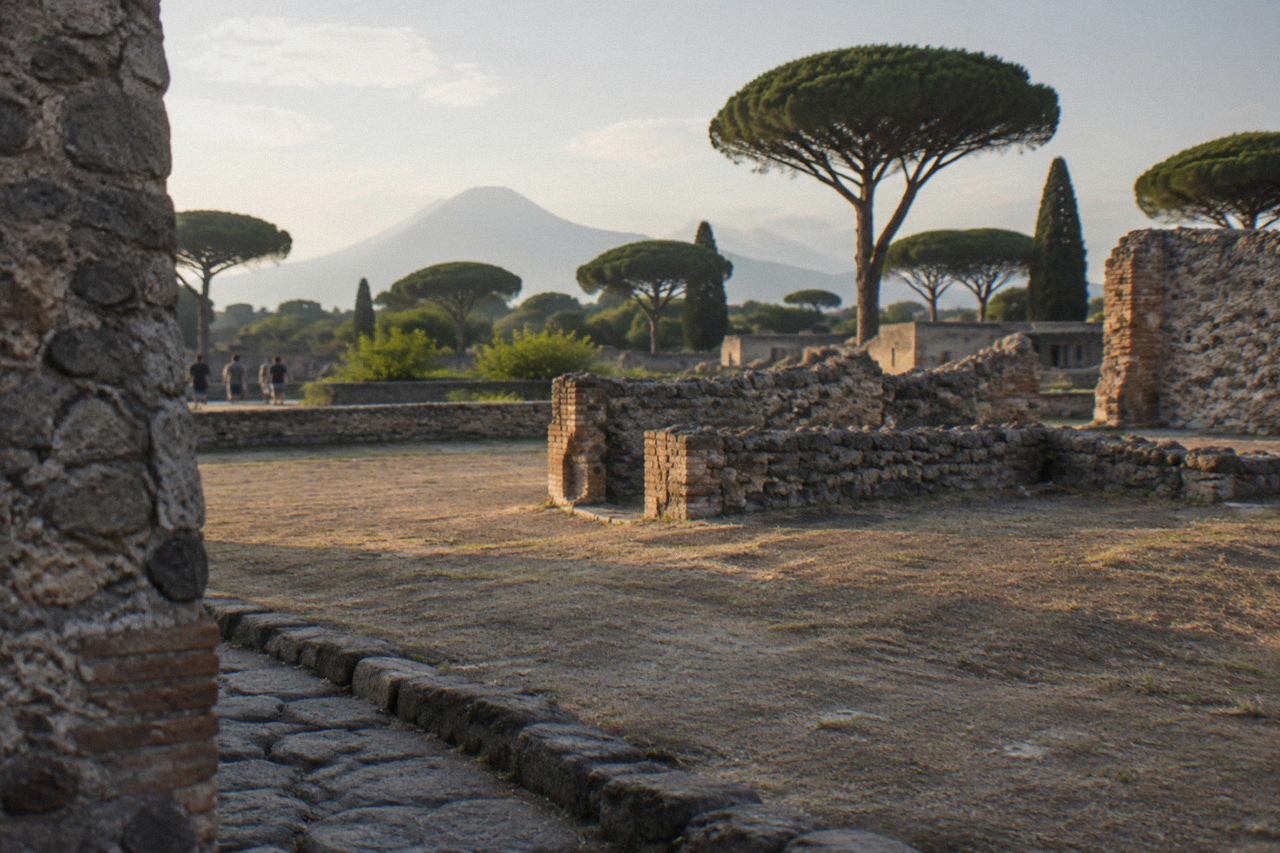
The Pompeii casts are plaster forms made by filling cavities left in the AD 79 volcanic deposits by people and animals who died in the eruption. They are displayed inside the archaeological park of Pompeii, about 24 km south-east of Naples in southern Italy. A 2026 Pompeii Express ticket costs EUR 20, and from 1 January 2027 a single EUR 25 ticket covers all park sites. Allow at least two hours on site.
The plaster casts of Pompeii stop nearly every visitor who sees them. They are not skeletons and they are not statues: they are hollow shells of plaster, made by pouring liquid material into cavities that the bodies of eruption victims left in the hardened volcanic deposits of Mount Vesuvius after those bodies decayed away. The ancient city of Pompeii, in Campania, southern Italy, about 24 km by road south-east of Naples on the Bay of Naples, is where they were found and where the ones on public display can still be seen. This guide covers how the casts were made, what they do and do not show, where to find them inside the park, and the practical planning facts, tickets, hours and entrances, that a visit around them depends on.
What Are The Pompeii Casts And Where Are They Displayed?
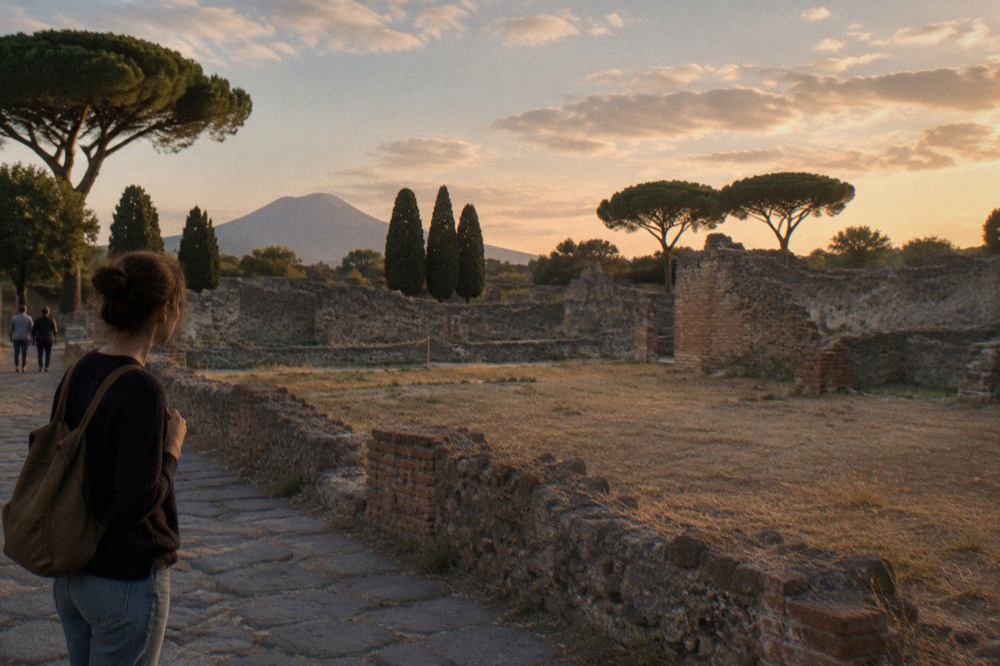
The Pompeii casts are plaster replicas of the spaces that human and animal bodies left inside the volcanic deposits that buried the city during the eruption of Mount Vesuvius in AD 79, traditionally dated to 24 August. They are displayed at various points inside the Parco Archeologico di Pompei in Campania, southern Italy, about 24 km from Naples, and they are included in the standard park ticket, which costs EUR 20 for the ancient city in 2026.
To understand the casts, it helps to understand what buried them. When Vesuvius erupted in AD 79, Pompeii was smothered under successive layers of pumice and then a surge of fine volcanic material that sealed the city, its buildings and its dead under metres of deposit. The excavated area of the ancient city covers 44 hectares, and the wider UNESCO-inscribed property, which also includes Herculaneum and Torre Annunziata, covers 98 hectares. Organic material buried in that deposit, including wood, food and bodies, decayed over the centuries and left voids in the hardened ash. Those voids preserved the exact outer shape of what had been there.
The casts are the result of a technique in which excavators detected such a cavity in the deposit and filled it with plaster before digging around it. Once the plaster set and the surrounding ash was removed, what remained was a three-dimensional negative of the person or animal who had died there: the posture, the folds of clothing, sometimes the outline of a sandal or a hand raised to a face.
Visitors sometimes arrive expecting a single "cast museum" and find instead that the casts appear in several places across the park's public route, in sheltered display areas and storerooms opened to view, alongside other finds. The park's official visitor regulations and timetable pages are the authoritative sources for what is open on a given day, and displays do move as conservation work proceeds. One thing that does not move is the ticket: in 2026 the Pompeii Express ticket, covering the ancient city, costs EUR 20, and the Pompeii+ ticket at EUR 25 adds the suburban villas route and the Boscoreale Antiquarium. From 1 January 2027 the park replaces this structure with a single EUR 25 ticket valid 30 days, one entry per site, across all park sites.
| Ticket (2026 prices, in force until 31 December 2026) | Price | What It Covers |
|---|---|---|
| Pompeii Express | EUR 20 | The ancient city of Pompeii only |
| Pompeii+ | EUR 25 | Ancient city, suburban villas route (Villa of the Mysteries, Villa of Diomedes), Villa Regina and Antiquarium at Boscoreale, shuttle |
| 3-day ticket | EUR 30 | Pompeii+ plus Oplontis, Villa Arianna, Villa San Marco, the Stabiae museum and Boscoreale |
| Other park sites individually (Boscoreale, Oplontis, Stabiae museum) | EUR 8 each | Single site each |
| My Pompeii Card (annual) | EUR 45 | Annual pass, EUR 10 reduced |
| Single ticket from 1 January 2027 | EUR 25 | All park sites, valid 30 days, one entry per site; smaller sites stay EUR 8 individually |
For the full ticket picture, including reduced and free-entry rules, see the dedicated Pompeii tickets and prices guide, which covers the EUR 2 reduced rate for EU citizens aged 18 to under 25 and free entry for under-18s and for everyone on the first Sunday of the month.
How Were The Pompeii Casts Made?
Casts were made by pouring plaster into hollow voids that eruption victims had left in the consolidated volcanic deposit, letting it harden, then chipping away the ash around it. The technique works because the AD 79 deposits held the exact shape of each body long after the body itself decayed, so the finished cast records posture, clothing folds and sometimes facial detail without containing any bone.
The process, in essence, is a moulding operation carried out inside an excavation trench. Digging through the pumice layers, archaeologists would occasionally expose a gap in the deposit, a void with no rubble in it, sometimes visible as a smooth-walled pocket. Recognising such a void as the space left by an organic object, and in the cases that concern this page by a human being, they would first reinforce the surrounding ash, then breach the cavity and fill it with liquid plaster. When the plaster cured, the excavators removed the volcanic material around it and lifted out a solid block that carried, on its surface, a precise positive copy of the interior of the void.
What that surface shows depends on how the person died and how quickly the body decayed. The deposits of Pompeii hardened around bodies in the positions they fell: crouched against a wall, curled on a floor, lying prone with arms drawn in. As the soft tissue decayed, the ash shell around it stayed rigid, so the finished cast can show the bend of a knee, the drape of a tunic, the strap of a bag, or the gap between fingers. In some casts the plaster caught enough detail around the skull and chest for a recognisable human silhouette; in others the form is more abstract, a hunched shape that reads as human without facial features.
Two honest cautions belong here. First, not every cast on display was made in a single pour: some were stabilised, reconstructed or completed at the edges, and the park's conservation teams have treated several over the years, so a display cast may combine ancient void surface and modern repair. Second, the casts are not the only record of the dead at Pompeii; skeletal remains were also excavated directly, and at Herculaneum, the neighbouring site on the other side of the volcano, bones themselves were preserved in a different way by that site's deposits. The comparison between the two sites is drawn in a later section.
For readers who want the wider story of the city the casts came from, the history of Pompeii guide traces the city from its origins to the eruption, and the eruption of Vesuvius explained covers the date debate in detail: the traditional manuscript date is 24 August AD 79, while the park's own e-journal states that a 24 October date has no evidentiary basis.
Which Casts Can You See During A Visit To Pompeii Today?
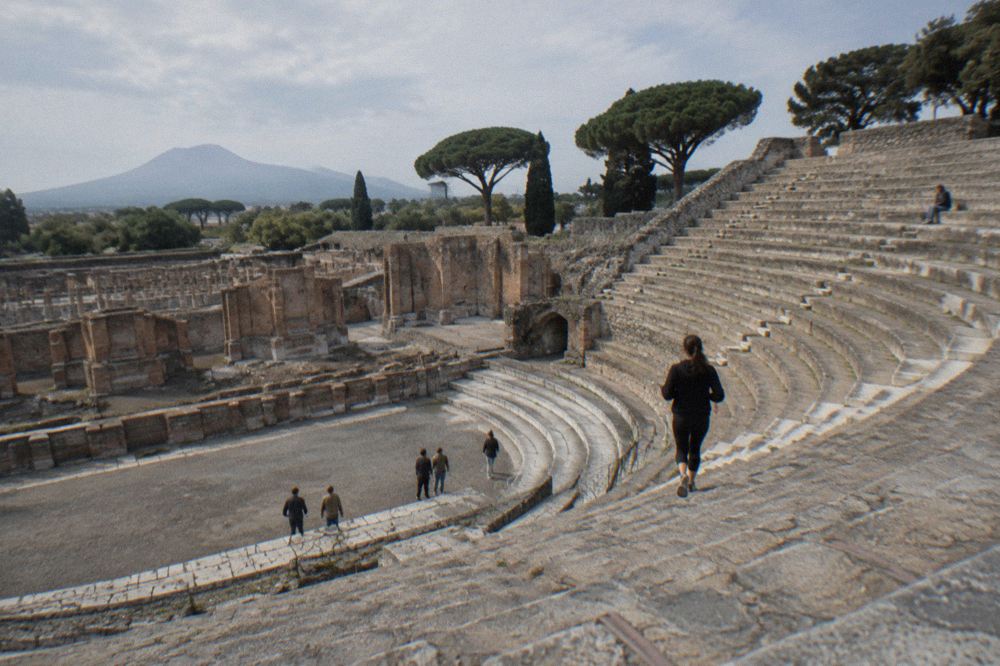
Several casts are on public display inside the park, typically in sheltered display spaces along the main visitor route and in the site's museum areas, and their exact placement changes as conservation and exhibition work proceeds. Every ticket tier that includes the ancient city, from the EUR 20 Pompeii Express ticket in 2026 to the single EUR 25 ticket from 1 January 2027, covers them; no separate cast ticket exists.
The park does not publish a fixed, permanent cast map, and the honest advice is to check at the ticket office or information point on arrival for what is open that day. Displays have historically included individual casts in glass cases, groups of casts shown together to illustrate different death postures, and casts of animals as well as people: a dog, a mule and other domestic animals were also found and cast, and the animal casts are among the forms visitors remember. The Garden of the Fugitives area, where a group of victims was found in a vineyard setting, is one of the locations long associated with the display of the dead, and casts connected with that find have been shown in the vicinity; the site is part of the standard walking route.
Because displays move, the most reliable planning approach is to build the cast stops into a route rather than chase a single address. The park has three ticket-office entrances, Porta Marina, Piazza Esedra and Piazza Anfiteatro, and the Porta Ercolano / Street of the Tombs entrance serves the suburban villas route. A route that starts at Porta Marina, crosses the Forum area and continues along the main decumanus will pass the locations where cast displays are most often placed, and the park's own map resources and the Pompeii map guide show the walking network on which those stops sit.
| Park Entrance | Type | Best For |
|---|---|---|
| Porta Marina | Ticket office, main western entrance | Forum-first routes, arriving from the Pompei Scavi-Villa dei Misteri station side |
| Piazza Anfiteatro | Ticket office | "Pompeii for All" accessible route entry, eastern end of the city |
| Porta Ercolano / Street of the Tombs | Suburban villas access | Villa of the Mysteries and Villa of Diomedes route, EUR 8 add-on for Express holders |
A visit built around the casts pairs naturally with an audio guide, since the park's own signage is brief and the casts raise questions that a commentary answers well. The entry ticket with audio guide is the site's featured option for this page, and it can be booked through the operator's live listing: Check availability.
If you would rather have a guide in person, the guided tour versus self-guided comparison weighs the two approaches, and the options departing from each base city are covered in the tours from Naples and tours from Sorrento guides.
Do The Pompeii Casts Contain Real Human Remains?
Most full-body plaster casts contain no bone at all: the body decayed inside the hardened ash long before the cast was poured, leaving only a void, and the plaster fills that void entirely. Some individual bones and teeth were preserved separately in the deposits and were excavated as skeletal finds, and modern imaging of some casts has revealed bones sealed inside the plaster, so the honest answer is: the casts are shapes of the dead, and a small number also hold real remains within them.
This is the point where careful wording matters, because popular articles often get it wrong in both directions. The claim that the casts "contain the bodies" is false for the classic full-body forms: the plaster replaced the space the body occupied, and the body itself is long gone. The opposite claim, that the casts are pure artistry with no human connection, is also false: the voids were made by real people who died in the eruption, and the cast surface is a direct physical record of their final posture, taken from the deposit itself.
Modern examination techniques have complicated the picture in an informative way. When researchers image certain casts, they have found bones embedded in the plaster, in the skull region in particular, where bone survived long enough to be fixed in place as the ash around it hardened. The park has also applied imaging to casts of other materials, including wood and furniture voids, using the same cavity principle. So a visitor looking at a cast may be looking at plaster alone, or at plaster holding sealed skeletal material; the distinction is not visible from the outside, and the park's conservation and research publications are the place where individual casts are documented.
A related question is whether the casts are original or reproductions. The park holds the original casts, some of which have been conserved and exhibited internationally, and it has also made study and display copies over the years. Display practice at Pompeii, as at every major archaeological site, balances conservation against public access, which is why a cast seen in a photograph from an older visit may not be standing in the same spot today. Treat any cast location you read anywhere, including in older guidebooks, as provisional and confirm on the day.
Where Else Can You See Victims Of The AD 79 Eruption?
Herculaneum, the neighbouring buried town on the western flank of Vesuvius, preserves the eruption's dead as skeletons rather than plaster casts, because its deposits sealed bodies in a different way; the site is a separate park with its own EUR 16 ticket in 2026, open daily, and its Villa dei Papiri and Ancient Theatre are closed for works. The UNESCO property that includes Pompeii also covers Herculaneum and Torre Annunziata, site of the Oplontis villa.
The difference between the two sites is one of the most instructive comparisons in Roman archaeology. At Pompeii, the fine ash hardened around bodies and left voids, which made casting possible. At Herculaneum, the surge deposits were hotter and denser, and the dead, many of them found in the boat sheds by the ancient shoreline, were preserved as skeletal remains rather than as empty cavities. So a traveller who wants the fullest picture of the eruption's human toll visits both: the plaster shapes at Pompeii and the skeletal finds at Herculaneum. The Pompeii versus Herculaneum guide compares the two sites in detail, including their different ticket systems.
Herculaneum's practical facts for 2026 are straightforward: the full ticket is EUR 16, reduced EUR 2 for visitors aged 18 to under 25, opening is 8:30 to 19:30 from 16 March to 14 October with last entry at 18:00, and 8:30 to 17:00 from 15 October to 15 March with last entry at 15:30. The site is open daily, closed only on 1 January and 25 December, and entry is free on the first Sunday of each month plus 25 April, 2 June and 4 November, with tickets collected at the office on the day. Two areas are closed for works: the Villa dei Papiri and the Ancient Theatre.
| Site | Eruption Victims Preserved As | 2026 Ticket | Closures to Know |
|---|---|---|---|
| Pompeii (ancient city) | Plaster casts from voids in the ash | EUR 20 Express / EUR 25 Pompeii+ | Praedia of Julia Felix closed since 7 September 2026 for maintenance |
| Herculaneum (Ercolano) | Skeletal remains, including the boat-shed finds | EUR 16 full, EUR 2 reduced 18 to under 25 | Villa dei Papiri and Ancient Theatre closed for works |
| Oplontis (Torre Annunziata) | No victim displays; villa and frescoes | EUR 8 individually | Closed on Tuesdays |
| Stabiae villas and museum (Castellammare di Stabiae) | No victim displays; villa remains | EUR 8 individually | Closed on Tuesdays |
A combined visit is realistic in one day, and the Pompeii and Herculaneum in one day itinerary sequences the two sites around the Circumvesuviana line, whose Pompei Scavi-Villa dei Misteri station serves the ancient city. The Circumvesuviana train guide covers the line; the Campania Express, by contrast, has been suspended since 1 October 2026, a fact covered in the Campania Express guide.
How Many People Visit Pompeii Each Year, And Does Crowding Affect A Cast Visit?
Yes, crowding can affect a cast visit, which is why Pompeii caps entry with time slots: from 16 March to 14 October the day splits at 13:00, with a maximum of 15,000 entries between 9:00 and 13:00 and a maximum of 5,000 between 13:00 and 17:30, so the afternoon is the quieter time to see the casts.
Those numbers explain a lot about how a visit feels. Four million visits a year, concentrated into the April-to-October half of the calendar, means the Forum and the main decumanus carry heavy foot traffic through the middle of the day. The monthly pattern from 2024 shows the shape of the season: April 466,344, May 516,923, June 410,712, July 449,162, August 421,255, September 468,340 and October 481,255, against January 112,121 and February 142,648. The afternoon slot, with its 5,000-entry ceiling, is the quieter of the two, and the last-entry time of 17:30 in the summer season gives late arrivals several hours of light.
| Year | Pompeii Ancient City Visitors | All Park Sites Total |
|---|---|---|
| 2022 | 2,972,159 | Not stated in the park's table for this year |
| 2023 | 3,985,424 | 4,079,235 |
| 2024 | 4,069,377 | 4,177,753 |
| 2025 | 4,000,090 | 4,118,926 |
The cap and the nominative ticket rule have practical consequences for planning. Tickets are personal, ID may be checked at every entry, and tickets are non-transferable and non-refundable except in cases of extraordinary closure. The bag rule also matters for a day built around walking: permitted bag size is 30x30x15 cm, and anything larger goes to left luggage. Free first Sundays, when entry costs nothing for everyone, draw the site's biggest crowds; the park has recorded more than 36,000 visitors on a single free first Sunday, which is above the ordinary cap because the free-entry scheme operates outside the paid-slot structure.
For travellers weighing whether the site justifies the effort at all, the is Pompeii worth visiting guide sets out the case on both sides, and this Pompeii Travel Guide collects the practical planning pages in one place.
When Is The Best Time Of Year To Visit The Pompeii Casts?
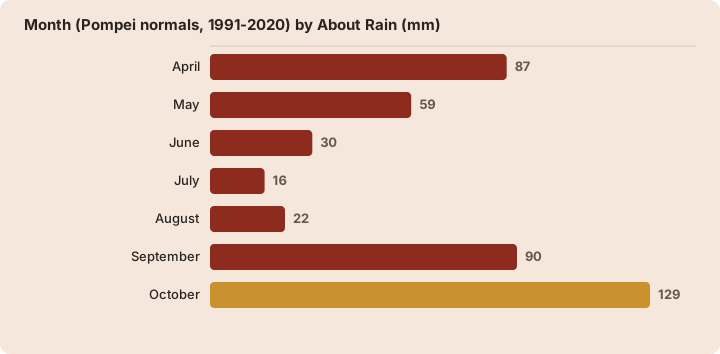
Spring and autumn offer the most comfortable conditions for the long outdoor walk a cast visit requires: Pompei's 1991-2020 climate normals show about 21.6 C daily maxima in May and about 21.3 C in October, against about 29.4 C in August, the hottest month, and about 12.2 C in January. November is the wettest month at about 180 mm of rain and July the driest at about 16 mm, so late spring combines warmth with relatively low rainfall.
The site is almost entirely open-air, and the volcanic stone underfoot holds heat, so temperature shapes the experience more than at a museum. The monthly normals computed from the Open-Meteo historical archive for the Pompei grid point give the full picture: mean daily maxima rise from about 12.2 C in January to about 29.4 C in August, with overnight minima from about 6.5 C in February to about 21.8 C in August. Rainfall peaks in November at about 180 mm, with December at about 147 mm and October at about 129 mm, while July averages about 16 mm and June about 30 mm.
| Month (Pompei normals, 1991-2020) | About Mean Daily Max (C) | About Mean Daily Min (C) | About Rain (mm) |
|---|---|---|---|
| April | 17.7 | 10.4 | 87 |
| May | 21.6 | 14.1 | 59 |
| June | 25.8 | 18.2 | 30 |
| July | 28.7 | 21.1 | 16 |
| August | 29.4 | 21.8 | 22 |
| September | 25.3 | 18.6 | 90 |
| October | 21.3 | 15.1 | 129 |
Opening hours also shift with the seasons. From 16 March to 14 October the park opens at 9:00, takes its last entry at 17:30 and closes at 19:00; from 15 October to 15 March it opens at 9:00, takes its last entry at 15:30 and closes at 17:00. The ancient city has no weekly closing day, though the smaller park sites at Oplontis, Stabiae and the Stabiae museum close on Tuesdays, and the whole park closes on 25 December and 1 January unless otherwise communicated. A winter afternoon visit is therefore short: the 15:30 last entry gives barely ninety minutes on site. The weather and best time to visit guide expands on all of this, and the summer heat plan has tactics for July and August.
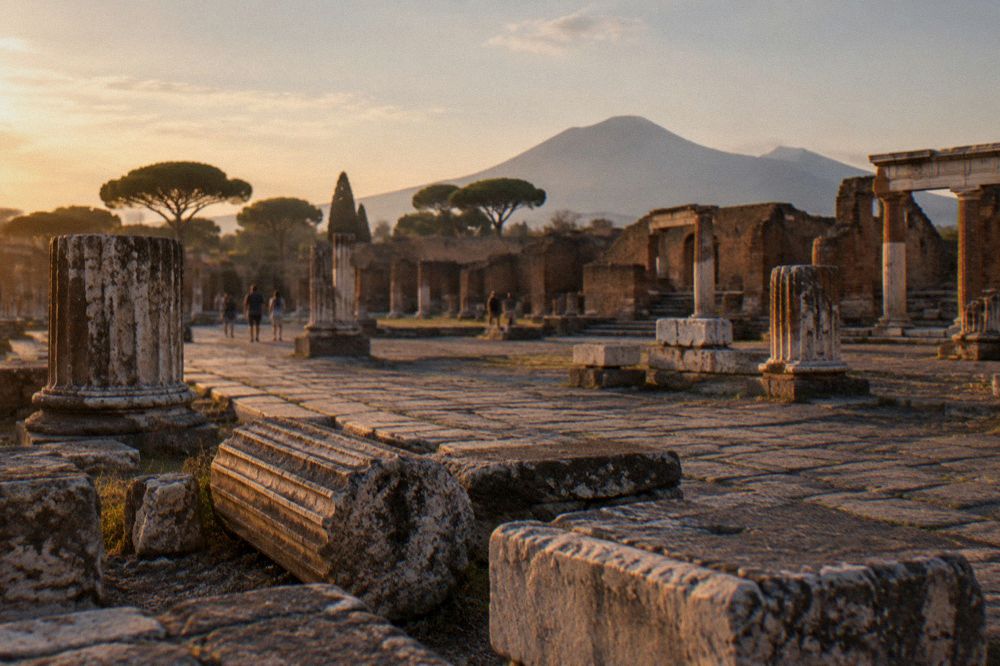
How Should You Plan A Day Around The Casts?
Plan the casts into a two-hour minimum visit that starts at Porta Marina or Piazza Anfiteatro, follows the main axis of the city past the Forum, and leaves time for the Villa of the Mysteries route if you hold a Pompeii+ ticket; arrive for the 9:00 opening or take the quieter 13:00 slot, carry only a 30x30x15 cm bag, and book a nominative ticket in advance because the 20,000 daily cap means peak days can sell out.
The single commonest mistake is treating Pompeii as a quick photo stop. The excavated area covers 44 hectares, the surfaces are ancient paving with deep ruts, and there is little shade between stops; comfortable shoes and water are not optional. The second mistake is ignoring the ticket structure. In 2026, an Express holder who decides on site to see the suburban villas can add them for EUR 8, card only, at the Porta Ercolano / Street of the Tombs entrance, which is worth knowing before committing to the EUR 20 tier. From 1 January 2027 this complexity disappears: one EUR 25 ticket covers all park sites, valid 30 days, one entry per site, with the three smaller sites staying at EUR 8 each and the MyPompeii Card staying at EUR 45.
| Planning Item | 16 March to 14 October | 15 October to 15 March |
|---|---|---|
| Opening time | 9:00 | 9:00 |
| Last entry | 17:30 | 15:30 |
| Closing time | 19:00 | 17:00 |
| Morning slot cap (9:00-13:00) | 15,000 entries | Applies in the 16 March to 14 October season |
| Afternoon slot cap (13:00-17:30) | 5,000 entries | Applies in the 16 March to 14 October season |
Where you sleep shapes the day as much as the ticket. Staying in the modern town of Pompei puts the Scavi entrance within a short walk of the station area, while Naples and Sorrento bases add a Circumvesuviana ride at each end; the where to stay in Pompei guide, the Naples to Pompeii guide, the Sorrento to Pompeii guide and the Amalfi Coast to Pompeii guide cover each approach, and the where to eat in Pompei guide solves the lunch question. Cruise passengers with limited hours should read the shore excursions guide, and anyone coming from the capital should start with the Rome to Pompeii day trip guide or the Rome to Pompeii by train guide.
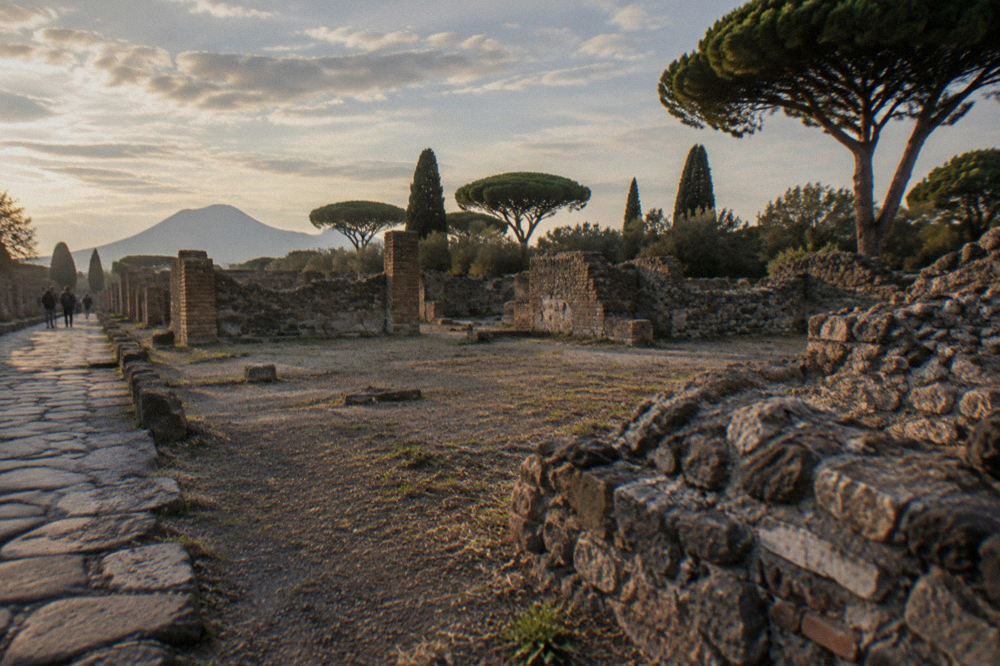
Is A Guided Tour Worth It For Seeing The Pompeii Casts?
A guided tour adds the most value exactly where the casts are concerned, because the forms are silent: a guide or audio commentary explains which voids were cast, what the postures indicate about the surge deposits, and how the casting technique developed, none of which the site signage states at length. Travellers with a strong background may prefer a self-guided visit with an audio guide, and the ticket-with-audio-guide option is the featured product for this page.
The honest trade-off is depth against flexibility. A small-group tour with an archaeologist keeps the group moving on a set route and covers the interpretation efficiently; a self-guided visit with the audio guide lets a visitor linger at each cast and skip what does not interest them. Both work. What does not work is arriving with no commentary at all and expecting the casts to explain themselves: they are plaster shapes, and without context a first-time visitor sees shapes and misses the story of voids, decay and plaster that this guide has laid out.
The featured option on this page is the entry ticket with audio guide, which bundles admission and commentary in one booking. It suits independent travellers who want the interpretation without a fixed group schedule, and it can be reserved ahead: Check availability.
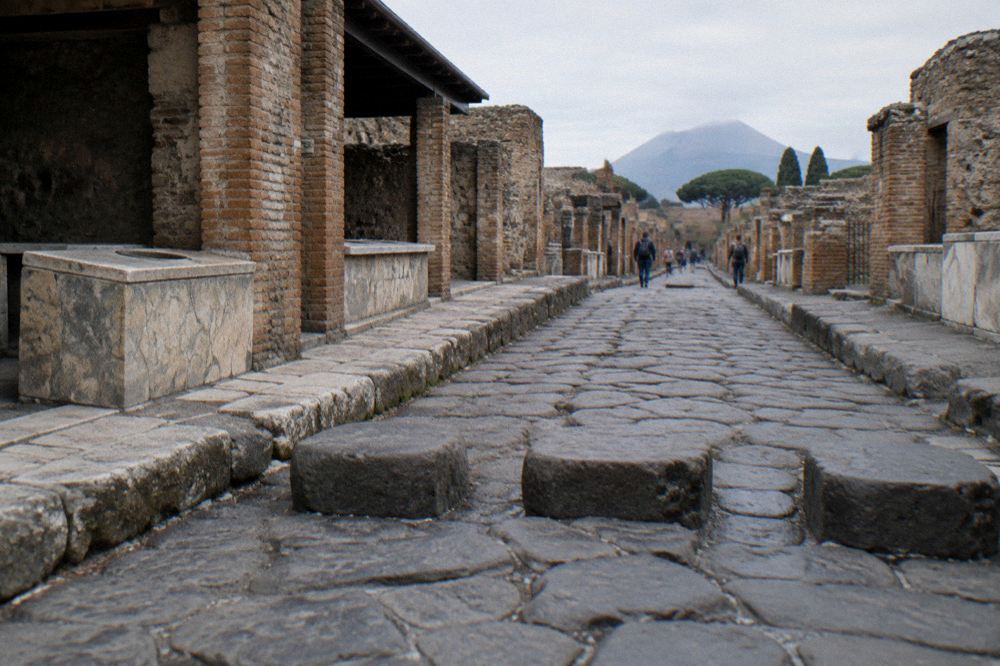
Common Questions About The Pompeii Casts
Are the Pompeii casts real bodies?
No. The full-body casts are plaster forms poured into voids left in the volcanic deposit after the bodies decayed, so they hold the shape of a person rather than the person. Modern imaging has found bones sealed inside a small number of casts, and skeletal finds from the AD 79 eruption also exist, including at Herculaneum, but a typical cast is plaster alone.
Where are the casts displayed in Pompeii?
Inside the Parco Archeologico di Pompei, in sheltered display areas along the visitor route and in the site's museum spaces. Displays move as conservation work proceeds, so confirm at the information point on arrival. Every ticket that includes the ancient city covers them; there is no separate cast ticket.
How were the Pompeii casts made?
Excavators found hollow voids in the hardened volcanic deposits, reinforced the surrounding ash, then filled each cavity with liquid plaster. Once the plaster hardened, the ash around it was removed, leaving a positive copy of the space a body had occupied: posture, clothing folds and sometimes fine detail such as straps or fingers.
Do I need a special ticket to see the Pompeii casts?
No. In 2026 the Pompeii Express ticket at EUR 20 covers the ancient city, including the cast displays, and the Pompeii+ ticket at EUR 25 adds the suburban villas and Boscoreale. From 1 January 2027 a single EUR 25 ticket covers all park sites, valid 30 days, one entry per site. Entry is free for under-18s and for everyone on the first Sunday of the month.
Are the casts suitable for children?
That depends on the child. The casts are lifelike forms of people who died in a volcanic eruption, and some are shown in stark postures. Many families visit successfully and use the casts to talk about history honestly; parents who prefer to preview material can check the park's official pages beforehand and plan the route accordingly.
Can I photograph the Pompeii casts?
Ordinary photography for personal use is permitted inside the park, and the casts are among the most photographed objects on site. The park's visitor regulations are the authoritative source for current rules on equipment, and commercial or drone use requires authorisation; drones without authorisation are not permitted anywhere in the park.
The casts of Pompeii are unlike anything else a traveller will ever stand in front of: not art, not relics under glass, but the literal shapes left in the ash by people caught in the eruption of AD 79, traditionally dated to 24 August. Seeing them well takes a little planning, a ticket bought in advance under the 20,000-a-day cap, comfortable shoes for 44 hectares of ancient paving, and enough time to let the forms do what they do. Plan the day around the morning or 13:00 slot, carry a small bag, and the plaster and the city that holds it will repay every minute.