Mount Vesuvius And Pompeii
Two days is the realistic minimum for the ancient city of Pompeii, the excavations at Herculaneum and the Vesuvius Gran Cono trail in Campania, southern Italy. This itinerary sequences the three sites, compares the 2026 tickets and states every closure and price change that matters.
Short answer
Day one covers Pompeii in the morning and the Vesuvius Gran Cono trail in the afternoon; day two covers Herculaneum. Pompeii Express costs EUR 20 in 2026, Herculaneum EUR 16 and the Vesuvius trail EUR 11.68 online. From 1 January 2027 a single EUR 25 ticket covers all Pompeii park sites. The Campania Express has been suspended since 1 October 2026.
Two days is the practical minimum for the three great Vesuvius sites of Campania, southern Italy: the ancient city of Pompeii, buried by the eruption of AD 79 and now an archaeological park beside the modern town of Pompei about 24 km from Naples; the smaller, better-preserved excavations at Herculaneum on the volcano's western flank; and the Gran Cono crater trail inside the Vesuvius National Park. Squeezing all three into one day is possible but rushed, and the one-day Pompeii and Vesuvius plan exists for travellers who must. This guide, published by Pompeii Travel Guide, sequences the three sites across two days, states the 2026 ticket prices for each, flags the closures in force this autumn, and separates what a combined tour solves from what independent travel handles better.
What Does A Two-Day Pompeii, Herculaneum And Vesuvius Trip Involve?
A two-day trip involves one ancient city, one buried seaside town and one active volcano crater, sequenced so the hardest walking comes first: Pompeii and the Vesuvius Gran Cono trail on day one, Herculaneum on day two. Pompeii alone holds a 44 ha excavated area within a 98 ha UNESCO inscribed property, and it drew 4,000,090 visitors in 2025. Herculaneum is compact by comparison, and the crater trail is a 2 to 3 hour mountain walk with timed online-only entry.
The logic of the split is physical as much as logistical. Pompeii is enormous, largely unshaded and covered in ancient paving stones; Herculaneum is smaller, partly deeper below modern street level, and easier on the legs; the Gran Cono trail is a proper mountain ascent of about 2 hours return by the shortest route, up to 3 hours by the longest. Putting the two most demanding visits on day one, with Herculaneum's gentler circuit as the recovery day, is the sequencing this guide recommends.
The 44 ha and 98 ha figures come from the UNESCO listing for property 829, which covers Pompeii, Herculaneum and Torre Annunziata together under criteria (iii), (iv) and (v). The visitor count of 4,000,090 for 2025 comes from the park's own published data table, down slightly from 4,069,377 in 2024. Those numbers explain the practical case for two days: the park operates a 20,000 visitors per day cap, in force since 15 November 2024, and the shoulder months of the year spread the crowds far more kindly than July and August.
How Should You Split Day One Between Pompeii And The Volcano?
Start Pompeii at the 9:00 opening at Porta Marina, give the ancient city four to five hours on a fixed route, then move to Vesuvius for an afternoon crater slot. Between 16 March and 14 October Pompeii's last entrance is 17:30 and closing is 19:00, so an early Pompeii start protects the volcano window. The crater's own access hours run only to 15:00 in November, so from late autumn the order should flip and Vesuvius should come first.
The pairing works because the two sites sit close together and use different kinds of time. Pompeii rewards slow looking; the Gran Cono is a timed slot on a clock. The train from Naples Garibaldi to Pompei Scavi-Villa dei Misteri takes 29 to 35 minutes on the Circumvesuviana line, and the crater trailheads lie a short drive above the park's parking areas, so a taxi or tour transfer between the two is the one leg where a combined tour genuinely earns its price. If you are weighing which site deserves the morning slot in your own case, the question of whether to do Pompeii or Vesuvius first has its own answer page.
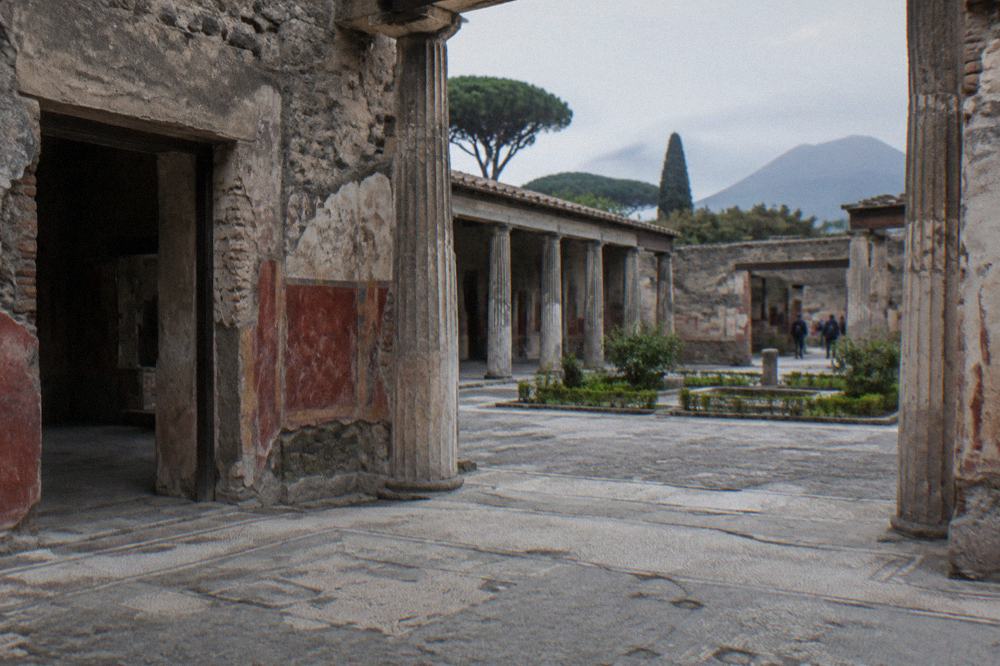
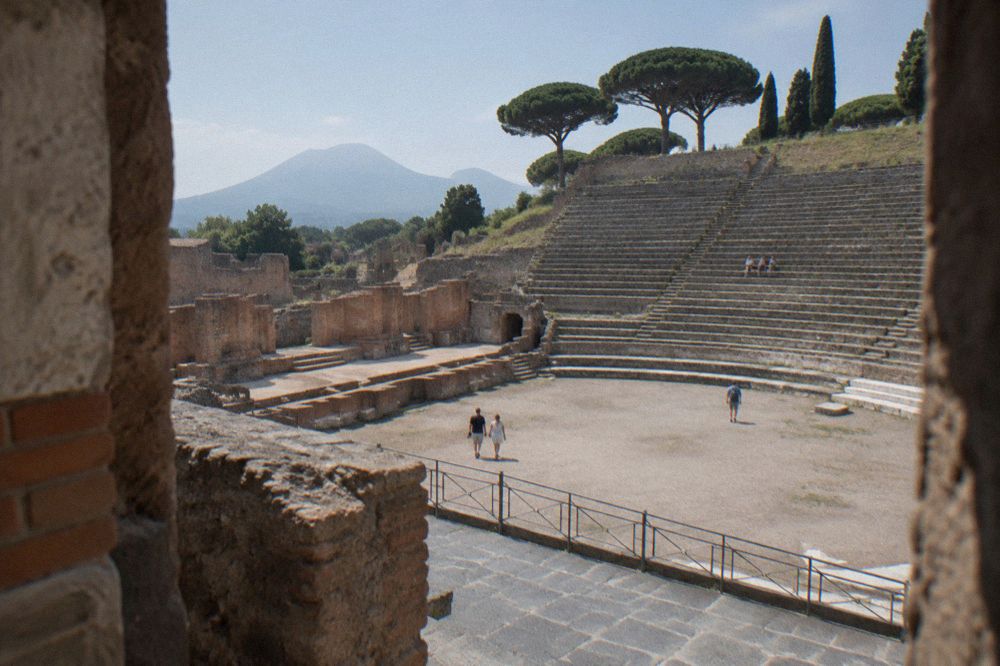
Inside Pompeii, fix the route before you enter. A realistic four-hour circuit runs from Porta Marina through the Forum, along Via dell'Abbondanza to the Large Theatre, across to the Amphitheatre and the Large Palaestra, and back past the Garden of the Fugitives. Note one closure that affects route planning this season: the Praedia of Julia Felix has been closed to the public since 7 September 2026 for maintenance, until further notice, so any printed itinerary that routes through it is out of date.
A fixed route matters because of the daily entry bands the park operates from 16 March to 14 October: a maximum of 15,000 visitors in the 9:00-13:00 band and 5,000 in the 13:00-17:30 band. The afternoon park is the quieter park. That cuts the other way for the volcano, whose afternoon slots sell out in high summer, which is why the 2027-pricing discussion below matters less than getting your crater slot booked the moment your dates are fixed.
The three options above span the realistic range for day one: a two-site day tour from Naples, a crater ticket with digital guide bought on its own, and a small-group lunch-inclusive version. Which one fits depends on whether you want the transfers solved or only the entry secured.
Which Pompeii Ticket Do You Need In 2026?
For this two-day itinerary the Pompeii Express at EUR 20 is enough, because Herculaneum and Vesuvius are separate ticket systems that no Pompeii pass covers. The Pompeii+ at EUR 25 or the 3-day ticket at EUR 30 only pay off if you also want the suburban villas at Pompeii or the outlying park sites at Oplontis, Stabiae and Boscoreale. All these 2026 prices end on 31 December 2026.
The 2026 structure, in force since 12 January 2026, is straightforward once you know what each tier buys. Express covers the ancient city alone. Pompeii+ adds the suburban villas route (Villa of the Mysteries and Villa diomedes, plus Villa Regina and the Antiquarium at Boscoreale with the shuttle). The 3-day ticket adds Oplontis, the Stabiae villas and museum, and Boscoreale. Express holders can add the suburban villas route later for EUR 8, card payment only, at the Porta Ercolano / Street of the Tombs entrance. The full detail, including the reduced and free categories, sits on the Pompeii tickets explained page.
| Pompeii Ticket (2026) | Price 2026 | What It Covers |
|---|---|---|
| Pompeii Express | EUR 20 | Ancient city only |
| Pompeii+ | EUR 25 | City, suburban villas, Villa Regina, Boscoreale Antiquarium, shuttle |
| 3-day ticket | EUR 30 | Pompeii+ plus Oplontis, Stabiae villas and museum, Boscoreale |
| Outlying sites individually | EUR 8 | Oplontis, Stabiae museum or Boscoreale |
| MyPompeii Card (annual) | EUR 45 | Annual pass (EUR 10 reduced) |
Two concessions matter for younger travellers: entry is free for everyone under 18, and EU citizens aged 18 to under 25 pay a reduced EUR 2 (non-EU holders of an Italian residence permit qualify too). Entry is free for everyone on the first Sunday of the month, year-round, under the Domenica al Museo scheme; the park recorded more than 36,000 visitors on a single free first Sunday, which is the number to hold in mind before choosing one.
From 1 January 2027 the structure collapses into a single EUR 25 ticket covering all park sites, valid 30 days with one entry per site. If your trip falls in 2027, planning around the Express price will leave you wrong by EUR 5, and planning around separate Oplontis purchases will overstate the cost. The nominative ticket rule, introduced 15 November 2024, survives the change: tickets carry a name, ID may be checked at every entry, and tickets are non-transferable.
The Vesuvius and Herculaneum costs never fold into any Pompeii pass, so budget them separately. If day one makes you want the transfers, tickets and crater timing handled by someone else, one combined option sits below.
How Do You Get Up Mount Vesuvius And What Does The Crater Cost?
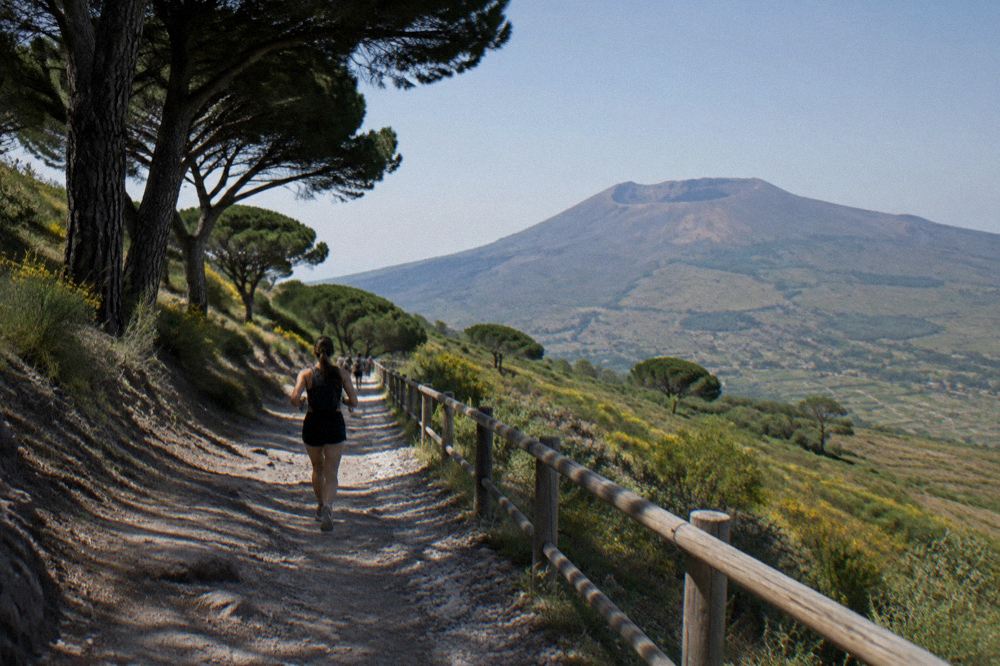
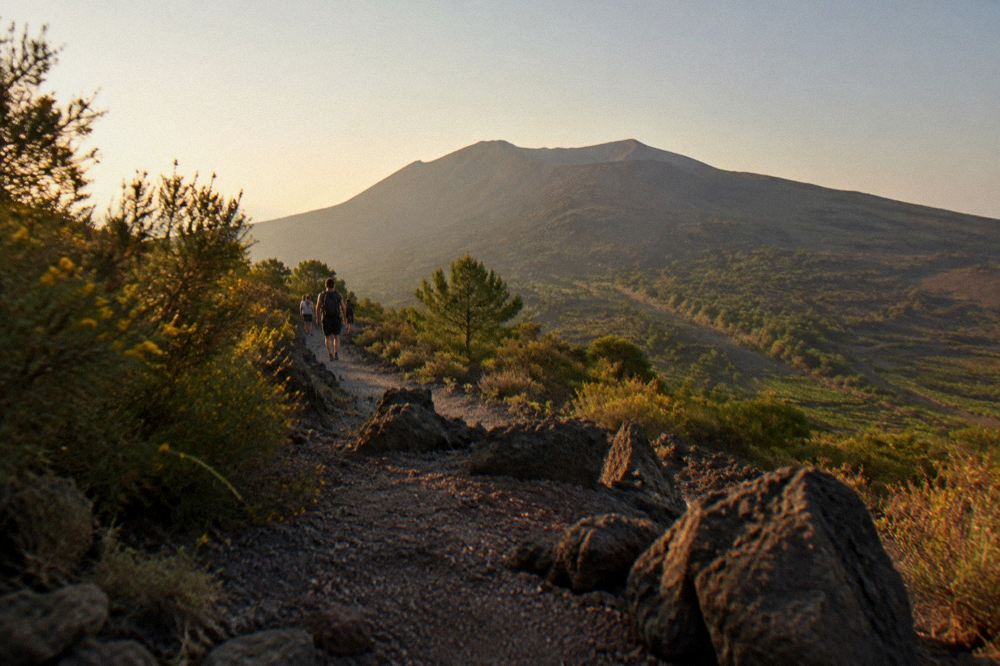
The Gran Cono crater trail is sold online only, as timed slots costing EUR 11.68 full and EUR 9.55 reduced as sold, bookable up to 30 days ahead through the national park's official ticketing page. Fifty tickets open per 10-minute slot, plus 10 last-minute nominative tickets per slot released 30 minutes before. The walk takes about 2 hours return by the shortest route, up to 3 hours by the longest.
There is no walk-up ticket office in the ordinary sense, and the Vesuvius tickets explained page covers the mechanics in detail. Slots run in groups of 60 per 10 minutes, organised as three groups of 20, and daily caps run from 2,160 to 3,240 visitors depending on the season. Access hours shift by month, so your day-one sequencing depends on the calendar more than on preference.
| Months | Gran Cono Access Hours |
|---|---|
| January, February, November, December | 09:00-15:00 |
| March and October | 09:00-16:00 |
| April, May, June, September | 09:00-17:00 |
| July and August | 09:00-18:00 |
Two rules catch visitors out. First, the ticket office and the path close automatically when an orange weather alert or higher is issued, with an automatic refund when that happens, so a stormy forecast is a genuine risk to day one rather than an inconvenience. Second, the last-minute tickets have been nominative since 11 April 2026, so they cannot be harvested in bulk by touts the way they once were. Children under 6 go free, and reduced rates apply to visitors under 25 and residents of the 13 park municipalities.
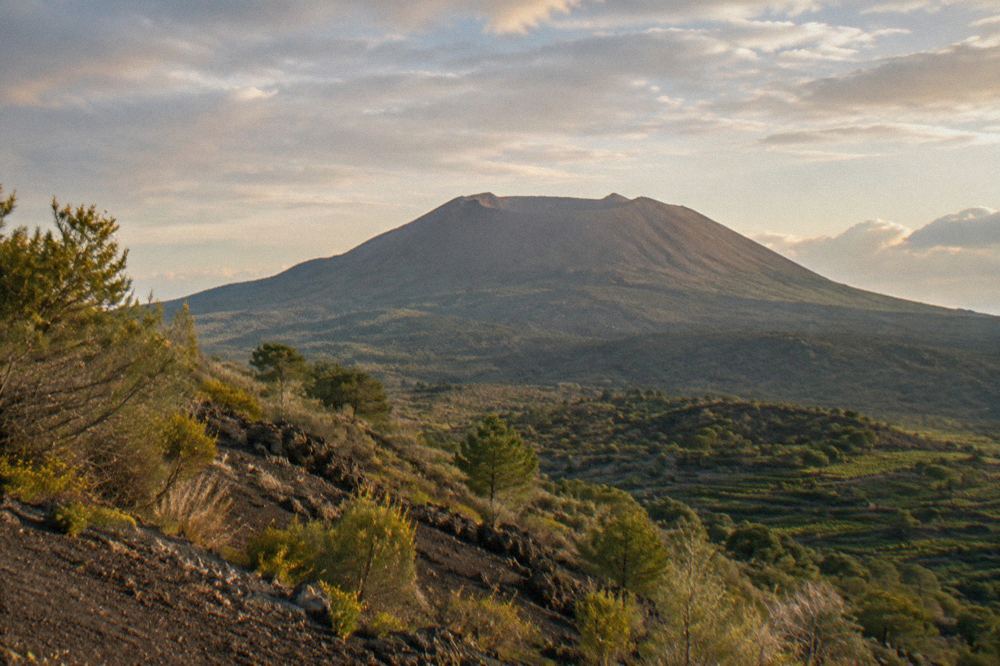
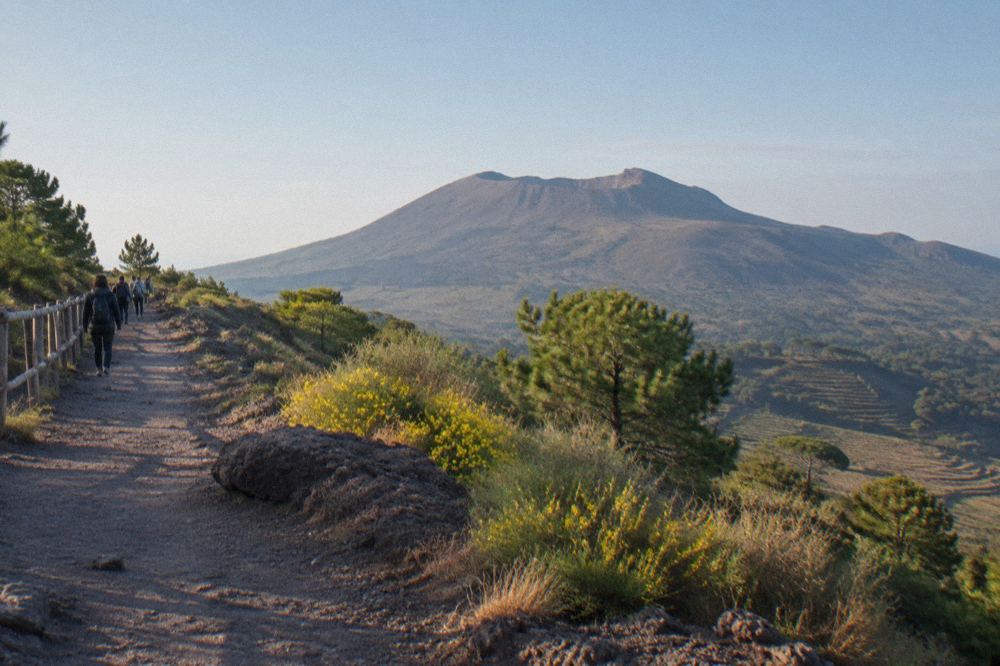
For the ascent itself, the Mount Vesuvius hike guide covers footwear, gradient and what the crater rim is actually like underfoot. If you would rather not self-manage the timed entry, a skip-the-line ticket with digital guide is bookable below; it bundles the crater access with orientation, and the operator's live listing carries the current price and terms.
Whether the crater is worth the climb at all is a fair question with a long answer, and it has its own page on whether going up Vesuvius is worth it. The short version for this itinerary: after half a day among the ruins the volcano explains itself, because standing on the rim is the only vantage from which the destruction reads as a single event.
What Should Day Two At Herculaneum Look Like?
Day two belongs to Herculaneum alone: a slower three to four hour circuit of a site that preserves upper floors, wooden structures and material Pompeii lost, entered from the modern town of Ercolano. Admission is EUR 16 full, EUR 2 reduced for ages 18 to 25, free on the first Sunday of each month plus 25 April, 2 June and 4 November. Two closures apply: the Villa dei Papiri and the Ancient Theatre are both closed for works.
Herculaneum rewards a different pace. Where Pompeii demands route discipline, Herculaneum is small enough to wander, and its boat sheds, carbonised doors and stacked roof tiles tell the story of the eruption's later, hotter phase in a way Pompeii's expanses cannot. The famous papyri recovered from the Villa dei Papiri have their own story on the Herculaneum scrolls page, and the villa's closure makes that the only place to "visit" it this season.
| Herculaneum (2026) | Detail |
|---|---|
| Full ticket | EUR 16 |
| Reduced (18 to 25) | EUR 2 |
| Hours 16 Mar to 14 Oct | 8:30-19:30, last entry 18:00 |
| Hours 15 Oct to 15 Mar | 8:30-17:00, last entry 15:30 |
| Free days | First Sunday monthly, 25 Apr, 2 Jun, 4 Nov |
| Closed | 1 Jan, 25 Dec |
The site opens daily, unlike the outlying Pompeii park sites at Oplontis and Stabiae, which close on Tuesdays; the main Pompeii excavations have no weekly closing day. Herculaneum's free first-Sunday tickets are collected at the ticket office on the day, with no reservation, so pairing your day two with a first Sunday saves EUR 16 per adult at the cost of a busier site.
Getting there needs care, because the rail picture changed this autumn. The Campania Express has been suspended since 1 October 2026 until further notice, so the EAV Circumvesuviana line is the surviving rail link for both days of this itinerary; refunds for suspended Campania Express bookings run through EAV's complaints form or the original seller. A guided small-group option for the day, with tickets included, is available below.
If day two leaves you wanting a fourth site, the pairing question of Pompeii versus Herculaneum has its own comparison page, and the wider villas of the Vesuvius route extends the same railway into a longer trip.
Where Should You Base Yourself For The Two Days?
Sorrento, 26 km and about 37 minutes by road, works if day one's volcano leg is a tour transfer rather than self-drive. Staying in the modern town of Pompei itself suits car travellers who want to be walking distance from the Porta Marina entrance.
The road distances come from route mapping on OpenStreetMap and are driving estimates rather than official figures, but they order the options correctly. Naples gives you the train, the food and the Archaeological Museum, whose Pompeii frescoes and artefacts repay a visit on any spare afternoon. Sorrento adds transfer time but pairs the trip with the coast. Pompei town itself is the quiet option, useful when day two starts early, though the archaeological area around the entrances is thin on evening life.
| Base | Road Distance To Pompei Scavi | Approx Driving Time | Best For |
|---|---|---|---|
| Naples | 24 km | 22 min | Rail travel, museum, restaurants |
| Sorrento | 26 km | 37 min | Combining with the Amalfi Coast |
| Salerno | 31 km | 30 min | Rail arrivals from the south |
| Rome | 234 km | 159 min | Not a base; a day-trip origin only |
Rome appears in the table only to close the question: a two-site, two-day Vesuvius itinerary is not a realistic Rome proposition, and anyone starting there should treat Pompeii as a single long day trip and pick either the volcano or Herculaneum as the second act, not both. If you are weighing the two cities against each other, the Naples versus Sorrento base comparison goes deeper than distances.
Fares are bought at station counters or machines, and the operator's own timetable is the authority for service times.
How Demanding Is The Walking, And When Should You Go?
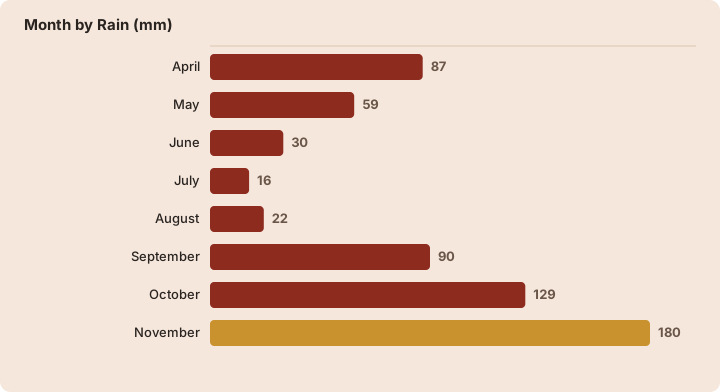
Expect 15,000 to 20,000 steps a day: Pompeii's paving is uneven and unshaded, the Gran Cono is a 2 to 3 hour mountain walk on loose gravel, and Herculaneum mixes ramps with stairs down to the ancient waterline. The climate data says May, June, September and October are the comfortable months, with July and August mean daily maxima near 29 C and November the wettest month at about 180 mm of rain.
The climate figures are 1991-2020 normals computed from the Open-Meteo historical archive at the Pompei grid point, a reanalysis grid rather than a weather station, so treat every number as approximate. The shape of the year is unambiguous: the driest months are July at about 16 mm and August at about 22 mm, and the wettest is November at about 180 mm, with October close behind at about 129 mm. February has the lowest mean daily minimum at about 6.5 C, and August the highest mean daily maximum at about 29.4 C.
| Month | Mean Daily Max (C) | Mean Daily Min (C) | Rain (mm) |
|---|---|---|---|
| April | 17.7 | 10.4 | 87 |
| May | 21.6 | 14.1 | 59 |
| June | 25.8 | 18.2 | 30 |
| July | 28.7 | 21.1 | 16 |
| August | 29.4 | 21.8 | 22 |
| September | 25.3 | 18.6 | 90 |
| October | 21.3 | 15.1 | 129 |
| November | 16.9 | 11.5 | 180 |
Footwear decisions follow from the surfaces, and the what to wear to Pompeii page treats them properly: closed shoes with grip, not sandals, and the same applies doubly on the crater path. Bring more water than feels reasonable between June and August, since shade inside the ancient city is scarce and the park's bag limit of 30x30x15 cm keeps large daypacks out anyway. The winter timetable compresses everything: from 15 October to 15 March Pompeii's last entrance is 15:30 and closing is 17:00, which makes the two-site day-one pattern impossible and pushes this itinerary toward one major site per day.
Accessibility changes the arithmetic rather than cancelling the trip. The park's "Pompeii for All" route lets visitors with mobility difficulties enter at Piazza Anfiteatro and exit at Piazza Anfiteatro or Piazza Esedra via the Antiquarium lift, and the full detail is on the Pompeii accessibility page. The crater trail has no equivalent, and the question of how difficult the walking in Pompeii is has a dedicated answer.
Should You Book A Combined Tour Or Travel Independently?
Book a combined tour if you want someone else to handle logistics, tickets, and timing, since it saves planning work and bundles popular stops into one itinerary; travel independently if you value flexibility, prefer setting your own pace, and want the freedom to linger, skip, or add stops, since the tradeoff is more research and coordination on your part.
| Decision Factor | Independent | Combined Tour |
|---|---|---|
| Entries to manage | Three separate timed purchases | One booking covers day one |
| Pompeii-to-crater leg | Taxi or tour transfer needed | Included |
| Pace control | Full | Fixed to the group |
| Weather re-planning | Your problem | Operator reschedules or refunds |
| Herculaneum day two | Own arrangement | Usually separate anyway |
Day two rarely needs a tour in the same way, because Herculaneum sits a short walk from its own station and the site is compact. Where a guided day does add value there is in the interpretation, and the small-group archaeologist format covered earlier in this guide is the version that fits. For travellers who prefer everything solved, a lunch-inclusive small-group day covering both Pompeii and Vesuvius is bookable below, and the operator's listing states what the meal and entry include.
One final historical note that dates the whole landscape you are walking through: the eruption that buried all three sites is traditionally dated to 24 August AD 79 from Pliny the Younger's oldest manuscripts, while the park's own e-journal states that the competing 24 October date has no evidentiary basis. The debate stays open, and the when Vesuvius erupted page sets out both sides, but nothing in the itinerary depends on settling it. What the crater rim gives you on day one is the geometry of the event: one volcano, two towns buried at different temperatures, and a landscape you can now cross in two days.
Common Questions About A Two-Day Pompeii, Herculaneum And Vesuvius Trip
Can Pompeii, Herculaneum And Vesuvius Be Done In Two Days?
Yes, two days is the comfortable minimum. Day one pairs Pompeii with the Vesuvius Gran Cono trail, and day two is Herculaneum. All three cannot be done well in one day.
How Much Do The Three Sites Cost In 2026?
Pompeii Express is EUR 20, Herculaneum is EUR 16 full, and the Vesuvius Gran Cono trail is EUR 11.68 full online. Reduced rates apply: EUR 2 at Pompeii for EU citizens aged 18 to under 25, EUR 2 at Herculaneum for ages 18 to 25, and EUR 9.55 on Vesuvius for under 25s and park residents.
Do The Ticket Prices Change In 2027?
Yes. From 1 January 2027 a single EUR 25 ticket covers all Pompeii park sites, valid 30 days with one entry per site. Oplontis, the Stabiae museum and Boscoreale stay EUR 8 each, and the MyPompeii Card stays EUR 45.
Which Site Should Come First?
Pompeii first in the cooler morning, Vesuvius in the afternoon, works from spring to early autumn. From November the crater closes at 15:00, so Vesuvius should come first or move to its own morning.
Are Parts Of The Sites Closed Right Now?
Yes. The Praedia of Julia Felix in Pompeii has been closed since 7 September 2026 for maintenance, and Herculaneum's Villa dei Papiri and Ancient Theatre are both closed for works.
Whatever mix of trains, timed slots and guided days you settle on, book the Vesuvius crater slot first, since it is the only entry of the three with hard monthly caps and automatic weather closures, and let the rest of the two days arrange themselves around it.