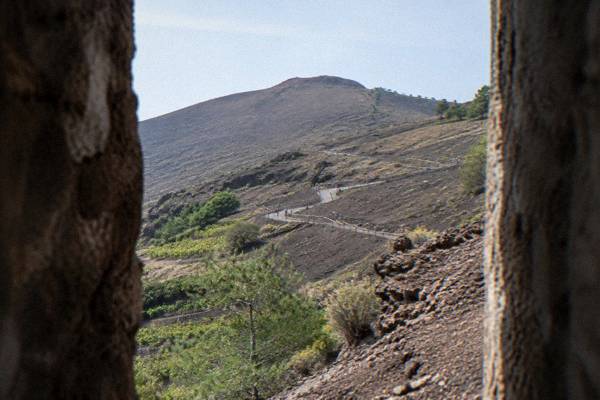
Mount Vesuvius Crater
The Gran Cono trail is the shortest way to stand on the rim of the volcano that destroyed Pompeii in AD 79. Here is what the climb involves, what it costs and how the timed-ticket system works.
Short answer
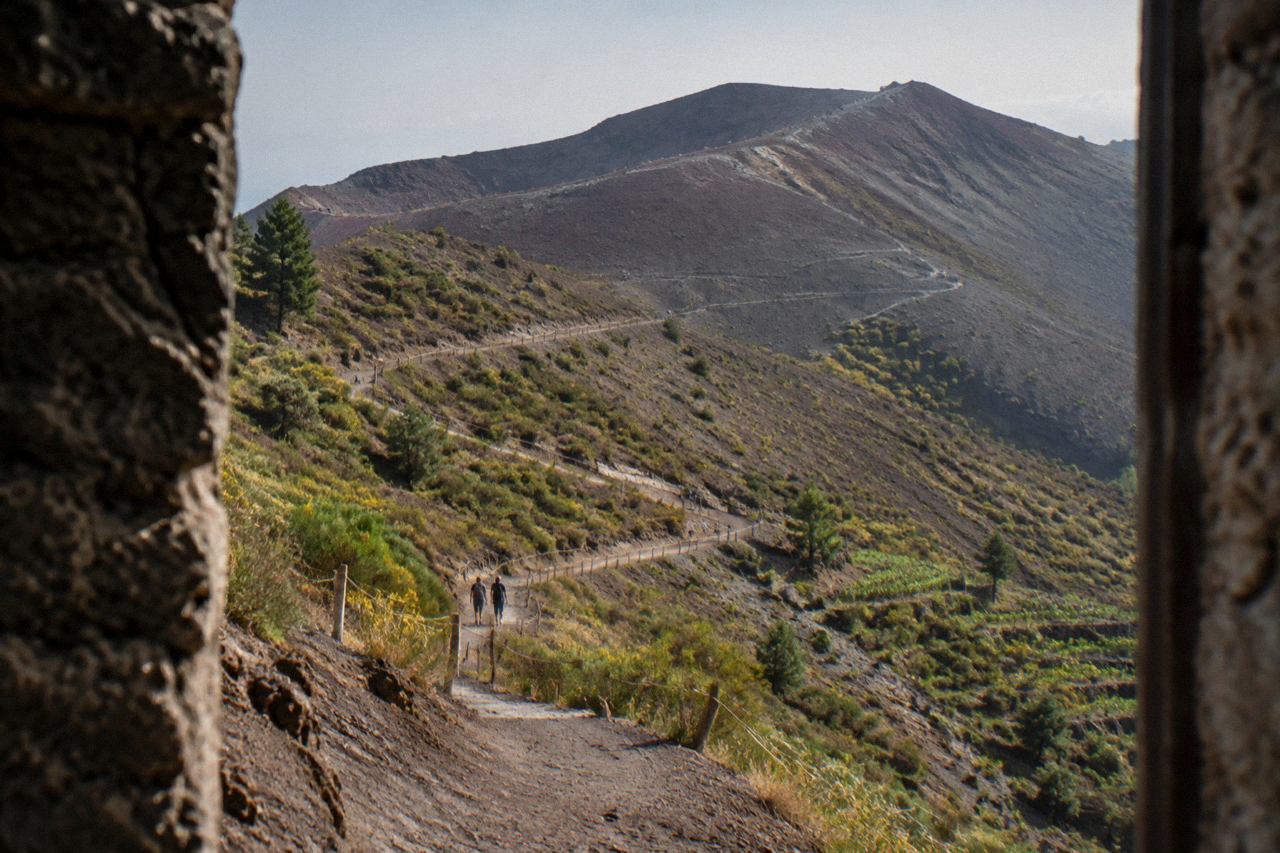
The Vesuvius crater trail is a 2 to 3 hour return walk on a well-marked path inside the Vesuvius National Park and close to Pompeii. Tickets are online only, timed, EUR 11.68 full and EUR 9.55 reduced, with 50 places per 10-minute slot. The path closes automatically on an orange weather alert or higher.
The Mount Vesuvius crater trail, the Gran Cono, is the only path that takes walkers to the rim of the volcano whose eruption in AD 79 buried the ancient city of Pompeii in Campania, southern Italy. This page covers the climb itself, the timed-ticket system, opening hours by month, what to wear, and how to fold the crater into a day that also includes Pompeii.
For the wider story of the volcano and the park that surrounds it, see the companion page on Mount Vesuvius itself, and for the buried city below, the Pompeii ticket options guide explains the 2026 pricing and the single-ticket change coming on 1 January 2027.
What Is The Mount Vesuvius Crater Trail?
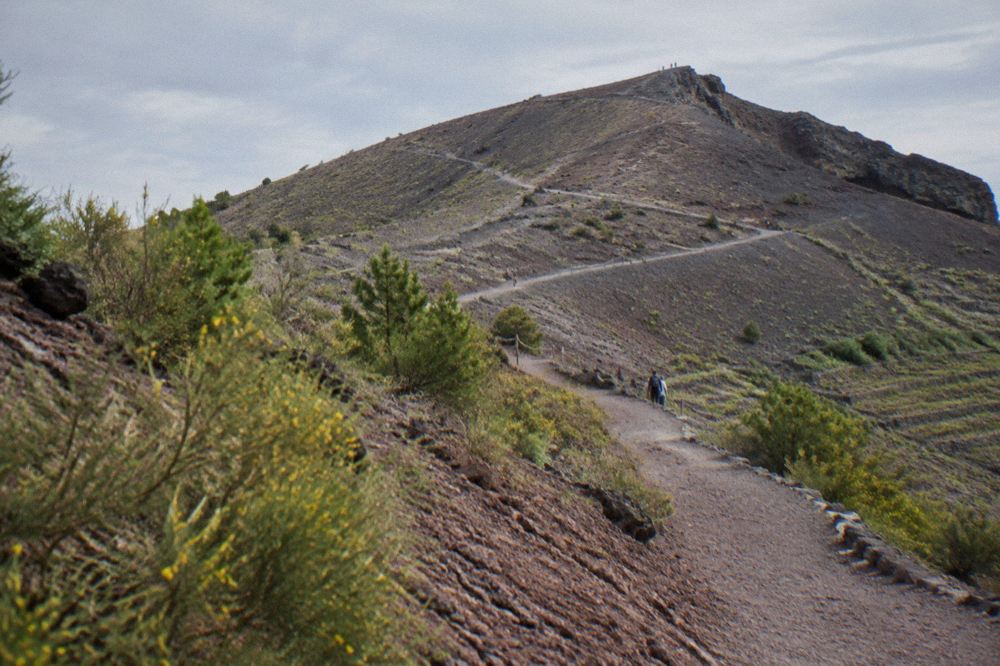
The Gran Cono is the crater trail on Mount Vesuvius: a signed, ranger-managed walking route that runs to the lip of the volcano's active crater. It is run by the Vesuvius National Park authority and sits in Campania, southern Italy, above the town of Pompei, and it is the route visitors follow to stand at the crater rim on foot. It is not a scramble and not a mountaineering route: the shortest version takes about 2 hours there and back, the longest about 3 hours, and the park sells strictly timed entry slots online only. Fifty tickets are released per 10-minute slot, bookable up to 30 days ahead, and the path itself closes automatically whenever the weather alert reaches orange or higher. Visitors walk on volcanic gravel and rock above the Bay of Naples, ending at a crater rim that still fumes gently from fissures in its floor.
The crater you look into today was shaped by that 1944 eruption, and questions such as how many people died when Mount Vesuvius erupted in 1944 and whether Vesuvius is ever going to erupt again sit alongside the walk in the park's own interpretation. Geologists monitor the volcano continuously; the park states no alert level on its public trail page, and this page states none either.
What surprises many first-time visitors is the scale of the view rather than the crater itself. From the rim you look south across the whole Bay of Naples, with Pompei, Naples and the Sorrento peninsula laid out below, and inland across the black lava fields of earlier eruptions. The walk is a geology lesson told in rock: successive lava flows and older material sit side by side along the path, each with its own colour and vegetation cover.
How Hard Is The Climb To The Crater Rim?
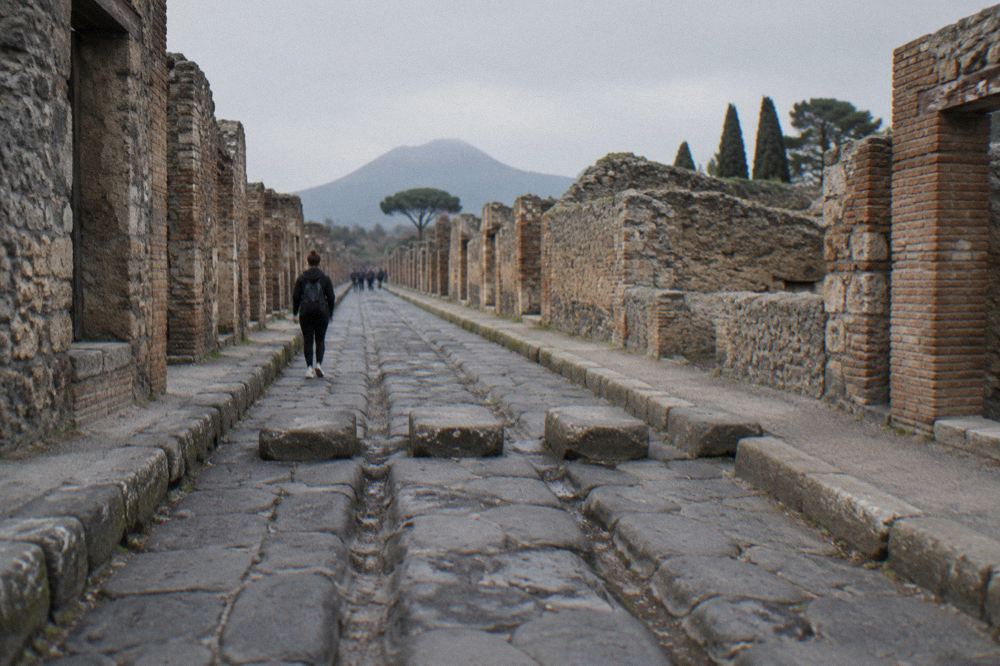
The climb to the crater rim is moderately challenging but very doable: it is a steady, steep uphill walk rather than a technical scramble, so hikers with average fitness can complete it by pacing themselves, taking breaks, and allowing plenty of time for the final, steeper stretch to the top.
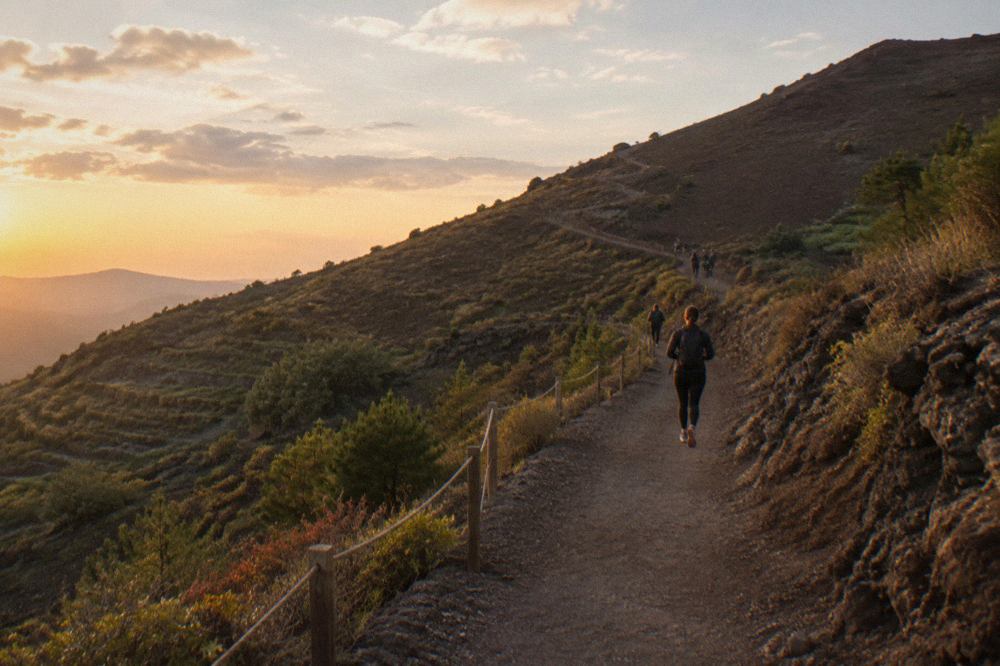
The surface is the real challenge. Volcanic gravel rolls underfoot on the descent, and boots or firm trainers with grip matter more than fitness. The elevation gain is compressed into a short distance, so the pace is slow and steady for nearly everyone. Walkers who want a fuller treatment of gradients, footwear and the descent should read the dedicated guide to the Mount Vesuvius hike, and the shorter question how long is the walk up Vesuvius has the timing in one page. Children manage it, older walkers manage it, and there is no obligation to reach the rim quickly because your slot admits you to the path, not to a timed summit.
Two practical notes from the park's own rules shape the day. First, slots are enforced at the entry point, so arriving within your window matters. Second, ten last-minute tickets per slot are released from 30 minutes before each departure time, in the visitor's own name since 11 April 2026, which is the fallback if the advance allocation is gone. Those last-minute places go quickly in high season.
How Much Does It Cost To Walk The Vesuvius Crater Trail?
Expect to pay EUR 11.68 for a full-price ticket to walk the Vesuvius Crater Trail when bought online, or EUR 9.55 at the reduced rate; both sit above the regulation base prices of EUR 10 and EUR 8, and children under 6 go free. Reduced rates apply to visitors under 25 and to residents of the 13 Park municipalities. There is no walk-up sales point in the ordinary sense: the park sells timed slots online only, up to 30 days ahead, through its official ticketing channel, and the 10 last-minute tickets per slot appear online from 30 minutes before each departure. The price buys the trail, the ranger presence and the automatic refund if an orange weather alert closes the path. No ticket, no trail.
The full pricing picture for the volcano, including how the slot system behaves on busy days, is in the Mount Vesuvius tickets guide, and the straight cost question how much does it cost to go up Mount Vesuvius answers it in brief. For walkers who would rather have a packaged crater ticket with a digital guide in the same purchase, one option on the roster bundles the two.
| Item | 2026 figure | Notes |
|---|---|---|
| Full ticket | EUR 11.68 | Online only, timed slot |
| Reduced ticket | EUR 9.55 | Under 25 and Park-municipality residents |
| Regulation base price | EUR 10 full / EUR 8 reduced | Stated in the park regulation text |
| Children under 6 | Free | Stated on the park trail page |
| Advance slots | 50 per 10 minutes | Bookable up to 30 days ahead |
| Last-minute tickets | 10 per slot | Nominative since 11 April 2026 |
One advantage of the timed system is honesty about crowding. Because entry is spread across 10-minute slots with a hard daily cap, the path never carries the uncontrolled surges that Pompeii's ticket halls once did before the 20,000-visitors-per-day cap arrived on 15 November 2024. Book the slot you want, arrive in the window, and the trail is predictable.
When Is The Vesuvius Crater Trail Open Through The Year?
Access hours shift with the seasons: 09:00-15:00 in January, February, November and December; 09:00-16:00 in March and October; 09:00-17:00 in April, May, June and September; and 09:00-18:00 in July and August. The trail closes automatically, ticket office and path together, whenever the weather alert reaches orange or higher, with an automatic refund in that case. There is no fixed closing day printed for the trail in the park's own access information, so the weather rule is the one that matters.
That automatic closure rule deserves emphasis for planners. Winter storms and summer thunderstorms over Campania can raise the alert level with little notice, and the refund is issued without you needing to chase it. The smart pattern is to leave the crater for the morning of a flexible day, hold the afternoon for Pompeii, and be ready to swap if the alert turns. The question of whether to do Pompeii or Vesuvius first matters here: afternoon slots are the ones that die when weather rolls in from the sea.
| Months | Access hours | Daily visitor cap range |
|---|---|---|
| January, February | 09:00-15:00 | 2,160 to 3,240 across the year |
| March | 09:00-16:00 | 2,160 to 3,240 across the year |
| April, May, June | 09:00-17:00 | 2,160 to 3,240 across the year |
| July, August | 09:00-18:00 | 2,160 to 3,240 across the year |
| September | 09:00-17:00 | 2,160 to 3,240 across the year |
| October | 09:00-16:00 | 2,160 to 3,240 across the year |
| November, December | 09:00-15:00 | 2,160 to 3,240 across the year |
Crowding tracks Pompeii's own calendar closely. The park's official visitor table shows Pompeii taking 466,344 visitors in April 2024 and 516,923 in May 2024, against 112,121 in January of that year, and the volcano's slots fill on the same rhythm. Late autumn and winter weekday slots are the quiet ones, at the price of shorter access hours and a higher chance of an alert-driven closure.
What Should You Wear And Carry For The Crater Walk?
Wear boots or grippy trainers, layered clothing, sun protection and carry at least a litre of water per person: the path is exposed gravel with no shade, and the temperature at the rim can sit well below what the coast shows. The wind on an exposed crater rim is constant, and the difference between Pompei at sea level and the trailhead is enough to turn a summer morning pleasant and a spring one raw. The dedicated question is it cold at the top of Vesuvius covers the rim conditions in detail, and the broader what to wear to Pompeii and Vesuvius logic applies to both halves of the day.
Carry as little as the walk allows. There is no luggage facility at the trailhead beyond what a parked vehicle offers, and the walk itself is short enough that a small daypack suffices. Water is the one item the path does not forgive: two hours of ascent on dark rock under summer sun dehydrates fast. A hat, sunglasses and sunscreen matter even in the shoulder months, because the lava fields reflect as well as absorb. Everything else covered here is indexed on Pompeii Travel Guide.
| Item | Why it matters | Season when it matters most |
|---|---|---|
| Boots or grippy trainers | Rolling volcanic gravel on the descent | All year |
| Windproof layer | Constant wind on the exposed rim | October to April |
| One litre of water per person | No shade, no water on the path | April to September |
| Hat, sunscreen, sunglasses | Reflected sun off light rock and lava | All year |
| Small daypack | No storage at the trailhead | All year |
| Reserved online ticket | No ticket office sale in the ordinary sense | All year |
How Do You Get To The Vesuvius Crater Trailhead?
The final climb to the parking area is a separate mountain road above those figures. The dedicated question of driving yourself is addressed further down this section.
Rail plus local connection is the budget pattern. The Circumvesuviana line from Napoli Garibaldi to Pompei Scavi-Villa dei Misteri takes 29 to 35 minutes on scheduled times from EAV's own timetable data, with the station for the excavations at Pompei Scavi; from Sorrento the same line covers Pompei Scavi in 34 to 40 minutes. Note that the Campania Express has been suspended since 1 October 2026, so the Circumvesuviana is the rail option. From the station area you continue upward by bus, taxi or a booked excursion. The full rail picture, including the station choice question, is in the guide on how to visit Mount Vesuvius. For self-drivers, the question can I drive up Mount Vesuvius addresses the road and the parking directly.
For travellers based in Sorrento, a packaged full-day option removes the connection puzzle entirely and pairs the crater with the ruins below. It runs from Sorrento with priority entry handling on the busy summer dates, and the operator's live listing carries the current dates and price.
Weather On The Volcano: What The Averages Show
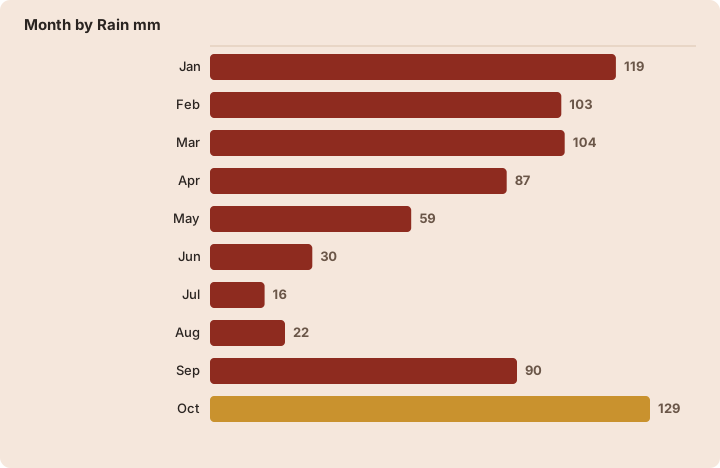
Pompei's 1991-2020 climate normals show a Mediterranean pattern: July means about 28.7 C by day and 16 mm of rain, while November means about 16.9 C by day and about 180 mm of rain, the wettest month. These are grid-point averages computed from the Open-Meteo historical archive, not station readings, so treat them as planning ranges rather than forecasts. The rim sits higher than the town, so subtract a few degrees and add wind for conditions on the trail itself.
| Month | Mean daily max C | Mean daily min C | Rain mm |
|---|---|---|---|
| Jan | about 12.2 | about 6.6 | 119 |
| Feb | about 12.6 | about 6.5 | 103 |
| Mar | about 14.9 | about 8.1 | 104 |
| Apr | about 17.7 | about 10.4 | 87 |
| May | about 21.6 | about 14.1 | 59 |
| Jun | about 25.8 | about 18.2 | 30 |
| Jul | about 28.7 | about 21.1 | 16 |
| Aug | about 29.4 | about 21.8 | 22 |
| Sep | about 25.3 | about 18.6 | 90 |
| Oct | about 21.3 | about 15.1 | 129 |
| Nov | about 16.9 | about 11.5 | 180 |
| Dec | about 13.2 | about 8.0 | 147 |
The pattern for the crater is simple: the dry months from May to August are the safest booking window because orange-alert closures are least likely, but they carry the longest access hours and the earliest slot sell-outs. April, May, June and September keep 09:00-17:00 access with meaningfully fewer walkers than August. November and December trade short 09:00-15:00 hours for empty paths, if the alert level allows the path to open at all.
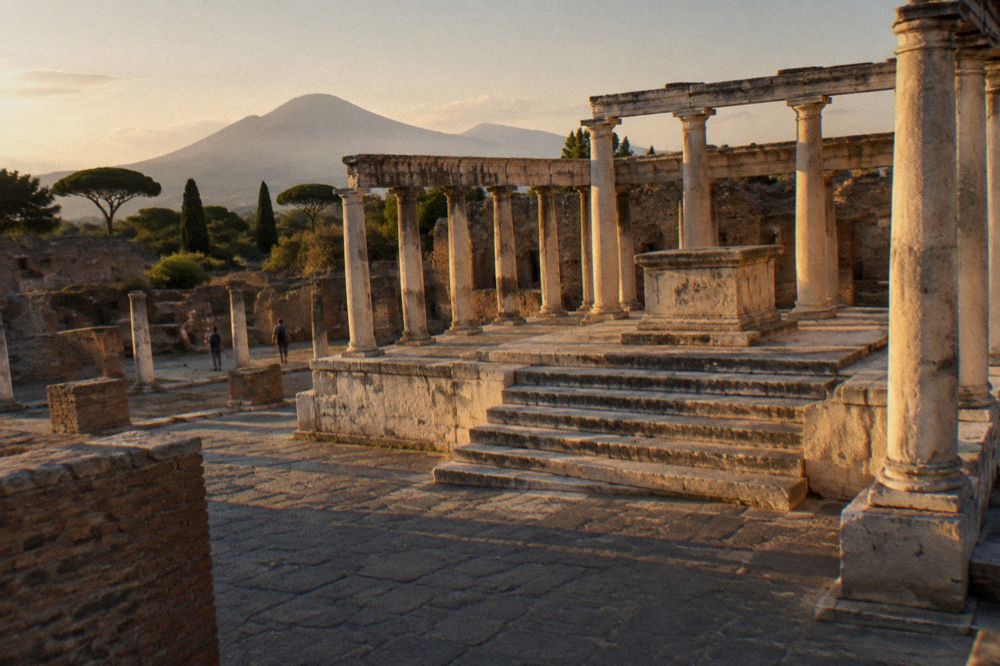
Can You Combine The Crater Walk With Pompeii In One Day?
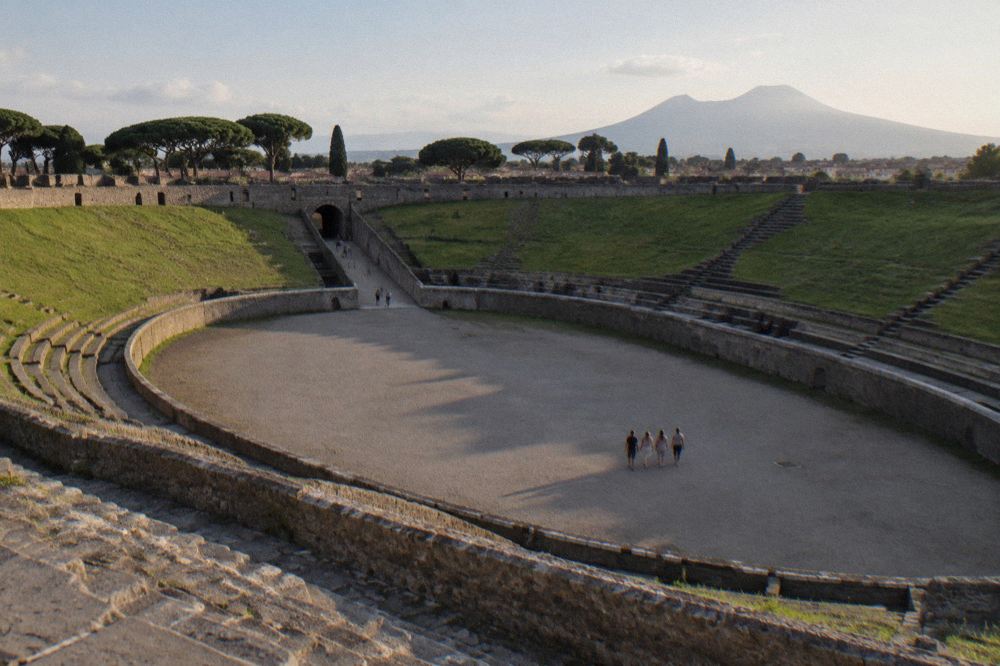
Yes, and it is the classic Campania pairing: the crater walk needs 2 to 3 hours plus transfers, and Pompeii sits about 24 km by road from Naples at the volcano's foot, so a single day covers both comfortably with an early start. The pattern that works is the crater in the morning slot, before heat builds on the exposed path, then Pompeii in the afternoon when the ruins' walls give shade. October's shorter crater hours, 09:00-16:00 with the last descent factored in, tighten the schedule but do not break it.
Two planning pieces decide whether the day runs smoothly. The first is order: the Pompeii or Vesuvius first question generally resolves toward Vesuvius in the morning for the weather, with Pompeii's later entry windows absorbing the afternoon. The second is tickets: Pompeii's 2026 structure of Express at EUR 20, Pompeii+ at EUR 25 and the 3-day at EUR 30 ends on 31 December 2026, when a single EUR 25 ticket for all park sites, valid 30 days with one entry per site, takes over. The details live in the Pompeii tickets guide and the itinerary page for Pompeii and Vesuvius in one day, with a fuller multi-site plan in two days across Pompeii, Herculaneum and Vesuvius.
Doing both independently means booking two timed entries, two transport legs and a lunch stop, all in a region where the midday pause is taken seriously. A booked day trip collapses that logistics stack into one purchase. The related option on this page pairs the Pompeii ruins with the Mount Vesuvius day tour from Naples, with the transfer between the two handled: Check availability. The tour page at the ruins and Vesuvius day tour from Naples carries the full description.
For travellers who want the same pairing with lunch built in, a second roster option runs the Pompeii and Vesuvius day from Naples with a pizza lunch between the two sites, which solves the midday question before it arises.
Rules, Safety And What You Cannot Take From The Trail
The park's rules are firm on three points: entry only with an online timed ticket in your own name, closure on an orange weather alert or higher with automatic refund, and no collecting of rocks or volcanic material from the path or crater. The last rule catches visitors off guard every year, because the loose scoria along the trail looks takeable. It is not, and the dedicated answer on whether you can take a rock from Mount Vesuvius explains what the park says about it. The same principle protects the archaeological site below, where removing material is likewise forbidden.
Safety on the path itself is straightforward: stay on the marked track, respect the slot time, and turn back if the weather closes in, because the closure rule exists for the fast-moving storms this coastline produces. The eruption-history questions, did Pompeii know Vesuvius was going to erupt and why Naples was not destroyed by Vesuvius, give useful background on why the monitoring network around you exists at all. On the volcano's relative size, the short answer to which is bigger, Vesuvius or Etna is that Etna is far larger.
| Rule | What it means in practice |
|---|---|
| Online timed ticket only | No ordinary walk-up purchase; book up to 30 days ahead |
| Nominative tickets | Named last-minute tickets since 11 April 2026; ID can be checked |
| Orange-alert closure | Ticket office and path close automatically; automatic refund |
| Stay on the marked path | No off-track walking onto lava flows or into the crater |
| No rock collecting | Taking volcanic material from the trail is prohibited |
Is The Vesuvius Crater Walk Worth The Ticket?
For the overwhelming share of visitors who make the climb, the crater rim is the single most vivid encounter with the AD 79 story anywhere in Campania: the bay, the buried cities and the smoking source of it all in one view. The cost is modest against the experience, the timed system keeps the path orderly, and the automatic weather refund removes the gamble. The honest counter-argument is mobility and heat: anyone who struggles on steep gravel for two hours, or who visits in a July afternoon slot, will find it harder work than the postcards suggest.
The straight verdict question, is it worth going up Mount Vesuvius, weighs the same factors for readers who want the judgement without the logistics. Our editorial read, in reporting voice: the crater changes how you understand Pompeii, because the distance from rim to ruin is short enough to grasp in a single glance, and the town of Pompei below reads differently once you have stood inside the thing that ended it. Pair it with the walk through the excavations, on your own legs or with a booked day, and the volcano stops being a postcard and becomes a place.
Common Questions About The Vesuvius Crater Trail
How long is the walk up Vesuvius?
The Gran Cono trail takes about 2 hours return by the shortest route and up to about 3 hours by the longest, on a maintained gravel path inside the Vesuvius National Park.
Can you buy Mount Vesuvius tickets on the day?
Only online, and only if slots remain: the park releases 10 last-minute tickets per 10-minute slot from 30 minutes before each departure, in the visitor's own name since 11 April 2026. Advance sales run up to 30 days ahead, and there is no ordinary walk-up ticket office sale.
How much does it cost to go up Mount Vesuvius?
The crater trail costs EUR 11.68 full and EUR 9.55 reduced as sold online, against a regulation base of EUR 10 and EUR 8. Children under 6 enter free, and reduced rates apply to visitors under 25 and residents of the 13 Park municipalities.
Can I drive up Mount Vesuvius?
Yes, a road climbs inside the national park to a parking area below the trailhead, from which the Gran Cono path starts. Tour vehicles and chartered transport use the same road, and rail travellers arrive at Pompei Scavi-Villa dei Misteri before continuing upward.
Is it cold at the top of Vesuvius?
It can be. The rim is exposed to constant wind and sits well above the coast, so conditions there run noticeably cooler than Pompei at sea level, particularly from October to April when a windproof layer is worth carrying.
Is it worth going up Mount Vesuvius?
For nearly everyone who completes it, yes: the rim gives the clearest single view of the Bay of Naples, Pompeii and the volcano's relationship to both, and the timed-ticket system keeps the path orderly. The two caveats are the exposed two-hour effort in summer heat and the automatic closure on an orange weather alert.
Plan the slot before you plan anything else. The crater walk rewards an early booking, a morning departure and a flexible afternoon, and Pompeii below will absorb whatever the volcano's weather decides to do with the rest of your day.